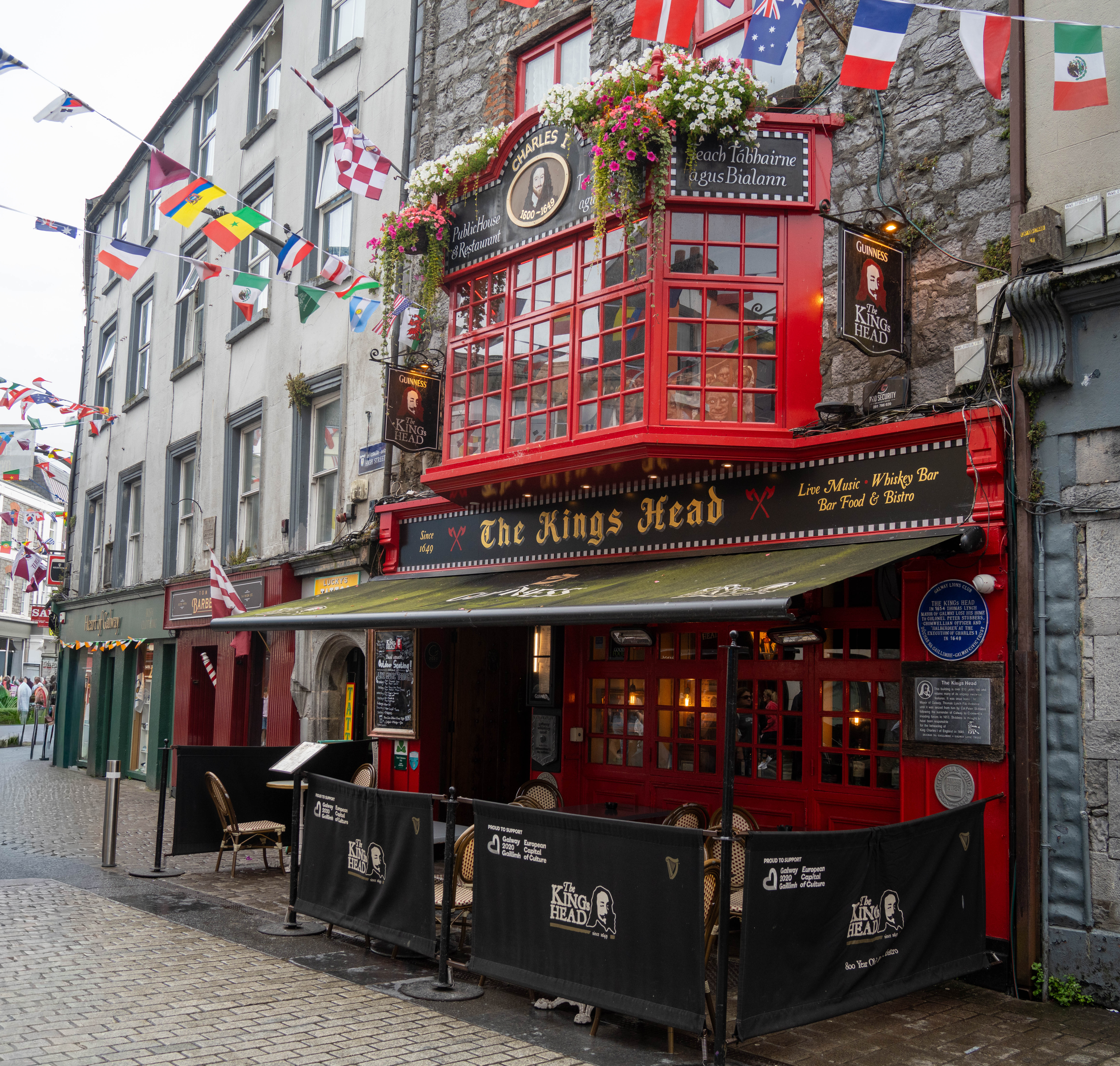
After the heavy meal of seafood chowder at The Kings Head Pub, we met the rest of the group for a tour of the Old City of Galway. This tour covered over 800 years of medieval history, starting from the central Eyre Square and winding through narrow lanes down to the waterfront Spanish Arch. Our very knowledge expert local guide led us on pedestrian-only cobblestone streets into the medieval heart of the “City of the Tribes”. This was one of the most educational tours on the trip.
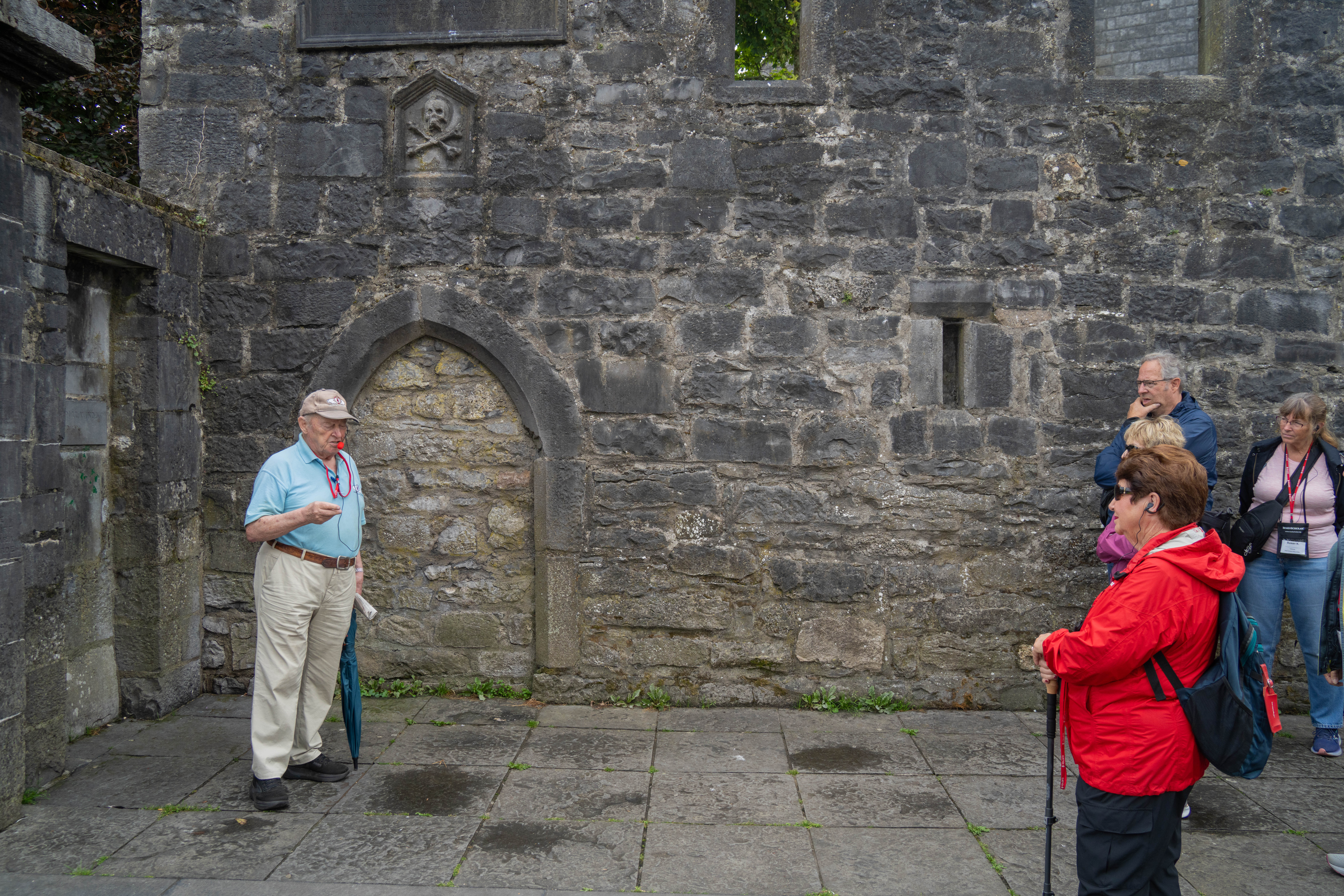
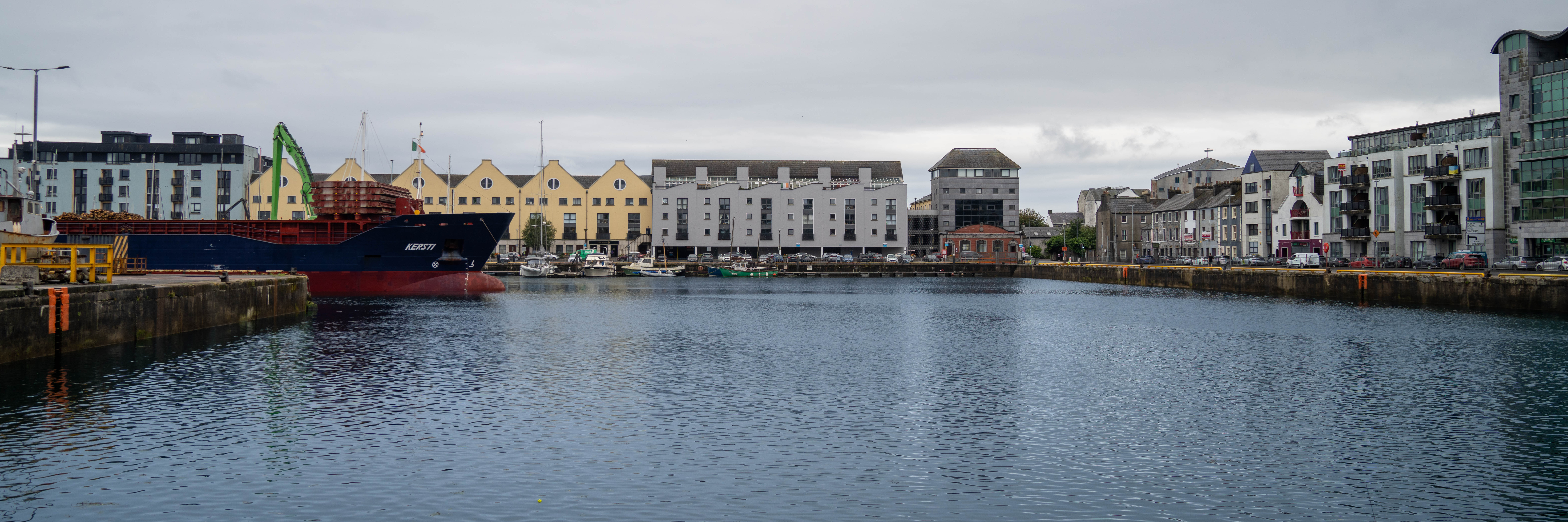
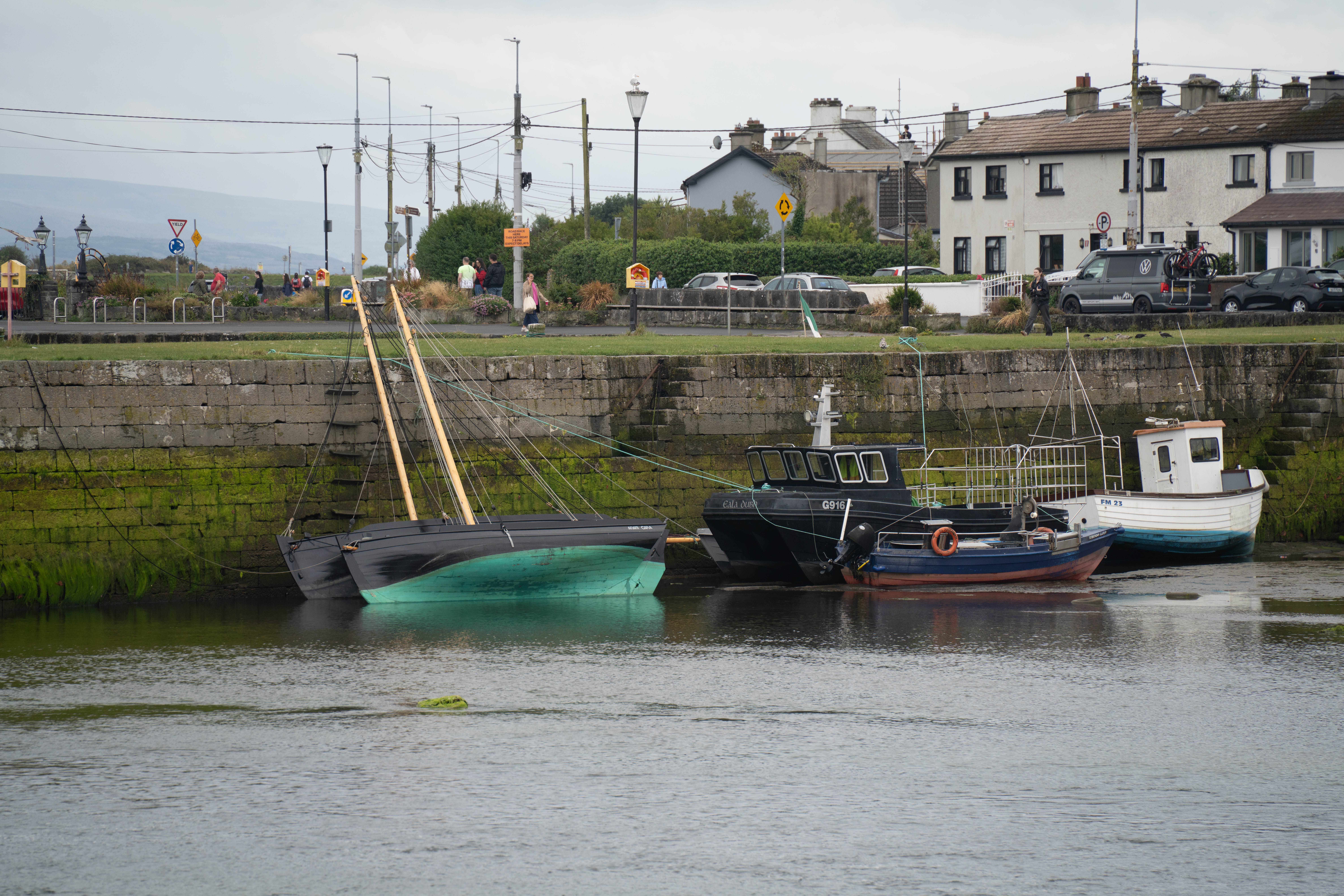
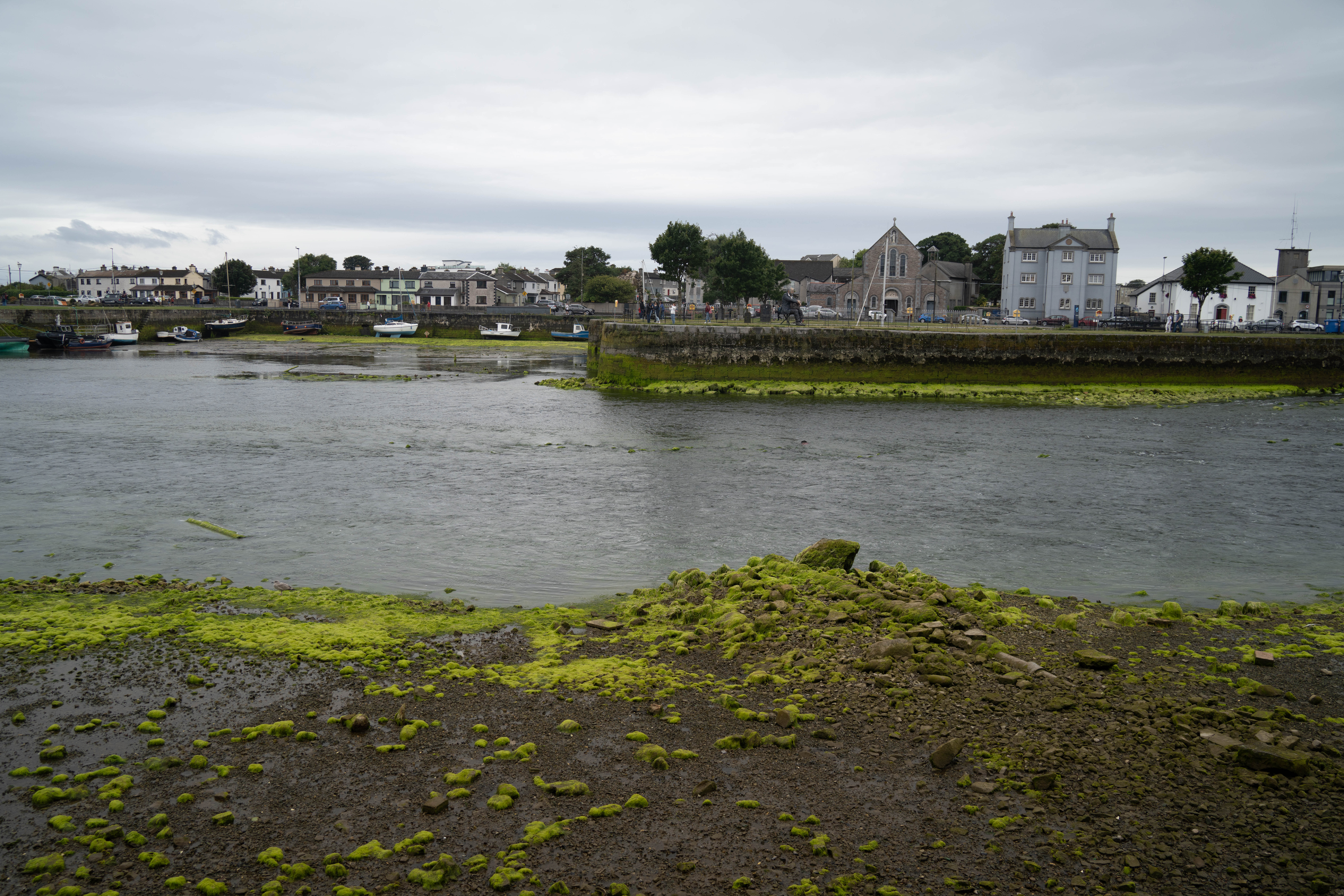
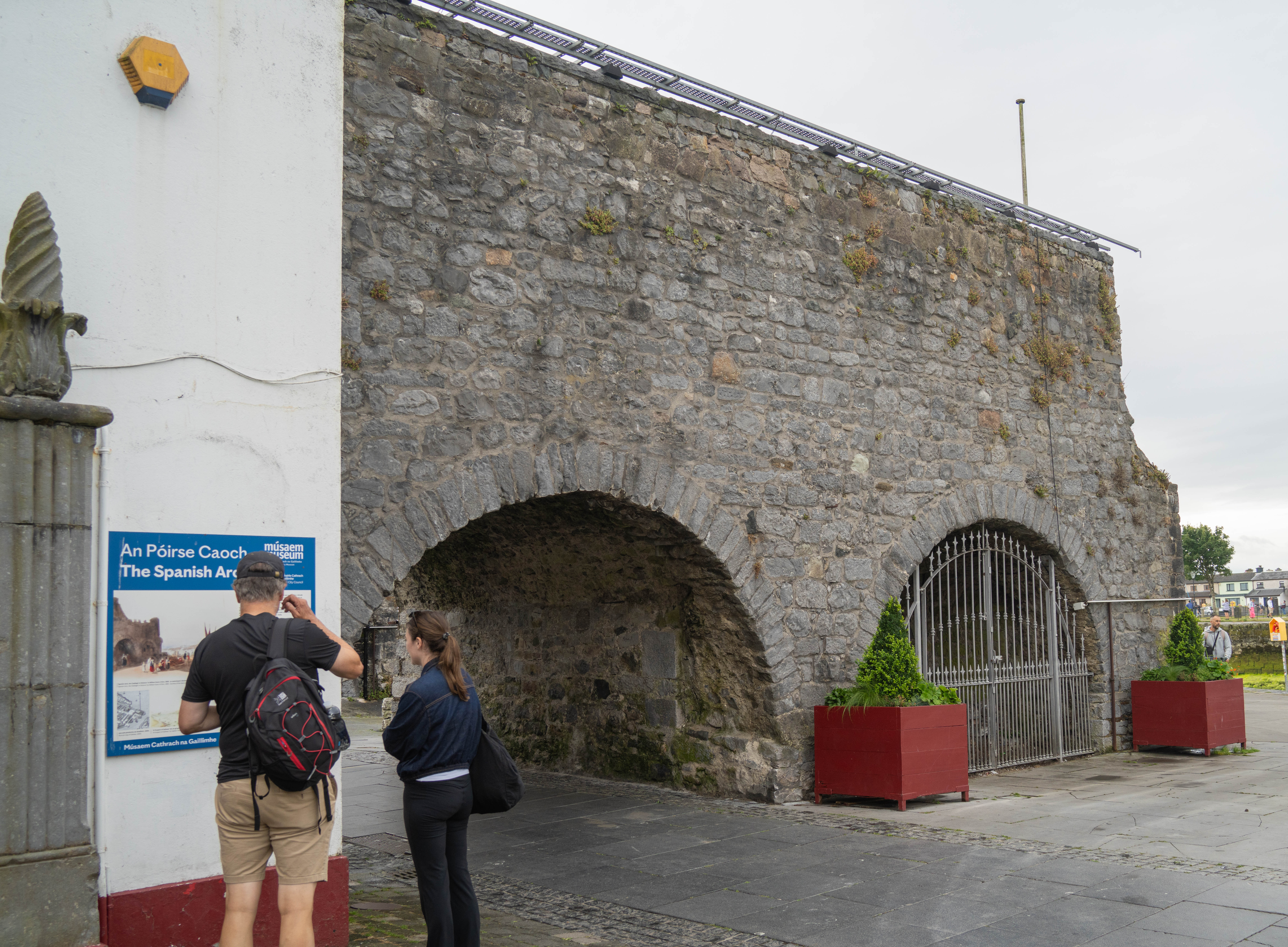
As we begun the Old City tour, we strolled under the Spanish Arch, one of the first notable icons of the Old City. The Spanish Arch is a 16th century fortification—city wall—standing at the edge of the River Corrib where ocean-going merchant ships used to unload wine and spices.
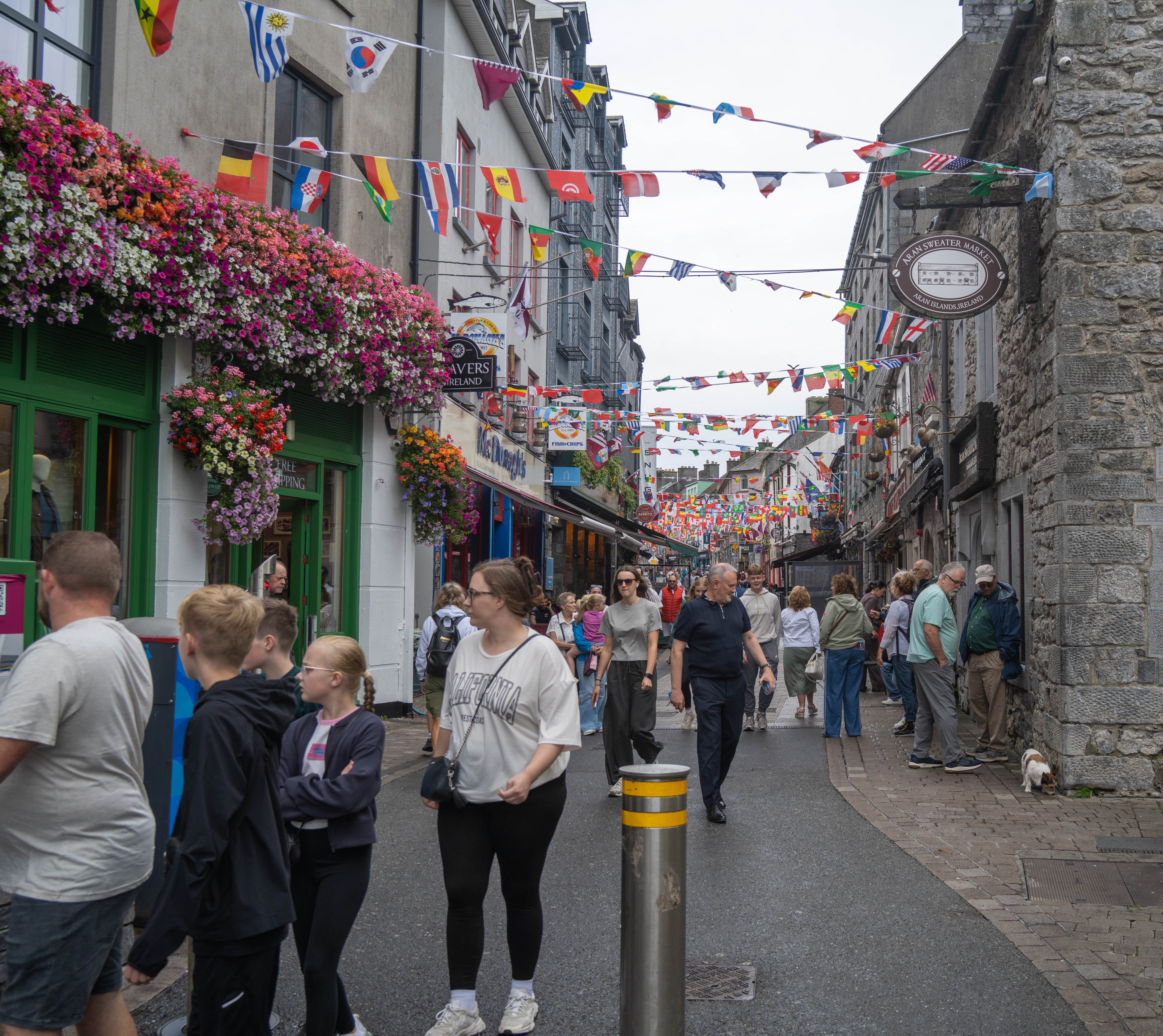
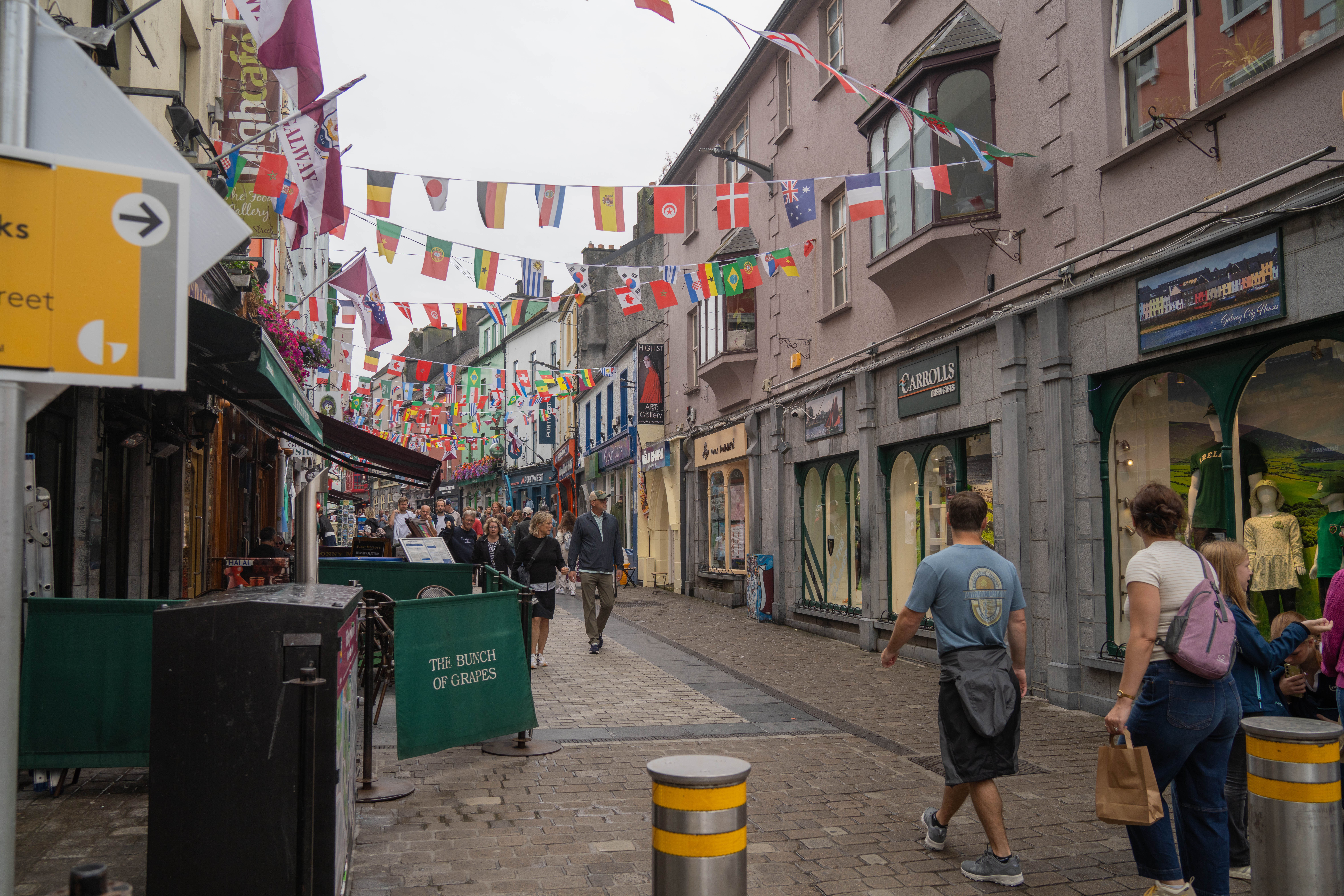
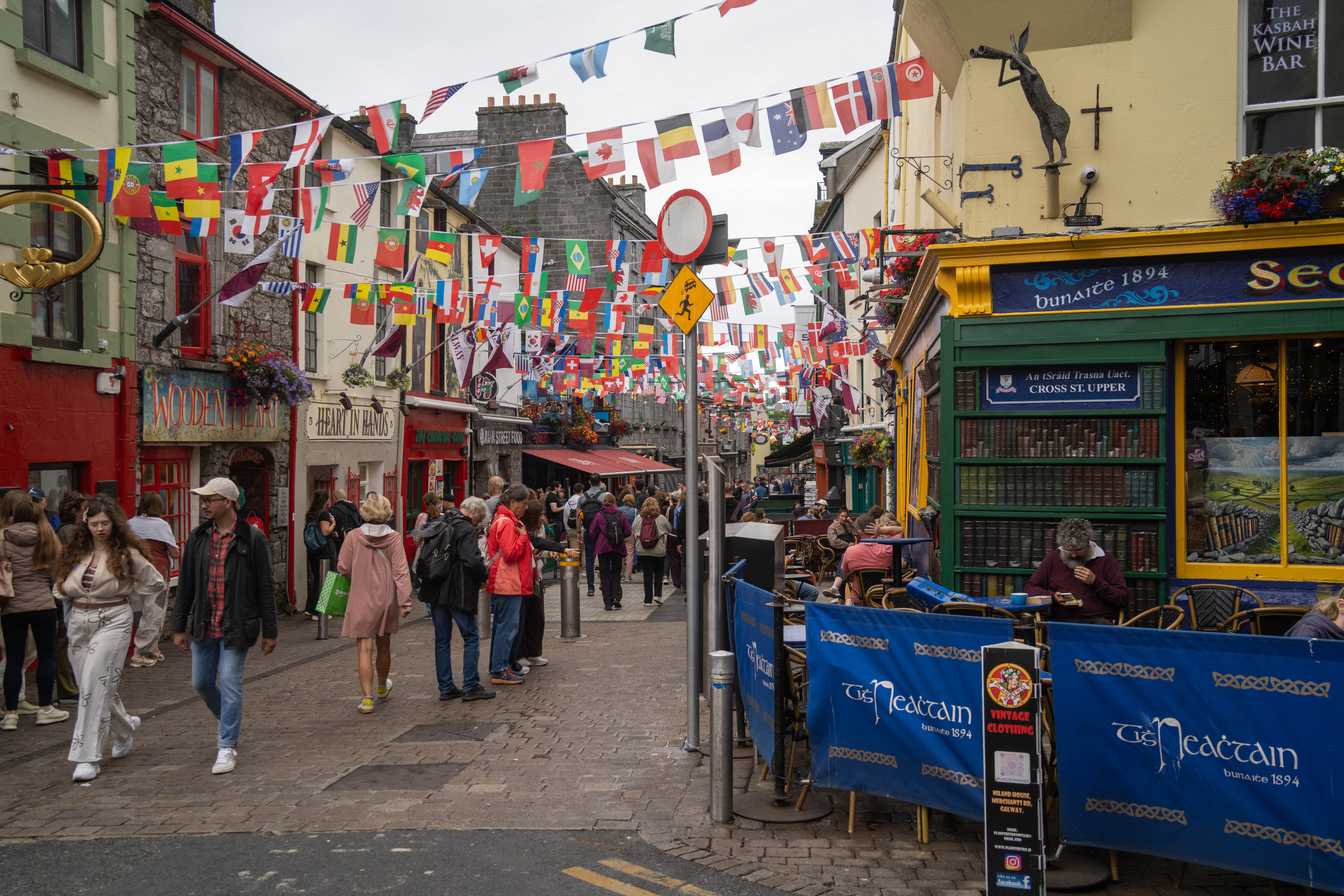
Eyre Square is the heart of the Old City and is the medieval heart of Ireland’s cultural capital, a maze of vibrant pedestrian streets and medieval stone fortifications. Among the notable area in the Old City, the Latin Quarter and High Street forms the vibrant epicenter of Old Galway. sIt is characterized by cobblestone pedestrian-only streets, brightly colored storefronts, and historic pubs.
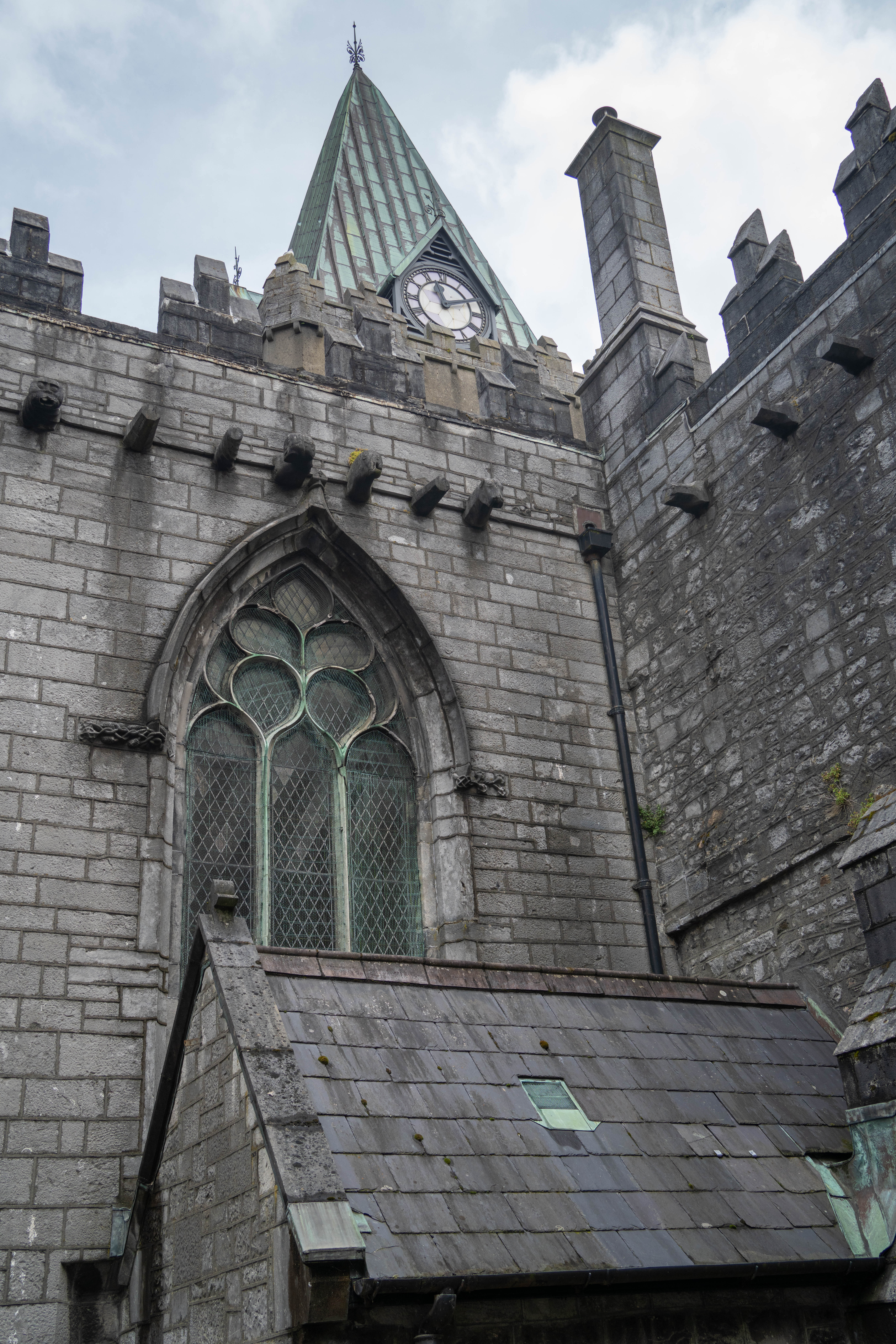
We walked past Collegiate Church of St. Nicholas. Built in 1320, it is the largest continuous medieval parish church still in active use in Ireland.
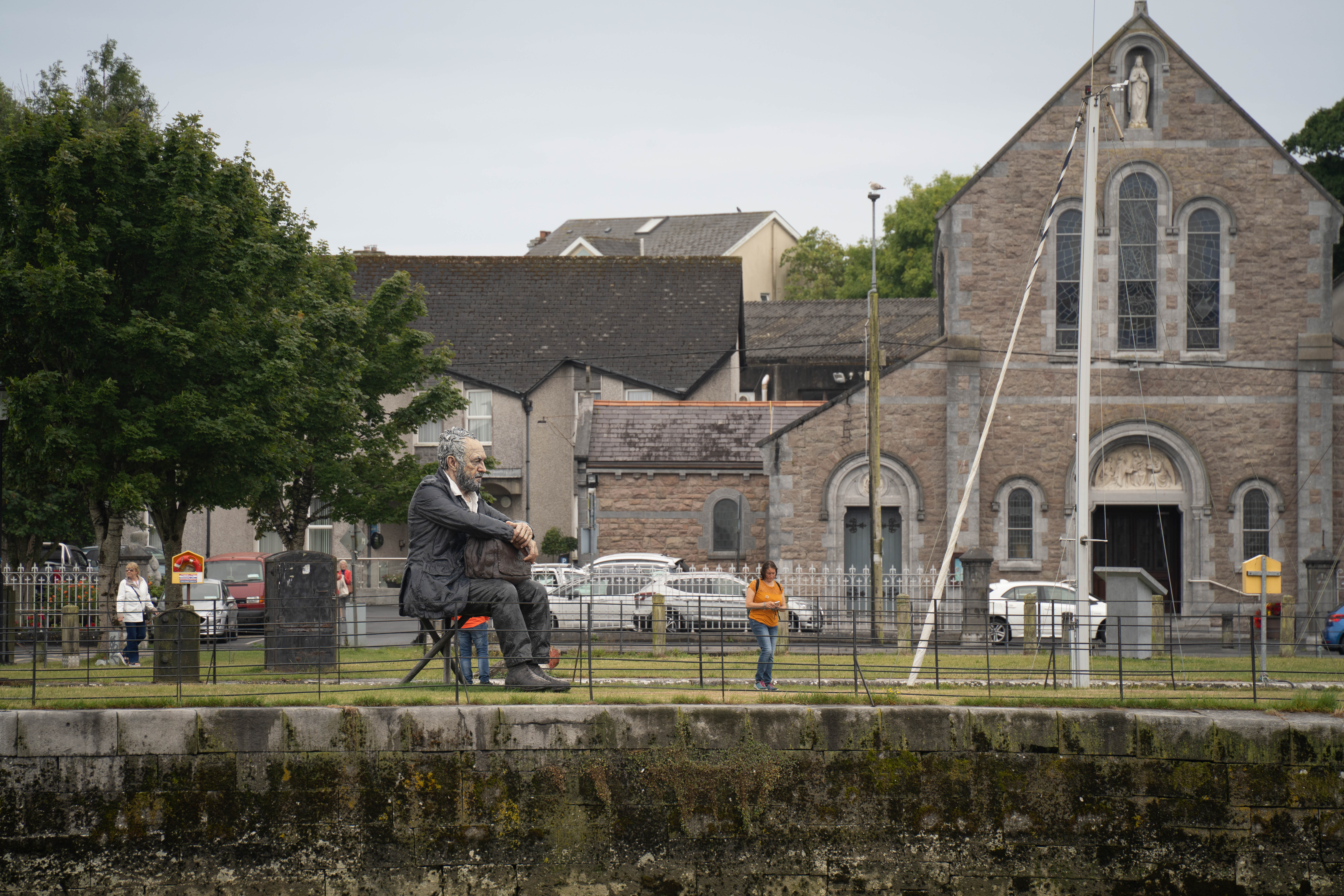
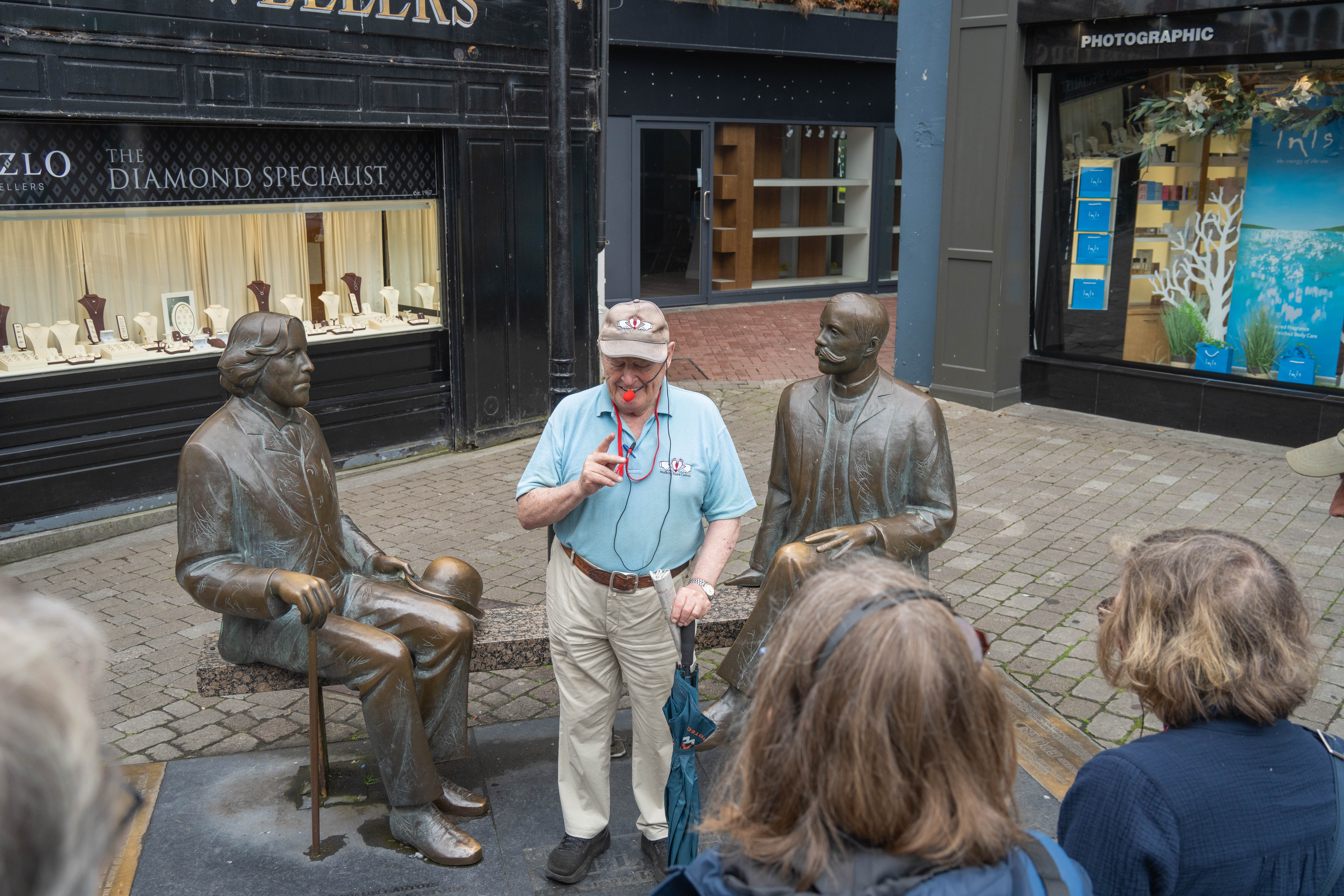
And there was this statue of Oscar Wilde and Eduard Vilde, depicting a fictional meeting between two famous late 19th-century writers who shared a similar surname but never actually met in real life.
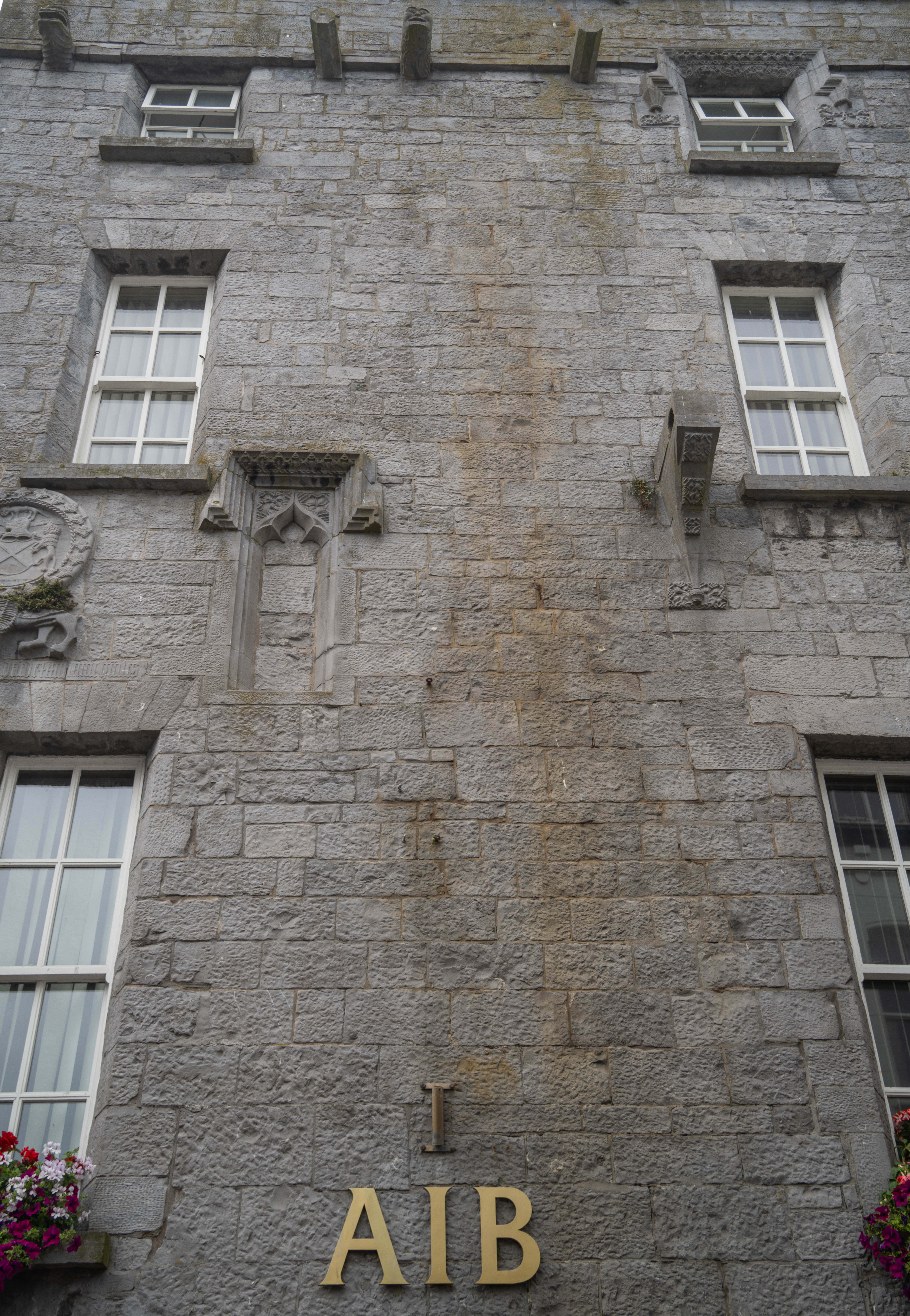
And, near the end of the walking tour we passed by Lynch’s Castle, standing as Ireland’s finest surviving example of a fortified medieval townhouse, and noted for its ornate limestone carvings and gargoyles.
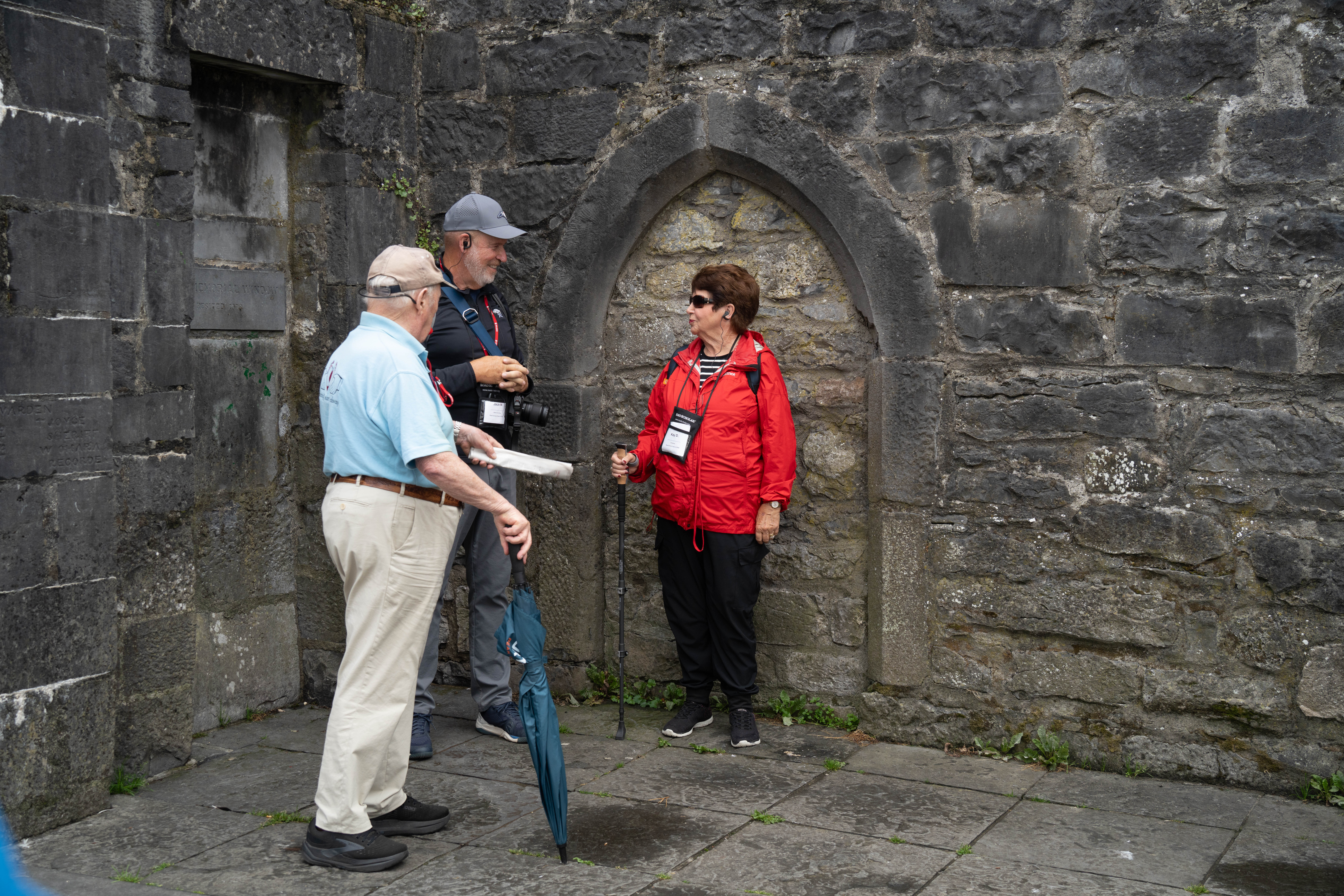
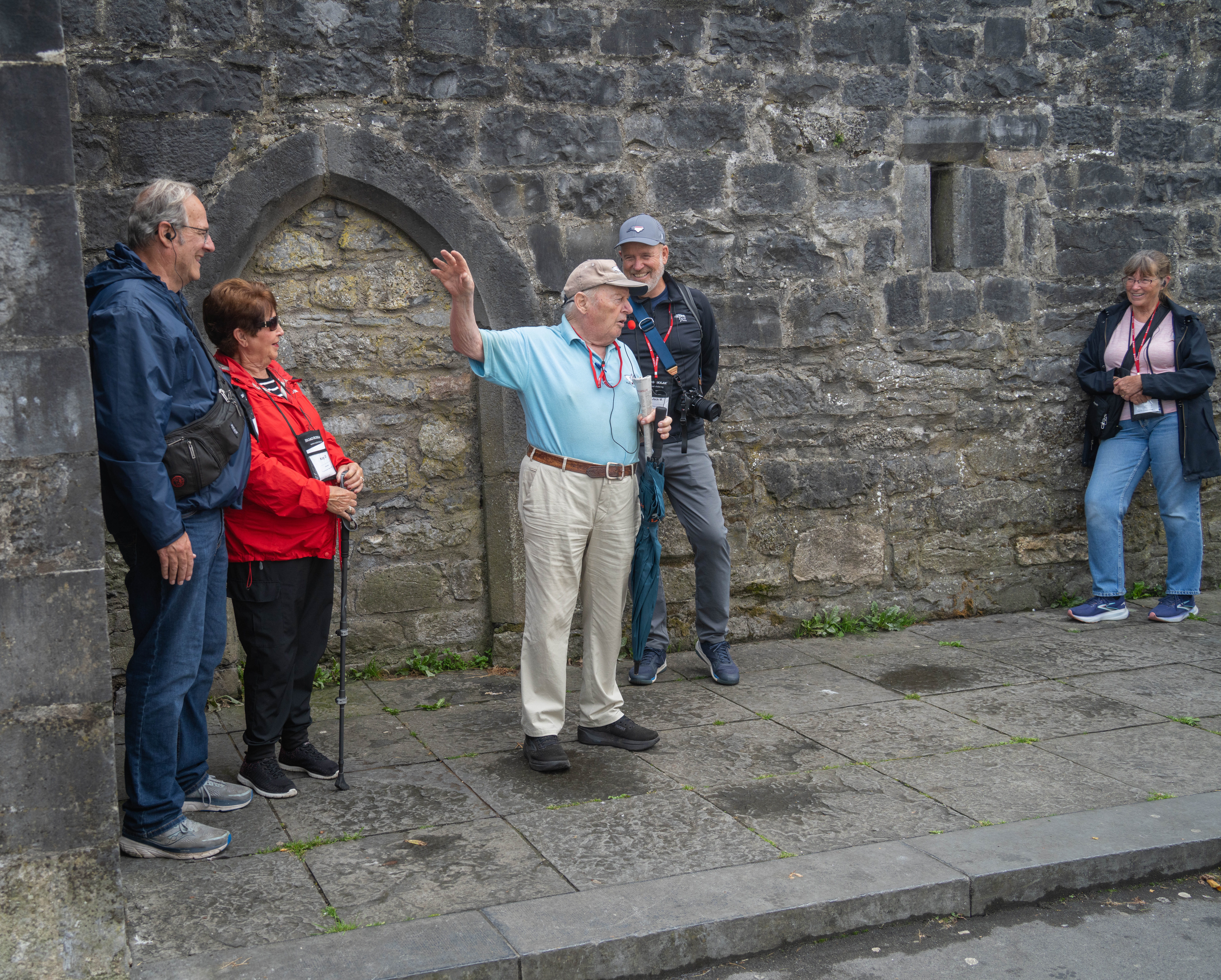
Regarding Lynch’s Castle, as part of the tour, Kay participated in a reenactment of a historic tryst in Galway. This refers to the famous 1493 legend of Agnes Browne and her two suitors in Galway, which led to a fatal jealous clash and a dramatic mayoral execution.
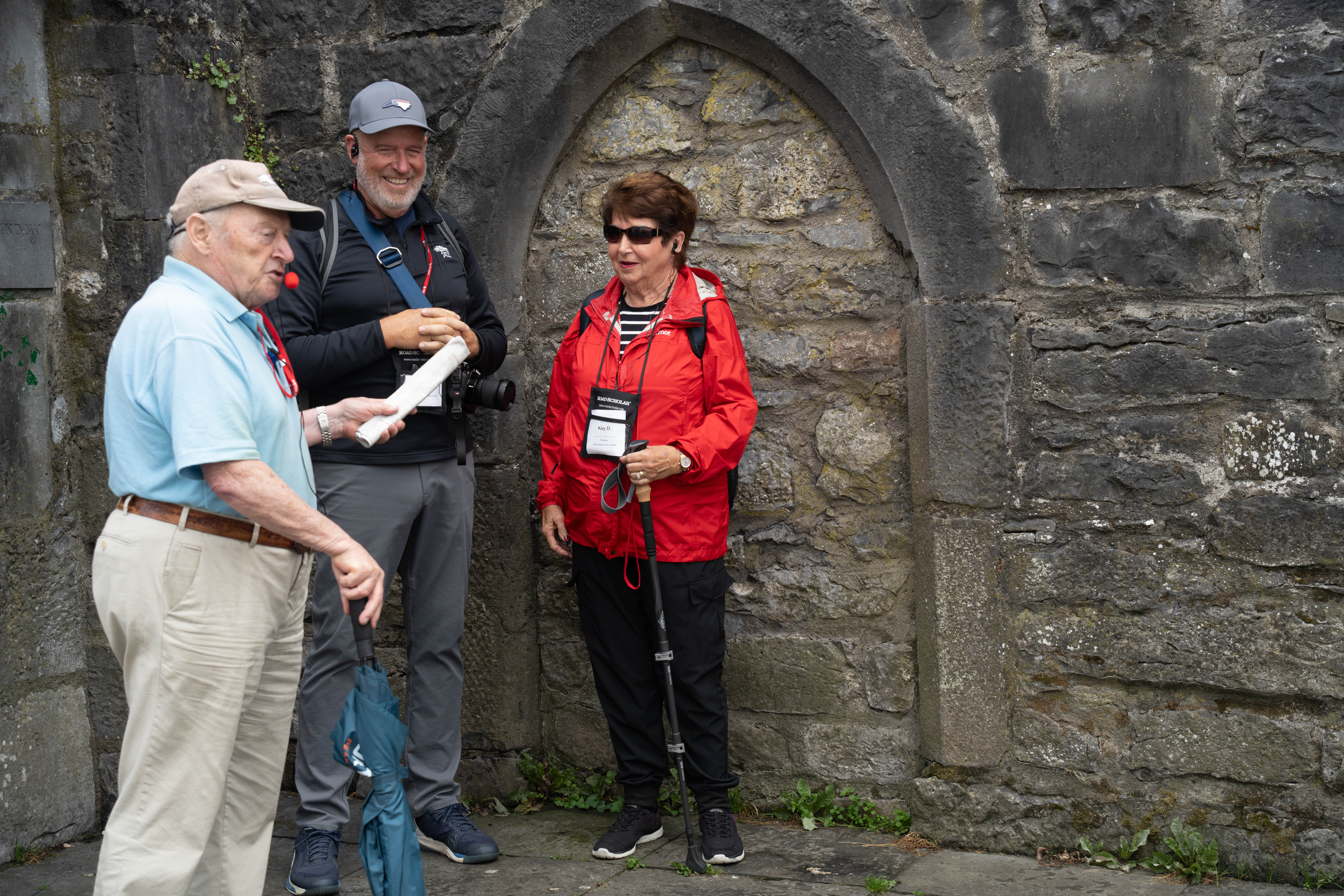
Agnes Browne was engaged to Walter Lynch, the son of James Lynch FitzStephen, the powerful mayor and magistrate of Galway. A young Spanish merchant named Gomez from Cadiz was staying with the family as a guest of trade and caught the attention of local women, making Walter intensely jealous. Convinced Agnes was unfaithful, Walter spied Gomez leaving her house one night and stabbed him to death in a fit of rage. Mayor James Lynch tried and convicted his own son, ultimately executing him from a window of his own house when local crowds prevented a standard public hanging. You can still see the Lynch Memorial Window today near St. Nicholas’ Church.
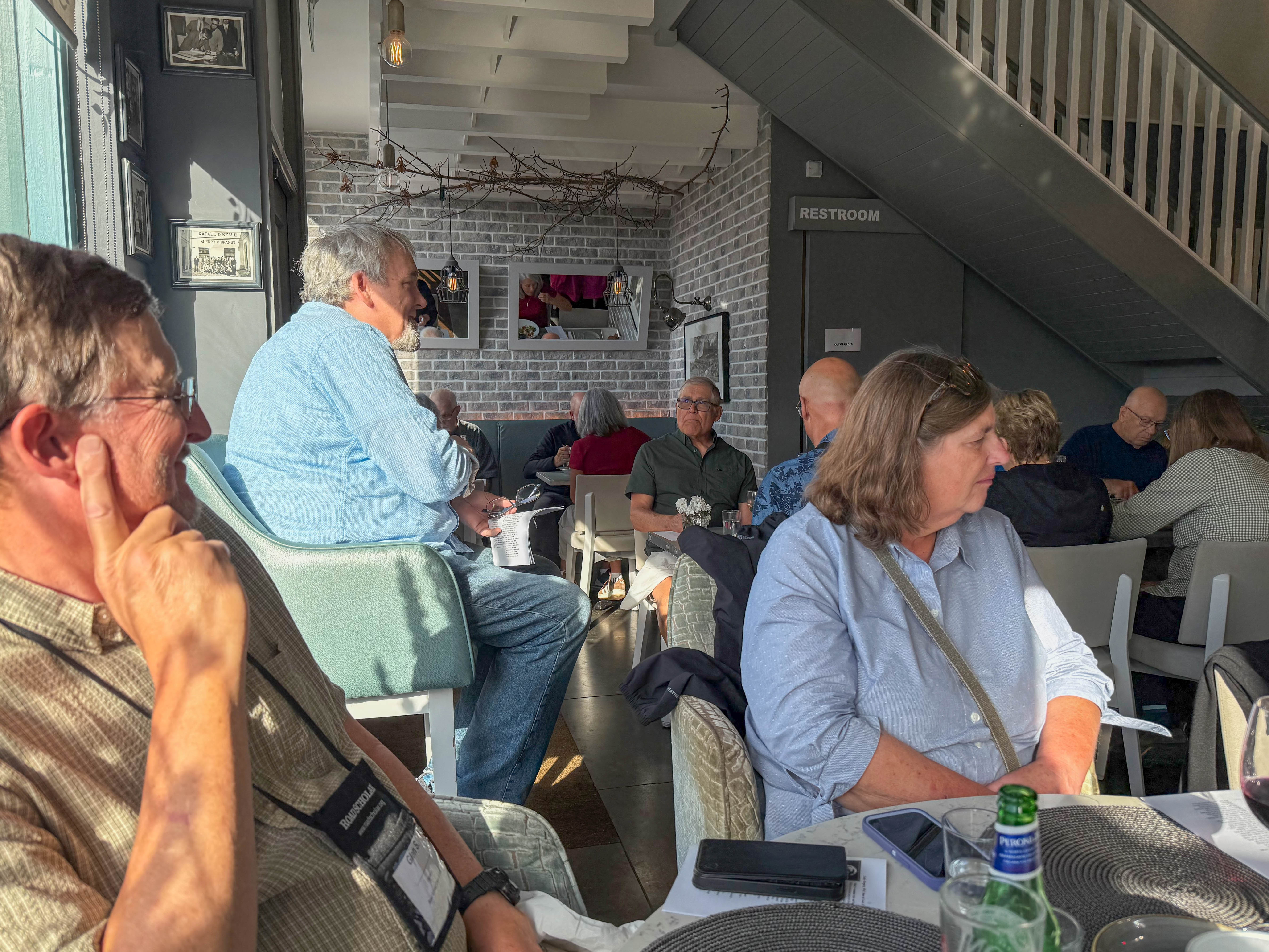
As if the Old City tour wasn’t enough, we were treated to fine dining at an upscale restaurant where the meal was preceded by poetry reading by a local college faculty member.