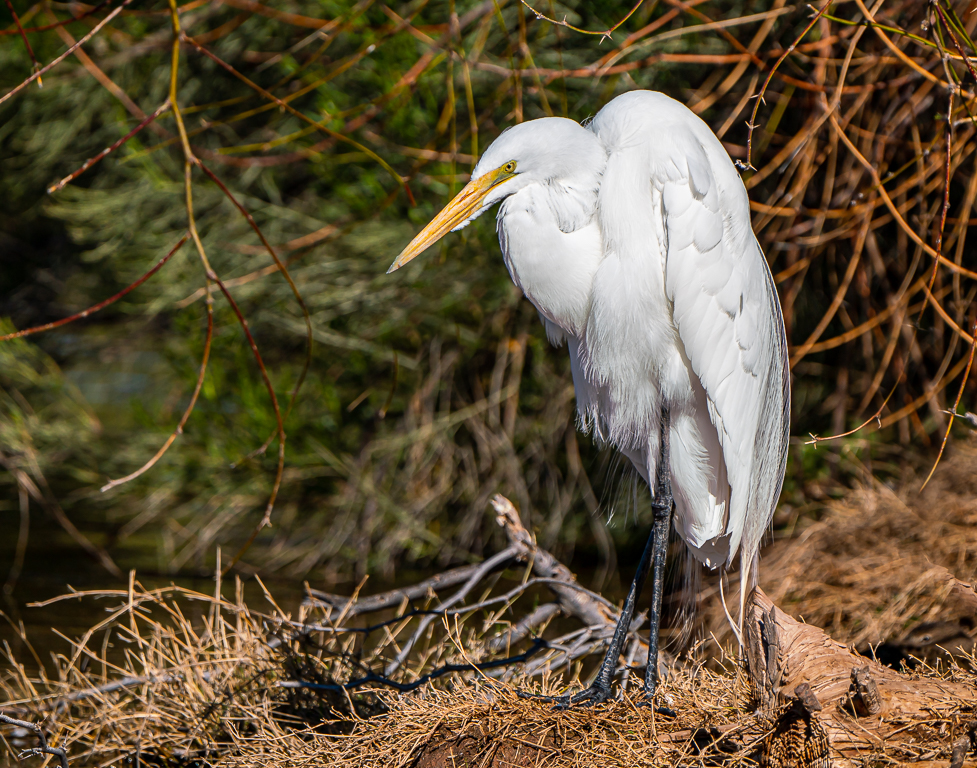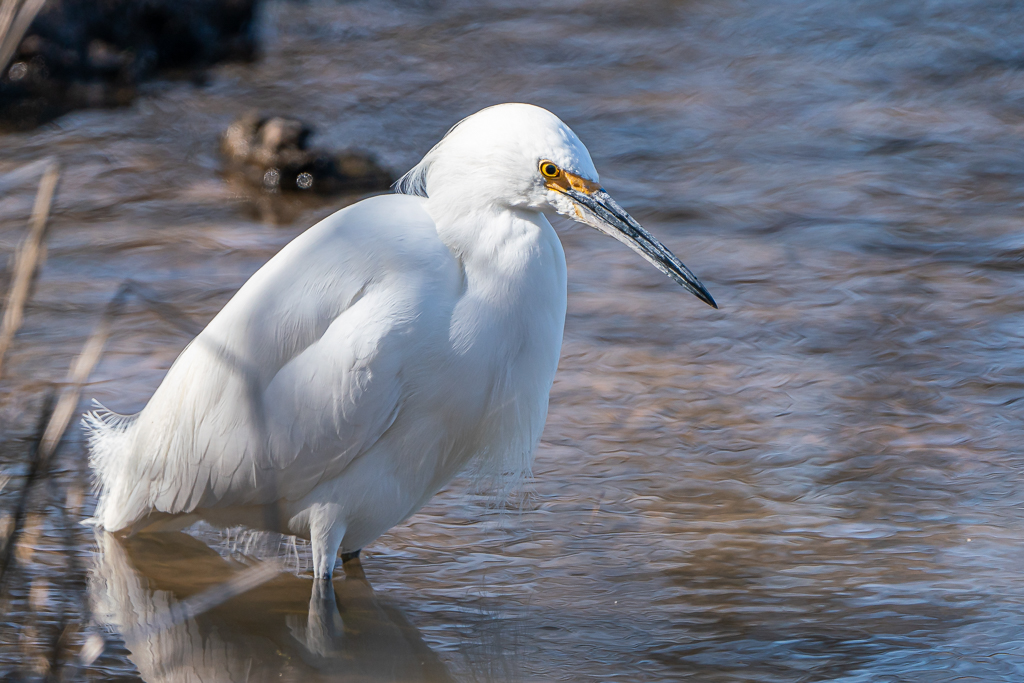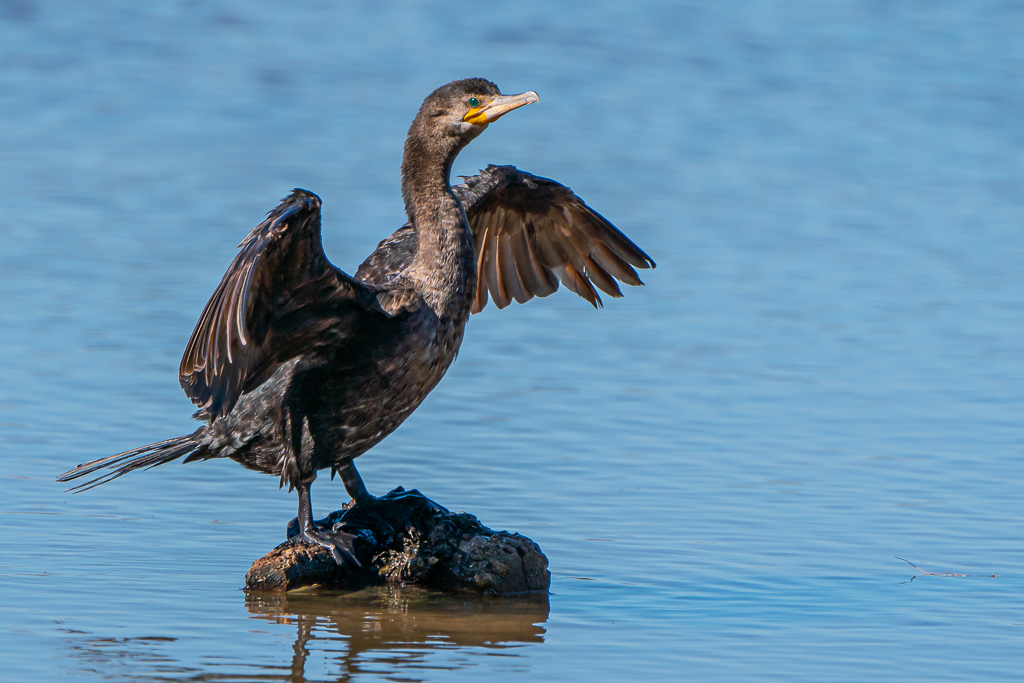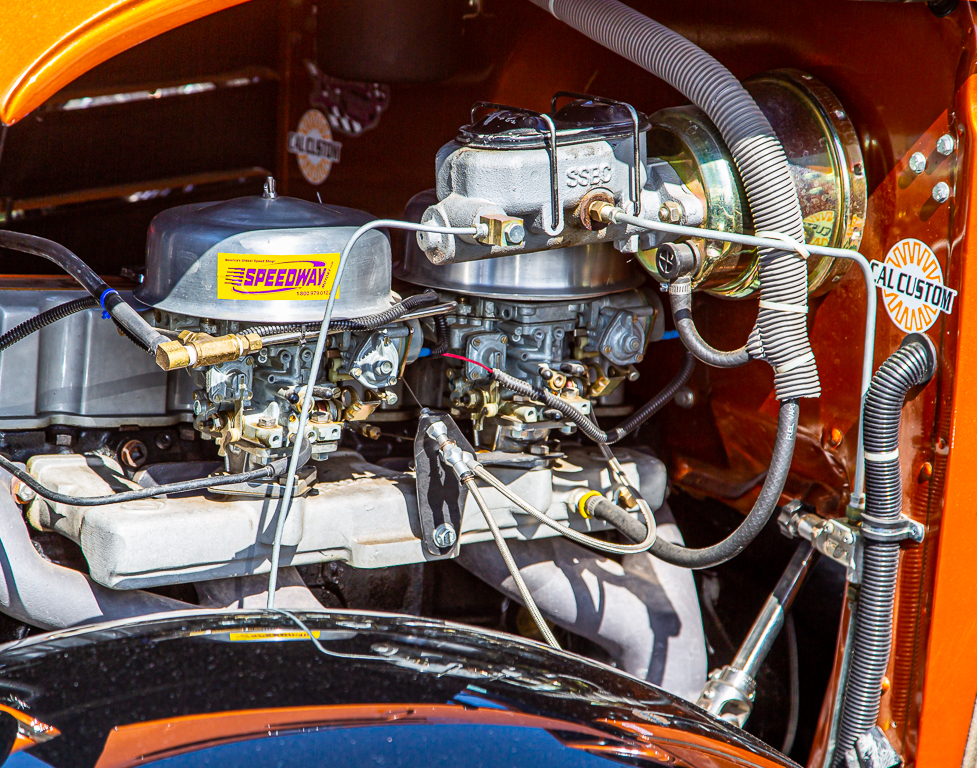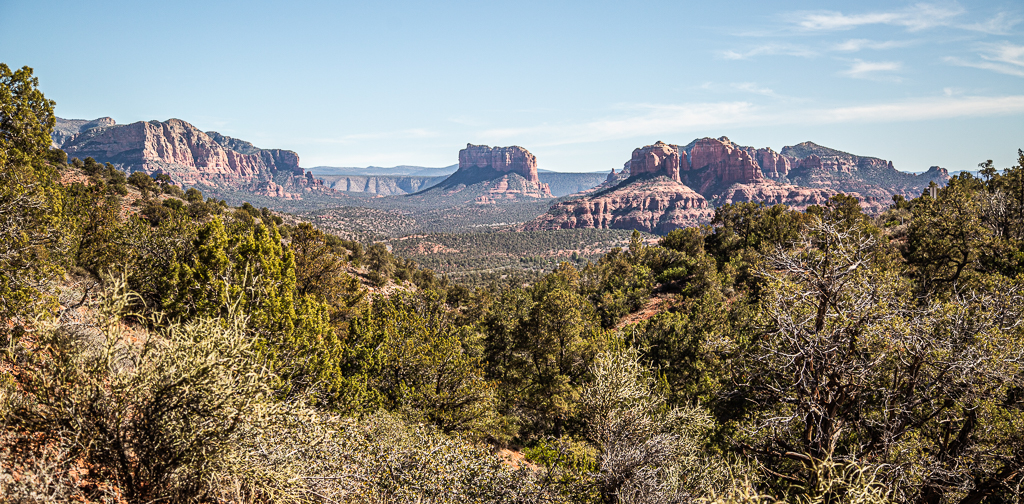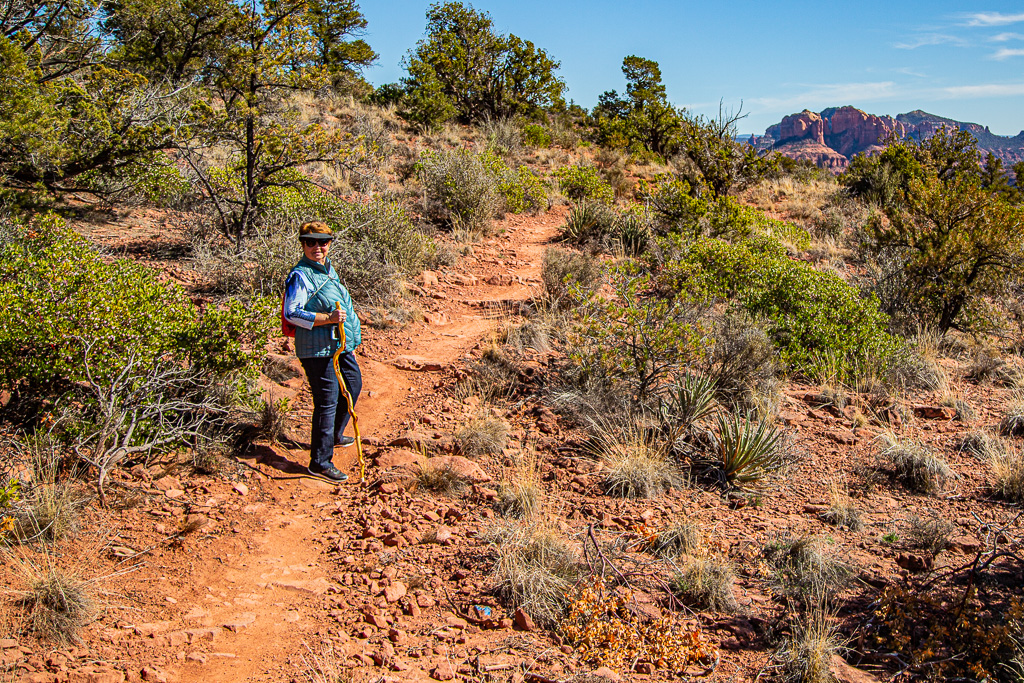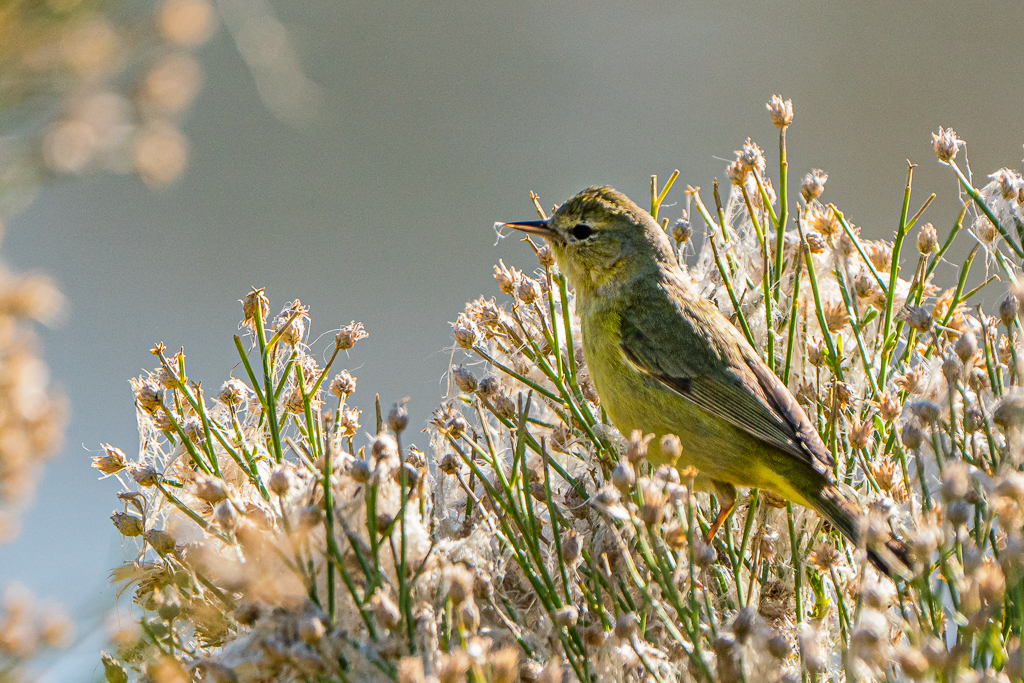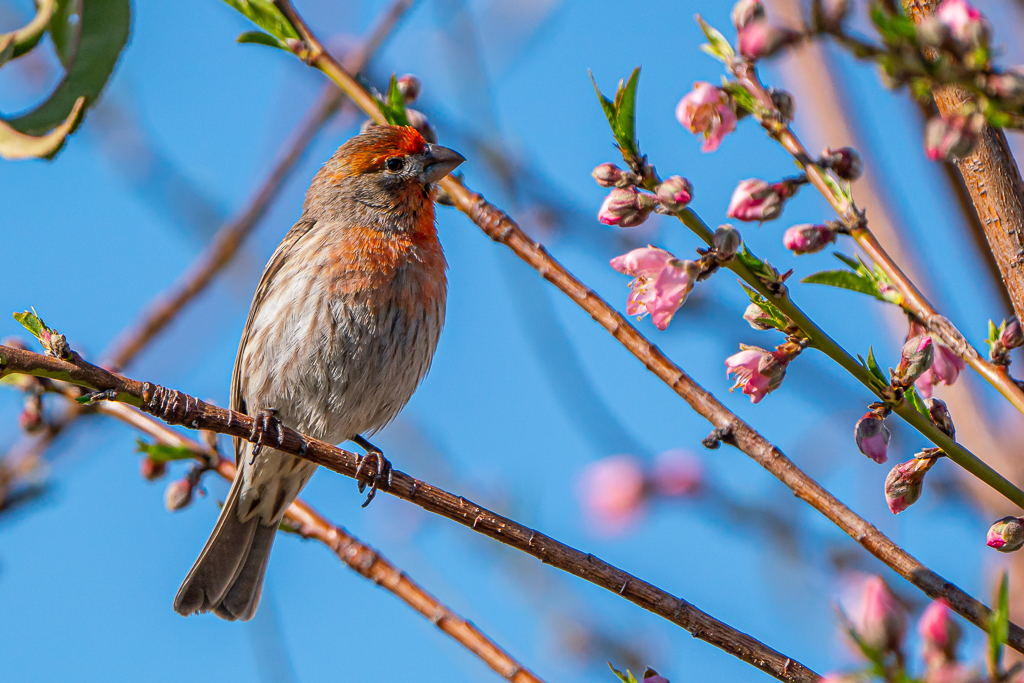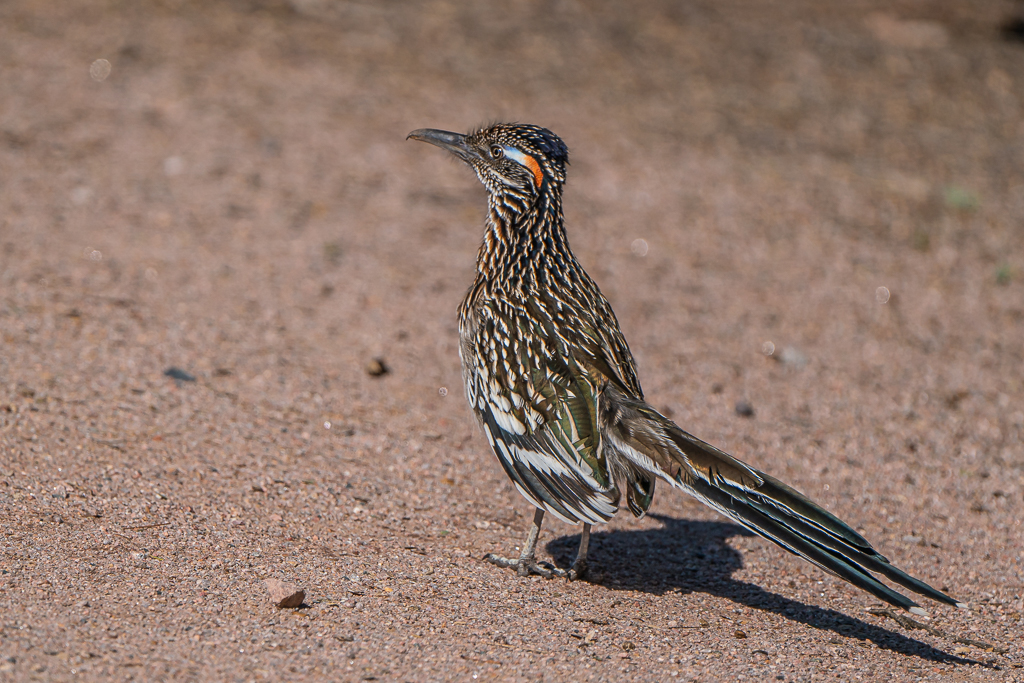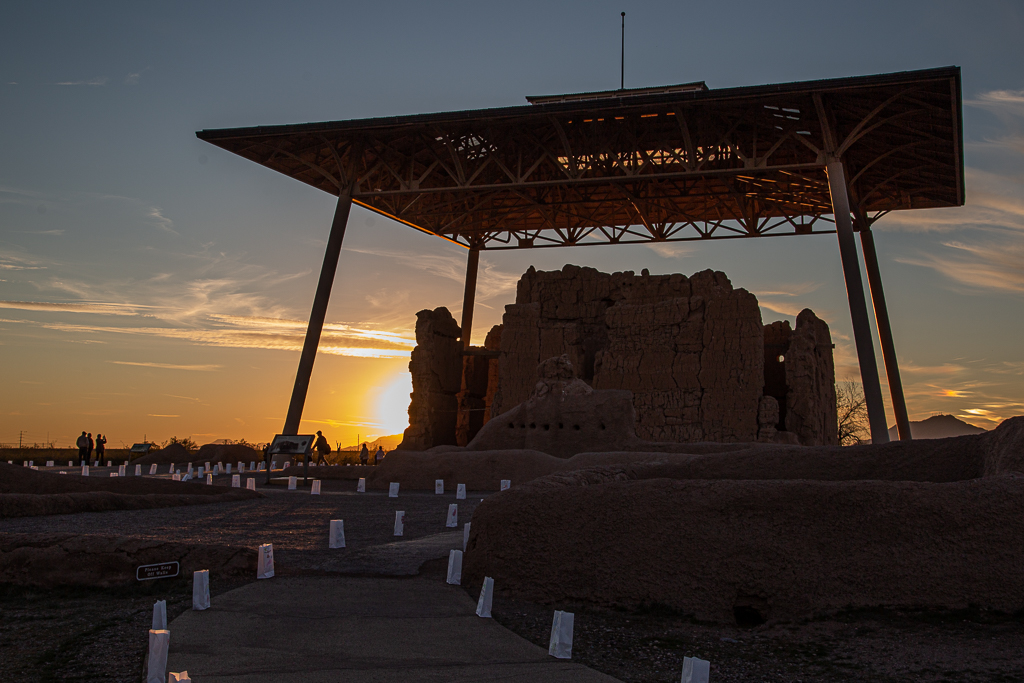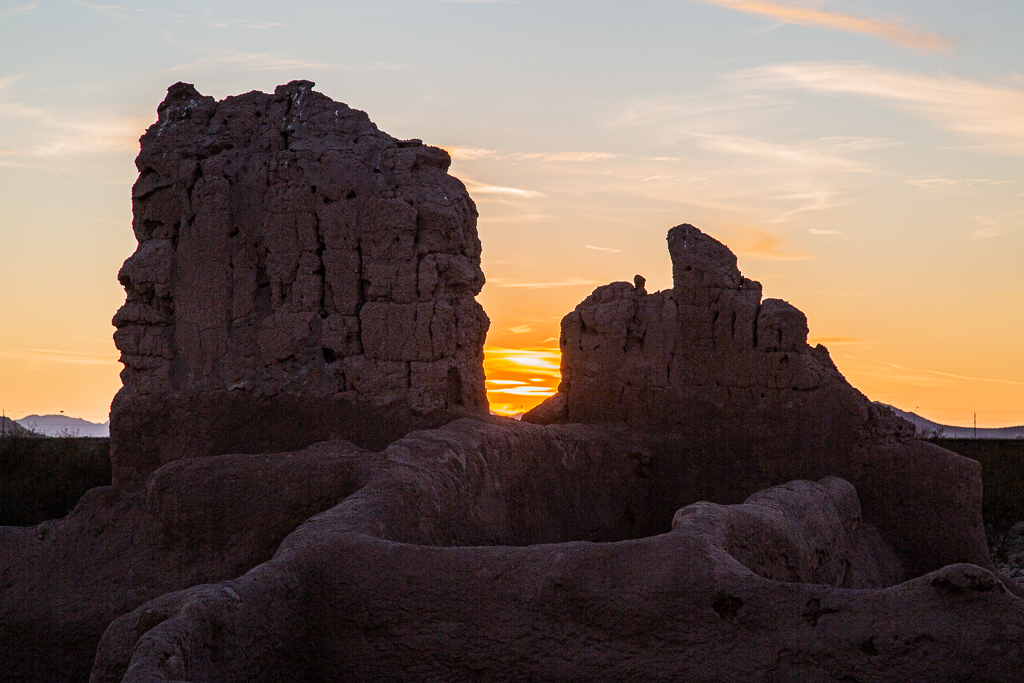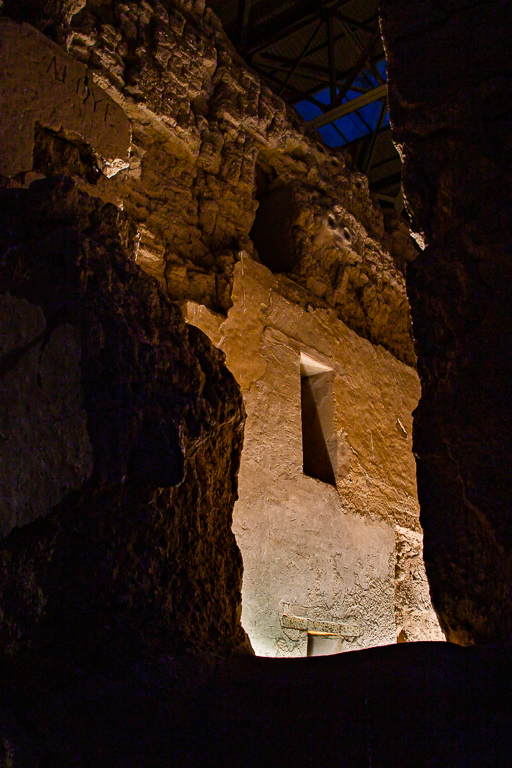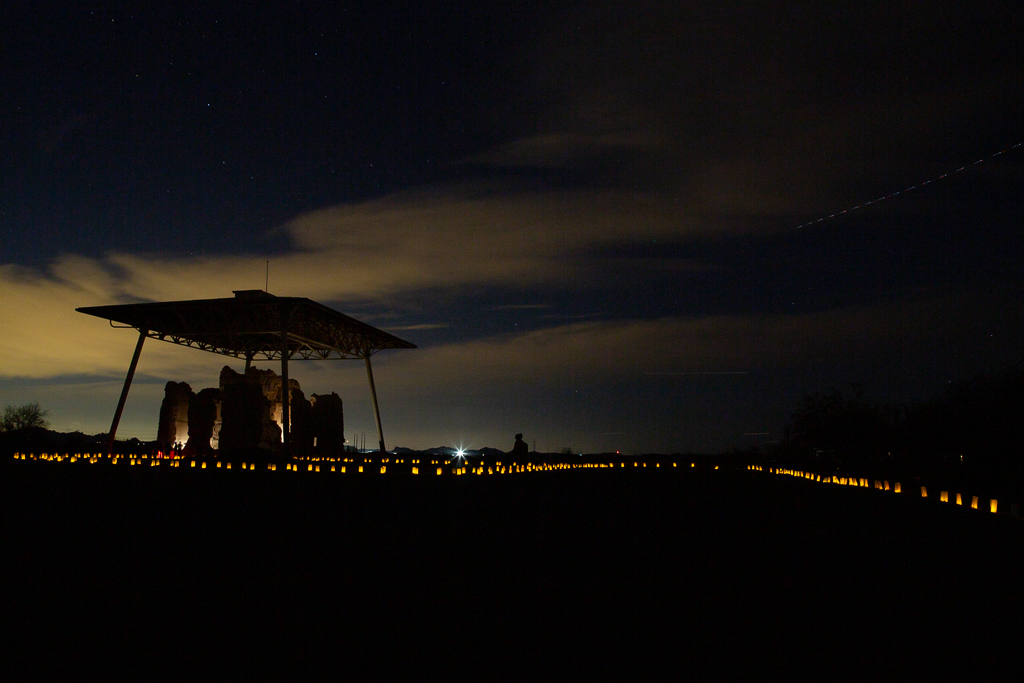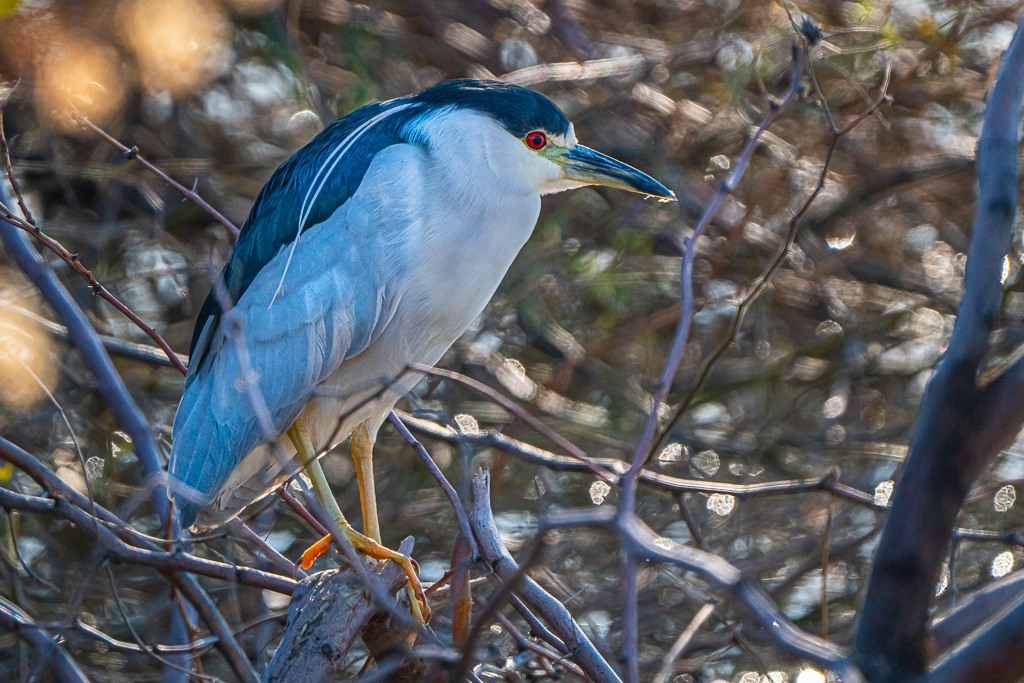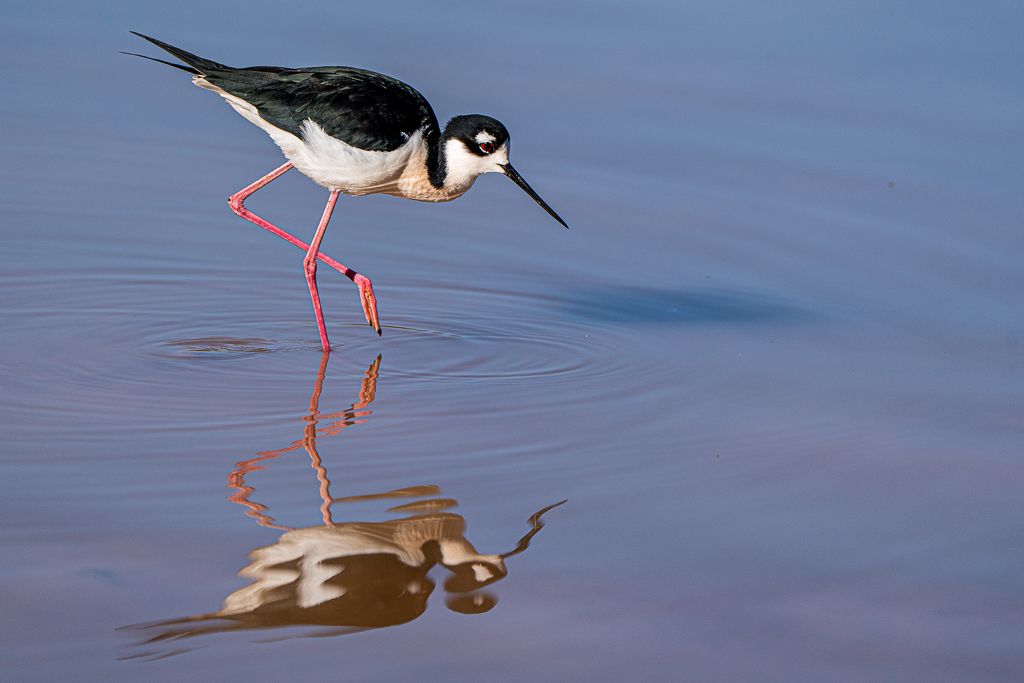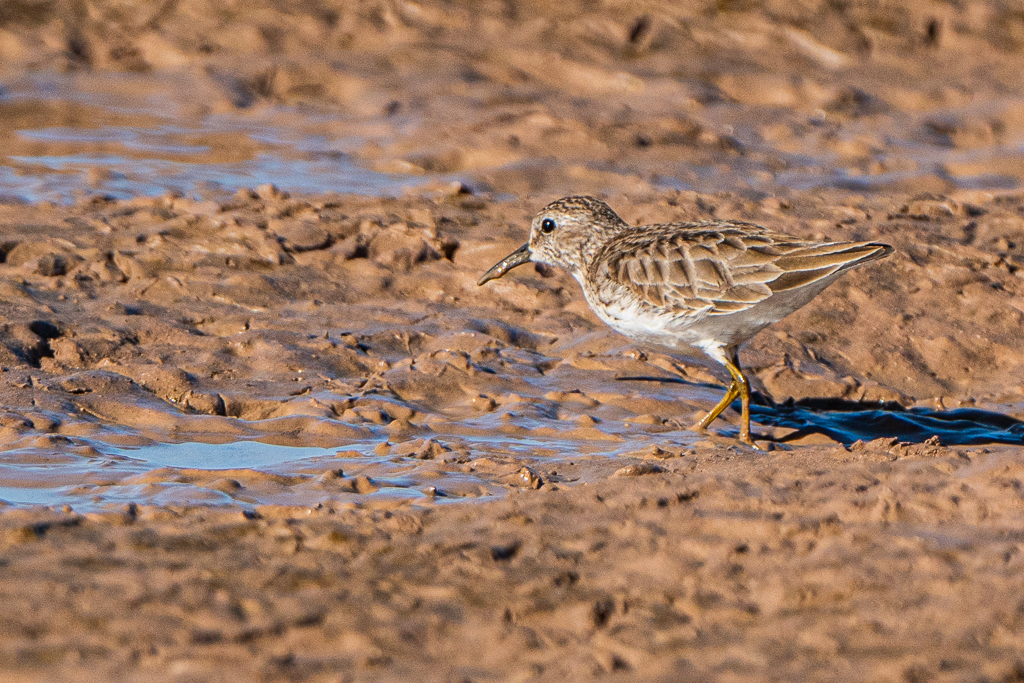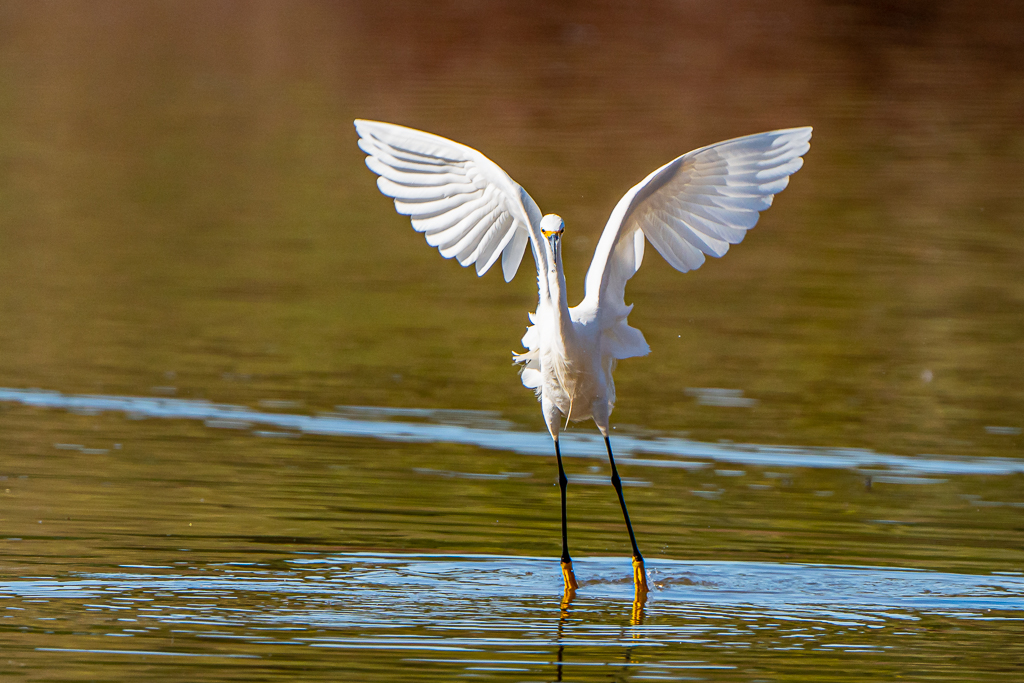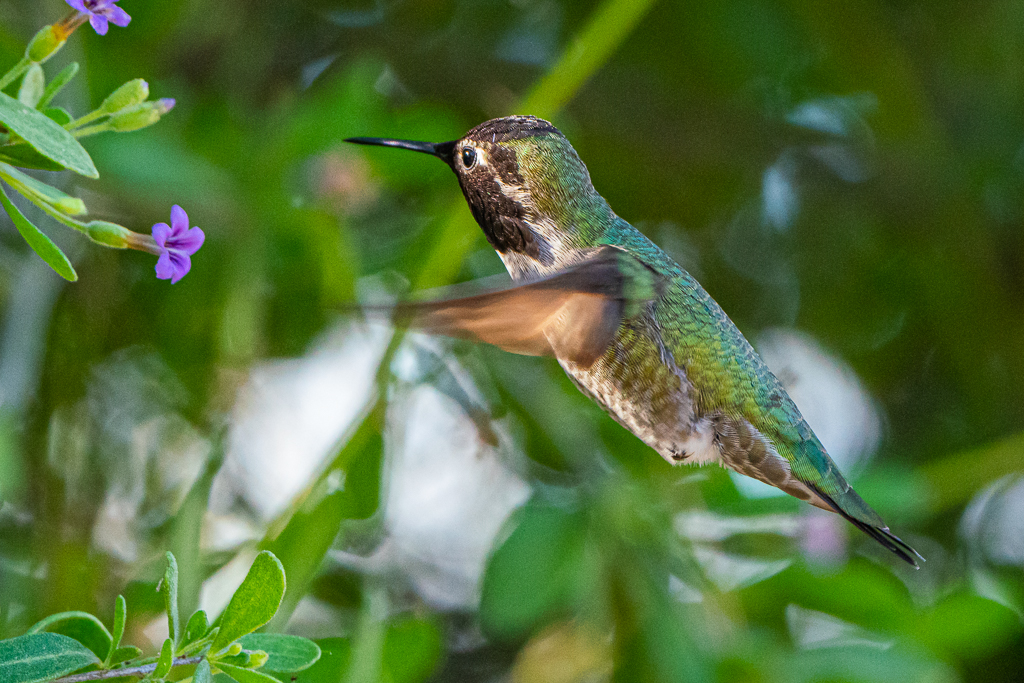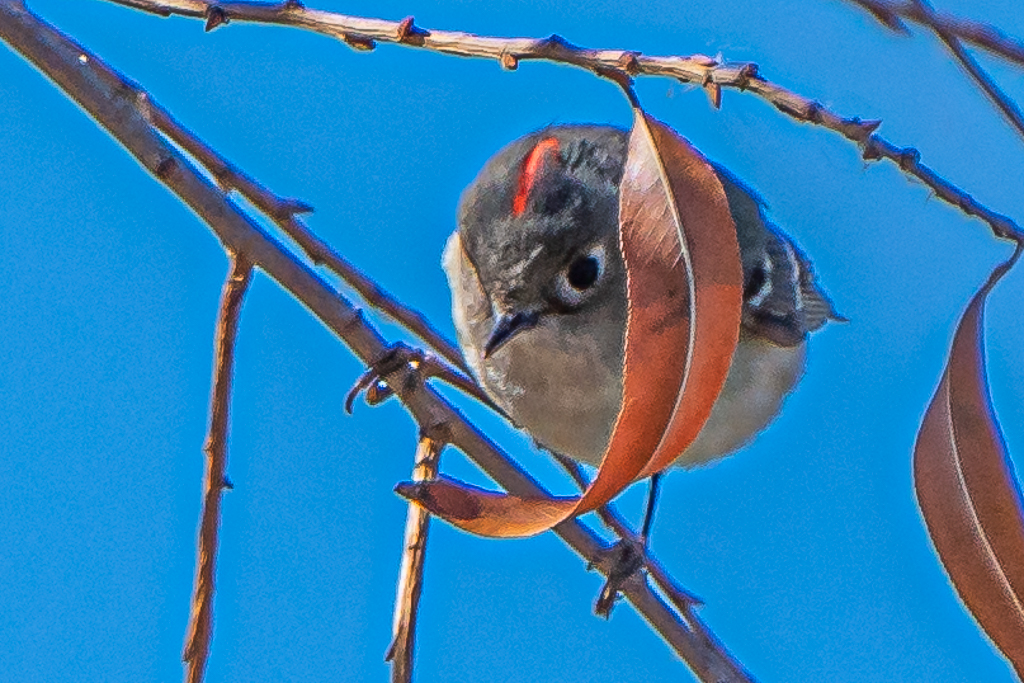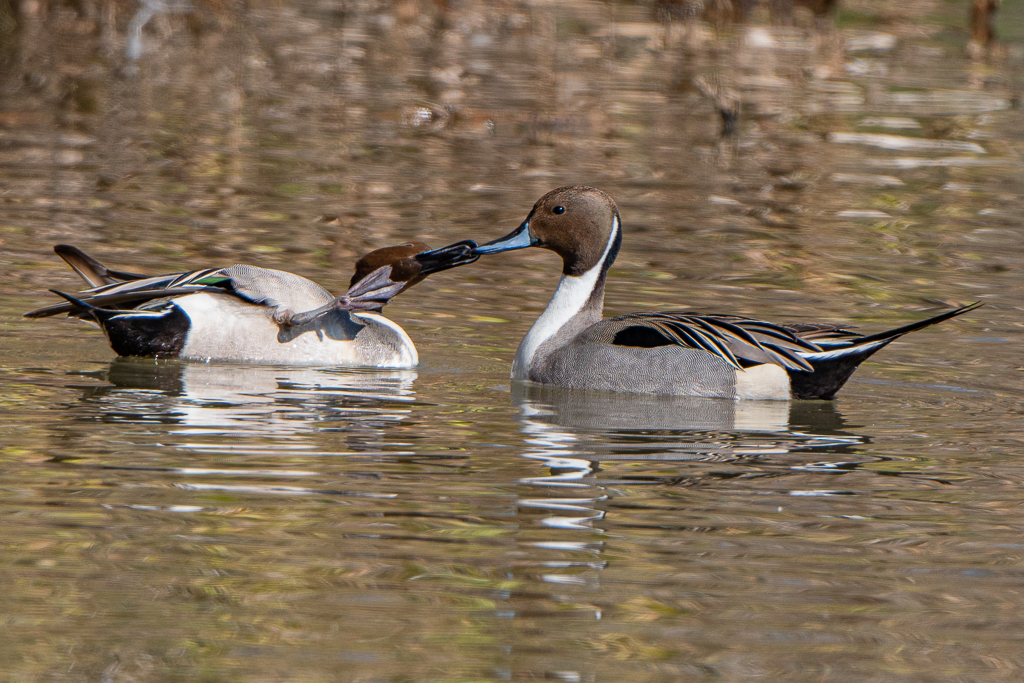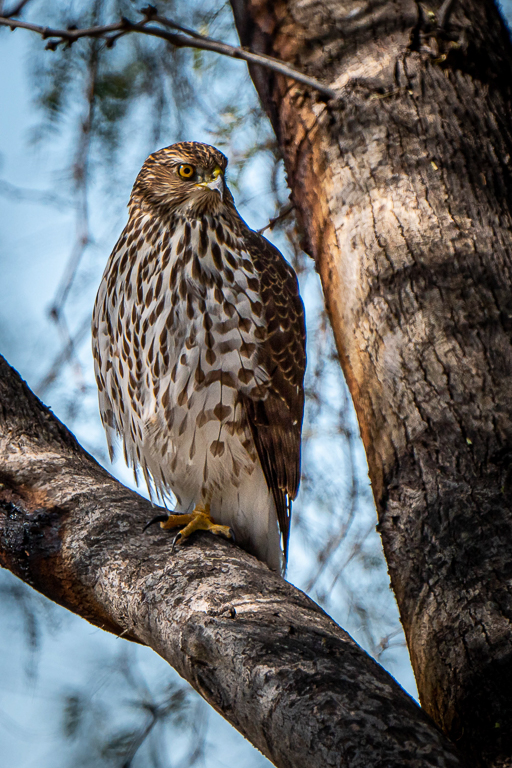
Departing early in the morning, I drove to Veteran’s Oasis Park in Chandler for one last visit this winter. A few birds posed as I walked the trails. I returned to Palm Creek, and then left before sunset to visit the normally closed Casa Grande National Monument for a luminary ceremony honoring the birthday of its first caretaker. There were a number of people there, many with children, making slow-speed photography (nighttime) difficult at best. I left there driving to the Tucson International Airport to pickup Kay returning from Arkansas. The airport provides a “cell phone” parking area near the gates for cars waiting on incoming passengers; after having arrived, the passenger may phone their pickup in the parking lot—neat and handy. Kay was glad to be back to great weather in Arizona.
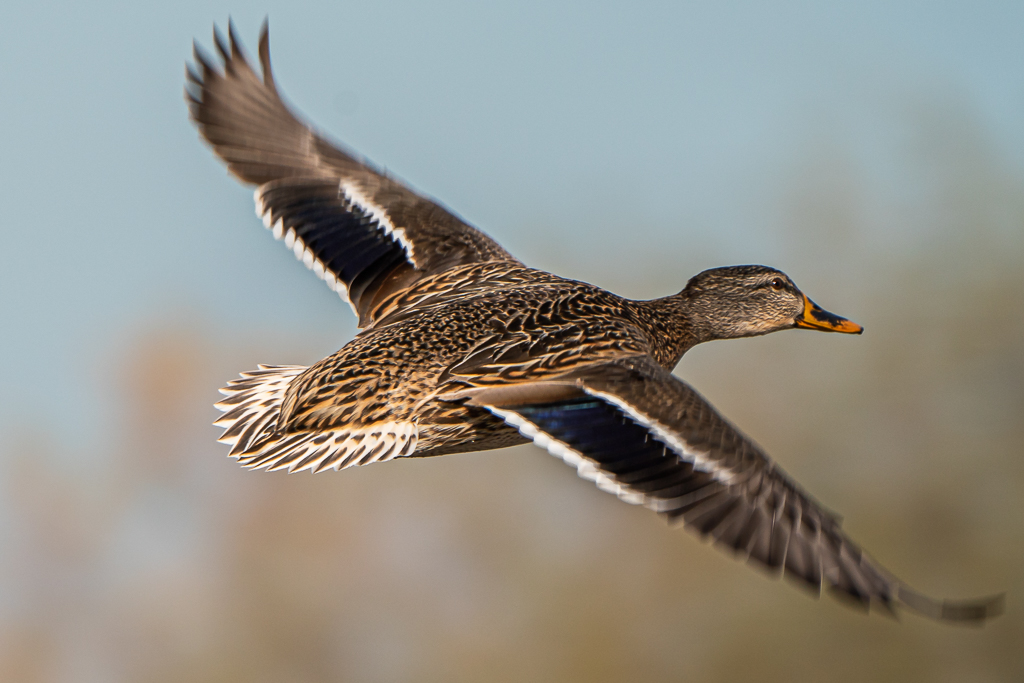
I took advantage of the alone time to bird and photograph extensively. I visited GWR on Friday and Monday while participating in pickleball and golf with the Hot Springs Village group and editing photographs over the weekend. Of course, I used today (Tuesday) to tidy up and neaten the RV before Kay returns tomorrow.
Kay caught a flight out of Tucson today to return home to assist in the post op care of BFF Pam. This gave me the opportunity to bird and photograph extensively (hogging the only car we have in Arizona). First on the list was the Sweetwater Wetlands in Tucson. The Sweetwater Wetlands is one of the most important functional, environmental, and educational components of the City of Tucson’s reclaimed water system. The facility was originally constructed in 1996 to handle backwash filter water from the reclaimed water plant. The wetlands now uses reclaimed water exclusively, helping treat secondary effluent and backwash from the reclaimed water treatment system at the now-closed Roger Road Wastewater Treatment Plant. Sweetwater Wetlands serves as an environmental education facility and habitat for a wide variety of wildlife. Paths, both paved and unpaved, visit all the ponds and give a view to the large detention basins to the south, which when containing water attract wading birds and shore birds. Rarities seen at Sweetwater over the years include Groove-billed Ani, Least Grebe, Chestnut-sided Warbler, Baltimore Oriole, and many others. The area consists of several ponds surrounded by cattails, willows, and cottonwoods. Ducks visit the ponds while Red-winged, Yellow-headed, and Brewer’s blackbirds frequent the cattails. Thick stands of saltbush provide cover to Song Sparrows, Abert’s Towhees, wrens, and many other species. While I enjoyed walking around the facility, it did not have as much to offer today as those we visited near Phoenix.
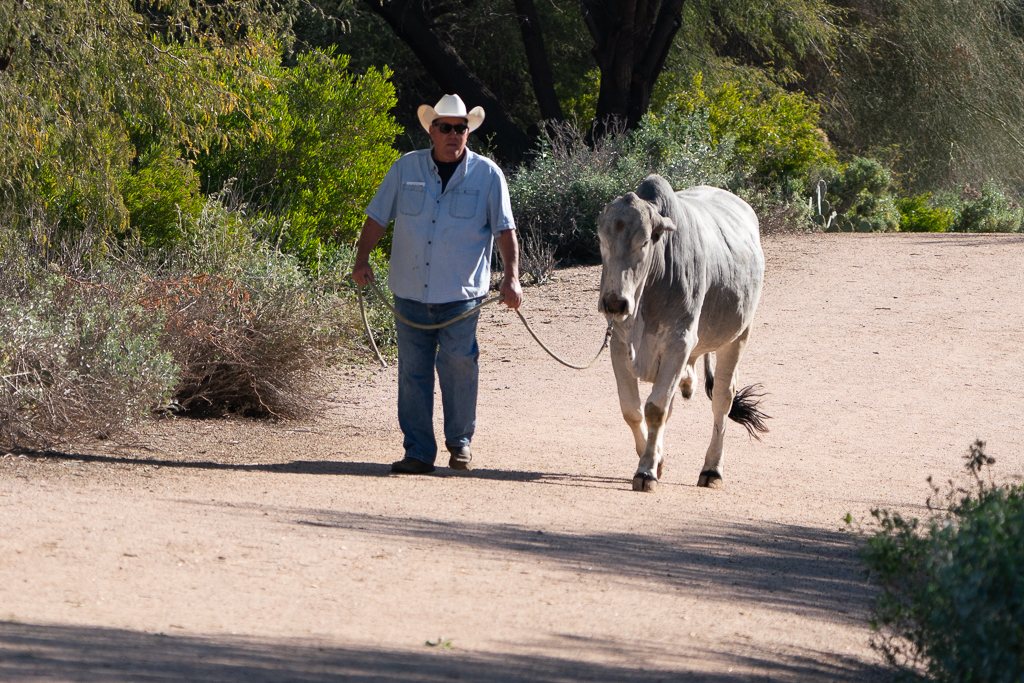
Ruby-crowned KingletThis isn’t a bird!Ruddy DuckCommon Yellowthroat
Continuing to look for the Vermillion Fly Catcher, I returned to Veteran’s Oasis Park in Chandler. Though there were no Vermillion Fly Catchers, but a number of other birds posed for photographs. It was a great day.
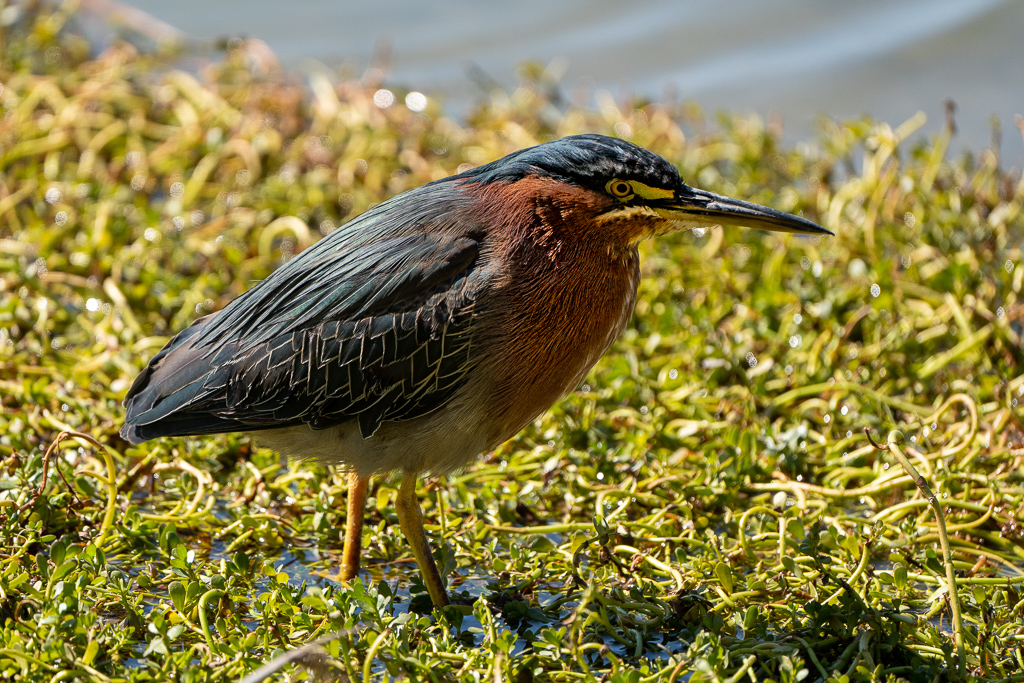
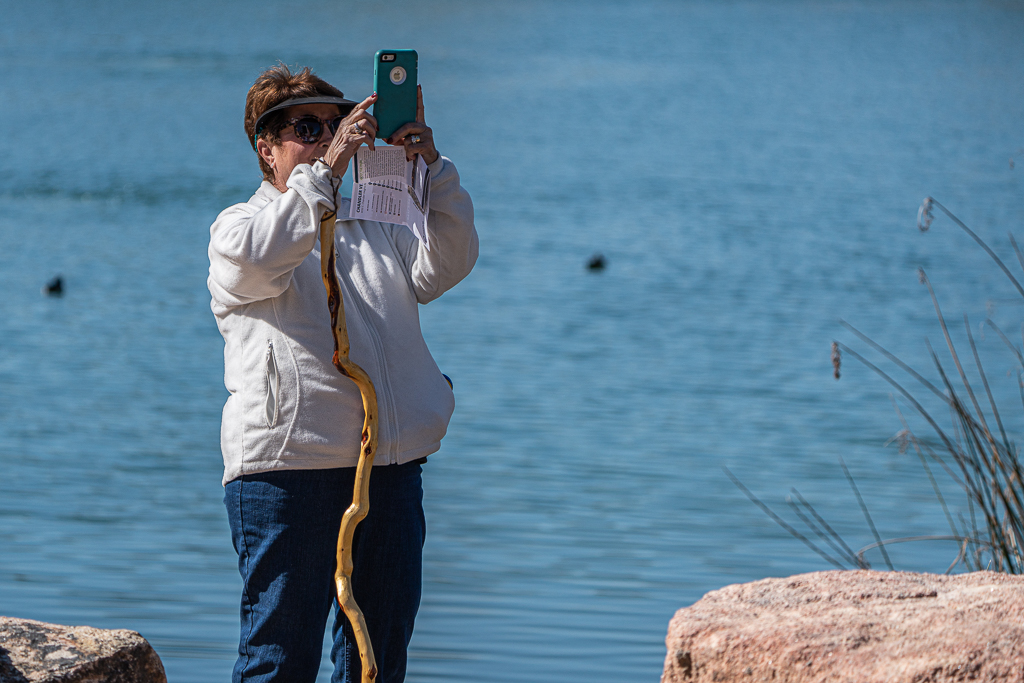
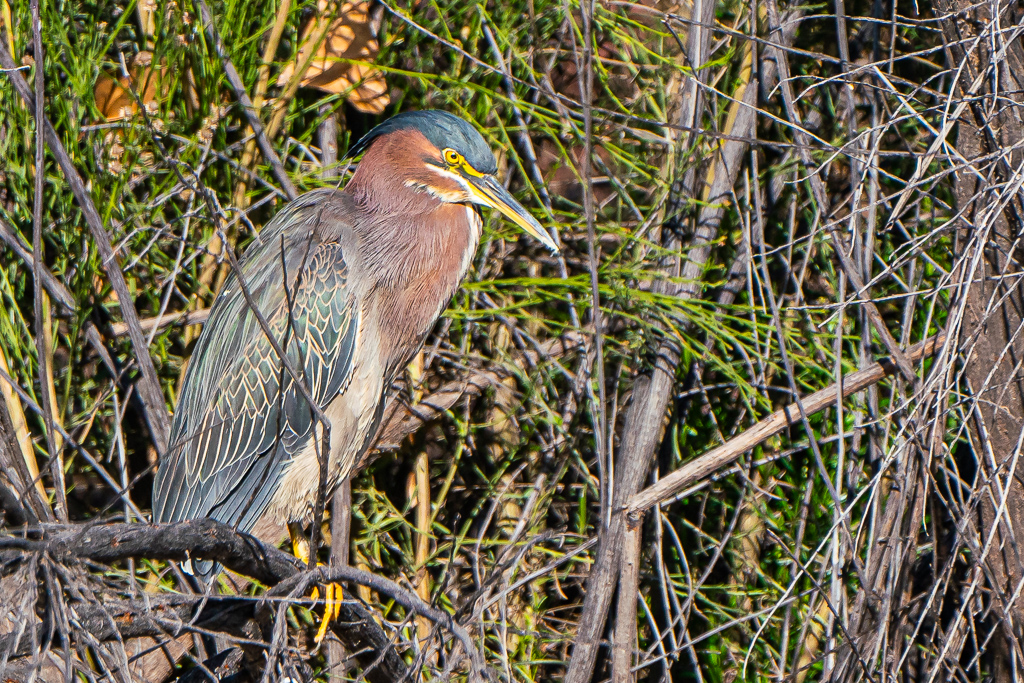
Costa’s HummingbirdNorthern Pintail DuckCooper’s hawkGreater RoasrunnerGreen HeronKay has a great eye for photography
This weekend’s long jaunt was to Superior, Arizona, on the way to Tonto National Monument.
Near Superior, Boyce Thompson Arboretum is located in the heart of the Sonoran Desert, just one hour east of Phoenix, Arizona. Three miles of garden paths and trails wind through 392 acres of plant exhibits and striking landscapes. Over 2,600 different types of plants from the deserts of Australia, North and South America, southern Africa, and other arid-land regions of the world blend seamlessly into an incomparable natural setting. Agaves, aloes, boojum trees, cork oaks, jujube trees, legume trees, and, in the Eucalyptus grove, one of the largest red gum Eucalyptus trees (“Mr. Big”) in the United States. Cacti and succulents grow extensively throughout the Arboretum. Nestled along Queen Creek at the foot of Picketpost Mountain, the Arboretum is a haven for plant lovers, photographers, birders, and nature enthusiasts of all ages. Boyce Thompson Arboretum is the largest and oldest botanical garden in the state of Arizona. It is one of the oldest botanical institutions west of the Mississippi. Founded in 1924 as a desert plant research facility and “living museum”, the Arboretum is located in the Sonoran Desert on 392 acres (158.6 ha) along Queen Creek and beneath the towering volcanic remnant, Picketpost Mountain. Boyce Thompson Arboretum is on U.S. Highway 60, an hour’s drive east from Phoenix and 3 miles (4.8 km) west of Superior, Arizona. Exhibits at the arboretum include a cactus garden, palm and eucalyptus groves, an Australian exhibit, South American exhibit, aloe garden and an herb garden. There are also side trails such as the Chihuahuan Trail, Curandero Trail, and High Trail. Because the BTA is a riparian zone, the park attracts Sonoran Desert wildlife and migrating birds. Visitors have seen bobcats, javelinas, coatimundis, rattlesnakes, gila monsters, hawks, hummingbirds, and vultures. 270 bird species have been spotted in the park and the Audubon Society has designated the Arboretum as an Important Bird Area. It was here that I saw butterflies for the first time this year.
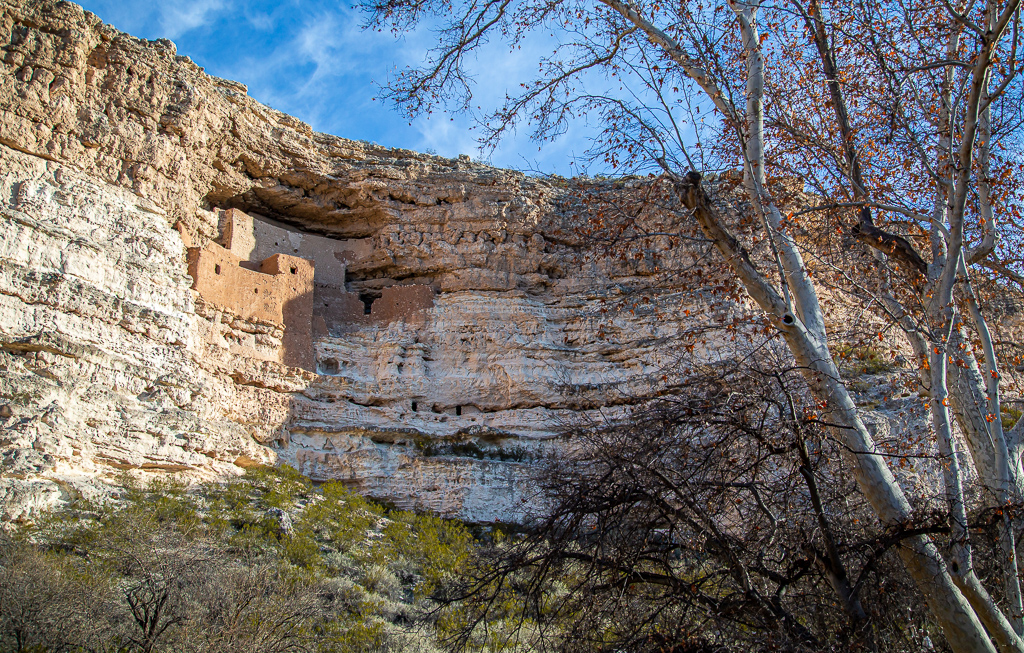
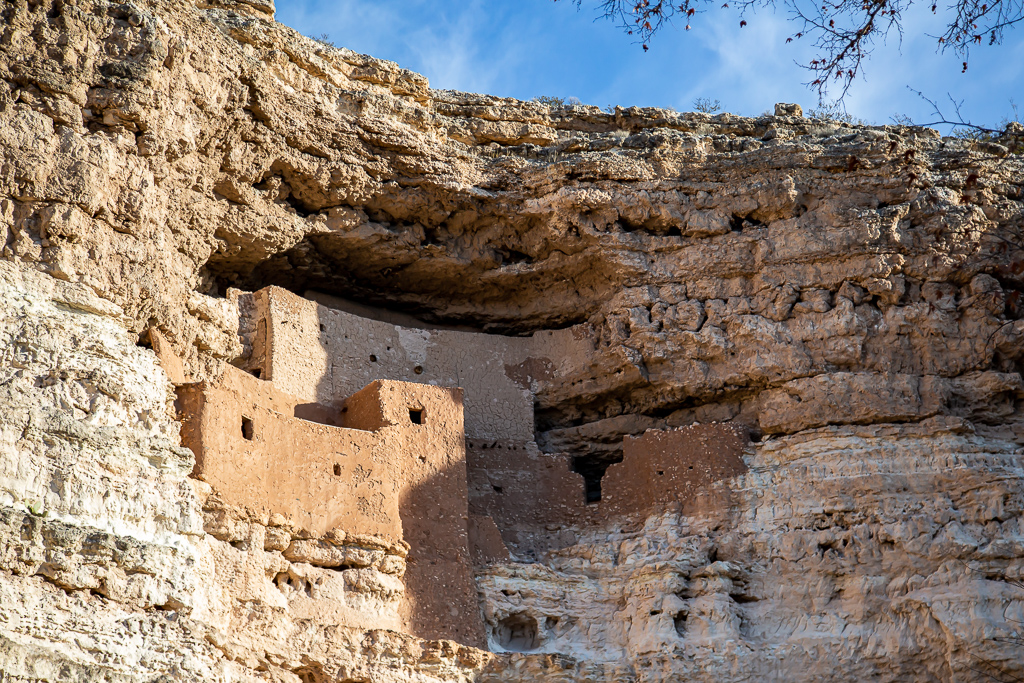
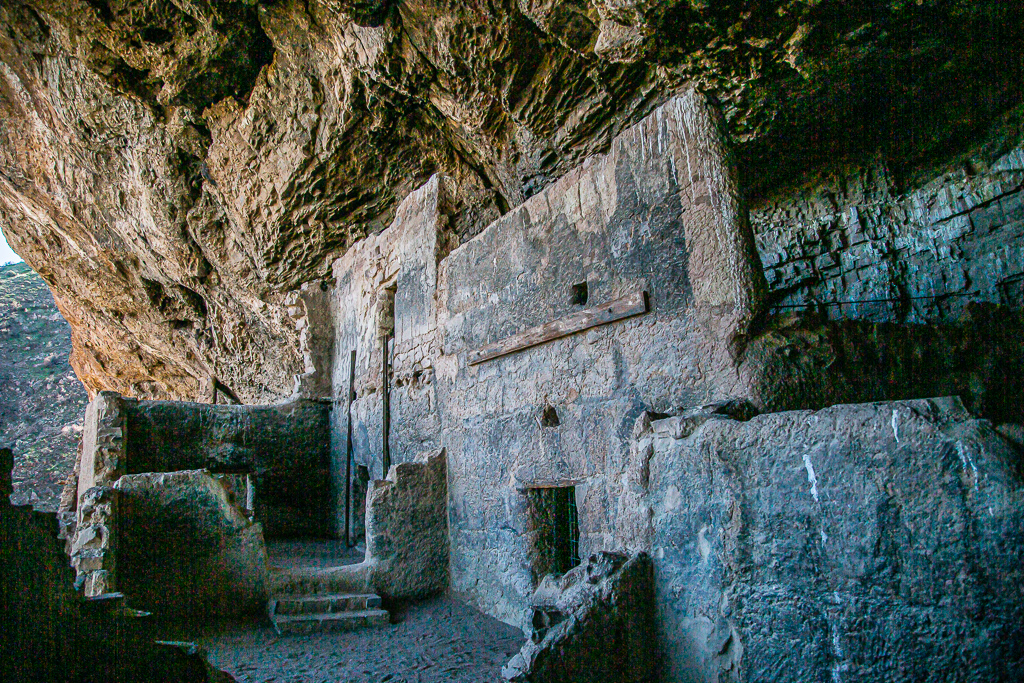
From Superior we drove east and north to Tonto National Monument in the Superstition Mountains, in Gila County of central Arizona. The area lies on the northeastern edge of the Sonoran Desert ecoregion, an arid habitat with annual rainfall of about 16 inches. The Salt River runs through this area, providing a rare, year-round source of water. The monument was established to preserve and protect cliff dwellings from the Salado culture built during the 13th, 14th, and early 15th centuries. The Salado people farmed in the Salt River Valley, and supplemented their diet by hunting and gathering native plants. The Salado were fine craftspeople, producing some of the most flamboyant polychrome pottery and intricately woven textiles to be found in the Southwest. We made the steep climb with only a few stops and enjoyed views of the surrounding landscape from sites along the trail. The preserved cliff dwellings were like many others we had seen in Arizona and New Mexico, and makes one marvel at the efforts of the Salado people.
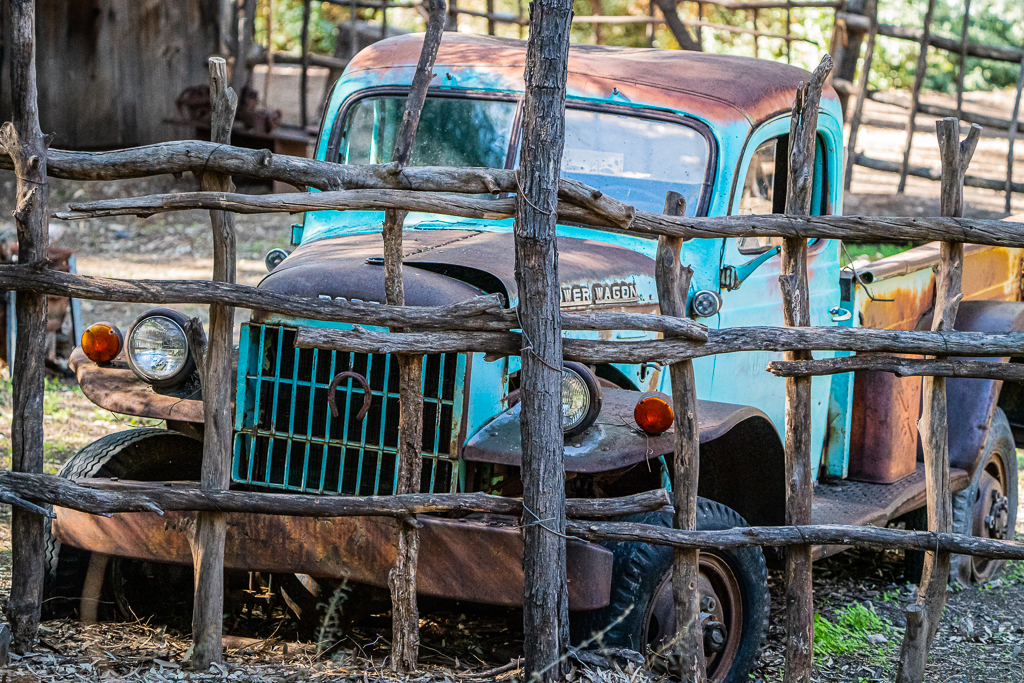
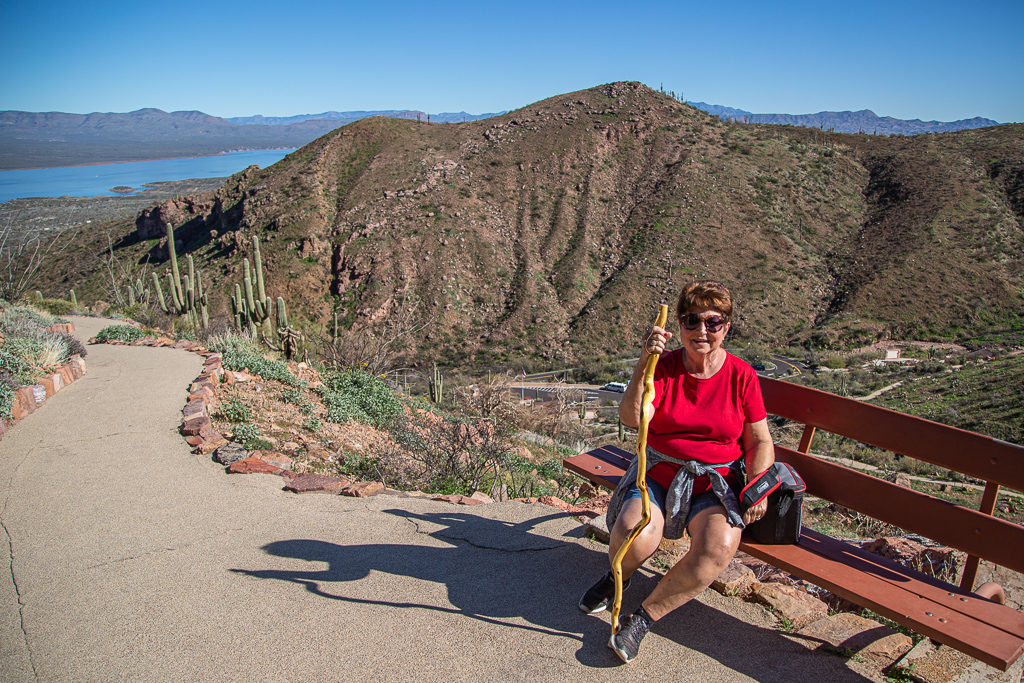
Old truck, always an interesting storyKay along the steep, winding trailCliff dwellings high on the mountainKay awaiting one more switchbackThe ruins were impressiveSpectacular view of Roosevelt Lake
Hot Springs Village foursome played golf today at Quarry Pines Golf Club (formerly known as The Pines Golf Club at Marana). It was a unique course offering a mix of dramatic elevation changes and stunning mountain views with 18 enjoyable holes. In 2000, following a decision to abandon the sand and gravel quarry adjacent to the original golf course, the Town of Marana and the quarry/golf course owner agreed on a plan that would reclaim the quarry. By relocating 10 golf holes into the old quarry and reconfiguring 8 of the existing holes one of Tucson’s most popular golf courses was transformed. Today the unique desert landscape is highlighted by dramatic elevation changes and the addition of thousands of trees. It was a difficult and challenging course.
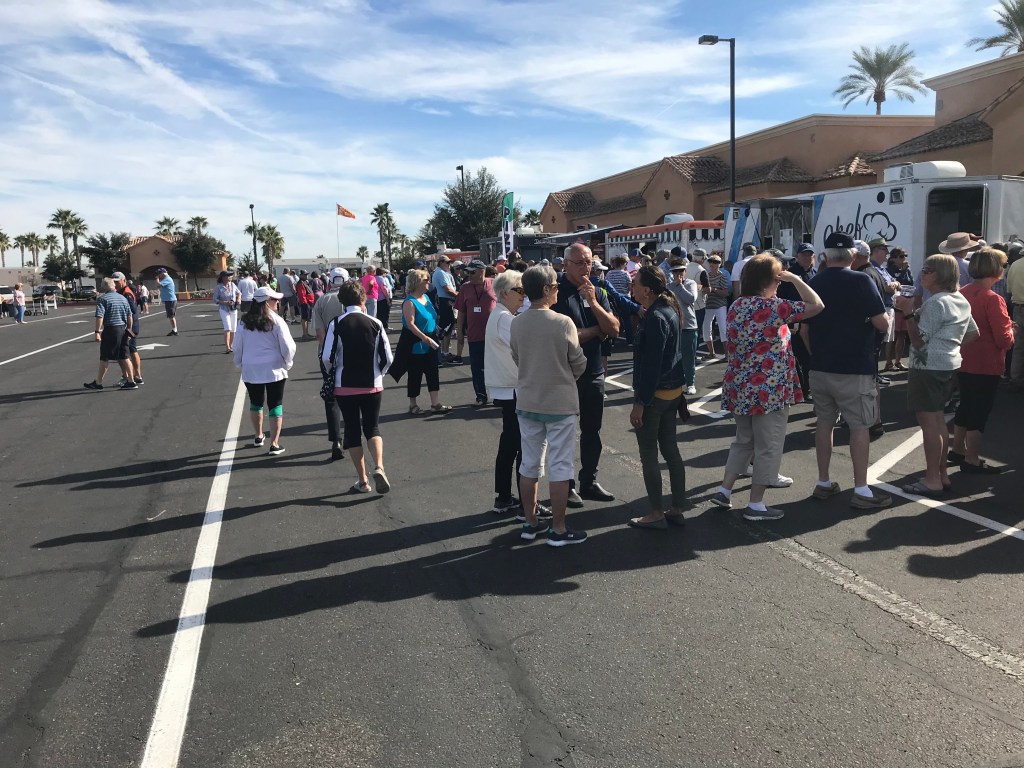
Music, food, balloons, and vendors; what else could one ask for. Cancer Awareness Weekend is a big deal at Palm Creek. Friday, the street was blocked off and food trucks occupied the otherwise busy “thoroughfare”. Table and chairs were set up in the plaza and a great band played on the bandstand. It was crowded, but not overly so. We ate lunch and listened to the band for awhile before returning to the RV. Since it was Friday, the Hot Springs Villagers gathered for pickle ball, after which we joined the crowd to observe the lighted hot air balloons. It was a sight to behold.
Listening to the bandPrimary street blocked for food trucksLighted hot air balloons
Noting bird locations on a popular Facebook site, Veterans Oasis Park in Chandler, AZ, was mentioned several times as hosting a Vermillion Flycatcher (of which I wanted to make a photograph). We made the relative short drive to Chandler, another suburb of Phoenix, to visit the park. Veterans Oasis Park and Environmental Education Center was opened as a mixed-use facility in April 2008. The center includes four classrooms for wildlife preservation and environmental awareness, exhibit areas, outdoor amphitheater, nature store and an urban fishing lake, all surrounded by more than four miles of trails. A primary purpose of the facility is to recharge reclaimed water into the ground for later use. Entrance to the Environmental Education Center is free and visitors are welcome to view the exhibits and walk the trails around the urban fishing lake. Though not as well known as the GWR, it is nevertheless a wonderful place to bird and make photographs, including hummingbirds in flight.
Our Sunday drive took us to the Arizona Sonora Desert Museum in Tucson. The Desert Museum is ranked on TripAdvisor.com as one of the Top 10 Museums in the country and the #1 Tucson attraction. Unlike most museums, about 85% of the experience is outdoors! The 98-acre Desert Museum is a fusion experience: zoo, botanical garden, art gallery, natural history museum, and aquarium.
21 interpreted acres with two miles of walking paths through various desert habits
242 animal species
Plants from 1,200 taxa — 56,000 individual specimens
One of the world’s most comprehensive regional mineral collections
The Museum is regularly listed as one of the top ten zoological parks in the world due to its unique approach in interpreting the complete natural history of a single region (in our case this is the Sonoran Desert and adjacent ecosystems). This represents a significant achievement, as the Museum’s collections and size are smaller than many of its counterparts. Not a “museum” in the usual sense, it is an unparalleled composite of plant, animal, and geologic collections with the goal of making the Sonoran Desert accessible, understandable, and valued. The Museum’s living animal collection contains 4,892 specimens of 242 species. Plants number 56,000 specimens of 1,200 taxa; mineral and fossil collections include 16,853 specimens. Represented in the living collections are 110 to 120 species considered to be of conservation concern.
On the way back from Tucson, we stopped at Skydive Arizona. It is the largest skydiving operation in the world, sits near us in Florence, Arizona, halfway between Phoenix and Tucson. Although close to major highways, it is surrounded by flat, uninhabited land for miles in every direction. Visitors remark on the oasis like appearance of the center, which has plenty of grass, a swimming pool, and trees in the midst of an otherwise barren desert. Around the central building, which houses offices, aircraft manifesting, classrooms, and an indoor packing area, one can find everything a skydiver needs. Equipment sales, food, a shower and laundry facility, grassy camping area, recreation hall with bunks for overnight guests, and a basketball court are some of the many amenities. The fleet is led by 4 Super Otters and 7 Skyvans, each capable of taking 23 skydivers to 13,000 feet. A venerable DC-3, once the workhorse of the fleet, carries the occasional load of 43 jumpers. Rounding out the flightline is a Pilatus Porter. Altogether, these airplanes can put over 240 skydivers at a time in the air, or over 500 jumps an hour!
CougarHeart-shaped CactusCactus WrenCanyon WrenRufous HummingbirdSkydiver coming in for a landing
We made another trip to Gilbert Water Ranch; this place is addicting for bird photography! There are so many trails it’s hard to cover them all at one visit. And, the shorebirds and waterfowl are plentiful, and sometimes cooperated by remaining close enough to photograph. Even a few dragonflies were out today.
Nestled away about an hour south of Phoenix sits Casa Grande. Commonly thought of as the halfway point between Tucson and Phoenix, Casa Grande is a small city of just over 50,000 residents. While no professional baseball team currently resides in Casa Grande, during the spring or otherwise, the city of Casa Grande does lay claim to its own piece of baseball history. Tucked away in the western part of Casa Grande resides the Francisco Grande, a luxury golf resort with deep roots in Arizona’s Spring Training tradition. That was our golf destination today.
Constructed in 1959 by then San Francisco Giants owner Horace Stoneham, the Francisco Grande was the pinnacle of modern baseball experiences. Named after both the city of San Francisco and Casa Grande, the resort played host to the San Francisco Giants and was designed to offer both guests and players with a high-class experience. Everything about the amenities screamed baseball, from the baseball bat shaped swimming pool, to the baseball diamond shaped flowerbeds, to the overhang on the hotel tower designed to look like the brim of a baseball cap. Coaching platforms oversaw the practice fields and gave the coaches a bird’s eye view of practices. The amenities at the practice facilities were so unique that some called the fields more like a “baseball factory” than actual fields.
This journal was begun several years ago, and reflects an accurate record of each day fished. Please enjoy it, and remember that fish are too valuable to be caught just once, and the places they live are too valuable to be mistreated.