Having taken a short break from making photos, Dan and I traveled to Madera Canyon just east of Green Valley, AZ, to “capture” additional birds.
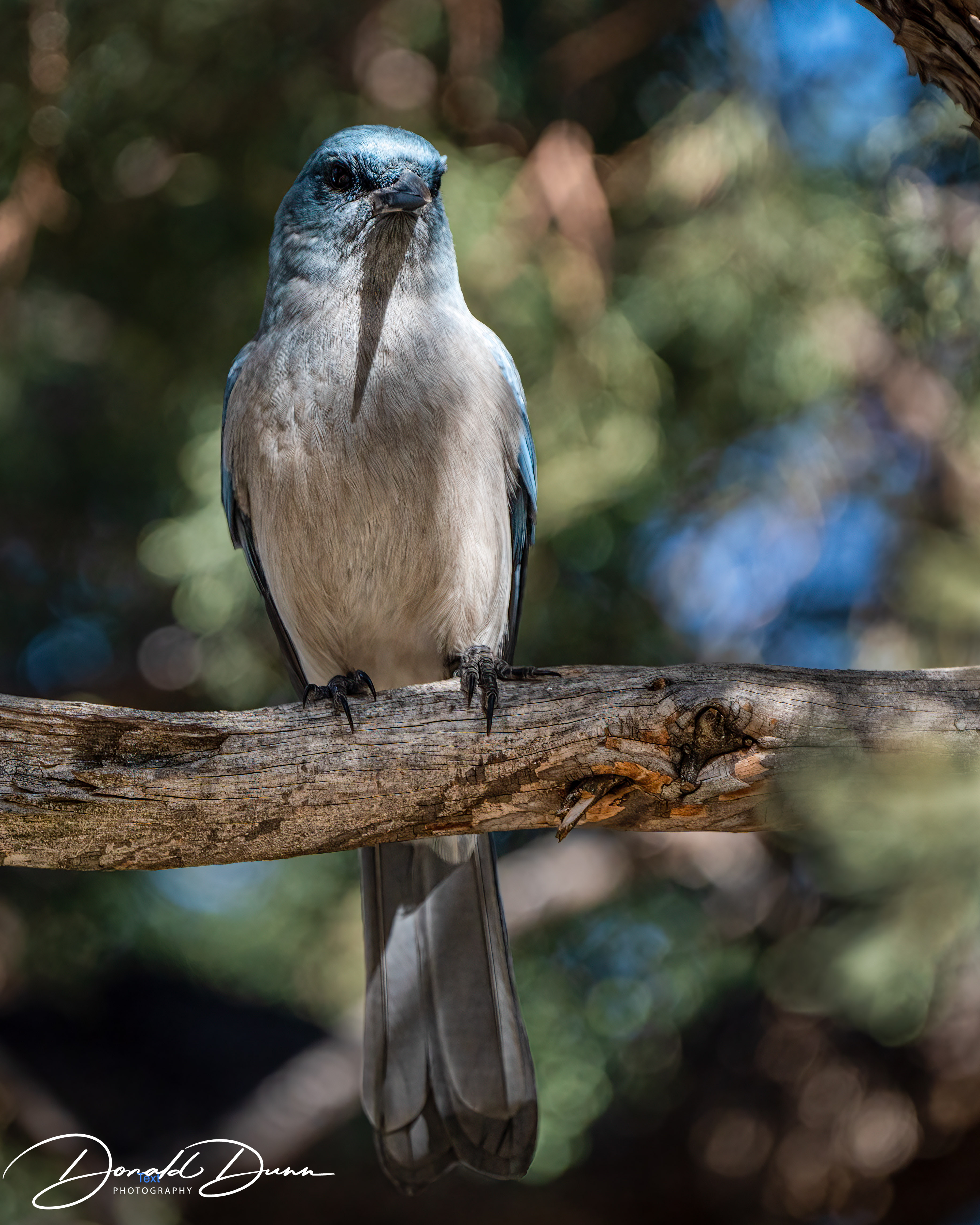
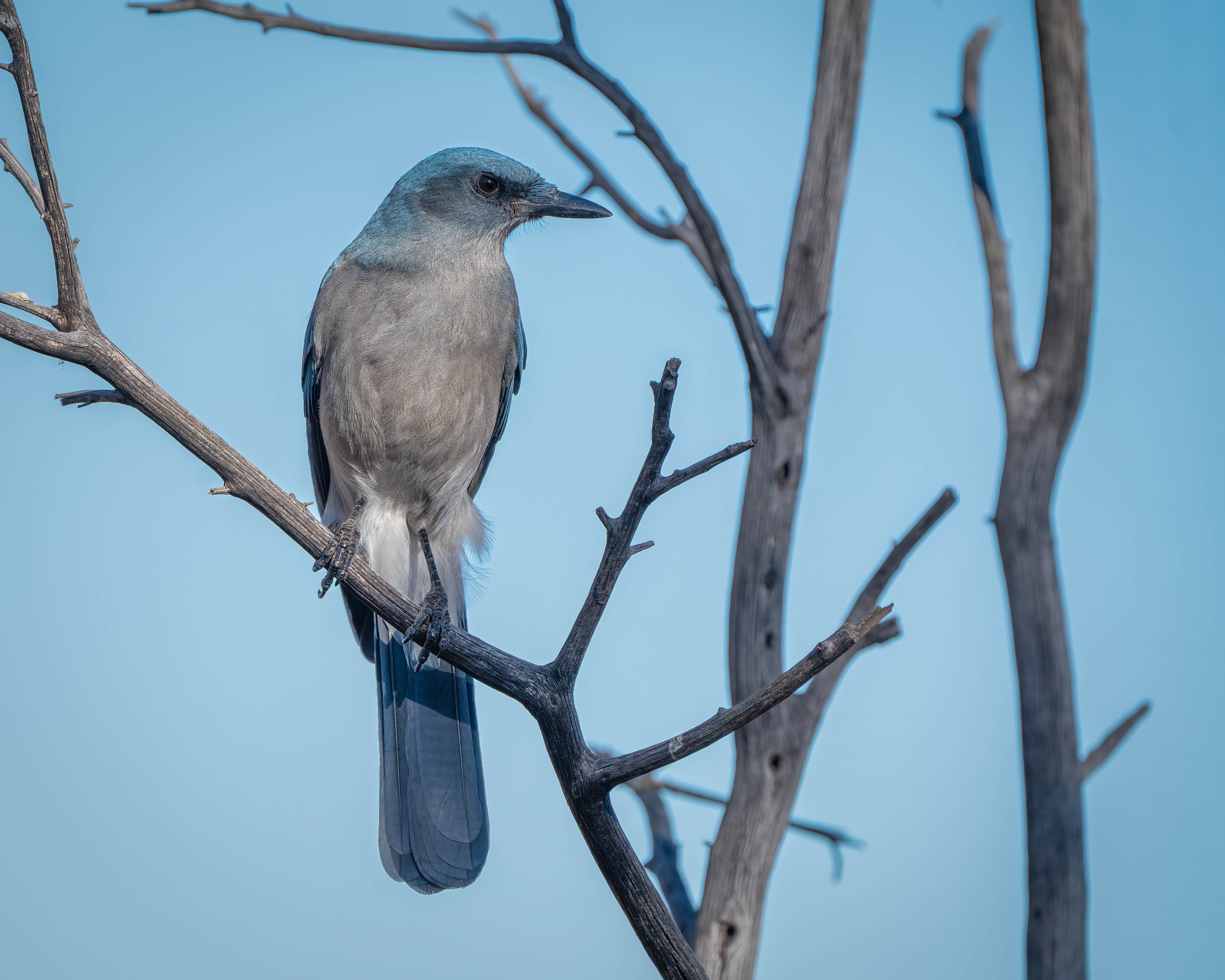
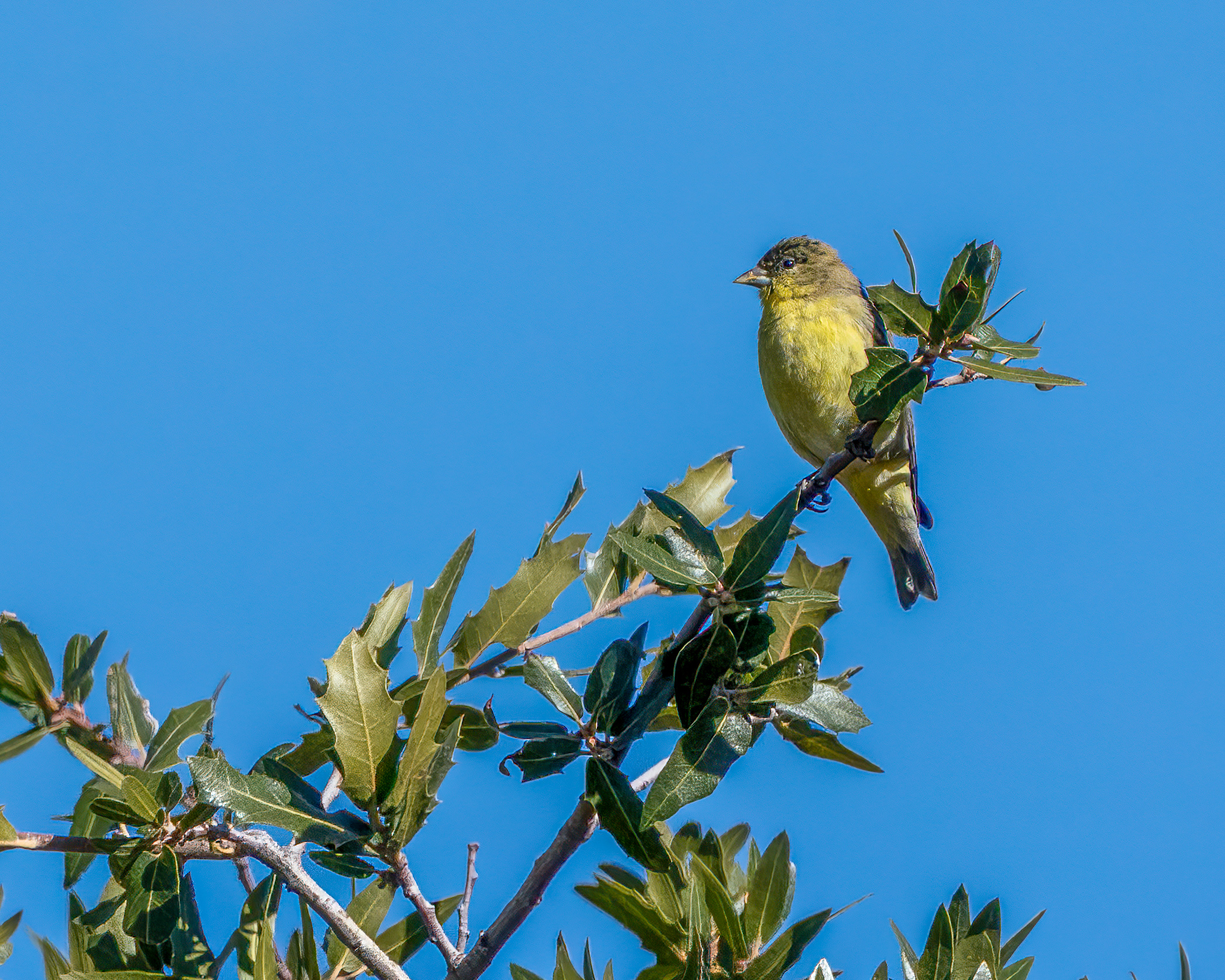
Though we traveled up and down the Canyon, Santa Rita Lodge’s feeding station proved to provide the best opportunities. The regulars were there; Mexican Jays, Yellow-rumped Warblers, Lesser Goldfinches, and Acorn Woodpeckers.
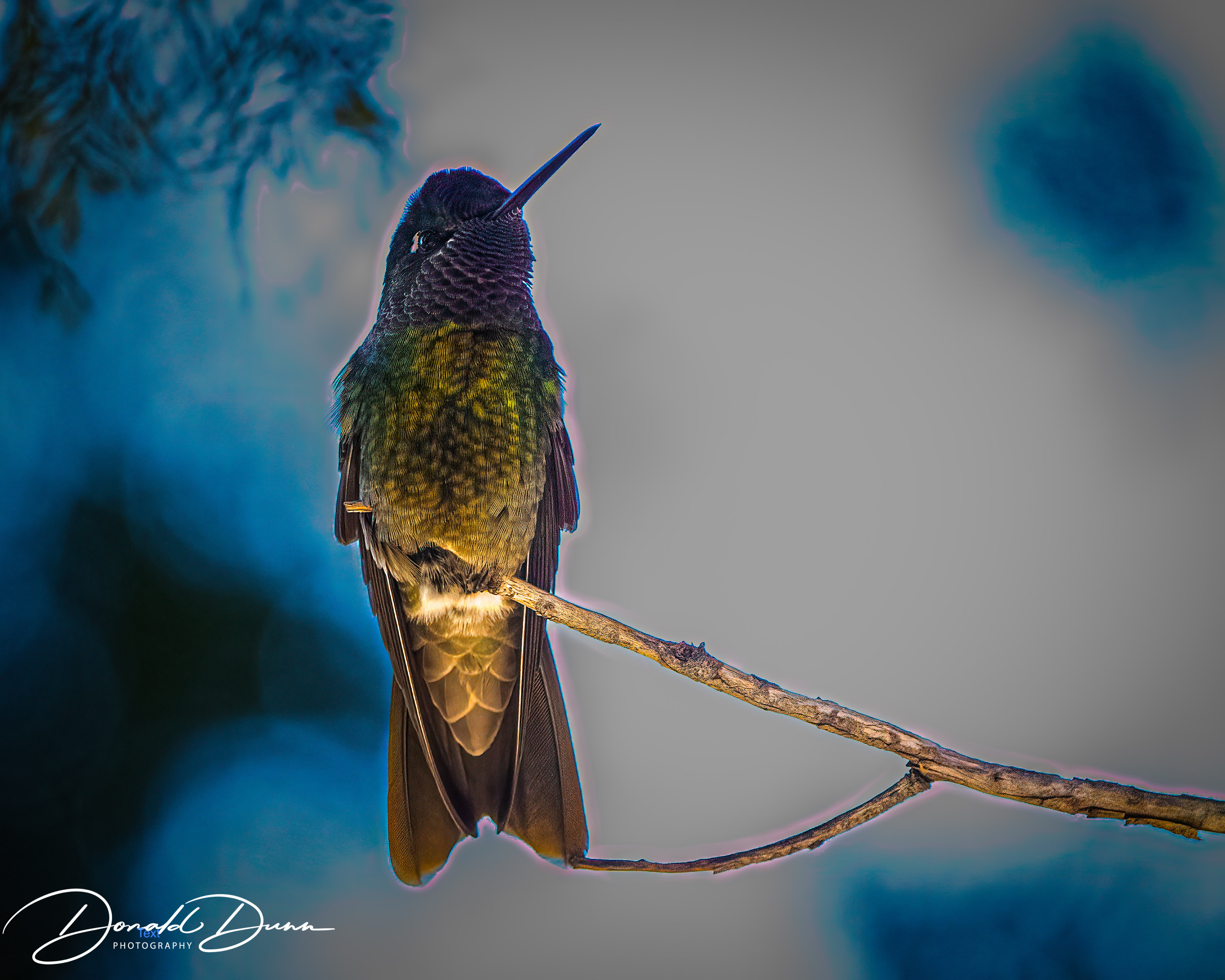
A Rivoli Hummingbird nectared at a nearby feeder, but did to offer a good photo opportunity.
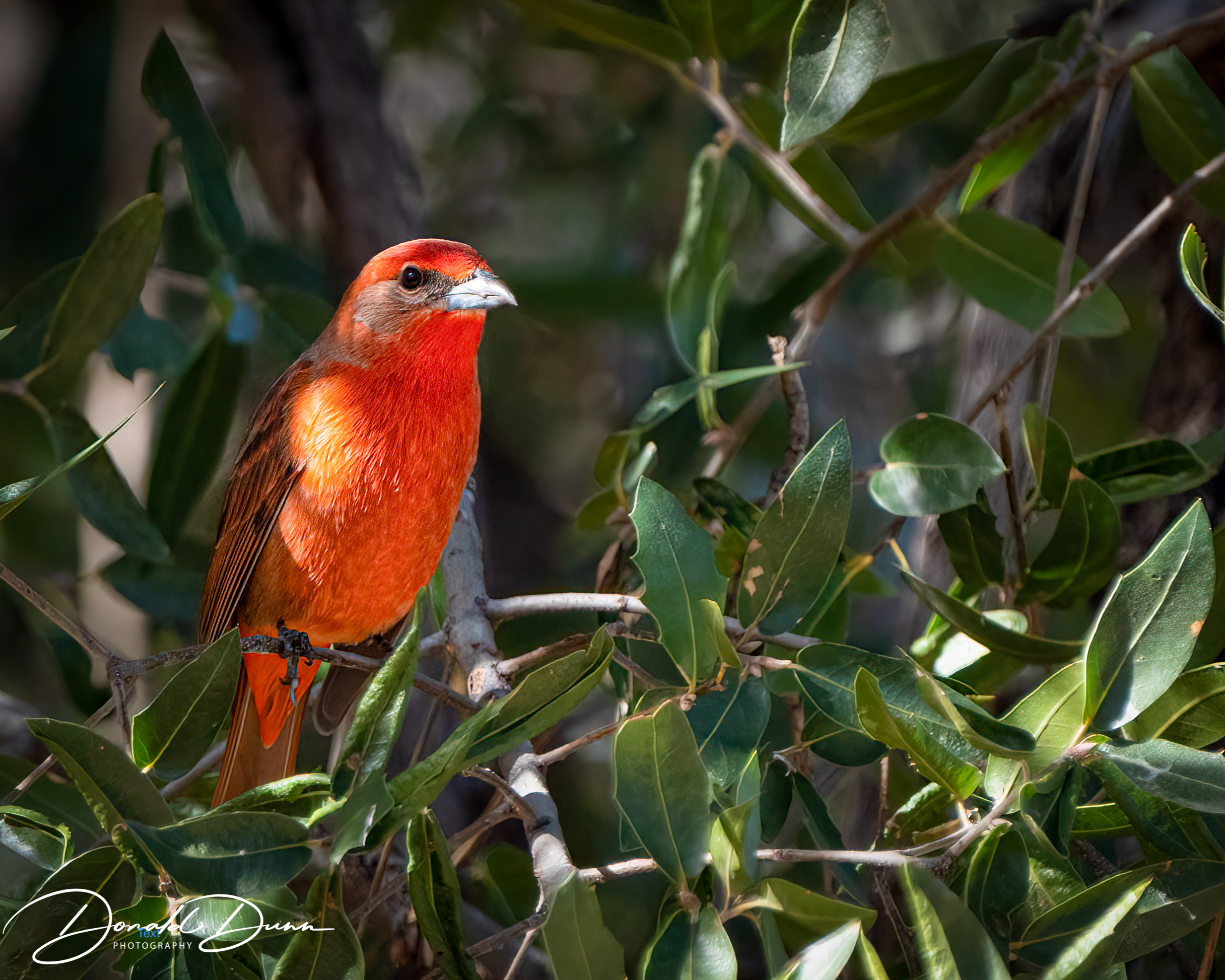
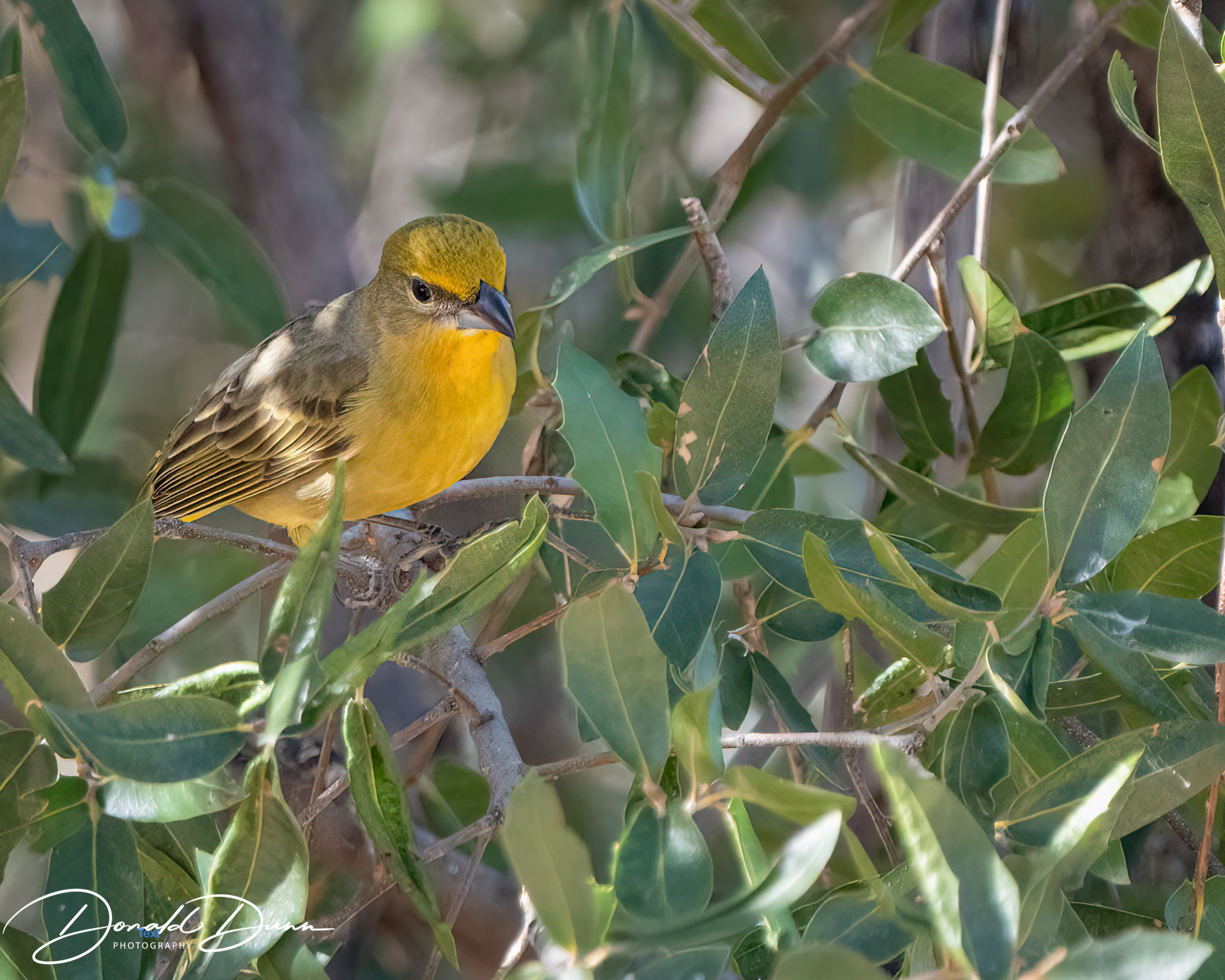
And, all at once, a beautiful orange bird perched in a tree directly facing me. It proved to be a male Hipatic Tanager. Soon, his female partner landed in the tree, and offered a brief pose. These birds were “LIFERS” for me.
A number of Gould’s Turkeys were feeding on seed dropped from the feeders, and the resident Coatimundi wandered from seed pile to seed pile, scarfing up the fallen seeds.
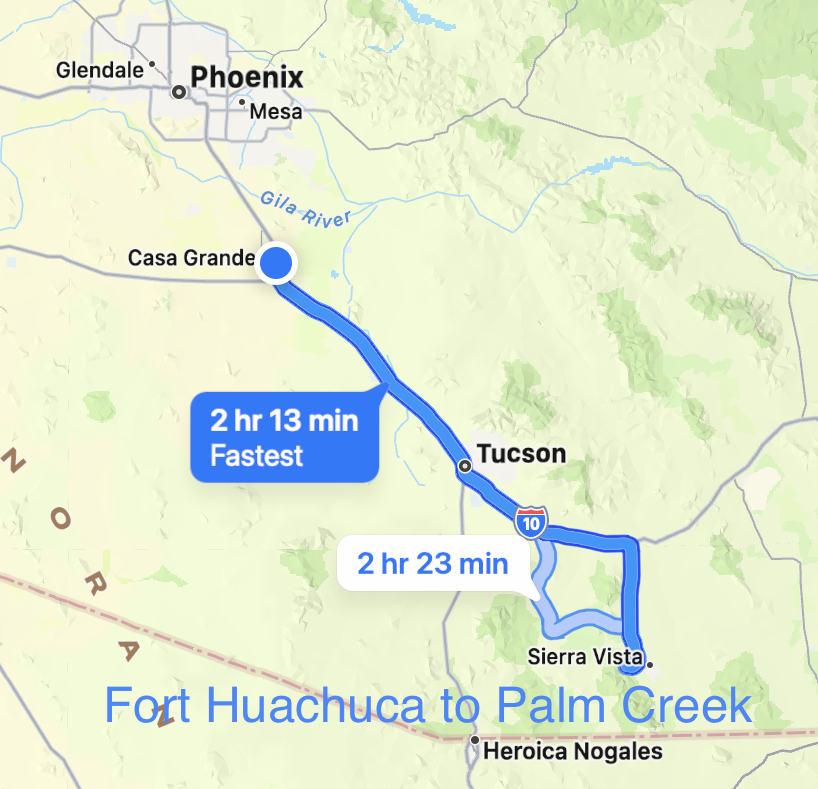
With Apache Flats RV Park at Fort Huachuca in the rearview mirror Wednesday morning, the short drive to Palm Creek Golf and RV Resort in Casa Grande, AZ, was completed about 12 noon. After checking in at Palm Creek and getting photo IDs made, a “Ranger” guided us to the site which will become our winter home. This will make three seasons that Kay and I have stayed at Palm Creek.
The motorhome was positioned on the site, electricity connected, and stabilizing jacks and slides deployed. The bicycles and rack were removed from the Honda CR-V, and the packed to capacity car was unloaded; the site looked like Gypsy Central! After a brief rest, the water softener was recharged and water connected to the motorhome.
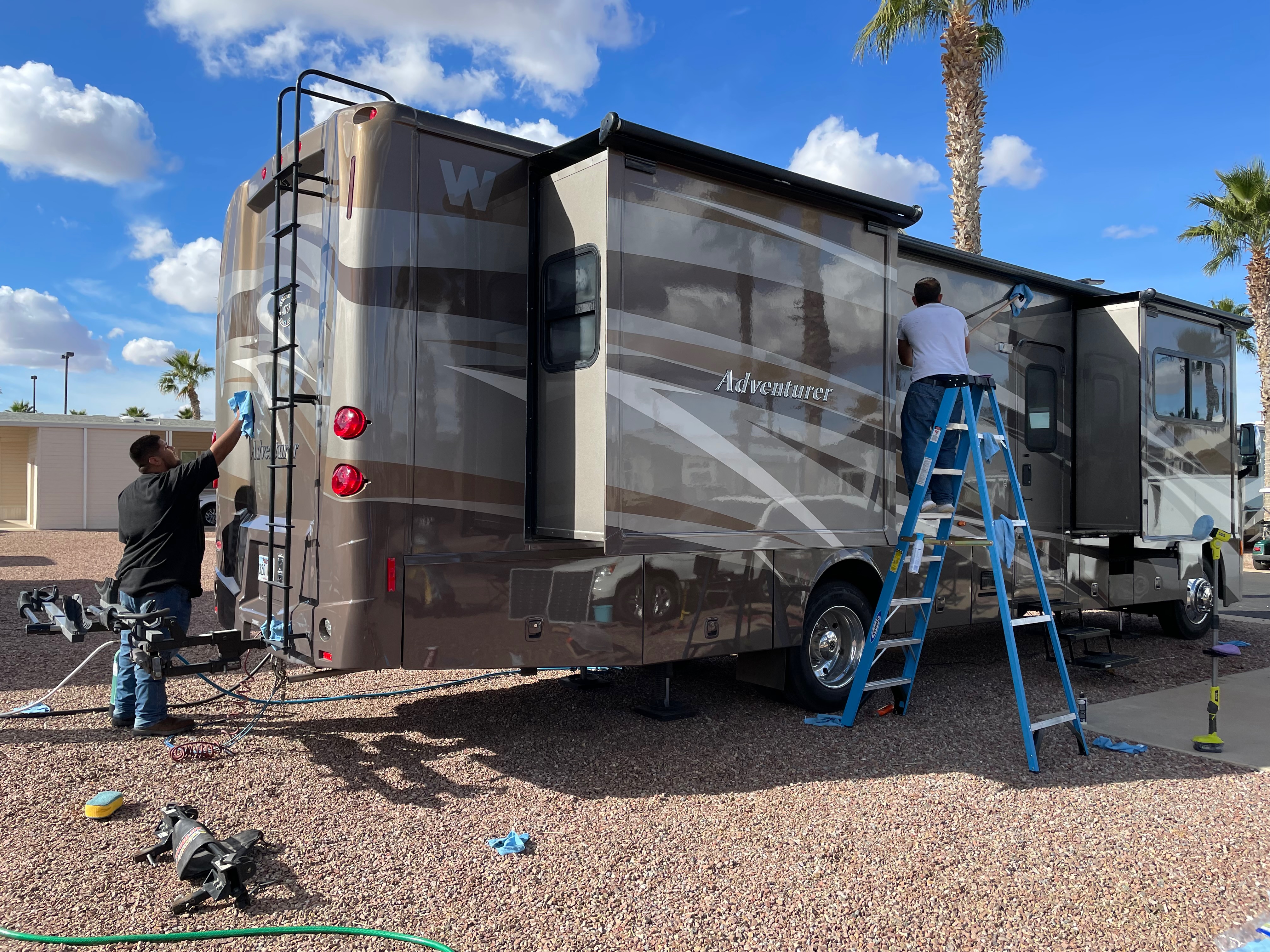
Both the car and motorhome were really dirty after all the miles of travel and dusty roads. Each season we buy unlimited monthly car washes from Clean Freak Car Wash, and for the first month it was only $11; and the car wash has great vacuums and air nozzles! After the car wash, a call was made to have the motorhome washed and waxed. Disappointed with last year’s job, a new “contractor” was hired this year.
Thursday was for removing items from the storage compartments (golf clubs, carts, etc.) and storing things that would not be used very often during the winter (motorhome brake assist, Dan’s luggage, etc.). We were up early to pick up an order of groceries at Fry’s, the local Kroger affiliate here in Casa Grande. And then back at Palm Creek, we moved chairs, grill, bicycles, table, etc. away from the motorhome; it got washed and waxed today. The young guy and his helper are to be applauded for being entrepreneurs, and good products were used, but the quality was not the best. On Friday, Dan traveled north to the greater Phoenix area to photograph birds while I hung out at Palm Creek visiting the pickleball courts, and tinkering with the solar panels.
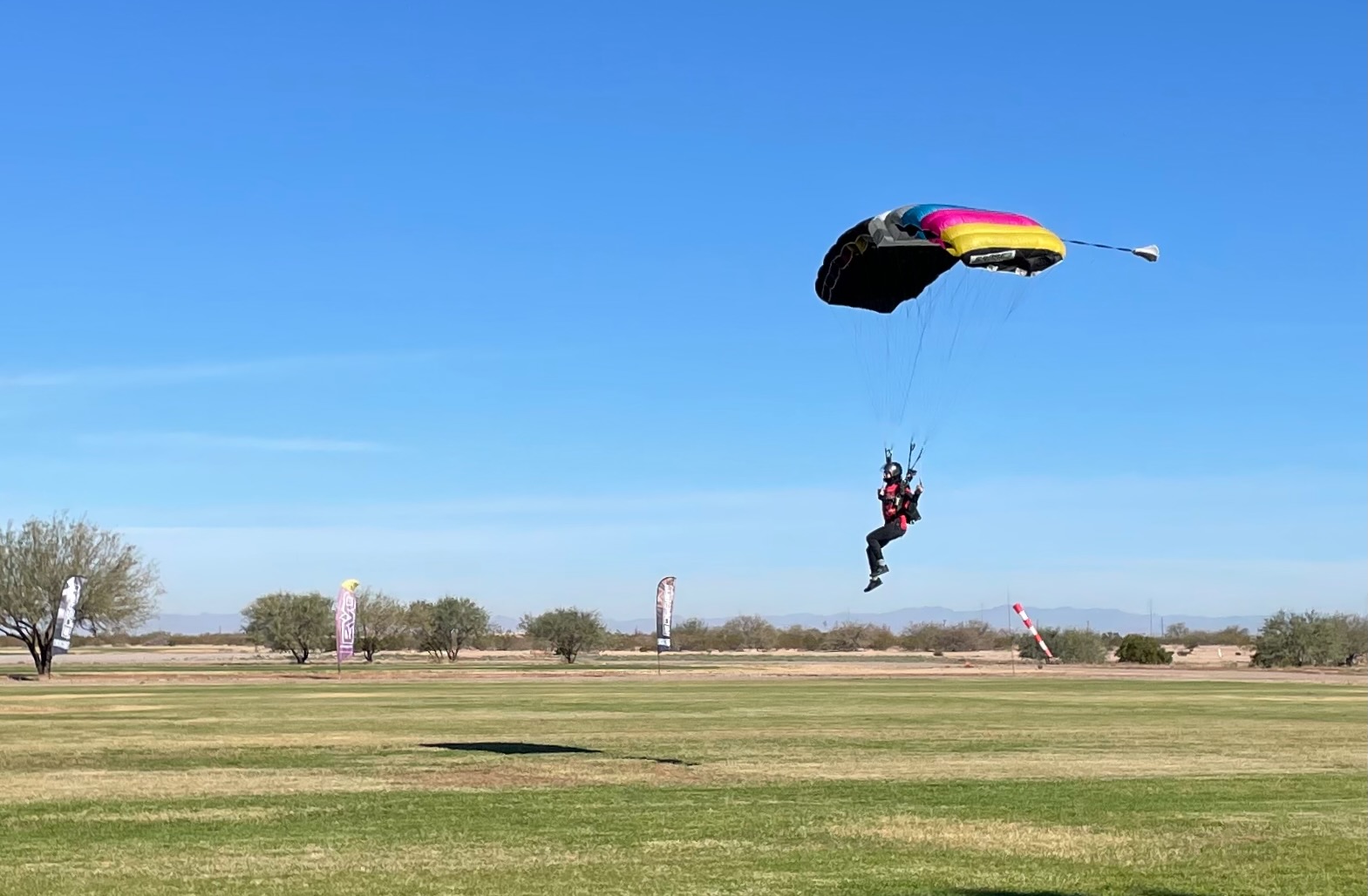
I finally got back on the pickleball courts Saturday, playing in the Mixed 3.5 Creek group, and was a bit nervous as I had not played with the 3.5 groups here at Palm Creek. Holding my own, it was a blast, and a very fast game with lots of finesse. Sunday morning was wash, dry, and fold clothes time, and afterwards, we visited SkyDive Arizona to watch the “free fallers” and tandem jumpers depart perfectly good airplanes in mid-air. The rest of the afternoon was used to edit photos and write on the blog, trying to catch up.
After such an incredible day yesterday, today’s itinerary called for a visit to one of Dan’s favorite places, Battiste’s Bed, Breakfast, and Birds (BB&B) in Hereford, AZ. Battiste’s BB&B is located in the famed Miller Canyon area in the Huachuca Mountains. Many feeders have been placed in the garden to provide close-up views of the numerous bird species that frequent the yard; over 150 bird species have been seen in or from the yard.
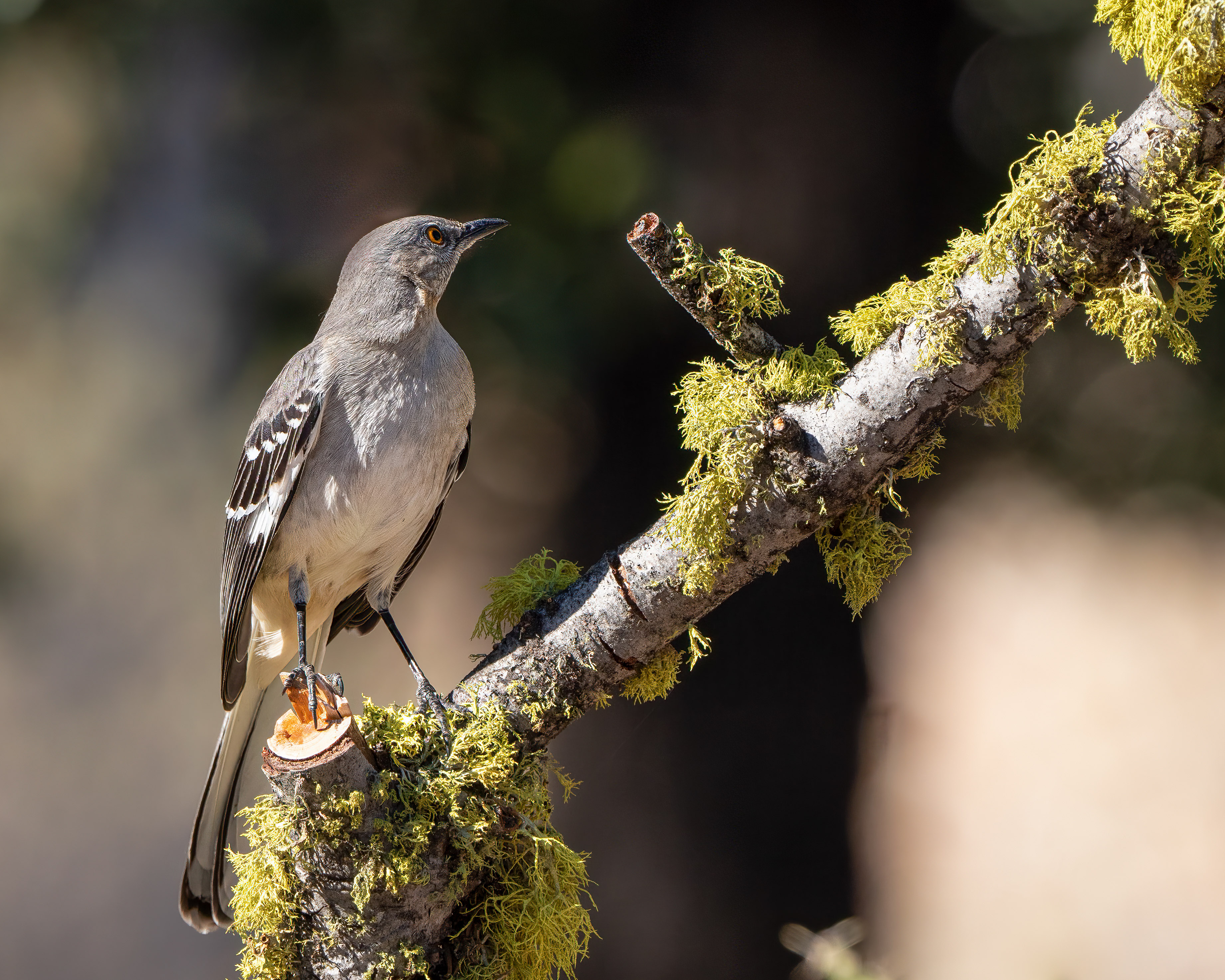
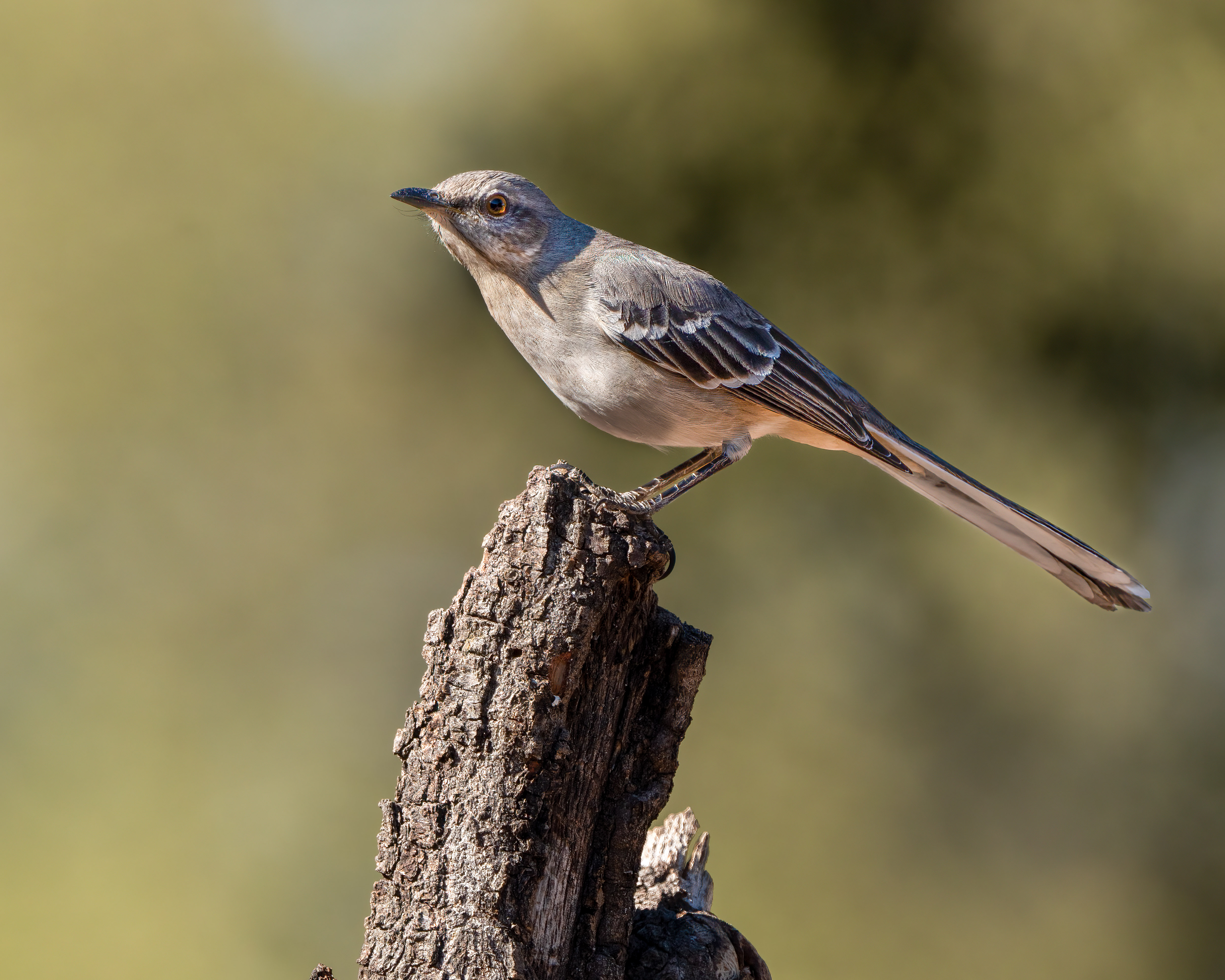
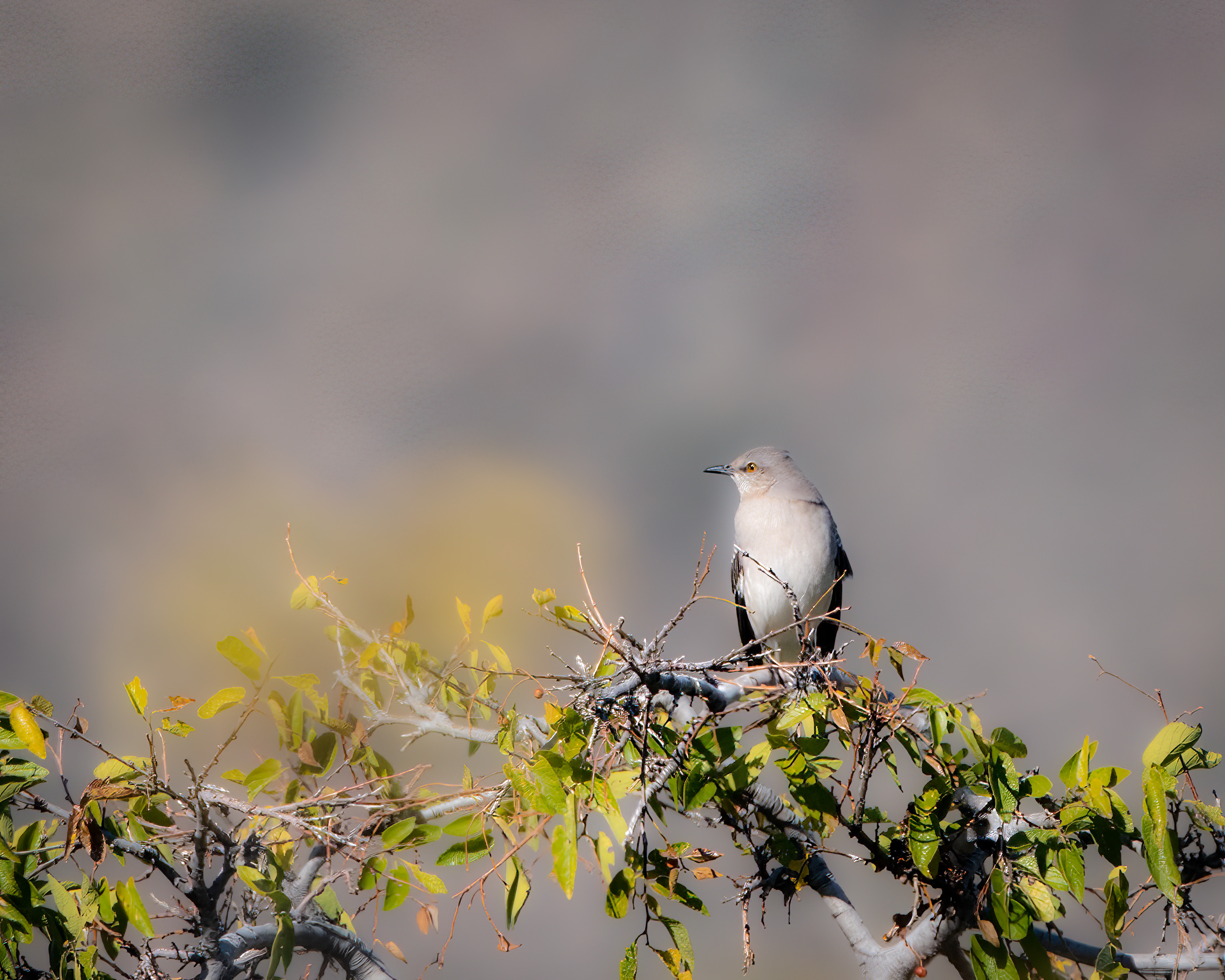
Birds began feeding on the many feeders, and provided a great photography experience. Tony Battiste has created the feeding stations so that birds perch nearby on old trees and limbs placed there to enhance photography. First, a Northern Mockingbird appeared.
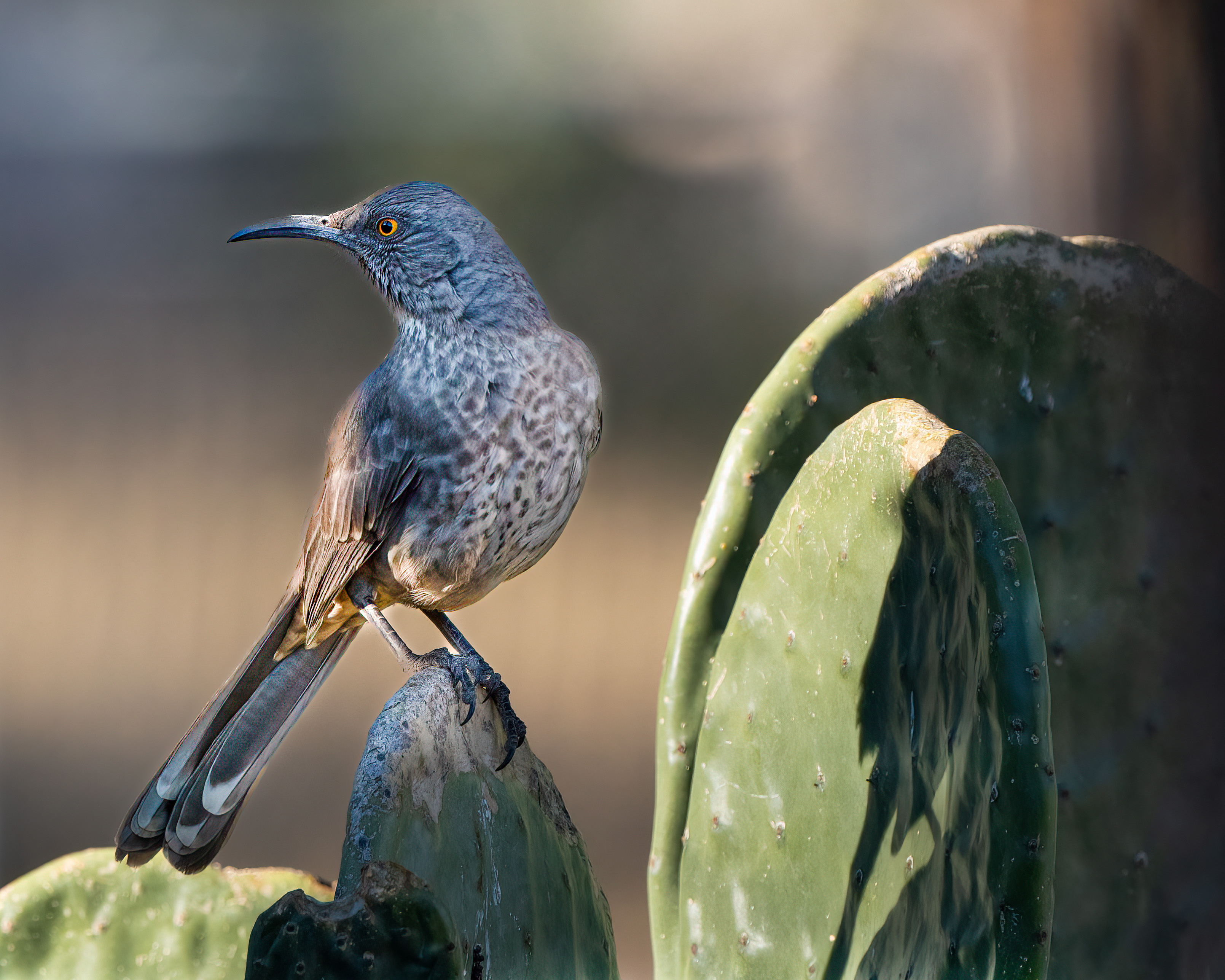
And then, another of my favorites, the Curve-bill Thrasher snuck in for seeds.
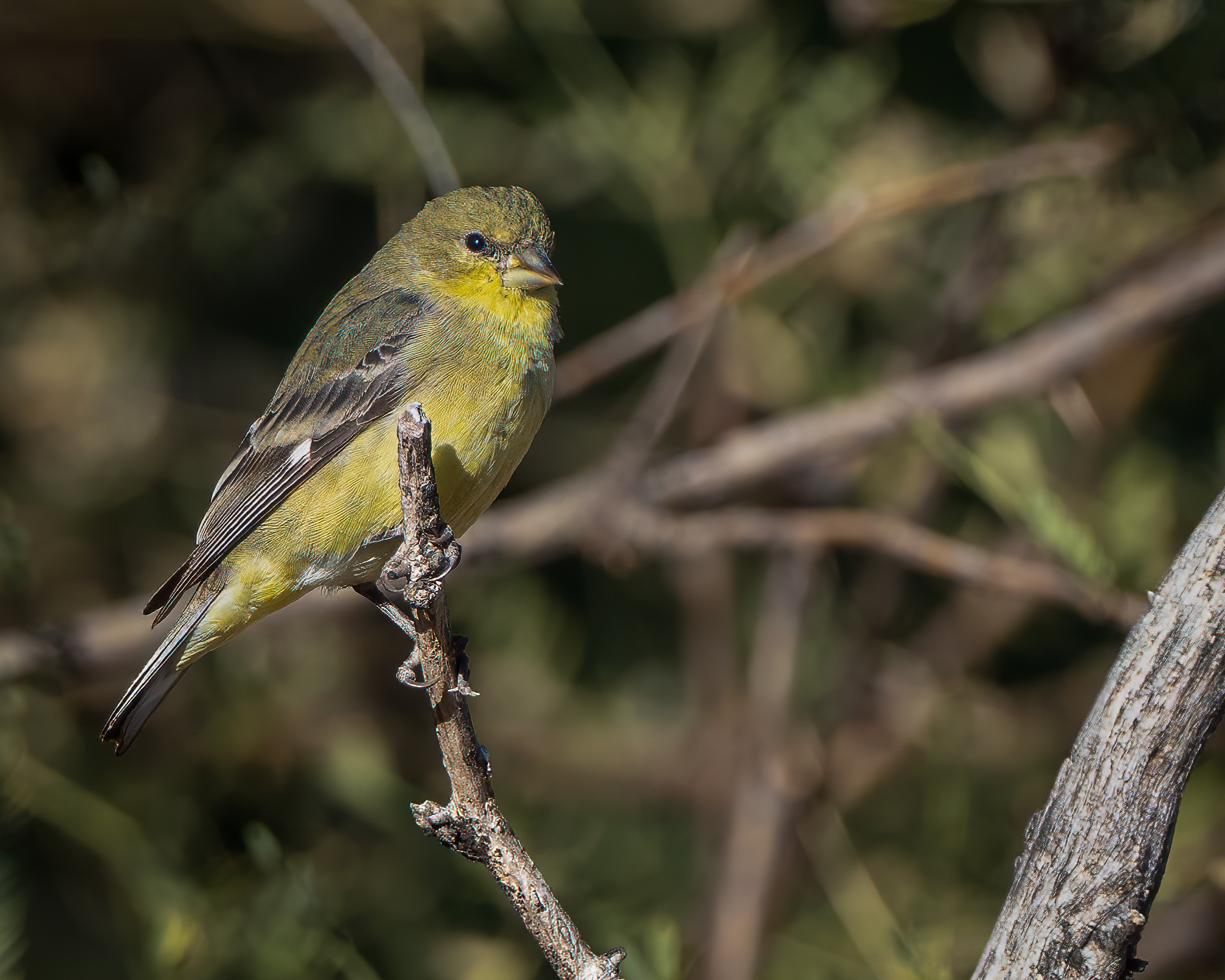
Next, a Lesser Goldfinch flew in.
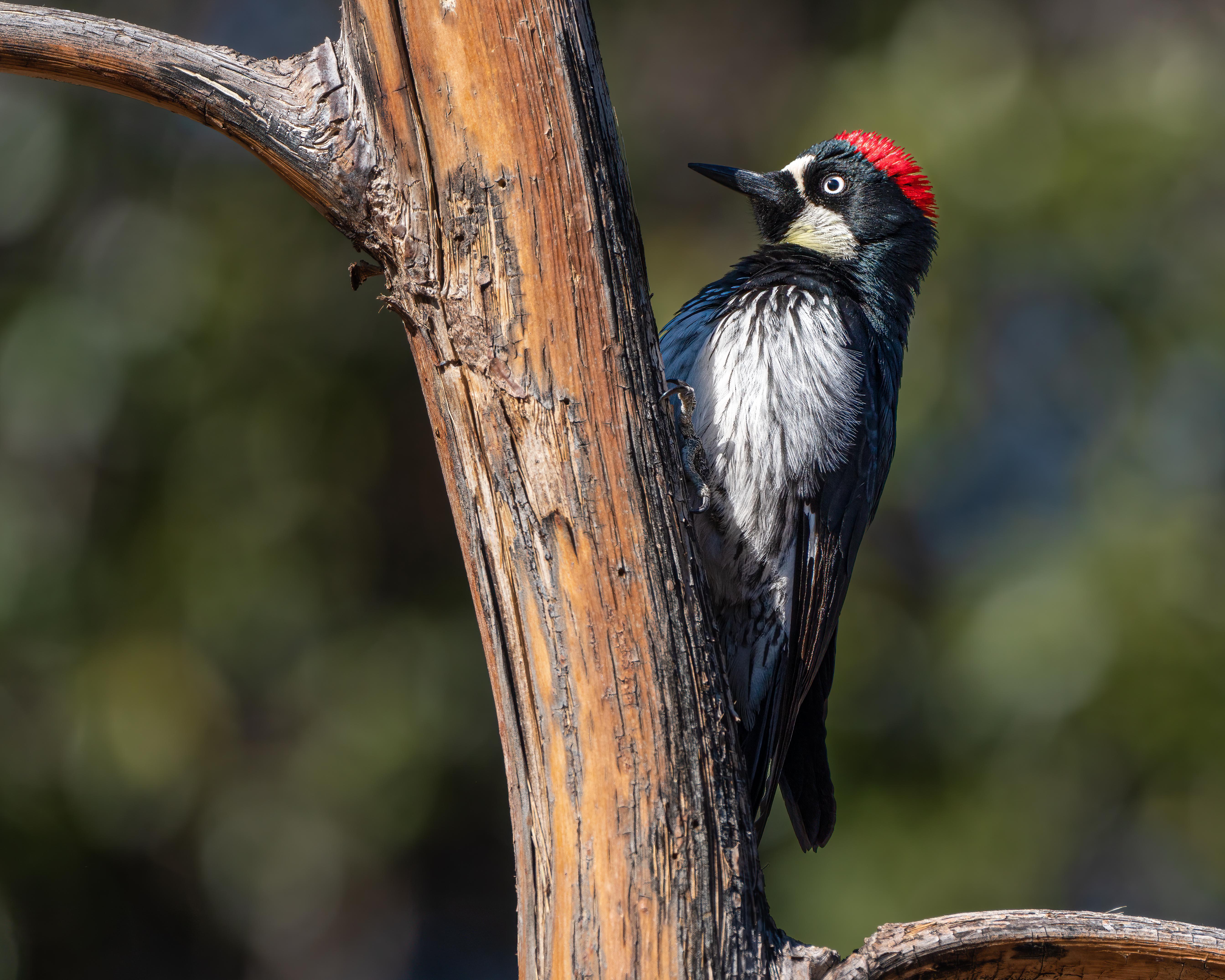
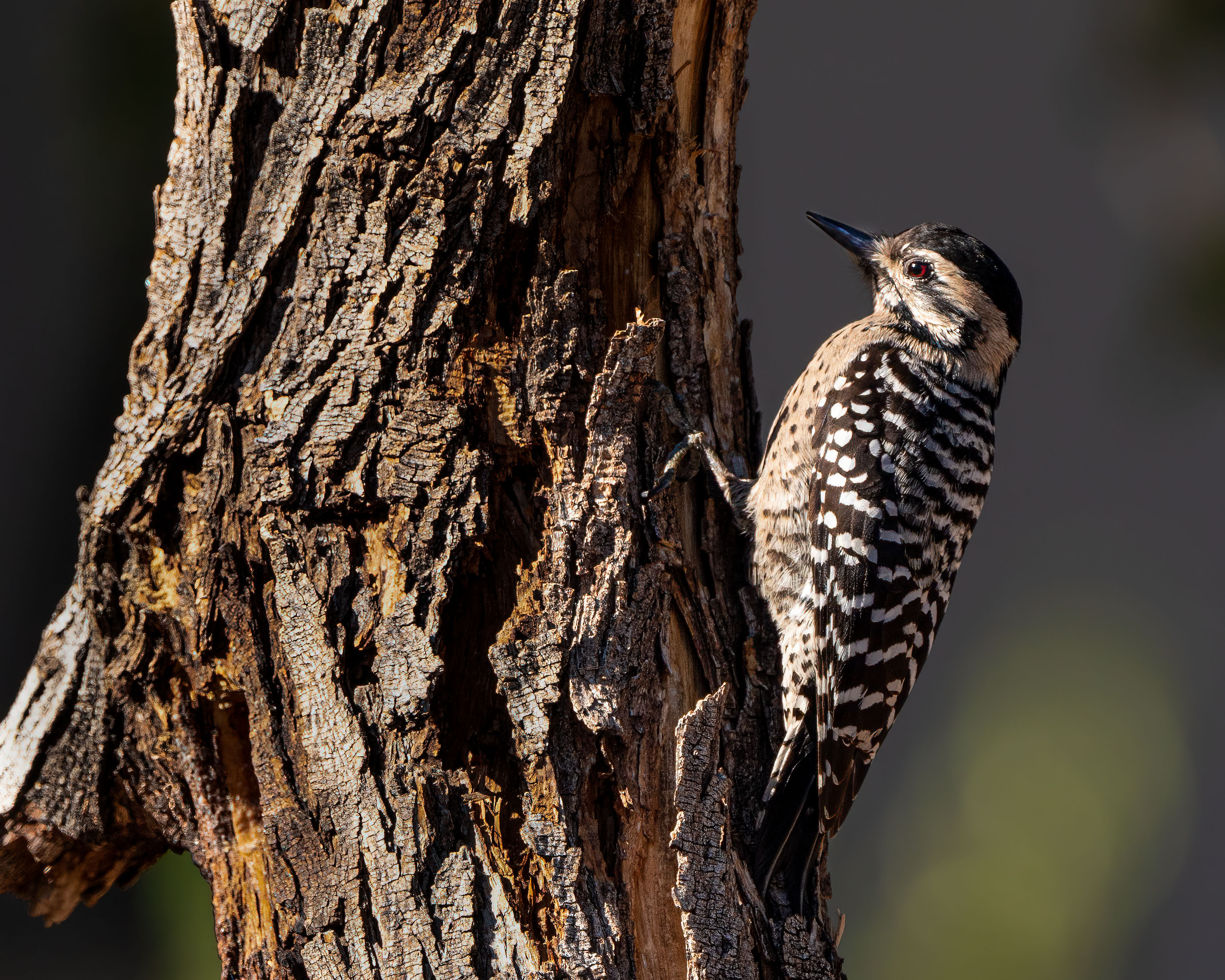
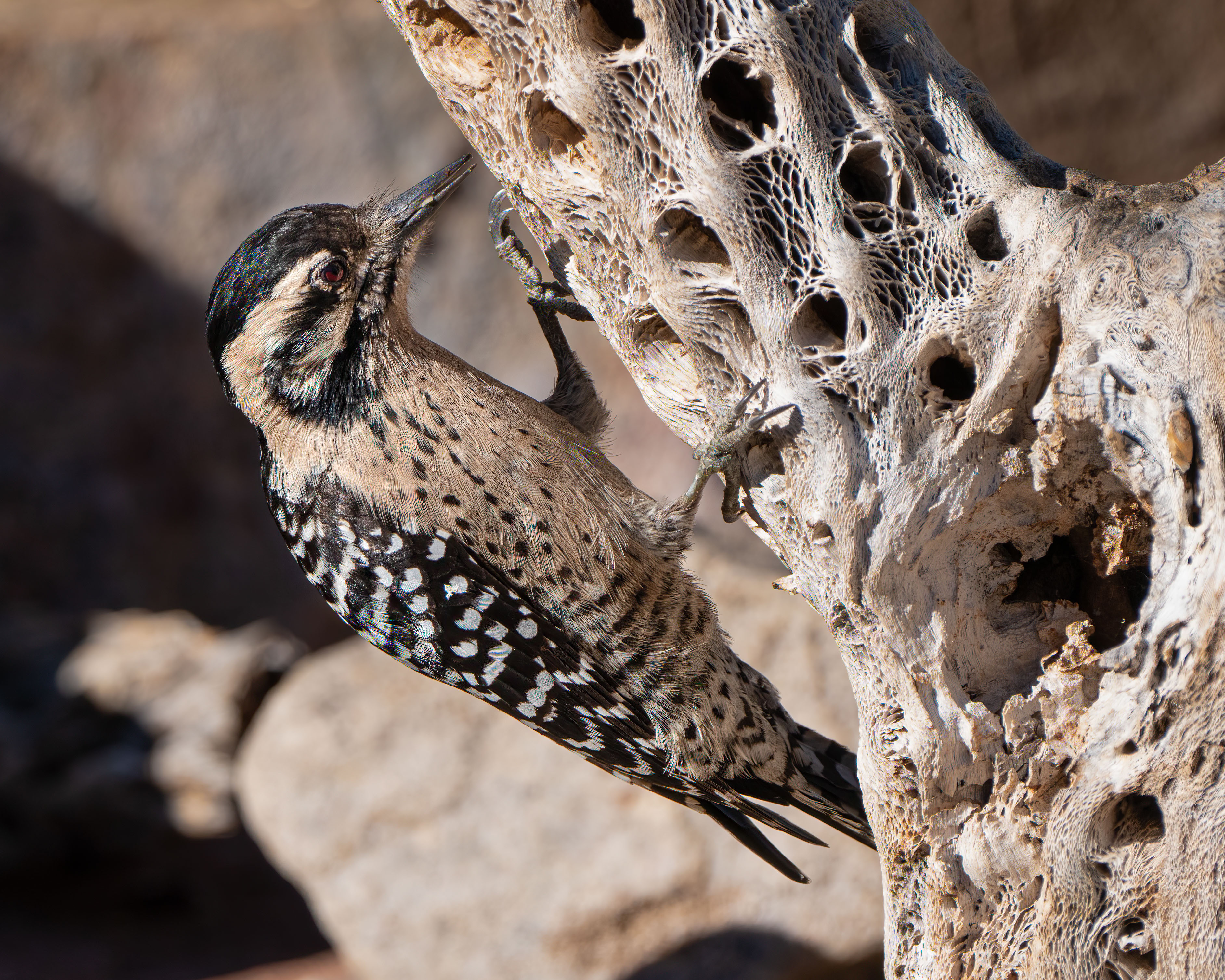
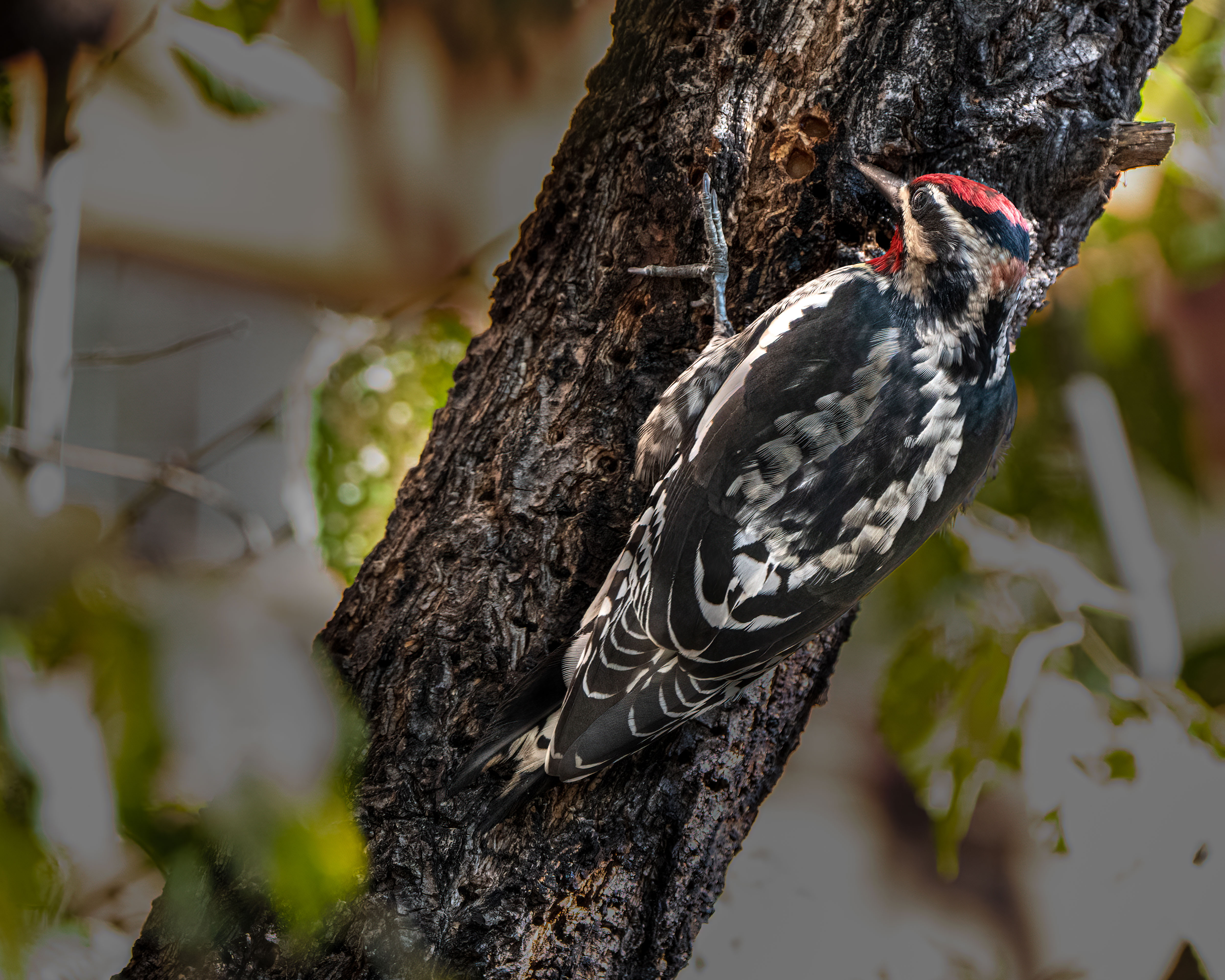
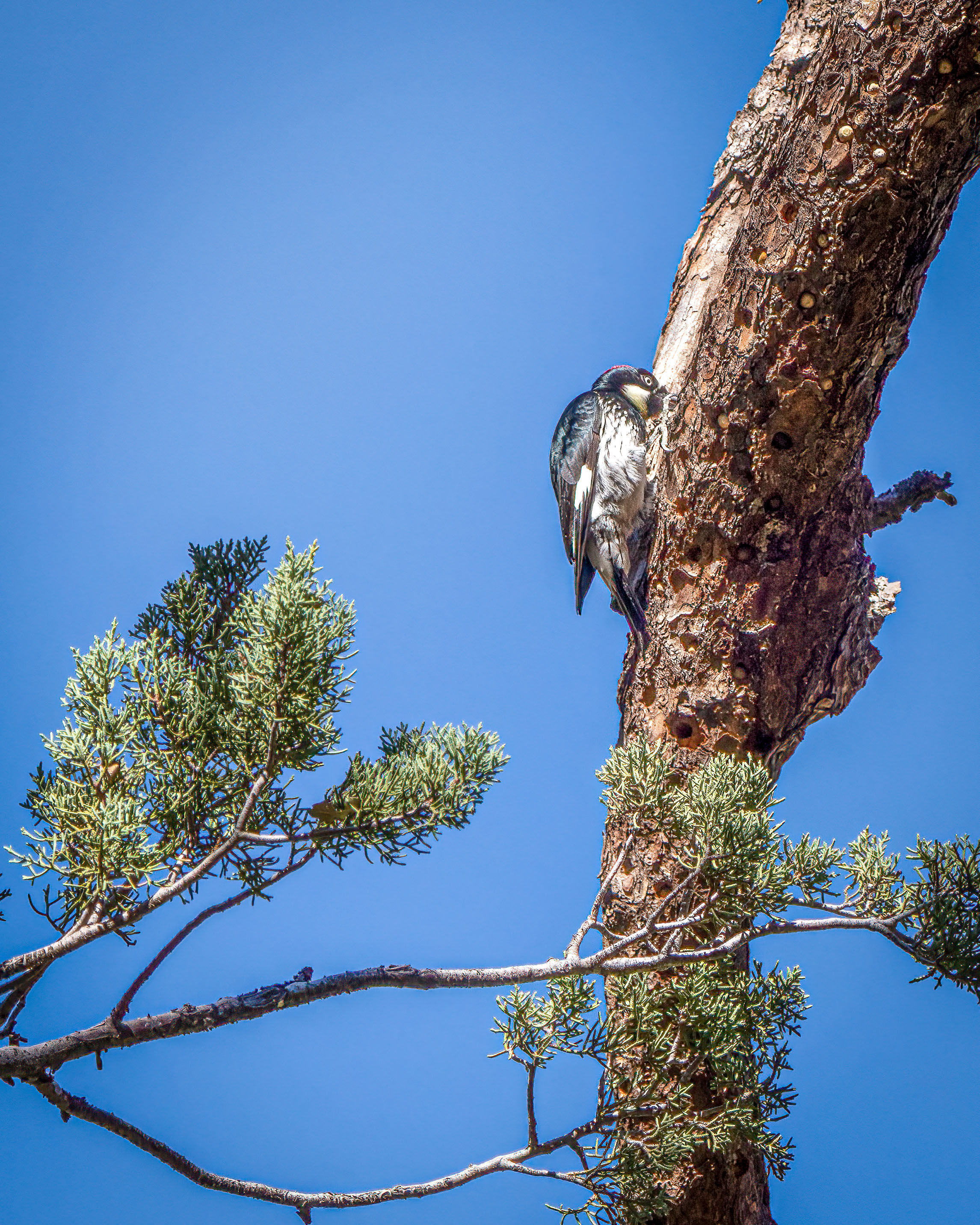
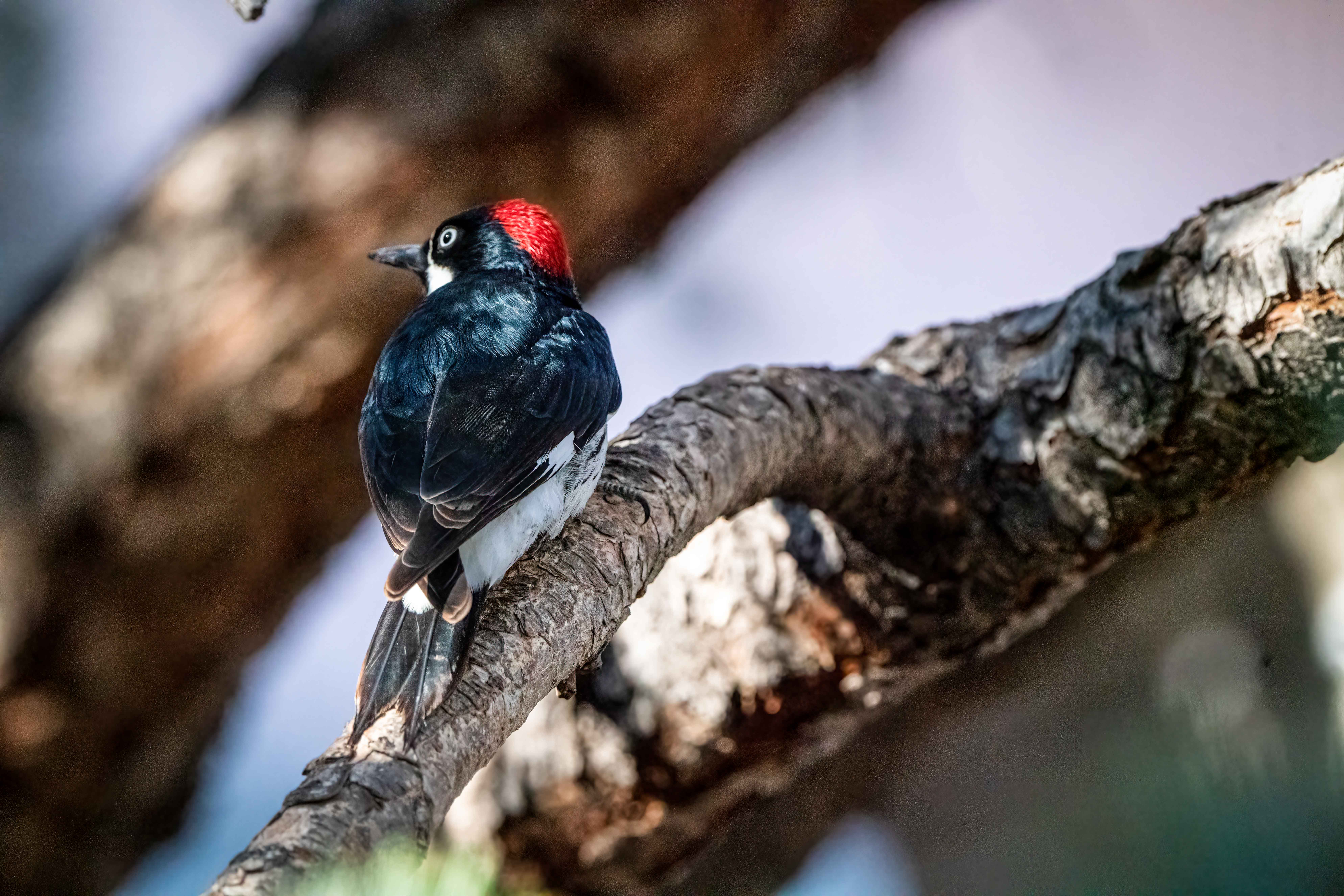
Not to be forgotten about, woodpeckers came to the trees using their bouncy flight patterns.
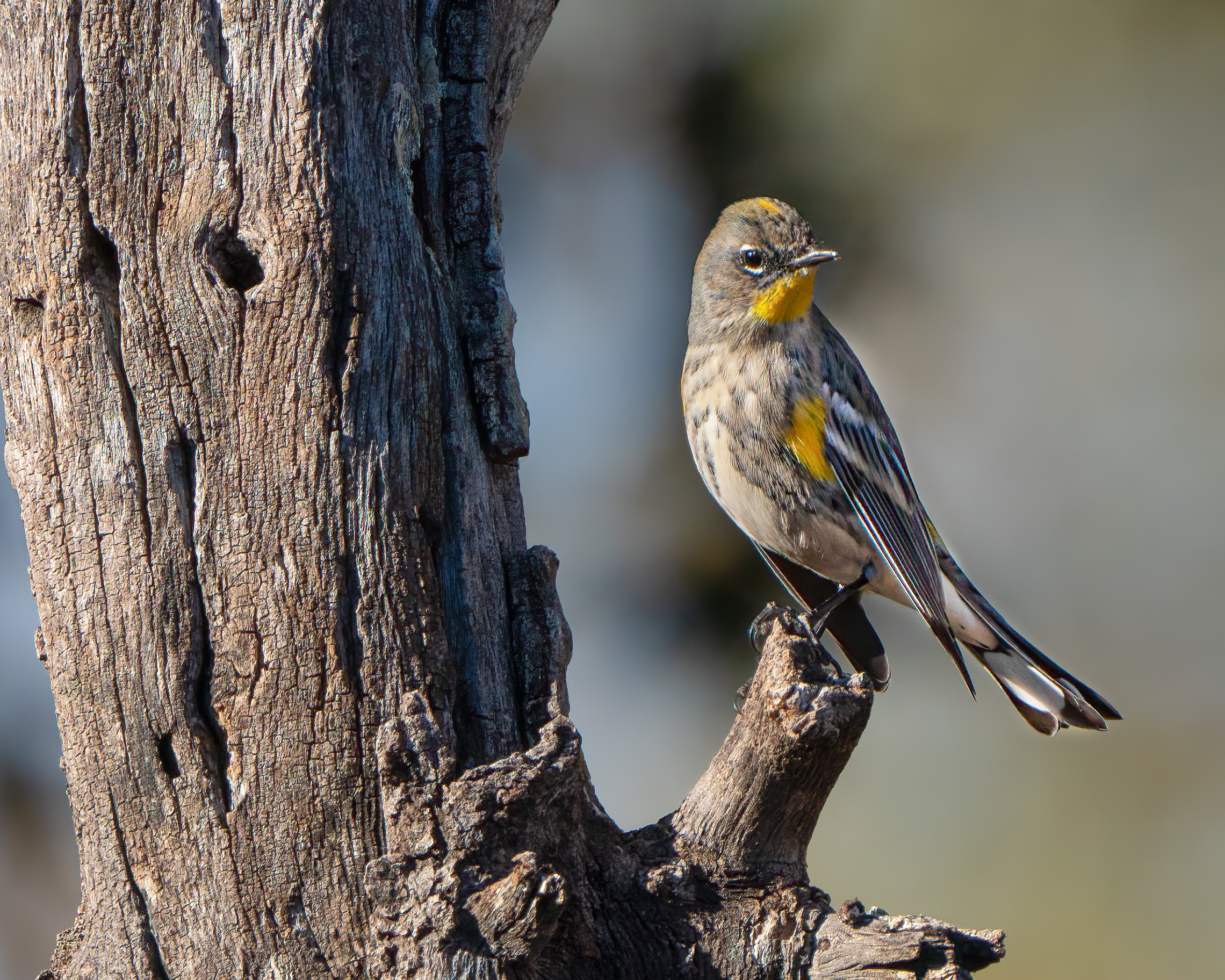
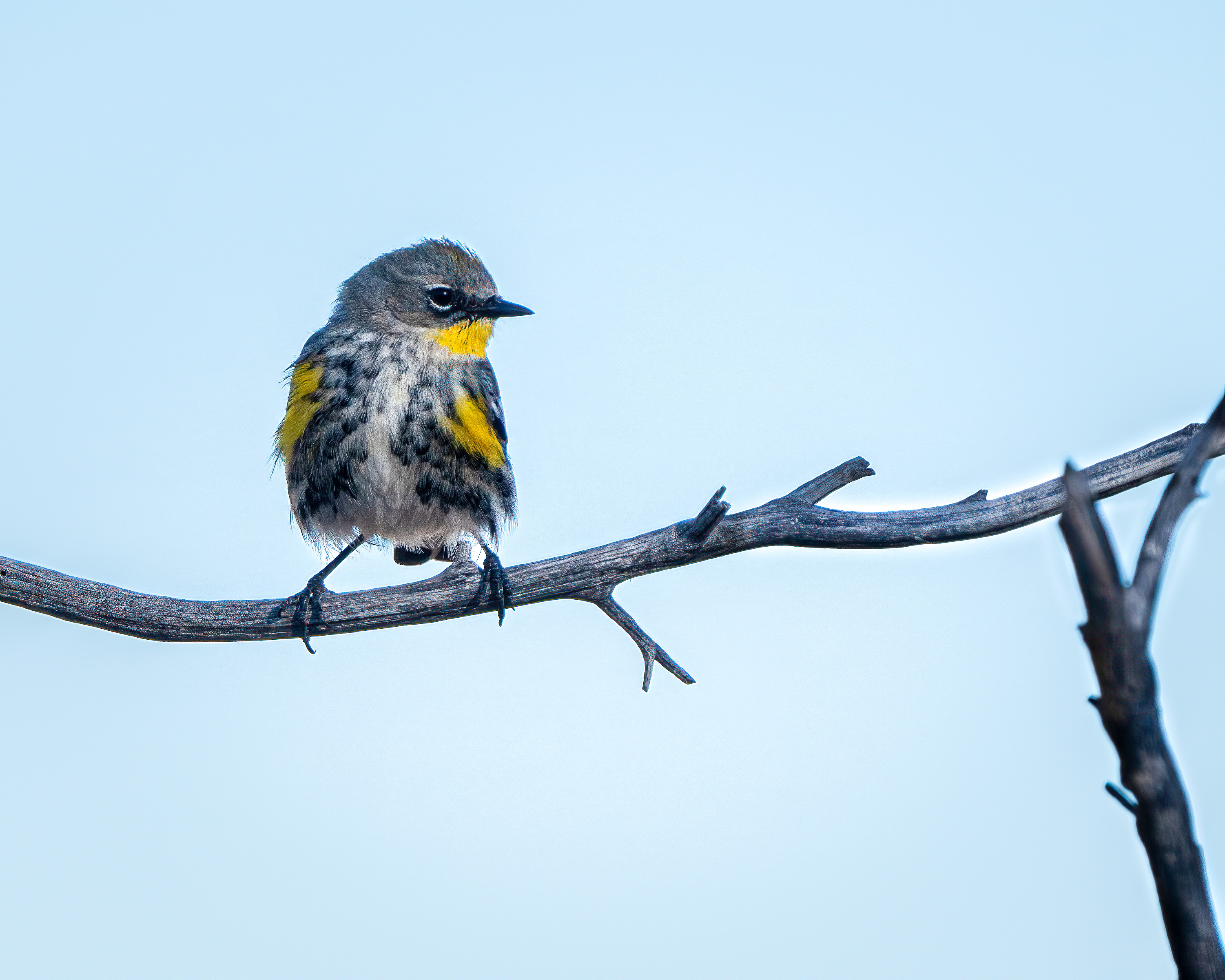
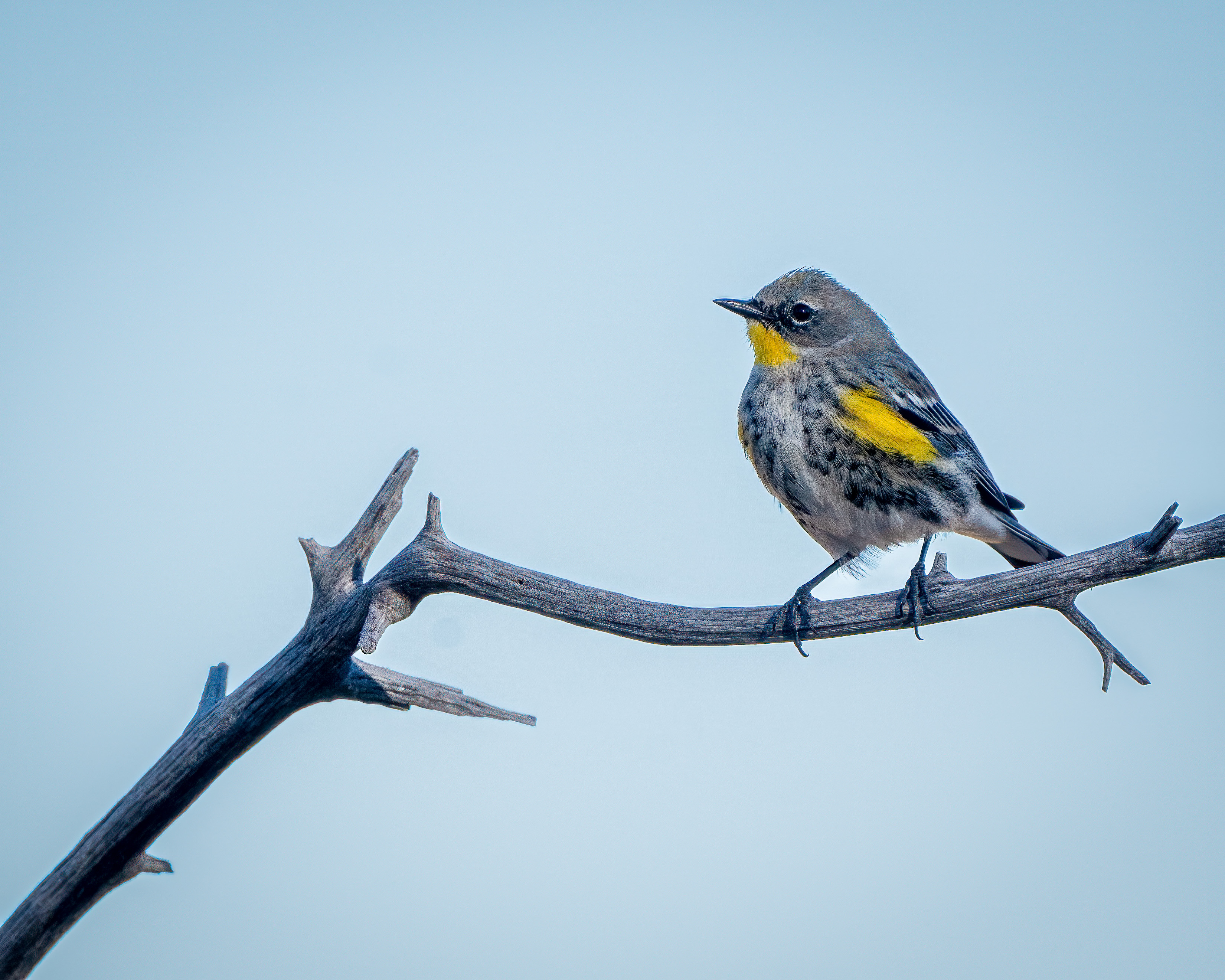
And of course, a number of Yellow-rumped Warblers appeared, darting among the trees here and there.
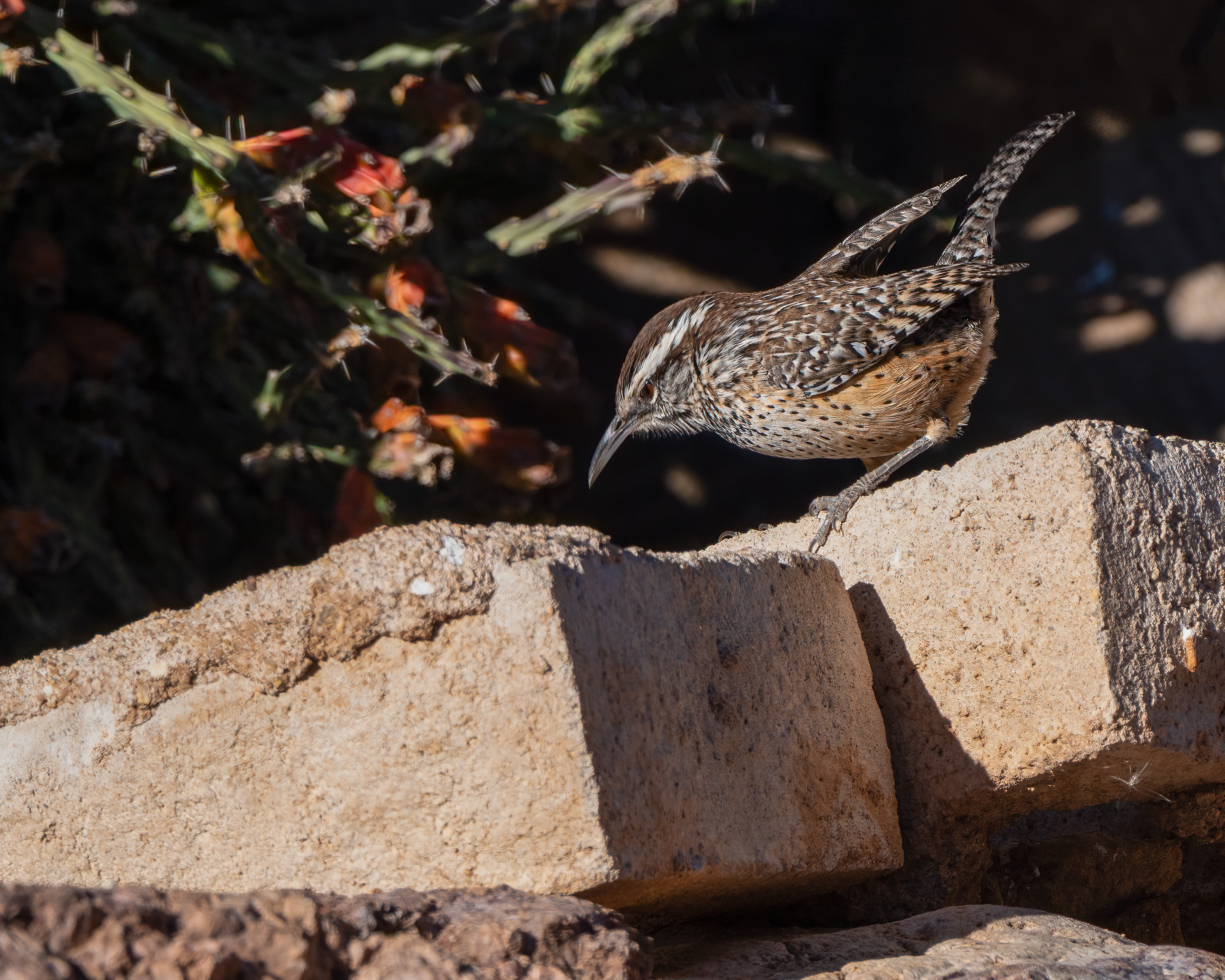
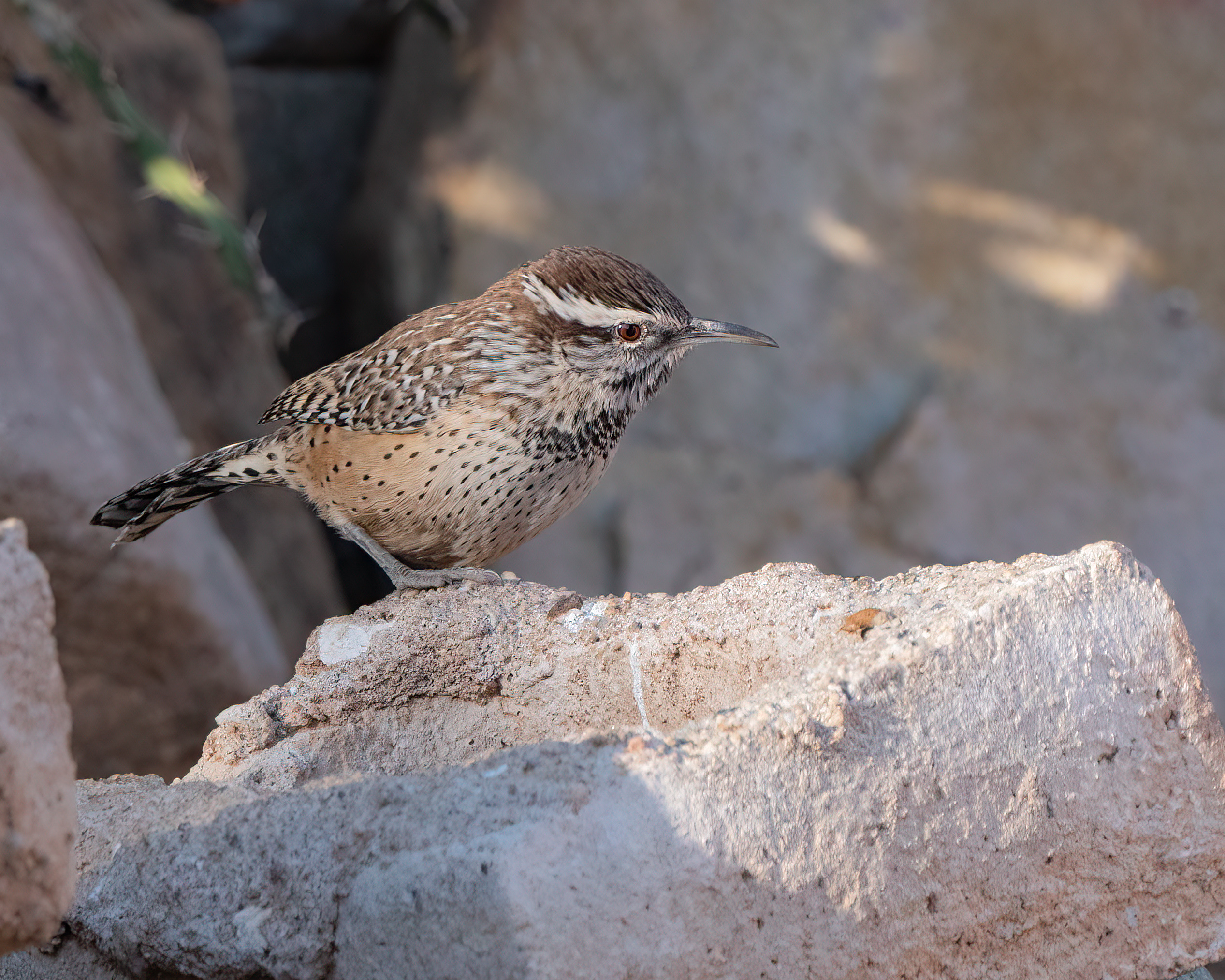
And my beloved Cactus Wren…
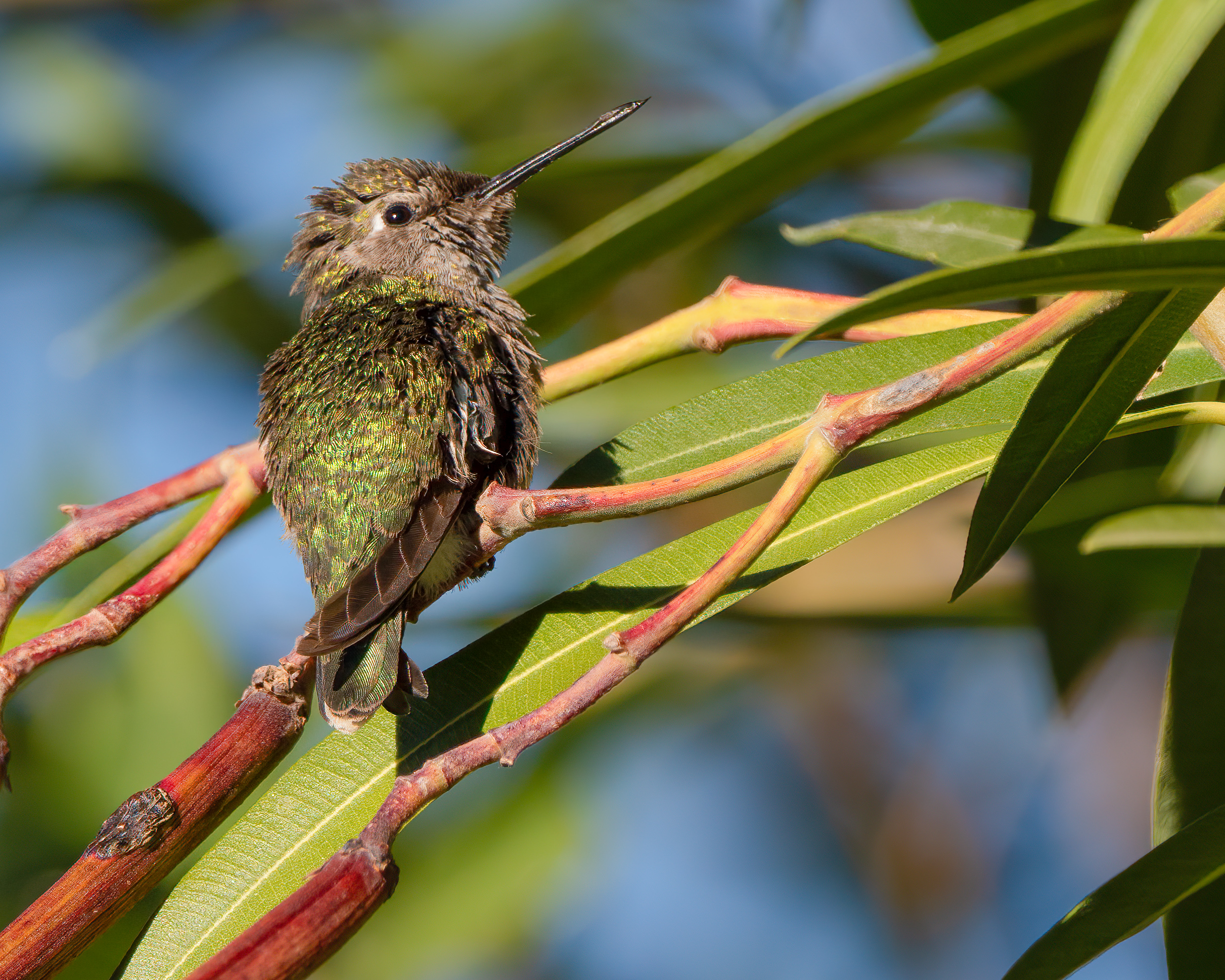
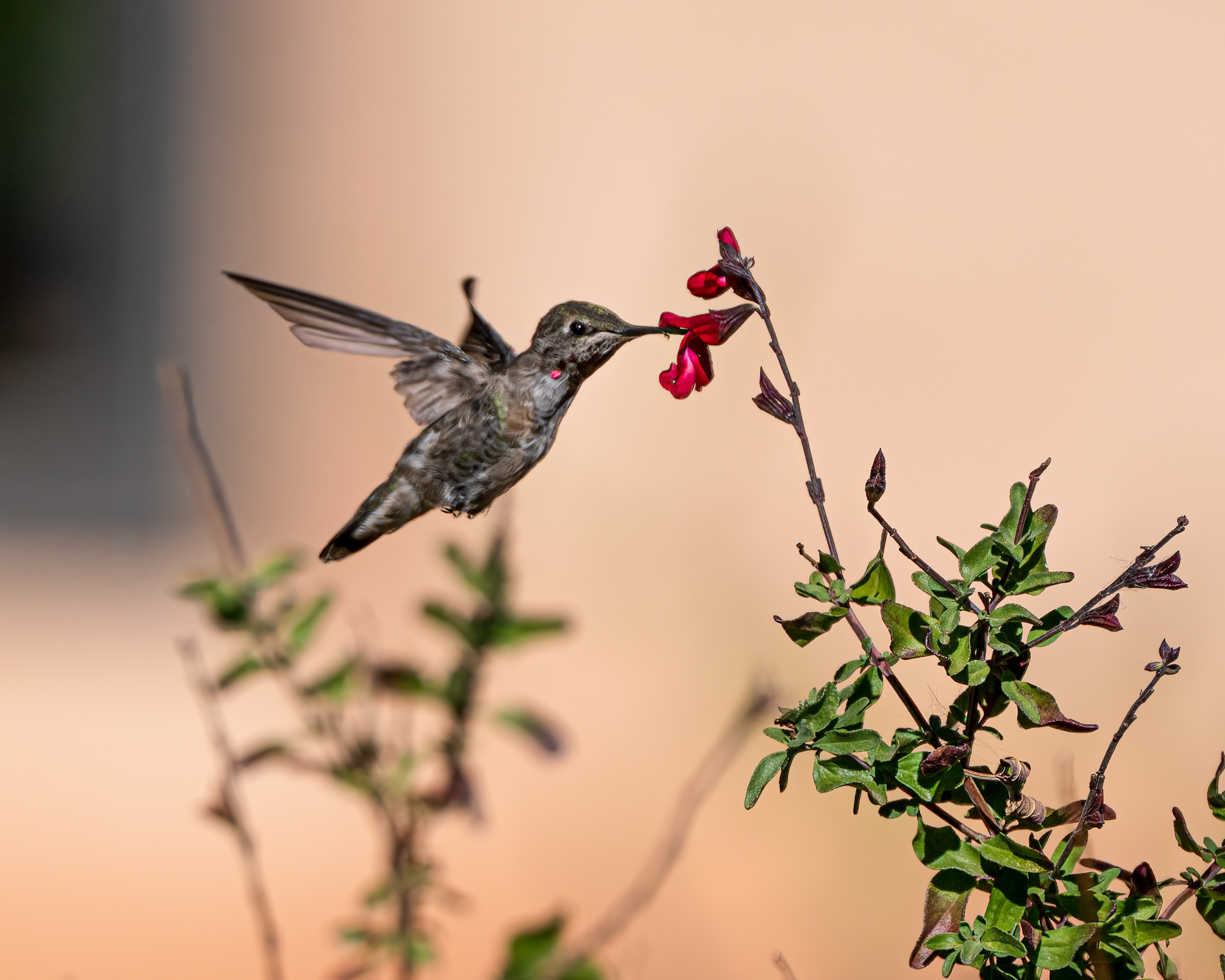
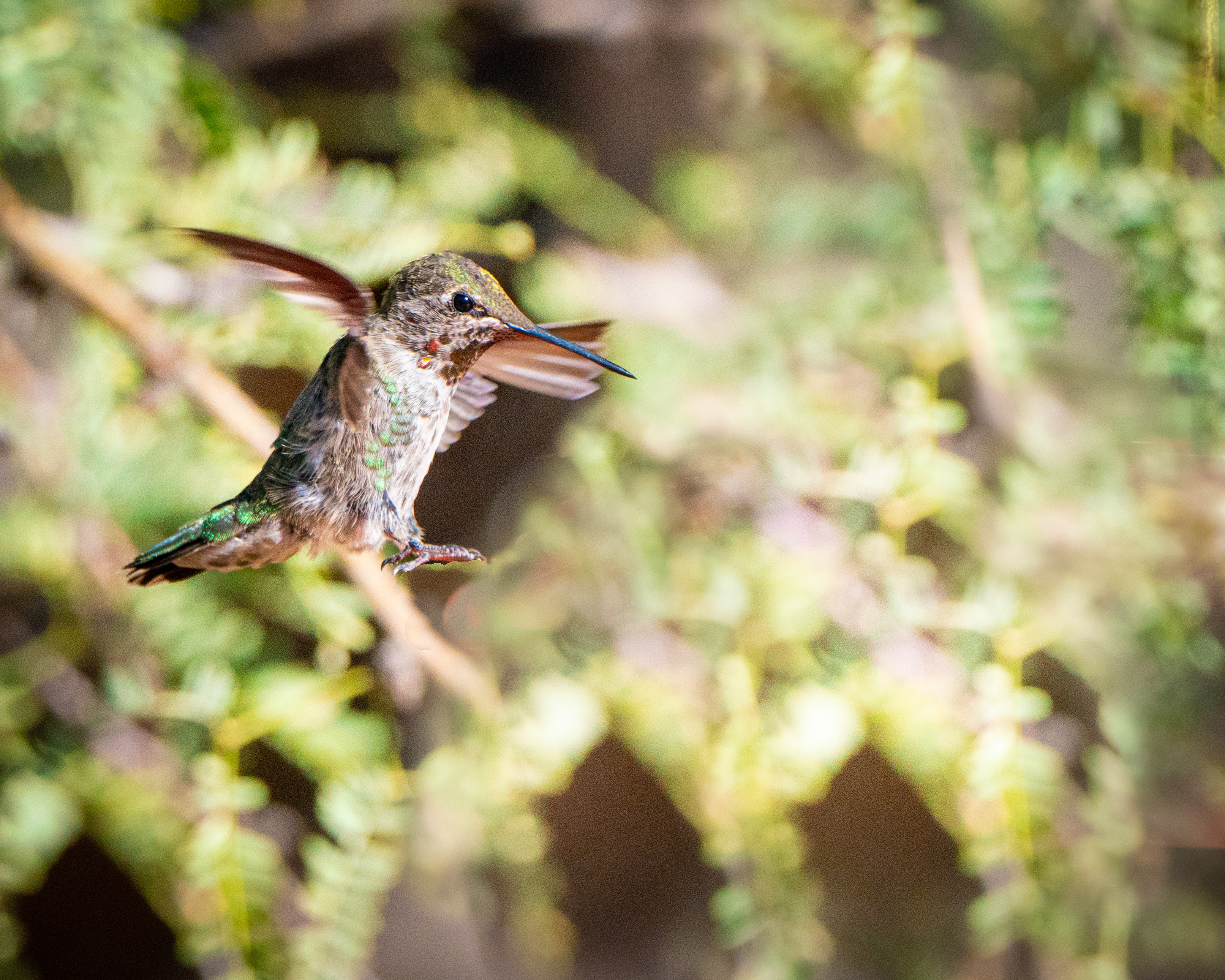
And no blog post featuring birds would be complete with a hummingbird (Anna’s Hummingbird), even if it is having a bad hair day!
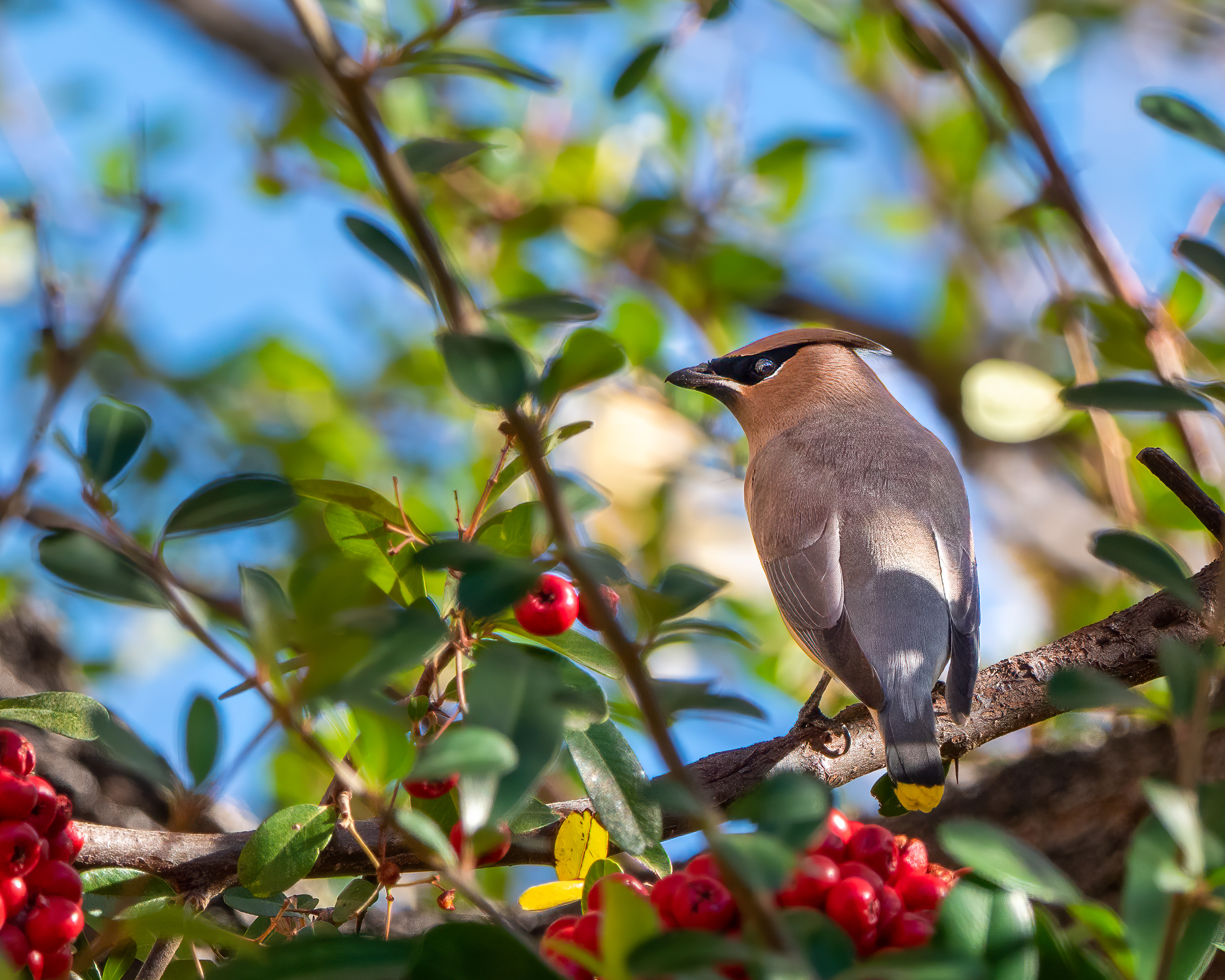
Fort Huachuca has two canyons known for great birding: Garden Canyon and Huachuca Canyon. The picnic areas in Garden Canyon are known birding locations, however we did not have many observations. One tree held several flighty Cedar Waxwings, but otherwise few birds were moving. We continued up the steep canyon on washed out roads, stopping occasionally to glass for birds, but to no avail. Finally, we reached the limits of the Honda CR-V.
Monday morning, we traveled east about 50 miles to the Paton Center for Hummingbirds in Patagonia, AZ. This is one of my favorite places to photograph birds, and especially hummingbirds.
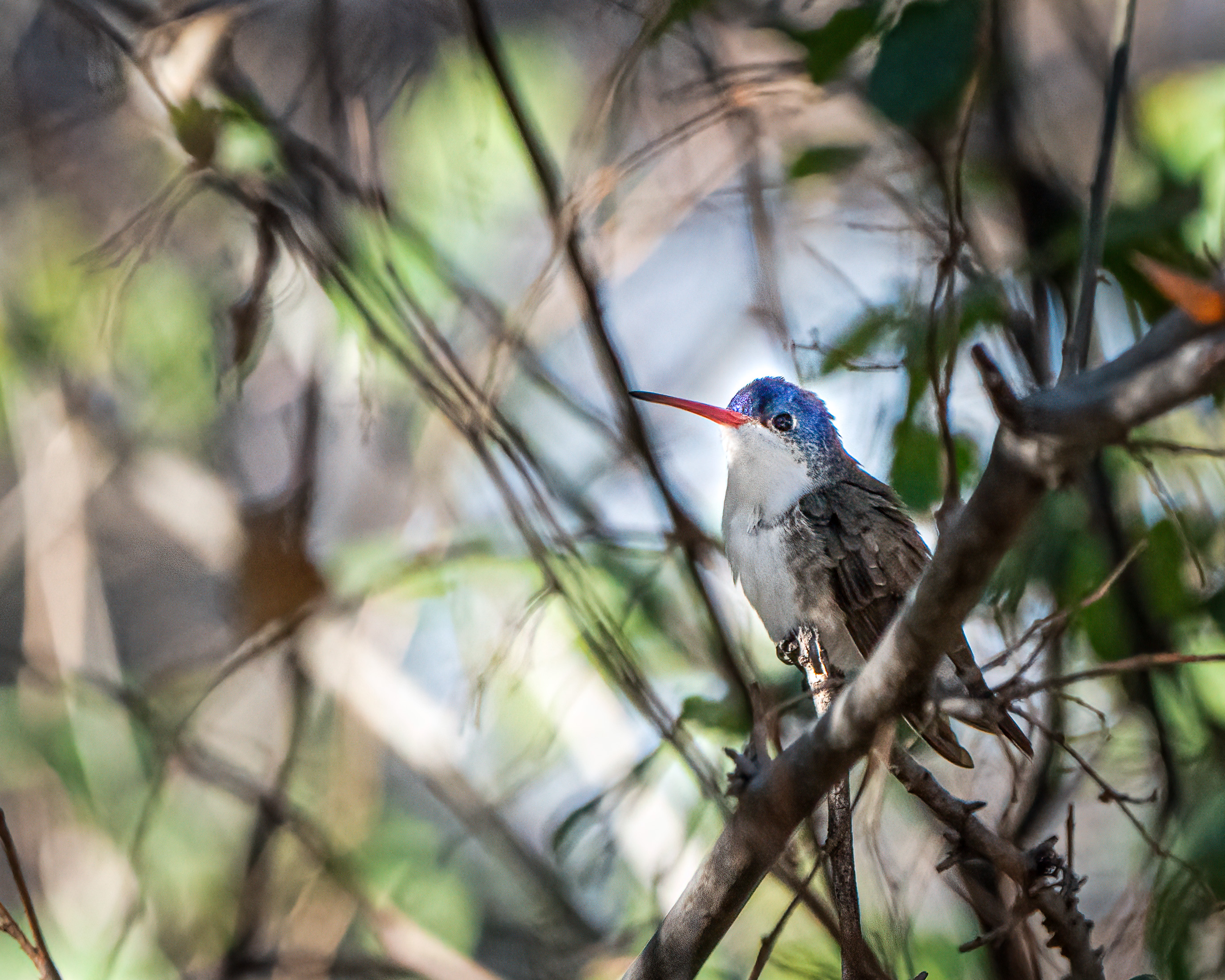
Not long after arrival, a Violet-crowned Hummingbird began nectaring on a nearby feeder hung from the eave of the Paton house, indicating that it was going to be a good day. With tripod-mounted camera aimed toward a hummingbird feeder, a Violet-crowned Hummingbird showed up, fed, and perched on a nearby limb. He stayed there most of the morning, undeterred by birders walking nearby. He was photographed many times that morning!
Violet-crowned Hummingbird
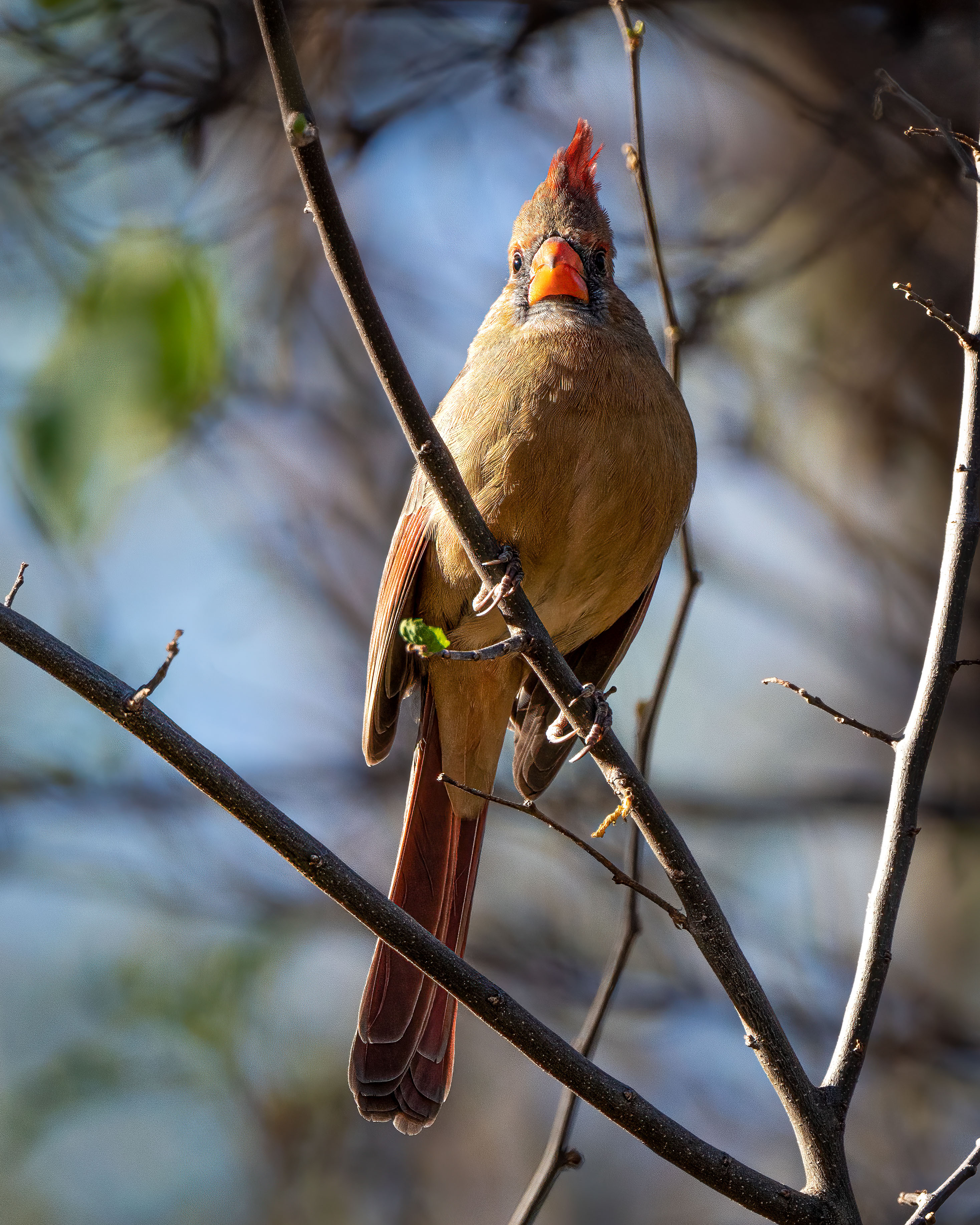
A female Northern Cardinal hung around the tree for a while, maintaining a guard over its surroundings.
And then, a somewhat muted but colorful bird landed on the water container atop the hummingbird feeder. It looked familiar, and I opined that it was a Northern Parula. The volunteer expert ornithologist looked at the photo on the camera’s monitor and corrected the identification as a Lazuli Bunting. Though not exciting to the other birders there, it was a LIFER for me, whereas a Northern Parula landed on one of the feeders at the Norfork house several years ago. Photographing the Lazuli Bunting made my day!
Lazuli Bunting
The ornithologist suddenly got excited as he spotted a Rose-throated Becard high in a nearby tree. As we all tried getting a look and a photograph, it had its back to us. And then, it moved to another tree, hiding behind some dense foliage. Fortunately, it moved again, allowing a good look. Another LIFER observed and photographed. Along with the Lazuli Bunting, two LIFERS in one day will be an unforgettable experience!
Today’s (Saturday) drive took us to Fort Huachuca, AZ, near Sierra Vista.
Fort Huachuca was founded to counter the Chiricahua Apache threat and secure the border with Mexico during the Apache Wars. General Nelson A. Miles commanded Fort Huachuca as his headquarters in his campaign against Geronimo in 1886. After the surrender of Geronimo in 1886, the Apache threat was extinguished, but the army continued to operate Fort Huachuca due to its strategic border position. In 1913, the fort became the base for the “Buffalo Soldiers”, the 10th Calvary Regiment composed of African Americans. It served this purpose for twenty years.
Fort Huachuca’s RV Park, Apache Flats, has full hookups, is clean, and not terribly expensive. The motorhome was set up, and Dan took the car for a wash and did his laundry while I cleaned the RV. The rest of the day was uneventful.
Arriving at Ash Canyon Bird Sanctuary near Hereford, AZ, about mid-morning on Sunday, we were greeted by a very nice volunteer. Since no one had reserved the photo blind, he offered it to us. We immediately set up and began seeing Yellow-rumped Warblers in droves.
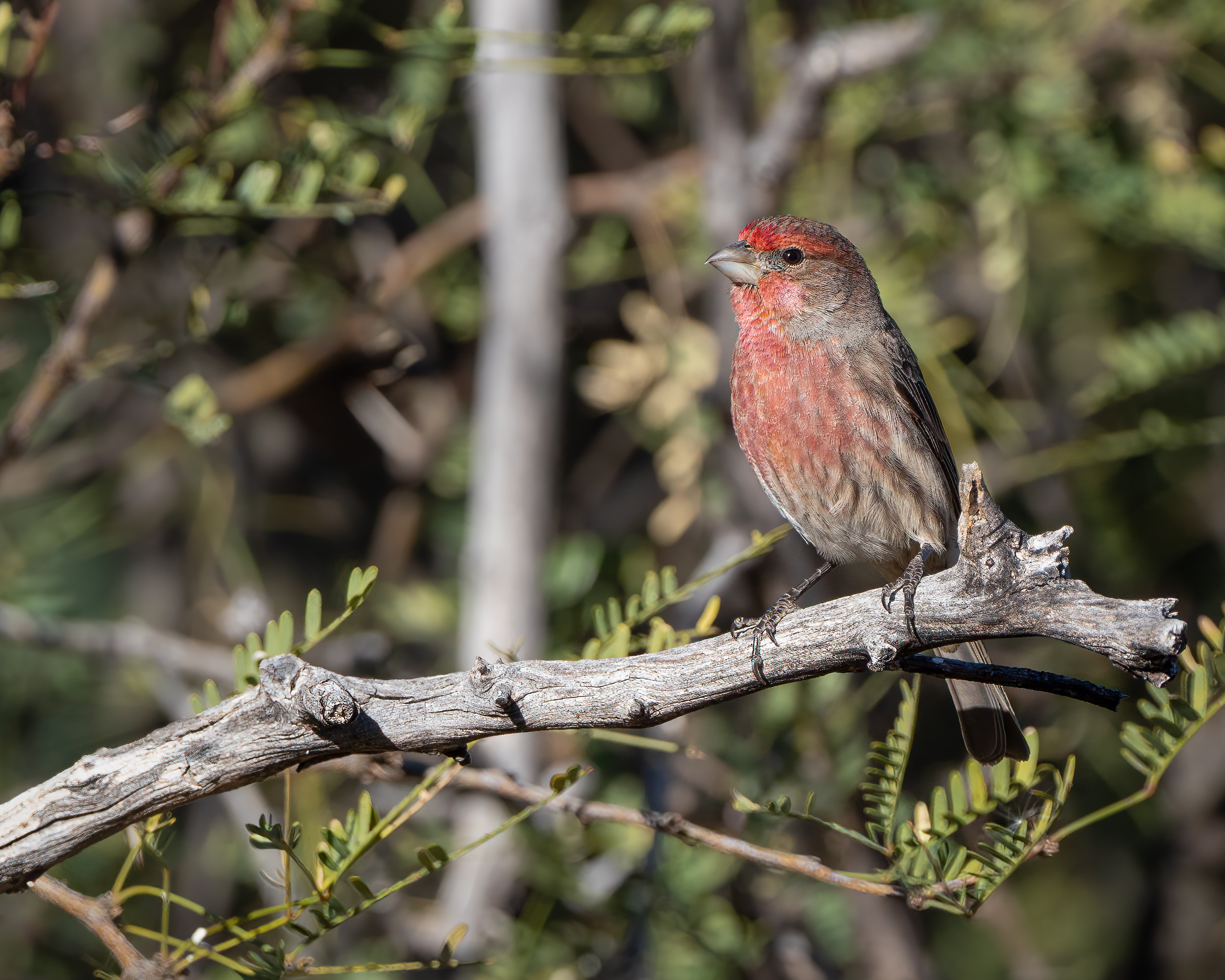
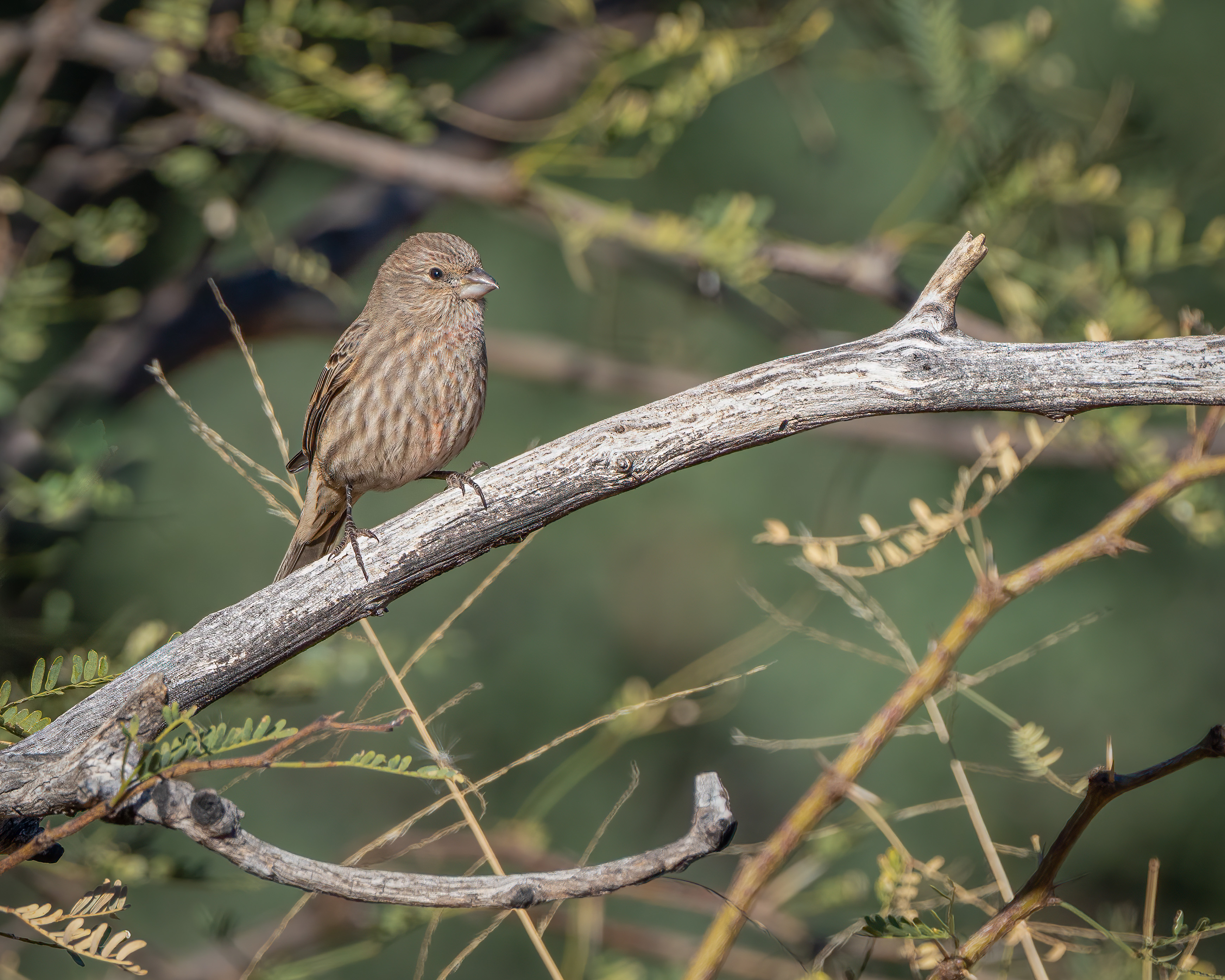
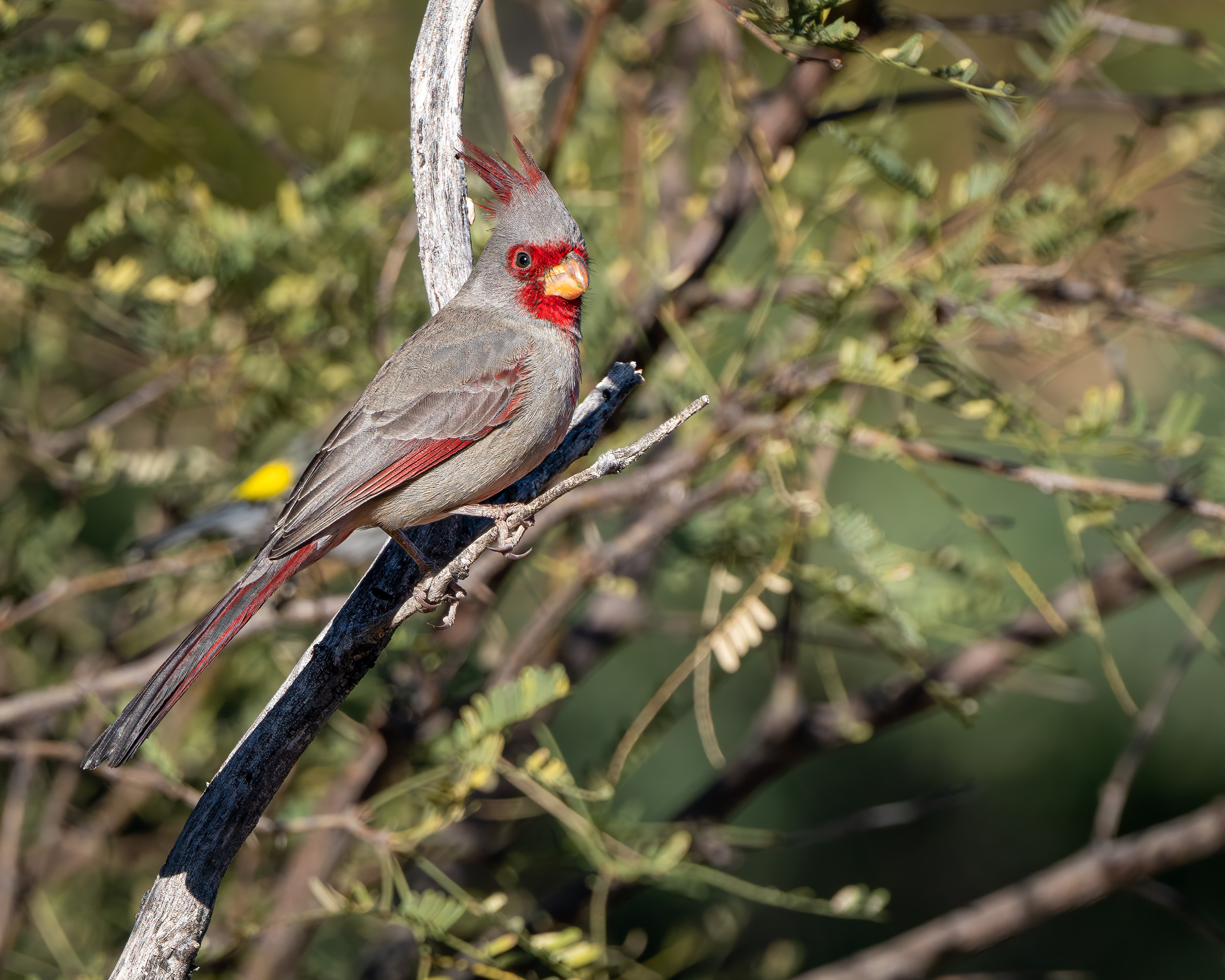
Mexican Jays, Pyrrhuloxia, Sparrows, Lesser Goldfinches, and House Finches also”posed” for photographs.
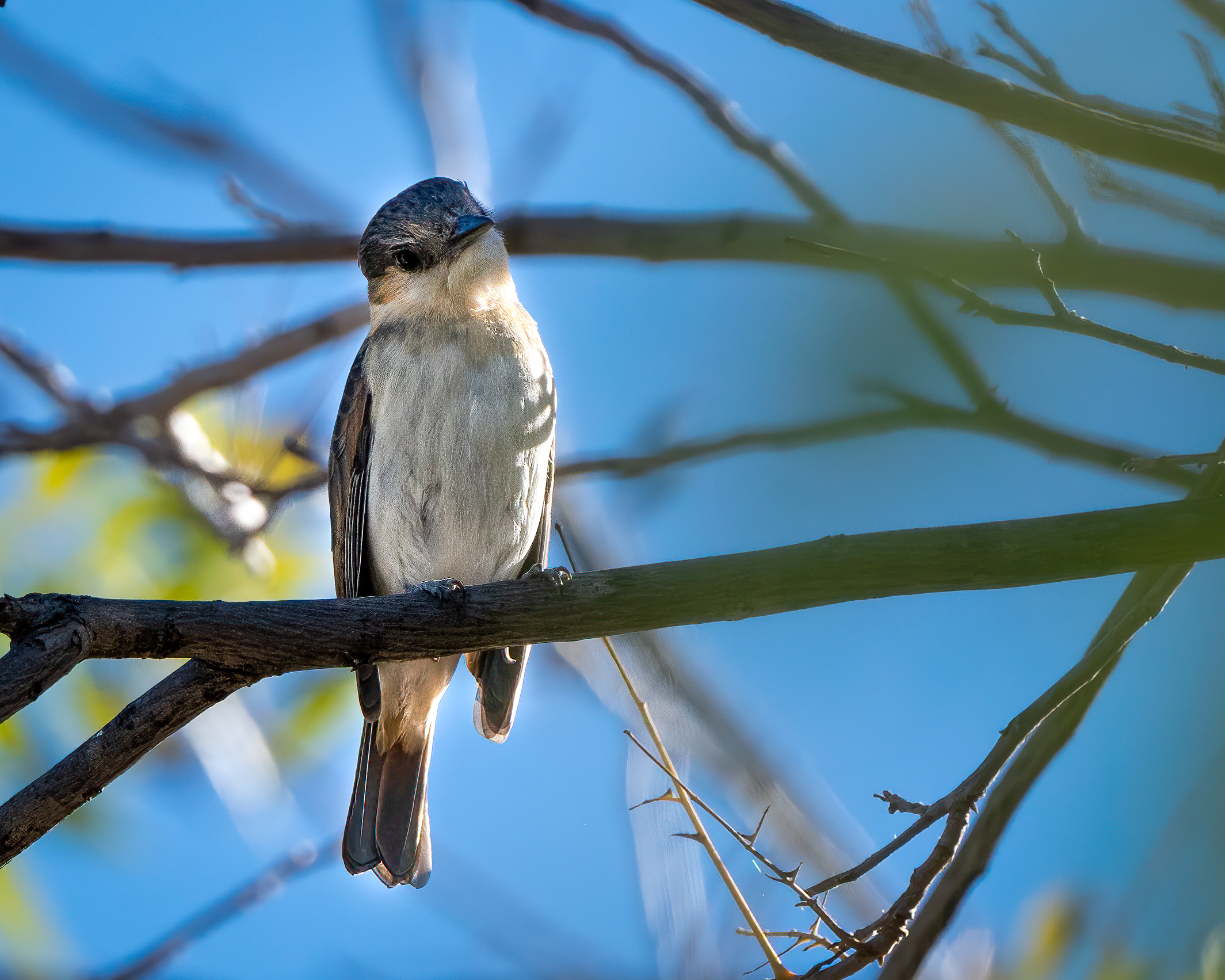
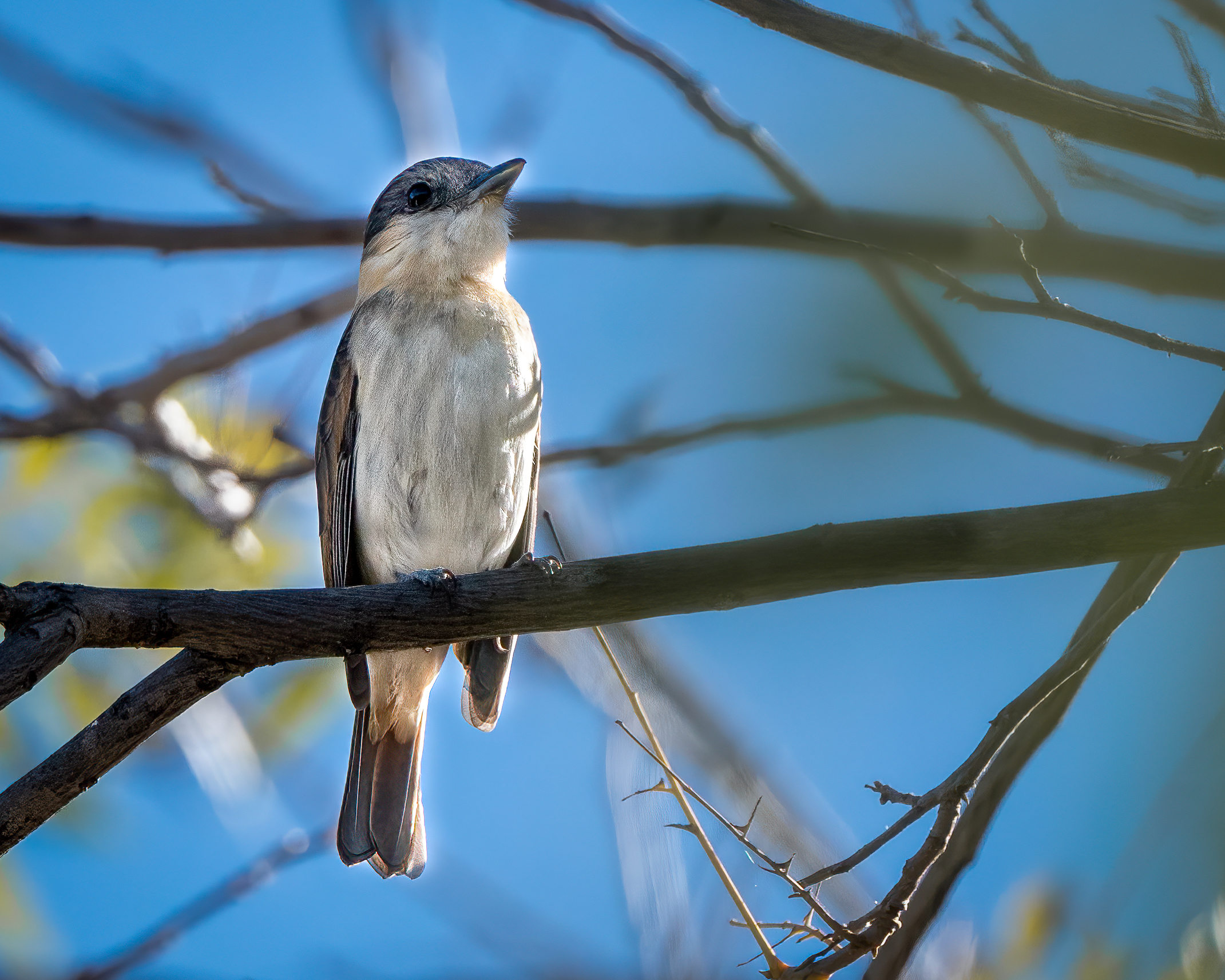
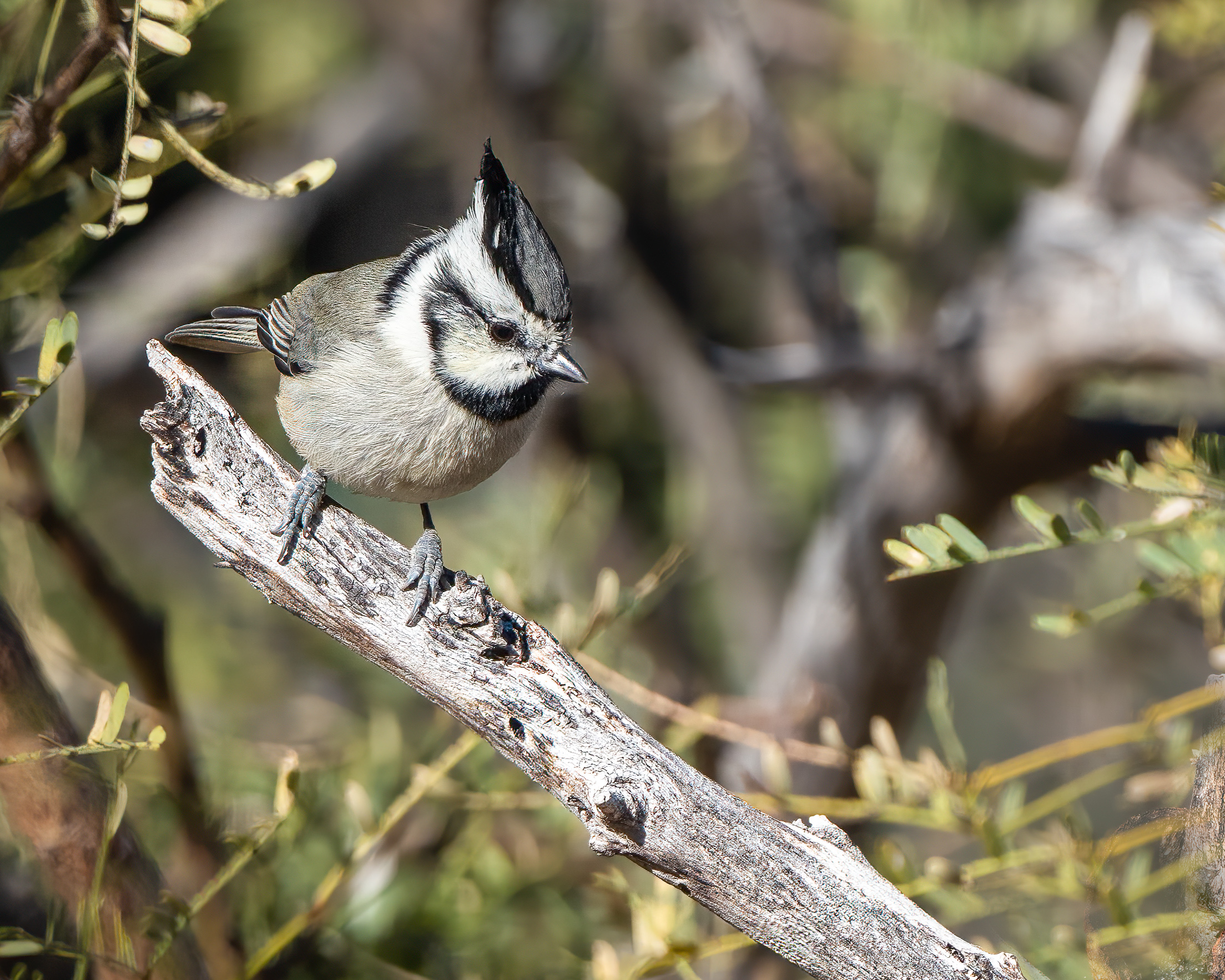
And, one of my many favorites, the Bridled Titmouse, made an appearance.
After photographing in the blind, a move was made to the main feeding station in the “front” yard. There, Lesser Goldfinches, Anna’s Hummingbirds, and even a Gulf Fritillary butterfly were observed.
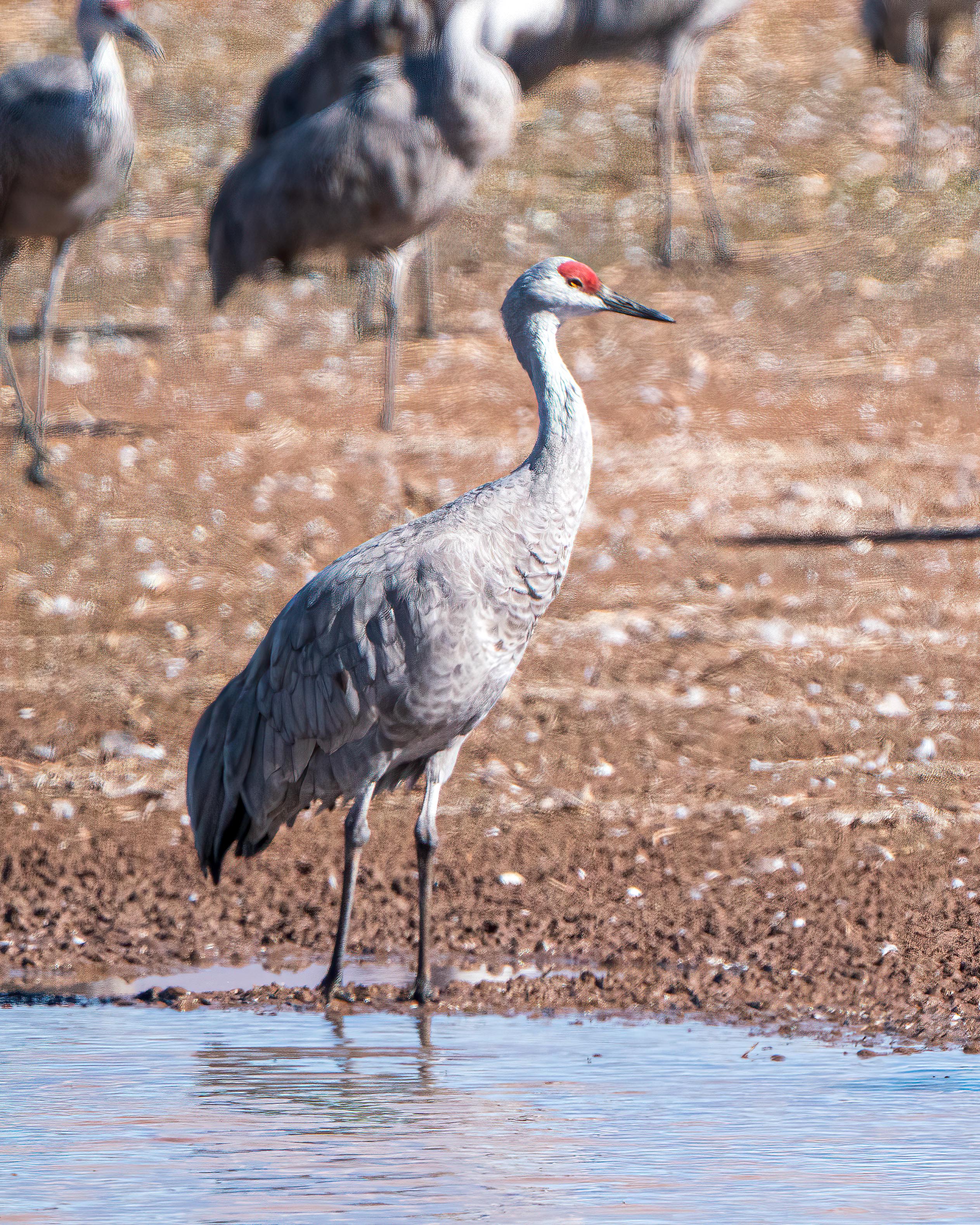
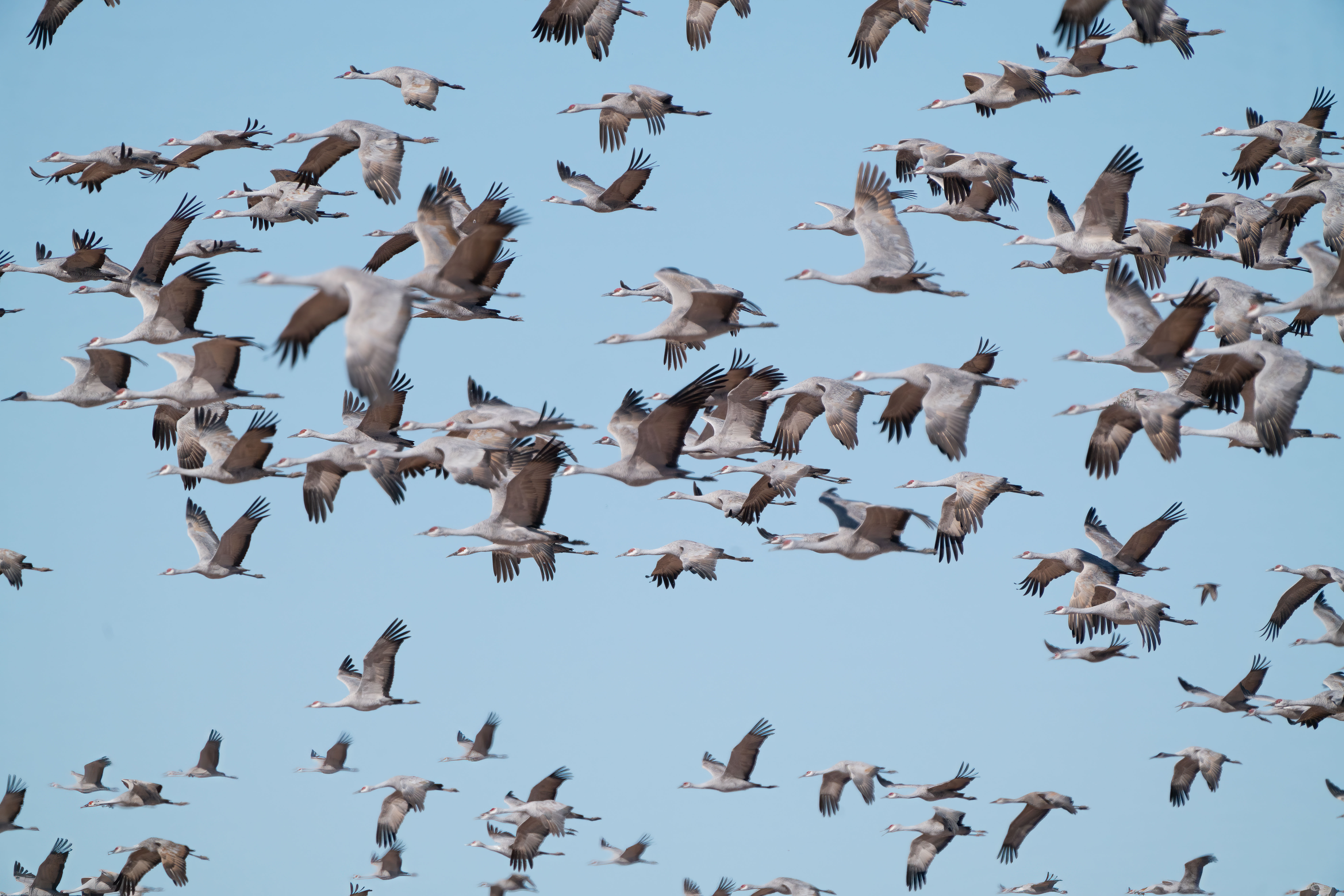
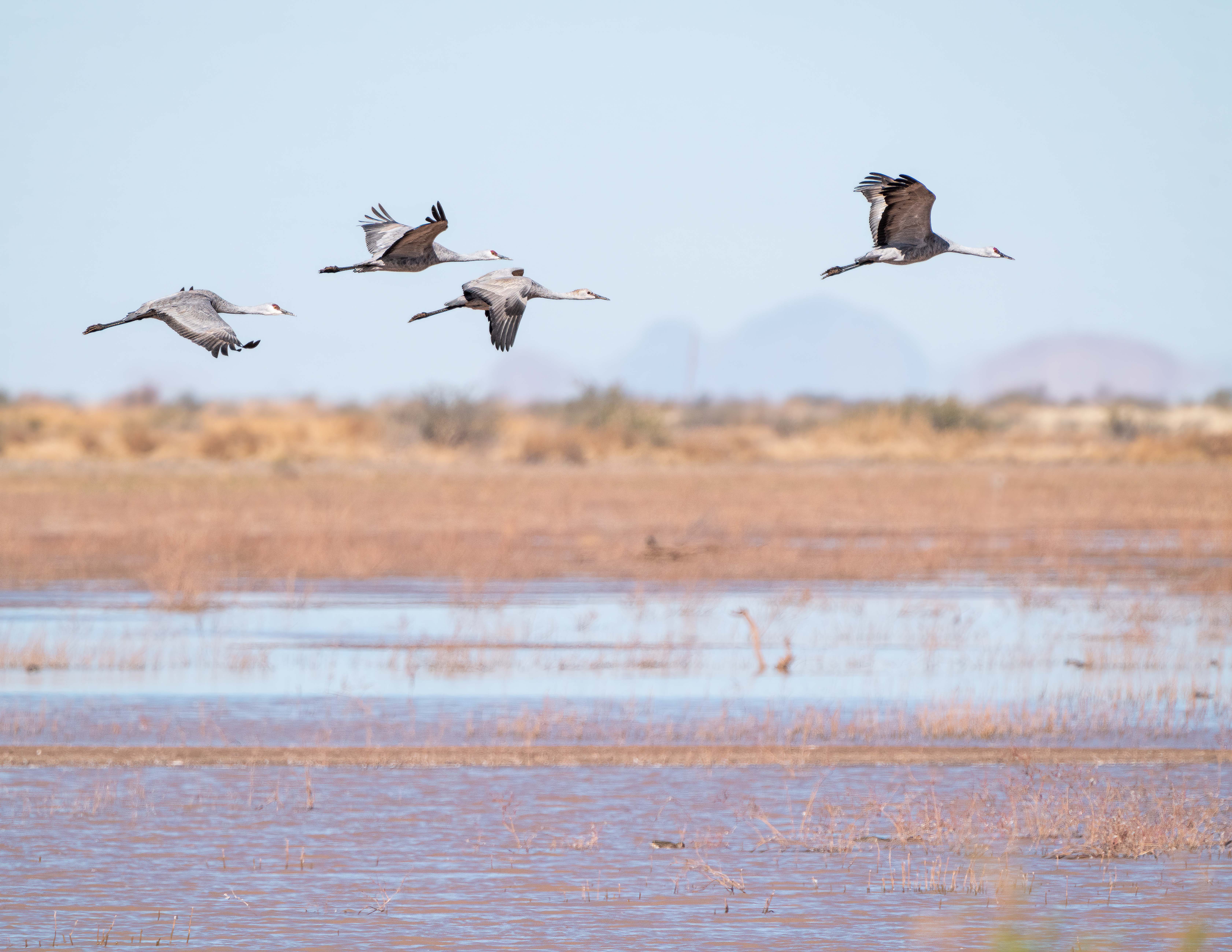
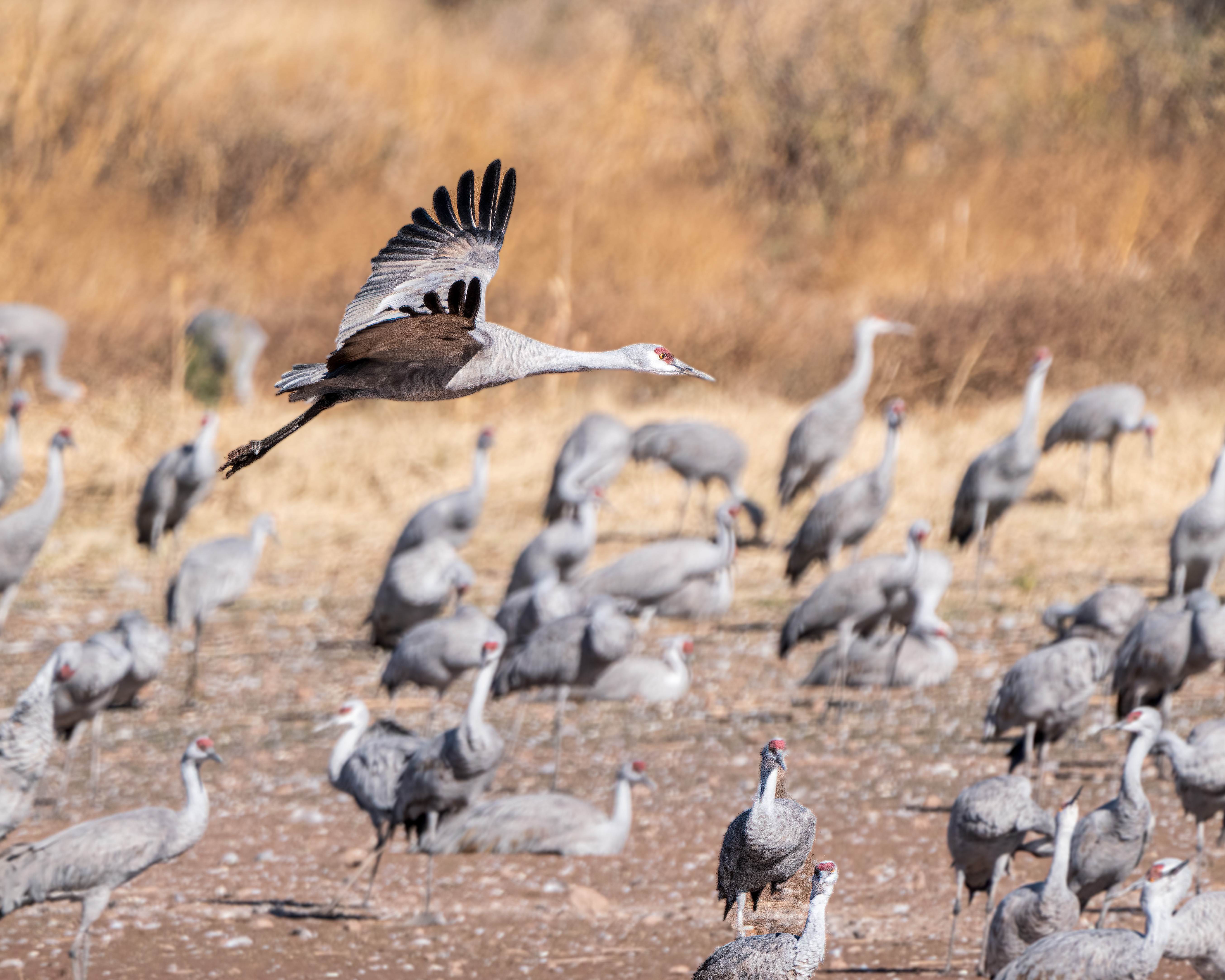
We were up early this morning to catch the flight out and away from the roost area (aka flight line). Swoop after swoop flew overhead as we photographed them.
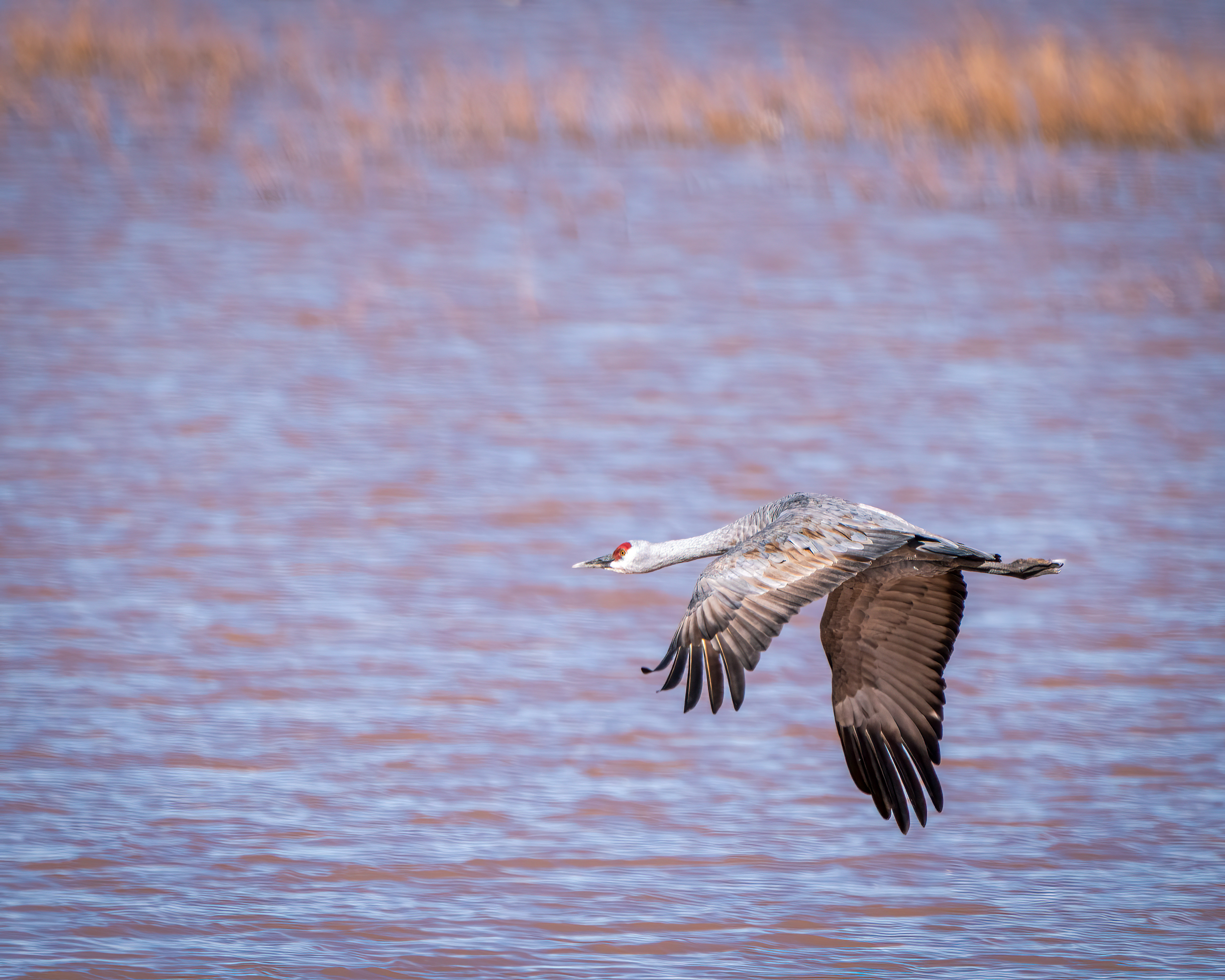
Returning to the motorhome, we had our usual breakfast of maple and brown sugar oatmeal, downloaded photographs, and began the laborious process of post processing. At about 1030, it was back to the reservoir to watch and photograph the Sandhill Cranes return to their roost area.
Later in the day, a few other birds made an appearance.
Another problem cropped up with the motorhome; the generator shut down, and gave an error essage regarding the rotor ($$$). We were now dependent on power from “solar” generators brought along, a Rockpals (don’t recommend it) and a Jackery (best of the best). Along with the coach and chassis batteries, we had enough power to run the computers for photo editing and CPAPs for sleeping! Fortunately, the refrigerator, water heater, and stove top work on LP so we were good to go.
On the left, our “dry camping” site at Whitewater Draw
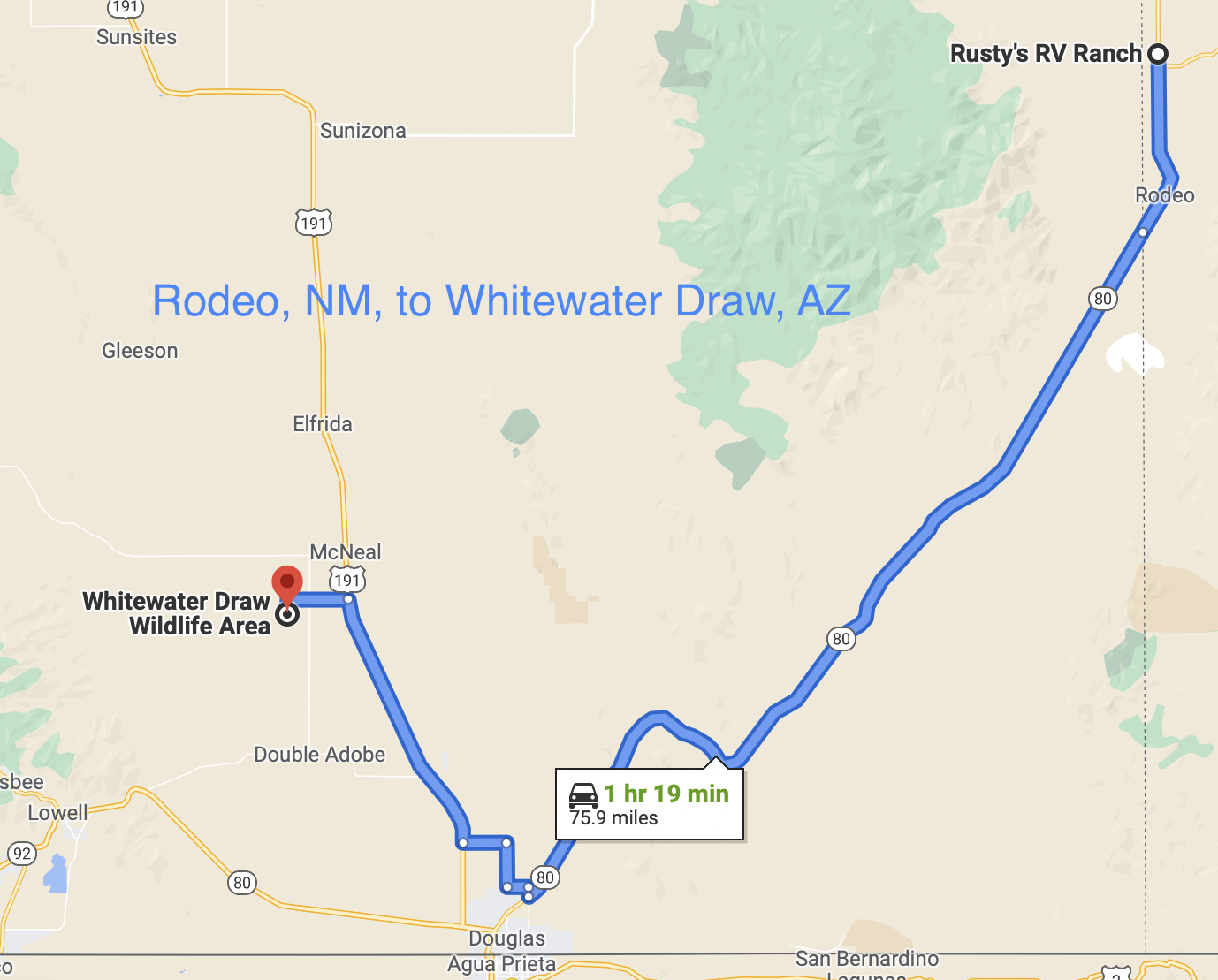
The next leg of the trip took us from Rusty’s RV Ranch in Rodeo, NM, to Whitewater Draw near McNeal, AZ. As a result of the short drive, we arrived via a few miles of dusty gravel roads just as they began returning from their morning feeding.
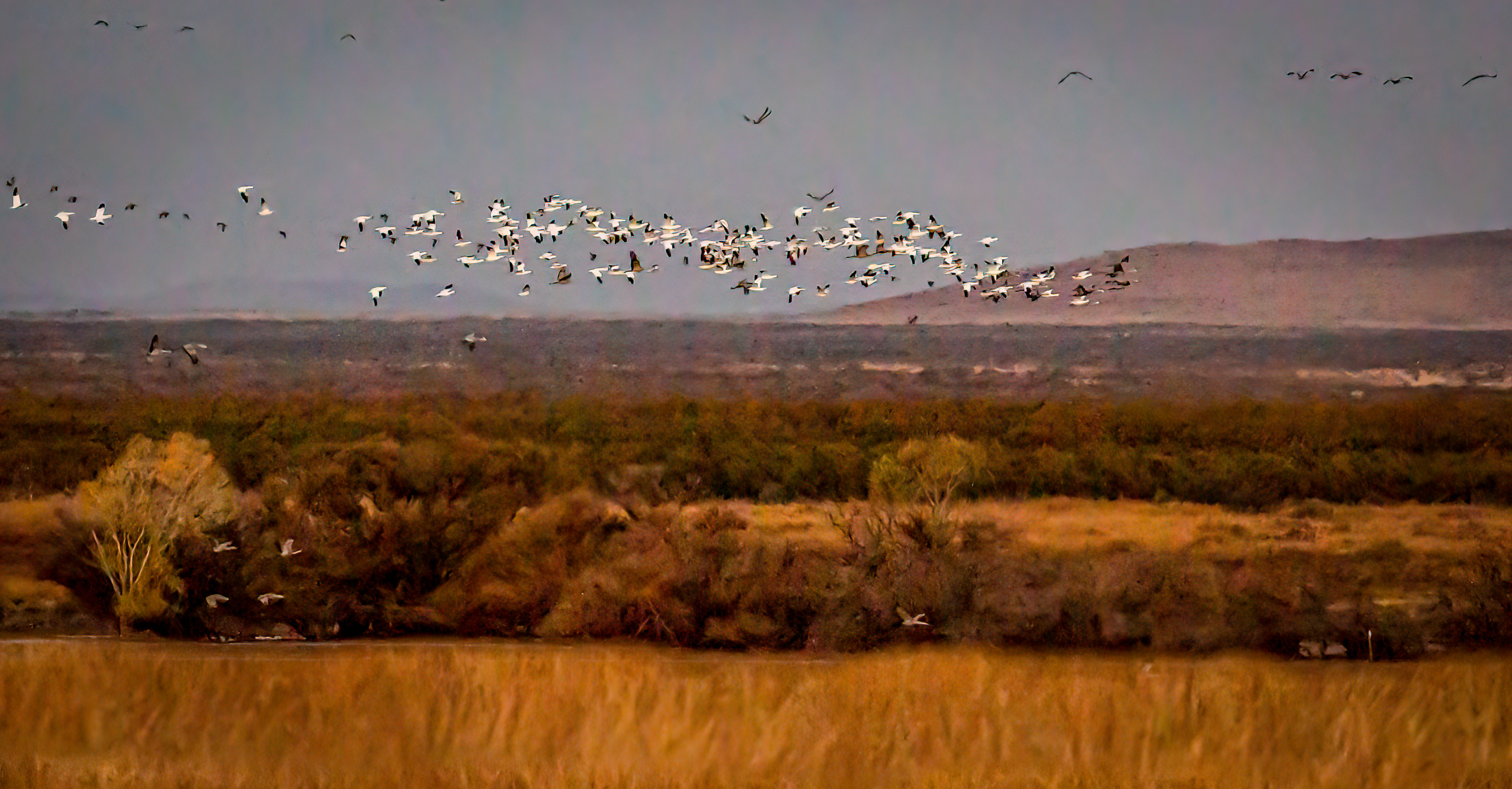
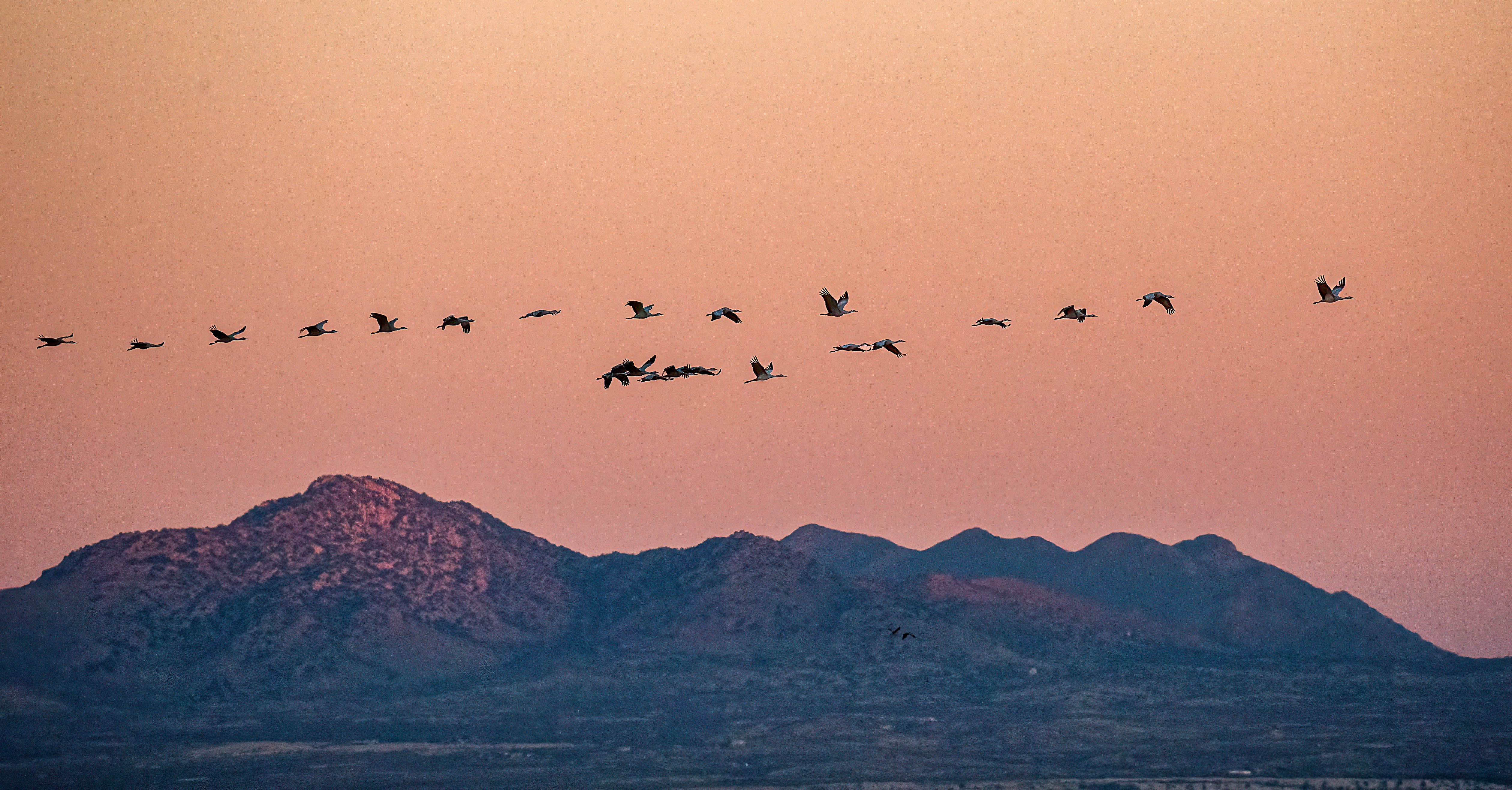
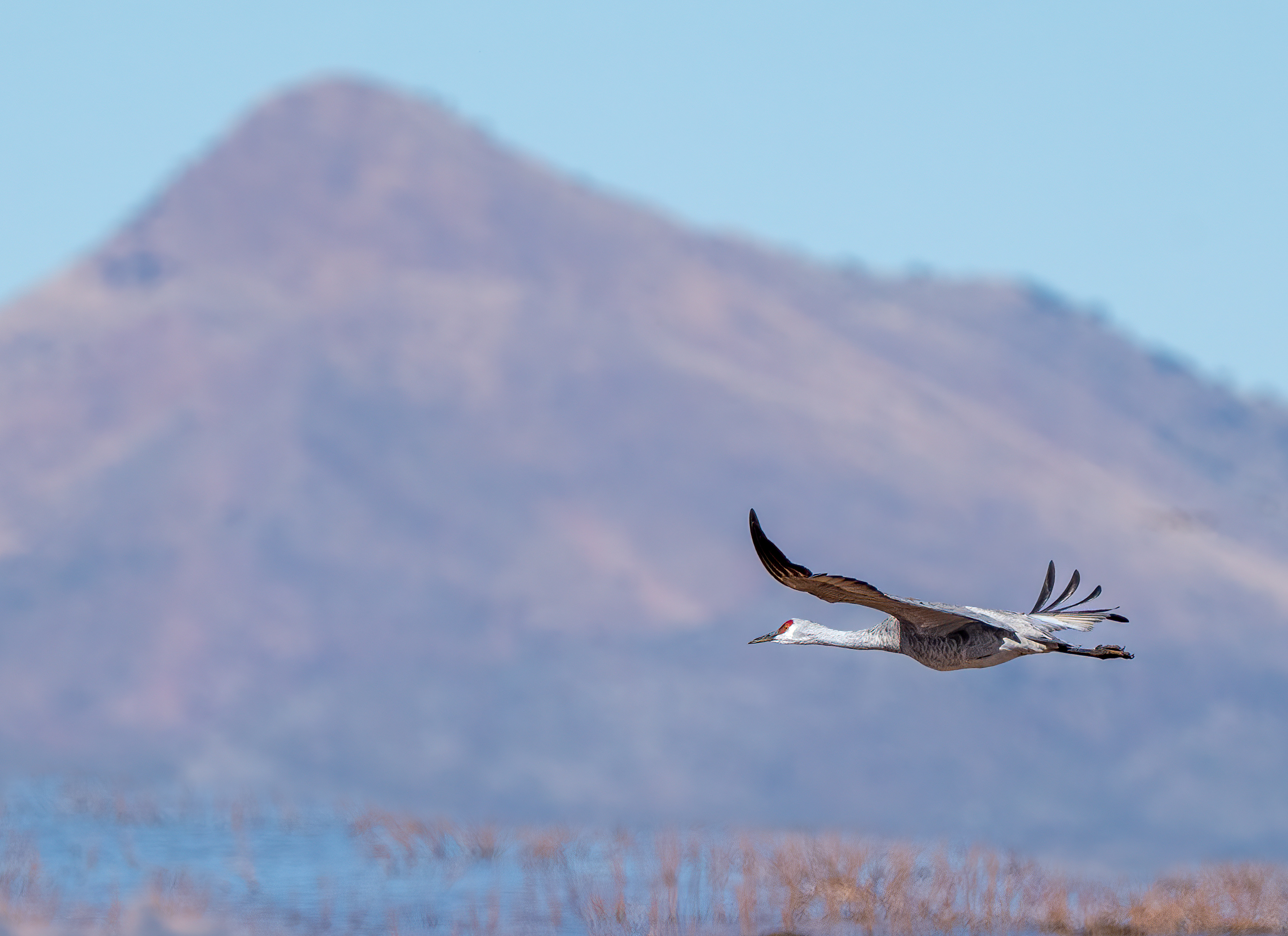
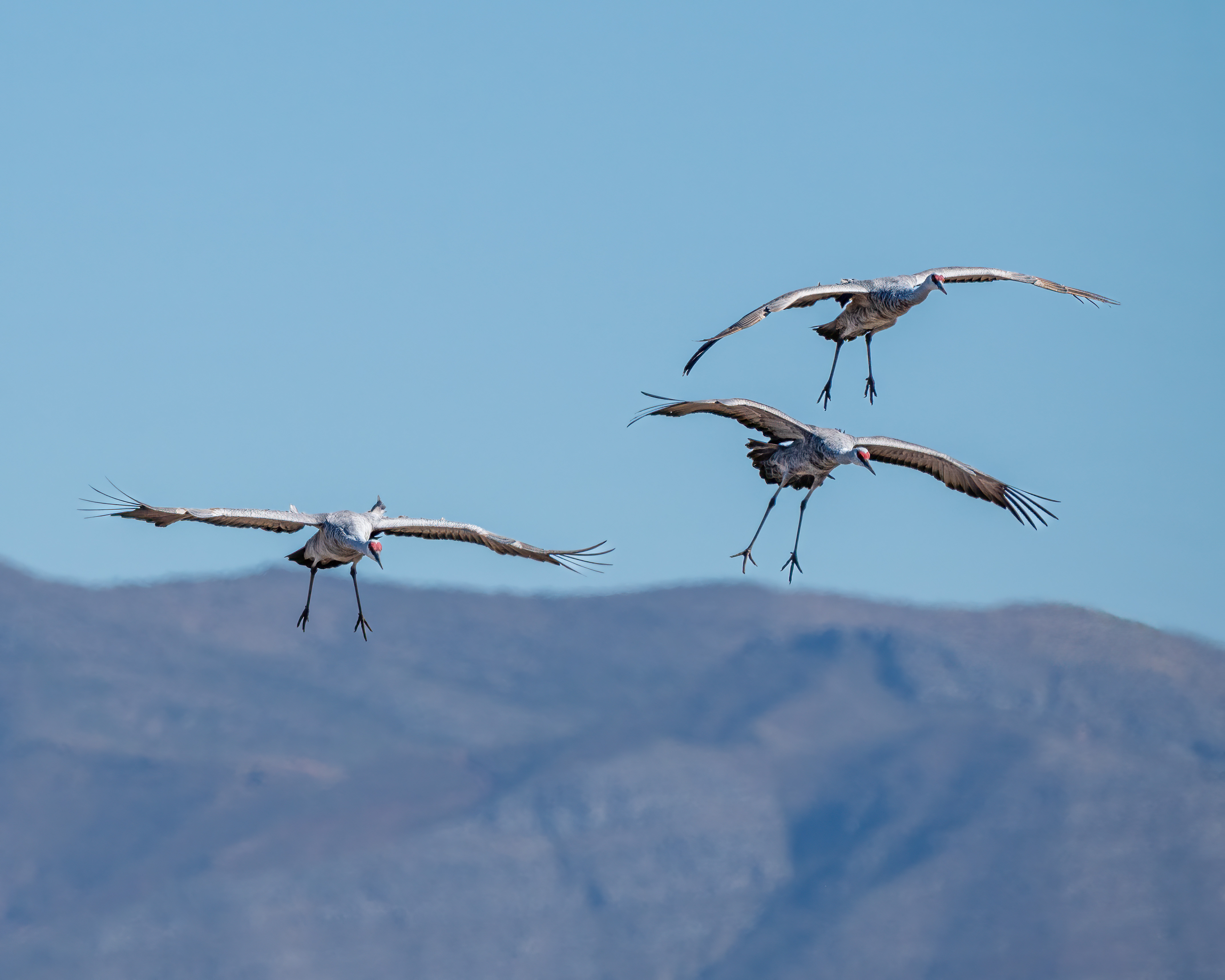
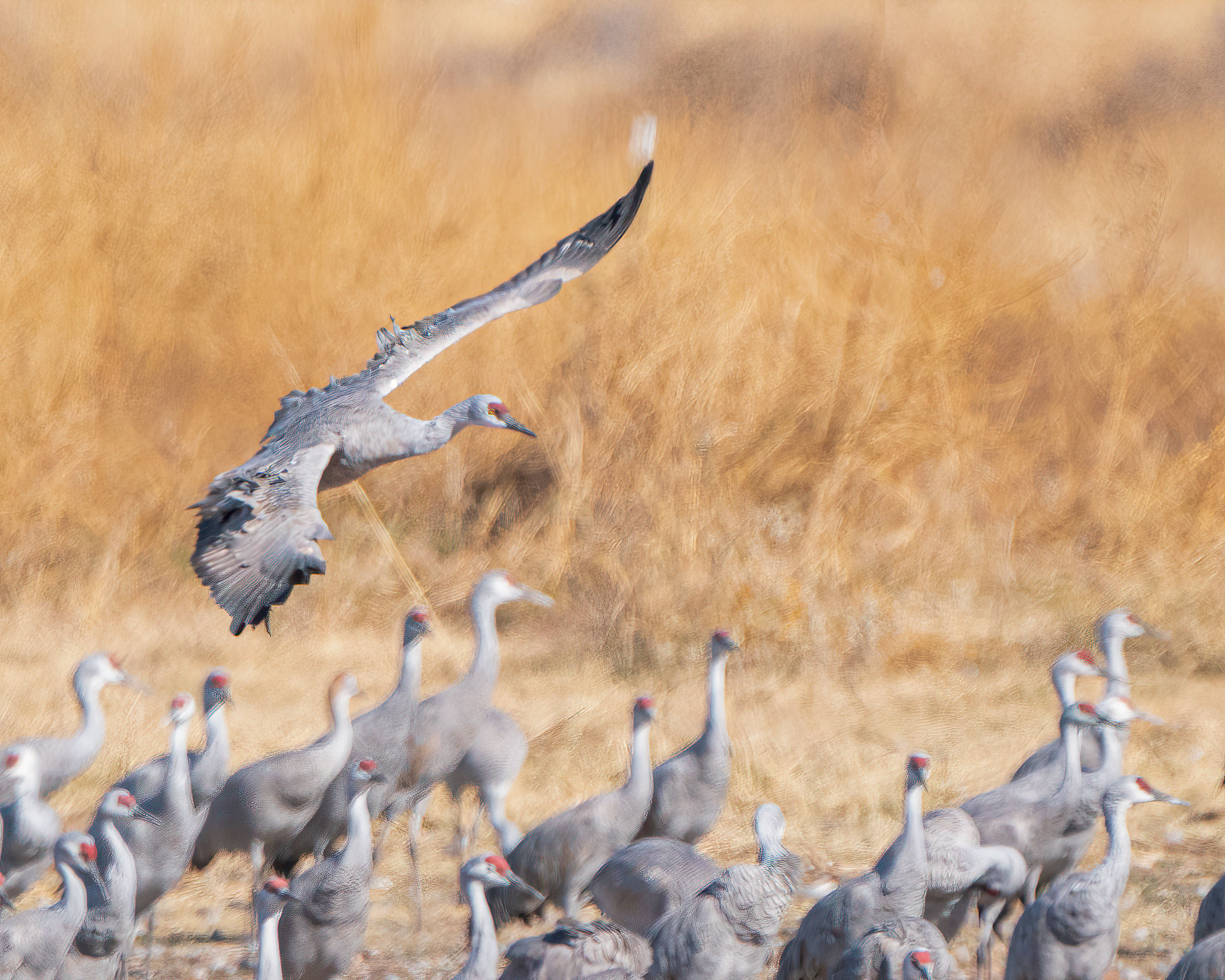
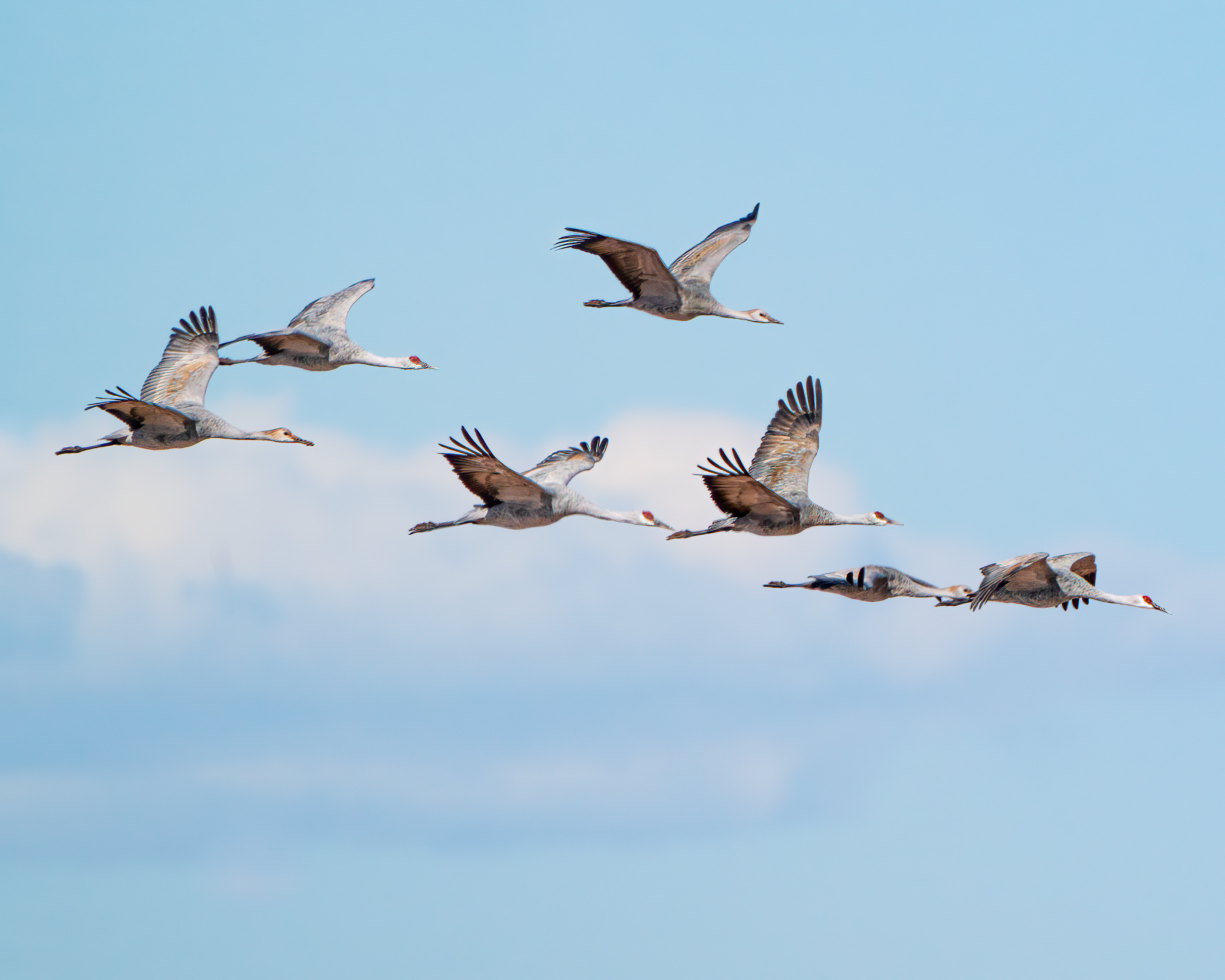
Located in southeastern Arizona, Whitewater Draw is a major roost site for Sandhill Cranes, Arizona Game and Fish Department currently manages Whitewater Draw for waterfowl, cranes, and other wetland associated birds. Each winter Whitewater Draw offers memorable sights and sounds of more than 20,000 sandhill cranes. These birds spend the night standing in Whitewater Draw’s shallow waters to evade predators, and then fly out each morning about sunrise to feed and socialize in the surrounding area. They begin returning to Whitewater Draw about 11 AM, continuing into the afternoon and evening.
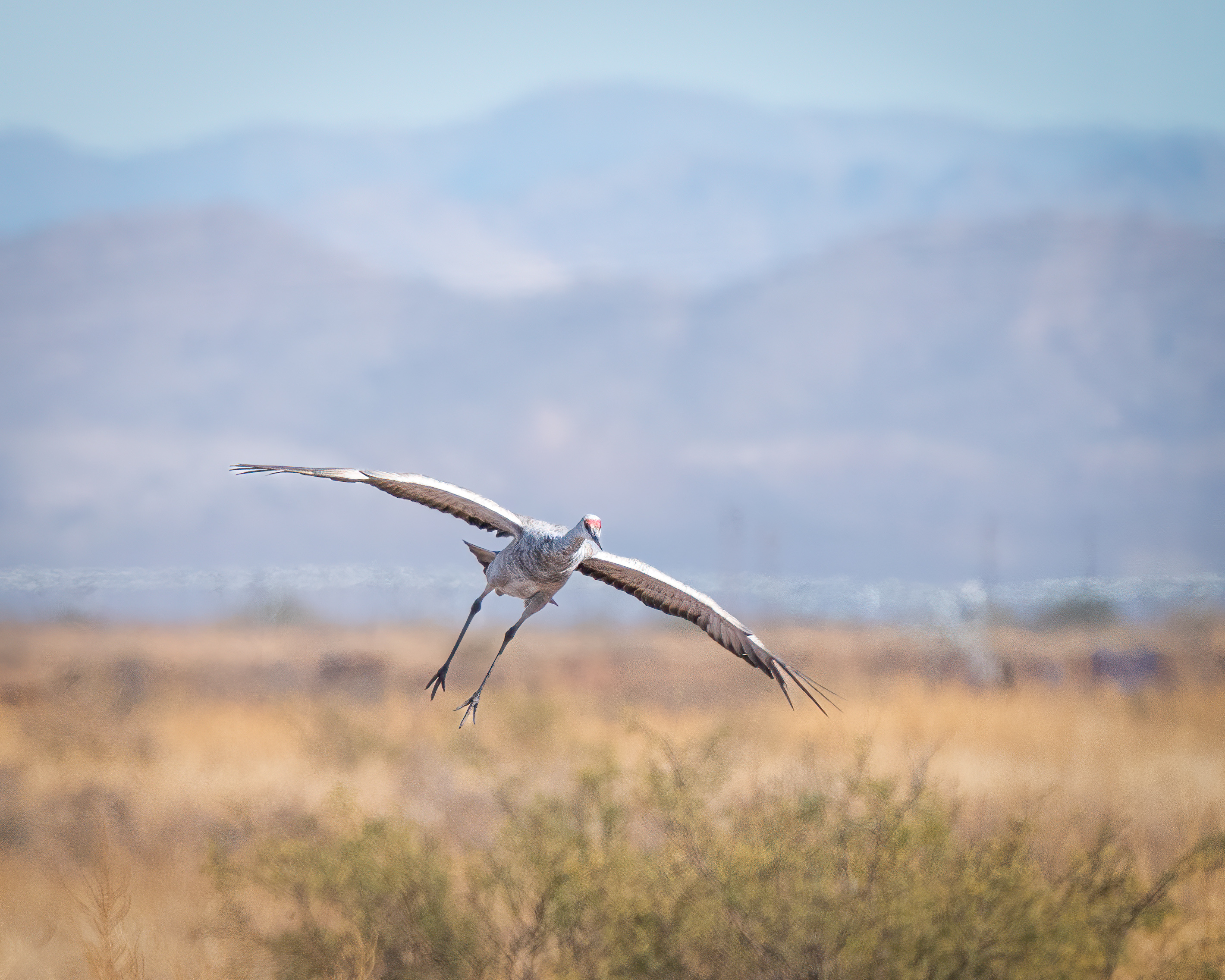
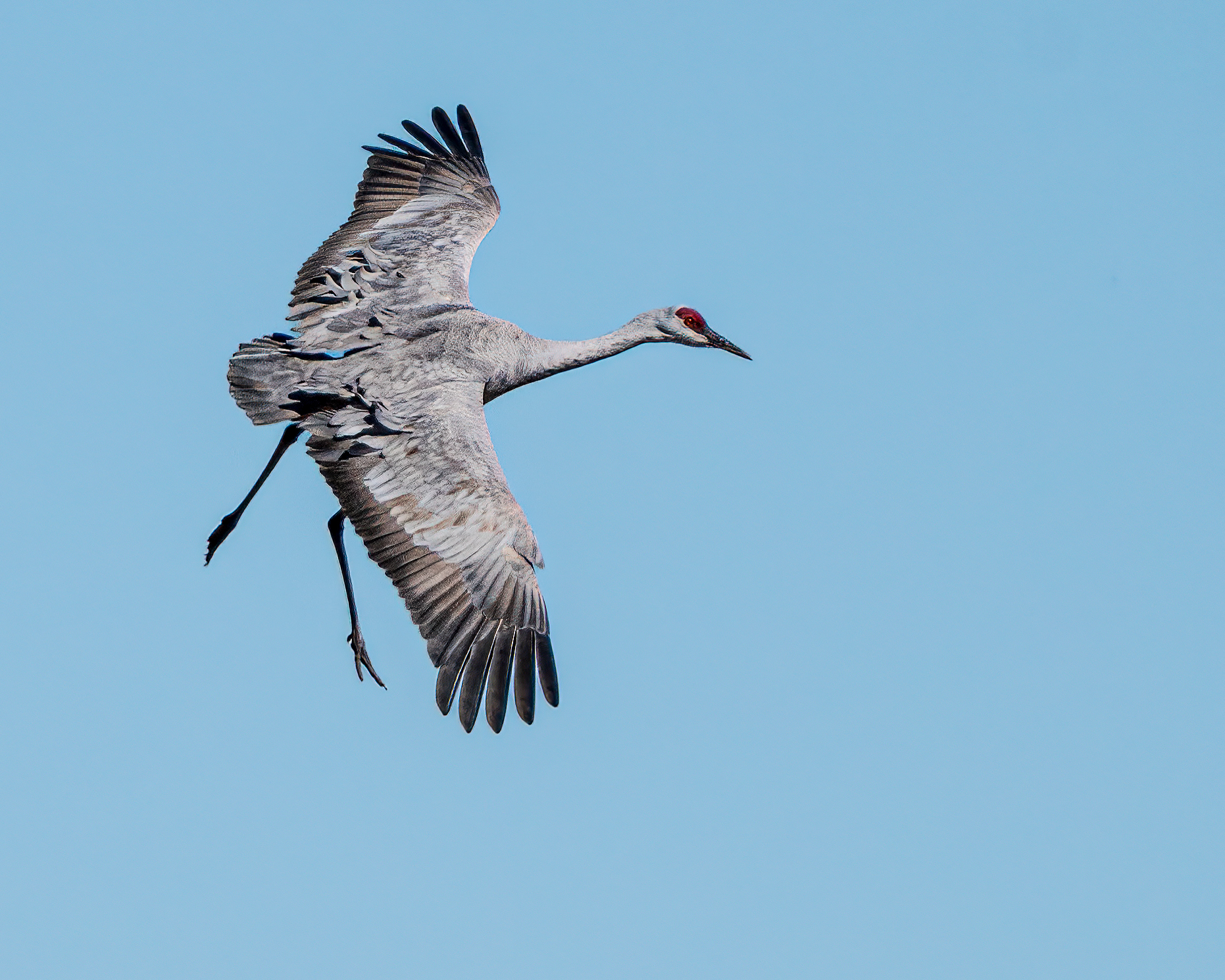
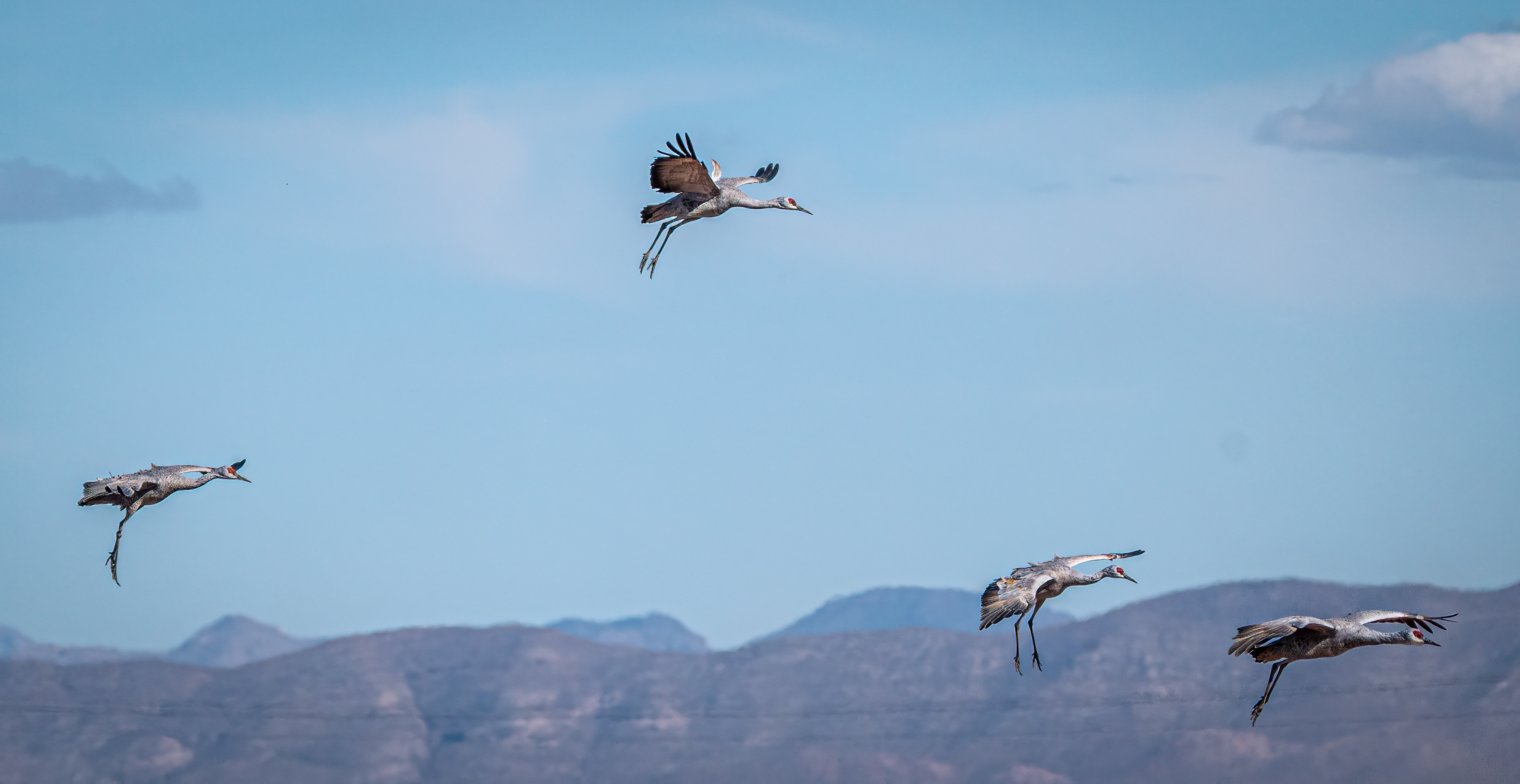
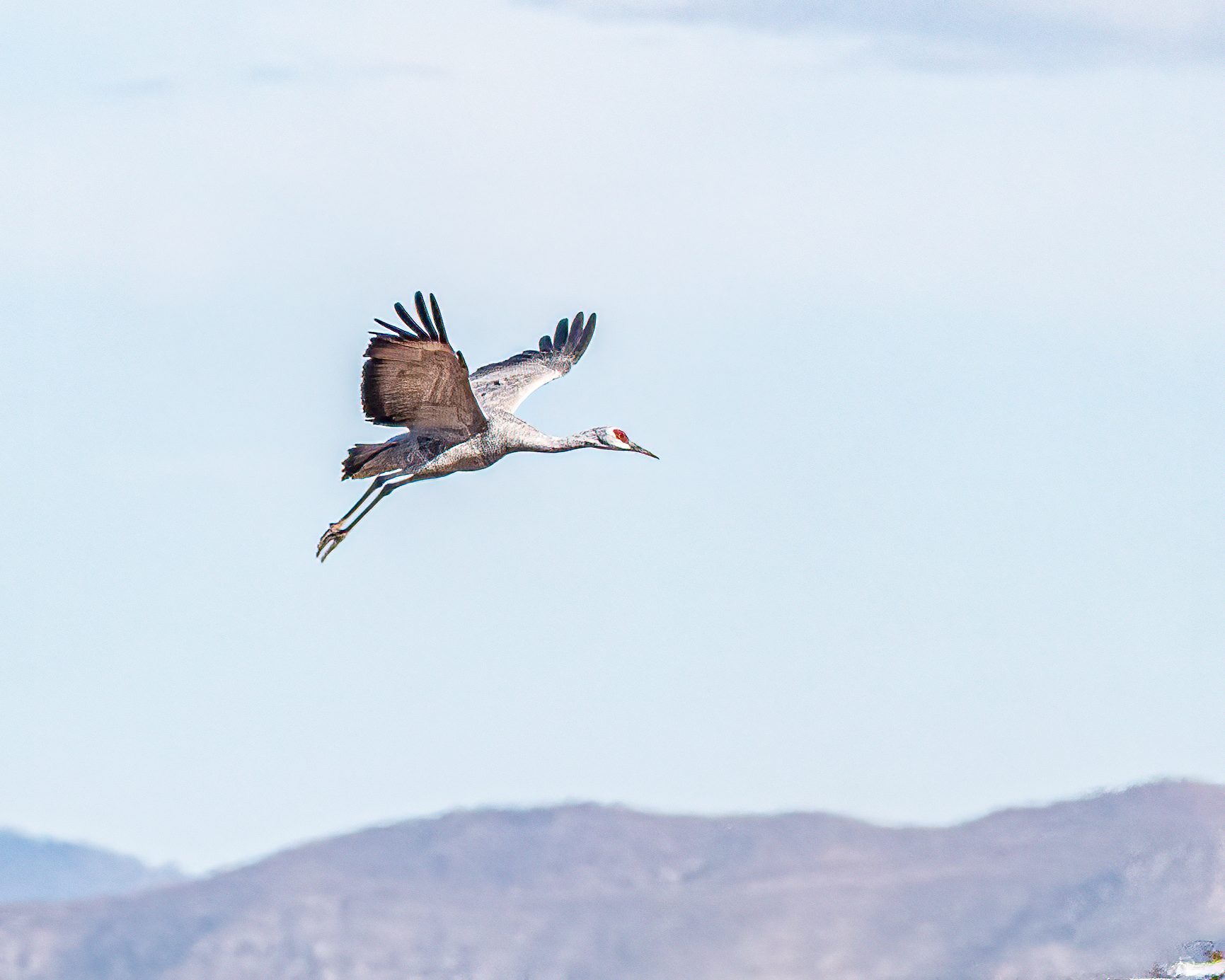
It didn’t take long to capture the amazing sights of the cranes coming in for a landing, often flying in “V” formation. And the sound was a cacophony of squeaks, cries, otherwise “obnoxious” sounds.
Whitewater Draw about 11 AM
Because this area is so far off the beaten path, dry camping is a must; usually no problem for us. However, the inverter refused to work, negating power from the batteries to the receptacles. The generator bailed us out and allowed us to use all the outlets and appliances, exspecially for heat and keeping the batteries charged..
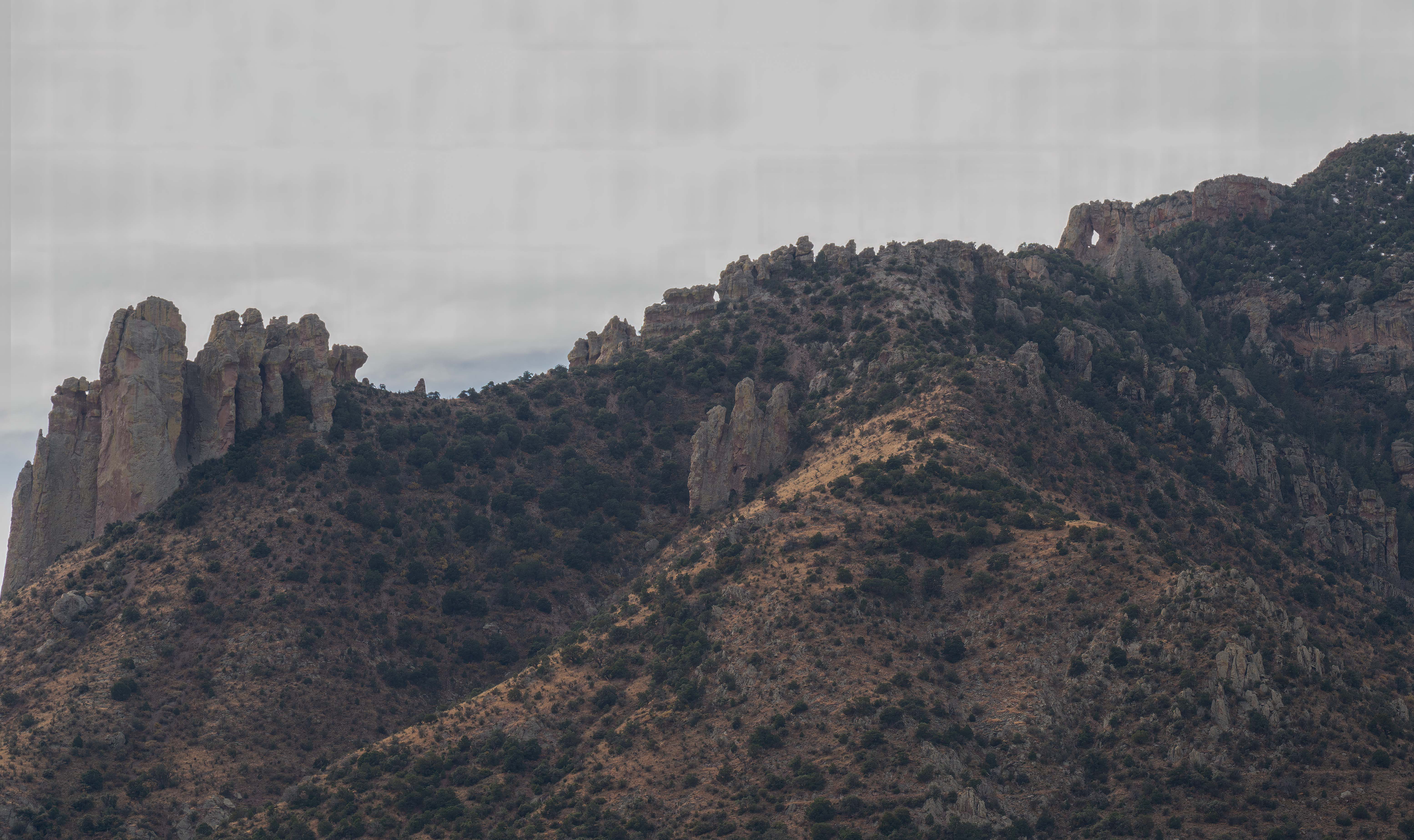
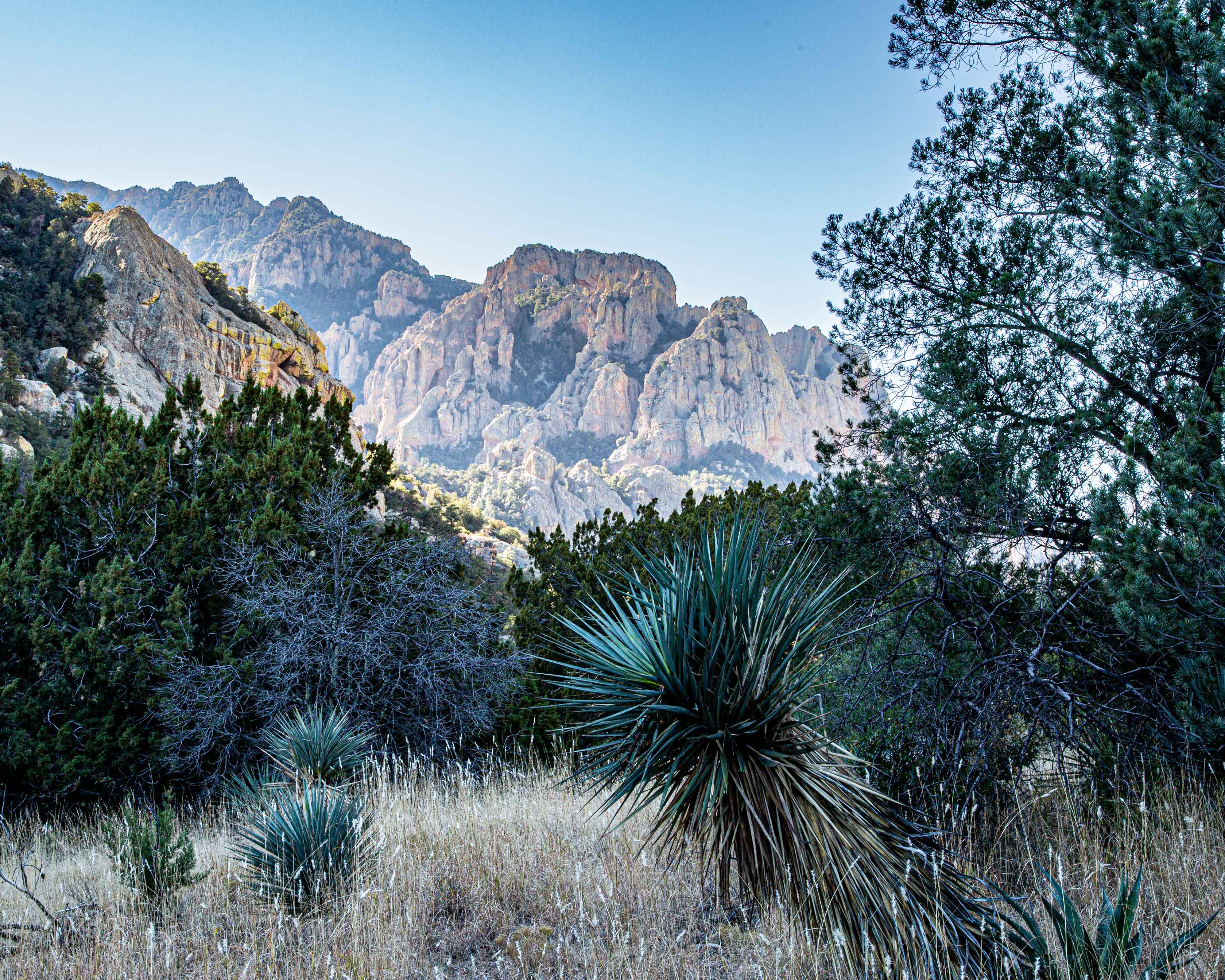
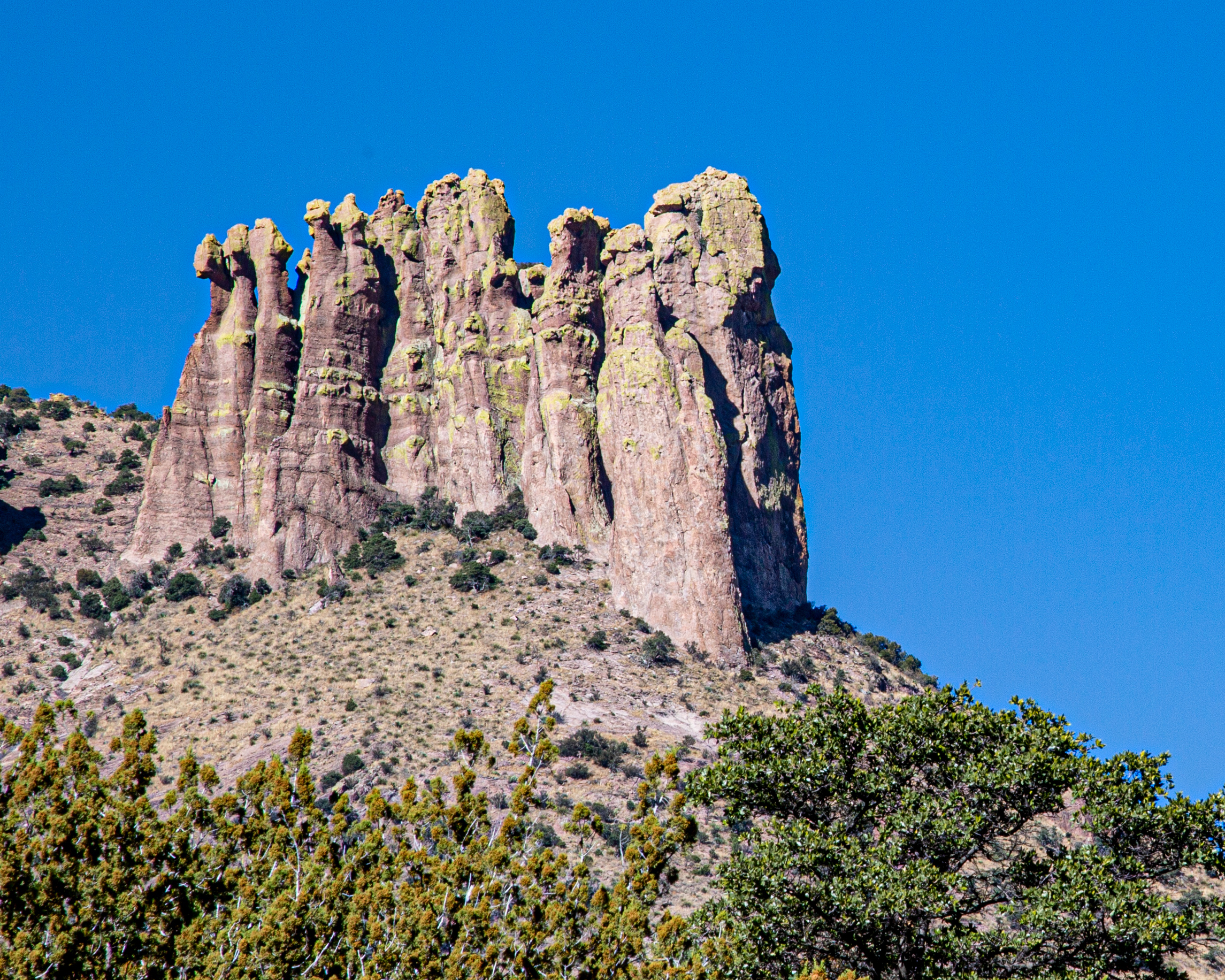
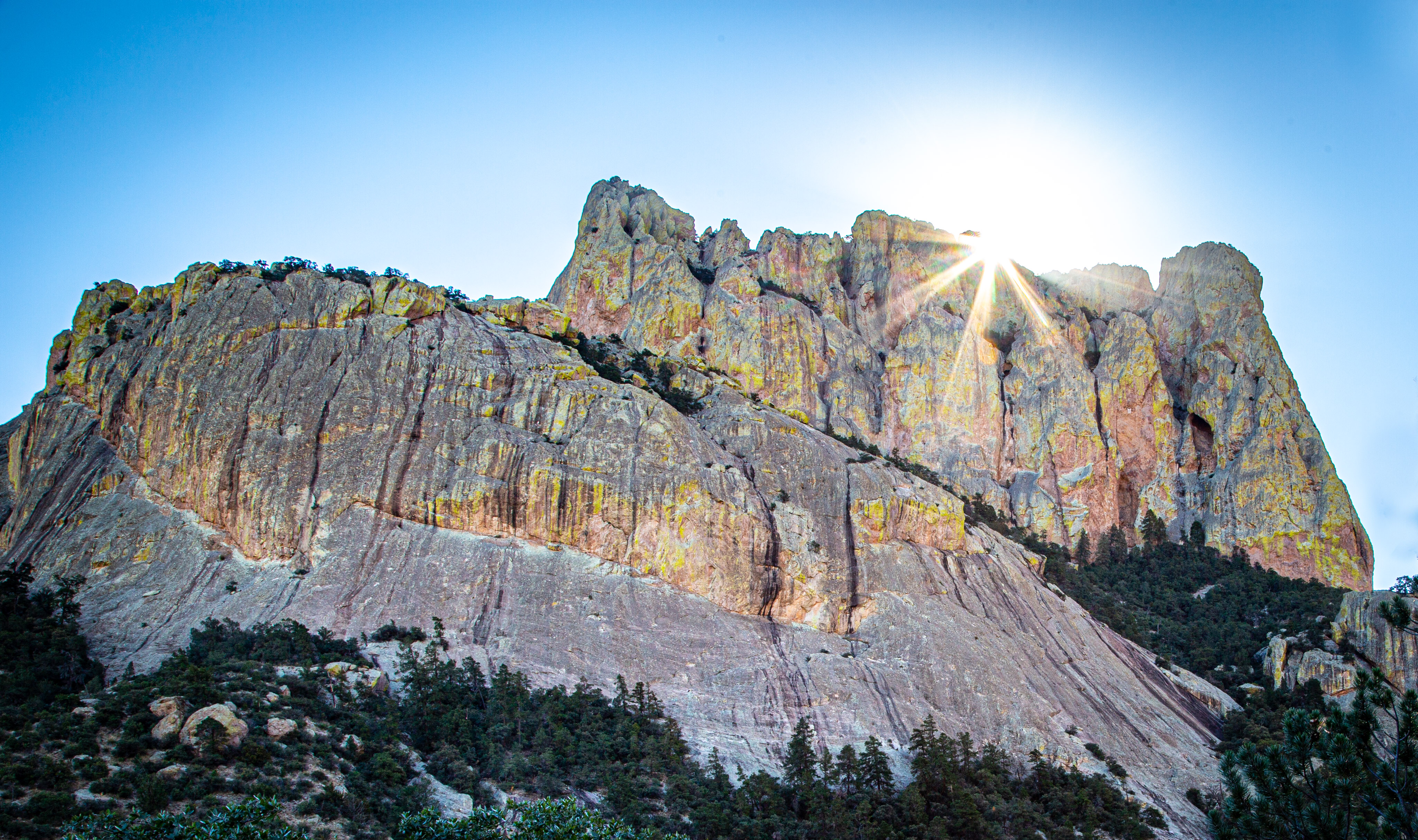
Today, we drove the road to Paradise to capture a couple of landscapes in the morning light. Yesterday, an arch was observed at the top of one of the rhyolite mountains, and this morning a smaller arch next to the larger arch could be seen.
On the road to Paradise
A final 200-yard hike to a scenic viewpoint afforded seemingly different views of the same mountains that were photographed previously. This is, in my opinion, the Zion National Park of Arizona, and just as pretty as the Zion NP in Utah.
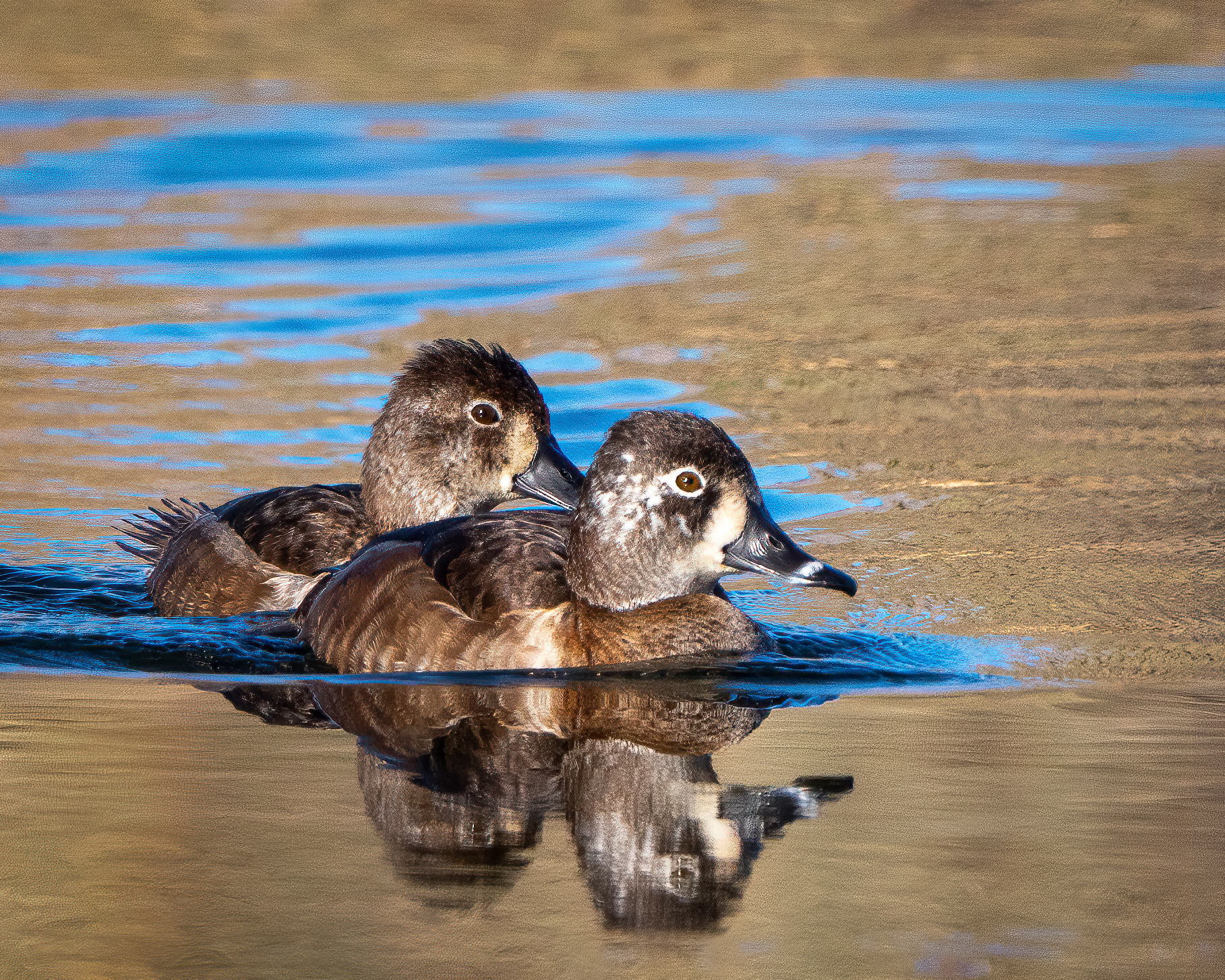
Arizona’s Willow Tank has been one of the best bird watching sites in the Portal/Rodeo area outside of Cave Creek Canyon. It was our first stop. The one acre pond yielded Ring-necked Ducks, and Dan was able to photograph a family of White-collared Peccaries (Javelina).
Willow Tank
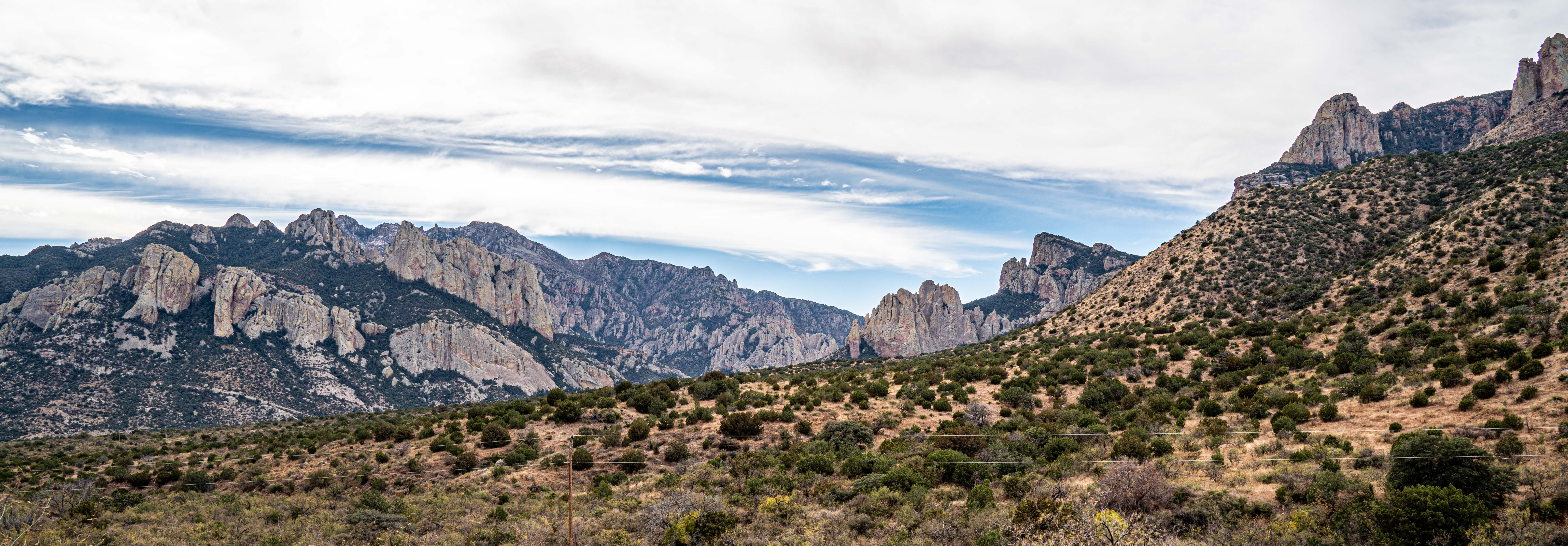
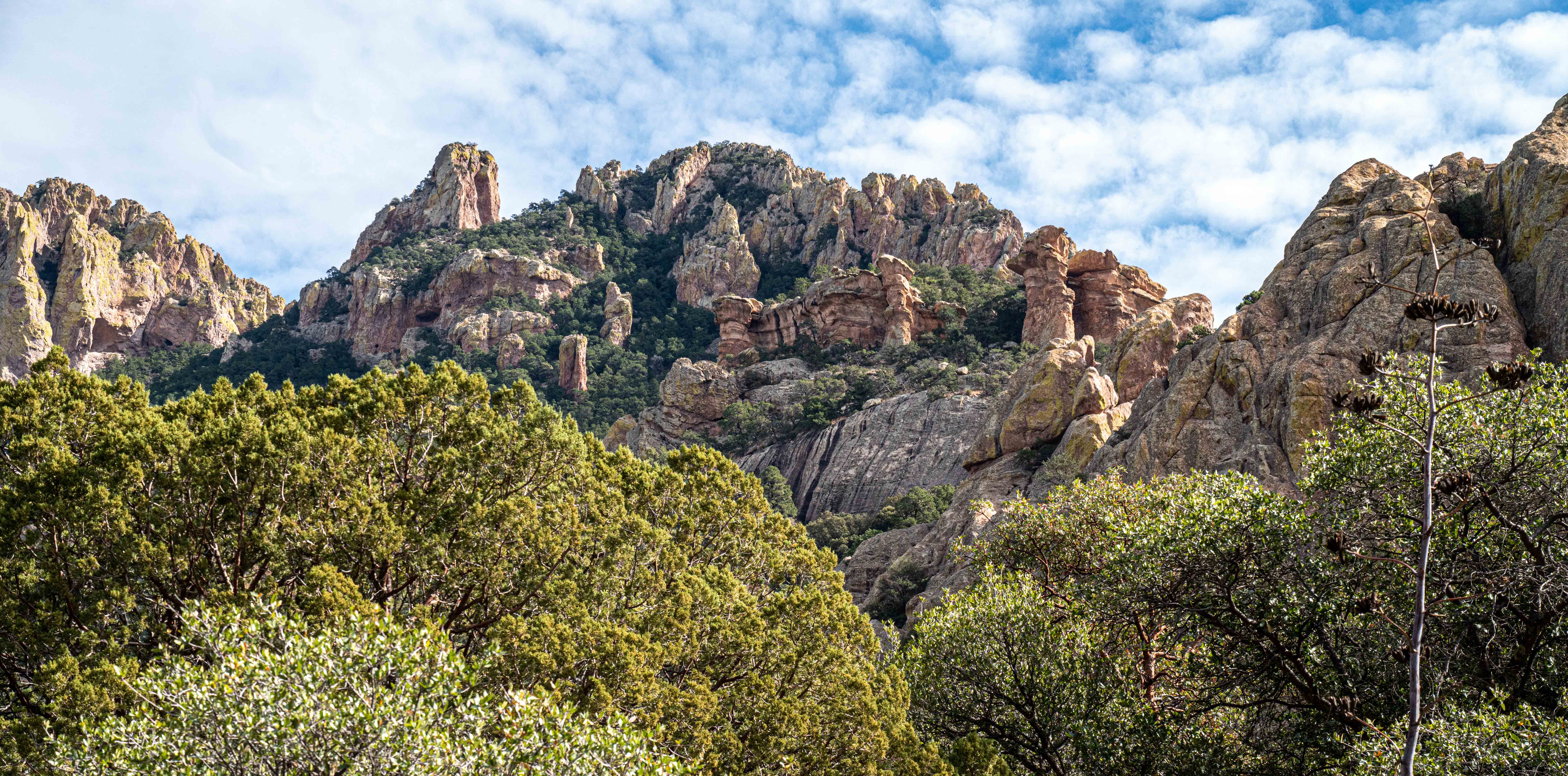
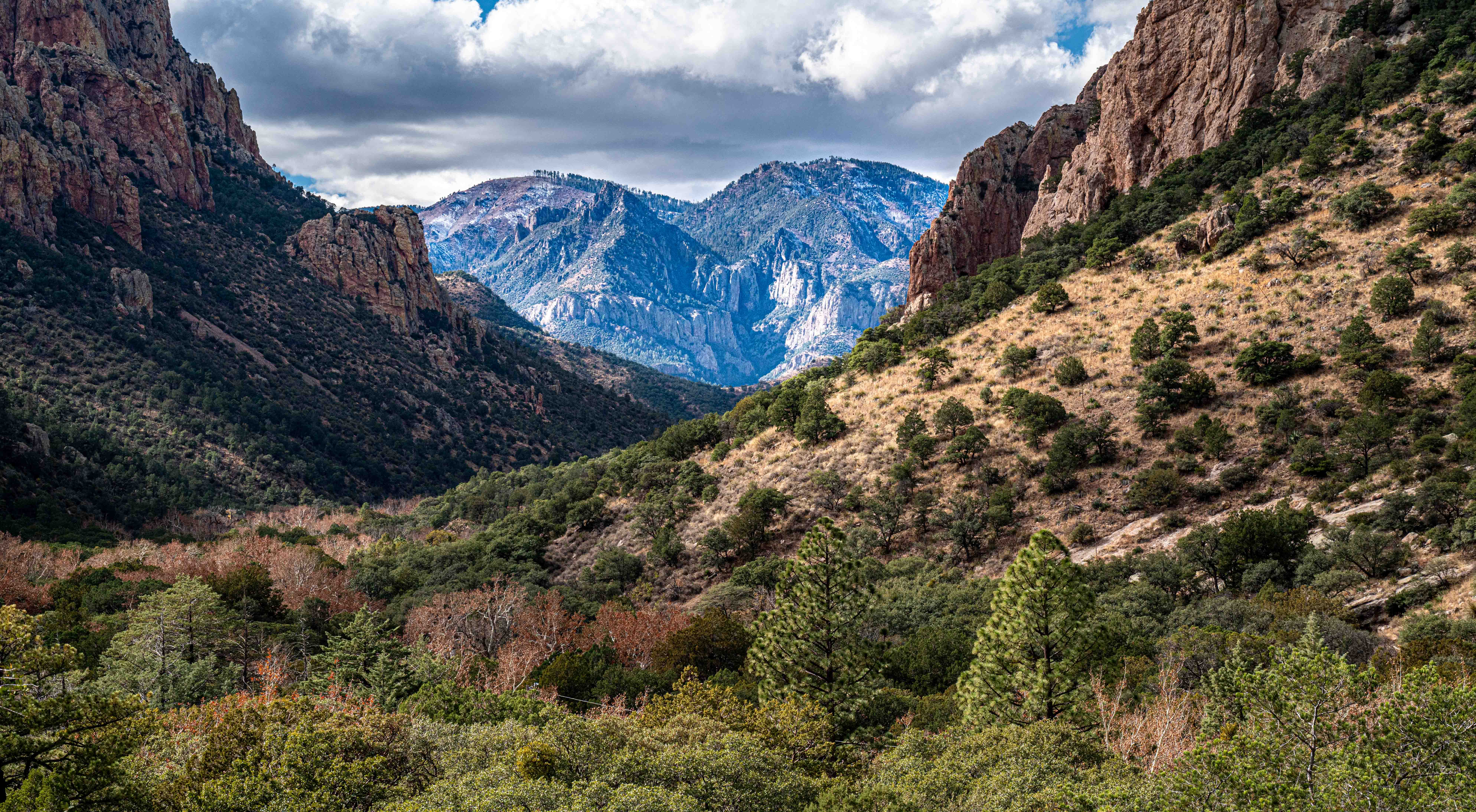
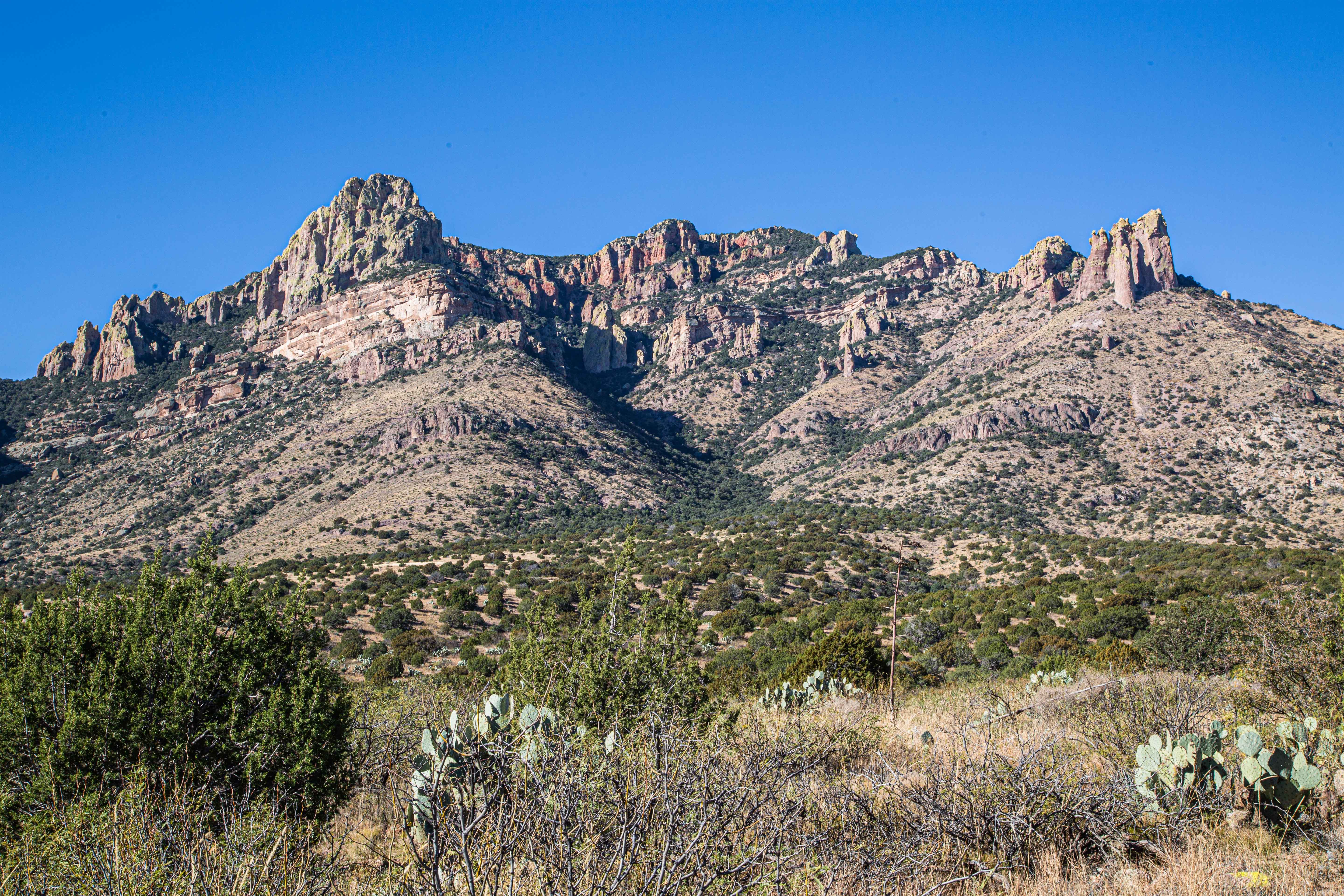
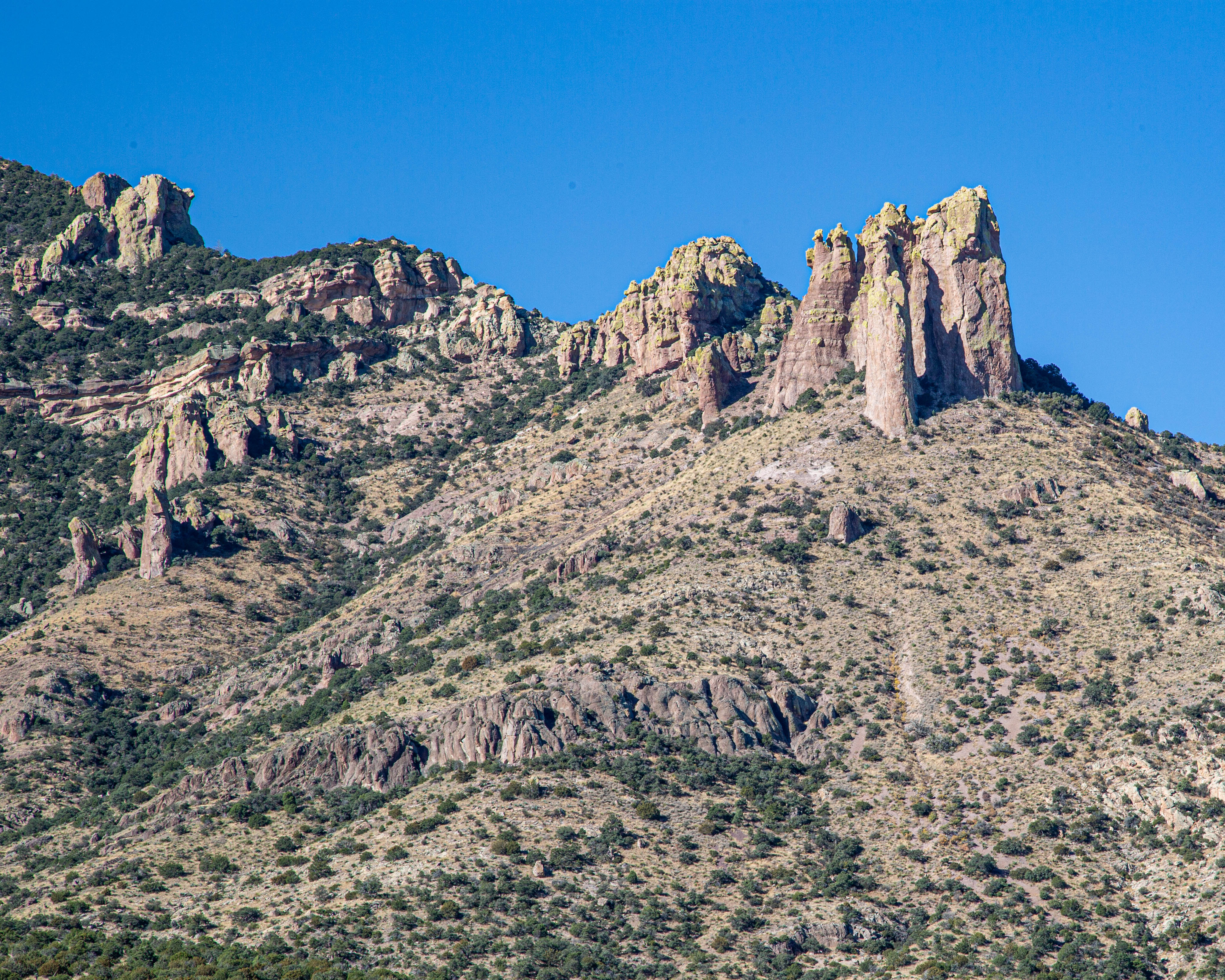
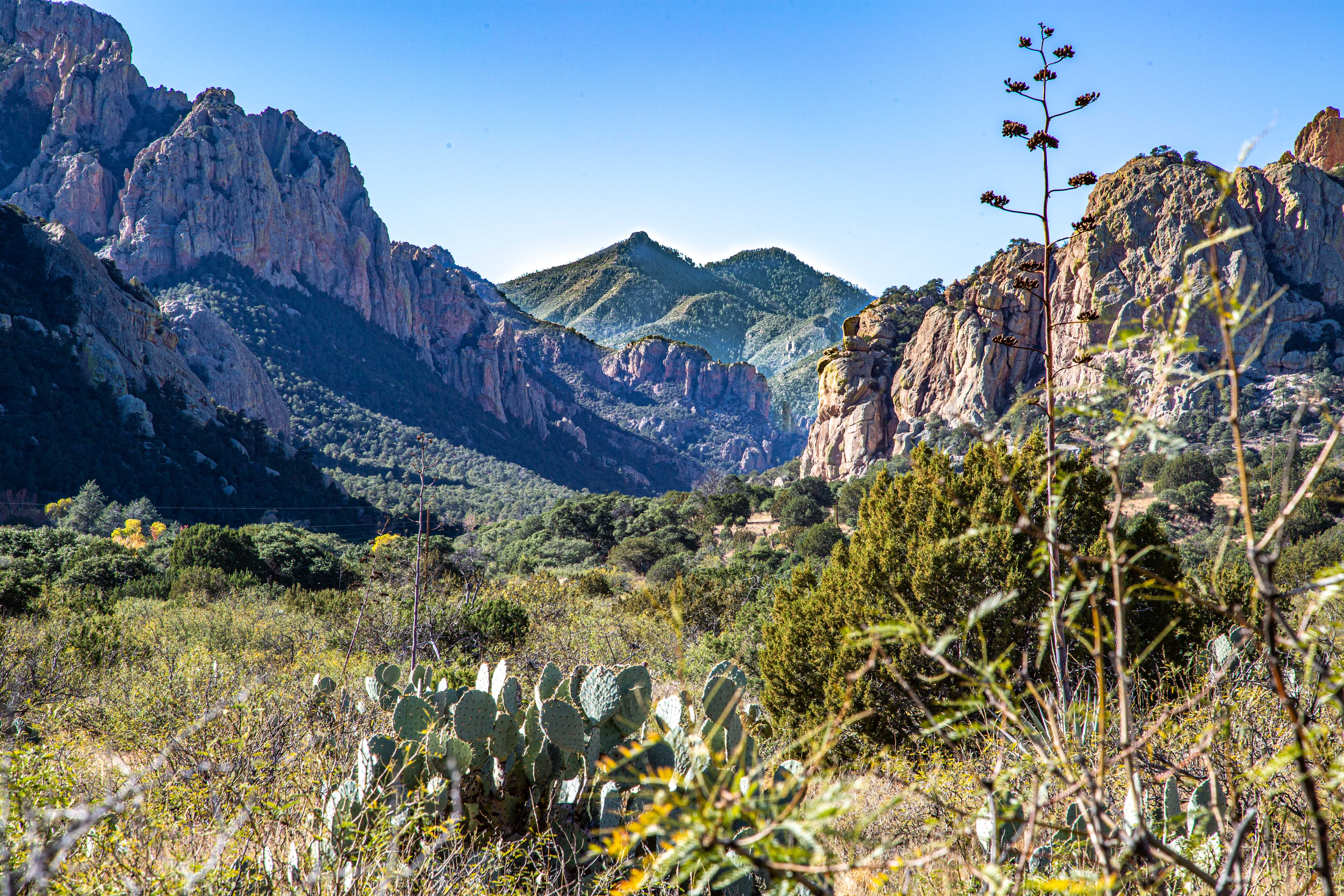
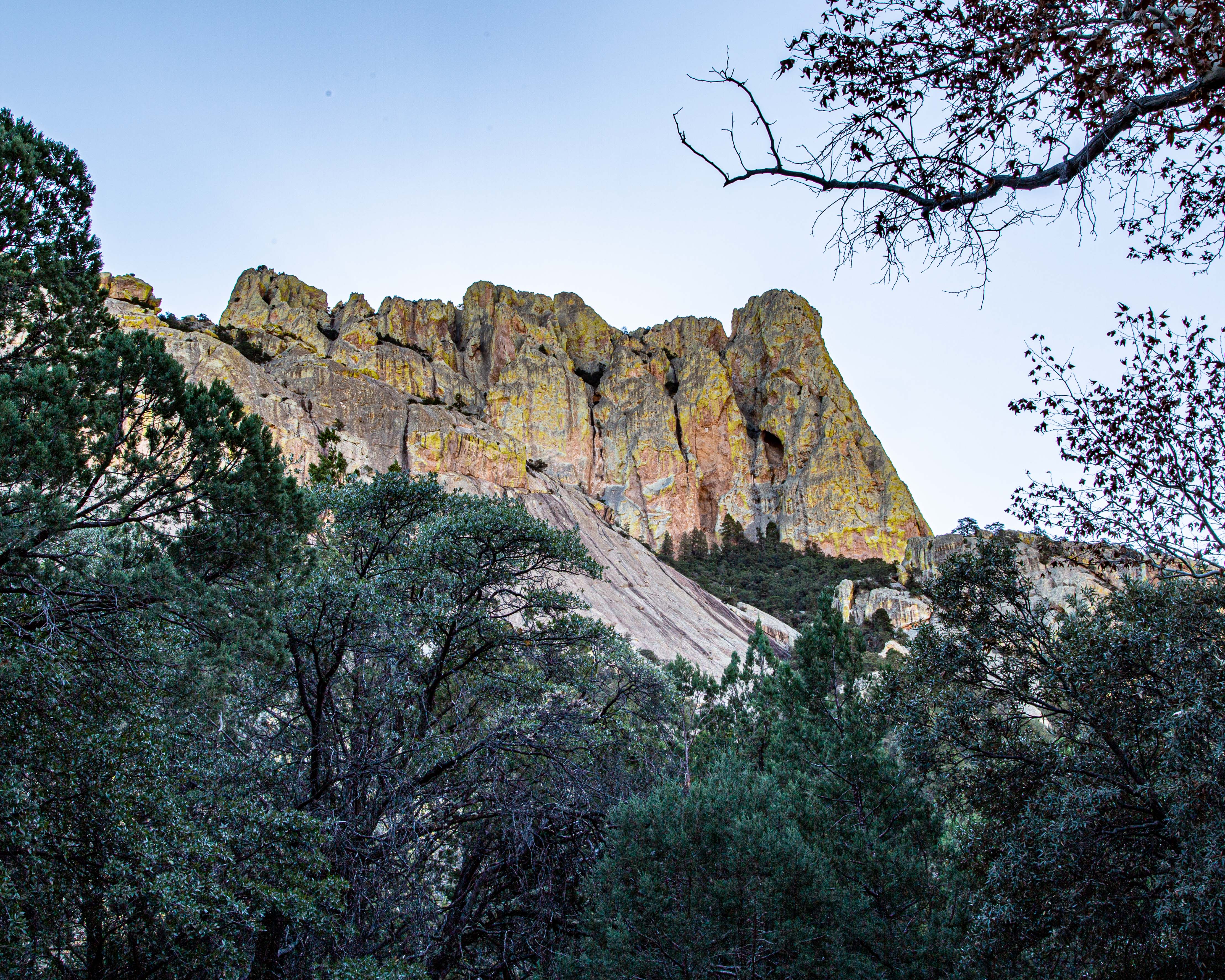
Landscape photography was the target for the rest of the morning and mid-day. A drive up Cave Creek Canyon yielded incredible views of the rugged rhyolite mountains. The subtle hues of tan, pink, green, and yellow were almost breathtaking. The sun did not rise over the canyon walls until near noon further muting the canyon colors. A short hike in the foothills provided a different view at each turn of the trail.
Cave Creek Canyon
The road to Paradise zigzagged upward on the switchbacks through the high desert mountain roads. We reached the George Walker House at Paradise near noon, and began observing the Mexican Jays flying in and out of the feeding station area. House Finches and Lesser Goldfinches were gorging on the seeds that had fallen to the ground. A Spotted Towhee and Yellow-rumped Warbler were seen among the shadows near the watering area. And lastly, an Arizona Woodpecker arrived near the suet on the old tree standing guard near the house.
Paradise, AZ
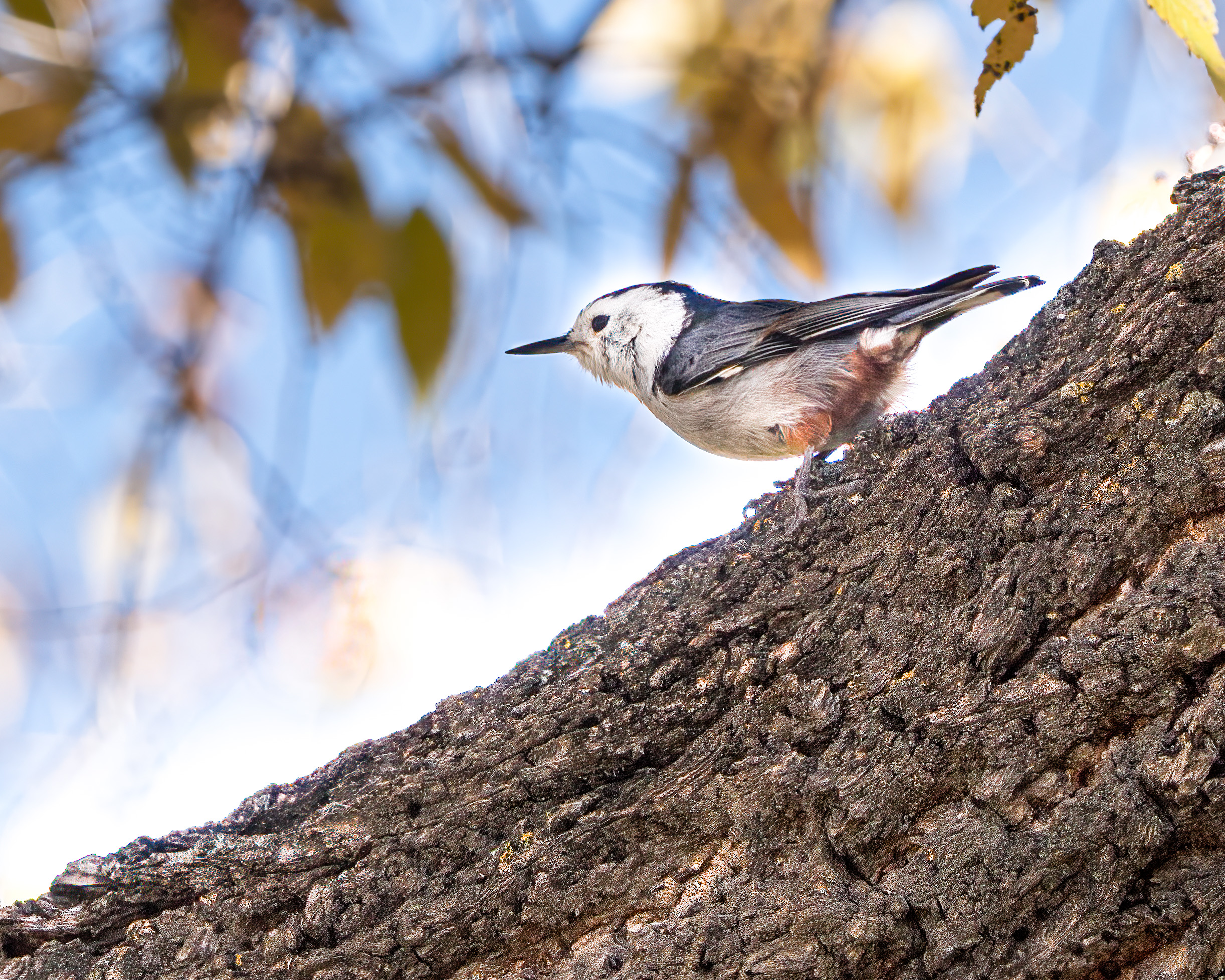
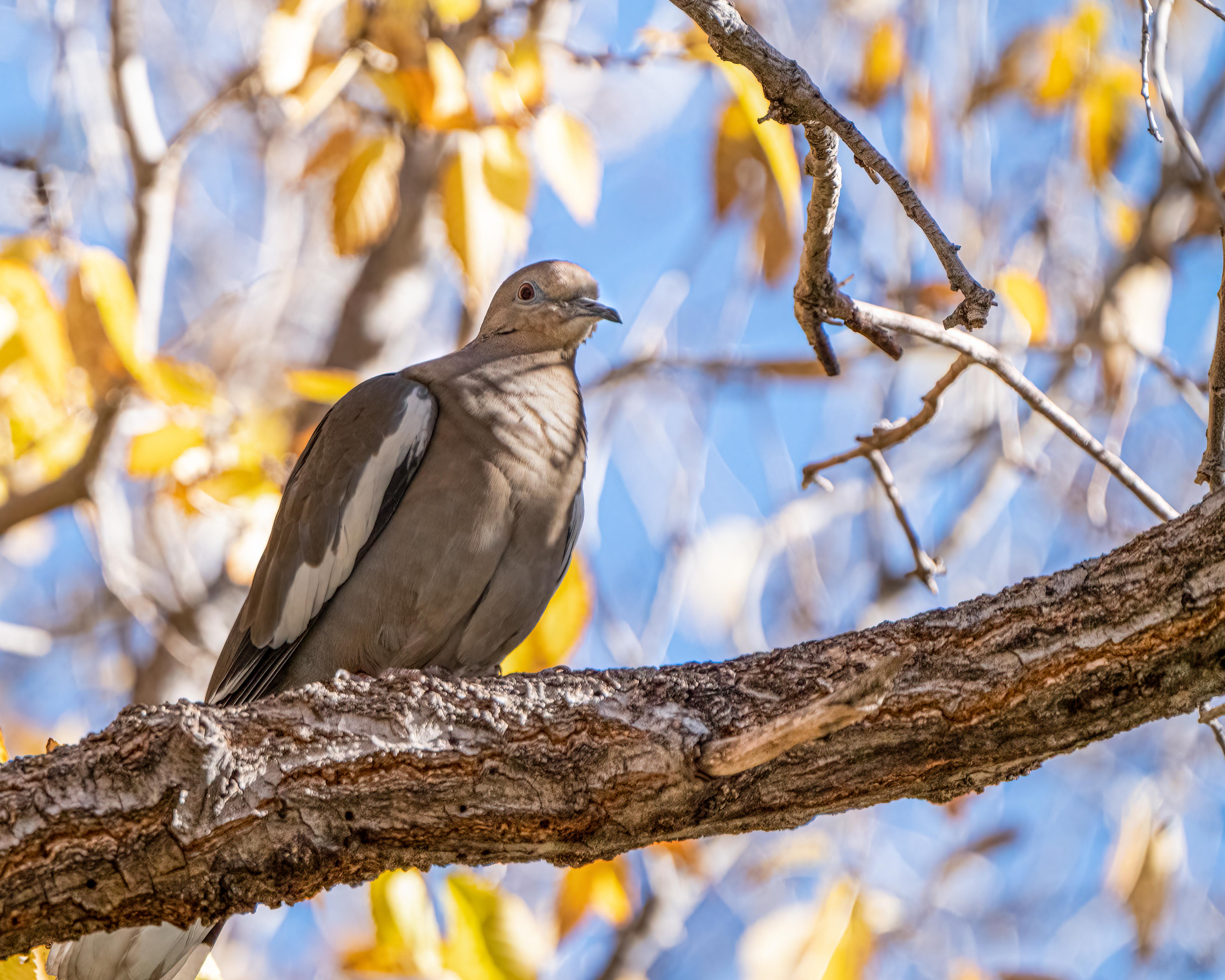
Following the visit to Paradise, we returned to Cave Creek Ranch and photographed a few new birds including Cedar Waxwings, Nuthatches, and White-winged Doves.
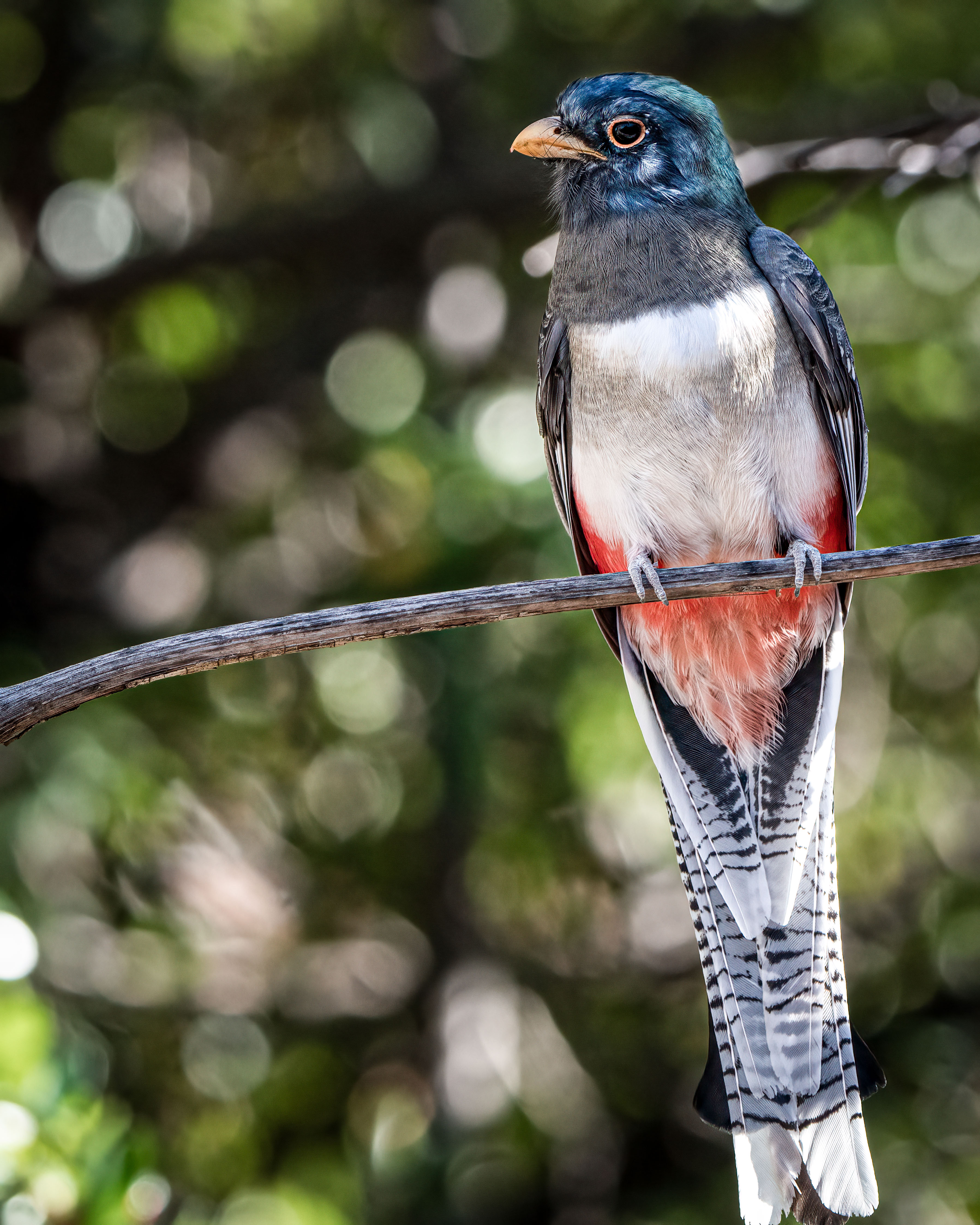
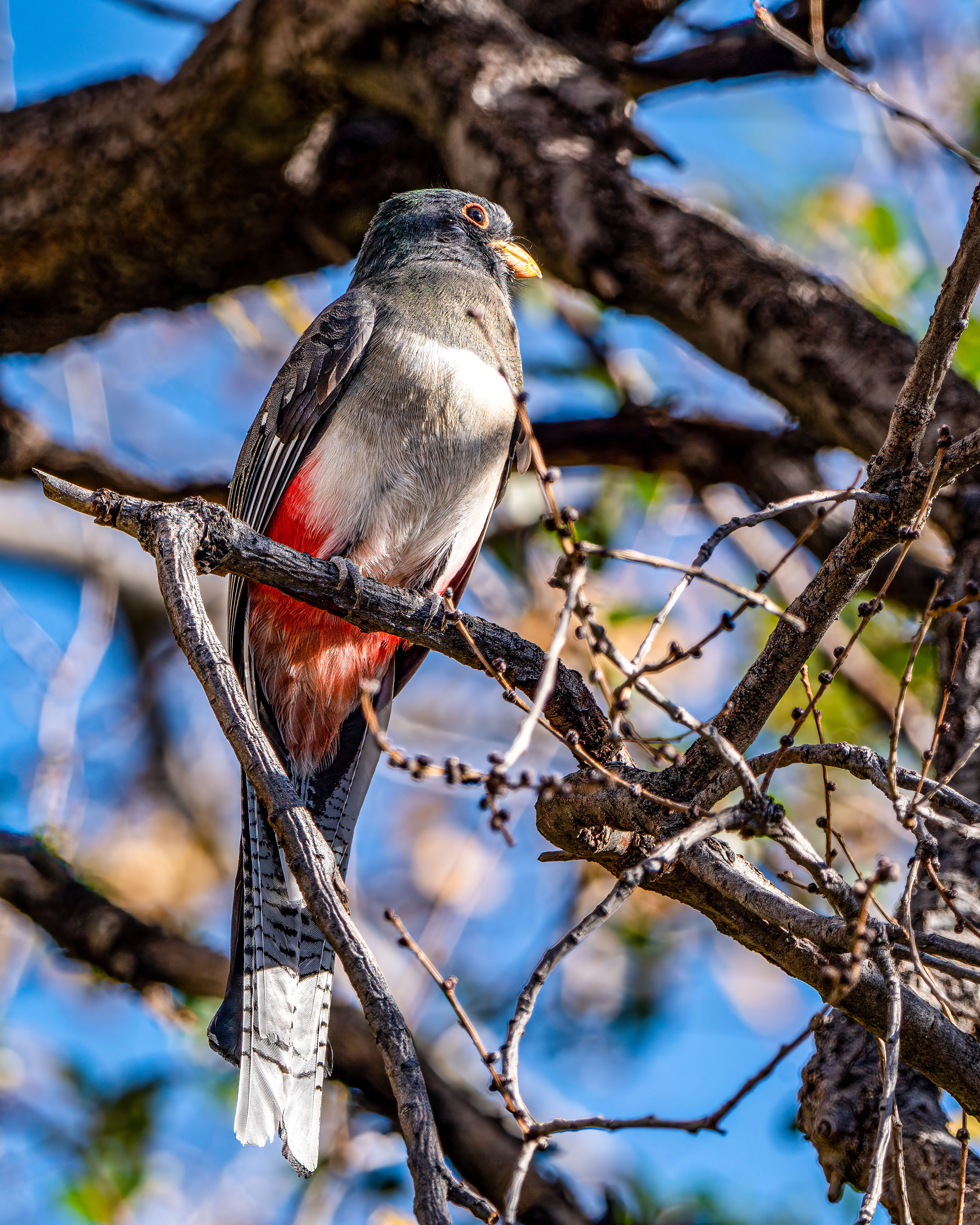
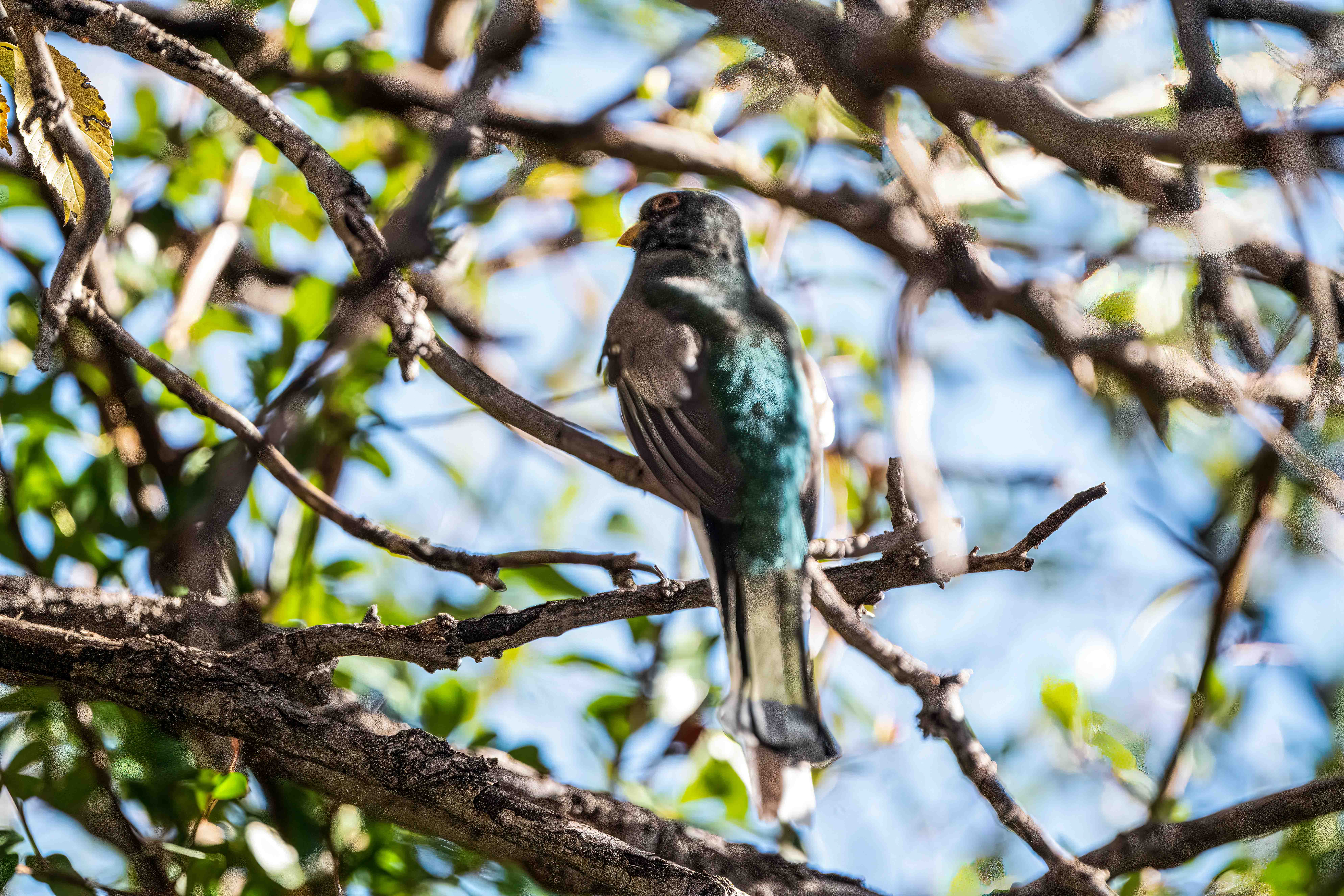
Hoping the Elegant Trogan would make another appearance in the Pyracantha Shrub, we waited patiently. Sure enough, at or near 2:50 PM, the same time as the day before, the young male made an appearance, and offered a close, open pose. I’m a happy camper now.
After early morning photo editing, we crossed the border into Arizona and the town of Portal. Some of the best birding in the United States is in the Chiricahua Mountains, Portal, and at Cave Creek Ranch. According to Richard Cachor Taylor’s Location Checklist to the Birds of the Chiricahua Mountains, “…the Chiricahua checklist presently stands at 375 species, not including 13 species still considered hypothetical — about half of all the birds regularly occurring on this continent north of Mexico.”This area is the most biodiverse landmass on the continent of North America, and the bird life reflects that. Cave Creek Canyon is the largest and best watered canyon in the Chiricahuas, and Cave Creek Ranch sits in the mouth of the canyon.
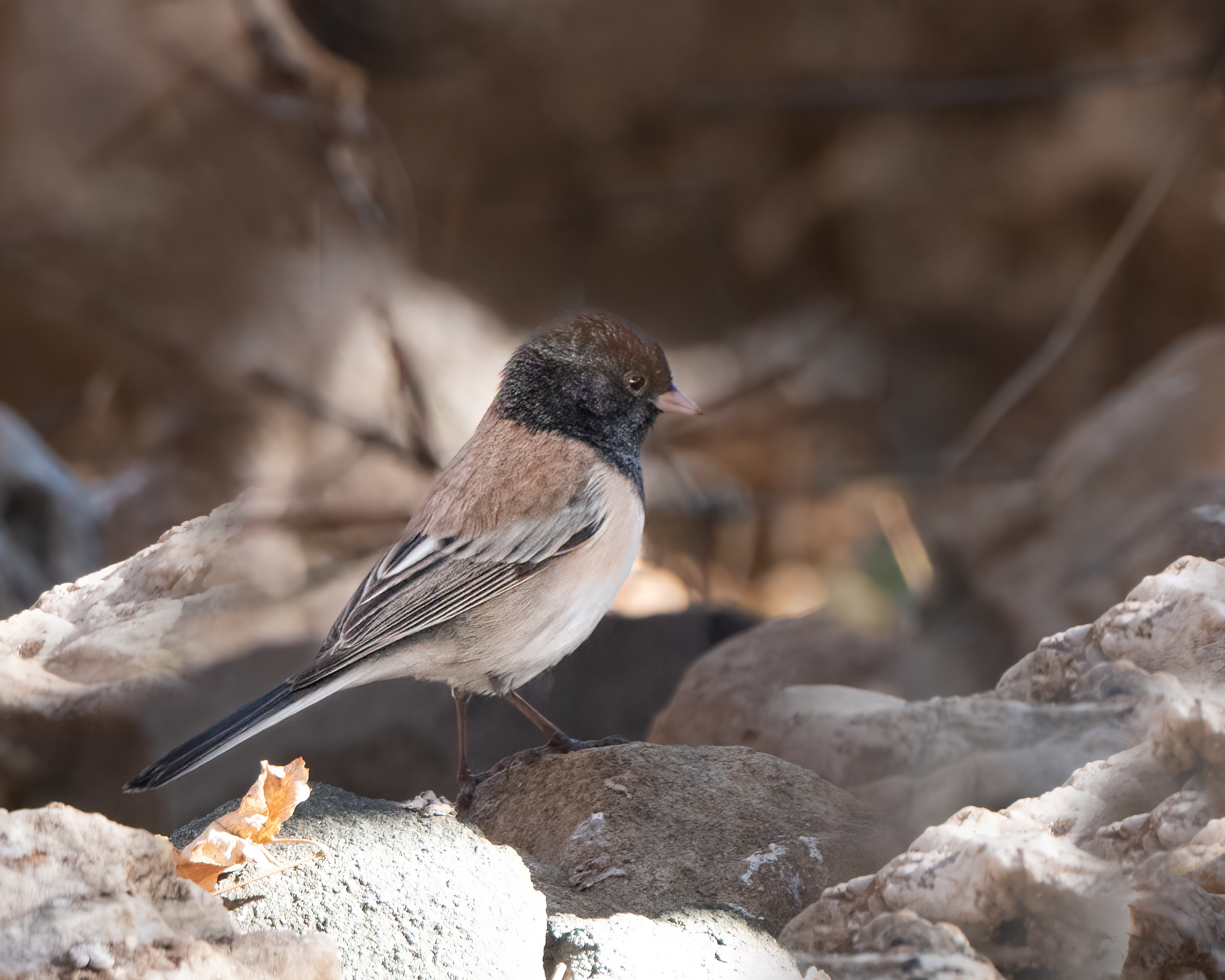
Our first stop was at the Rodriguez place, hoping to find birds galore to photograph. Mr. Rodriguez was at the feeding area when we arrived, and said that most of “his” birds left a couple of months ago. While we saw Gambel’s Quail, an occasional Mexican Jay, and a Pyrrhuloxia (aka Desert Cardinal), birds were scarce, no photos were made and processed. Next, Cave Creek Canyon beckoned, and the mountains, evergreens, and high desert proved once again that it was my “”happy place. Stops were made along the road where Dan had spotted birds on his previous trips. Birds were scarce; only an Acorn Woodpecker, American Snout butterfly, and Gould’s Turkey were photographed.
Cave Creek Ranch was next on the itinerary. From their website: “Located in the Chiricahua Mountains of Southeastern Arizona, Cave Creek Ranch occupies 7 secluded acres alongside famous Cave Creek, and offers spectacular views of the rhyolite cliffs of Cave Creek Canyon.” Birds were scarce here, too. An Acorn Woodpecker and White-winged Dove made the photo album.
And then about 2:50 PM, this beautiful, brightly colored bird swooped in to feed on the Pyracantha berries. It was the Elegant Trogan, a bird I’ve been chasing for three years. The elusive bird did not pose long enough for a good photograph, but the “lifer” was recorded. What a way to end the day.
Collection of trails and greenway quotes, terms, acronyms, tools as well as trail publications and presentations and 100s of photos from my bicycle and hiking adventures. .
This journal was begun several years ago, and reflects an accurate record of each day fished. Please enjoy it, and remember that fish are too valuable to be caught just once, and the places they live are too valuable to be mistreated.






































 Dunngone's Photos and Blog