
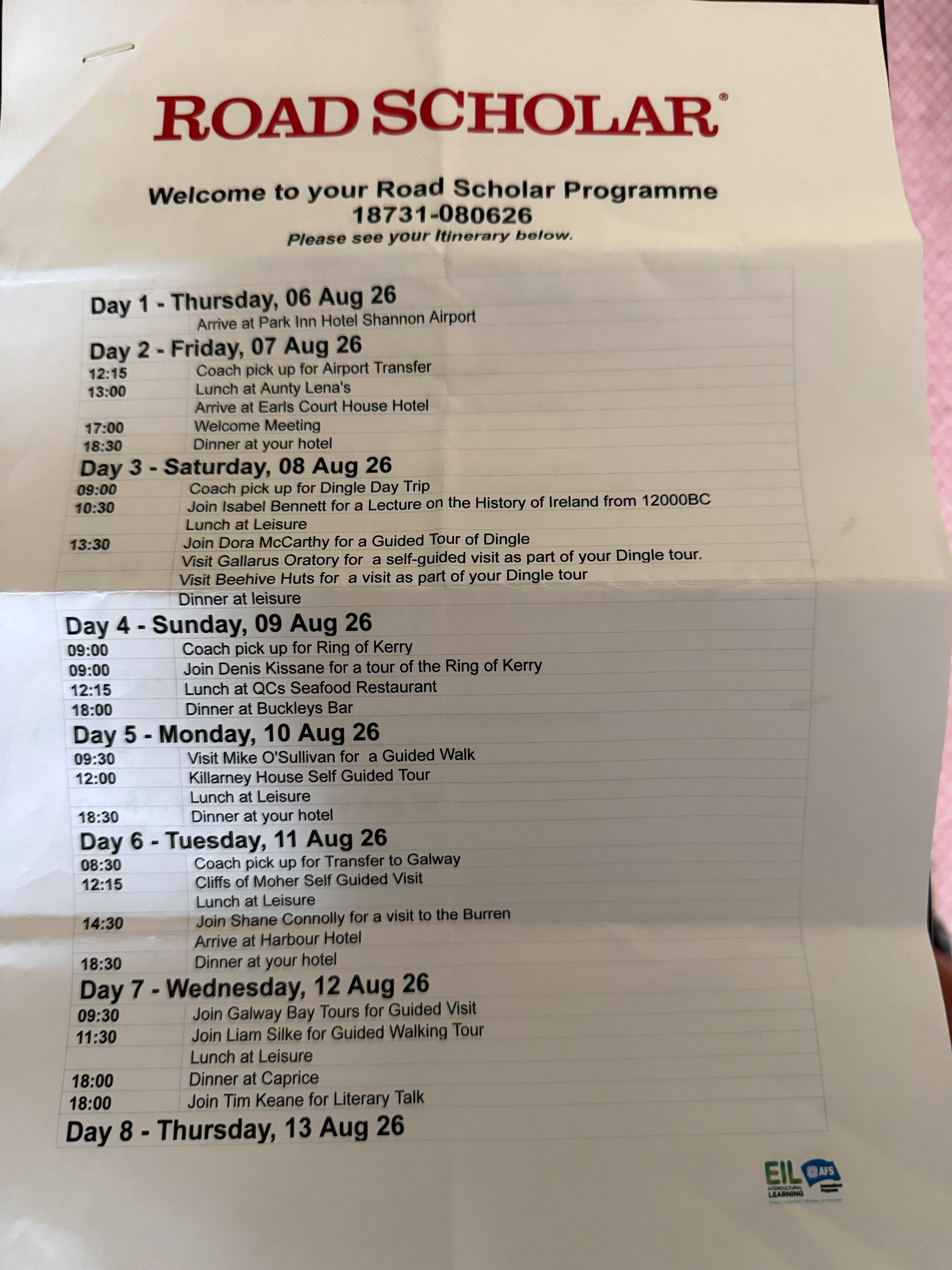
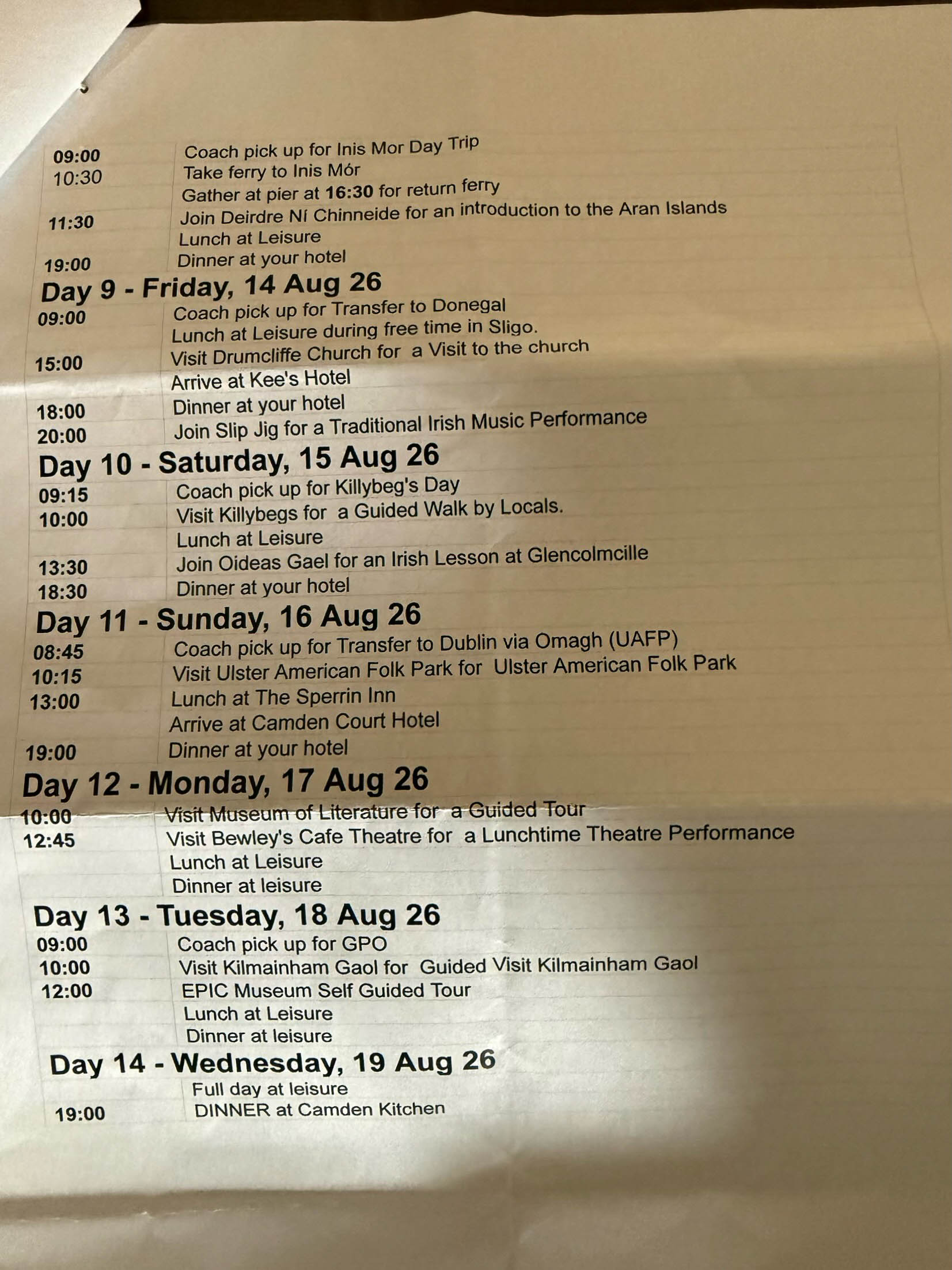
After a buffet breakfast, we adjourned to a meeting room where a detailed itinerary of the tour’s activities was provided.
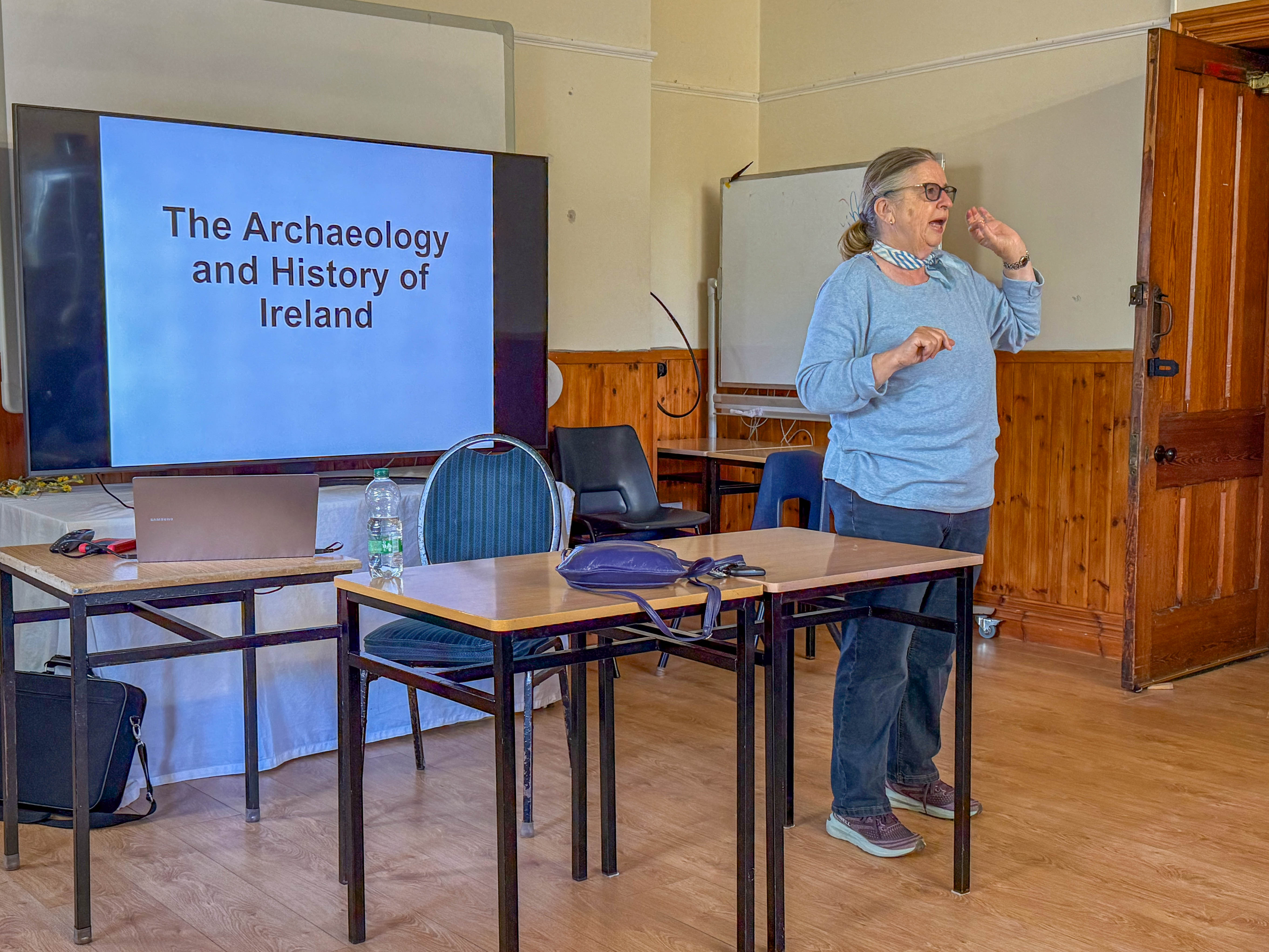
Afterwards, a lecture on Irish history was presented by a local expert.
When taken in full, the last couple hundred years was a sad time in the country’s history.

After a couple hours of “free time”, we were driven to the Dingle Peninsula via motorcoach to view “the most beautiful place on earth” as once cited by National Geographic magazine.
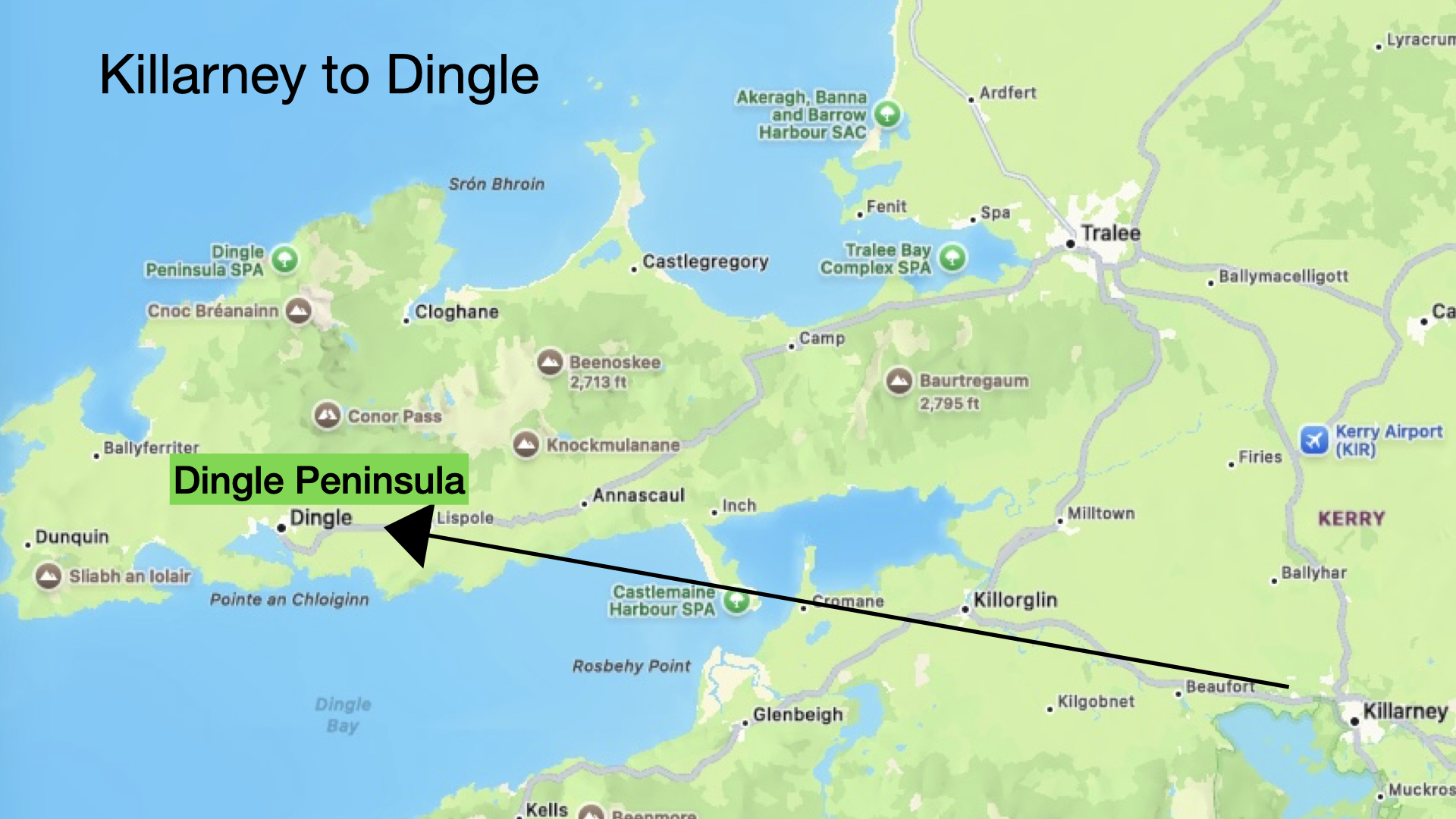
The narrow, winding roads exposed the pastoral countryside broken abruptly by rugged cliffs along the seaside intermixed with wide gently curving beaches. (Click on an image to enlarge.)
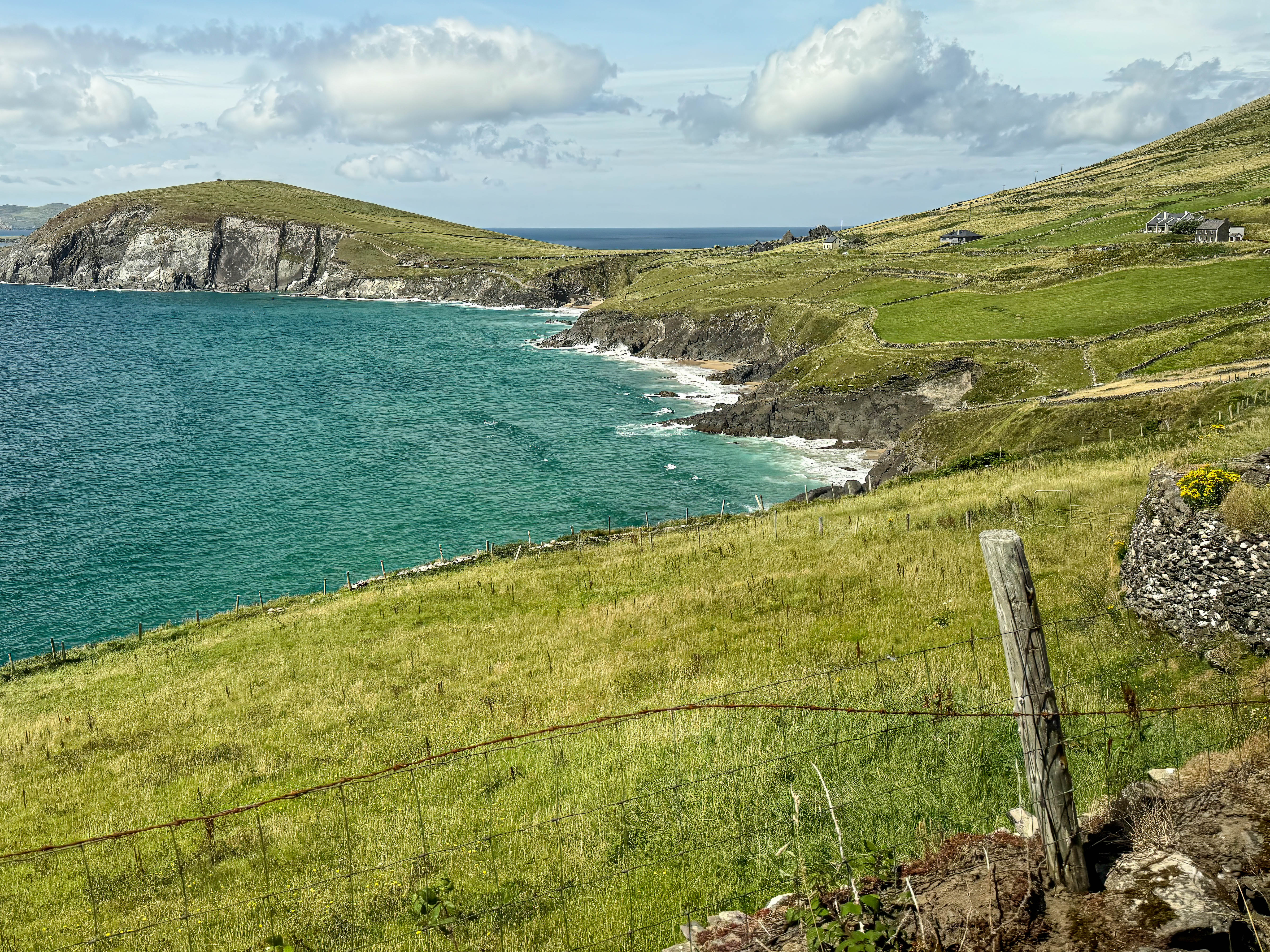
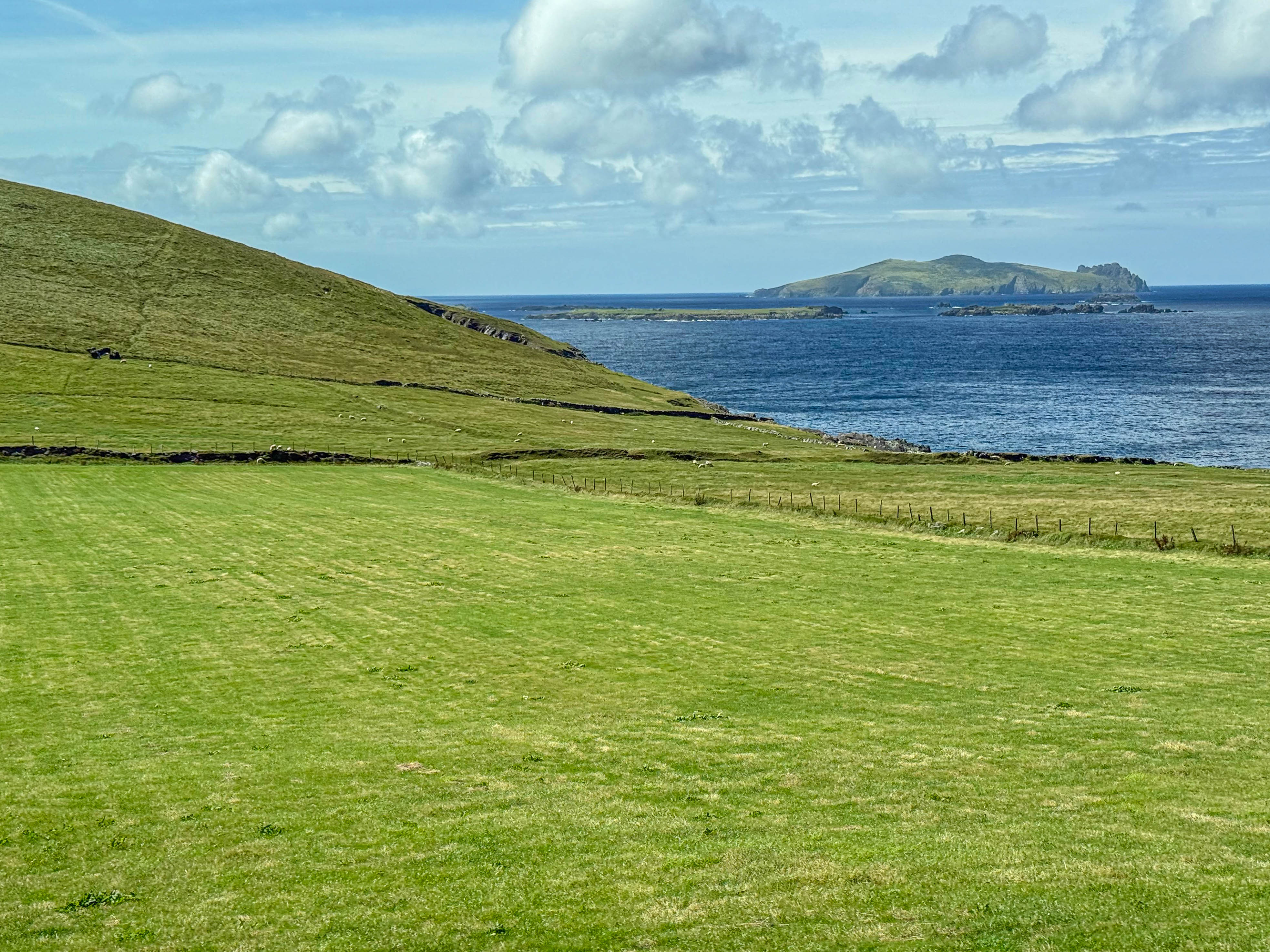
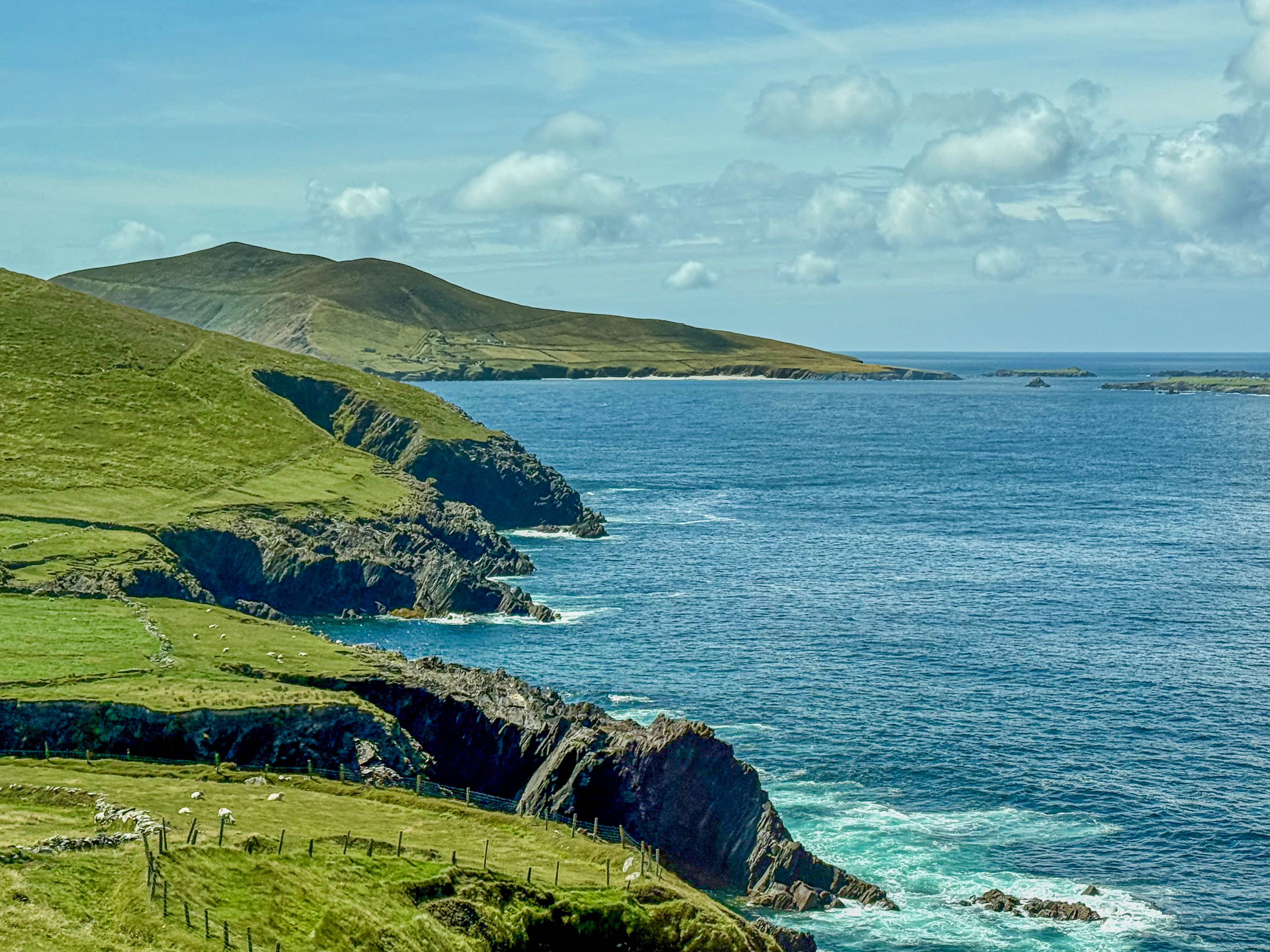
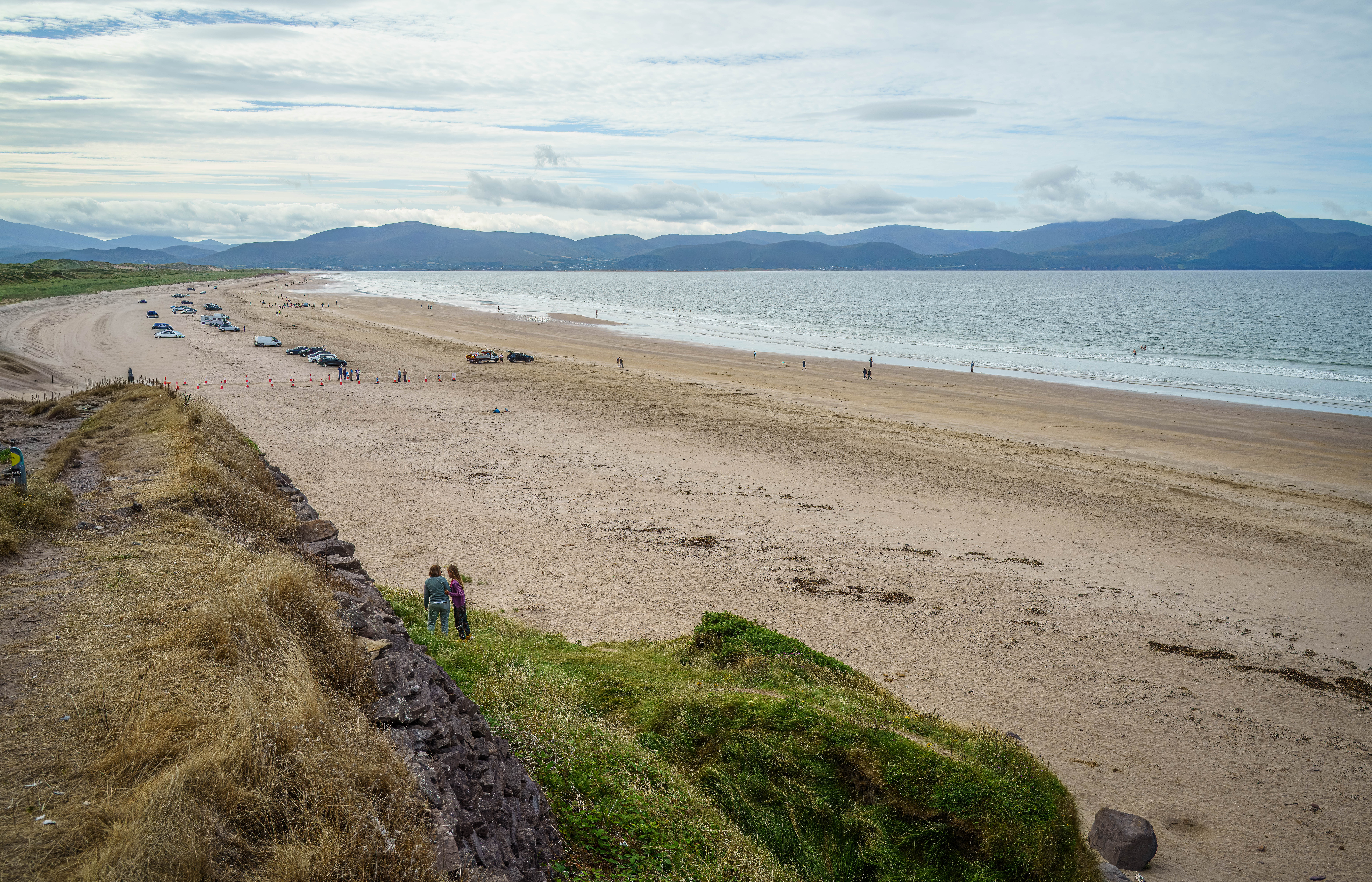
The resulting sea scape was incredibly beautiful. Slea Head Drive, a world-famous 24-mile circular drive located on the western tip of the Dingle Peninsula was breathtakingly beautiful.
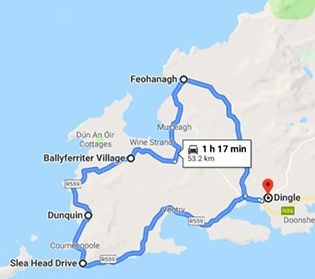
The local expert discussed the area’s rich archaeological heritage and unique culture, the latter owing to a Gaeltacht— an area where the Irish language is widely spoken at home, in the workplace, and at school. Our group leader, Shiela, explained the importance of the Irish Gaelic language and ways in which the local governments and communities have made efforts towards its preservation, particularly since the establishment of the Irish Free State in the 1920s.
We had a stopover in Dingle Town—with its colorful, pastel building facades. Dingle is a fishing port and the only major town on the Dingle Peninsula. (Click on an image to enlarge.)
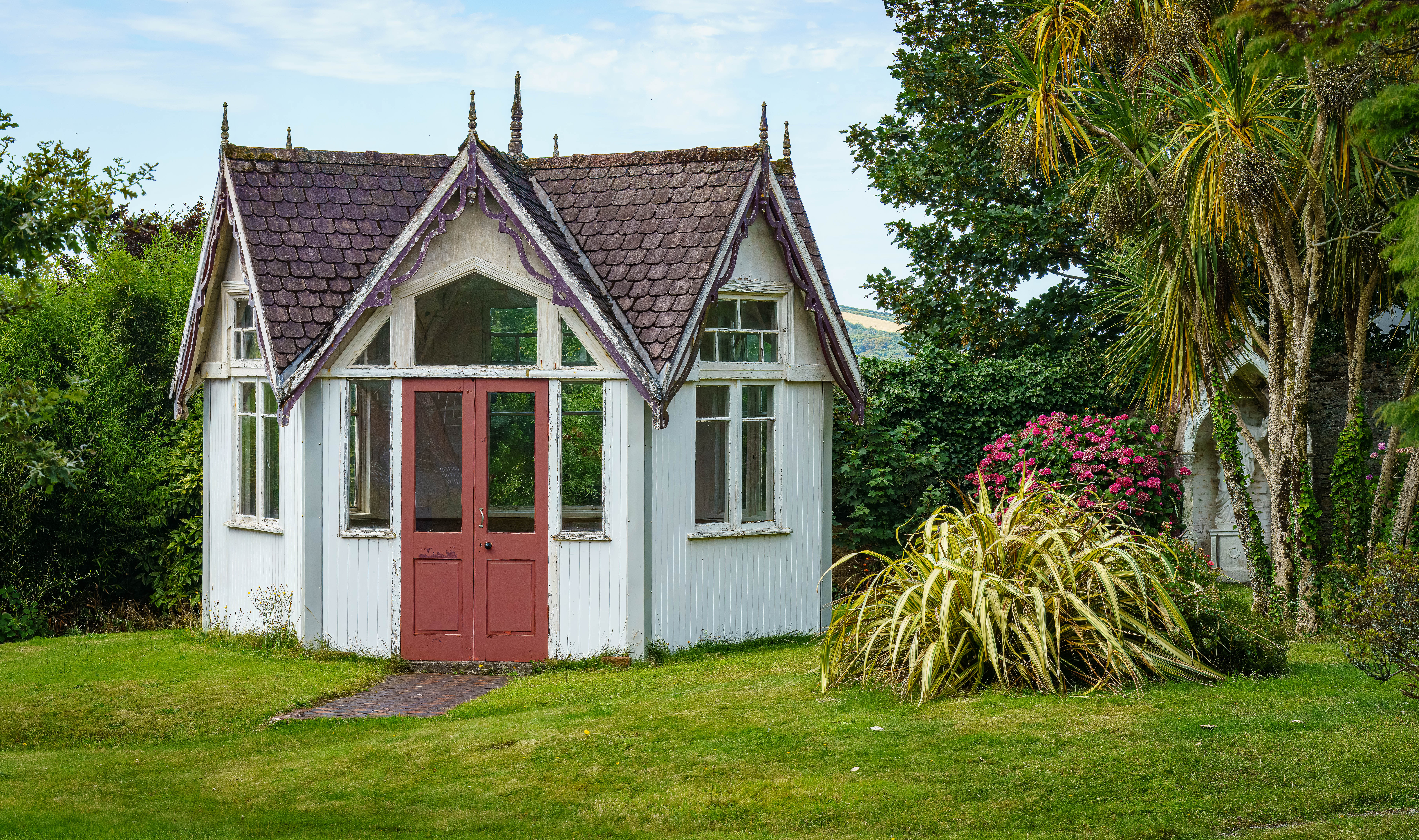
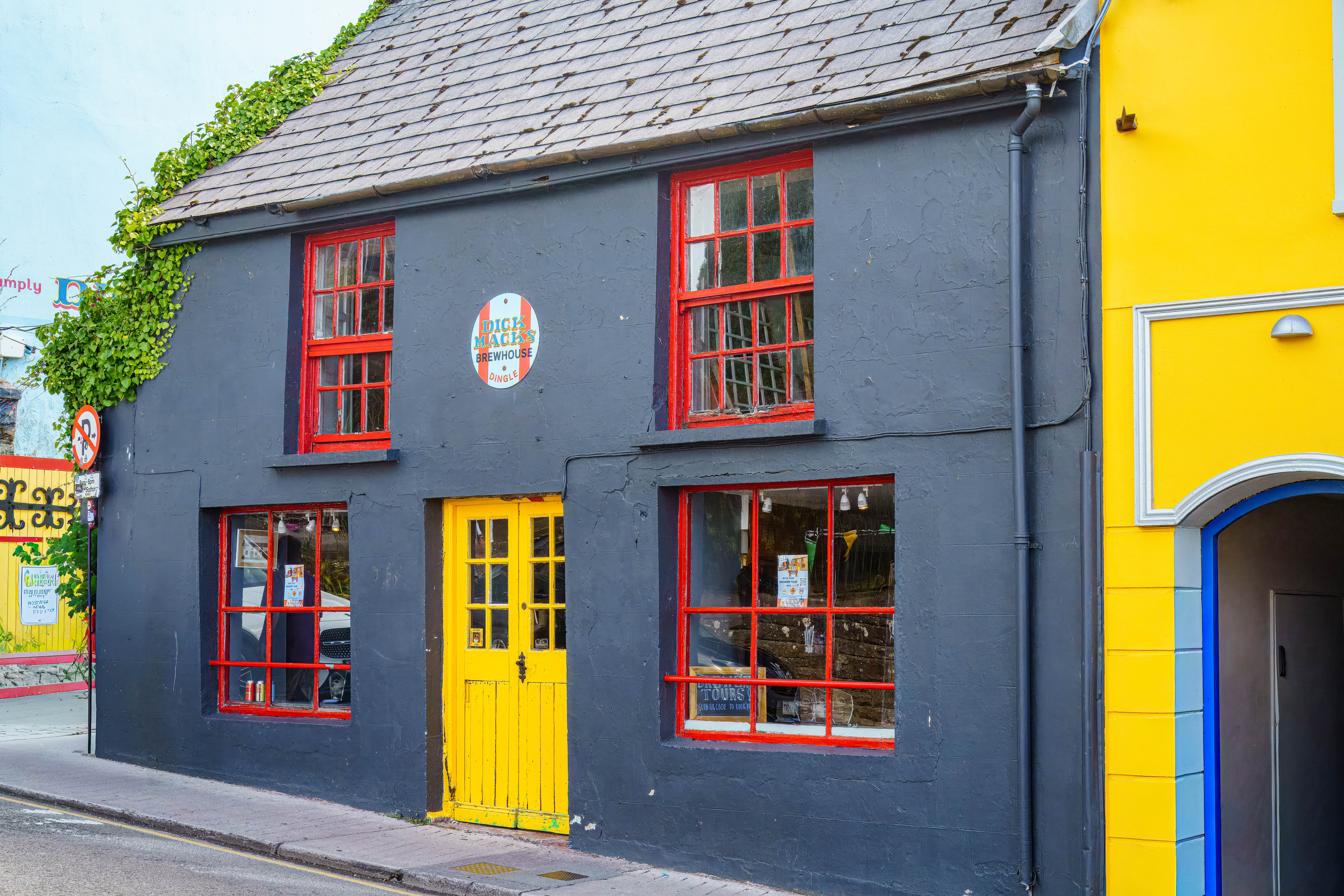
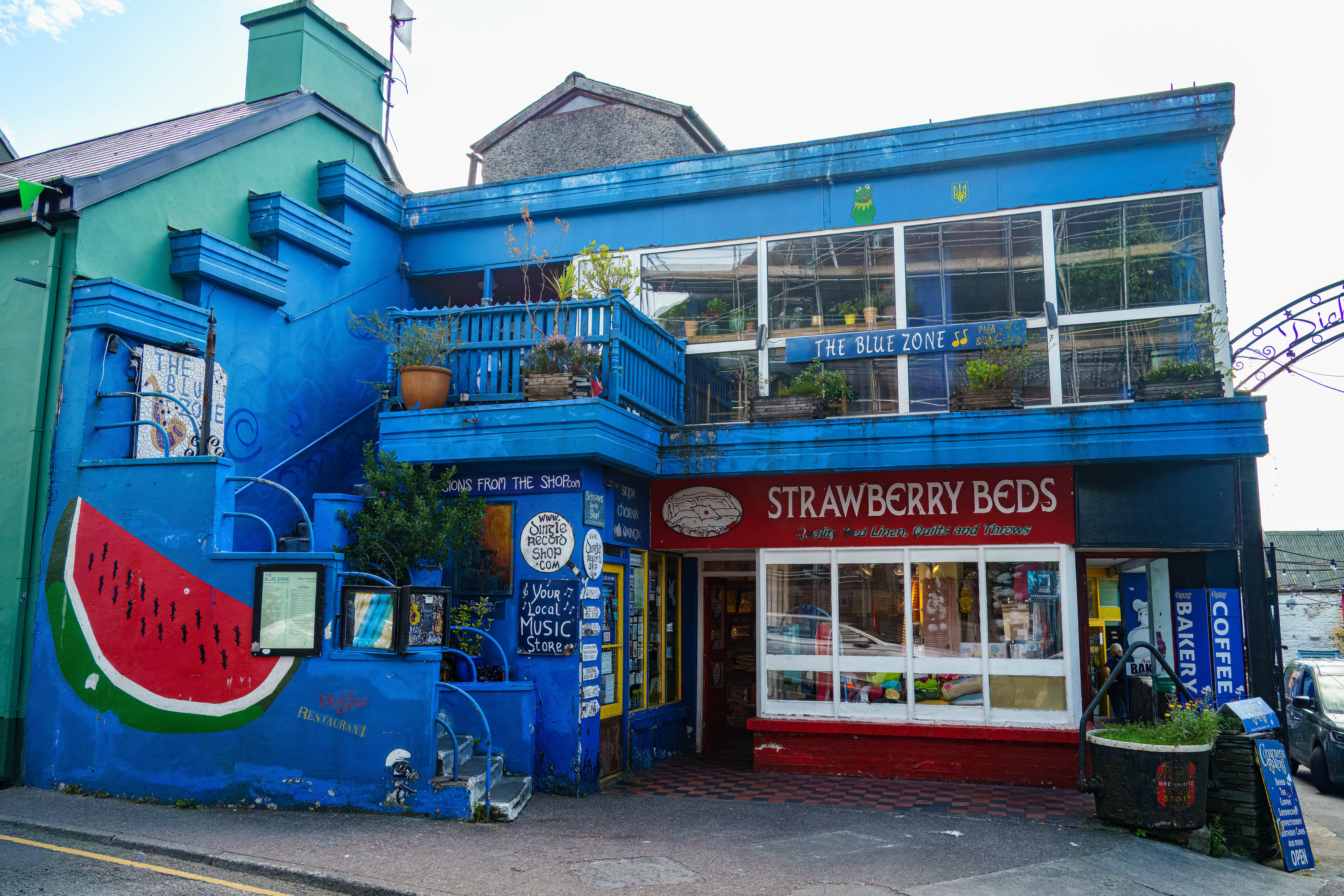
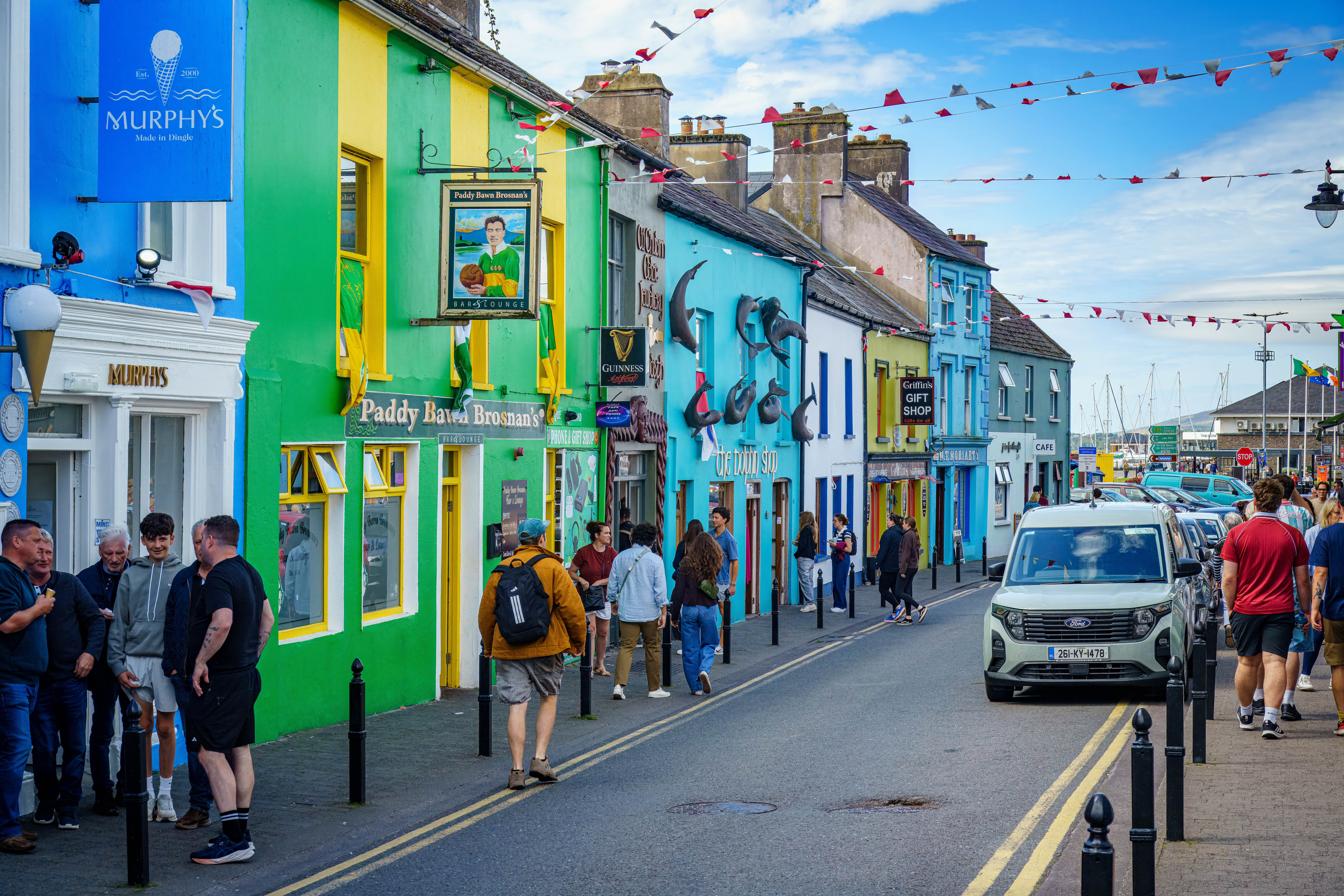
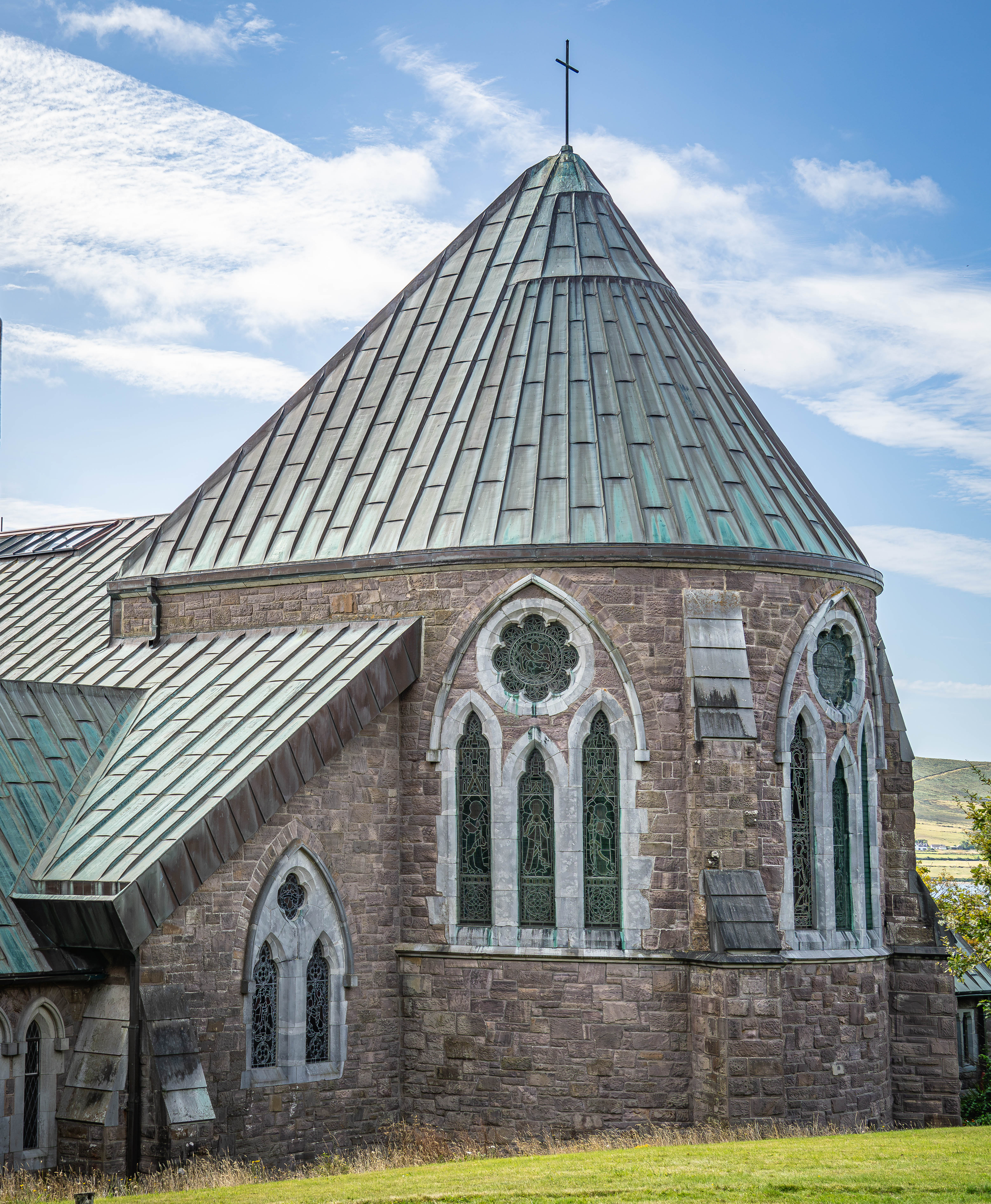
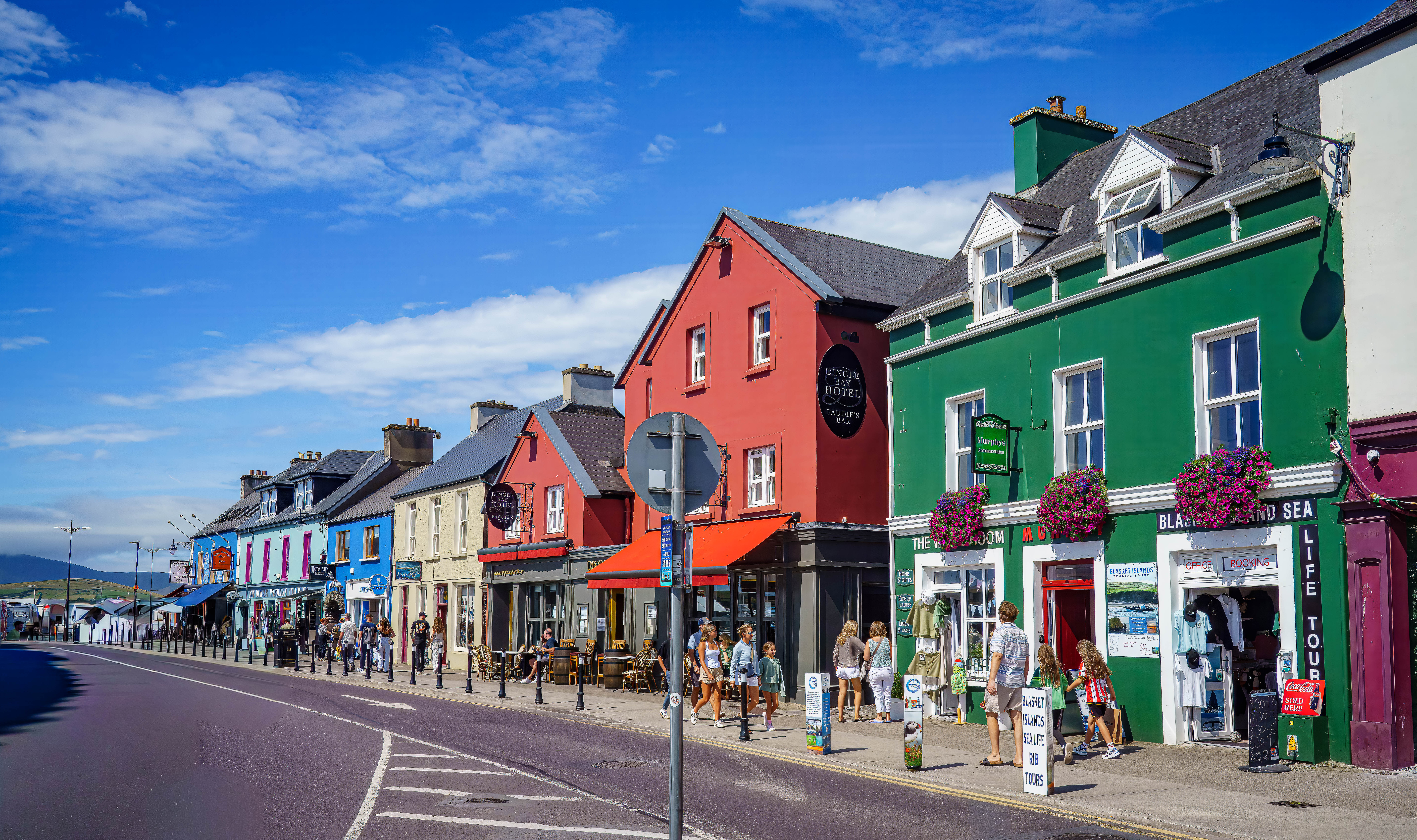
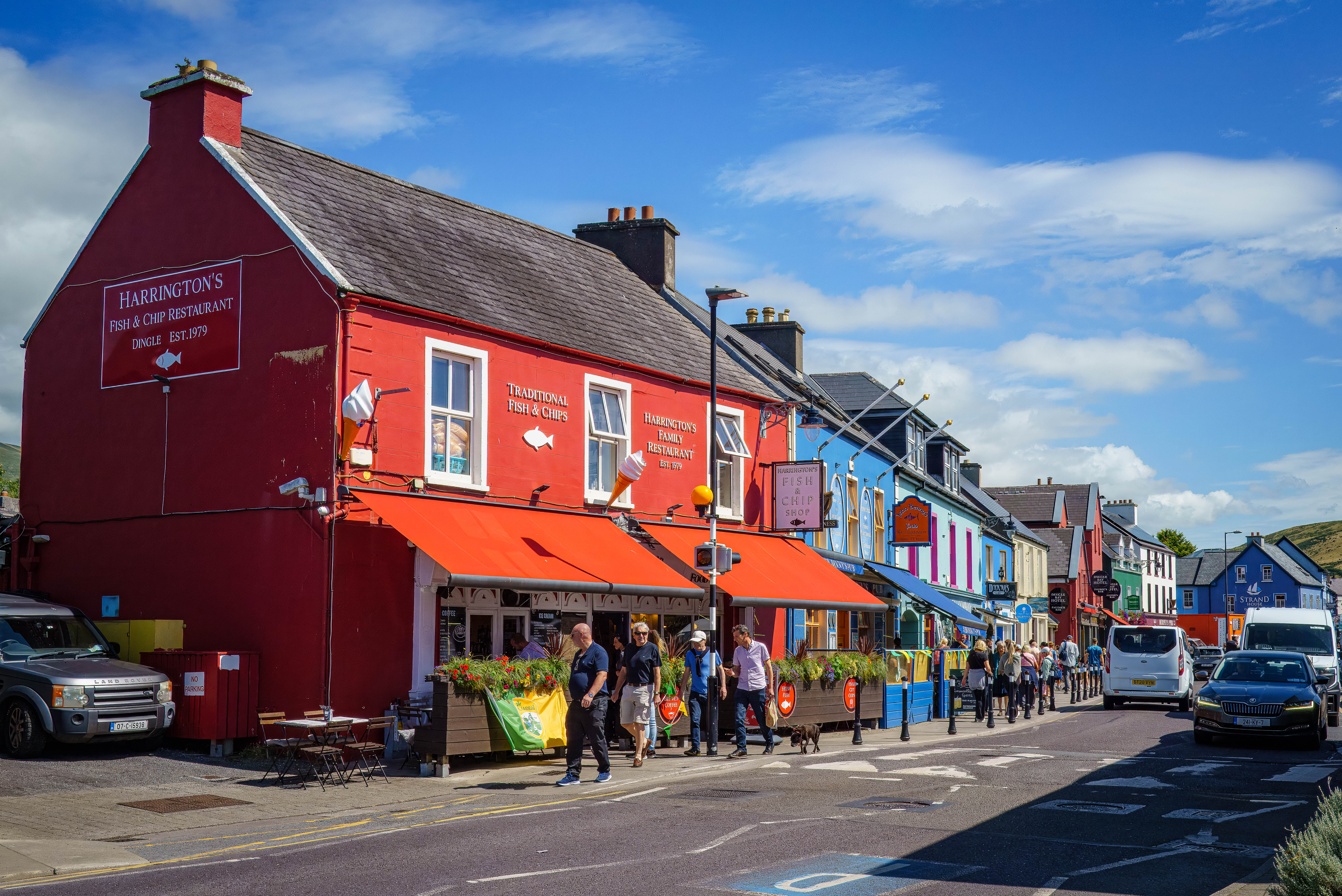
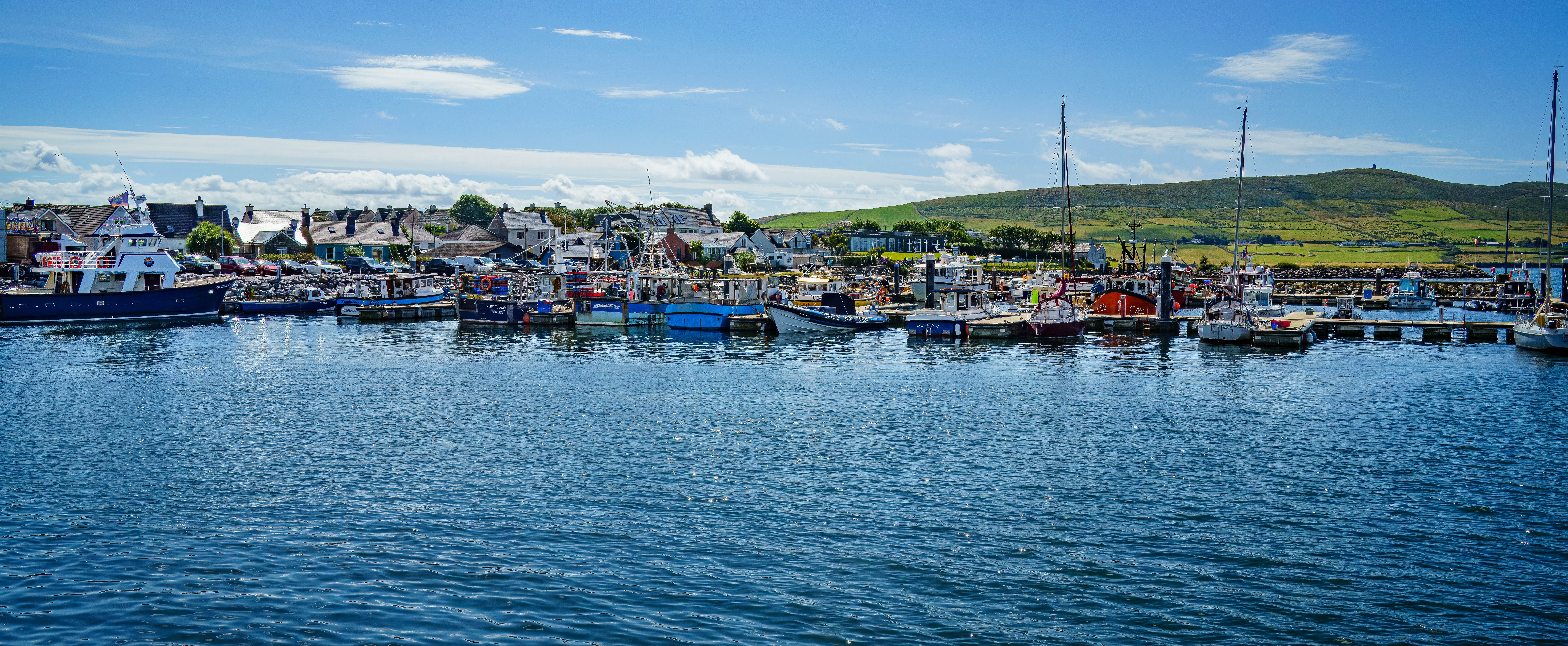

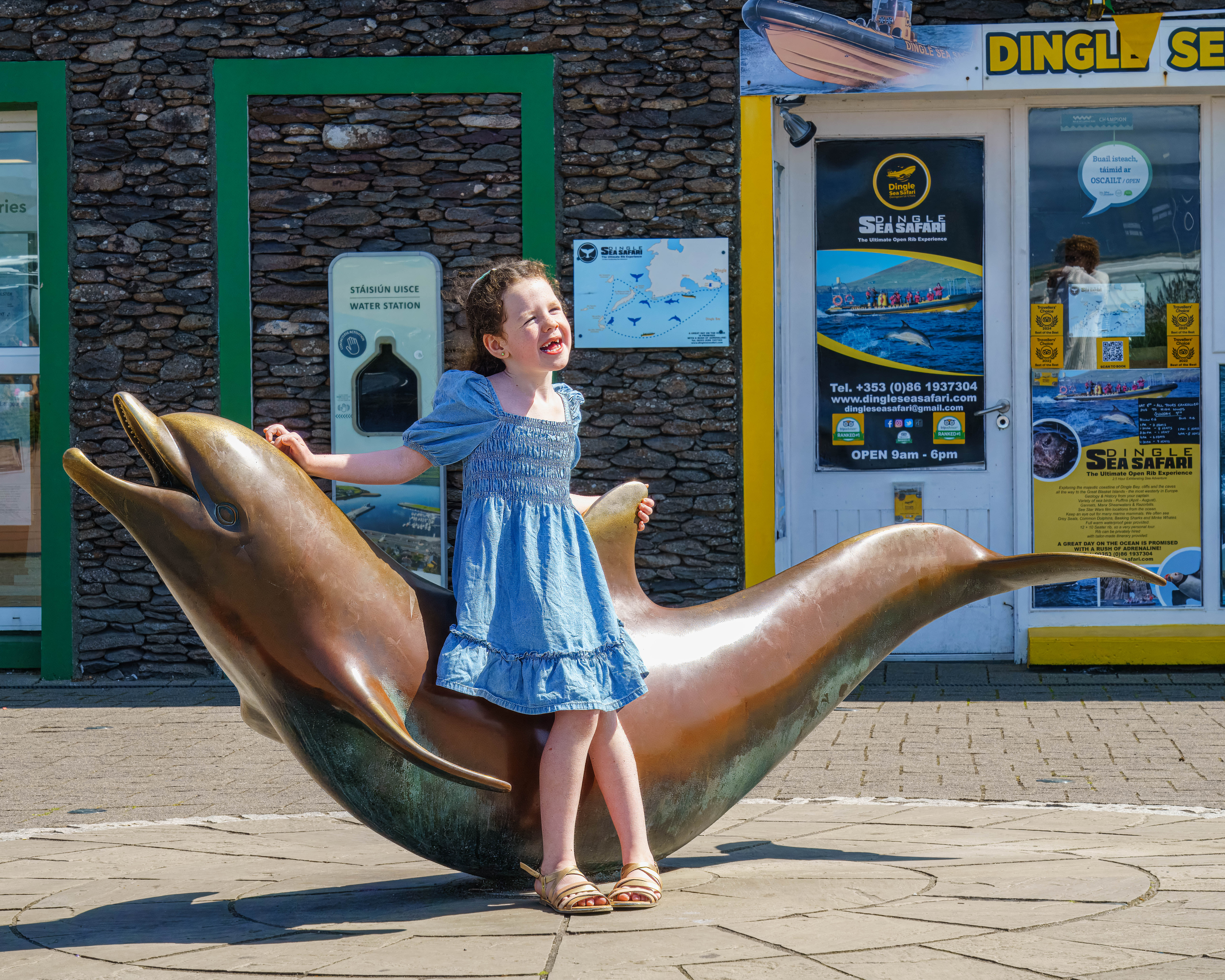
Following our free time in Dingle Town, the tour continued along the Slea Head Drive to view more sights along “Wild Atlantic Way”. (Click on an image to enlarge.)
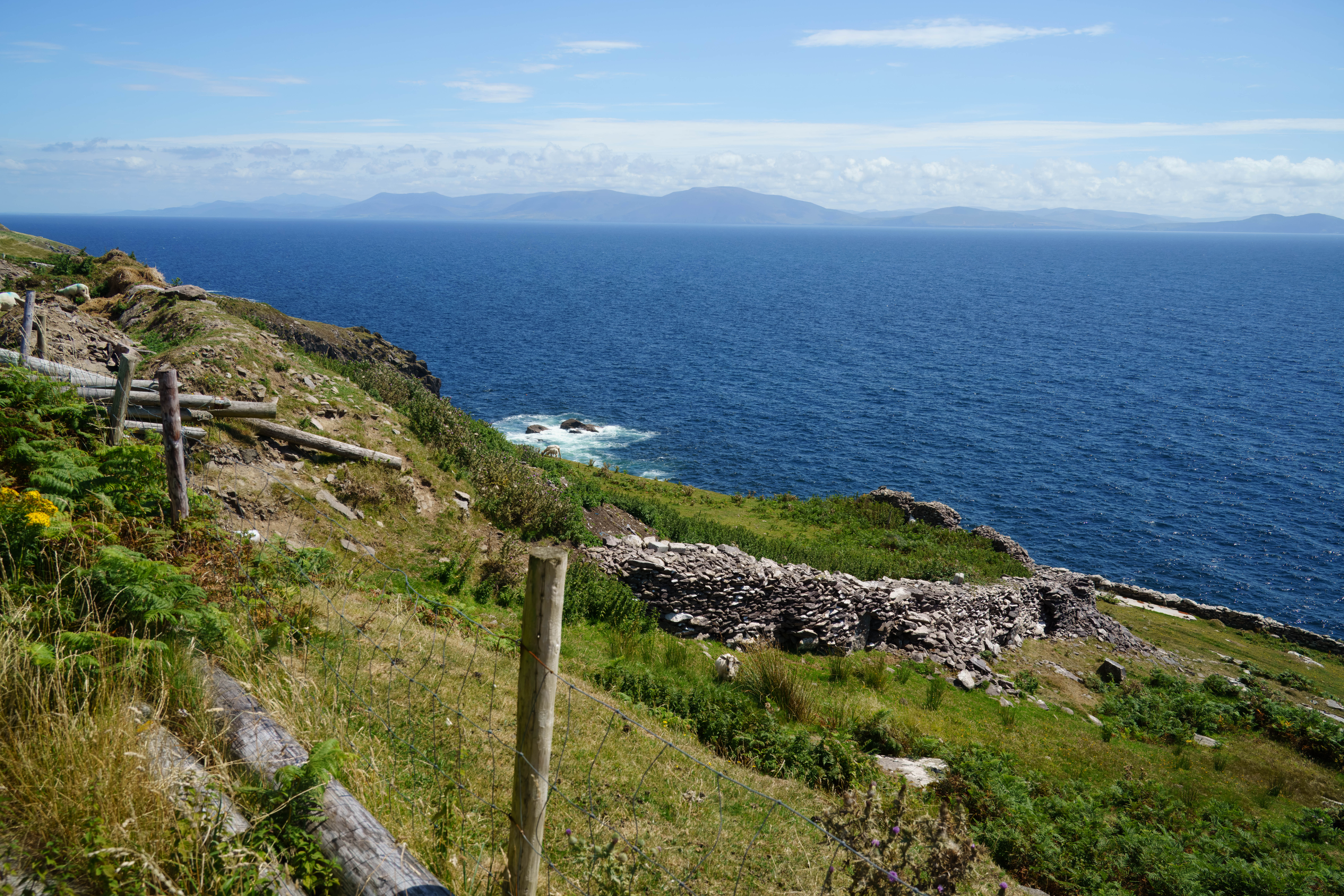
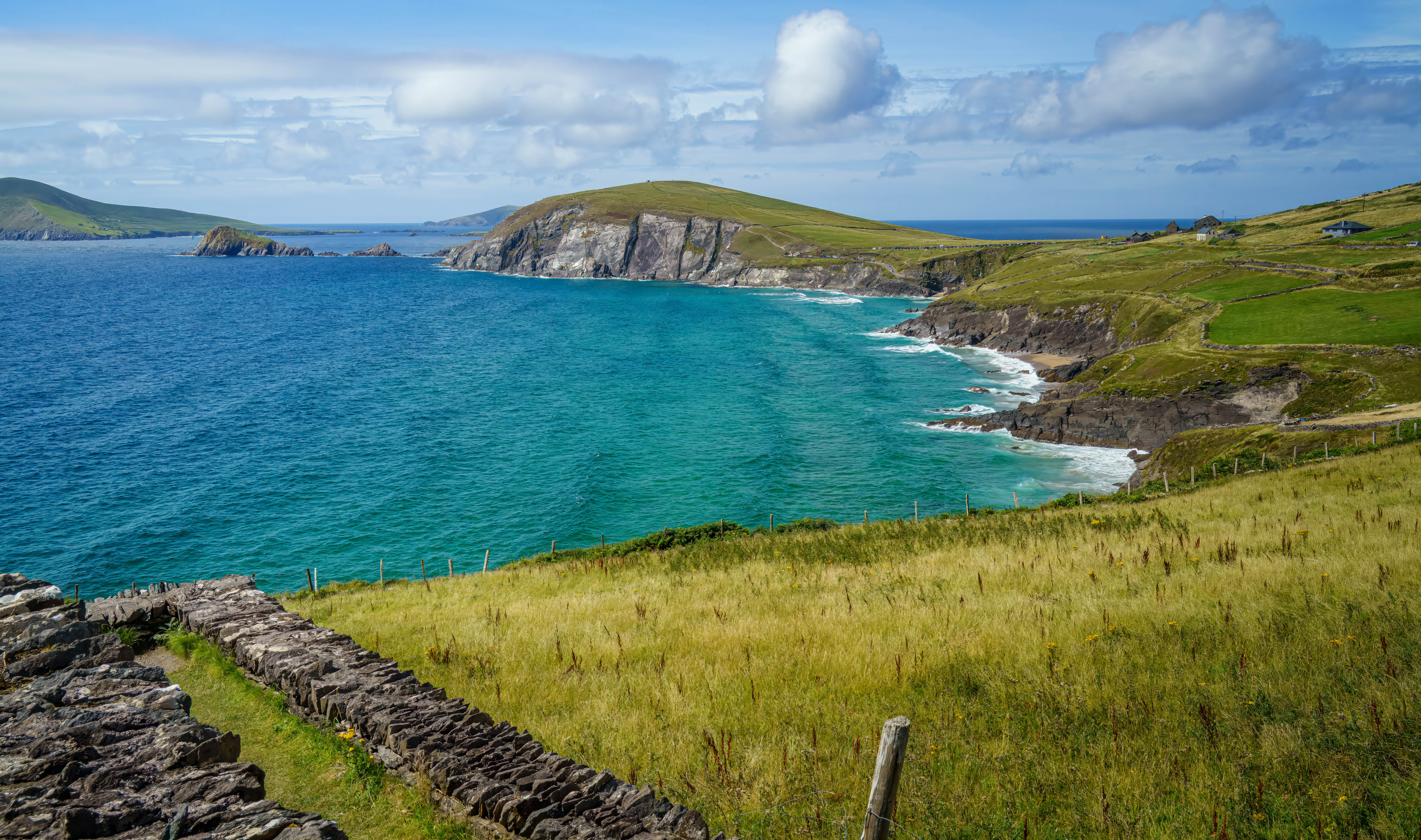

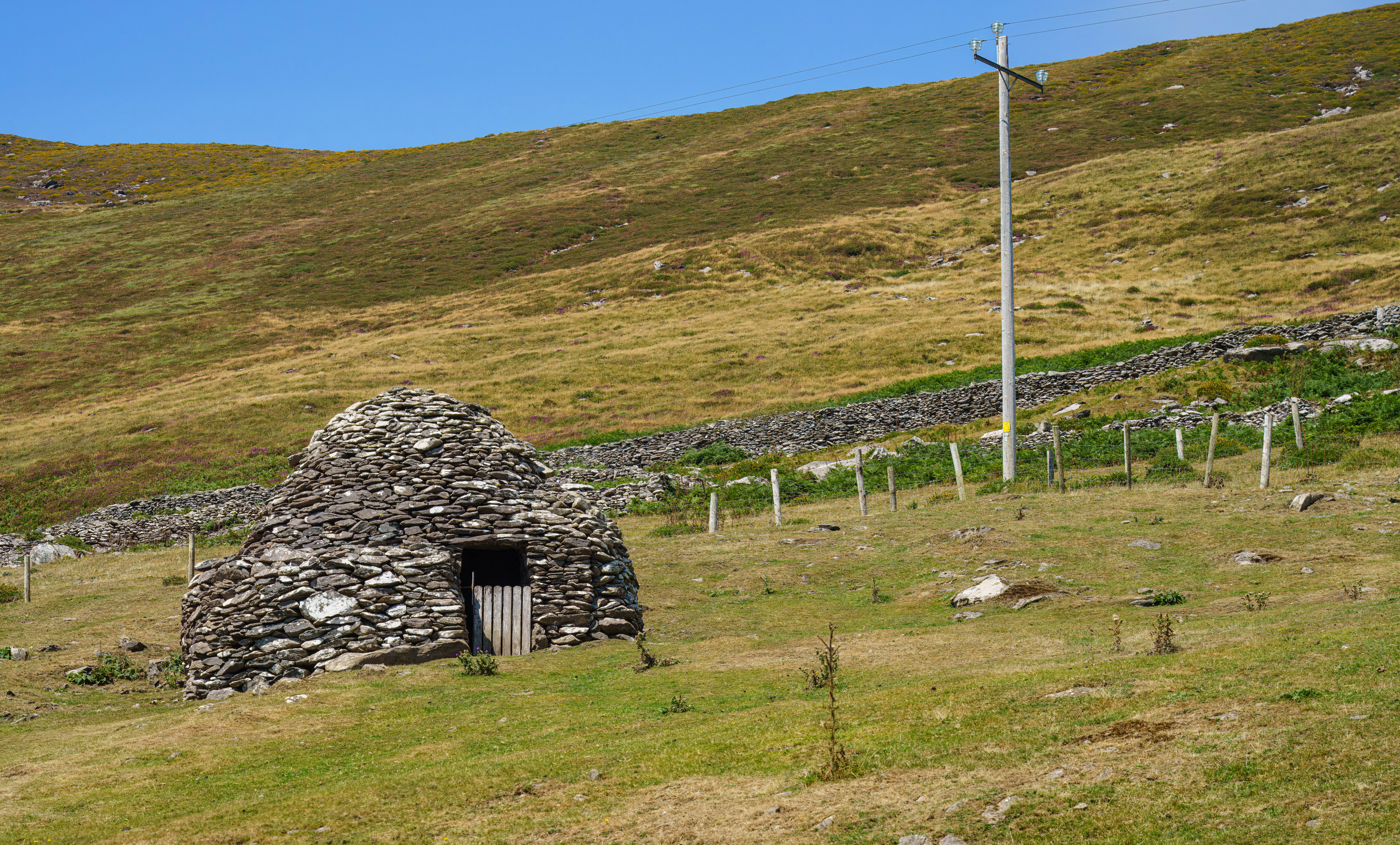
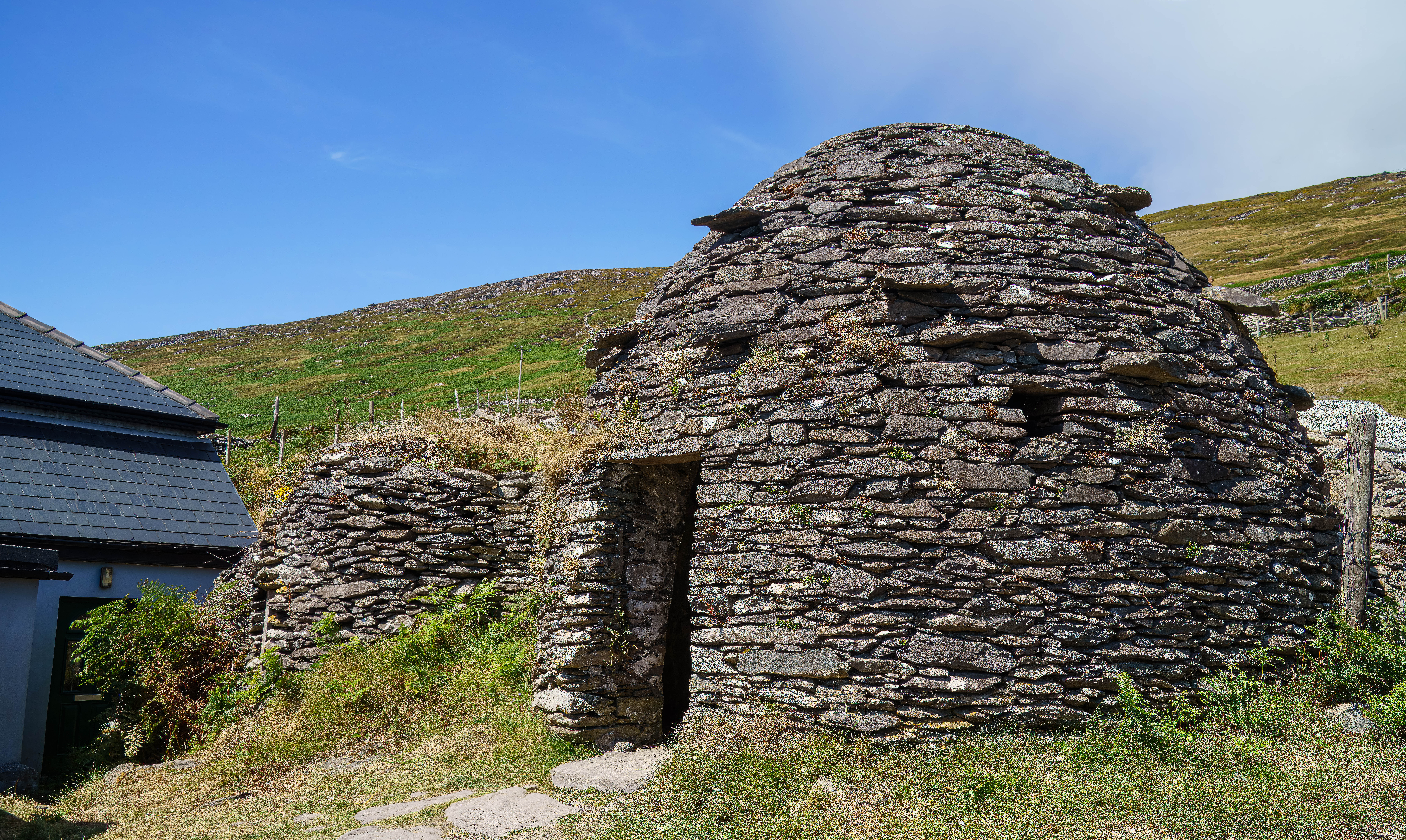
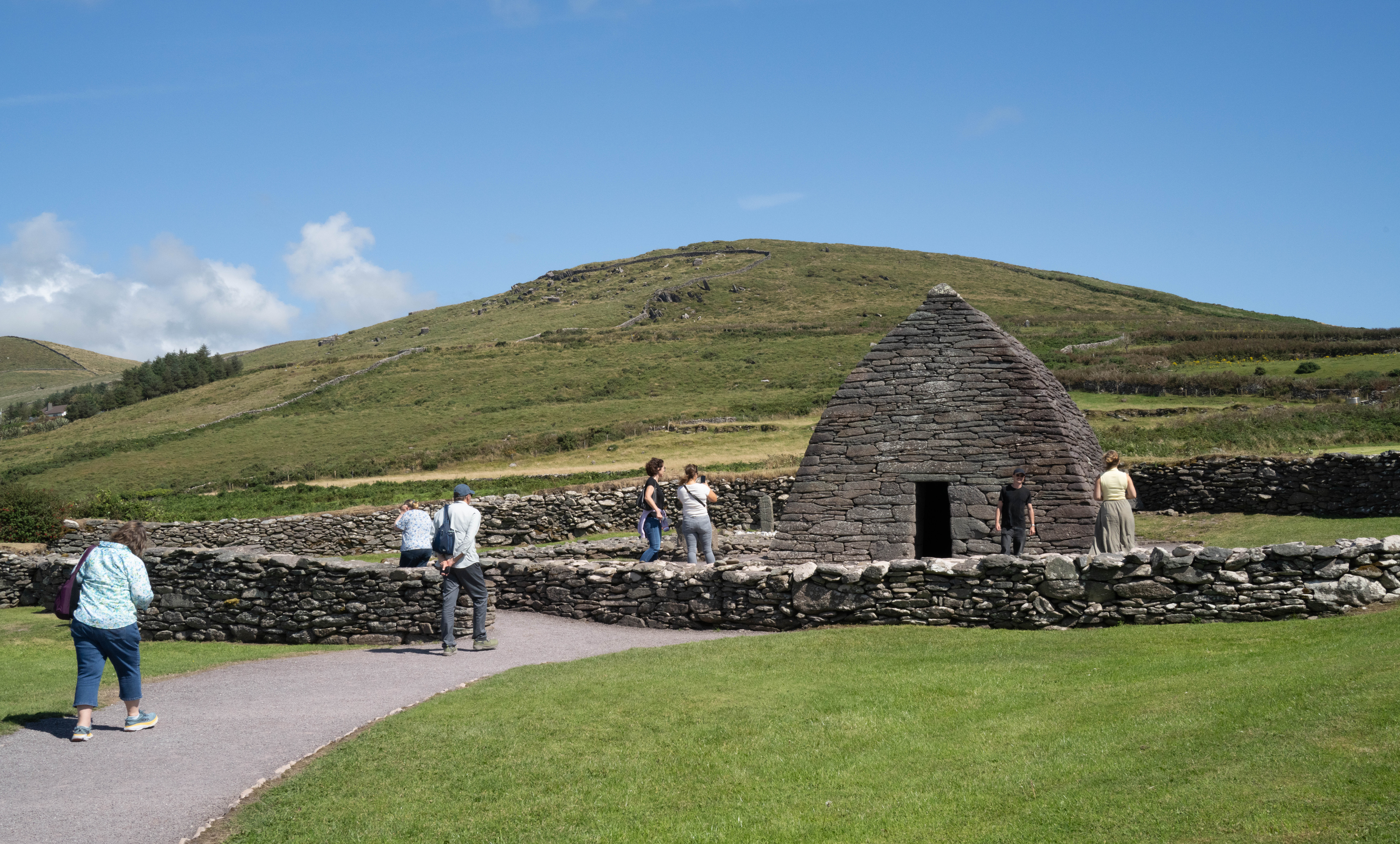
Many ancient stone structures were observed as the local guide discussed their prehistoric and medieval construction. Included were the beehive huts (clocháns) and the mysterious Gallarus Oratory.
The Beehive huts, or clochain, are ancient dry stacked stone dwellings with corralled roofs. These structures dated roughly fin the 7th to 12th centuries, serving as early Christian monastic hermitages or local shelters.
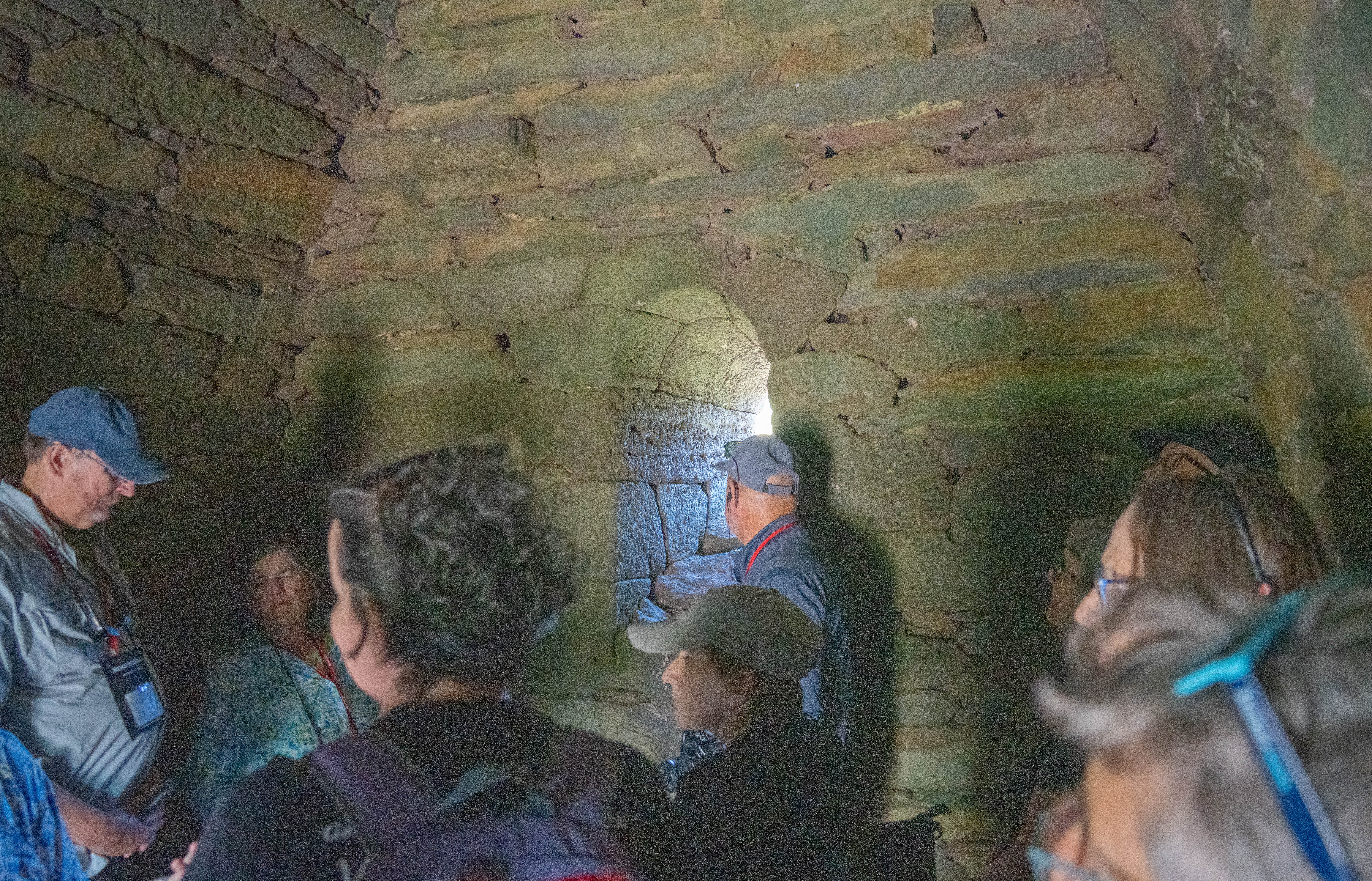
The Gallarus Oratory is an ancient stacked stone church on the Dingle Peninsula. It is shaped like an upturned boat, and features an ingenious corbelled stone roof built without mortar. It dates from the early Christian or medieval period (approx. 8th to 12th century) and remains completely waterproof (sort of).
We returned to the hotel a bit tired after our field trip (about 100 miles and 4 hours of motor coach riding, and three miles of walking). The remainder of the afternoon was free.

