Friday, July 4, 2025–Mainz Walking Tour and Gutenberg Museum

Our walking tour of Mainz focused mainly on the Old Town and its many historic assets.
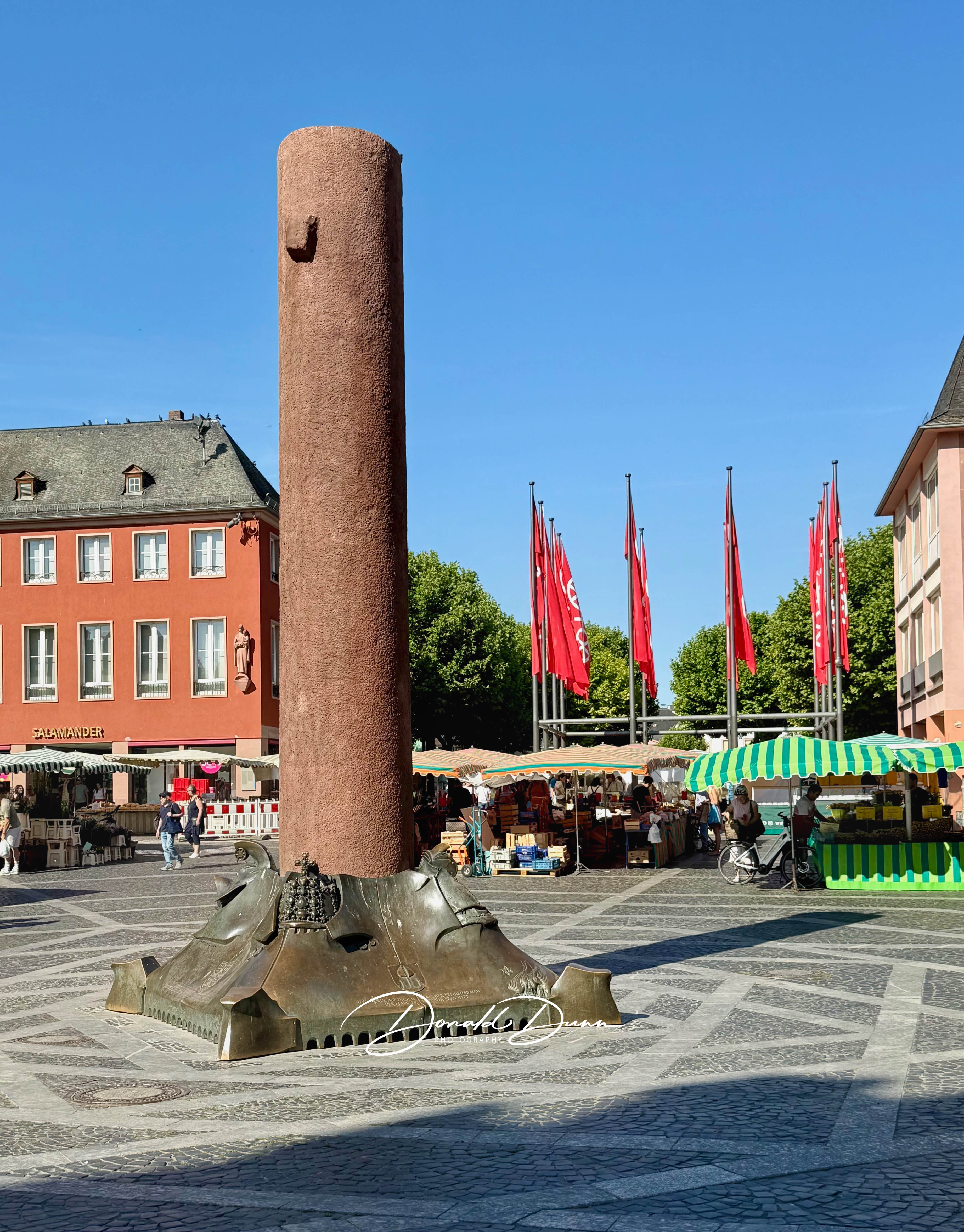
Mainz’s Old Town is a charming area known for its historic buildings, picturesque squares, and vibrant atmosphere. It features winding streets, half-timbered houses, baroque churches, and is a place where history and modern life intertwine. The Old Town also offers a variety of shops, restaurants, and wine taverns, making it a popular destination for both locals and tourists. The Old Town is the oldest part of Mainz, with a history dating back to Roman times. It boasts a mix of architectural styles, including half-timbered, baroque, and rococo façades, creating a unique and picturesque streetscape. The Wood Tower is a mediaeval tower in Mainz, Germany, with the Iron Tower and the Alexander Tower one of three remaining towers from the city walls. Its current Gothic appearance dates to the early 15th century. It is so named because wood used to be piled next to it on the bank of the Rhine.

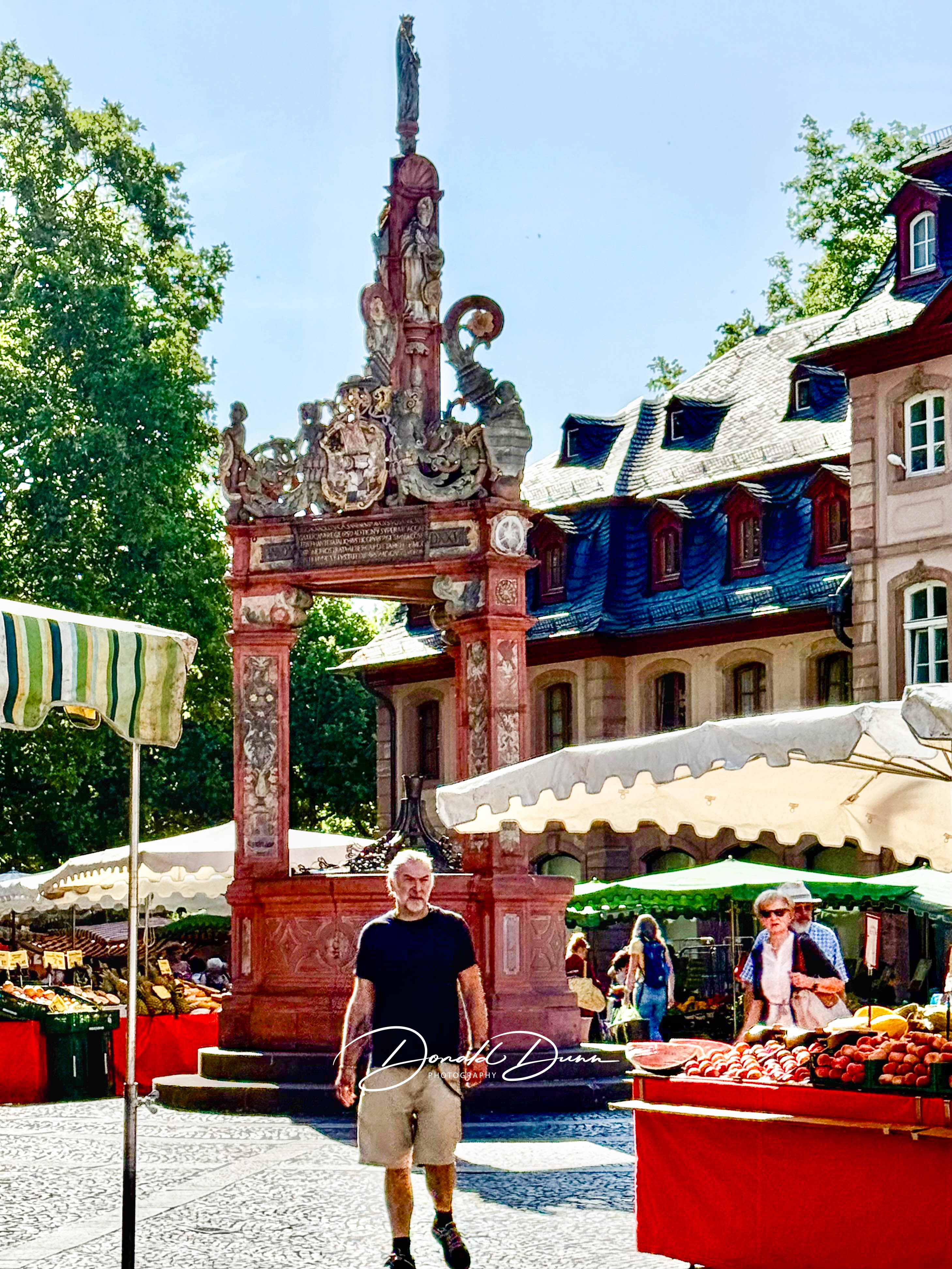
Many smiling locals were enjoying coffee and pastries at the several outdoor cafes in the Market Square. Market Square is Mainz’s most popular square and is dominated by the iconic Mainz Cathedral. The square became a popular trading place when the cathedral was built in 975. Traditionally, merchants offered wool, cloth, fur, baked goods, and fruit and vegetables. Products were set out in large baskets on the floor. The Renaissance market fountain was built in 1526. The water fountain was an important source of fresh water for nearby residents. In 1889, a Madonna figure was added to the fountain. Most of the houses in the square date to the 18th century. World War II bombs heavily damaged Market Square. In 1975, Mainz celebrated the thousandth anniversary of the cathedral and committed to re-designing and rebuilding the square. Many of the buildings were rebuilt with historical facades. The market takes place Tuesdays, Fridays, and Saturdays, and we were fortunate enough to have visited on a Friday. Also, as an aside, Market Square hosts a vibrant Christmas Market during the Christmas holiday season.

Mainz also has some quirky traffic lights.


The magnificent Mainz Cathedral, or St. Martin’s Cathedral, dominates the skyline and is a major attraction in the Old Town. It is situated near the historical centre and market square. 

This Roman Catholic cathedral church has stood witness to more than 1000 years of history and is the site of the Episcopal see of the Bishop of Mainz. Together with the cathedrals of Worms and Speyer, the Mainz Dom represents the summit of Romanesque cathedral architecture seen in Germany. Predominantly Romanesque in style, the cathedral has however had later additions to it, making it a wonderful blend of architectural styles from various eras. It is a beautiful experience to see the six red sandstone towers of the St. Martin’s Cathedral rise above the Mainz cityscape with half-timbered houses. To give you an idea about the historic importance of this cathedral, it is enough to say that through the centuries, seven coronations were hosted here. During the World War II, almost 80% of Mainz was destroyed by bombing, but the cathedral had stood unharmed. It is almost completely surrounded by buildings. The largest dome shows a blend of Roman and Baroque styles and beneath it is the transept separating the west chancel from the nave and smaller east chancel. Many supporting pillars in the nave are adorned with carved and painted statues.

The Gutenberg Museum is one of the oldest museums of printing in the world, located opposite the cathedral in the old part of Mainz, Germany. It is named after Johannes Gutenberg, a native son of Mainz and the inventor of printing from movable metal type in Western Europe and focuses on him and his inventions. The museum’s collection includes two original Gutenberg Bibles that date back to the middle of the 15th century and are widely regarded as some of the finest books of all time.
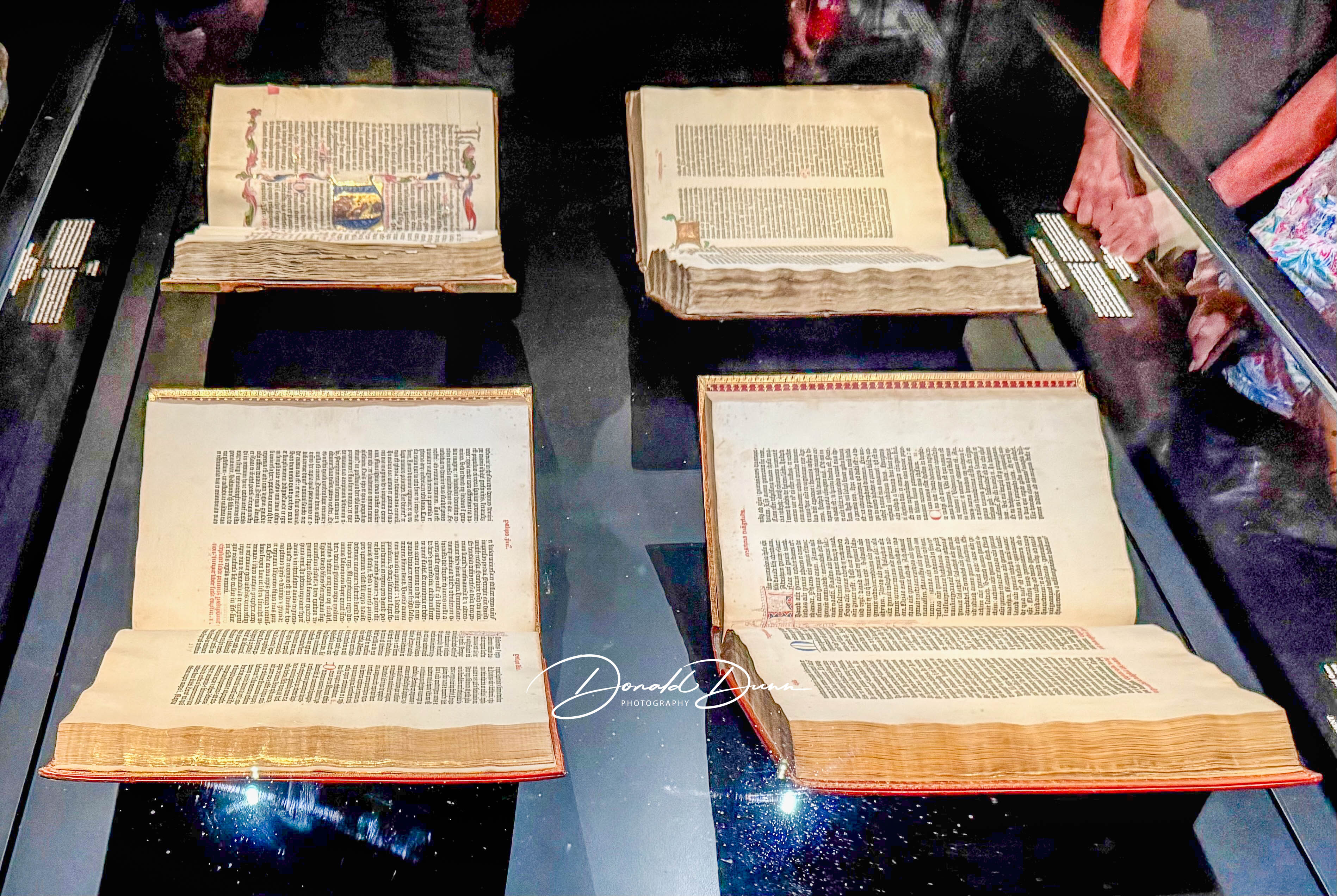
The reconstruction of Gutenberg’s workshop is another main attraction, and our guide demonstrated what the printing process would have been like in Gutenberg’s day.

The Collegiate Church of St. Stephan, known in German as St. Stephan zu Mainz, is a Gothic hall collegiate church located in the German city of Mainz. It is known for windows created by Marc Chagall. St. Stephan was originally built in 990 at the order of Archbishop Willigis, who also initiated the building of Mainz Cathedral. The current church building dates from the late medieval era; construction of the main area of the church began in about 1267 and was completed in 1340. St. Stephan was heavily damaged in the bombing of Mainz in World War II. The Chagall choir windows in St. Stephan are unique in Germany. Between 1978 and his death in 1985, Russian Jewish artist Marc Chagall created nine stained-glass windows of scriptural figures in luminous blue. The figures depict scenes from the Old Testament, demonstrating the commonalities across Christian and Jewish traditions. Chagall intended his work to be a contribution to Jewish-German reconciliation, made all the more poignant by the fact that Chagall himself fled France under Nazi occupation.

Thursday, July 3, 2025–Historic Koblenz

Finally, the record heat that has enveloped this part of Europe has disappeared and temperatures are now more “normal” with highs in the 70s and lows in the 50s—a welcome change indeed.

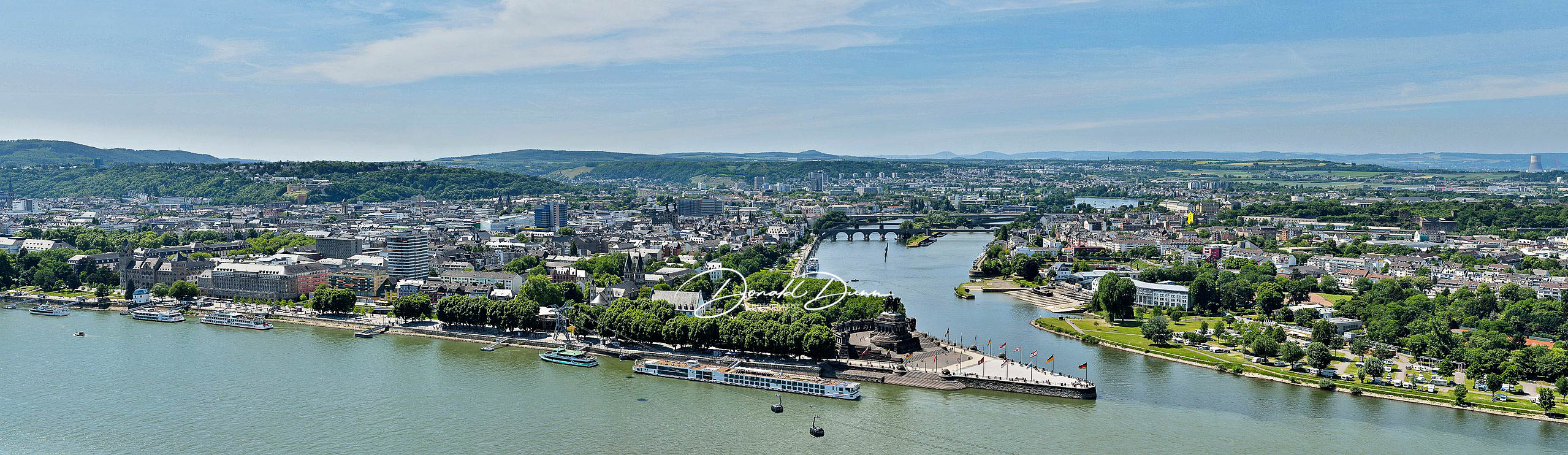
This is our second visit to Koblenz, having toured here August 17, 2015. Koblenz, a major German city, is at the confluence of the Moselle and Rhine Rivers. Koblenz was established as a Roman military post in 8 BC.

The Rhine Gorge was declared a UNESCO World Heritage Site in 2002, with Koblenz marking the northern end because of its beauty as a cultural landscape, its importance as a route of transport across Europe, and the unique adaptations of the buildings and terraces to the steep slopes of the gorge. Some of the sites we visited are discussed below.

The statue of Kaiser Wilhelm rises imposingly here, at 37 meters high.

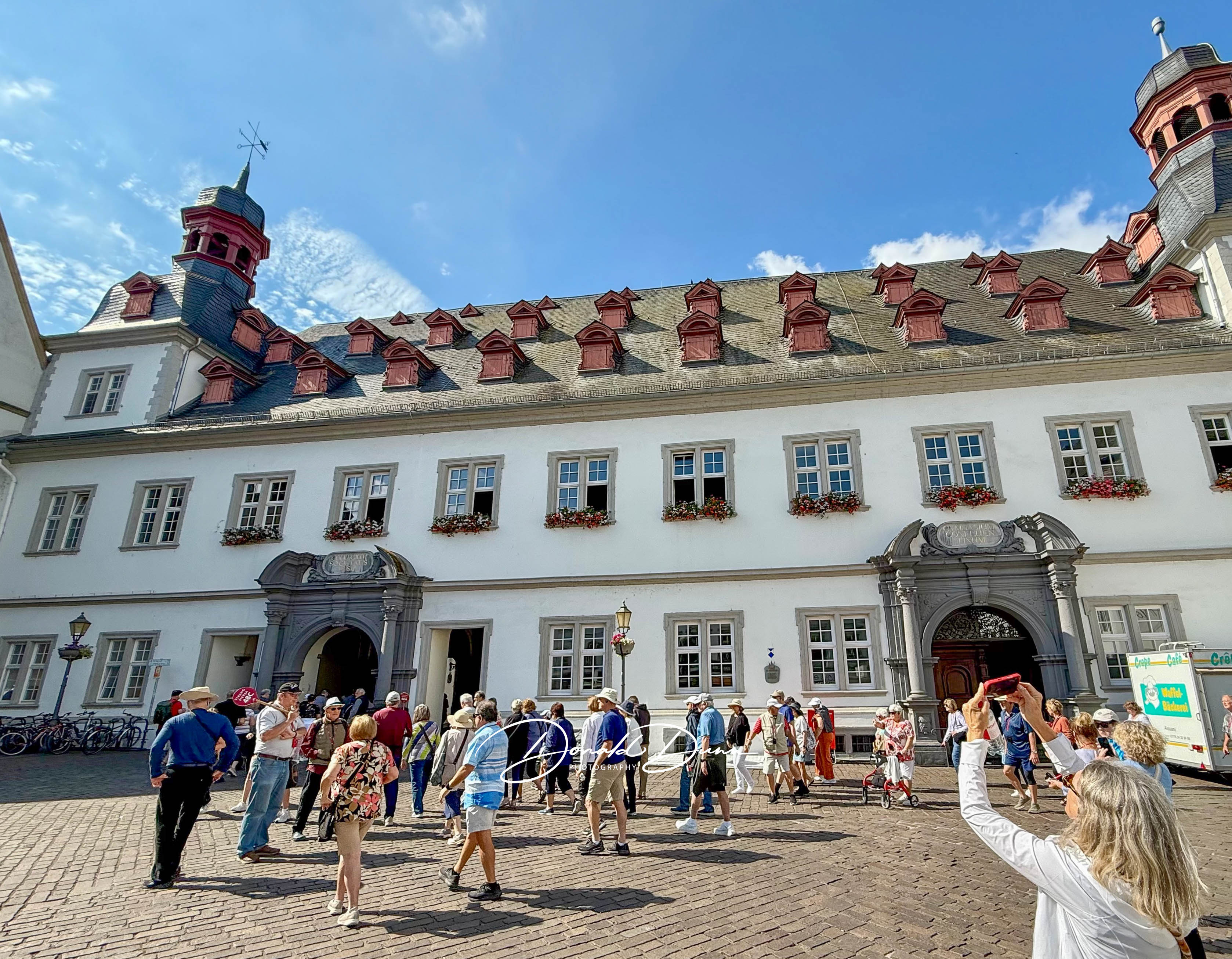
The Electoral Palace in Koblenz is one of the most important palace buildings of early French classicism in southwest Germany and is one of the last residential palaces built in Germany immediately before the French Revolution. Elector Clemens Wenzeslaus had the Electoral Palace built between 1777 and 1786. From 1850 to 1858, the Prussian Crown Prince and later Emperor Wilhelm I resided here as Prussian military governor. In 1944, the Electoral Palace was destroyed down to the outer walls and rebuilt in 1950-51.
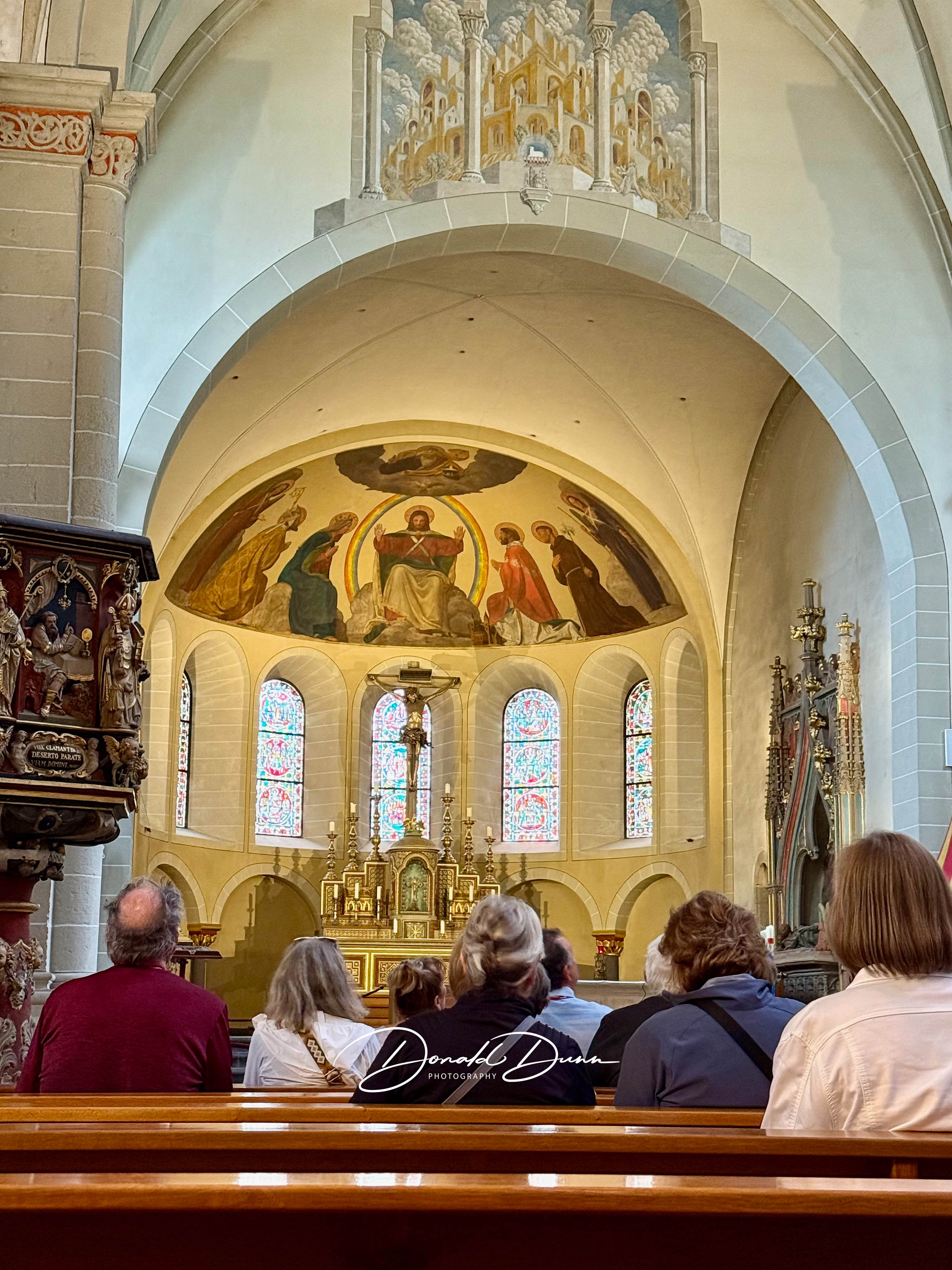
The St. Castor Basilica is the oldest preserved church in Koblenz. The collegiate church, consecrated in 836, was the scene of significant historical events. The monastery of St. Kastor was the meeting and arbitration place of emperors and kings as well as their descendants. In 842, the Romanesque church was the venue for the negotiations of the sons of Emperor Louis the Pious, which led to the partition of the Frankish Empire in the Treaty of Verdun the following year. The building in its present form dates mainly from the middle of the 12th century. On July 30, 1991, Pope John Paul II elevated the Castor church to the status of basilica minor. Together with the Liebfrauenkirche and the Florinskirche, the St. Castor Basilica shapes the silhouette of the Koblenz old town.

On the highest point in the Old Town stands the Romanesque Church of Our Lady (Liebfrauenkirche), also known as the Notre Dame Church.

Although what’s seen today dates from the 12th century with later 15th-century additions, there’s evidence pointing to a much older 5th-century place of worship having been built here by the Romans. Notable features include its splendid Gothic choir and the attractive onion-shaped Baroque towers with their four bells, famous for tolling the “Reveler’s Bell” at 10pm each evening.

We also toured the 12th-century St. Florin’s Church (Florinskirche), notable for the old cannonball above the baptismal vault — a reminder of the destruction of the city during earlier wars — and its picturesque setting overlooking an attractive public square.

The Old Town (Altstadt) district of Koblenz has been painstakingly restored after the devastation of WWII. Highlights of our walking tour included the Town Hall (Rathaus), built between 1695 and 1700, in front of which is the humorous Schängelbrunnen, a monument designed in 1940 by Carl Burger and dedicated to poet Josef Cornelius, who penned the lyrics for the city’s “hymn” (watch out for the spitting boy!).

The town clock in Saint Florin’s market in Koblenz contains more than one face. It’s adorned with an image that according to local lore represents Johan Lutter, a 16th century robber. Though he was sentenced to death and lost his head in 1536, his visage still keeps watch over Koblenz’s Old Town from beneath the clock. The face’s eyes roll back and forth as the pendulum moves, marking the passage of time. When the clock strikes the hour or half hour, the whimsical sheet metal man sticks out his tongue to mock the good citizens of Koblenz. This depicts the gruesome yet morbidly comical expression Lutter supposedly made in his final moments. Some legends even say he continued to roll his eyes and wiggle his tongue after his head lay severed from his body.

Today’s upstream sailing took us by castles at almost every bend of the Rhine River.

Tuesday, July 1, 2025–Trier Highlights

One of our favorite things about cruising with the Viking is their easily accessible, espresso, cappuccino, and/or latte at any time of the day. Kay and I awoke relatively early, 5:00 AM, and I went to the cappuccino machine and made us each a cappuccino and picked up a couple of muffins for a pre-breakfast snack. The coffees were very tasty.

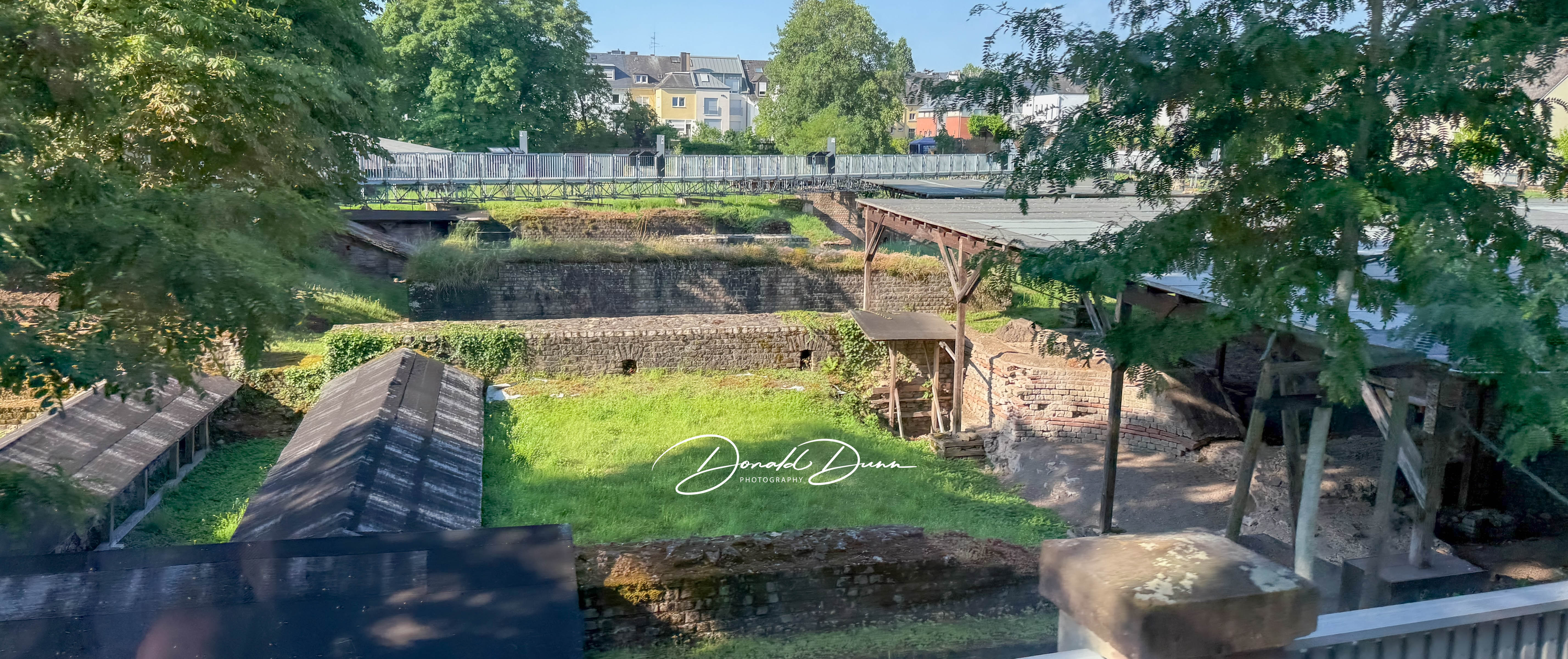
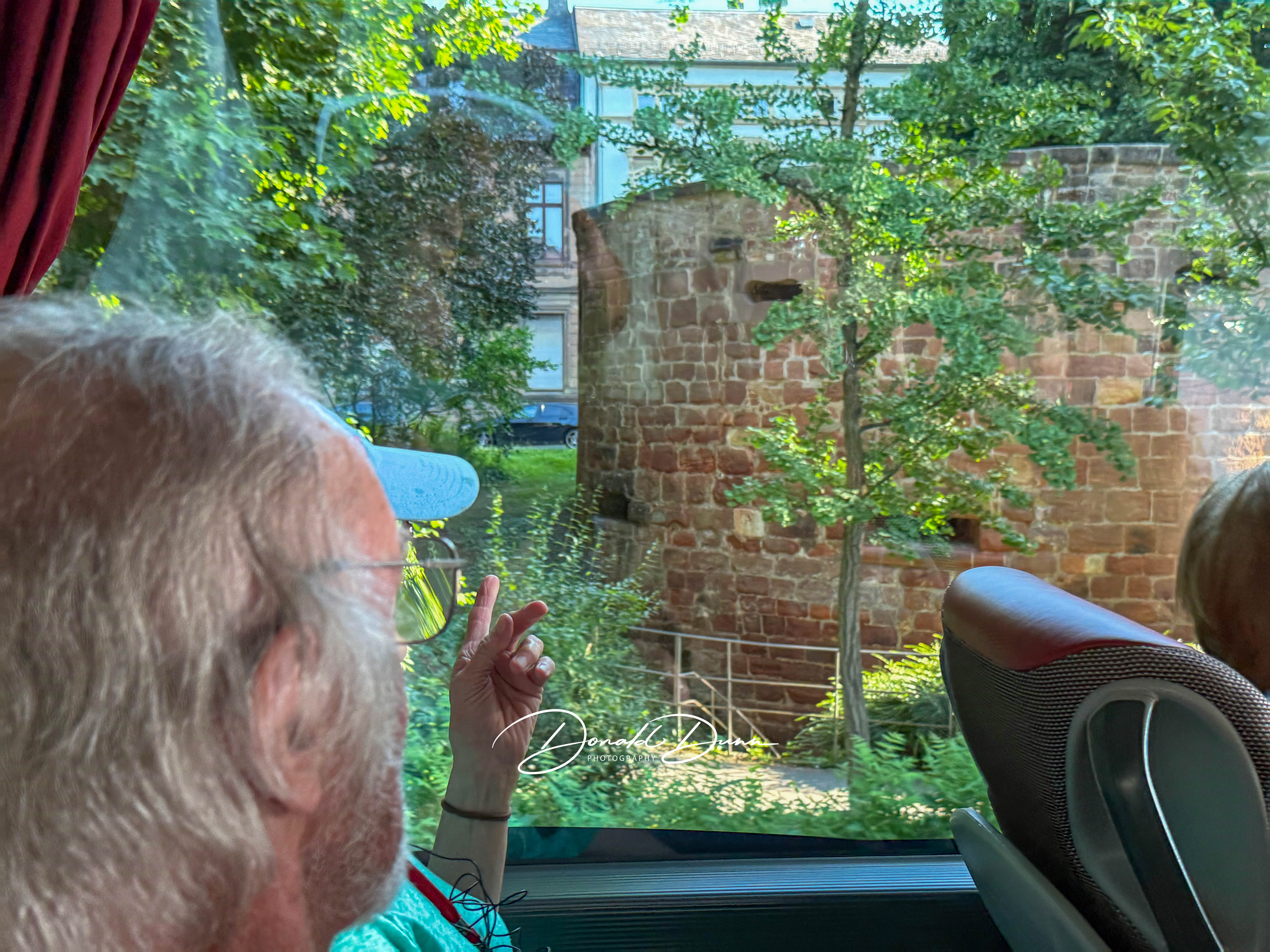
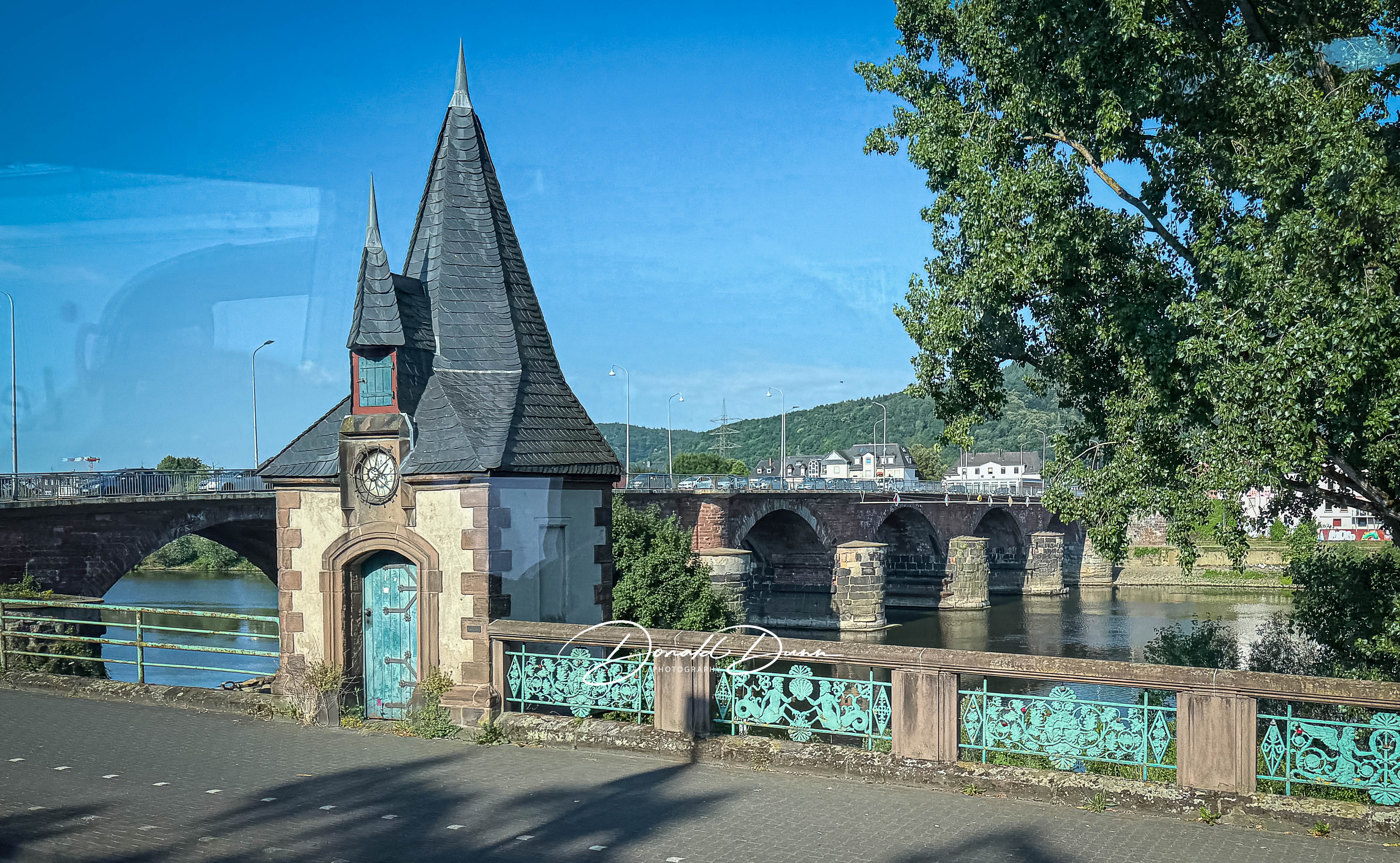
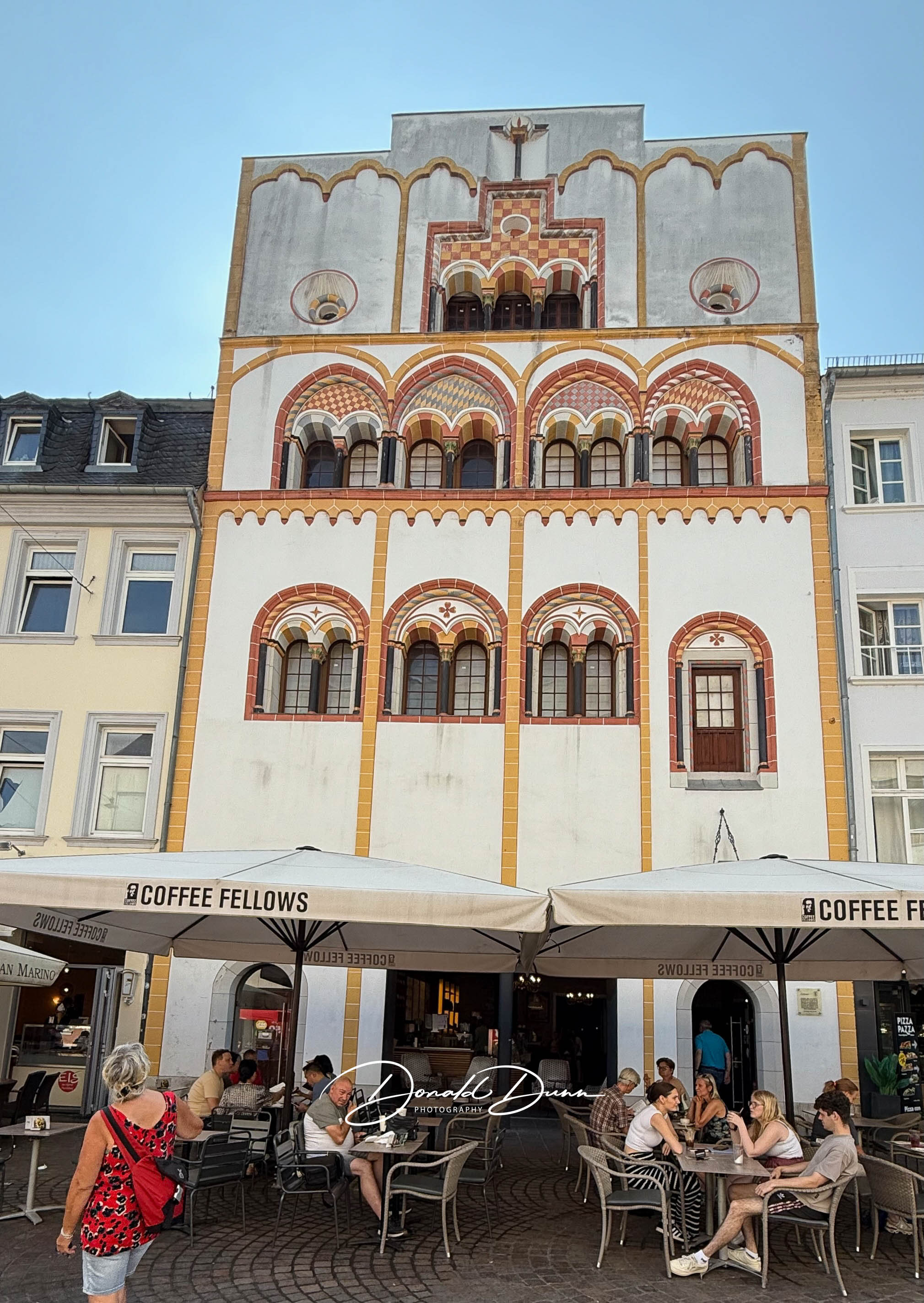
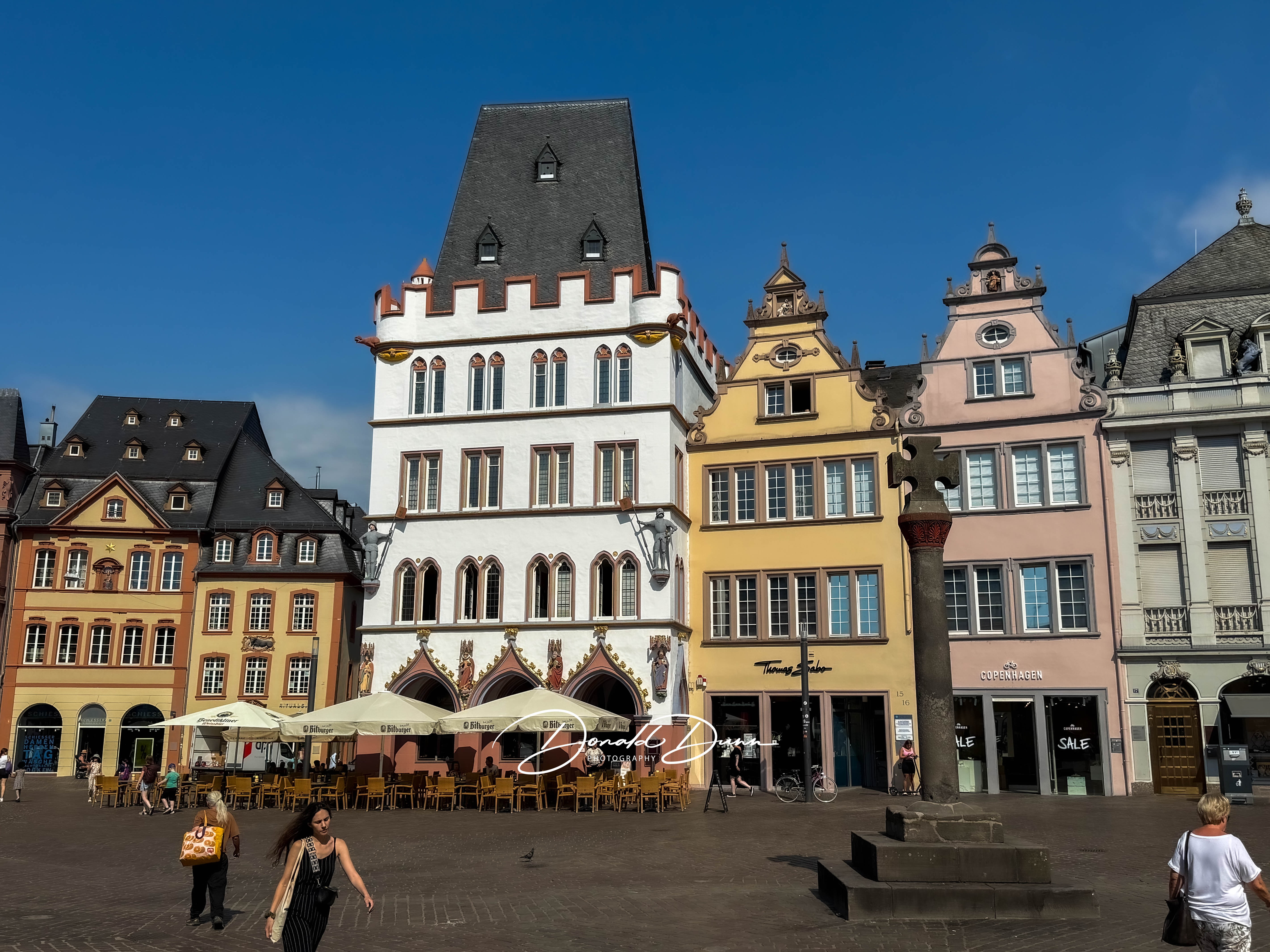
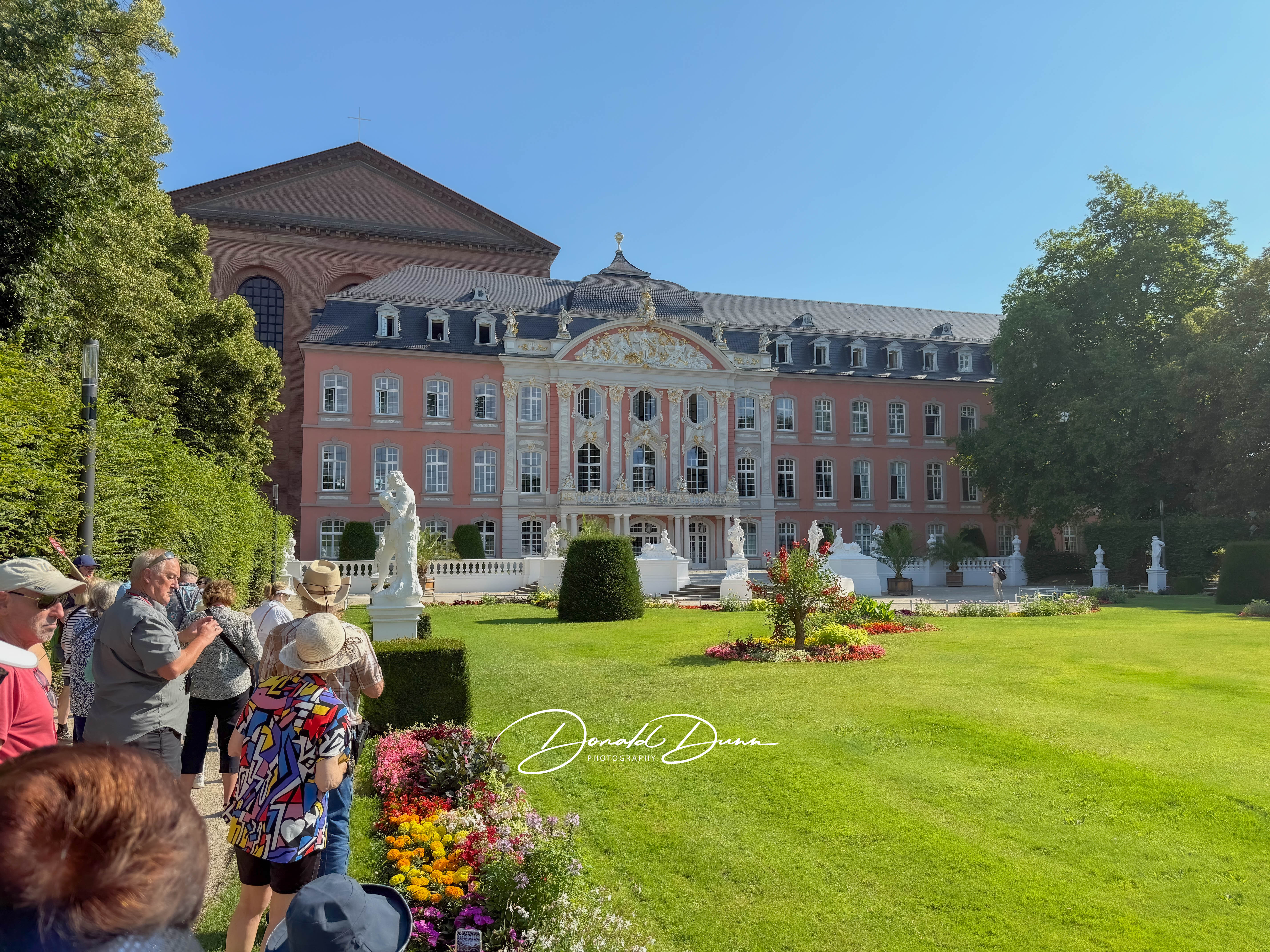
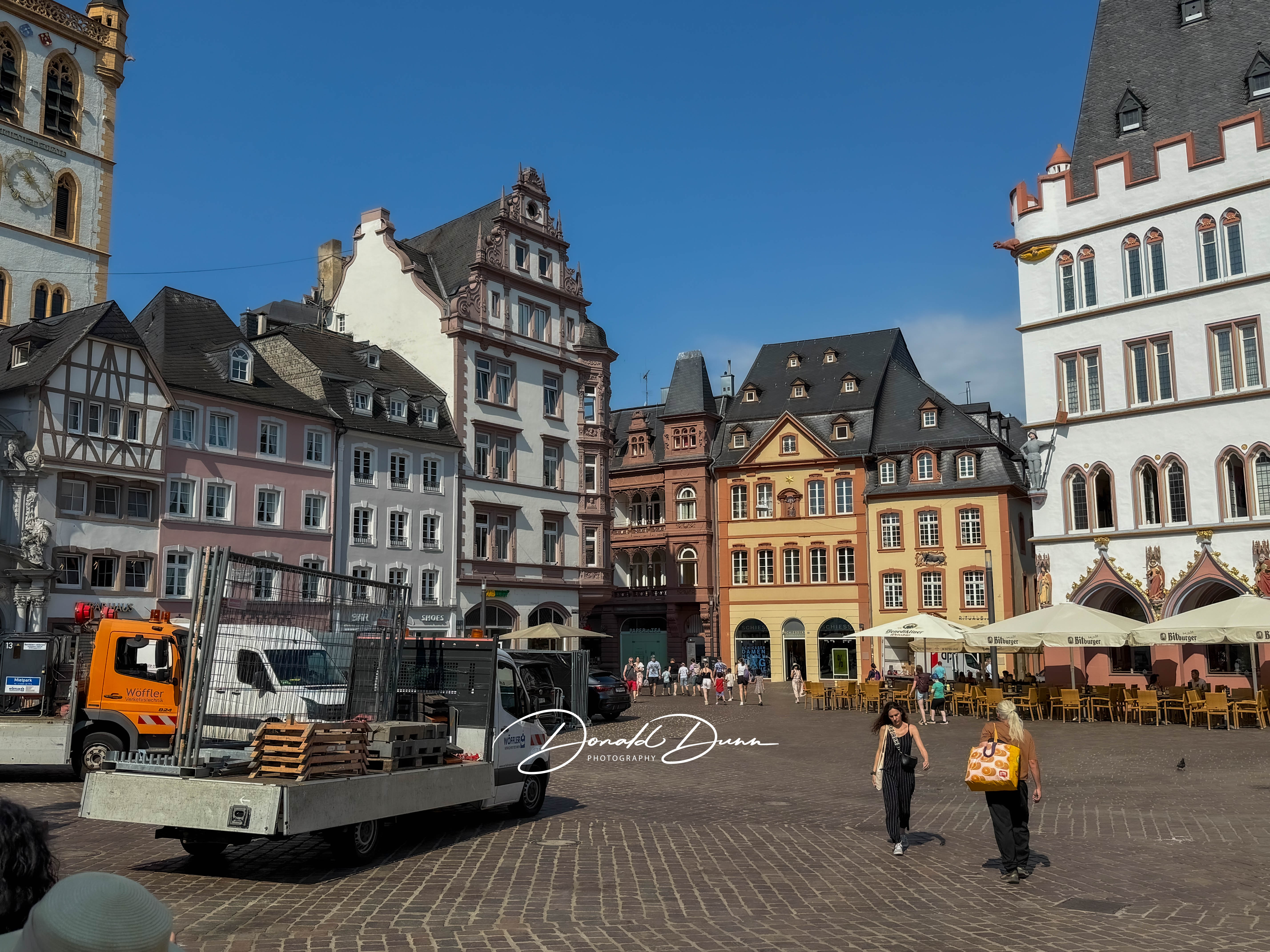
After catching up on news and mail, and hot showers, we went to breakfast and enjoyed eggs Benedict with a few sides and, of course, fresh coffee. And then it was off to catch the bus for both a bus and walking tours of Trier, Germany. Trier is Germany’s oldest city, dating back to Roman Times. Trier is a southwestern German city in the Moselle wine region, near the Luxembourg border. Founded by the Romans, it contains several well-preserved Roman structures like the ruins of Roman baths, an amphitheater just outside the center and a stone bridge over the Moselle River. 

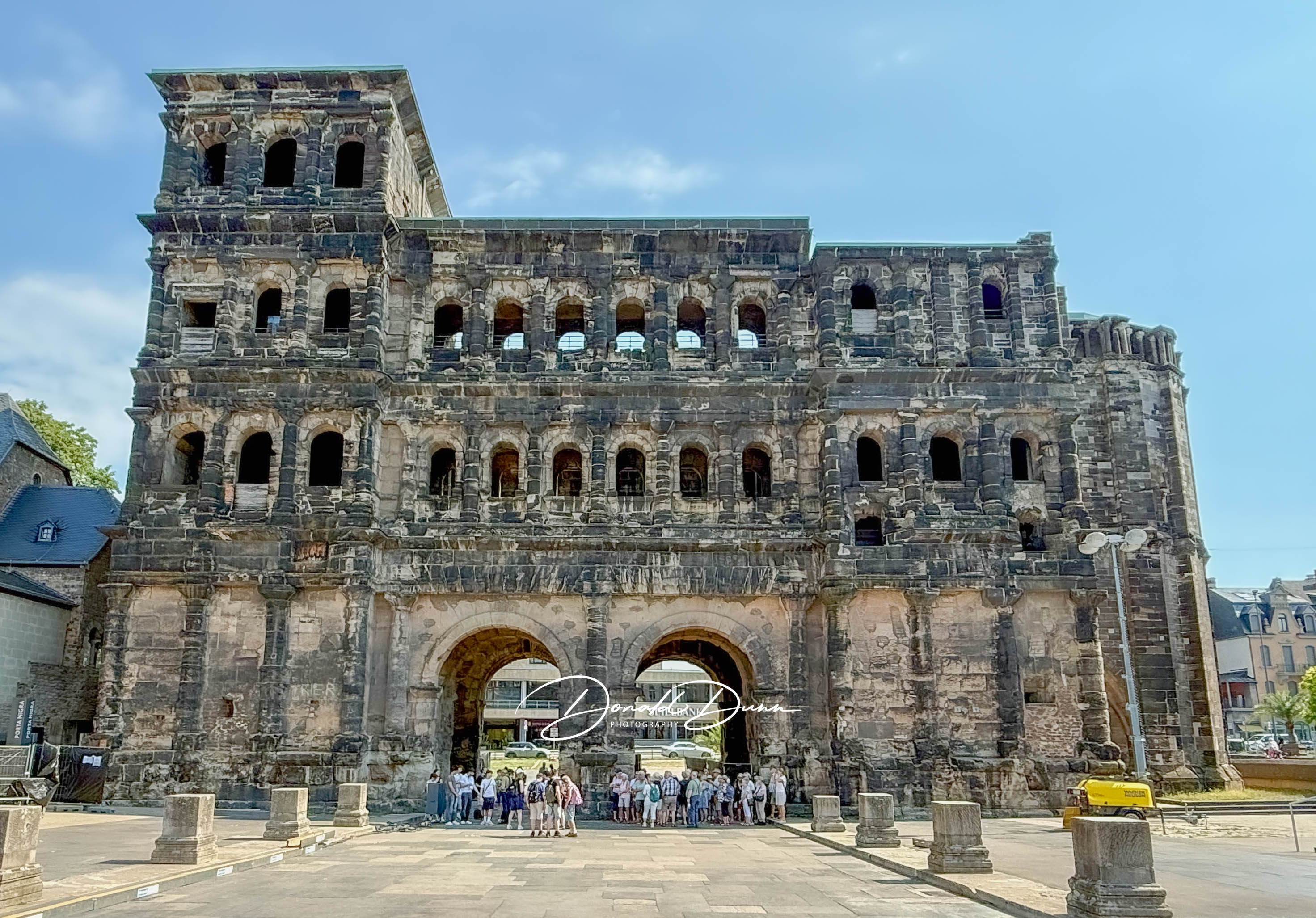
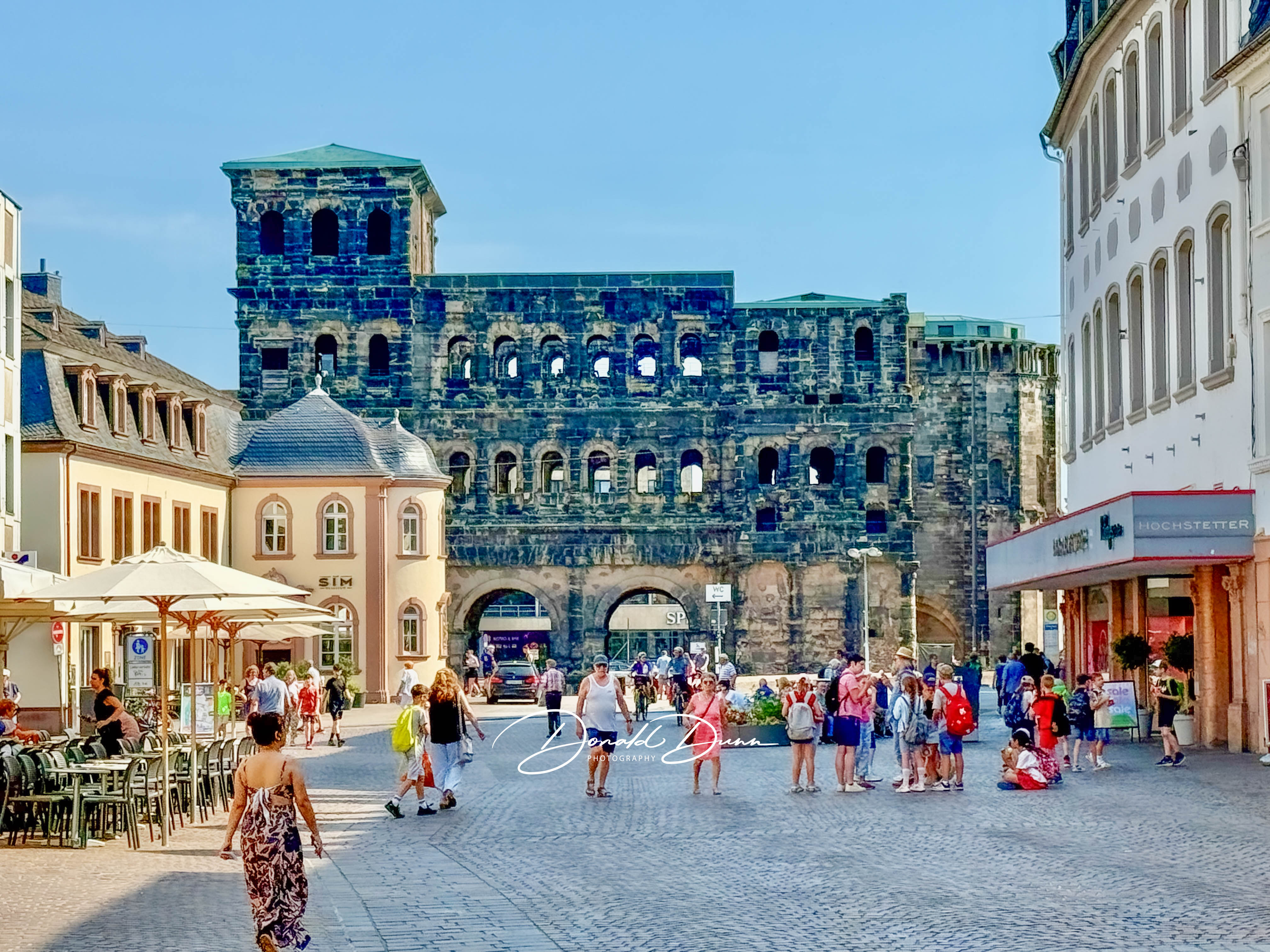
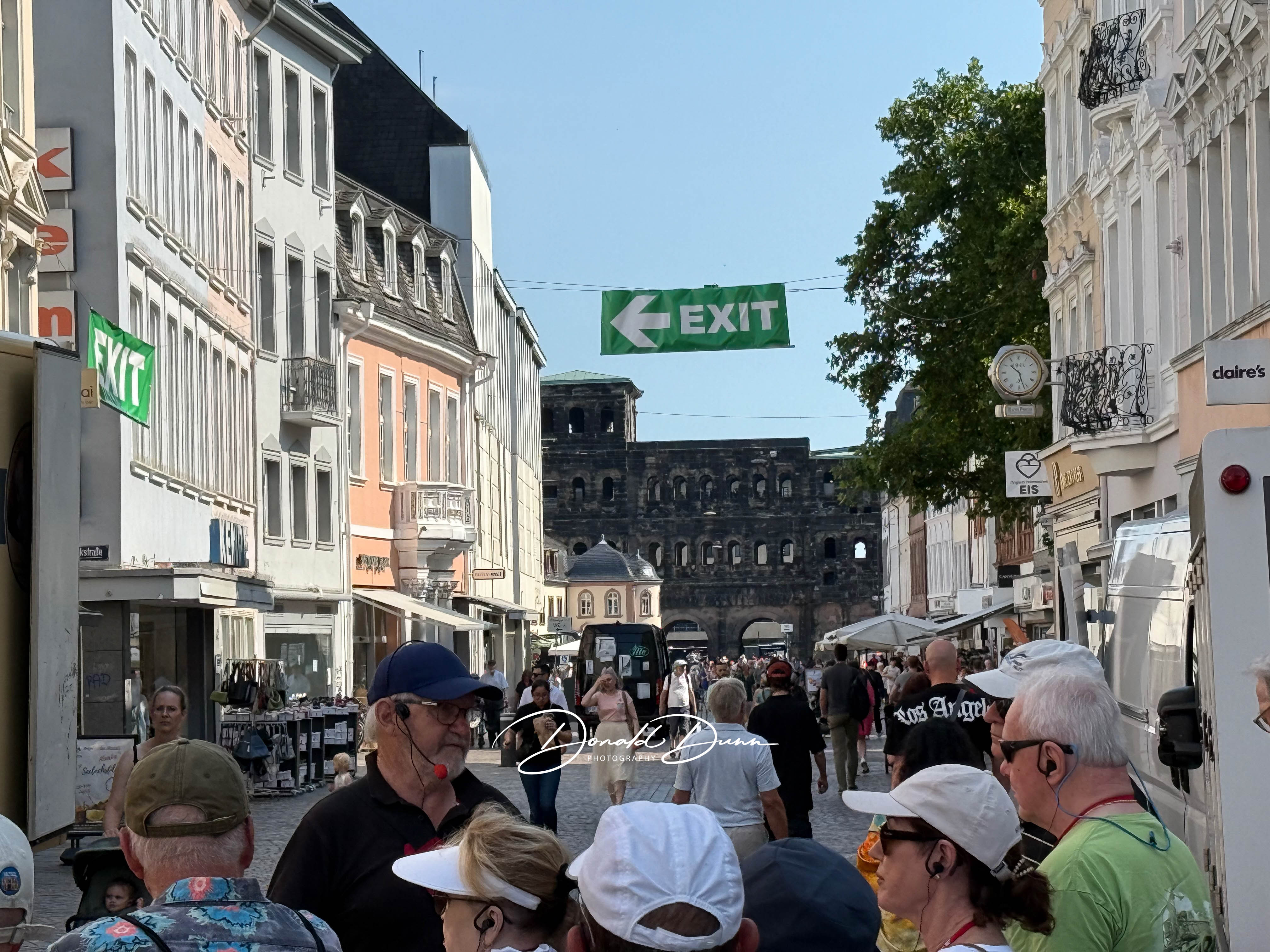
Among the best preserved Roman structure is the Porta Nigre Gate.

The Porta Nigra Gate was built in grey sandstone after 170 AD. The original gate consisted of two four-storeyed towers, projecting as near semicircles on the outer side. A narrow courtyard separated the two gate openings on either side. The gate was used as a town entrance for centuries until the end of the Roman era in Trier. In Roman times, the Porta Nigra was part of a system of four city gates, one of which stood at each side of the roughly rectangular Roman city. It guarded the northern entry to the Roman city

The Archaeological Museum displays Roman artifacts, including The Trier Gold Hoard. The gold is a hoard of 2516 (or 2518) gold coins with a weight of 18.5 kg found in Trier, Germany, in September 1993 during construction works. It is described as the largest preserved Roman gold hoard worldwide..

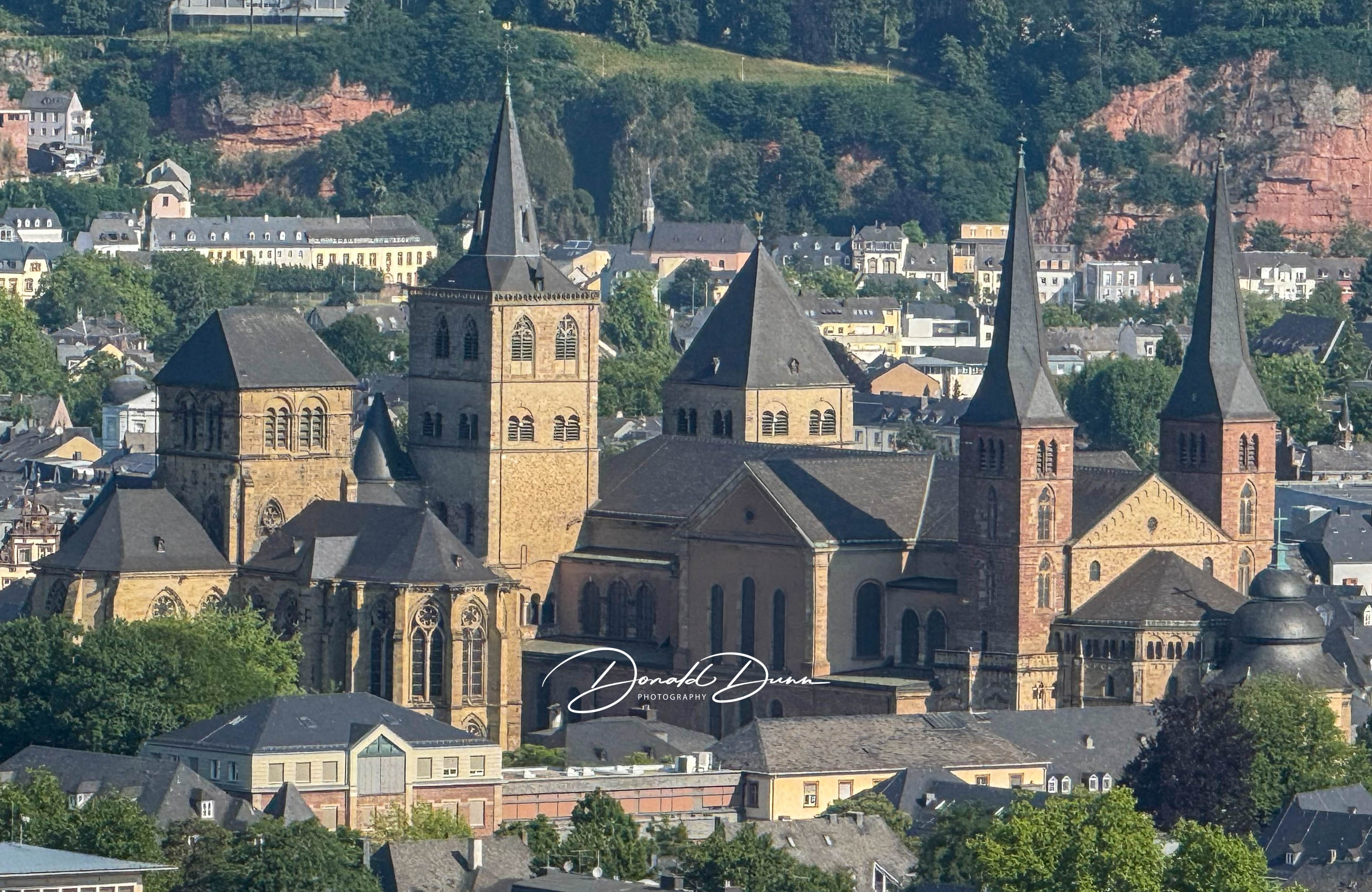
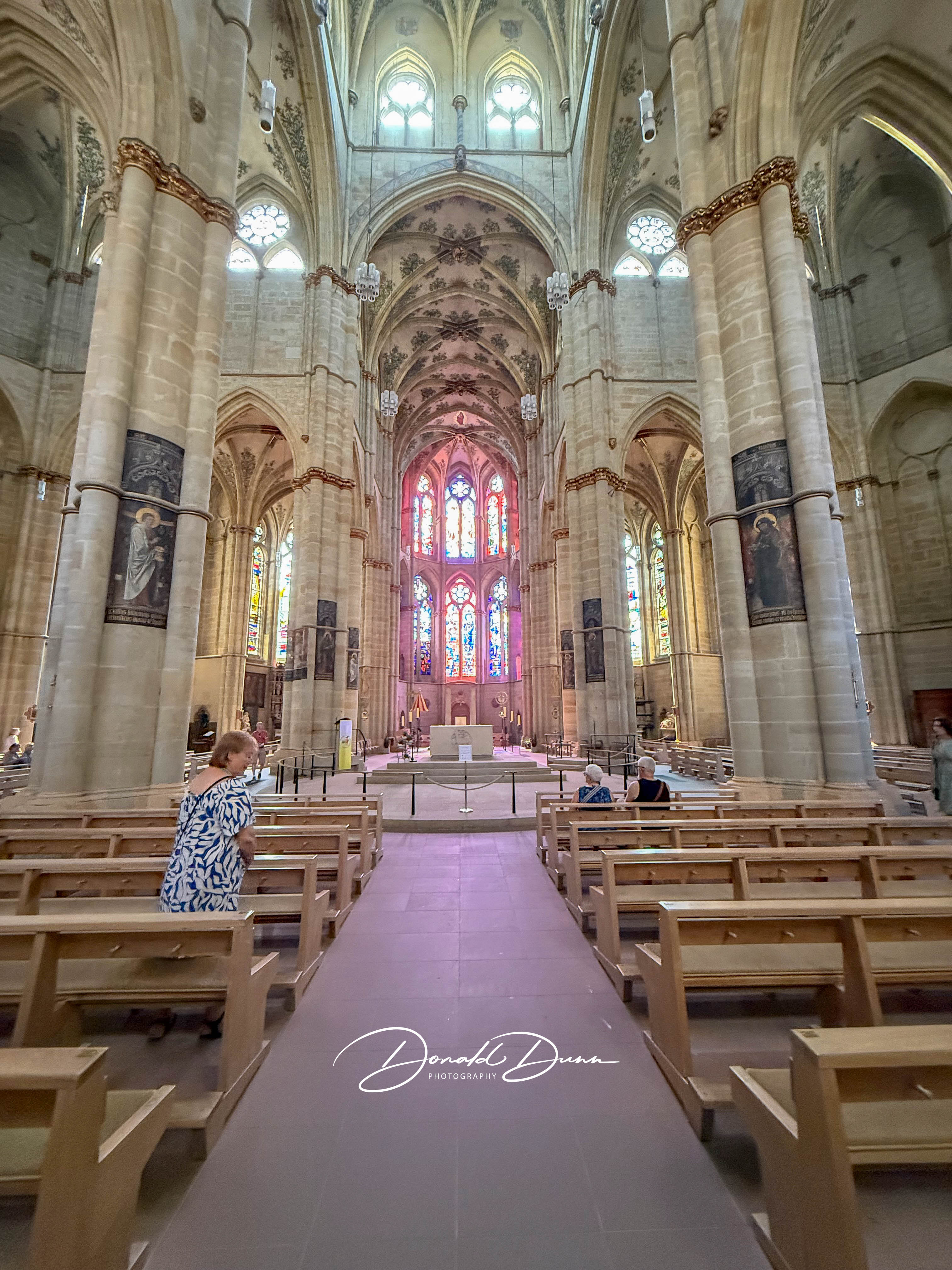
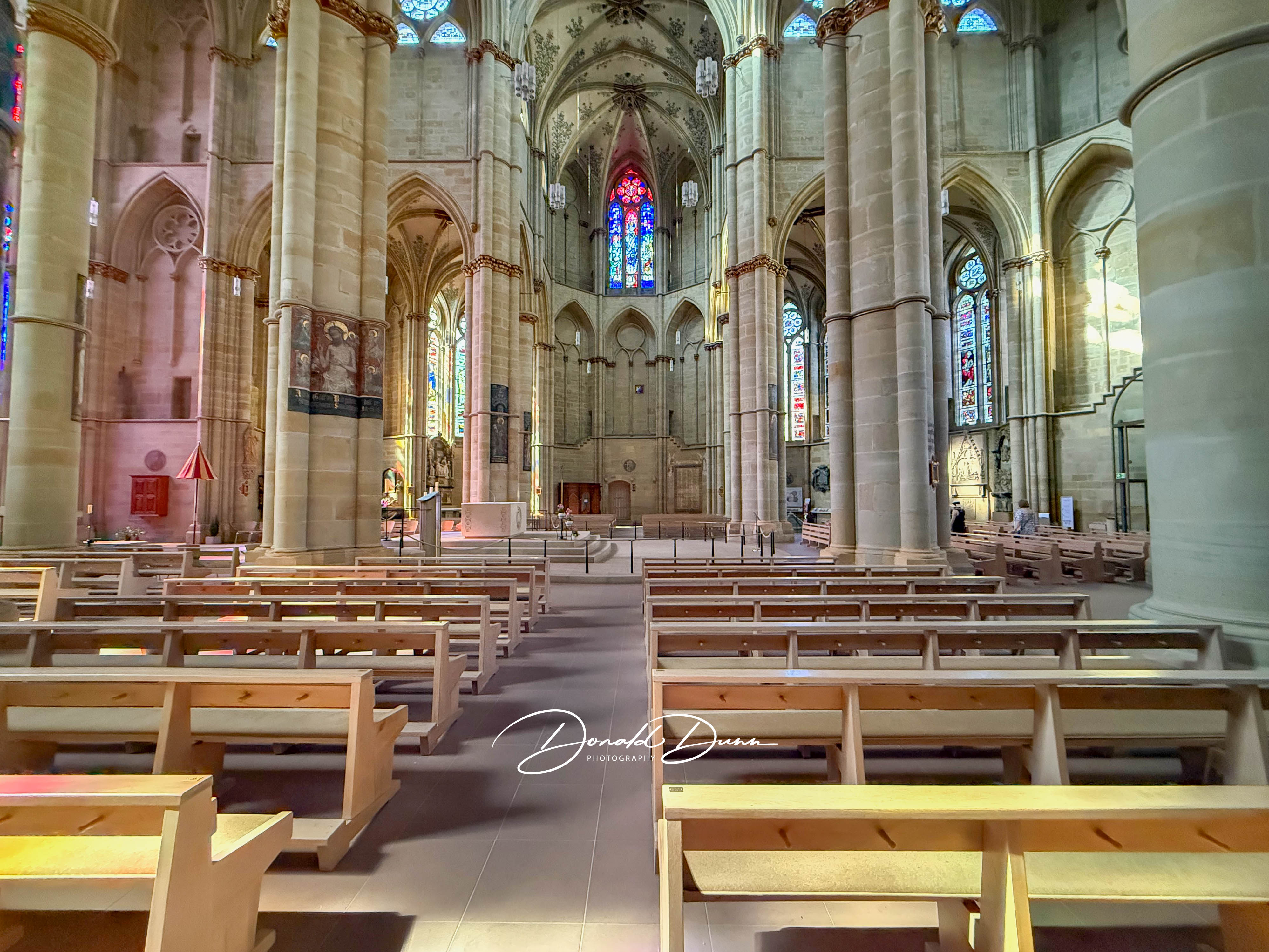
Among Trier’s many Catholic churches is Trier Cathedral.

Because of its significance during the Roman and Holy Roman empires, several monuments and cathedrals within Trier are listed as a UNESCO World Heritage Site. 

Today was the hottest day of the year in Trier—22 degrees above normal with accompanying high humidity.