Friday, July 4, 2025–Mainz Walking Tour and Gutenberg Museum

Our walking tour of Mainz focused mainly on the Old Town and its many historic assets.

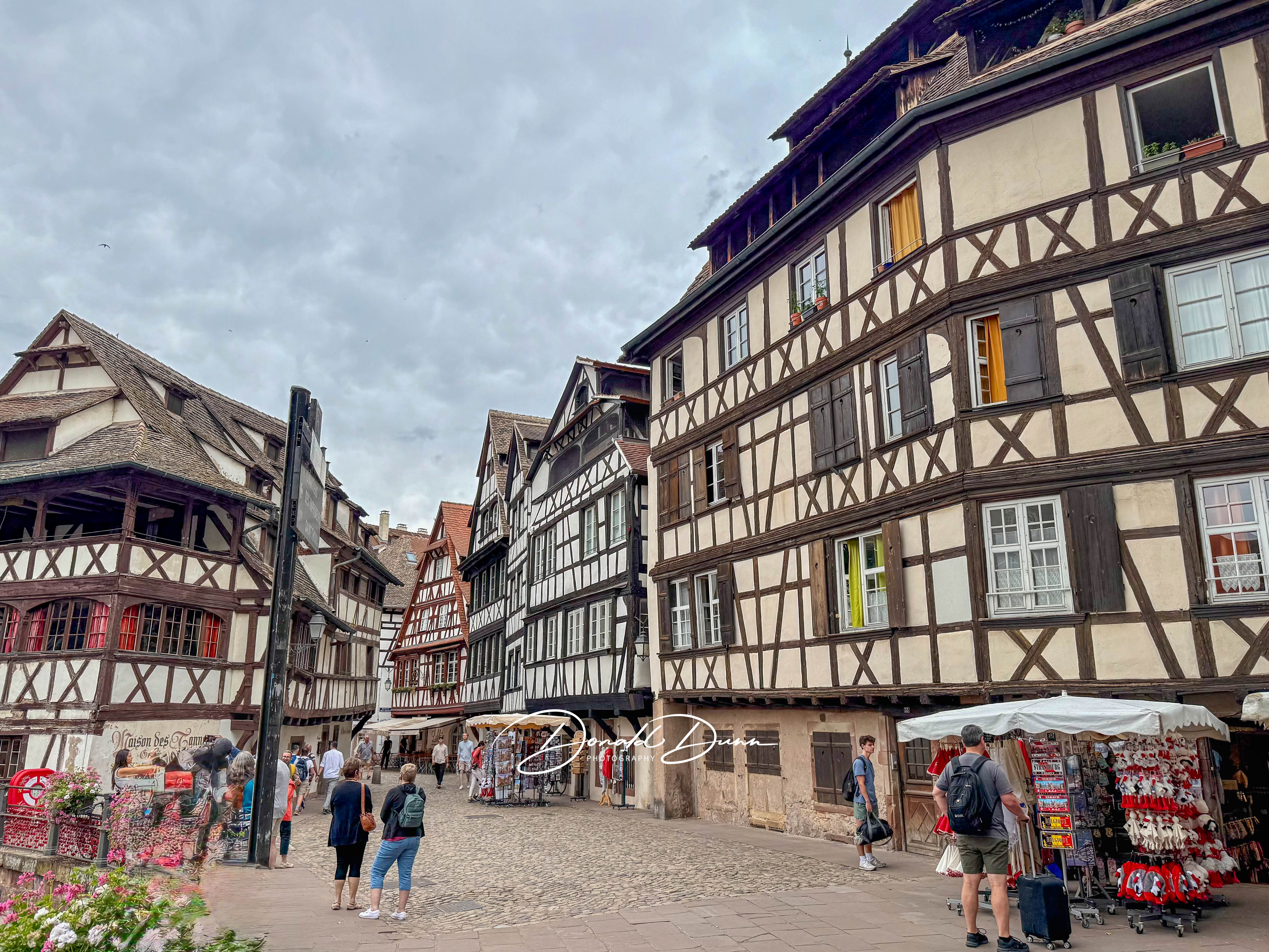
Mainz’s Old Town is a charming area known for its historic buildings, picturesque squares, and vibrant atmosphere. It features winding streets, half-timbered houses, baroque churches, and is a place where history and modern life intertwine. The Old Town also offers a variety of shops, restaurants, and wine taverns, making it a popular destination for both locals and tourists. The Old Town is the oldest part of Mainz, with a history dating back to Roman times. It boasts a mix of architectural styles, including half-timbered, baroque, and rococo façades, creating a unique and picturesque streetscape. The Wood Tower is a mediaeval tower in Mainz, Germany, with the Iron Tower and the Alexander Tower one of three remaining towers from the city walls. Its current Gothic appearance dates to the early 15th century. It is so named because wood used to be piled next to it on the bank of the Rhine.

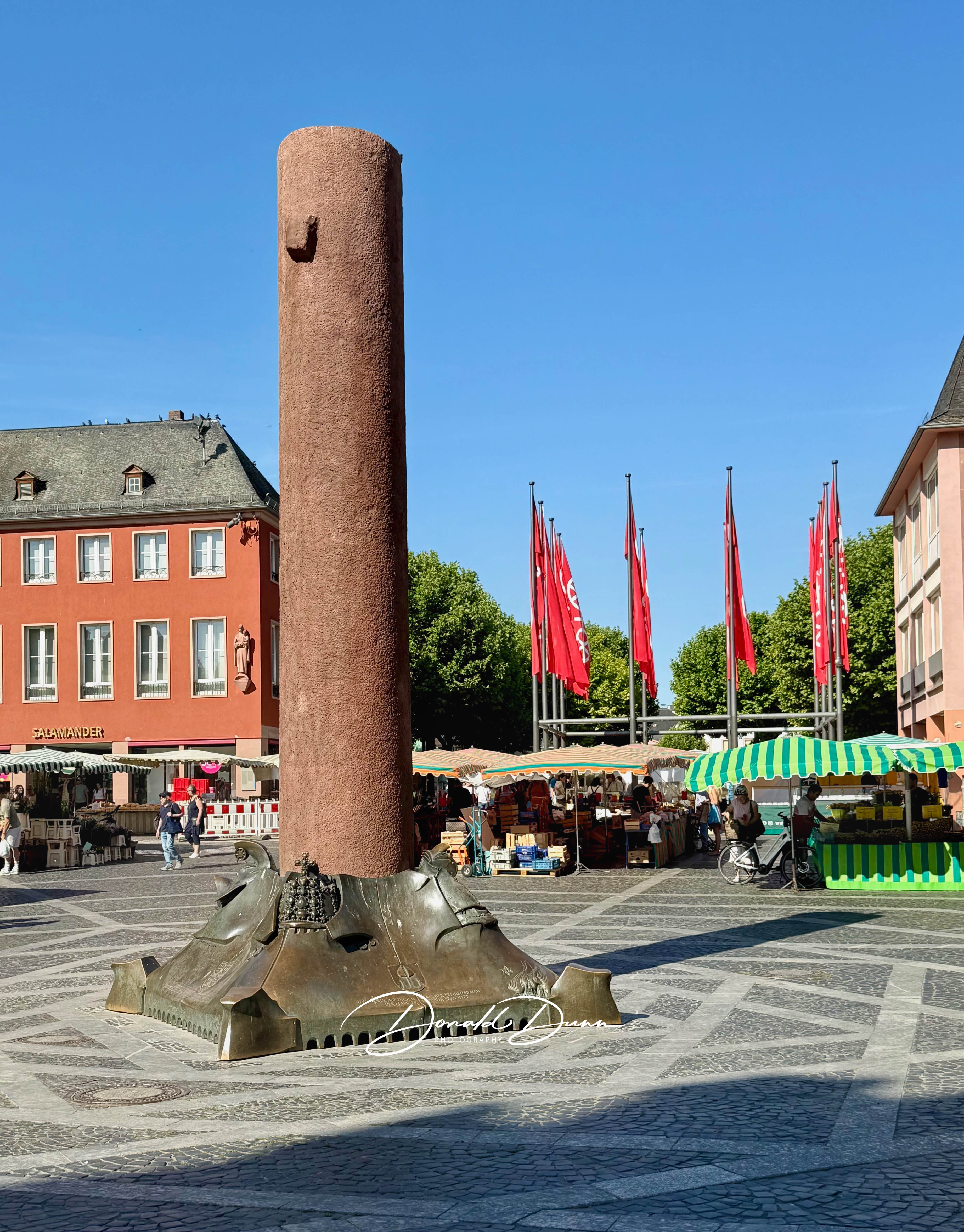
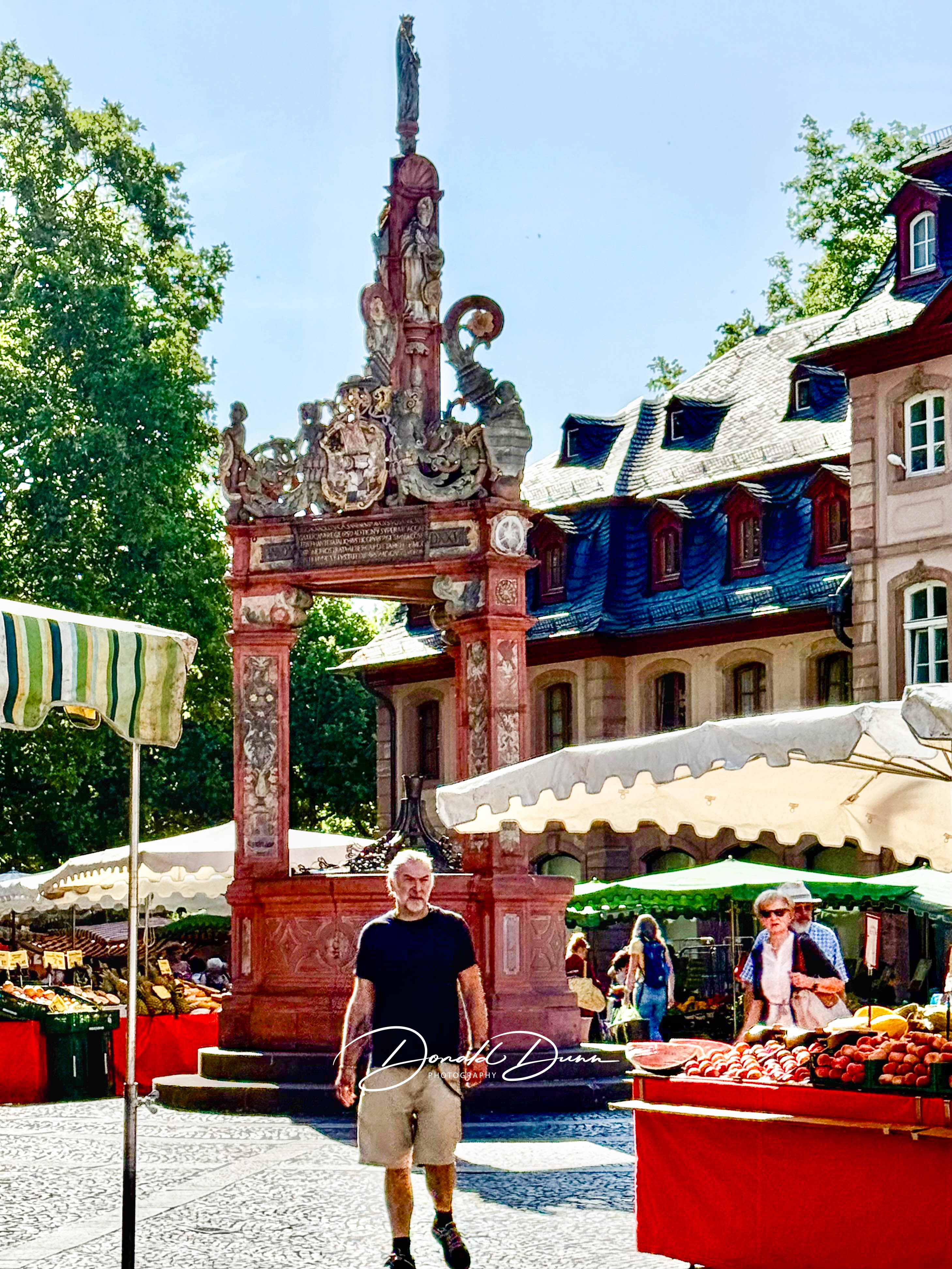
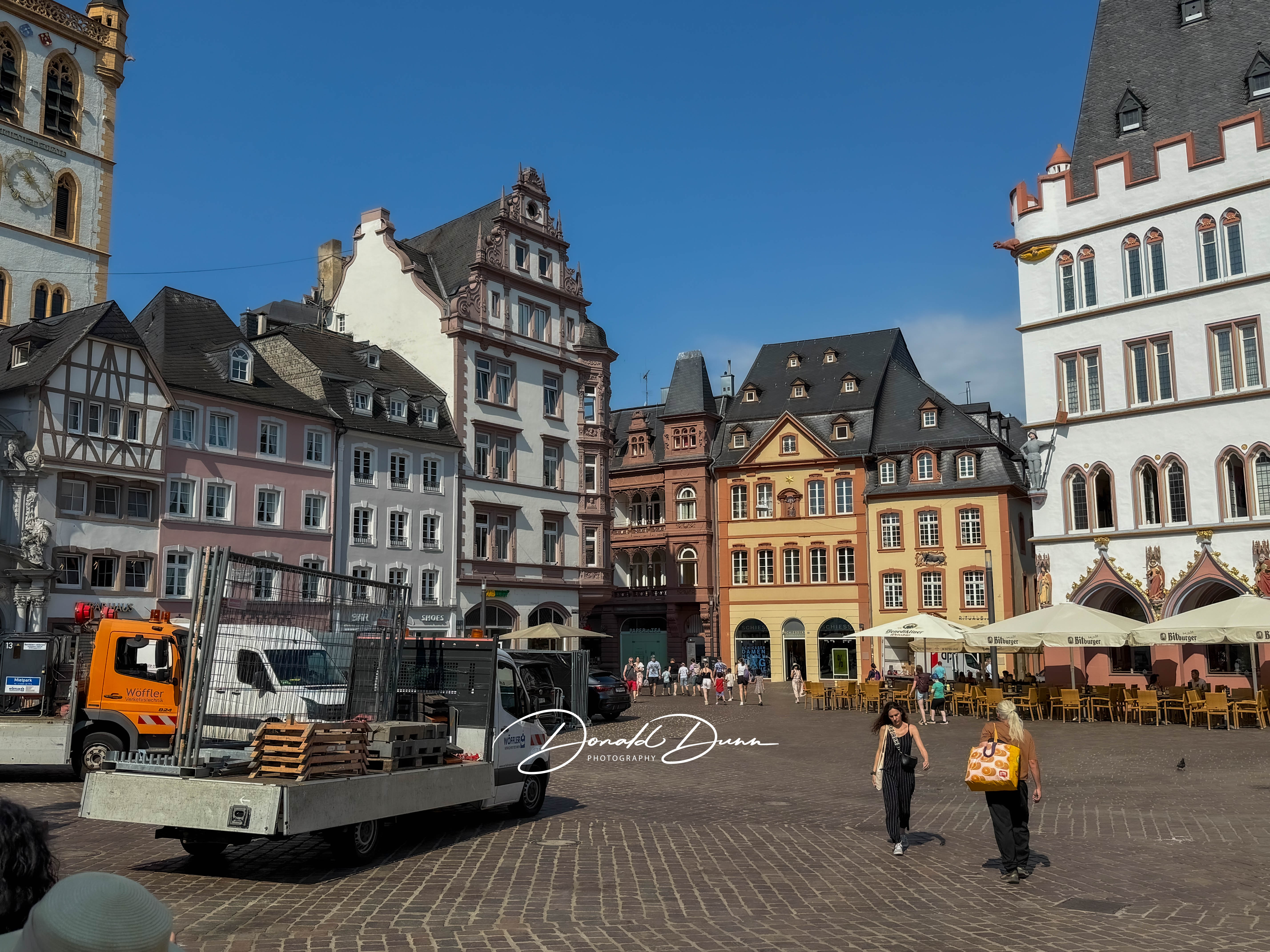
Many smiling locals were enjoying coffee and pastries at the several outdoor cafes in the Market Square. Market Square is Mainz’s most popular square and is dominated by the iconic Mainz Cathedral. The square became a popular trading place when the cathedral was built in 975. Traditionally, merchants offered wool, cloth, fur, baked goods, and fruit and vegetables. Products were set out in large baskets on the floor. The Renaissance market fountain was built in 1526. The water fountain was an important source of fresh water for nearby residents. In 1889, a Madonna figure was added to the fountain. Most of the houses in the square date to the 18th century. World War II bombs heavily damaged Market Square. In 1975, Mainz celebrated the thousandth anniversary of the cathedral and committed to re-designing and rebuilding the square. Many of the buildings were rebuilt with historical facades. The market takes place Tuesdays, Fridays, and Saturdays, and we were fortunate enough to have visited on a Friday. Also, as an aside, Market Square hosts a vibrant Christmas Market during the Christmas holiday season.

Mainz also has some quirky traffic lights.


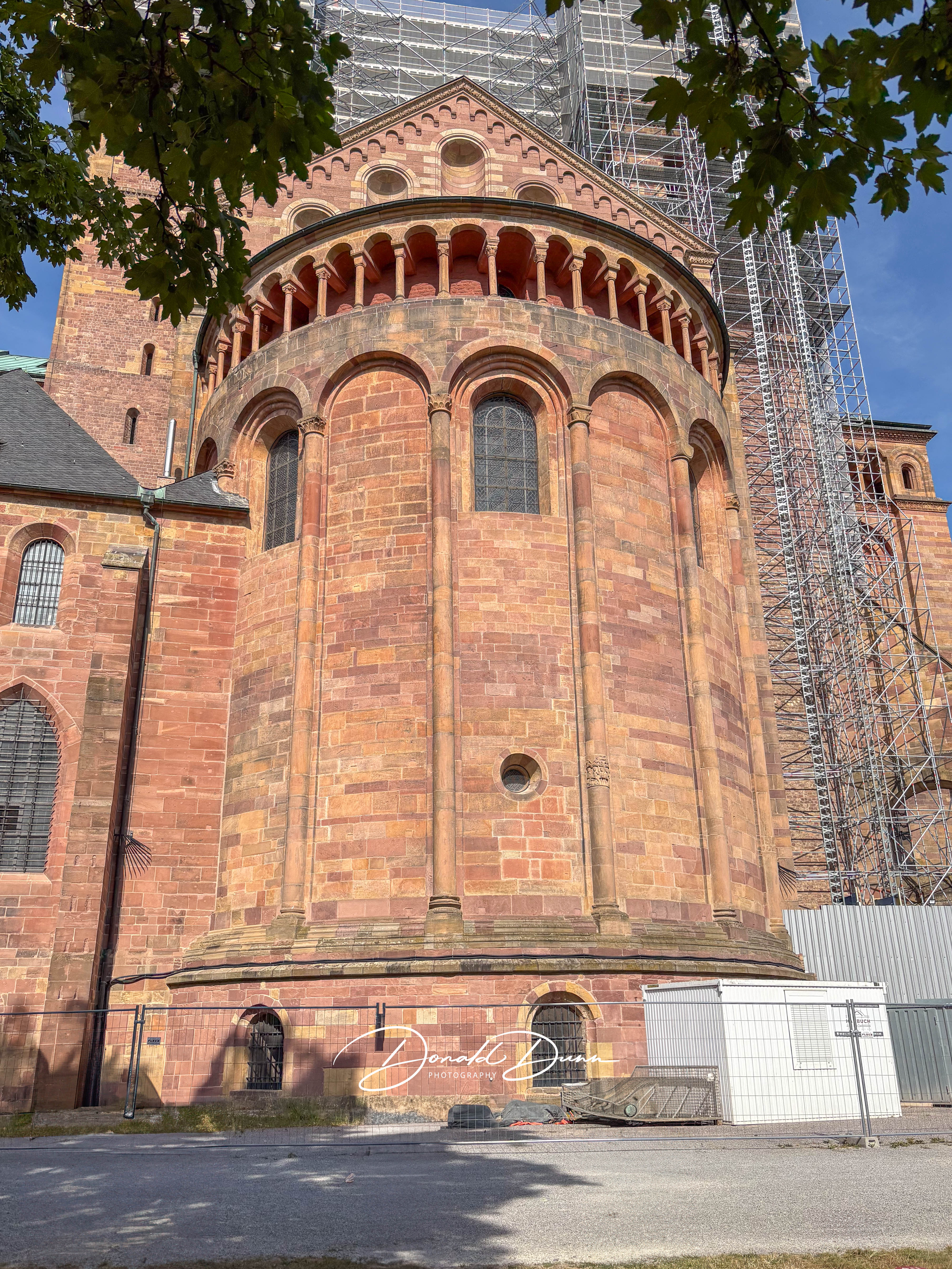
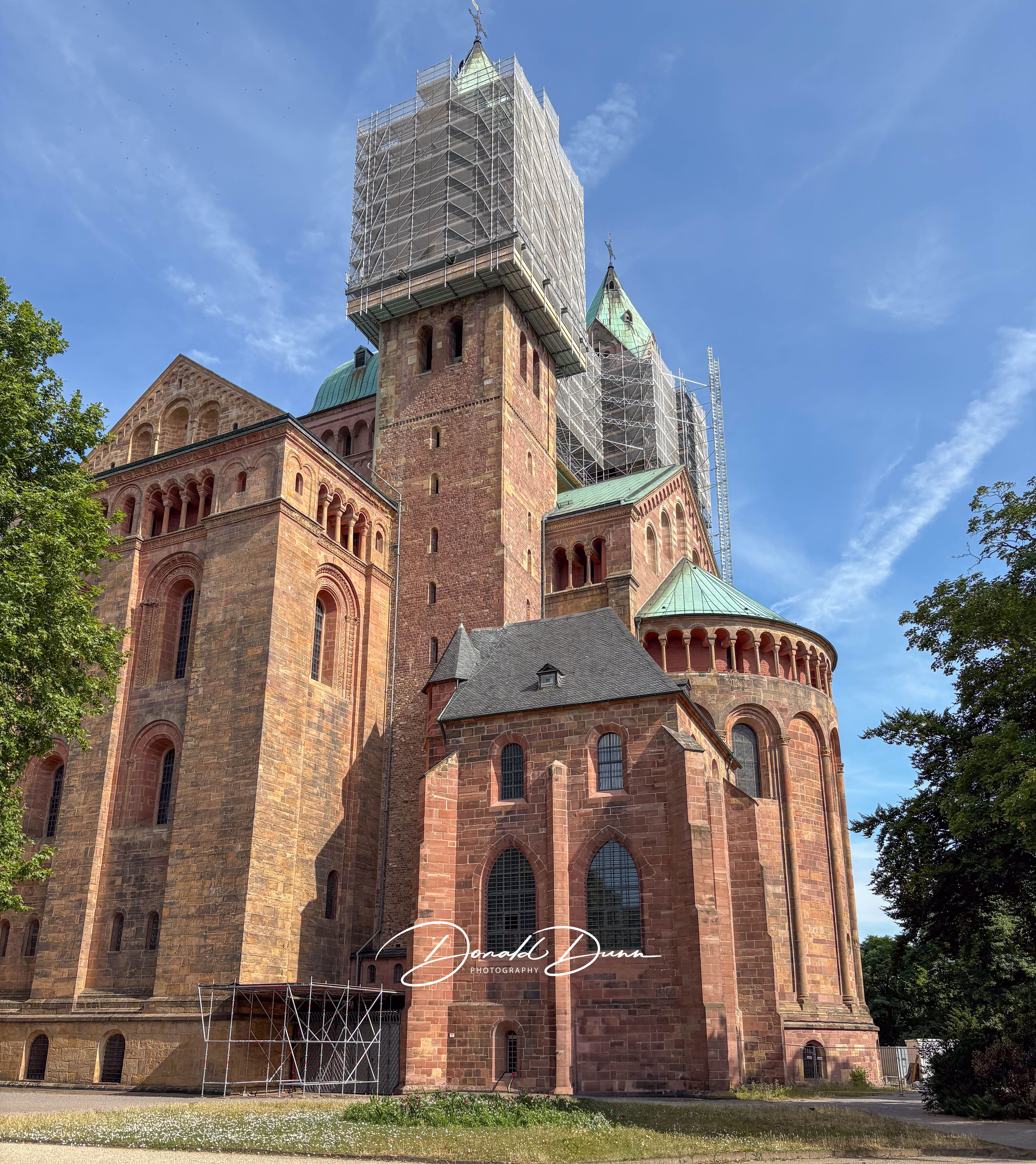
The magnificent Mainz Cathedral, or St. Martin’s Cathedral, dominates the skyline and is a major attraction in the Old Town. It is situated near the historical centre and market square. 

This Roman Catholic cathedral church has stood witness to more than 1000 years of history and is the site of the Episcopal see of the Bishop of Mainz. Together with the cathedrals of Worms and Speyer, the Mainz Dom represents the summit of Romanesque cathedral architecture seen in Germany. Predominantly Romanesque in style, the cathedral has however had later additions to it, making it a wonderful blend of architectural styles from various eras. It is a beautiful experience to see the six red sandstone towers of the St. Martin’s Cathedral rise above the Mainz cityscape with half-timbered houses. To give you an idea about the historic importance of this cathedral, it is enough to say that through the centuries, seven coronations were hosted here. During the World War II, almost 80% of Mainz was destroyed by bombing, but the cathedral had stood unharmed. It is almost completely surrounded by buildings. The largest dome shows a blend of Roman and Baroque styles and beneath it is the transept separating the west chancel from the nave and smaller east chancel. Many supporting pillars in the nave are adorned with carved and painted statues.

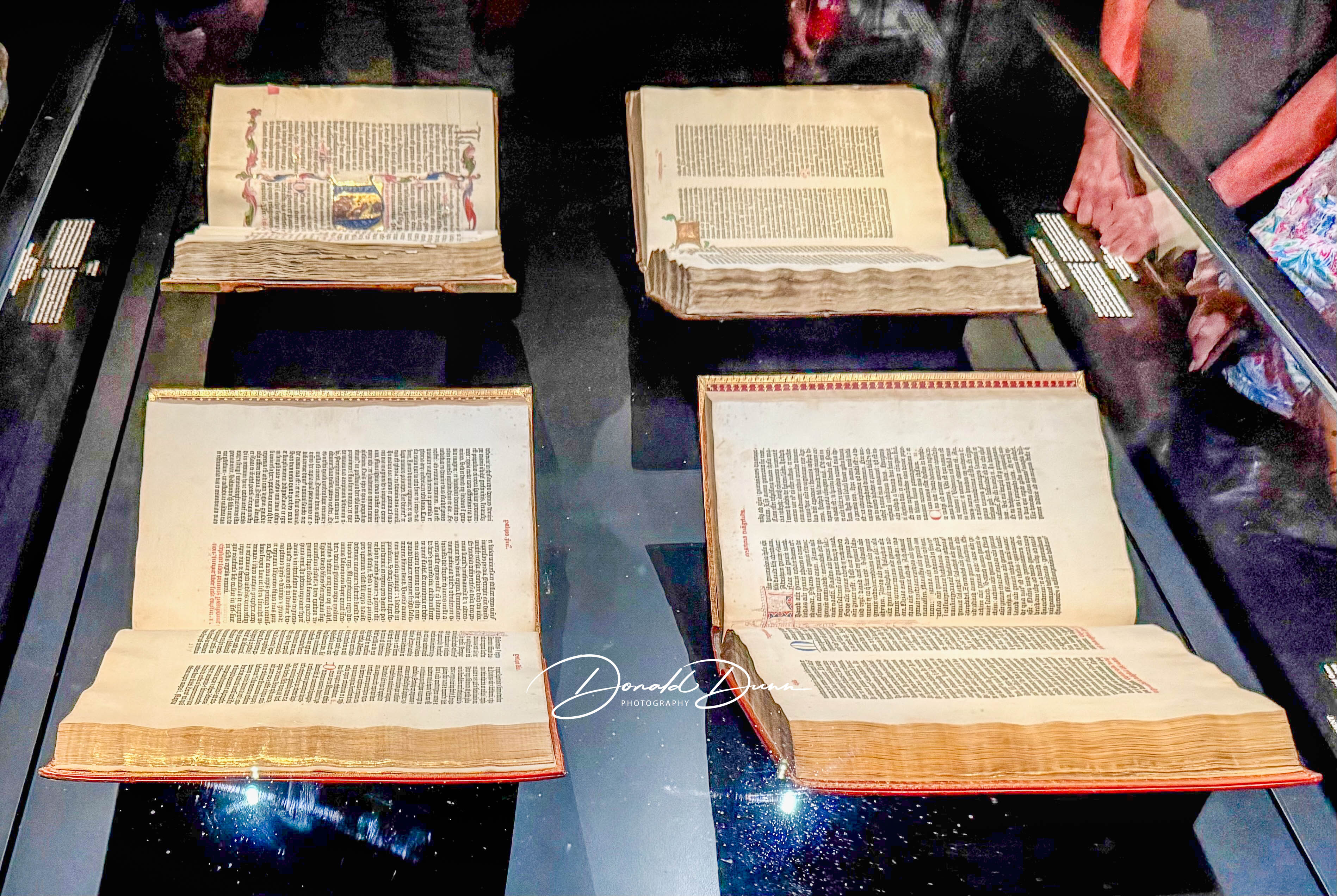
The Gutenberg Museum is one of the oldest museums of printing in the world, located opposite the cathedral in the old part of Mainz, Germany. It is named after Johannes Gutenberg, a native son of Mainz and the inventor of printing from movable metal type in Western Europe and focuses on him and his inventions. The museum’s collection includes two original Gutenberg Bibles that date back to the middle of the 15th century and are widely regarded as some of the finest books of all time.

The reconstruction of Gutenberg’s workshop is another main attraction, and our guide demonstrated what the printing process would have been like in Gutenberg’s day.

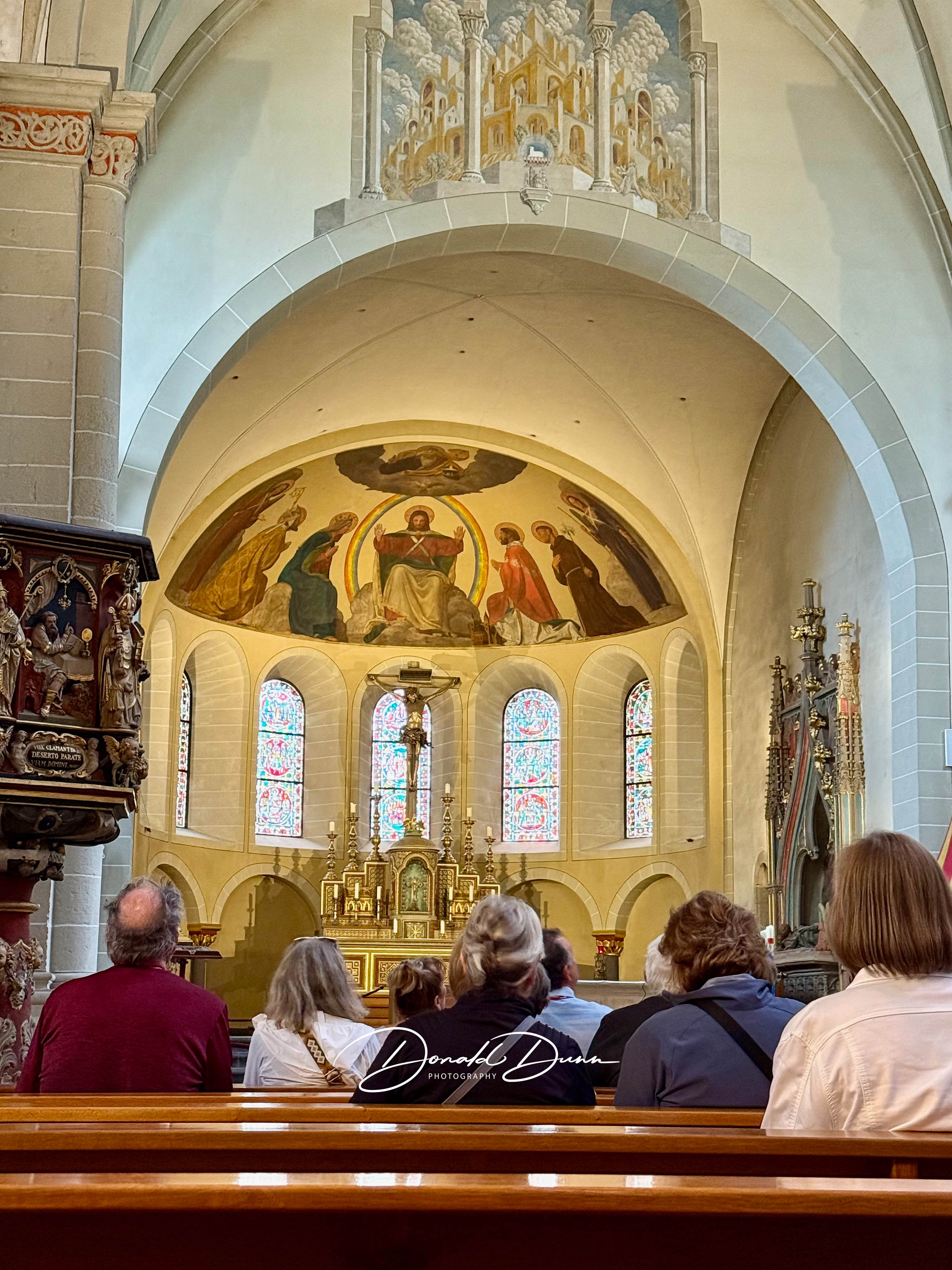
The Collegiate Church of St. Stephan, known in German as St. Stephan zu Mainz, is a Gothic hall collegiate church located in the German city of Mainz. It is known for windows created by Marc Chagall. St. Stephan was originally built in 990 at the order of Archbishop Willigis, who also initiated the building of Mainz Cathedral. The current church building dates from the late medieval era; construction of the main area of the church began in about 1267 and was completed in 1340. St. Stephan was heavily damaged in the bombing of Mainz in World War II. The Chagall choir windows in St. Stephan are unique in Germany. Between 1978 and his death in 1985, Russian Jewish artist Marc Chagall created nine stained-glass windows of scriptural figures in luminous blue. The figures depict scenes from the Old Testament, demonstrating the commonalities across Christian and Jewish traditions. Chagall intended his work to be a contribution to Jewish-German reconciliation, made all the more poignant by the fact that Chagall himself fled France under Nazi occupation.

Thursday, July 3, 2025–Historic Koblenz

Finally, the record heat that has enveloped this part of Europe has disappeared and temperatures are now more “normal” with highs in the 70s and lows in the 50s—a welcome change indeed.
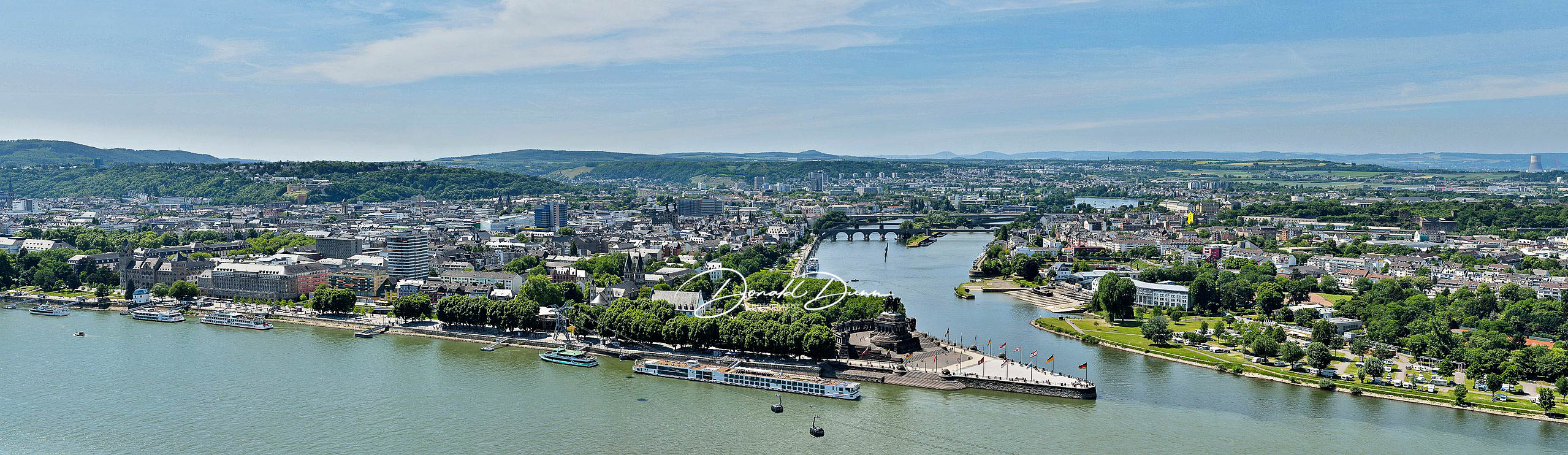
This is our second visit to Koblenz, having toured here August 17, 2015. Koblenz, a major German city, is at the confluence of the Moselle and Rhine Rivers. Koblenz was established as a Roman military post in 8 BC.

The Rhine Gorge was declared a UNESCO World Heritage Site in 2002, with Koblenz marking the northern end because of its beauty as a cultural landscape, its importance as a route of transport across Europe, and the unique adaptations of the buildings and terraces to the steep slopes of the gorge. Some of the sites we visited are discussed below.

The statue of Kaiser Wilhelm rises imposingly here, at 37 meters high.

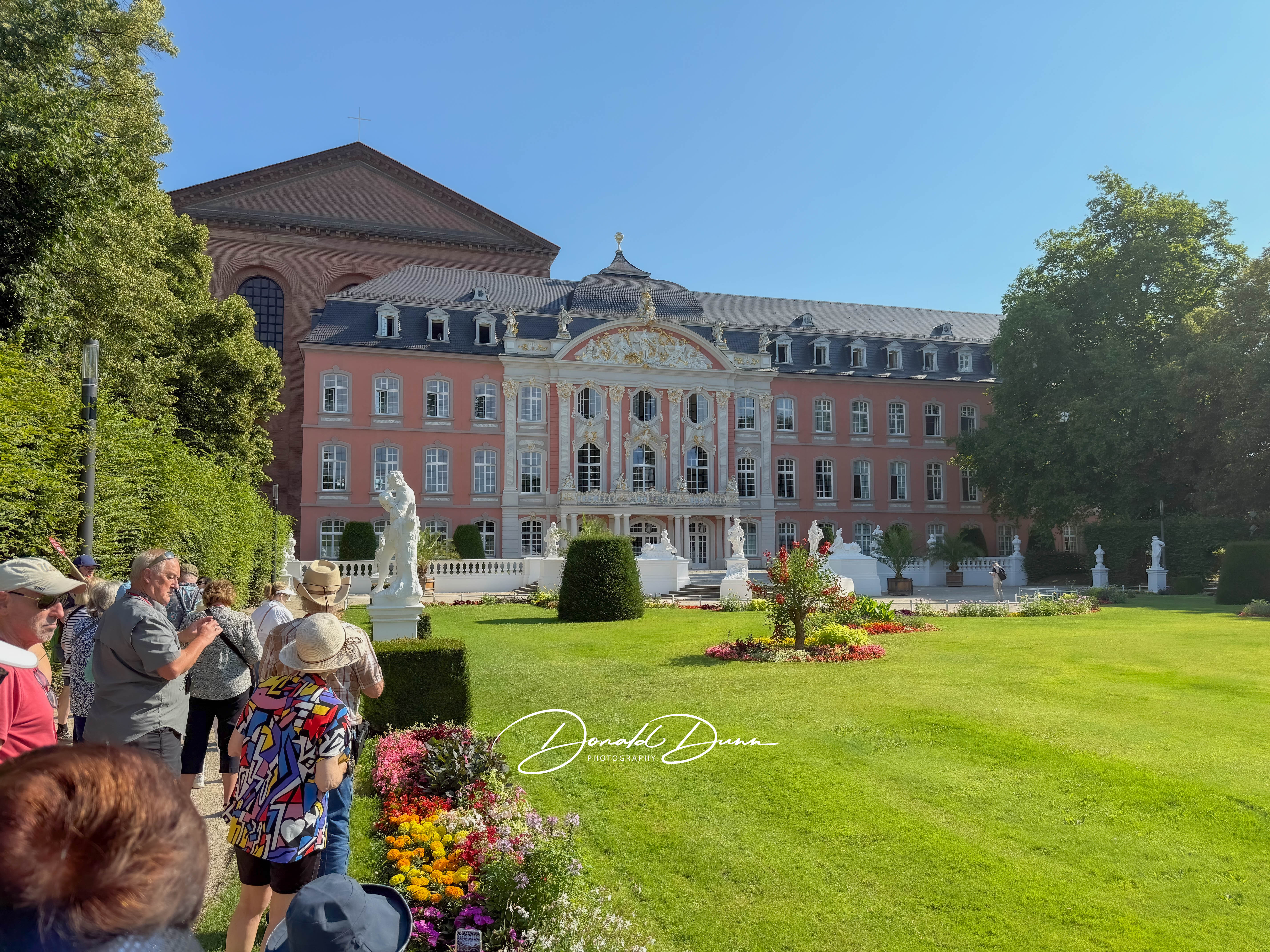
The Electoral Palace in Koblenz is one of the most important palace buildings of early French classicism in southwest Germany and is one of the last residential palaces built in Germany immediately before the French Revolution. Elector Clemens Wenzeslaus had the Electoral Palace built between 1777 and 1786. From 1850 to 1858, the Prussian Crown Prince and later Emperor Wilhelm I resided here as Prussian military governor. In 1944, the Electoral Palace was destroyed down to the outer walls and rebuilt in 1950-51.

The St. Castor Basilica is the oldest preserved church in Koblenz. The collegiate church, consecrated in 836, was the scene of significant historical events. The monastery of St. Kastor was the meeting and arbitration place of emperors and kings as well as their descendants. In 842, the Romanesque church was the venue for the negotiations of the sons of Emperor Louis the Pious, which led to the partition of the Frankish Empire in the Treaty of Verdun the following year. The building in its present form dates mainly from the middle of the 12th century. On July 30, 1991, Pope John Paul II elevated the Castor church to the status of basilica minor. Together with the Liebfrauenkirche and the Florinskirche, the St. Castor Basilica shapes the silhouette of the Koblenz old town.

On the highest point in the Old Town stands the Romanesque Church of Our Lady (Liebfrauenkirche), also known as the Notre Dame Church.

Although what’s seen today dates from the 12th century with later 15th-century additions, there’s evidence pointing to a much older 5th-century place of worship having been built here by the Romans. Notable features include its splendid Gothic choir and the attractive onion-shaped Baroque towers with their four bells, famous for tolling the “Reveler’s Bell” at 10pm each evening.

We also toured the 12th-century St. Florin’s Church (Florinskirche), notable for the old cannonball above the baptismal vault — a reminder of the destruction of the city during earlier wars — and its picturesque setting overlooking an attractive public square.

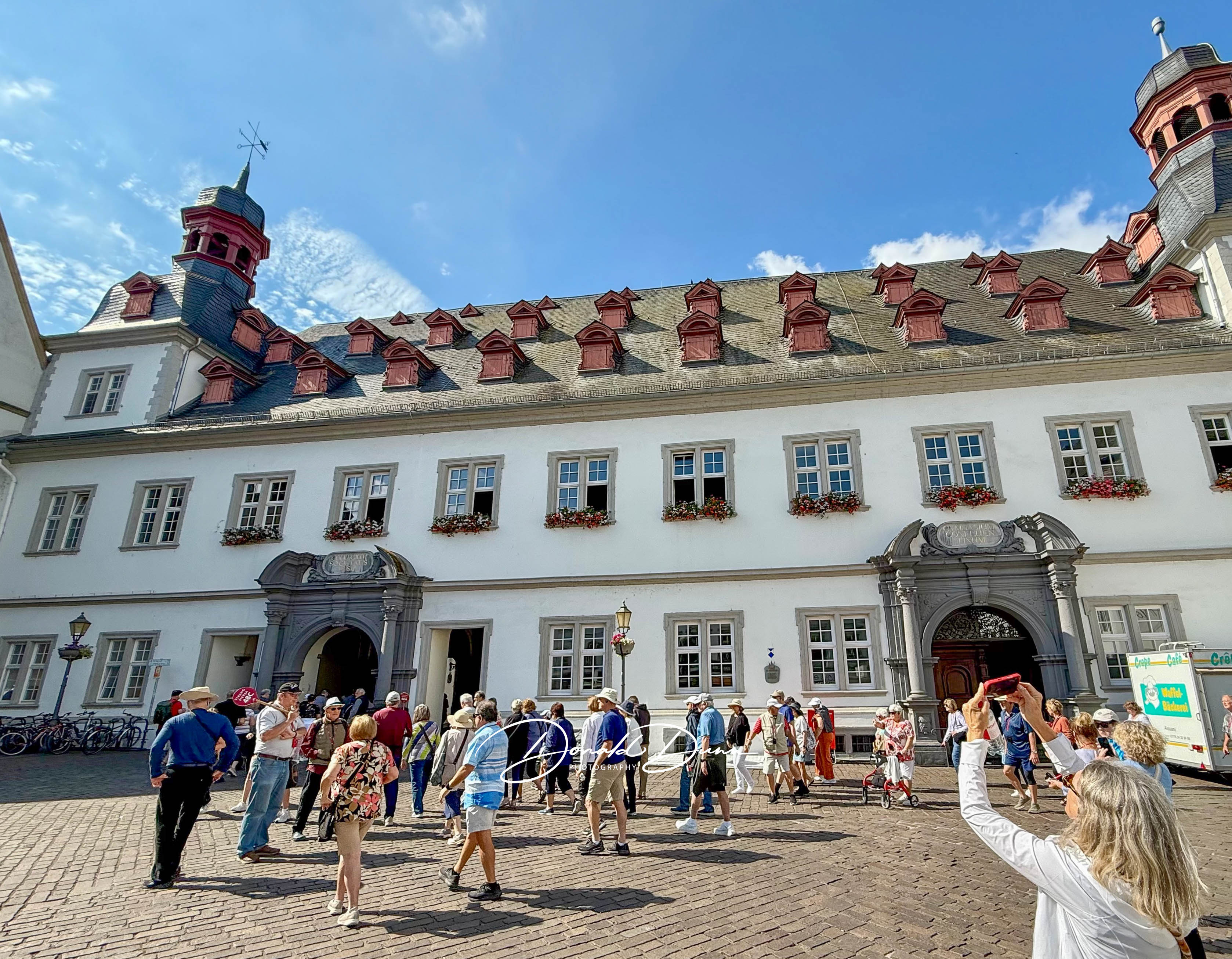
The Old Town (Altstadt) district of Koblenz has been painstakingly restored after the devastation of WWII. Highlights of our walking tour included the Town Hall (Rathaus), built between 1695 and 1700, in front of which is the humorous Schängelbrunnen, a monument designed in 1940 by Carl Burger and dedicated to poet Josef Cornelius, who penned the lyrics for the city’s “hymn” (watch out for the spitting boy!).

The town clock in Saint Florin’s market in Koblenz contains more than one face. It’s adorned with an image that according to local lore represents Johan Lutter, a 16th century robber. Though he was sentenced to death and lost his head in 1536, his visage still keeps watch over Koblenz’s Old Town from beneath the clock. The face’s eyes roll back and forth as the pendulum moves, marking the passage of time. When the clock strikes the hour or half hour, the whimsical sheet metal man sticks out his tongue to mock the good citizens of Koblenz. This depicts the gruesome yet morbidly comical expression Lutter supposedly made in his final moments. Some legends even say he continued to roll his eyes and wiggle his tongue after his head lay severed from his body.

Today’s upstream sailing took us by castles at almost every bend of the Rhine River.

Wednesday, July 2, 2025–Cochem, Reichsburg, and the Moselle Valley

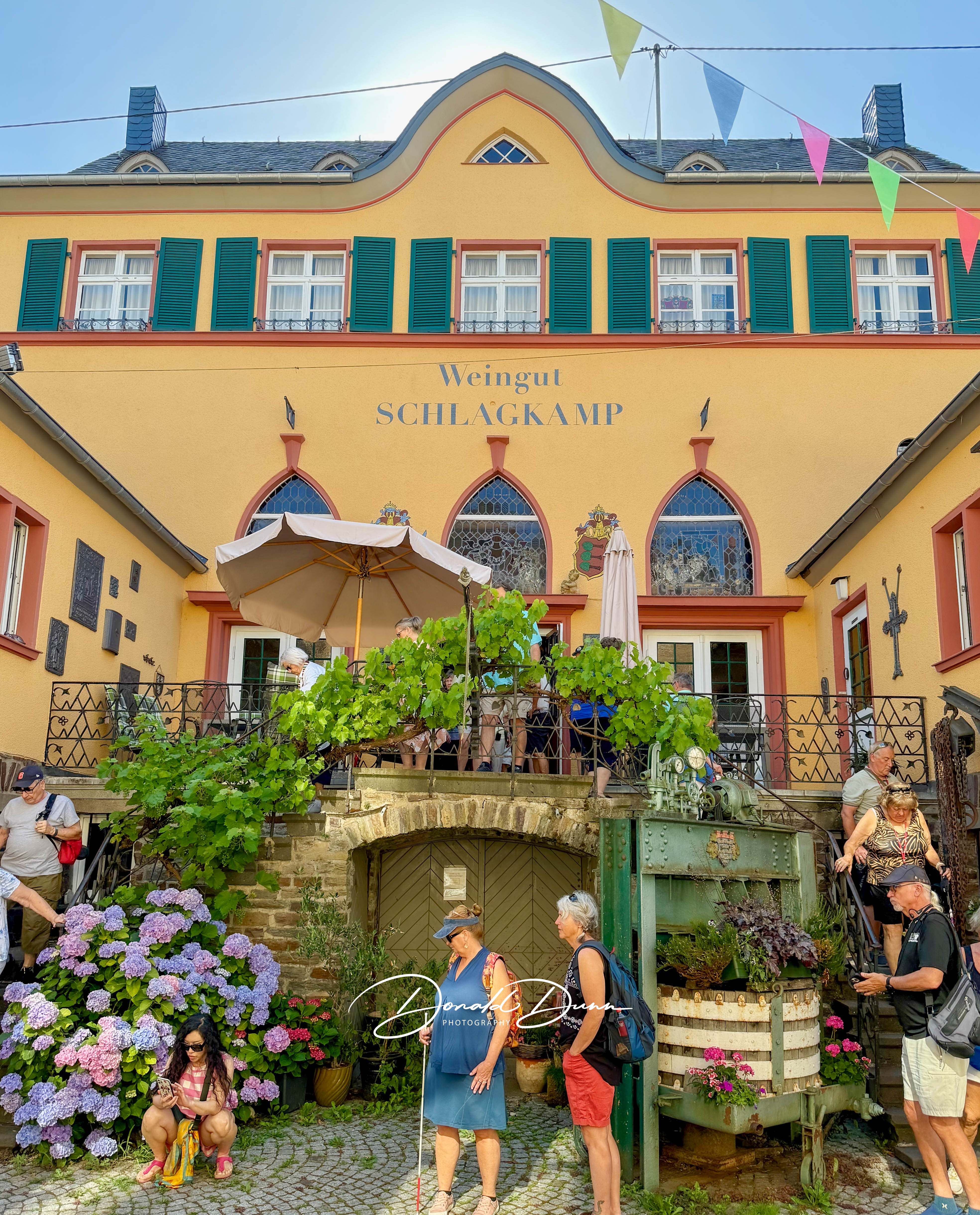
Today’s excursion included a delightful wine tasting at the Weinhaus Schlagkamp in the small village of Senheim.

For more than 400 years, Weinhaus Schlagkamp has proudly embodied the diversity of wine growing in the Mosel region. The steep slate hillside vineyards of the Mosel are renowned the world over for their Reisling wines. These historical vineyards have south/southwest aspects, inclines up to 60 percent, and excellent aeration among the vines providing ideal conditions for the cultivation of premium grape varieties. In addition to their Reisling wines, the winery featured a red peach liqueur and jam.

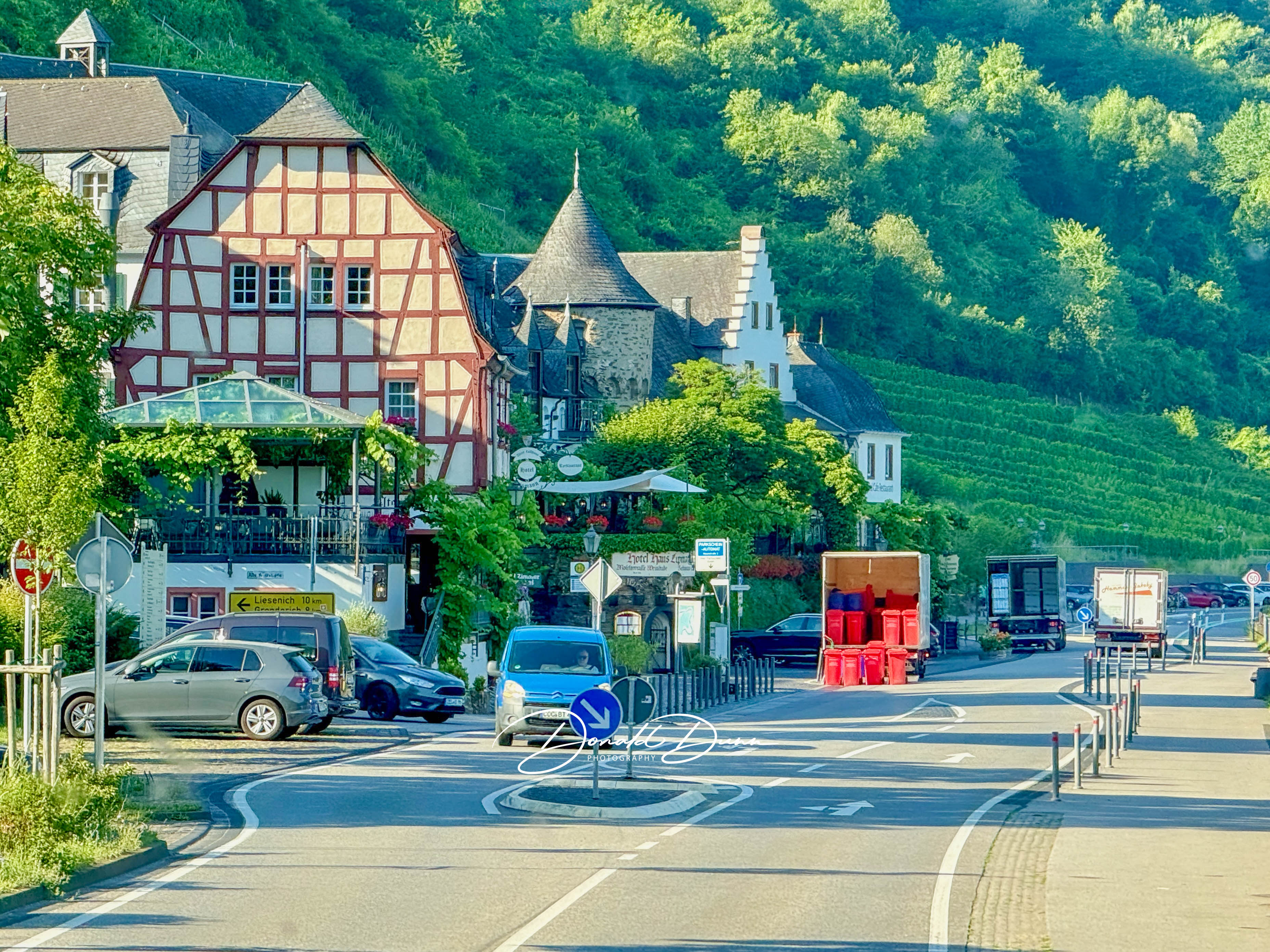
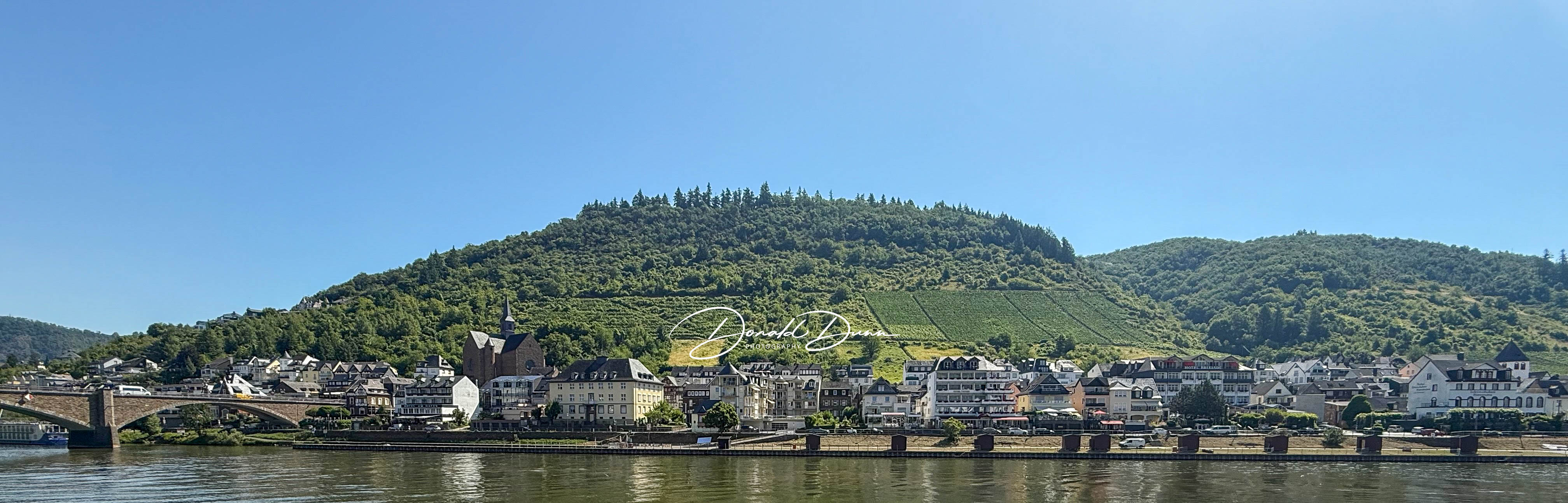
We also did a walking tour of Cochem, a quaint municipality on the left bank of the Moselle River. The small city is most noted as the location of the Imperial Castle.

The Imperial Castle is the largest castle on the Moselle. The medieval castle, heavily damaged while in the possession of the electoral princes of Trier during a war of succession, was bought and lovingly restored in the neo-gothic style associated with German castle romanticism in the 19th century. Notable are the impressive interiors of rooms such as the Knight’s Hall, the Dining Hall, the Trophy Room and the Bower.

Tuesday, July 1, 2025–Trier Highlights

One of our favorite things about cruising with the Viking is their easily accessible, espresso, cappuccino, and/or latte at any time of the day. Kay and I awoke relatively early, 5:00 AM, and I went to the cappuccino machine and made us each a cappuccino and picked up a couple of muffins for a pre-breakfast snack. The coffees were very tasty.

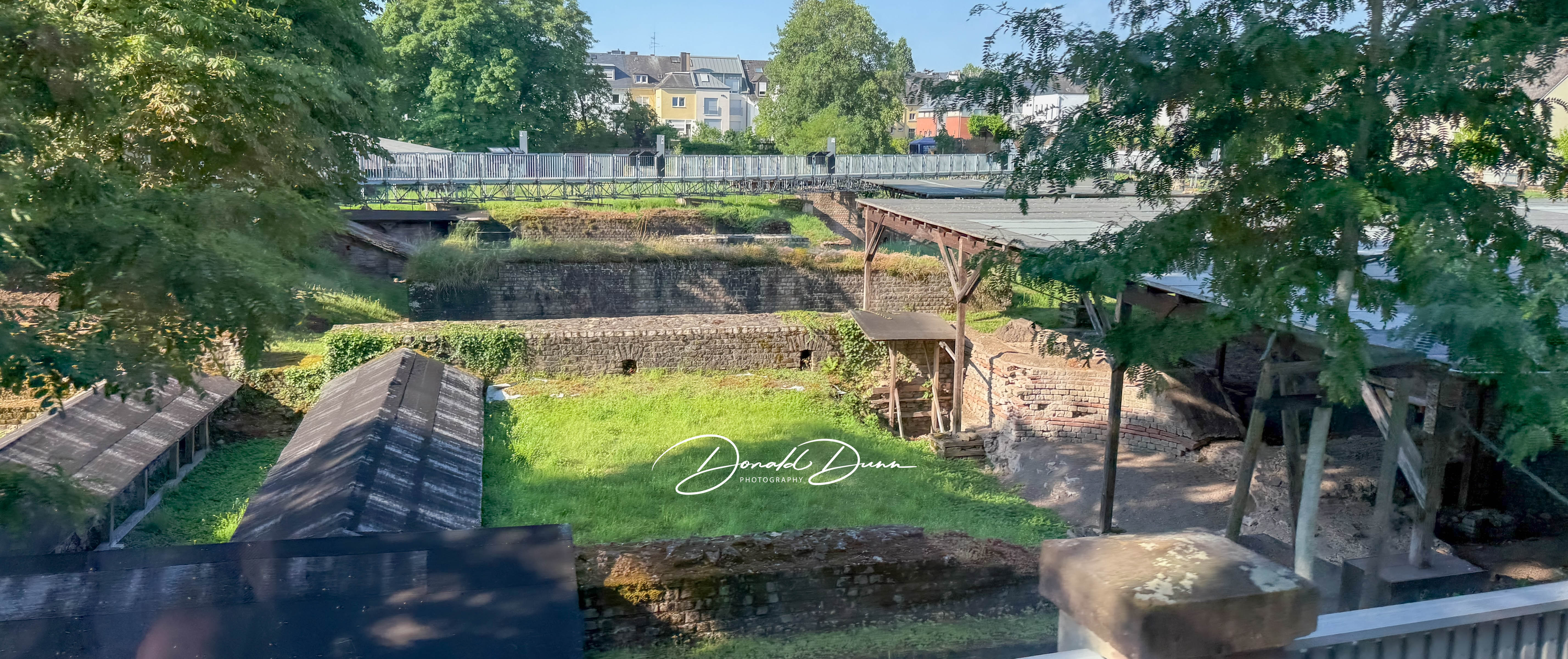
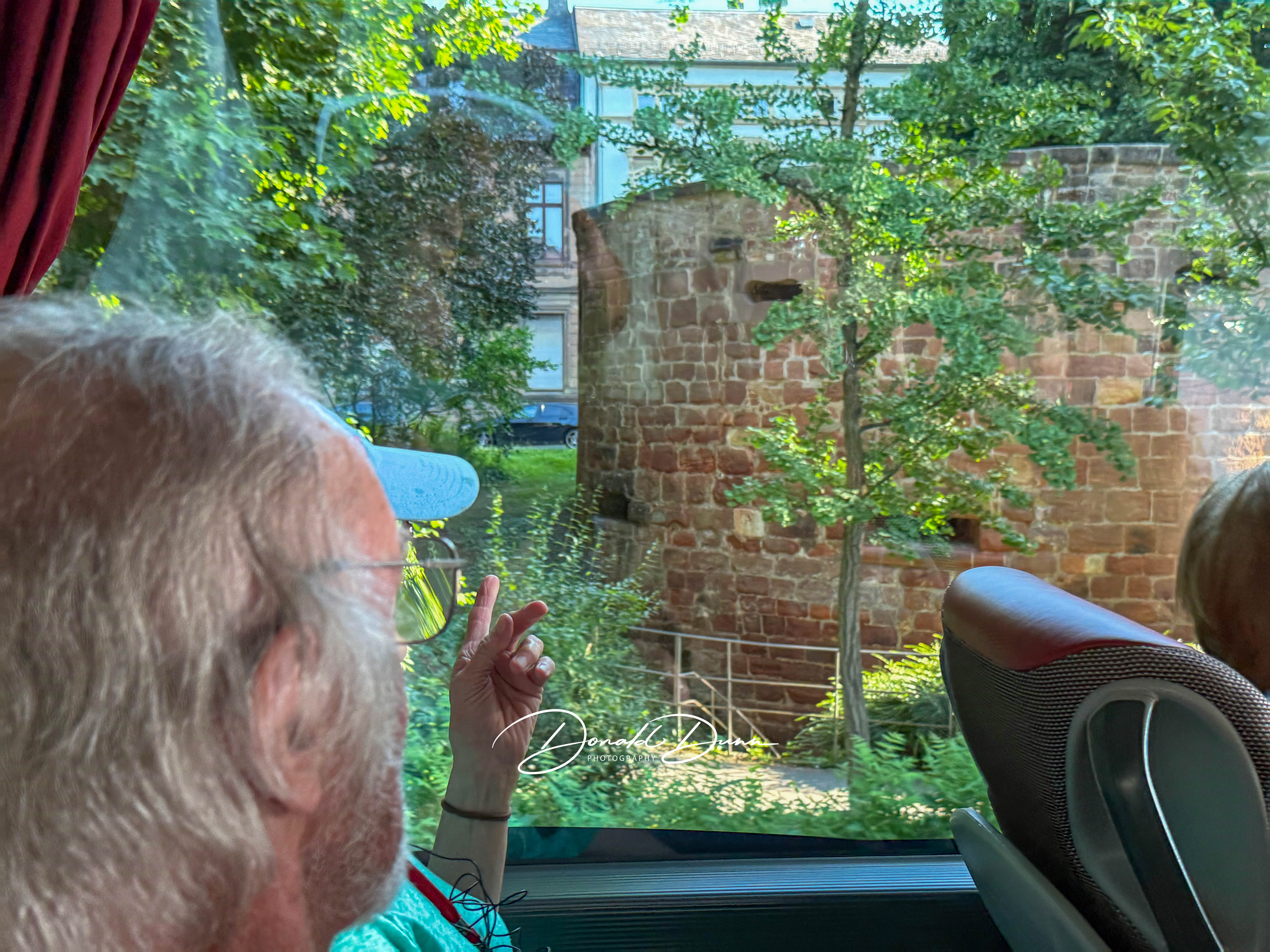
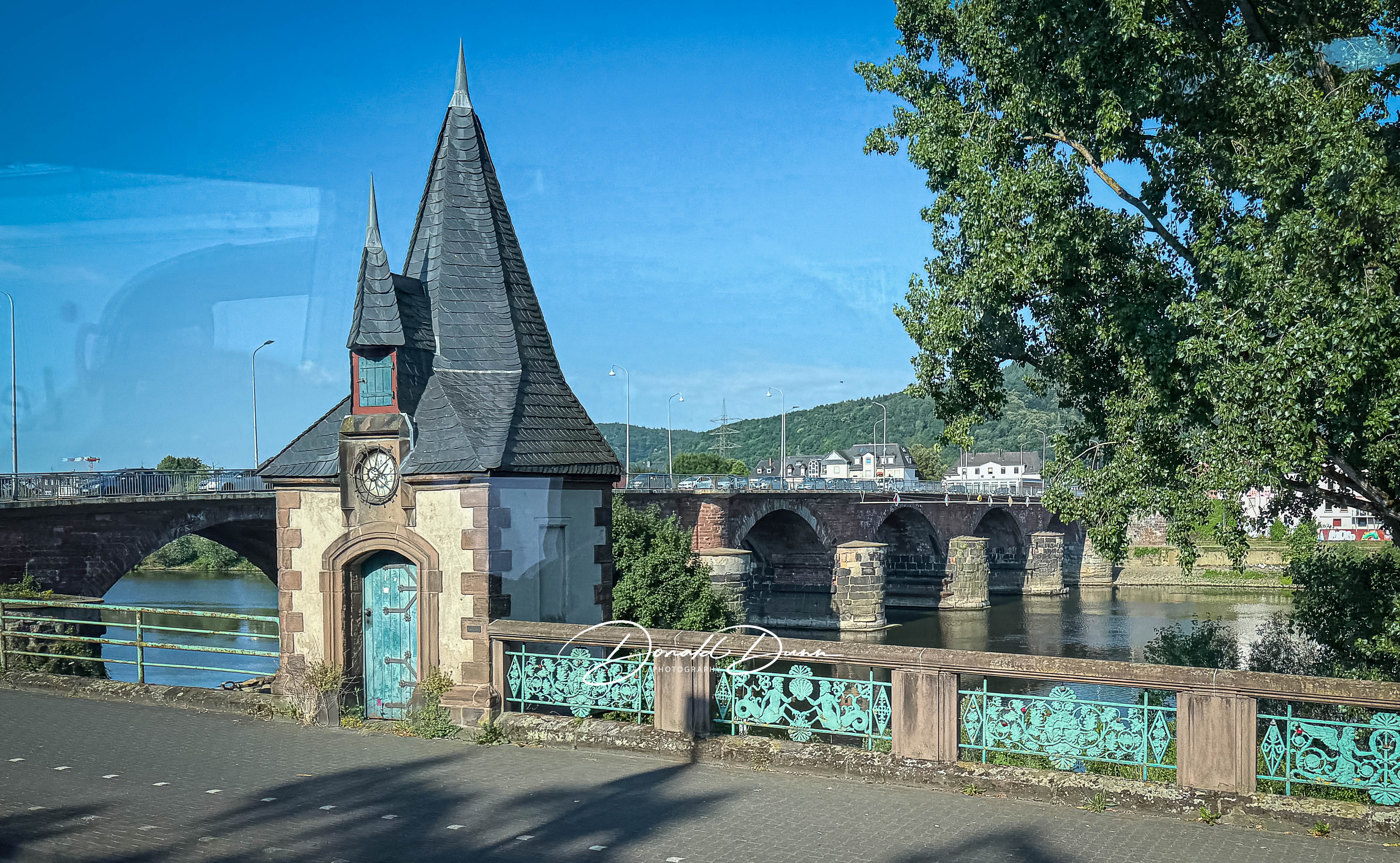
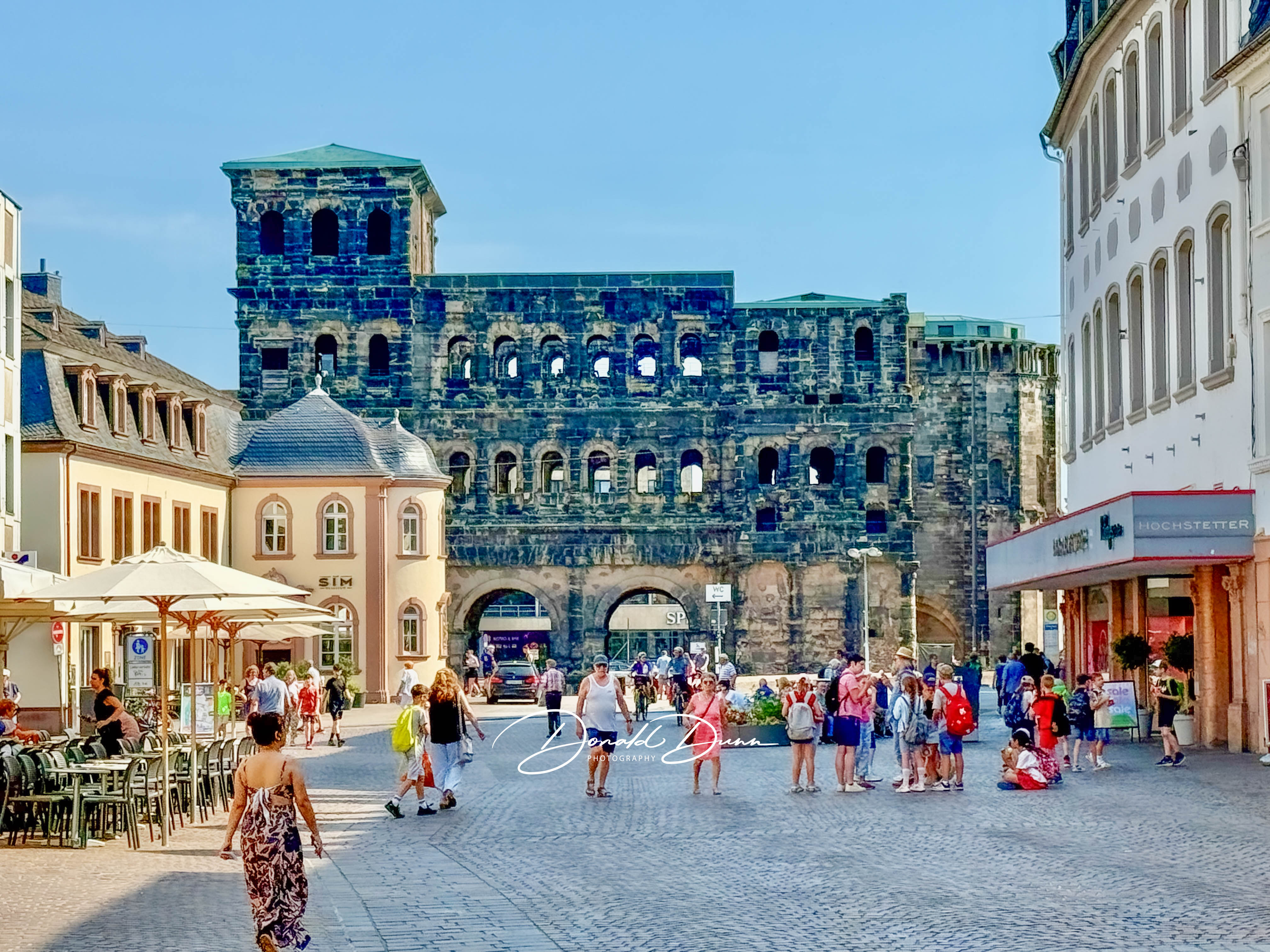
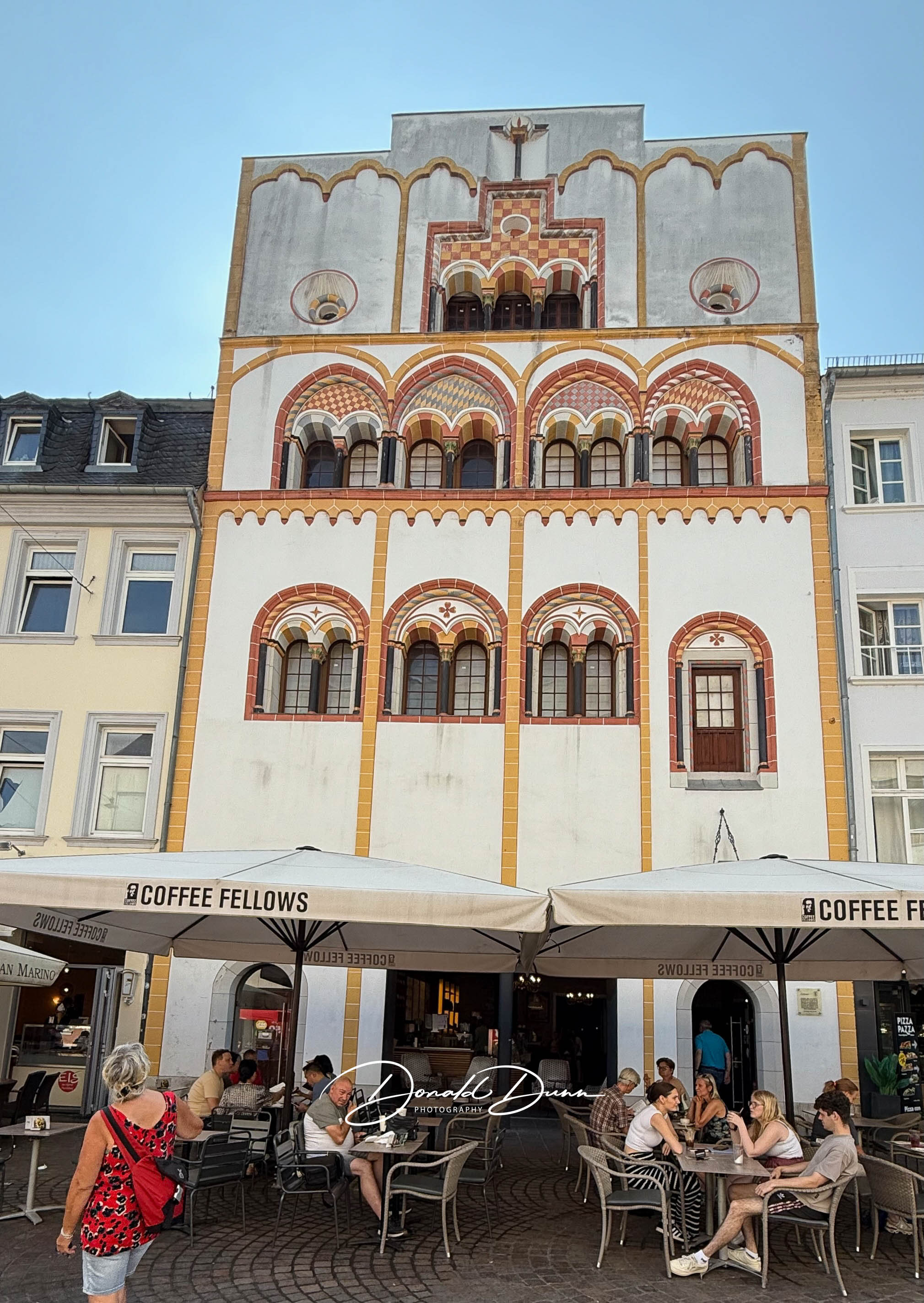
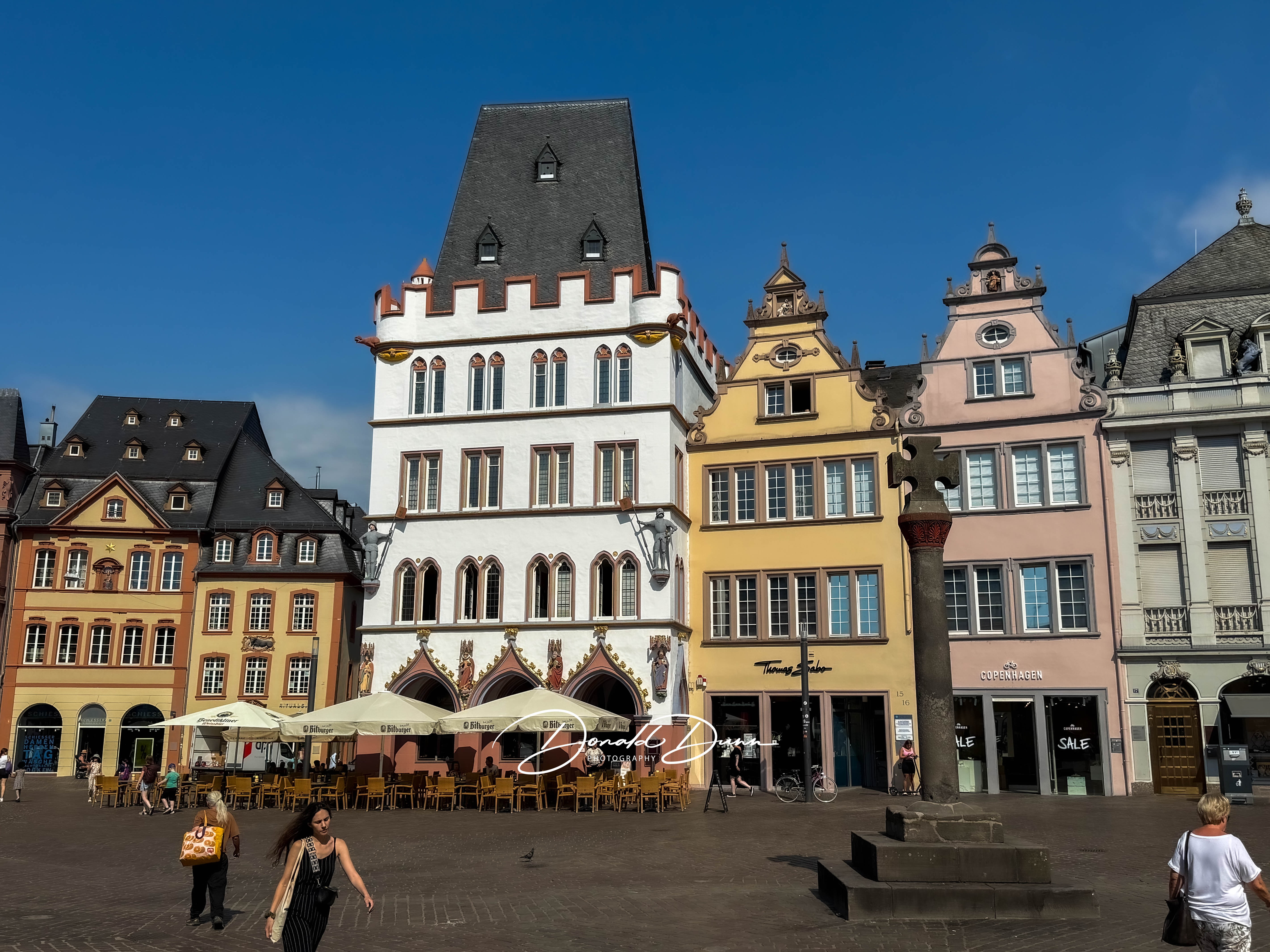
After catching up on news and mail, and hot showers, we went to breakfast and enjoyed eggs Benedict with a few sides and, of course, fresh coffee. And then it was off to catch the bus for both a bus and walking tours of Trier, Germany. Trier is Germany’s oldest city, dating back to Roman Times. Trier is a southwestern German city in the Moselle wine region, near the Luxembourg border. Founded by the Romans, it contains several well-preserved Roman structures like the ruins of Roman baths, an amphitheater just outside the center and a stone bridge over the Moselle River. 

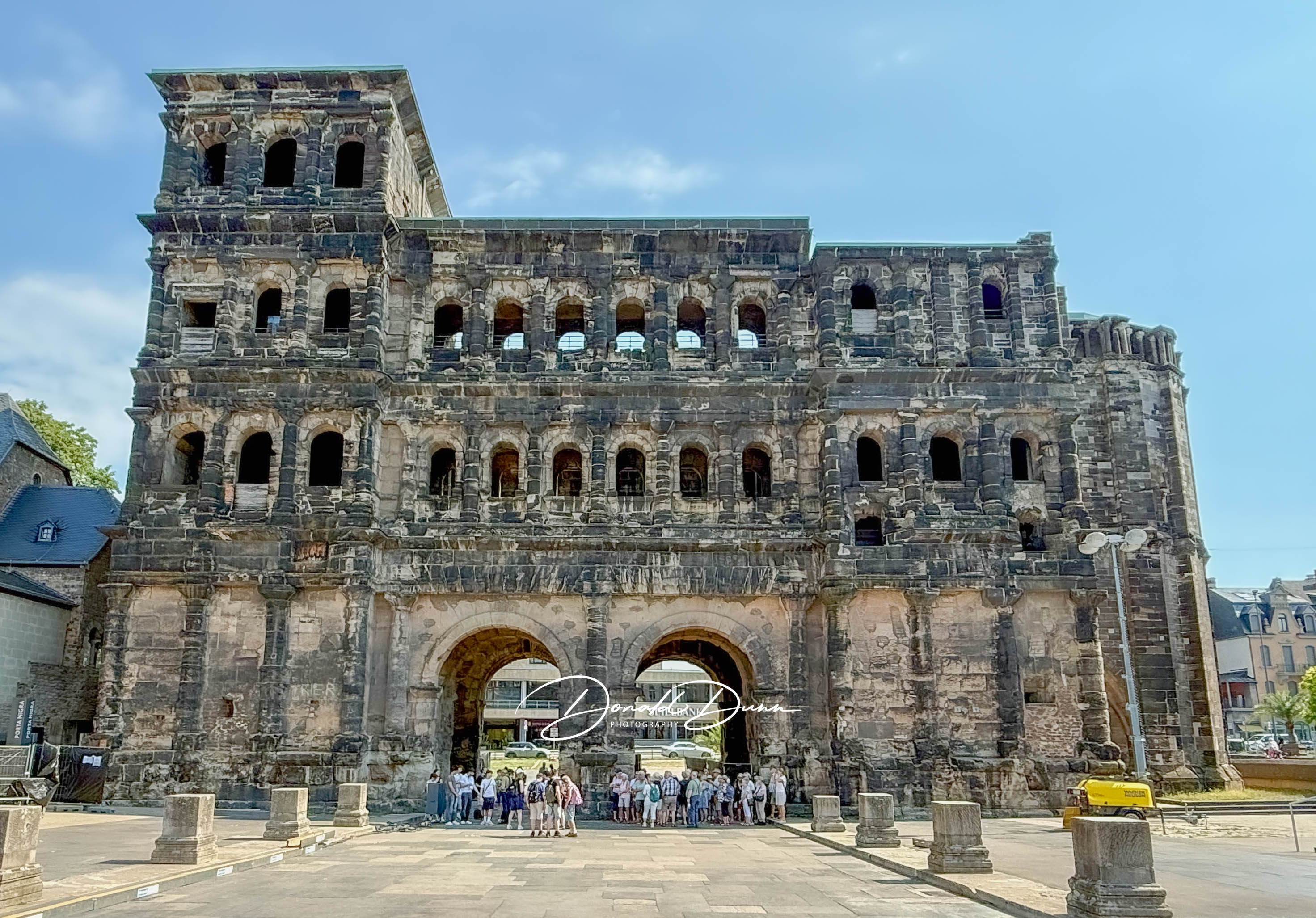
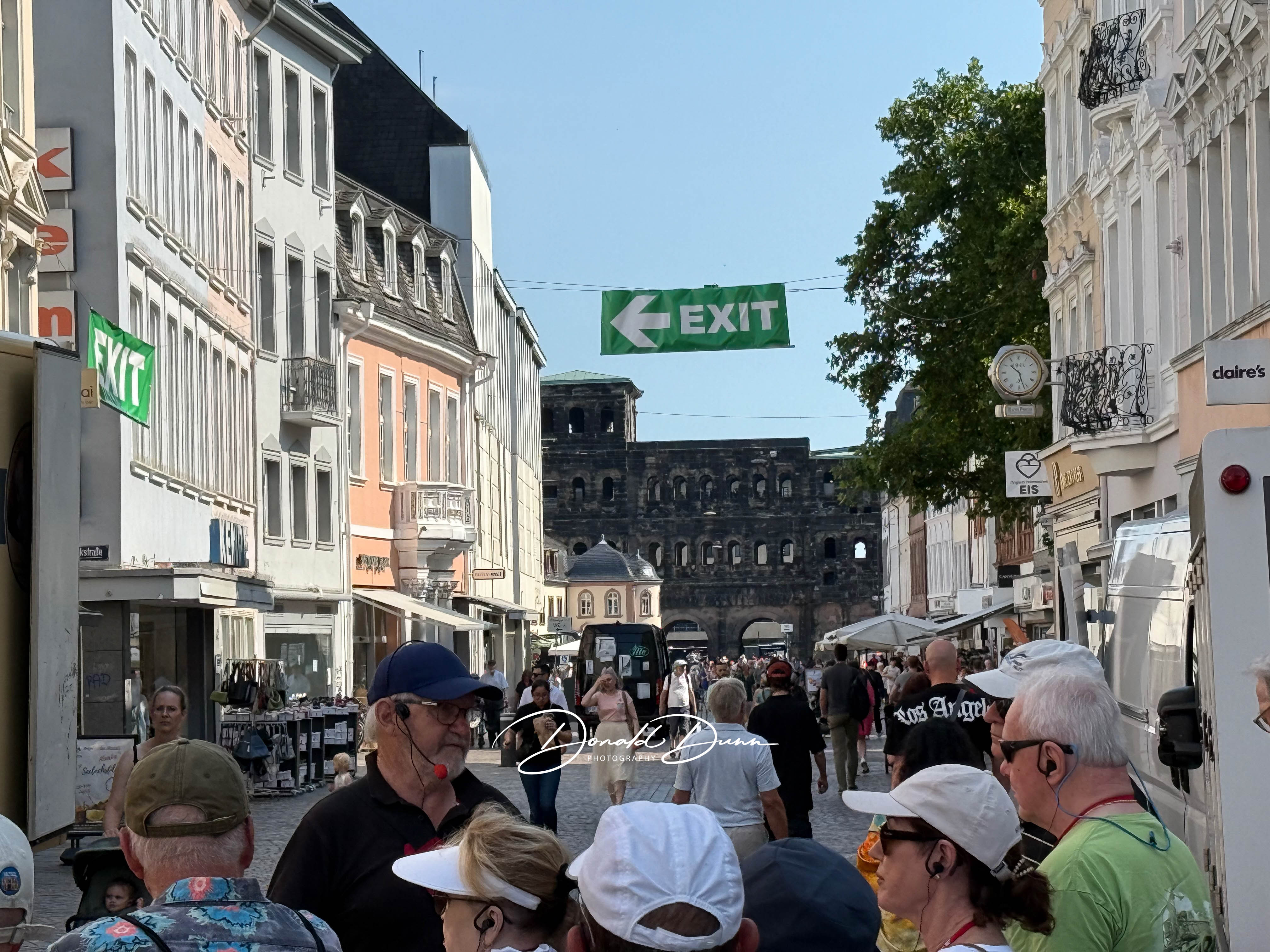
Among the best preserved Roman structure is the Porta Nigre Gate.

The Porta Nigra Gate was built in grey sandstone after 170 AD. The original gate consisted of two four-storeyed towers, projecting as near semicircles on the outer side. A narrow courtyard separated the two gate openings on either side. The gate was used as a town entrance for centuries until the end of the Roman era in Trier. In Roman times, the Porta Nigra was part of a system of four city gates, one of which stood at each side of the roughly rectangular Roman city. It guarded the northern entry to the Roman city

The Archaeological Museum displays Roman artifacts, including The Trier Gold Hoard. The gold is a hoard of 2516 (or 2518) gold coins with a weight of 18.5 kg found in Trier, Germany, in September 1993 during construction works. It is described as the largest preserved Roman gold hoard worldwide..

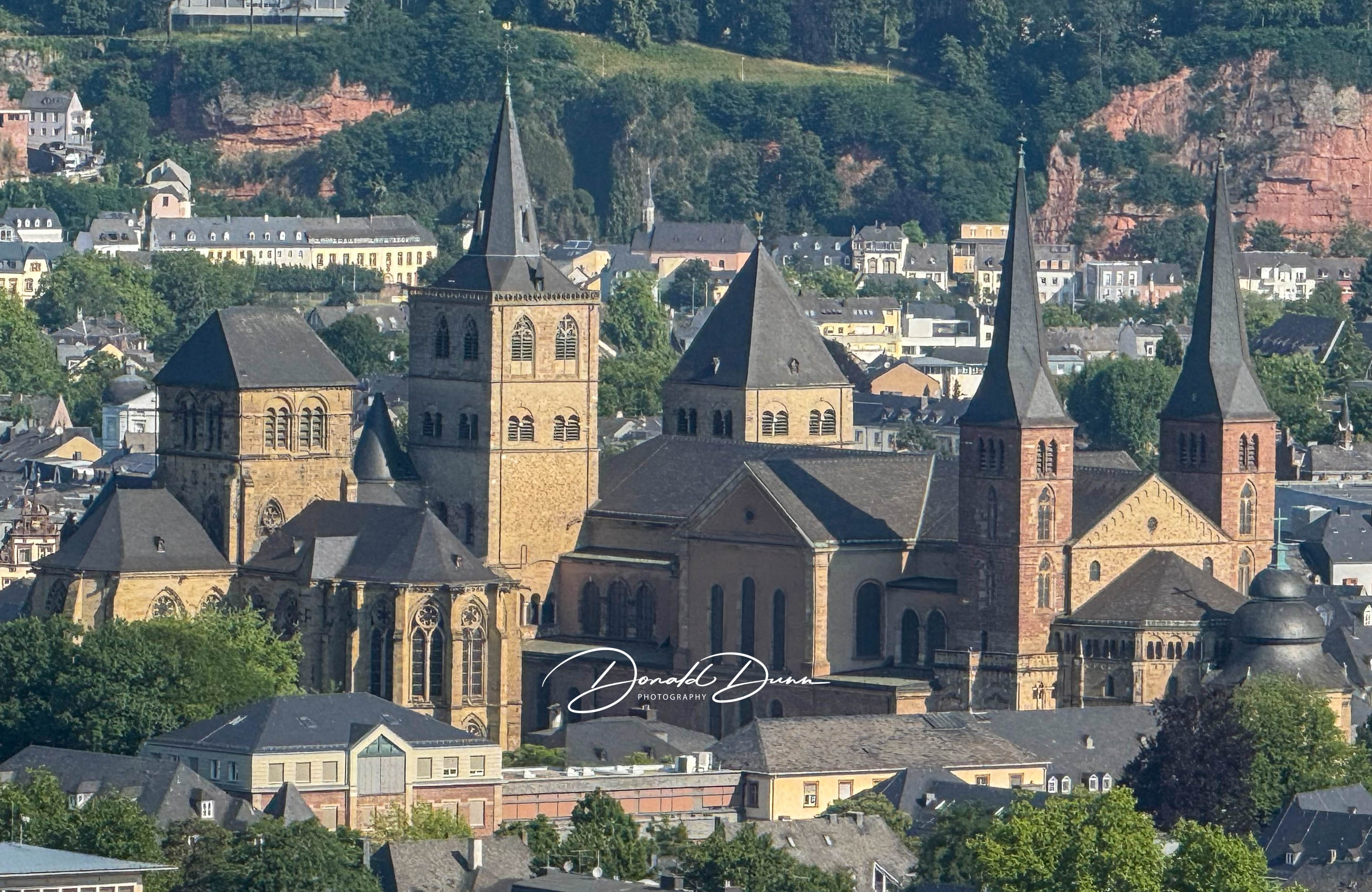
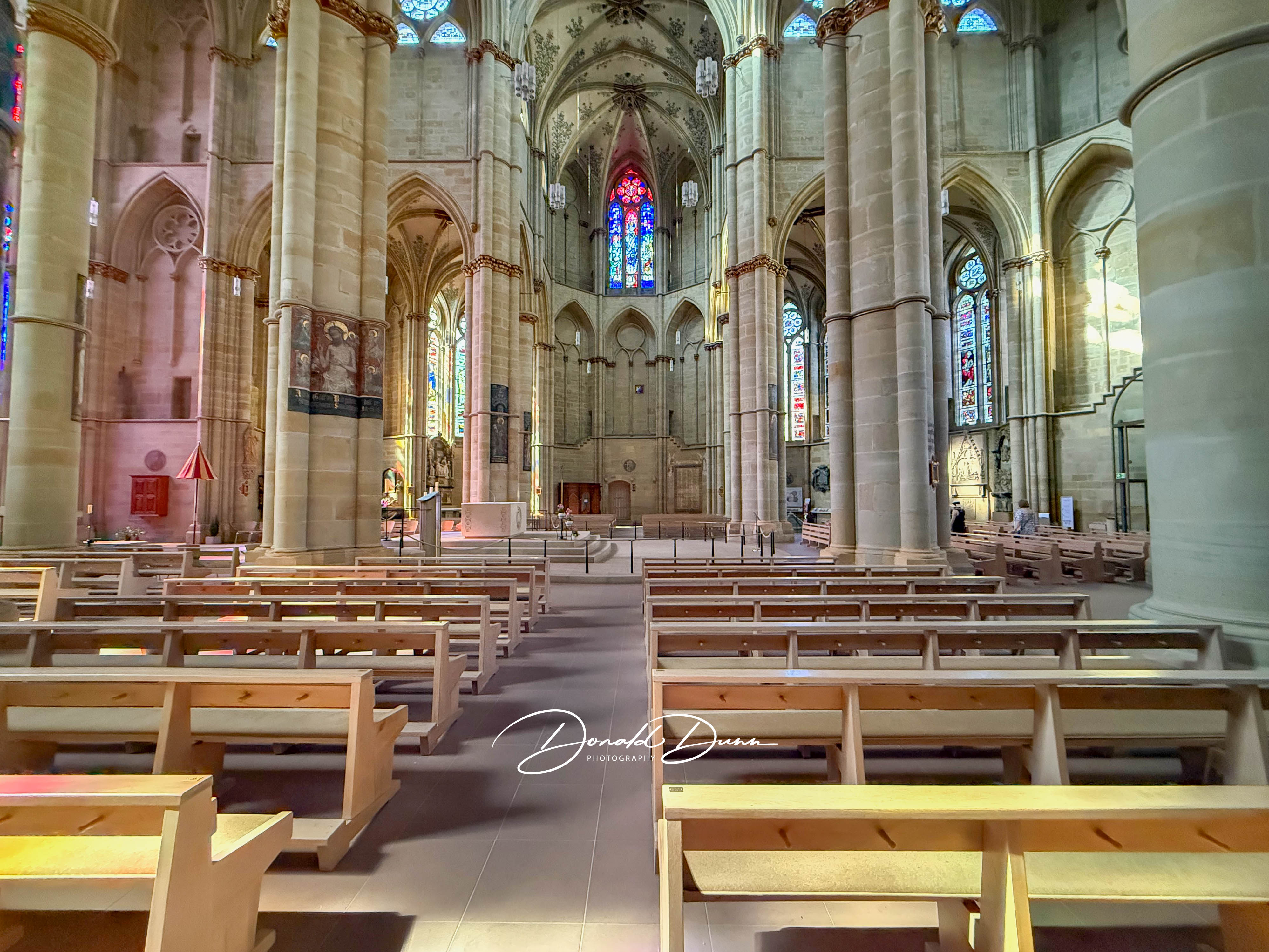
Among Trier’s many Catholic churches is Trier Cathedral.

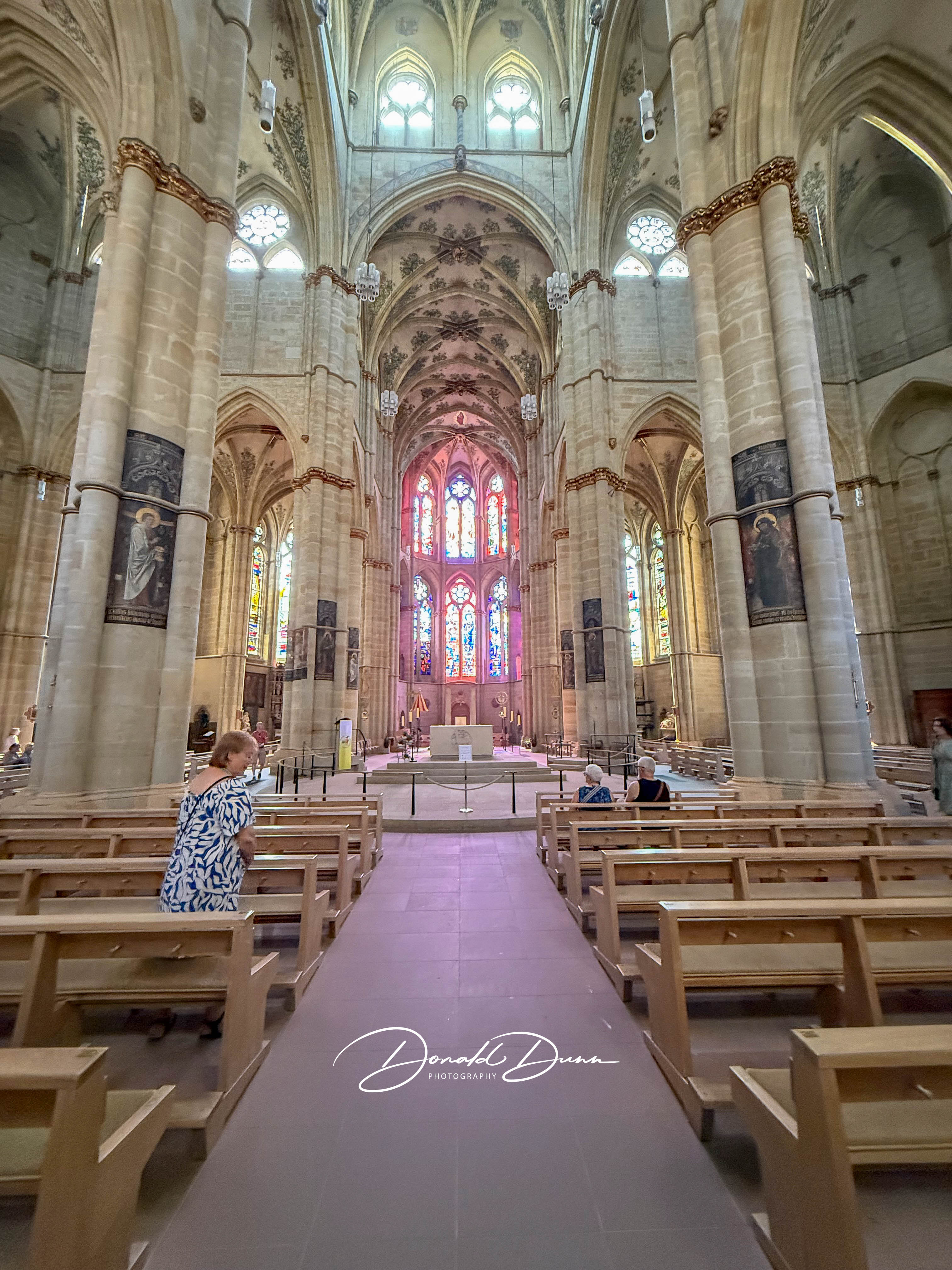
Because of its significance during the Roman and Holy Roman empires, several monuments and cathedrals within Trier are listed as a UNESCO World Heritage Site. 

Today was the hottest day of the year in Trier—22 degrees above normal with accompanying high humidity.

Monday, June 30, 2025–Reims Cathedral and Luxembourg American Cemetery

We each had difficulty sleeping, so the 5 am alarm was not needed. We reorganized our suitcases, tagged them, and moved them to outside the hotel room door for delivery to our day’s tour bus and ultimately to Viking’s long boat Herja.

Breakfast at the hotel buffet was preceded by long lines to be seated, at each of the four coffee machines, and at the eggs preparation counter. With an infected tooth cavity, soft foods were the order of the morning for me while Kay sampled a number of dishes. 

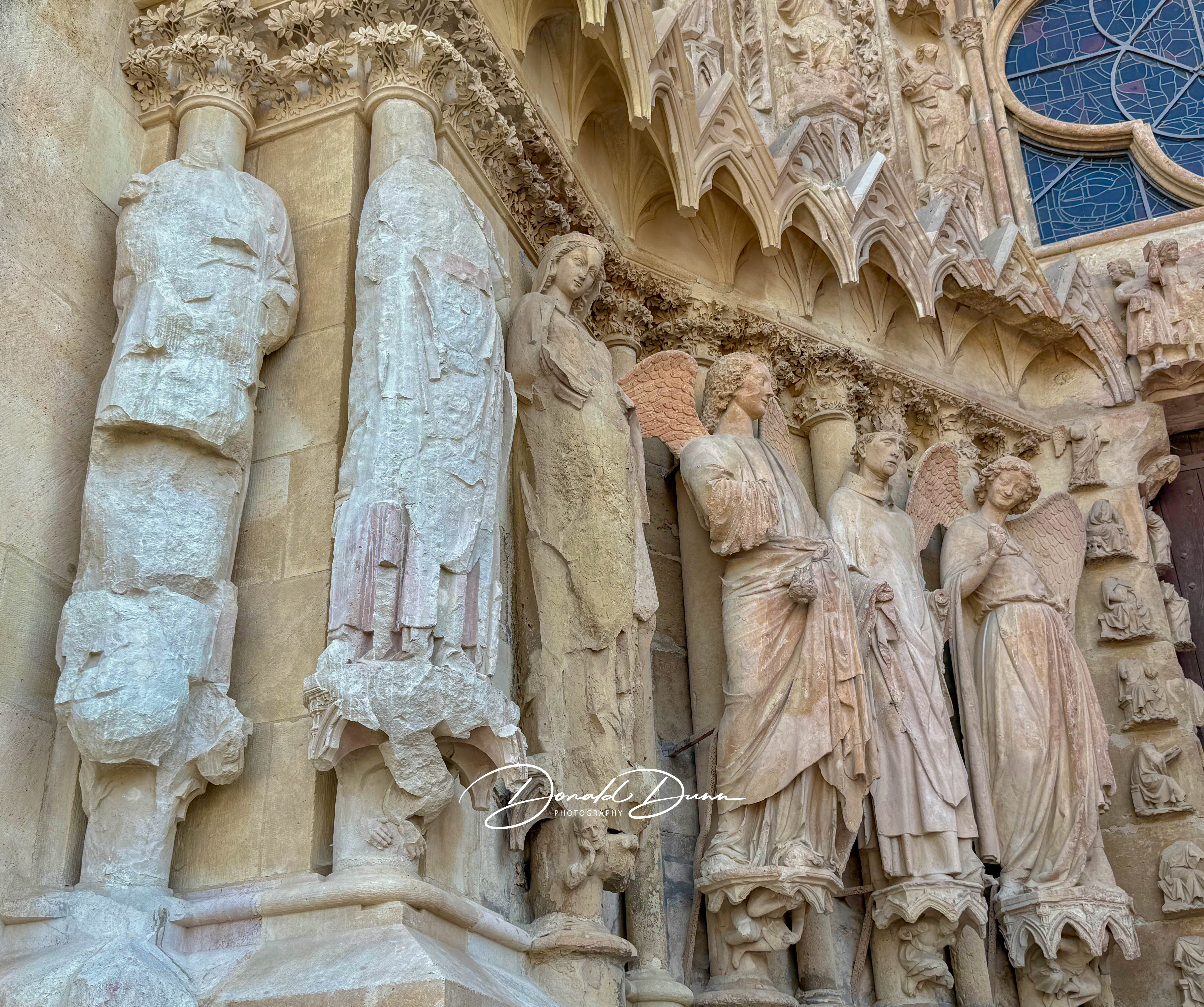
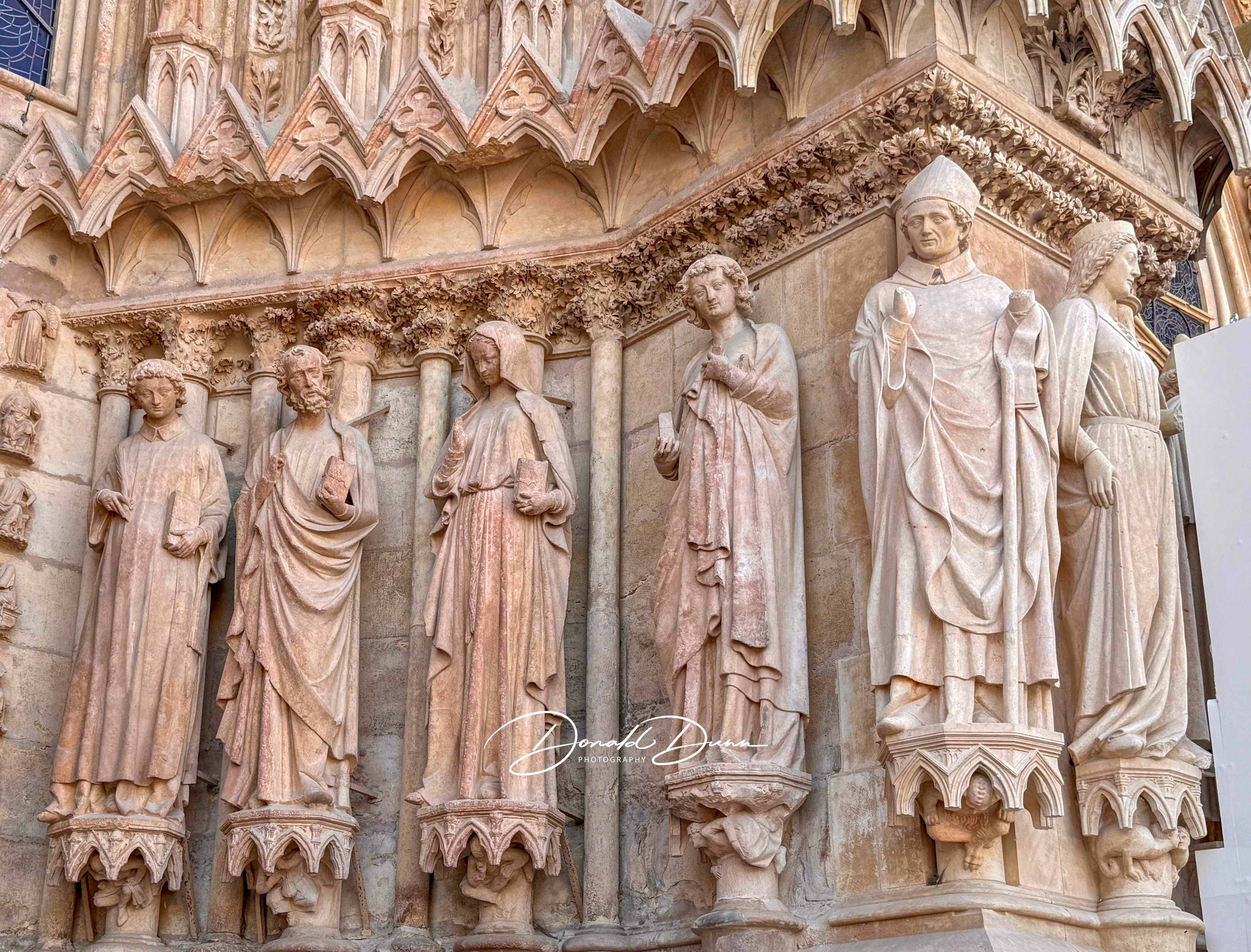
After boarding the bus and suffering through Monday morning’s rush hour traffic, we were transported to Reims where we toured the Reims Cathedral.

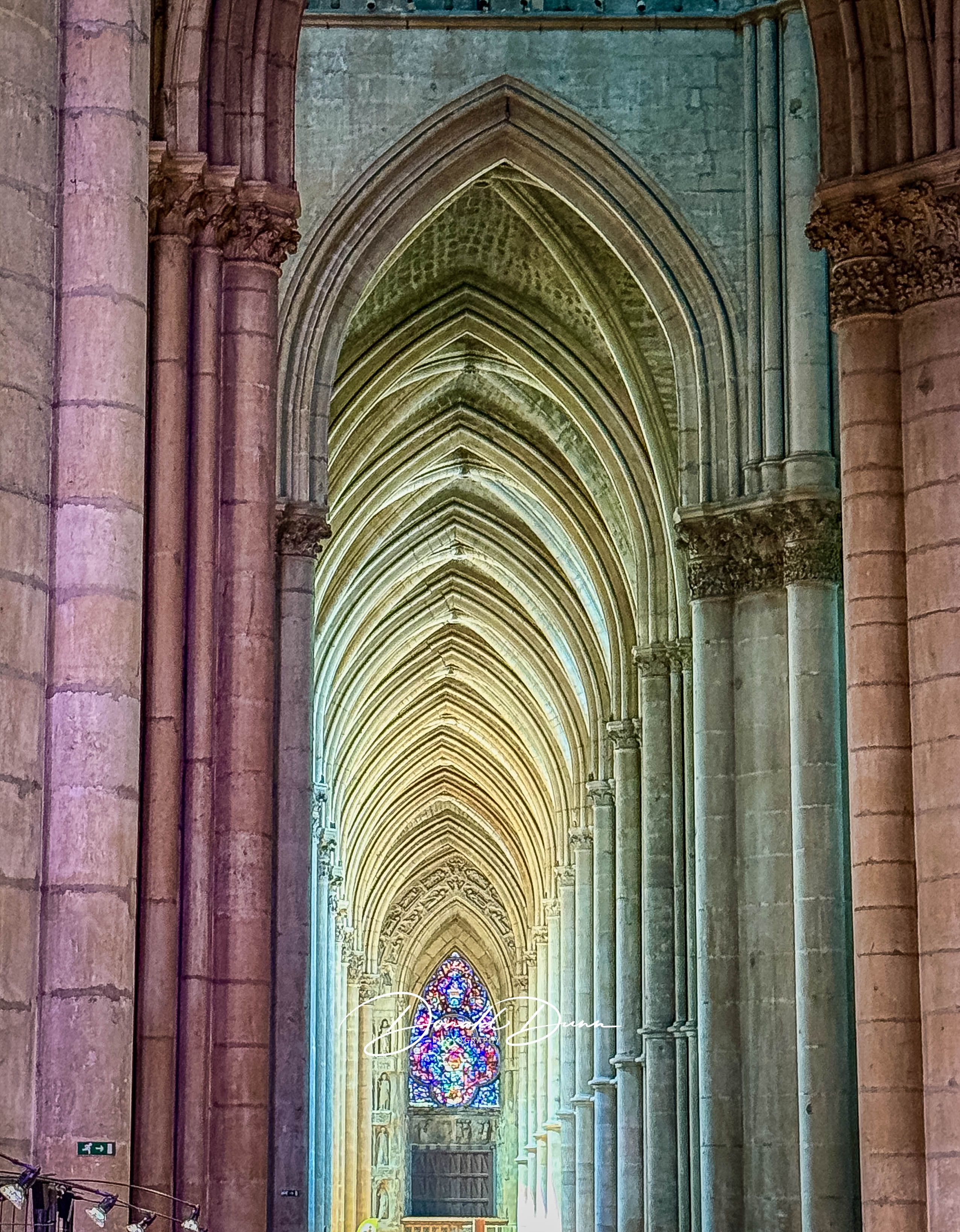
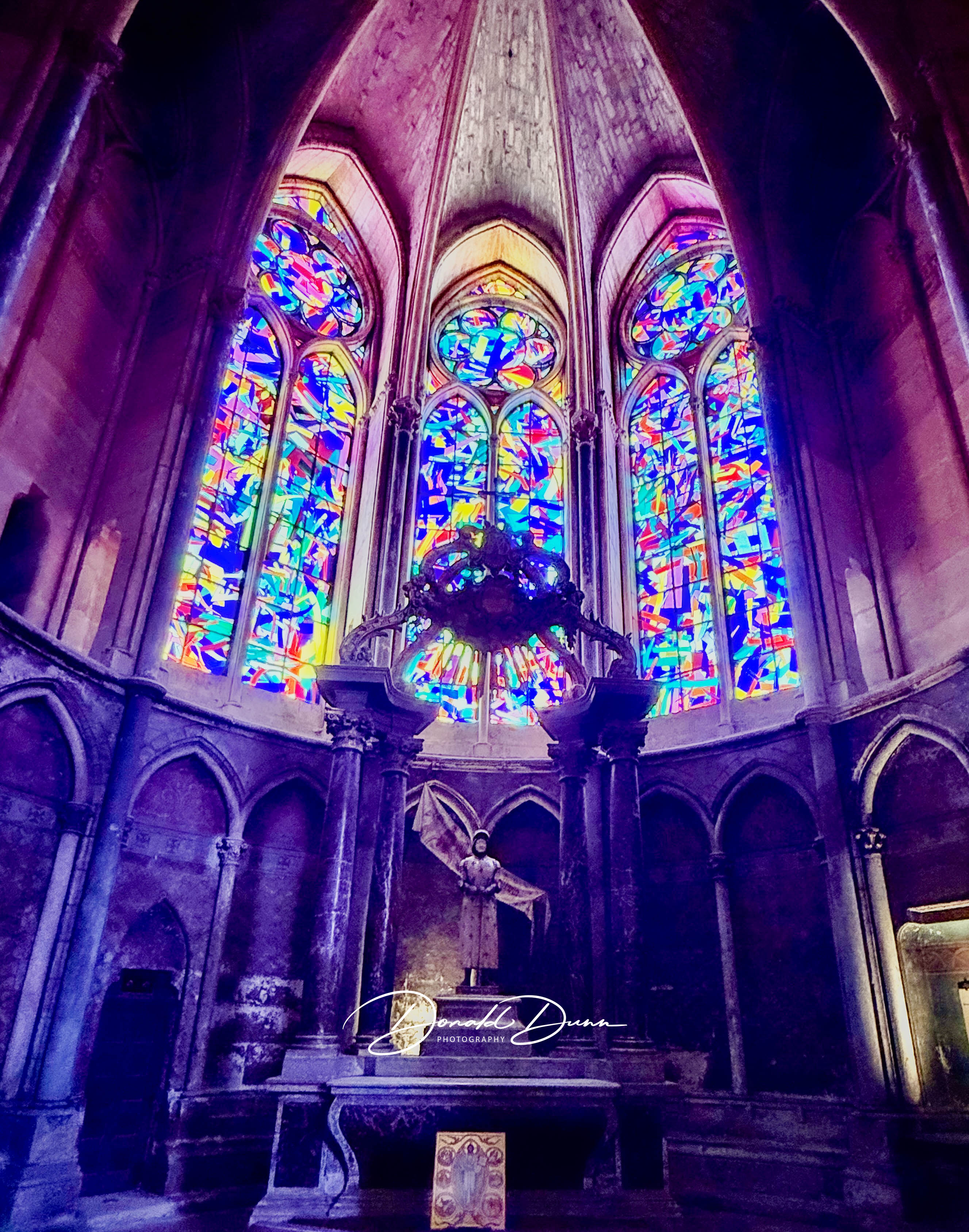
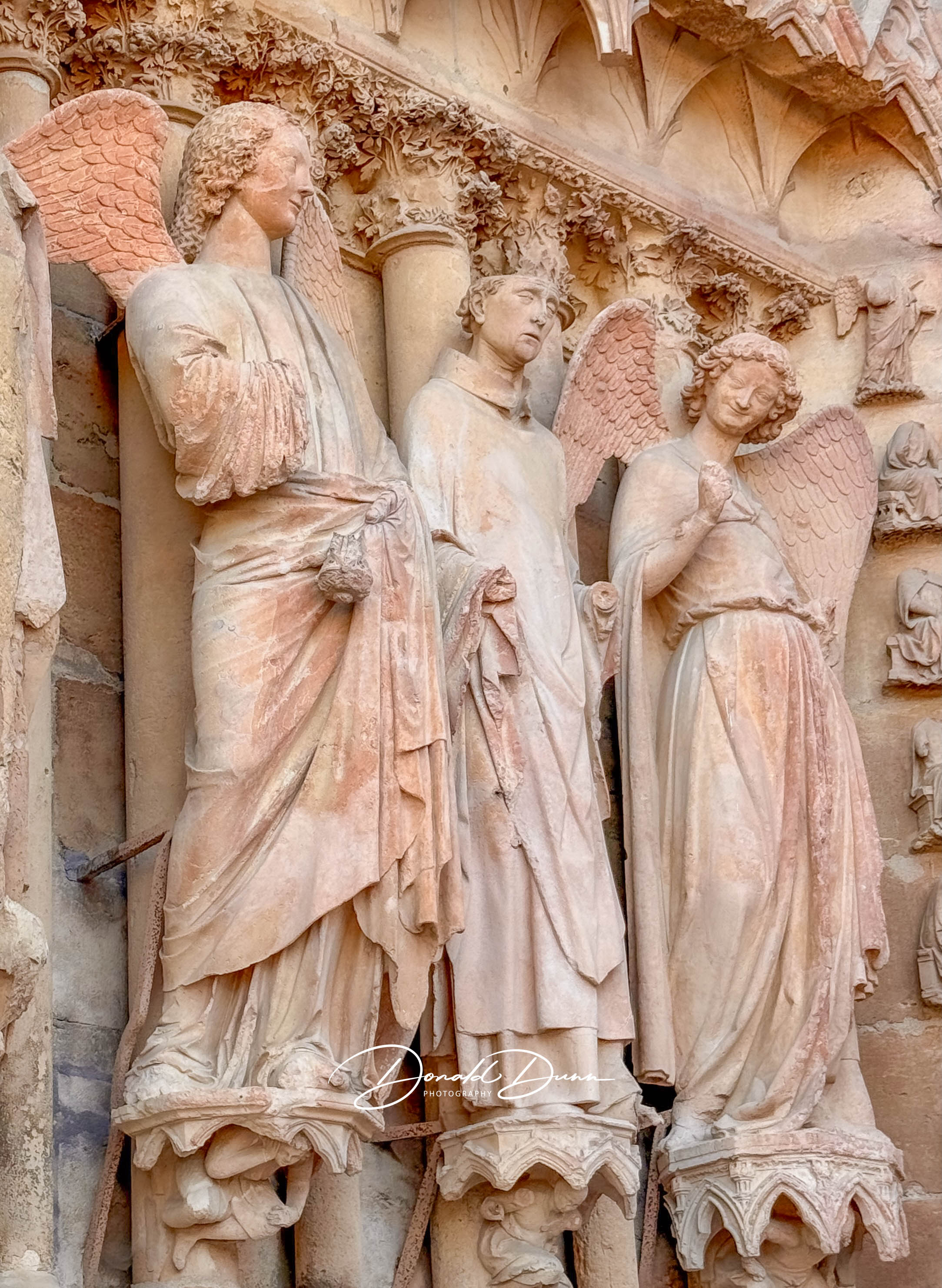
The cathedral Notre-Dame de Reims meaning “Our Lady of Reims“), known in English as Reims Cathedral, is a Catholic cathedral in the French city of Reims, the seat of the Archdiocese of Reims. The cathedral was dedicated to the Virgin Mary and was the traditional location for the coronation of the kings of France. The cathedral is considered to be one of the most important works of Gothic Architecture. A major tourist destination, it receives about a million visitors annually. It became a UNESCO World Heritage Site in 1991. Reims Cathedral is renowned for its magnificent stained glass, particularly its rose windows and the modern additions by Marc Chagall.

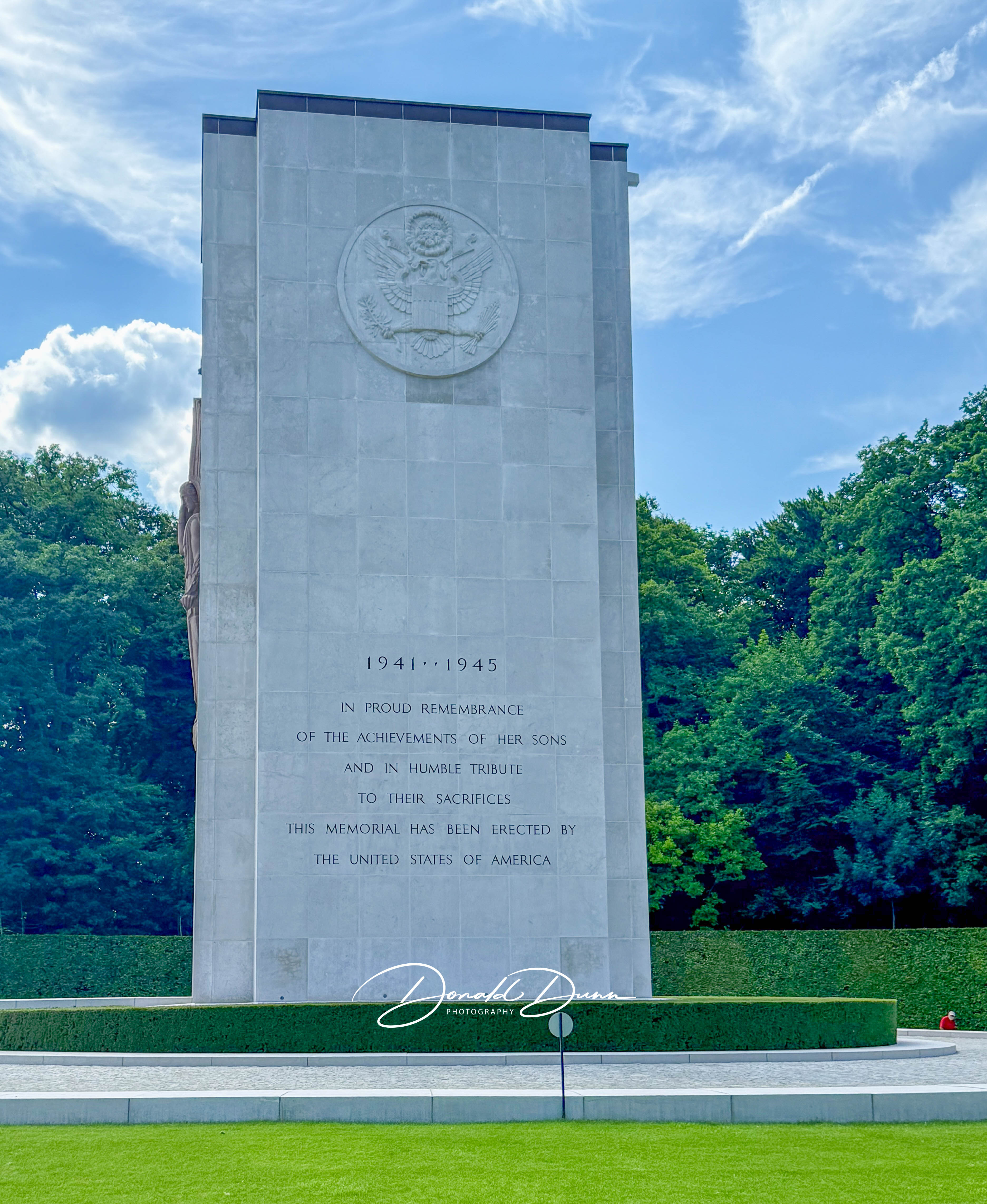
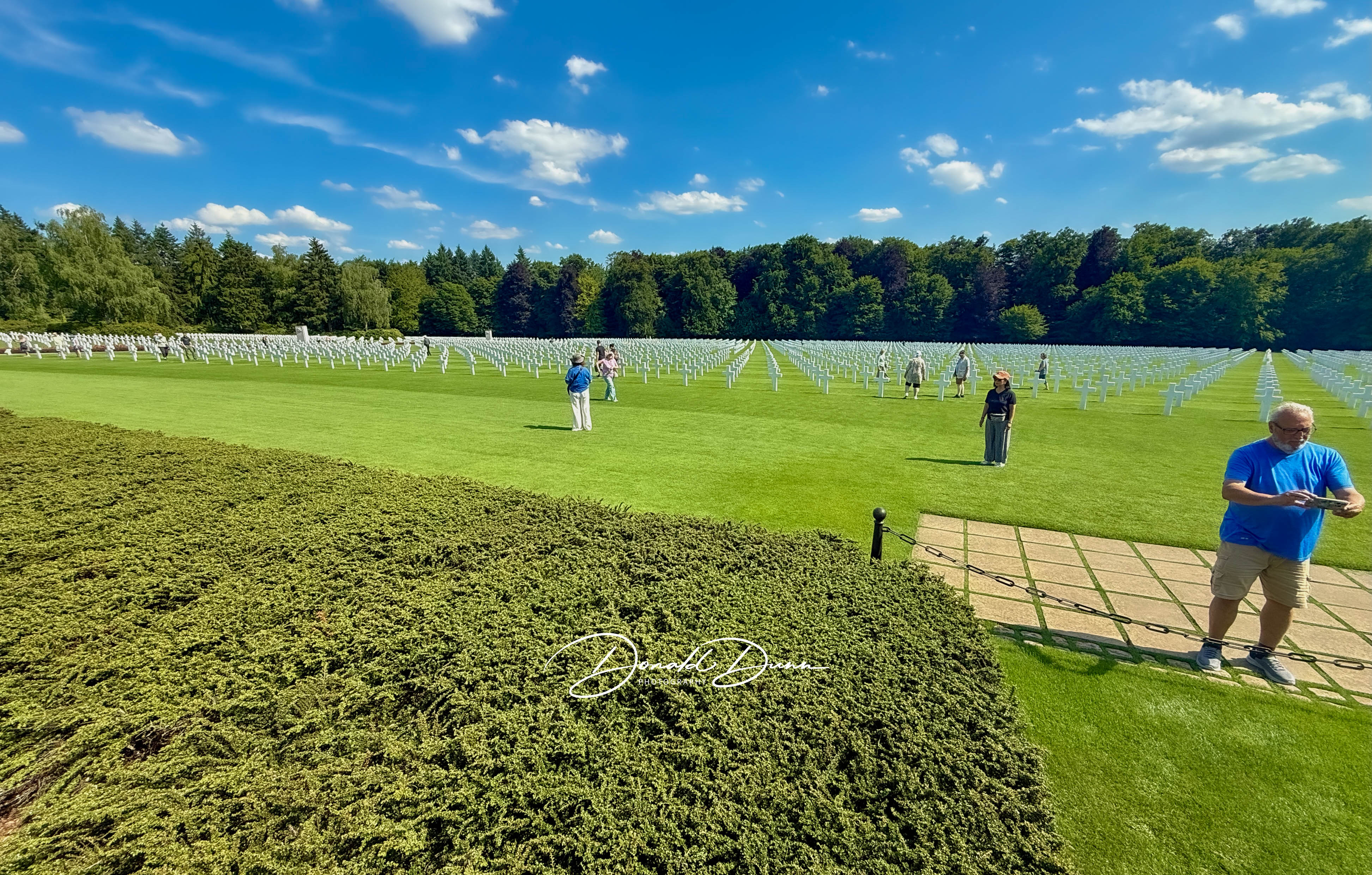
After leaving Reims just after lunch, we were driven to Luxembourg American Cemetery to honor those Americans from WW II.

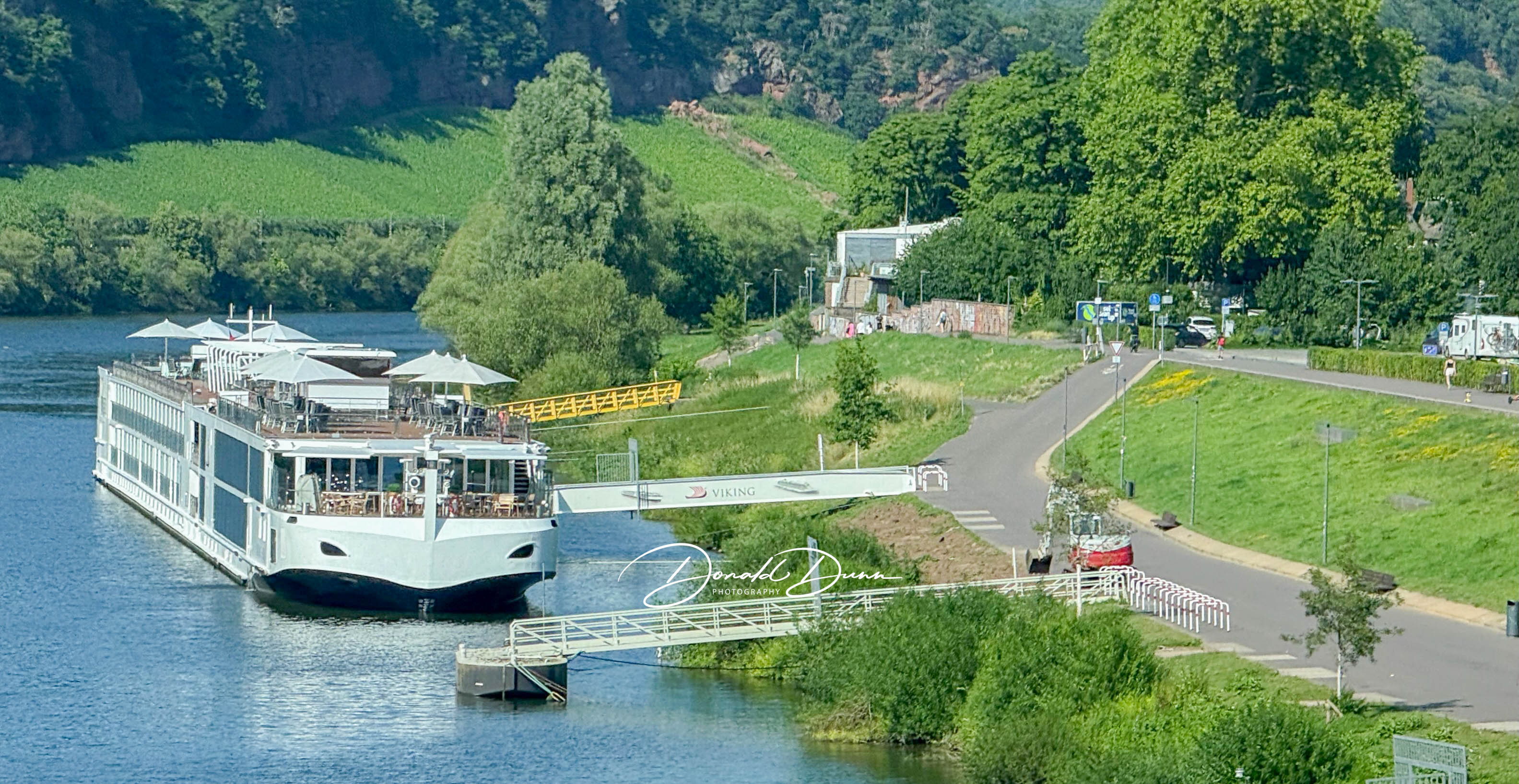
A short drive later found us boarding the Viking Herja where we would spend the next several days.

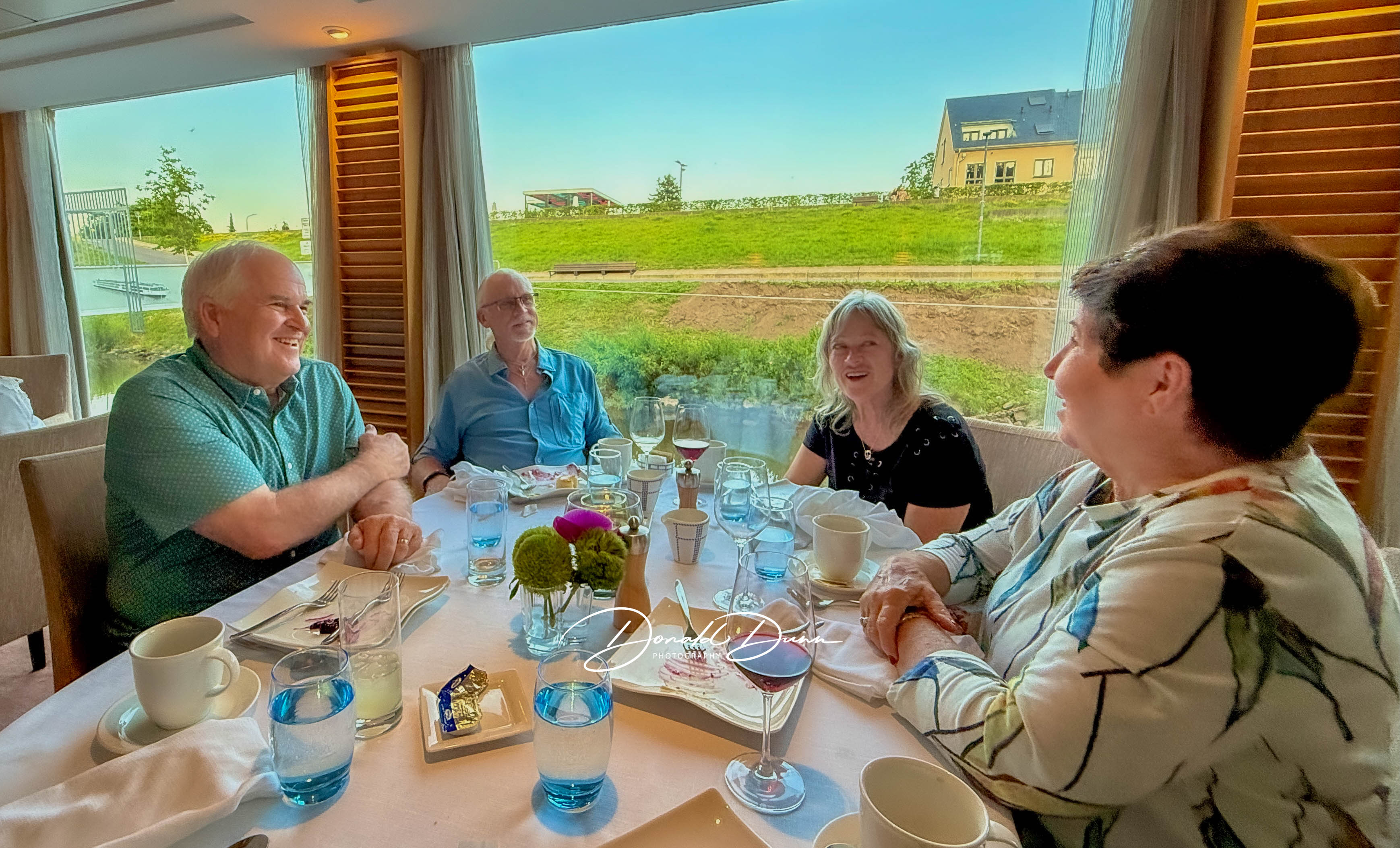
Our luggage then arrived and we met with the other passengers in Herja’s lounge for an introduction to the crew leaders, a welcoming and orientation meeting, and a champagne toast. Dinner included a bacon based appetizer, pork tenderloin medallions with fried cabbage, patty, and delightful pudding cake (similar to crème brûlée).

Sunday, June 29, 2025–Panoramic Paris

At 6 o’clock Sunday morning, we were in queue for the hotel’s breakfast buffet, just as the restaurant was opening. First order of business was a cup of latte for each of us, followed by select items from the simple but very good buffet. And then after a return to the room to prepare for the day’s activities, we gathered with folks from several tour groups to await instructions for our morning tour, Panoramic Paris. The bus tour included windshield views of iconic landmarks such as the Champ-Elysees, Arc de Triomphe, and Les Invalides.

Champ-Elysees
Arch de Triomphe
Les Invalides

The excursion also walking tours of the Eiffel Tower and Notre Dame-de Paris areas.

Eiffel Tower
Notre Dame Cathedral

One of the interesting places driven by was a bullet-riddled building from WWII. The guide mentioned several times the relationship between France and the US, particularly the liberation of France in 1944, and discussed aspects of their democratic republic.

Upon returning to the hotel, we rested, and then Kay went shopping for snacks while I edited photographs, downloaded videos, and worked on this blog.

Friday and Saturday, June 27-28, 2025–Our Next Adventure

While Kay was “locked and loaded”, I procrastinated until the last minute early Friday morning to pack for our next adventure, Paris to the Swiss Alps. Amazingly, things came together on departure day morning, with fifteen minutes to spare. After loading the car, we prayed for travel mercies and left the Village, driving towards the national airport via long term parking.

After checking in and slowly proceeding through airport security, we arrived at the gate about an hour before departure.

The flight to Atlanta was without incident.

Aboard Delta plane to Atlanta

Departure from Atlanta was another story, with a 45 minute delay. The British Airways crew did a good job of making up the delay as we arrived at the Charles de Gaulle airport near Paris just 15 minutes late.

Aboard British Airways flight to Paris

De-boarding, French customs, and baggage pickup were smooth, despite shoulder to shoulder crowds. We were met by a Viking representative and a driver and experienced a bumper to bumper hour drive to our hotel.

In the hotel room, we had a couple shots of espresso, and immediately took a midday (Paris time) nap to mitigate the almost 24 hours without sleep.

After a bit of unpacking and then showers, we were fit to face civilization again. A short walk led us to a food court where the hamburgers and fries were mediocre, but expensive.

And then we returned to the hotel and hung out in a cafe near the lobby, drinking a latte, and watching people milling about. Many of the hotel guests were in town to support Toulouse for the top level rugby championship between Toulouse and Bordeaux at Stade de France for the Top 14 Grand Final (similar to our Super Bowl); the hotel was the team hotel for Toulouse. The Toulouse players were huge, like our professional football players. Afterwards, we retired to the room fighting to stay awake. Sleep came easy.

Saturday through Thursday, June 14-26, 2025—Welcome Summer 2025

Rain, early in the reporting period—Saturday through Tuesday—pretty much kept us house bound upon our return from eastern Virginia. And the down time was needed. We found the gardens had prospered in our absence. A great boat ride Wednesday evening around Balboa Lake with the Andersons, and hosted by the Nobles, was a great respite from the heat that had entered our area. Thursday was another quite day spent mostly inside. Finally, we both were ready for pickleball on Friday, June 20, the first day of Summer 2025. The weather was a bit disruptive, with temperatures hovering in the low 90s and the humidity about the same, i.e. low 90s. I was soaking wet after playing a couple of hours. A quick walk around the pollinator garden revealed only three species of butterflies: Common Buckeye, Fiery Skipper, and Delaware Skipper. However, the Delaware Skipper was a first time visitor to the yard/garden, making it the 14th species observed this season (2025), and the 42nd species observed since I started recording last year.

Common Buckeye
Fiery Skipper
Delaware Skipper

Also, a couple of wildflower blooms were recorded.

Also, dragonflies were plentiful—a great way to start summer.

Saturday was basketball day with two games in Cabot. Regrettably, Ridge did not get to play much (9th grade team), but his team played well against significantly more height.

Apparently a heat dome has settled in for a good portion of the US, and we’re right on the edge with heat advisories almost every day. That means staying inside as much as possible—not something desirable for us folks that like being outside. We attended church Sunday morning for the first time in three weeks having been out of town. Our new pastor begins his term next week, but we’ll miss his first three services; are we off on another adventure?

Kay played pickleball twice on Monday while I lazed about the house, piddling with photo and computer gear. Truth be told, I just can’t get in the mood for any outside activities with this high heat and humidity (the humidity was 95% early Monday morning). And, of course, that just fuels bouts of depression! I did print a couple of photos after not having used the printer for some six months, and it performed just fine.

Thursday and Friday, June 12-13, 2025—Traveling Home via New River Gorge National Park and Bed Bugs

After awaking, we packed, remade the bed, and loaded the car. Nan and George were already up, and we discussed whether or not we would travel home via the New River Gorge National Park (NP). We said our goodbyes, and once in the car opted to drive to the out-of-the-way park. After driving 200+ miles west on mostly interstate highways, the small NP visitor center sat among the southern West Virginia mountains. 

New River Gorge National Park and Preserve, WV

President Jimmy Carter signed legislation establishing New River Gorge National River on November 10, 1978, as a unit of the national park system “for the purpose of conserving and interpreting outstanding natural, scenic, and historic values and objects in and around the New River Gorge, and preserving as a free-flowing stream an important segment of the New River in West Virginia for the benefit and enjoyment of present and future generations.” And then the New River Gorge National Park and Preserve Designation Act was incorporated into the 2021 Appropriations Act (former Senator Joe Manchin, WV), and signed into law by President Donald Trump on December 27, 2020, changing the designation to New River Gorge National Park and Preserve. Less than 10% of the original national river (7,021 acres) was redesignated as a national park (NO HUNTING), while the remaining 65,165 acres was designated as a national preserve (HUNTING ALLOWED). Some months ago, this same ploy was attempted in Arkansas regarding the Buffalo River (making it a national park and preserve), but never materialized due to the mass outcries of the public.

We drove to various locations to observe the NP’s highlights, but were grossly underwhelmed—it is a rafting river, no more and no less.

After the route deviation, we began the long drive towards home, overnighting in Cookeville, Tennessee.

The drive home on Friday was definitely a Friday the 13th adventure. First, I began breaking out in whelps similar to mosquito bites, mostly on my left side (I sleep on my left side) except they didn’t go away and swelled to the size of quarters. Over a dozen bites appeared (BED BUGS). And we stayed in a highly rated and somewhat expensive hotel (Comfort Inn and Suites), Room 213. As we slept in different beds, Kay escaped any bites.

And then, just west of Little Rock in Interstate 40, traffic came to a complete standstill for an hour and forty-five minutes due to a 4-vehicle wreck. Another standstill was experienced southwest of Little Rock on Interstate 30, but only for a few minutes. We were very happy to arrive home, our place of refuge.

Monday through Wednesday, June 9-11, 2025–Visiting Family

Kay and I drove east Monday some 300 miles to visit family in eastern Virginia, arriving about 1:30 pm. The first couple of hours were spent catching up, and then we sort of unpacked, visited some more, and “crashed and burned” for a decent night’s sleep.

We all ventured out Tuesday to see their community pickleball courts, hike a James River trail. And visit their Master Gardener’s pollinator garden. A few butterflies were observed, including a new lifer, a Cabbage White.

Cabbage White

Also, several damselflies were bouncing from place to place.

And then, even a few dragonflies were spotted.We all enjoyed a homemade shrimp and egg noodle alfredo dish for dinner, before watching a bit of television and retiring for the evening.

On our final day, Wednesday, we had coffee at a large church’s coffee shop, and visited their off-site thrift shop, where brother-in-law George volunteers.  Afterwards, we went shopping. One of the neat things about high population areas, such as the greater Richmond, VA, area, is the variety of shopping available, and many “big name” outdoor stores are available such as REI and Sierra Trading Post. None of us bought much, though I did buy a pair of cheap sunglasses for the trip back home. And then we stopped at a pollinator garden created and maintained by master gardeners; both Nan and George are master gardeners. And then, it was off to their public pickleball courts which were really nice, including the two individually covered courts. Both Kay and I found groups with which to play, and we had a good time.

We visited with Geoff and  in the afternoon, and again that evening. He is an outstanding young man (though maybe not so young anymore), and we enjoyed his recap of a recent work trip to India.

All in all our family visit with Nan and George was really good, perhaps the best we’ve experienced, and we thank them much for hosting us.