
Finally, the record heat that has enveloped this part of Europe has disappeared and temperatures are now more “normal” with highs in the 70s and lows in the 50s—a welcome change indeed.
This is our second visit to Koblenz, having toured here August 17, 2015. Koblenz, a major German city, is at the confluence of the Moselle and Rhine Rivers. Koblenz was established as a Roman military post in 8 BC.
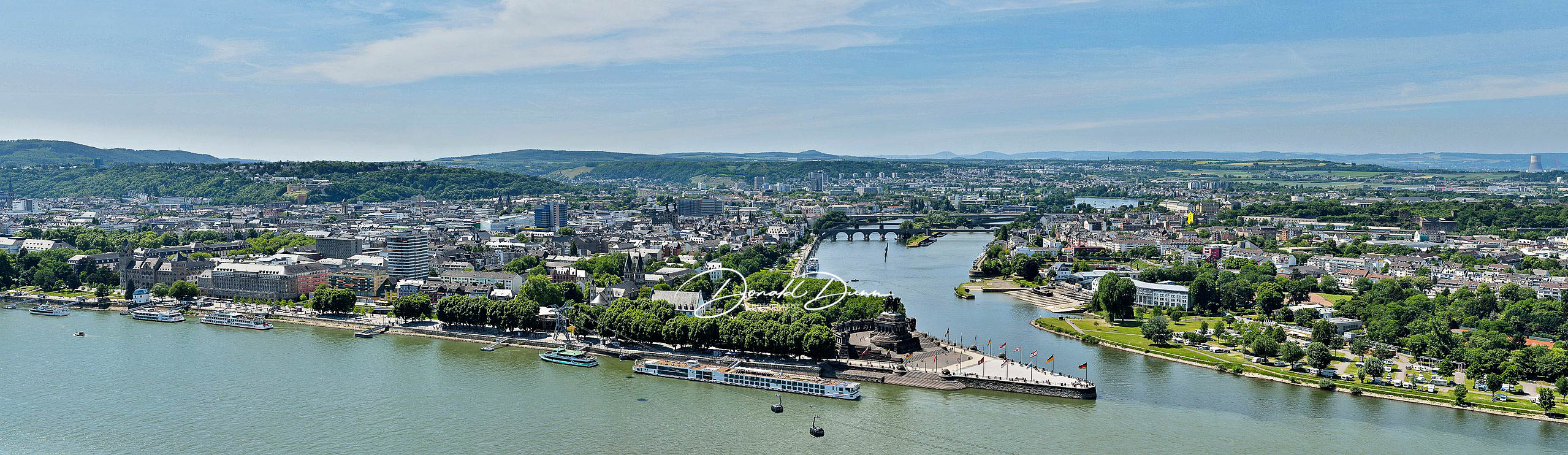
The Rhine Gorge was declared a UNESCO World Heritage Site in 2002, with Koblenz marking the northern end because of its beauty as a cultural landscape, its importance as a route of transport across Europe, and the unique adaptations of the buildings and terraces to the steep slopes of the gorge. Some of the sites we visited are discussed below.
The statue of Kaiser Wilhelm rises imposingly here, at 37 meters high.

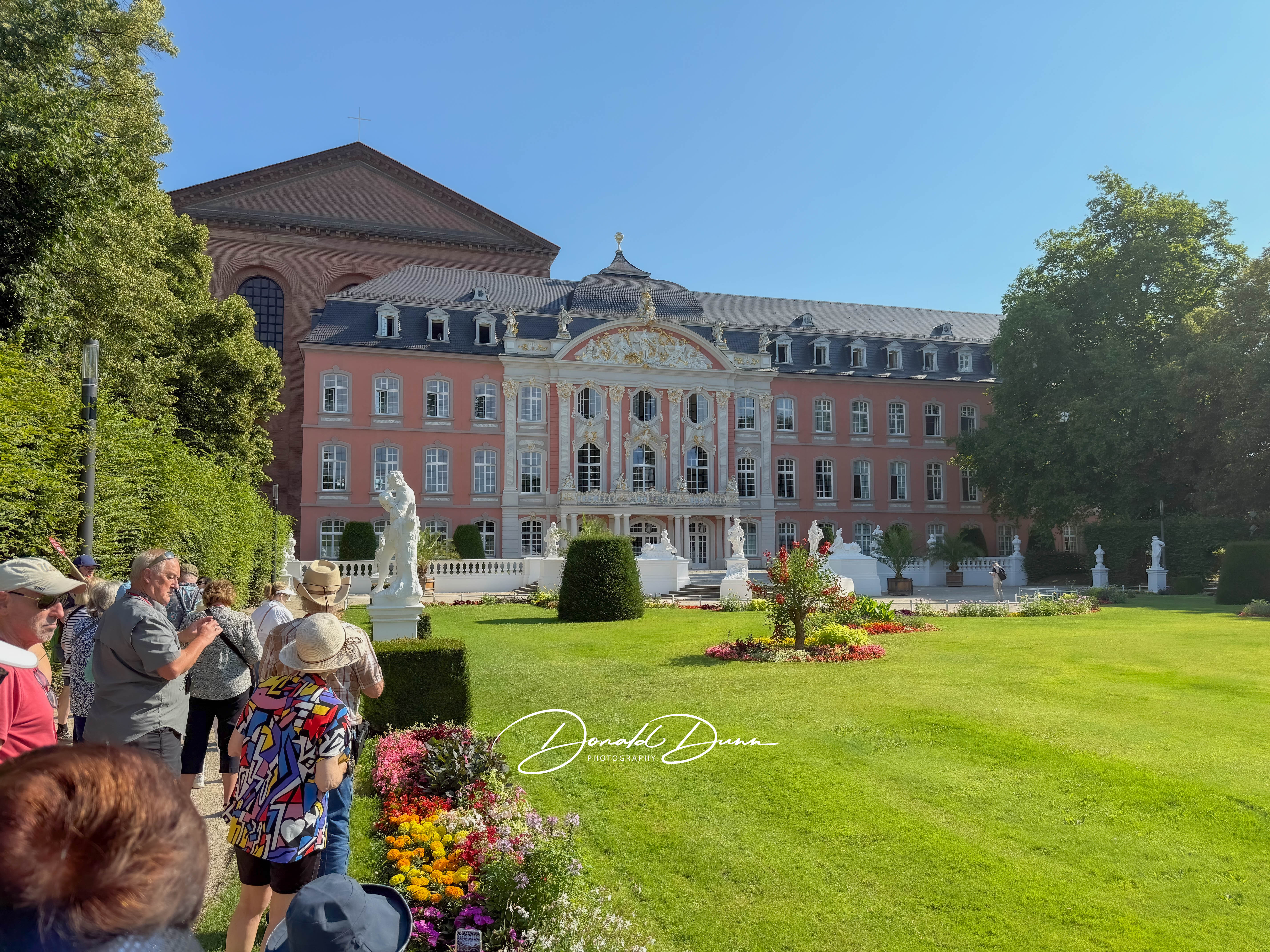
The Electoral Palace in Koblenz is one of the most important palace buildings of early French classicism in southwest Germany and is one of the last residential palaces built in Germany immediately before the French Revolution. Elector Clemens Wenzeslaus had the Electoral Palace built between 1777 and 1786. From 1850 to 1858, the Prussian Crown Prince and later Emperor Wilhelm I resided here as Prussian military governor. In 1944, the Electoral Palace was destroyed down to the outer walls and rebuilt in 1950-51.
The St. Castor Basilica is the oldest preserved church in Koblenz. The collegiate church, consecrated in 836, was the scene of significant historical events. The monastery of St. Kastor was the meeting and arbitration place of emperors and kings as well as their descendants. In 842, the Romanesque church was the venue for the negotiations of the sons of Emperor Louis the Pious, which led to the partition of the Frankish Empire in the Treaty of Verdun the following year. The building in its present form dates mainly from the middle of the 12th century. On July 30, 1991, Pope John Paul II elevated the Castor church to the status of basilica minor. Together with the Liebfrauenkirche and the Florinskirche, the St. Castor Basilica shapes the silhouette of the Koblenz old town.

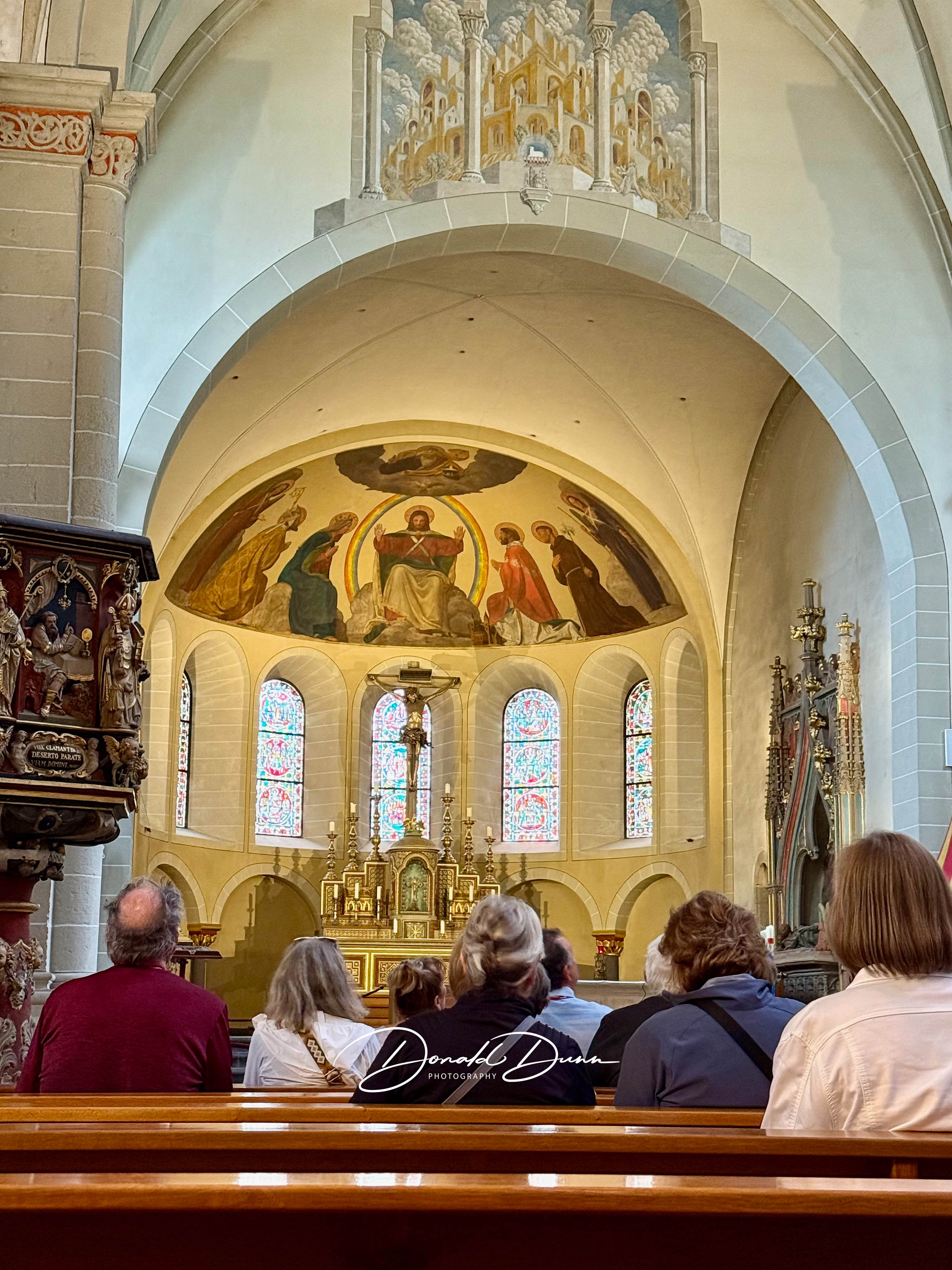
On the highest point in the Old Town stands the Romanesque Church of Our Lady (Liebfrauenkirche), also known as the Notre Dame Church.

Although what’s seen today dates from the 12th century with later 15th-century additions, there’s evidence pointing to a much older 5th-century place of worship having been built here by the Romans. Notable features include its splendid Gothic choir and the attractive onion-shaped Baroque towers with their four bells, famous for tolling the “Reveler’s Bell” at 10pm each evening.
We also toured the 12th-century St. Florin’s Church (Florinskirche), notable for the old cannonball above the baptismal vault — a reminder of the destruction of the city during earlier wars — and its picturesque setting overlooking an attractive public square.

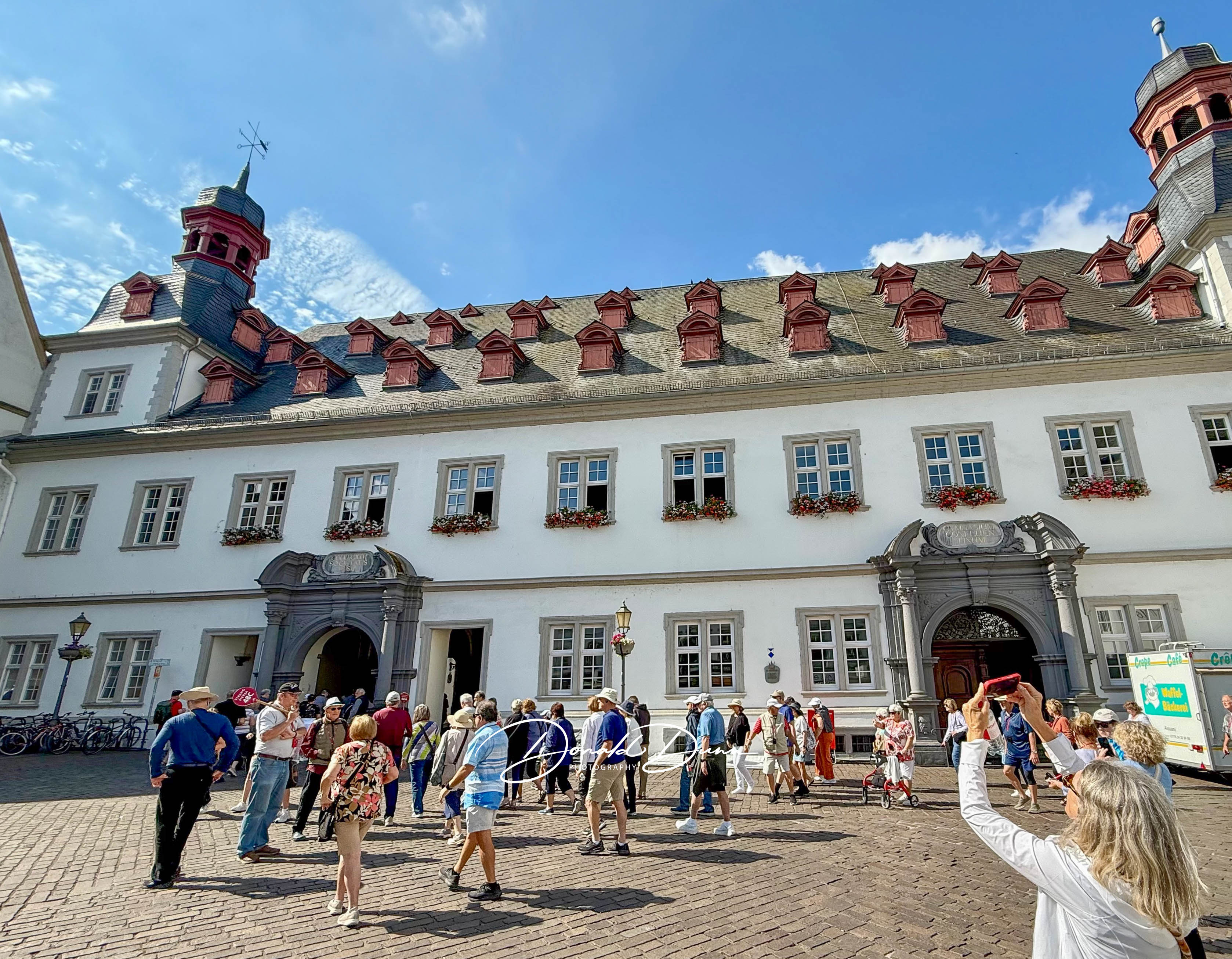
The Old Town (Altstadt) district of Koblenz has been painstakingly restored after the devastation of WWII. Highlights of our walking tour included the Town Hall (Rathaus), built between 1695 and 1700, in front of which is the humorous Schängelbrunnen, a monument designed in 1940 by Carl Burger and dedicated to poet Josef Cornelius, who penned the lyrics for the city’s “hymn” (watch out for the spitting boy!).
The town clock in Saint Florin’s market in Koblenz contains more than one face. It’s adorned with an image that according to local lore represents Johan Lutter, a 16th century robber. Though he was sentenced to death and lost his head in 1536, his visage still keeps watch over Koblenz’s Old Town from beneath the clock. The face’s eyes roll back and forth as the pendulum moves, marking the passage of time. When the clock strikes the hour or half hour, the whimsical sheet metal man sticks out his tongue to mock the good citizens of Koblenz. This depicts the gruesome yet morbidly comical expression Lutter supposedly made in his final moments. Some legends even say he continued to roll his eyes and wiggle his tongue after his head lay severed from his body.


Today’s upstream sailing took us by castles at almost every bend of the Rhine River.















 Dunngone's Photos and Blog