Sunday, May 28 through June 30,  2023–Italy to Arkansas, COVID, and Surgery

We were up way too early Sunday morning (May 28) in order to depart the ship at 5:30 am. Because it was so early, we had to manage our own luggage which wasn’t an issue. There was mass confusion as to which exit ramp to take, and we were sent three different places before finding the correct one. We arrived at the airport, passed through Italy’s Passport Check and Customs without a hitch. The plane from Rome to DFW was a bit late, but the delay was more than made up as we arrived at DFW an hour and half early. And then it was off to Little Rock, then home, arriving some 24 hours after getting out of bed!

Sleep came easily in our own bed, but we were up at 2 am on Memorial Day, in concert with our body time. Kay was not feeling well, and tested positive for COVID, the first time for either of us. She rested throughout the day and much of the week, beginning to feel better on Friday. Meanwhile, on Tuesday I received a call to schedule surgery to repair a rotator cuff and bicep tear in my right shoulder. Anticipating a 6 to 8 week waiting period, the surgeon’s office surprised me with a June 7 surgery date. They knew I wanted to have the surgery as soon as possible, and kept the early date open for me.
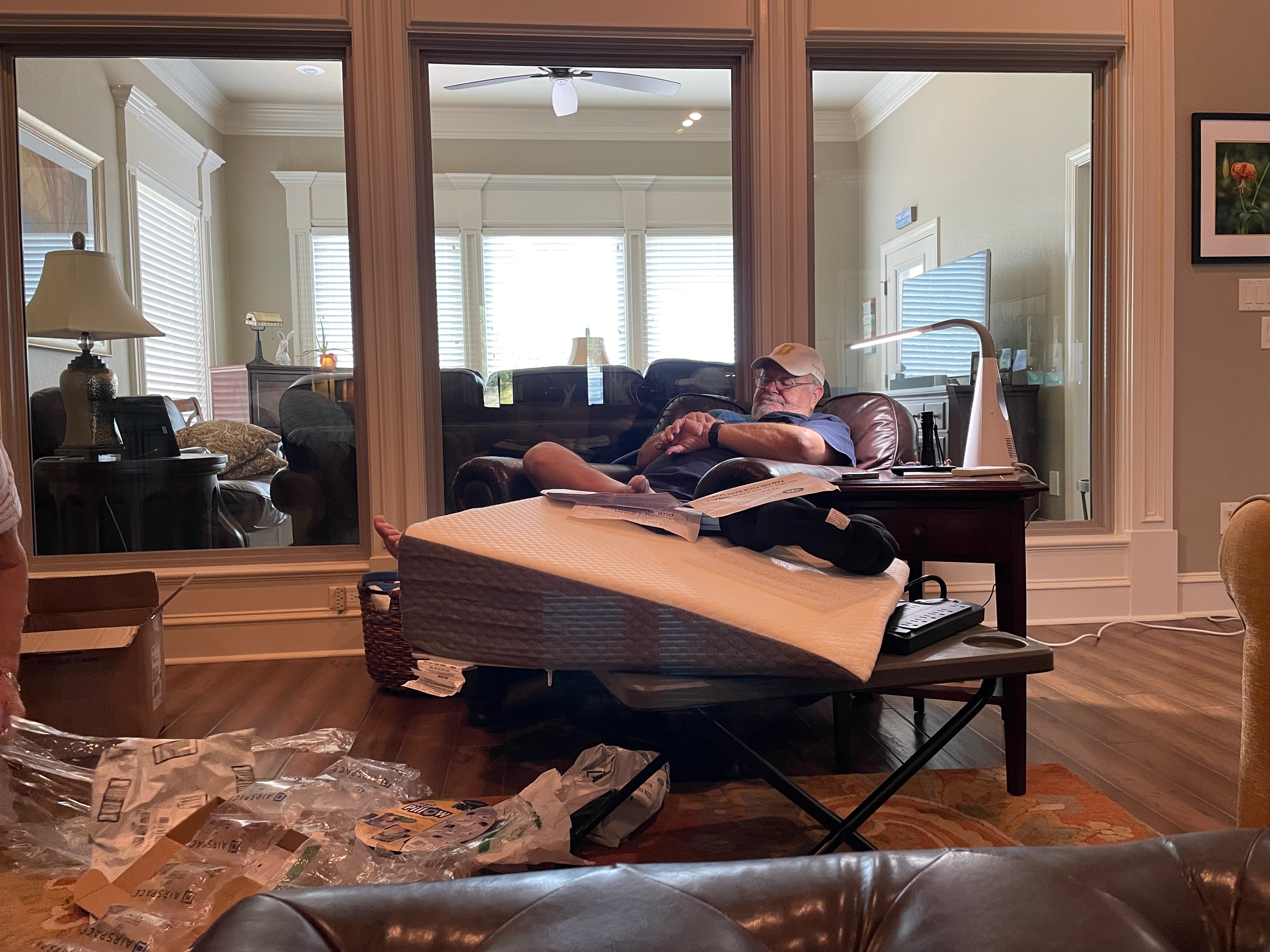
Checking out the recliner

The days leading up to surgery were a whirlwind, what with Kay testing positive again, and then negative, and our preparing for shoulder surgery.

The next week, the second week of June, was all about shoulder surgery. Arriving at the outpatient clinic at CHI in Hot Springs on the morning of June 7, I was prepped, then taken into the OR, “waking up” an hour later in Recovery with a bandage and cooling pad on my shoulder, and my arm nestled in a sling. With the nerve block still effective, I felt no pain.

Prepped and ready for surgery
Waking up after surgery to a much needed cup of coffee

We returned home about three hours later, and the recliner became my home for the next week. Everything was coming along just fine, and then the nerve block began wearing off the day after surgery, and the pain began, intensifying almost every minute. Despite the oxycodone the pain was about 8 on a scale of 1 to 10. To supplement the opioid I took two Tylenol and an Advil, and repeated the three medications every 6 hours. After the first six hours, the pain began receding, hovering about “6” for another few hours—tolerable. The pain quickly receded and I felt no discomfort at all. And no more pain medicine.

I spent the first seven days after surgery taking it easy, and not putting the shoulder in any kind of motion or bind. Regretfully, Kay again tested positive for Covid. Though she didn’t feel terribly bad, it really neutered her always busy schedule. On Day 7 after surgery, we visited the surgeon’s office where the stitches and bandages were removed, and the surgeon gave instructions for the next five weeks. (Note: The surgeon was Dr. Cari Cordell; she and all of her staff get a 5-star rating in all categories from us.)
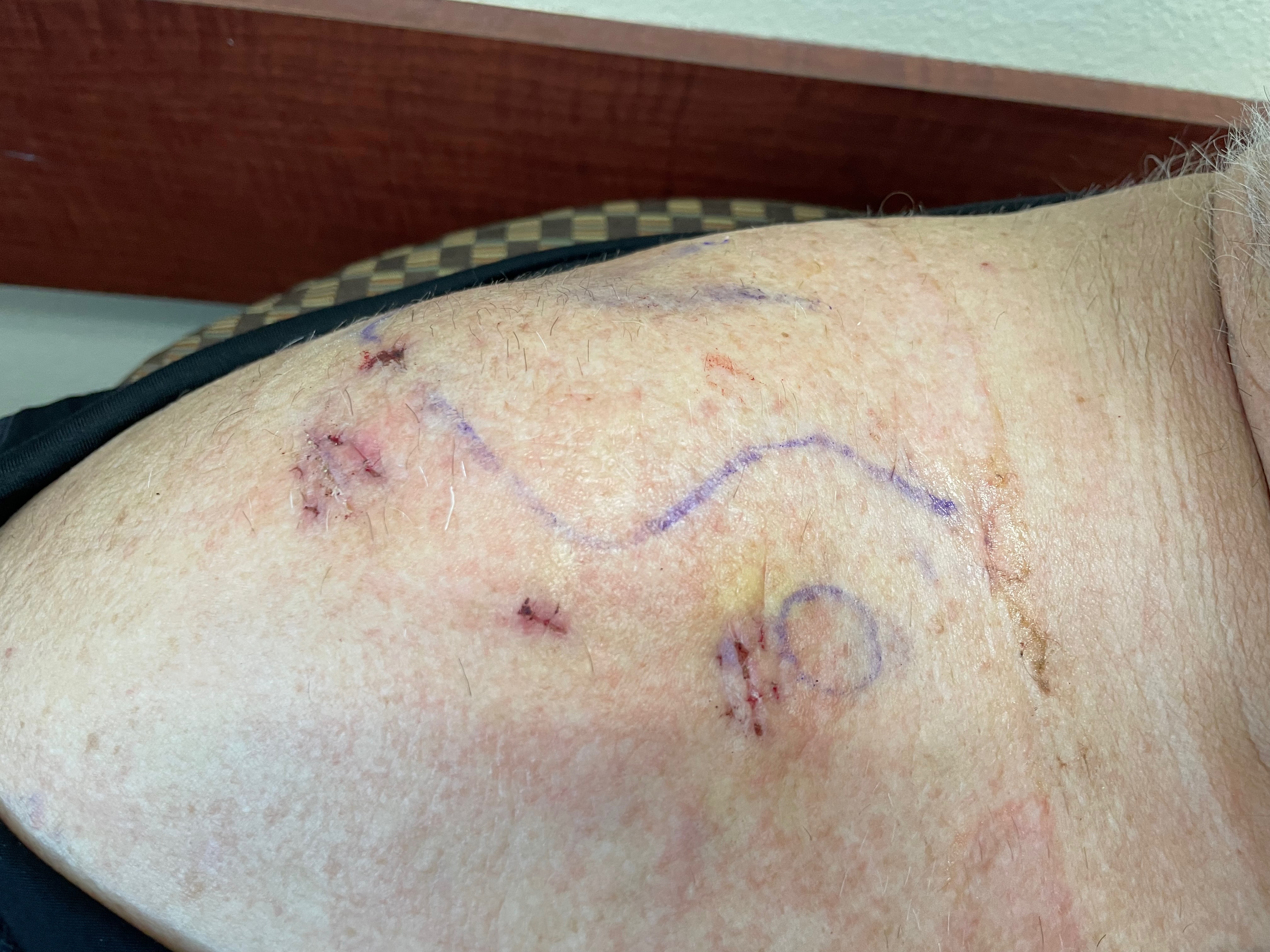
The following week, the second week after surgery, Kay returned to her two mornings of pickleball and one morning of golf. I continued taking it easy and began physical therapy.

One week post surgery

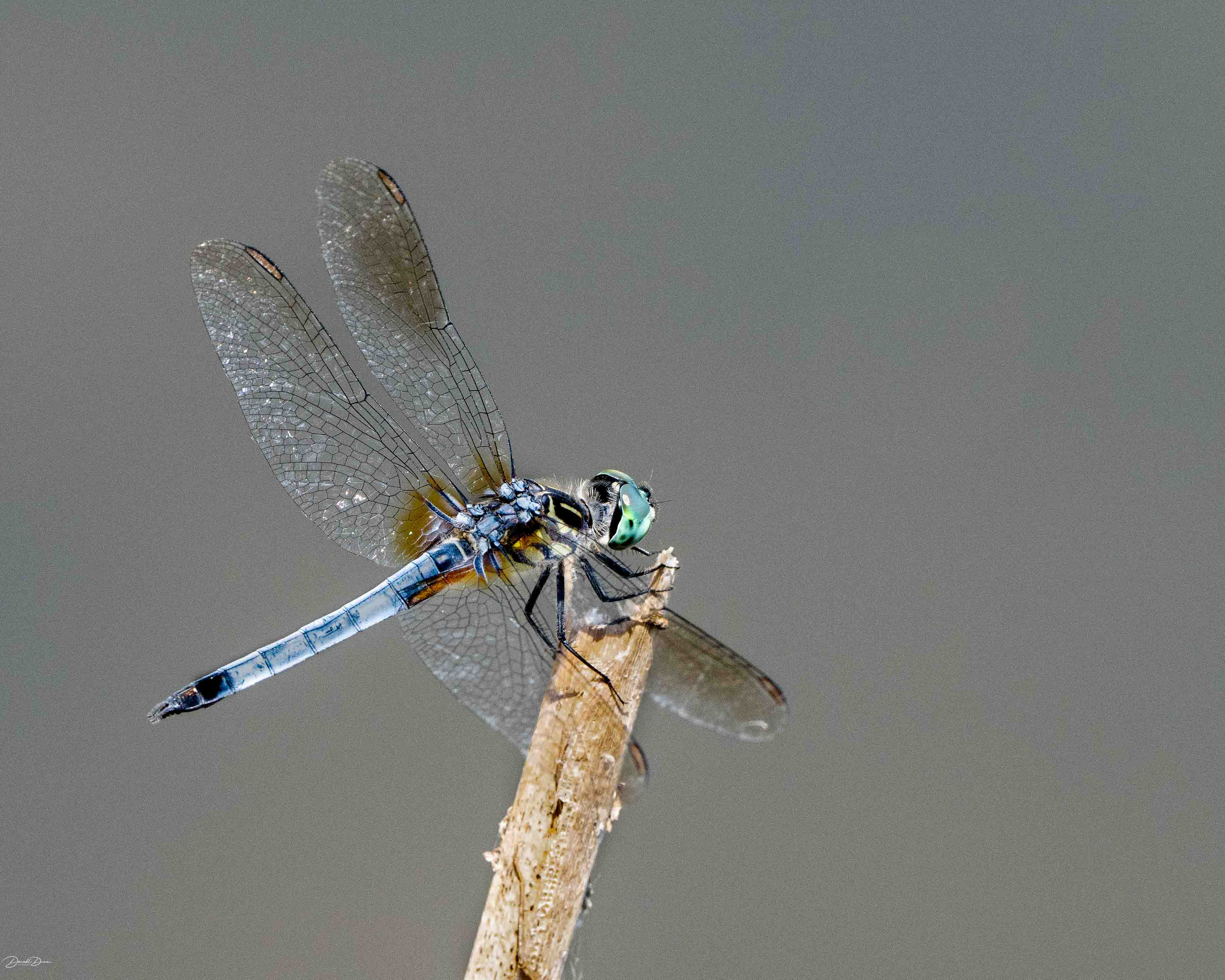
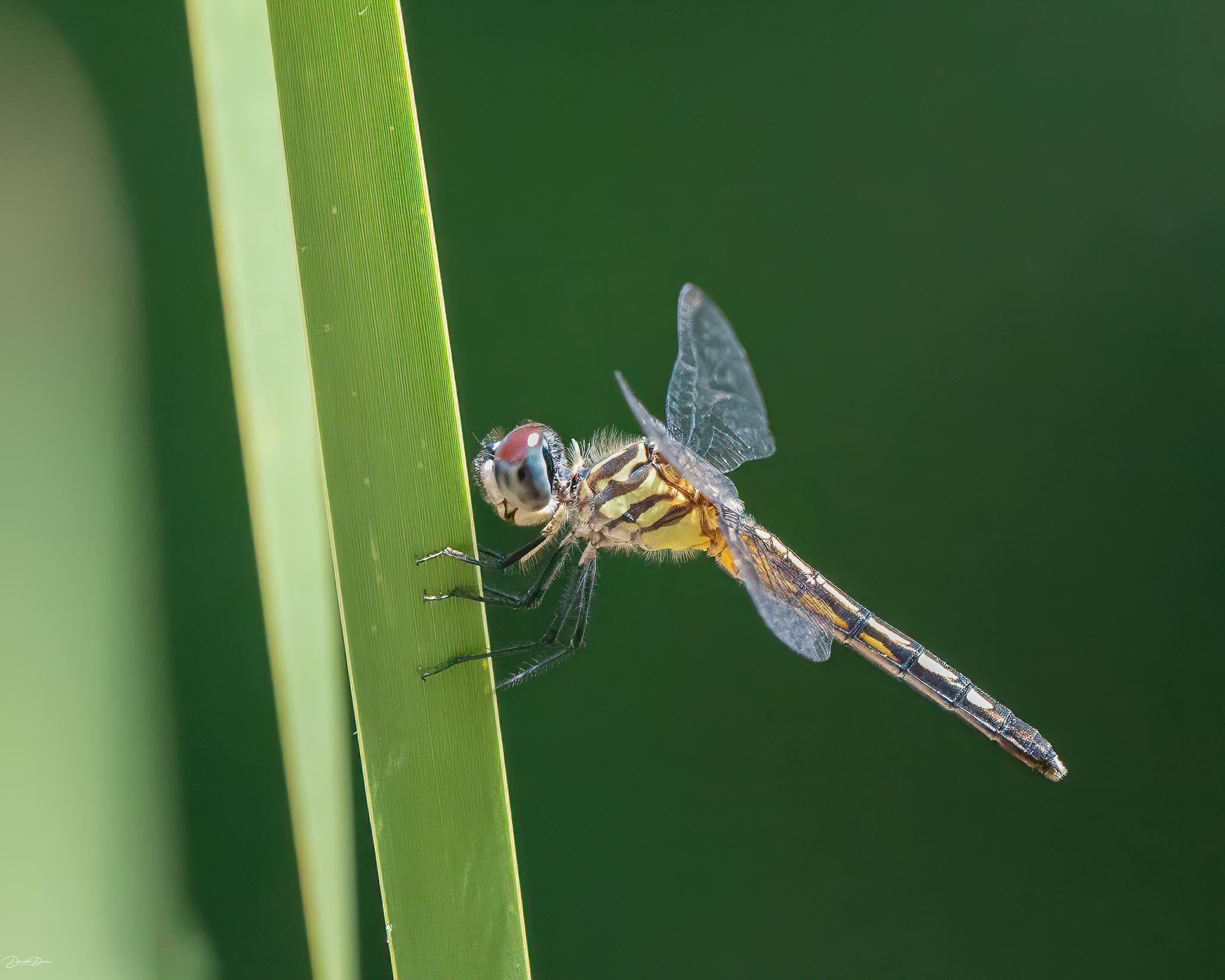
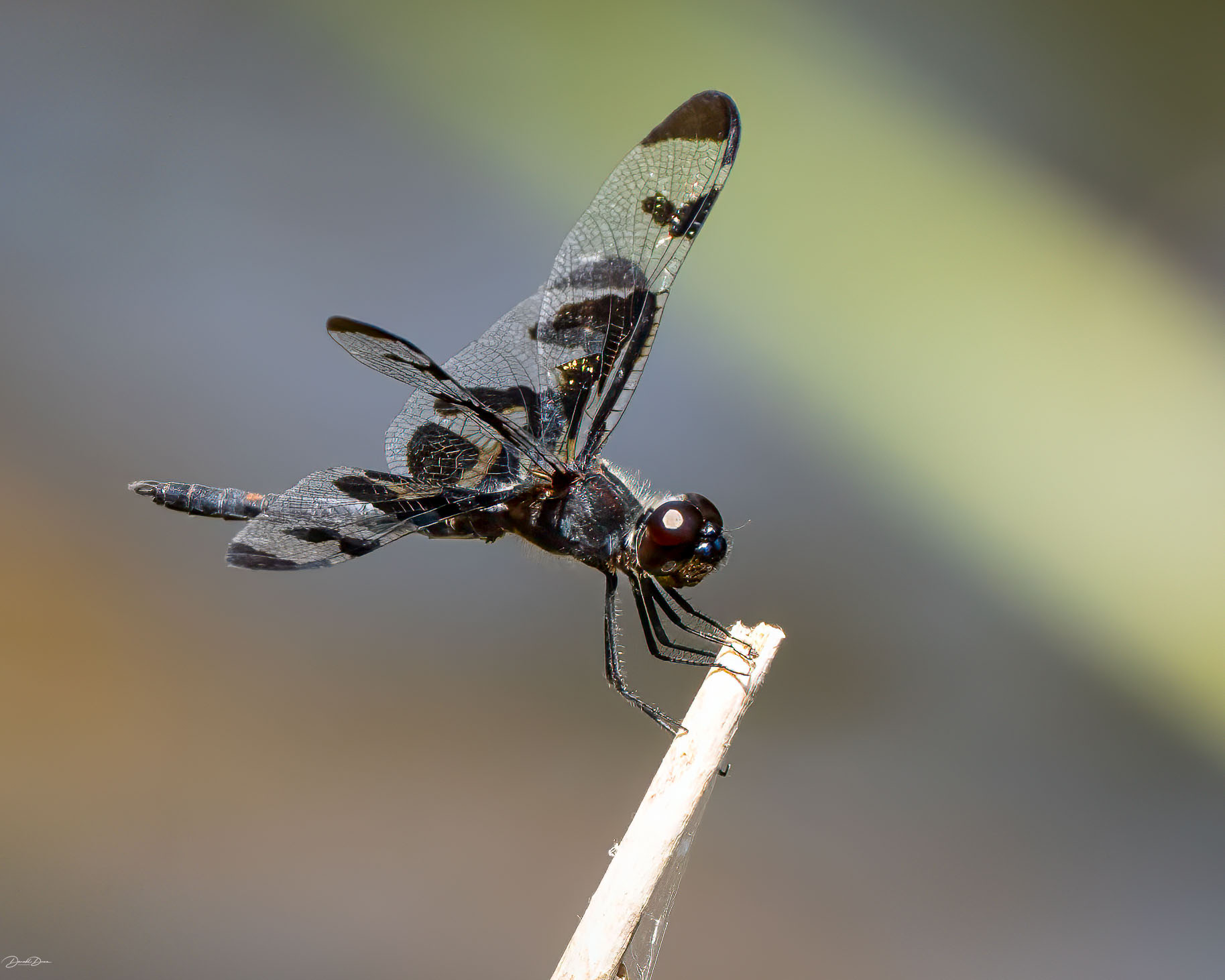
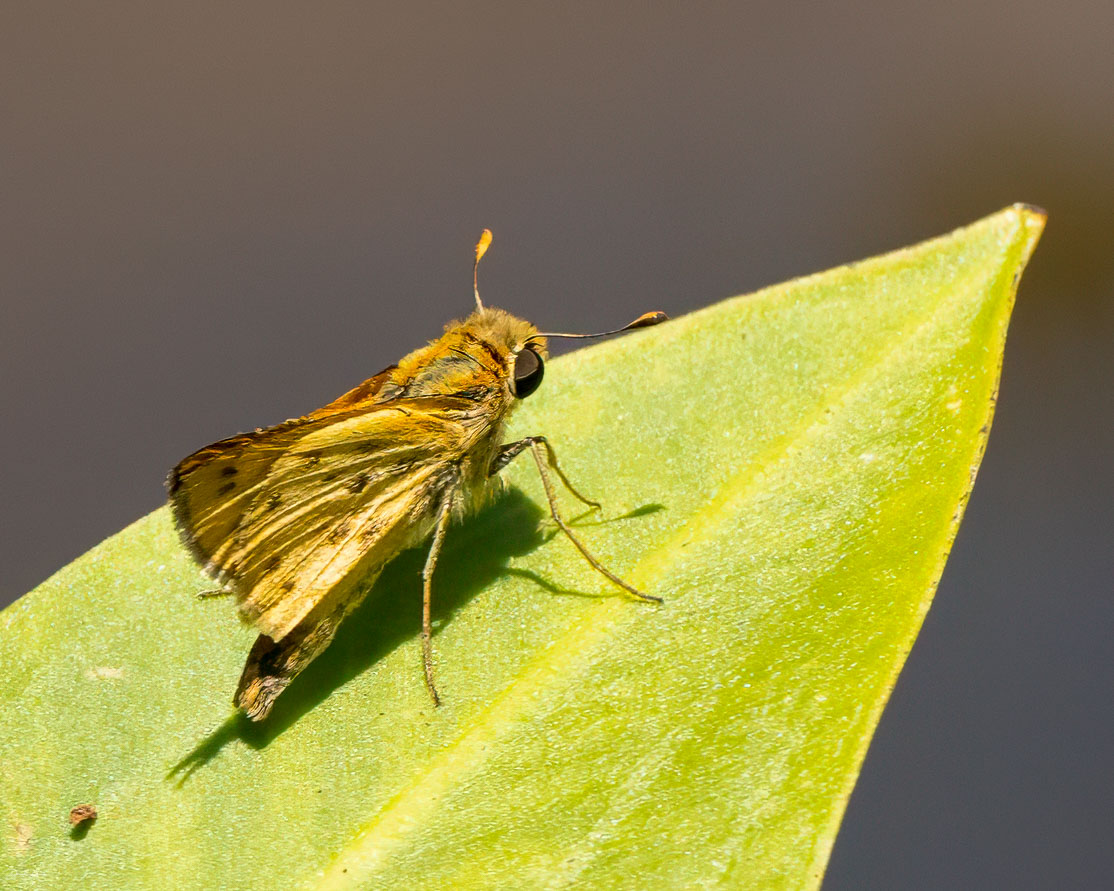
The next week, the third week after surgery and the last full week of June, Kay continued with pickleball, golf, and a few other social activities while I continued the recovery and rehabilitation process. I did venture out to take a few photos.
I spent a lot of time at the computer learning new software, and creating a YouTube channel, DunnGone Travels.
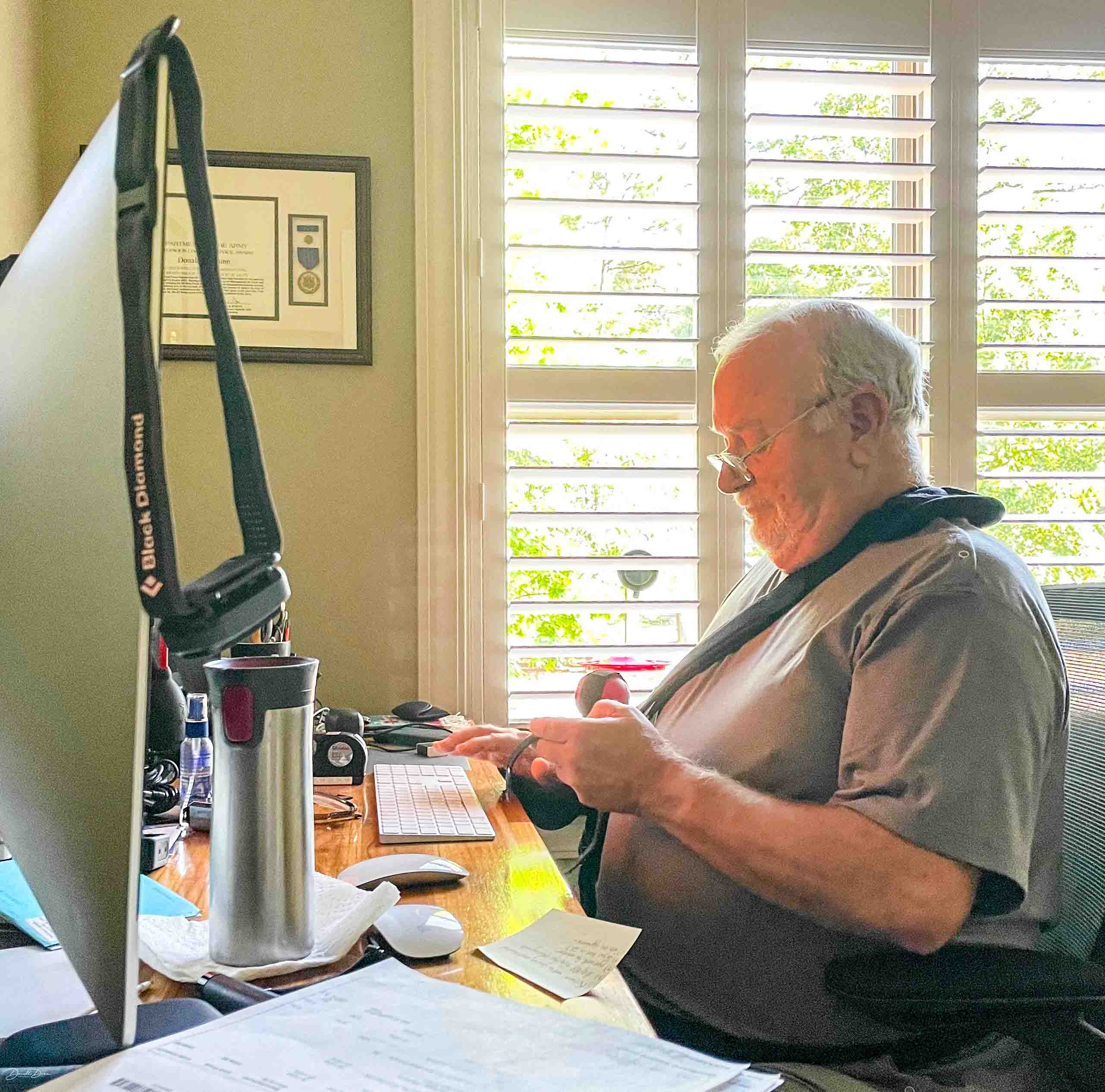
An old dog learning new tricks

The next few days, those at the end of June, was a continuation of the last three weeks. This is going to be a long, hot and humid summer! 

Saturday, May 27, 2023–Pompeii via Naples, Rome

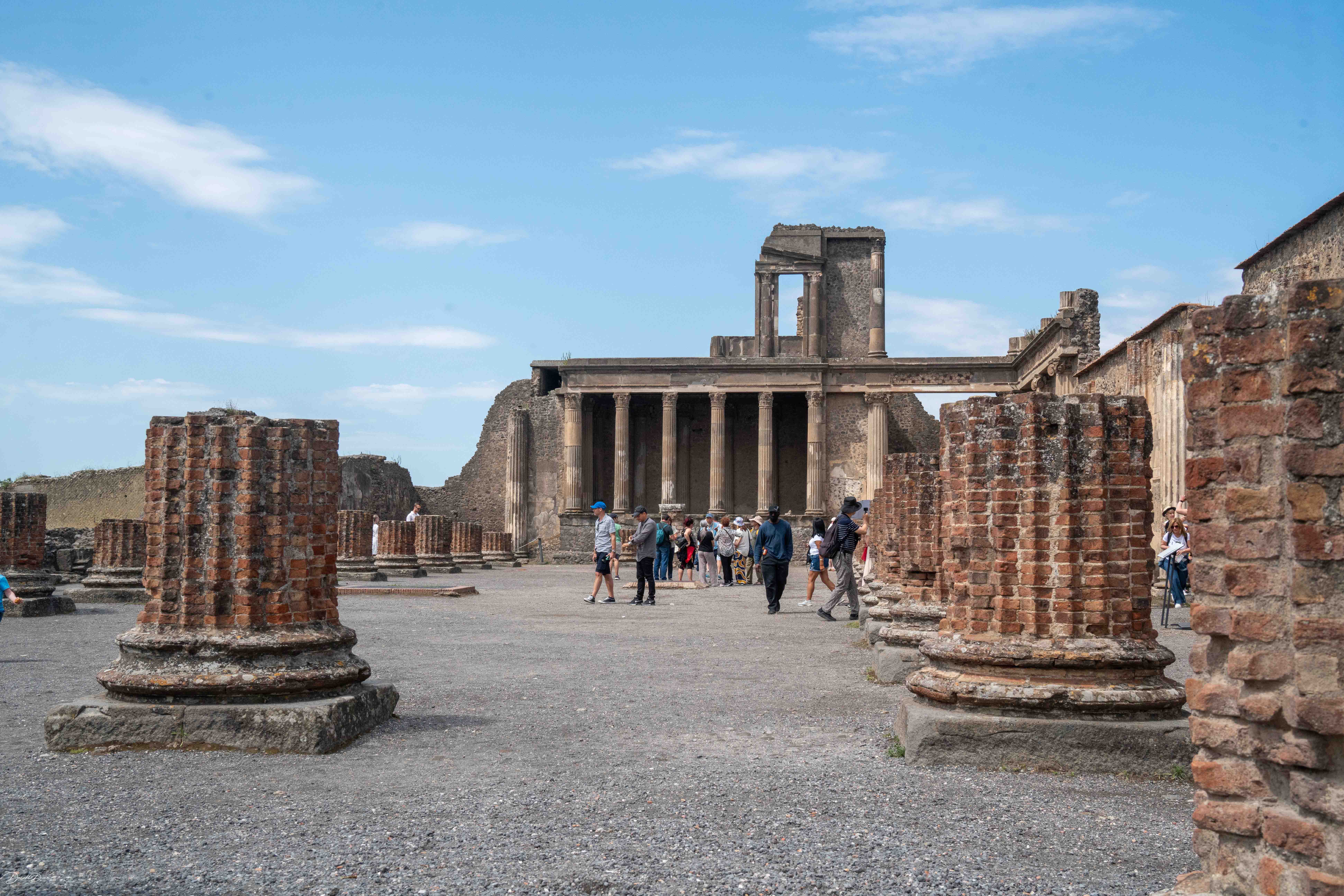
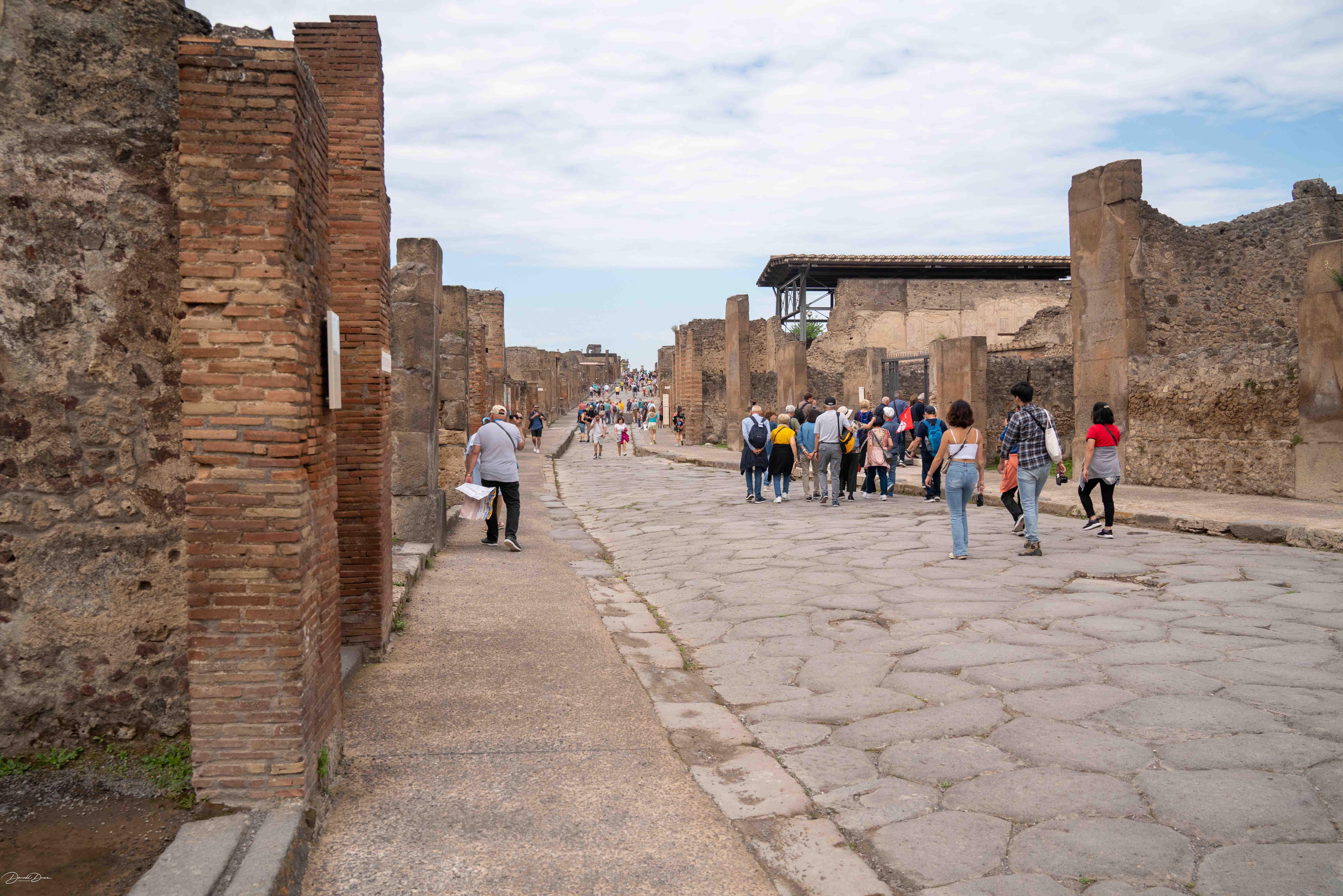
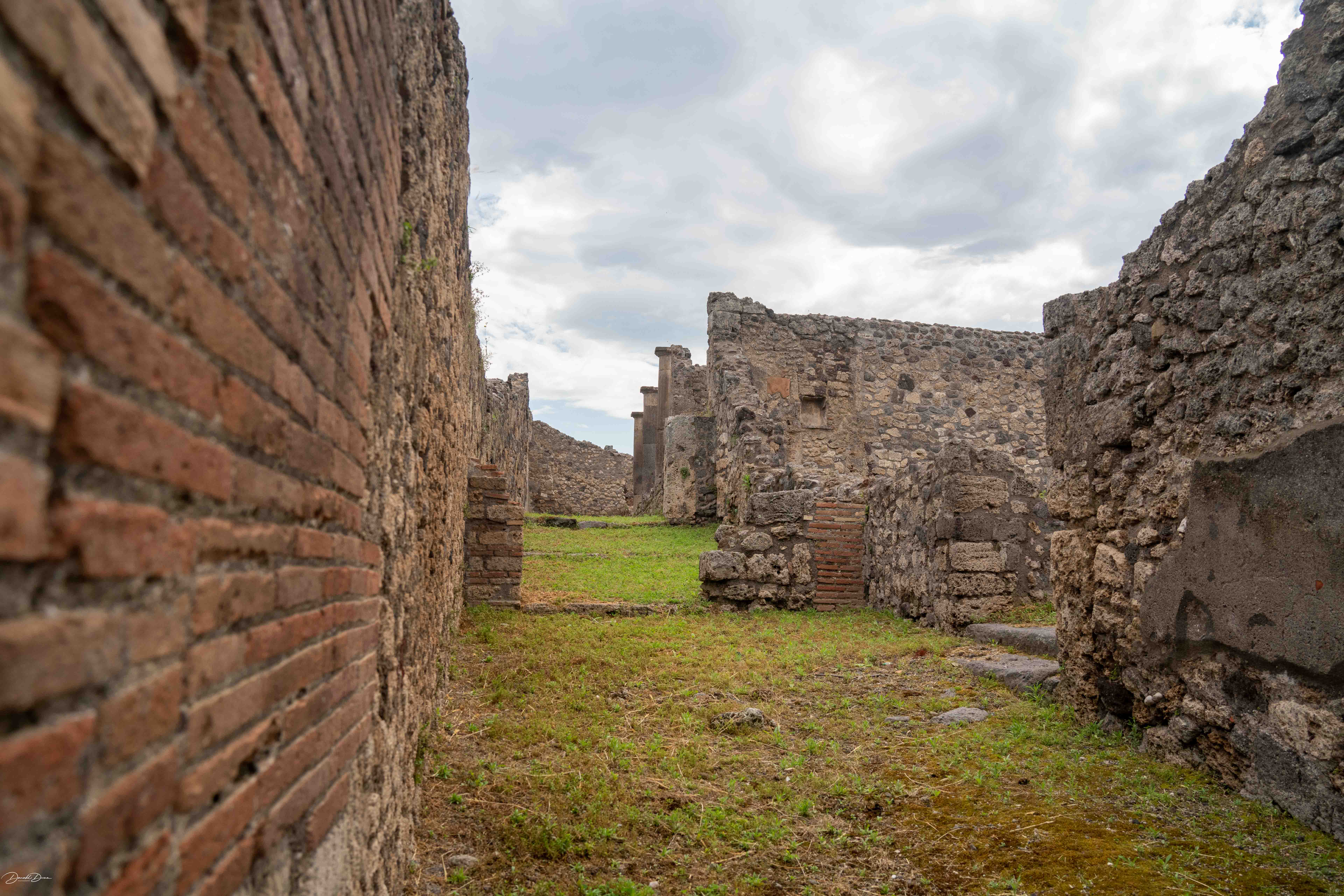
The Odyssey of the Seas sailed into the port at Naples, Rome, early Saturday morning. After coffee, we had breakfast at the buffet—basically eating the same things we eat at home with a few unusual things thrown in like Eggs Benedict and Mueslix with granola. Disembarkment was at 8:00 o’clock am. We traveled by bus towards Mount Vesuvius and the ancient city of Pompeii to observe the well-preserved ruins and uncover the fascinating history of Pompeii.

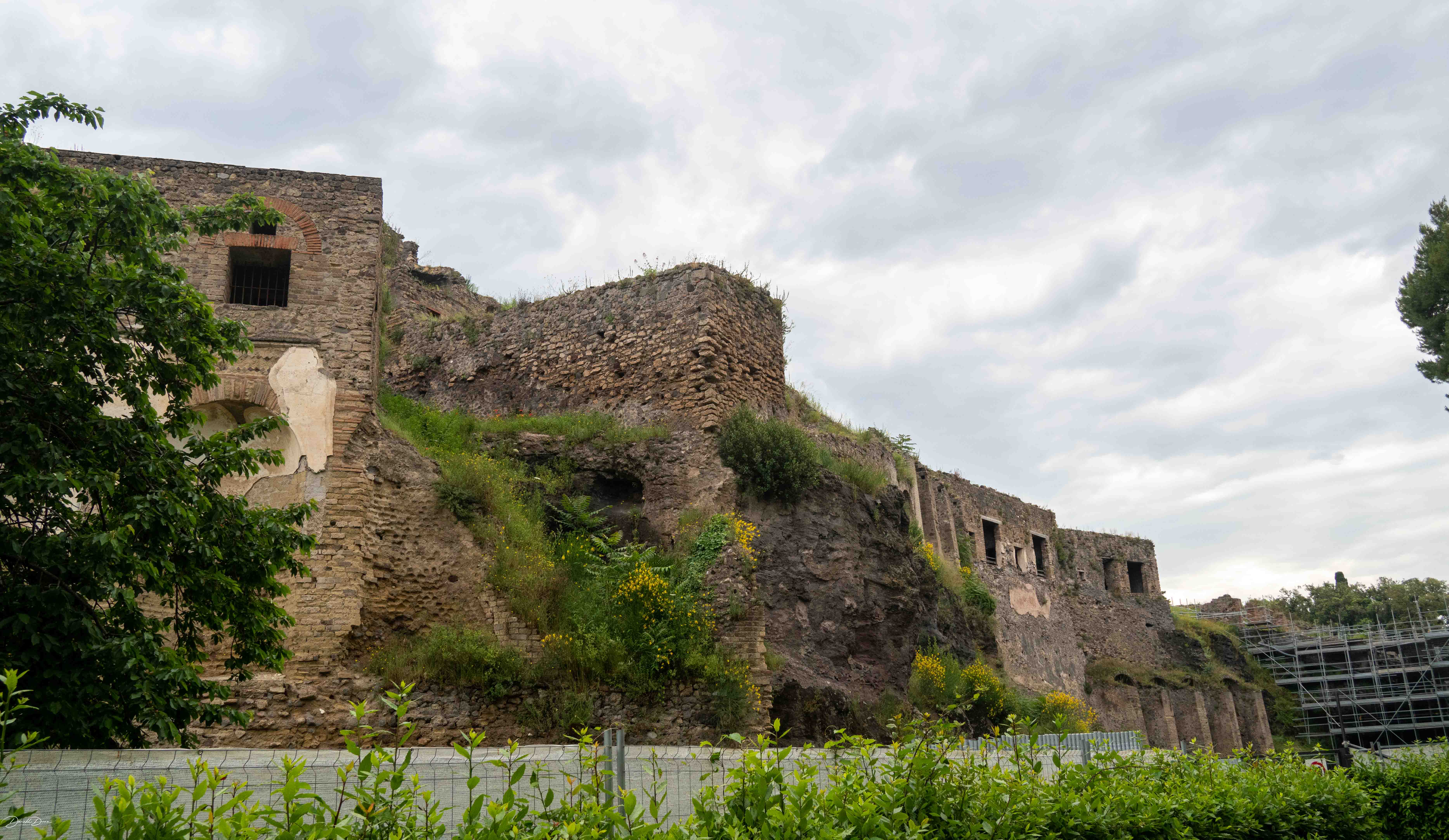
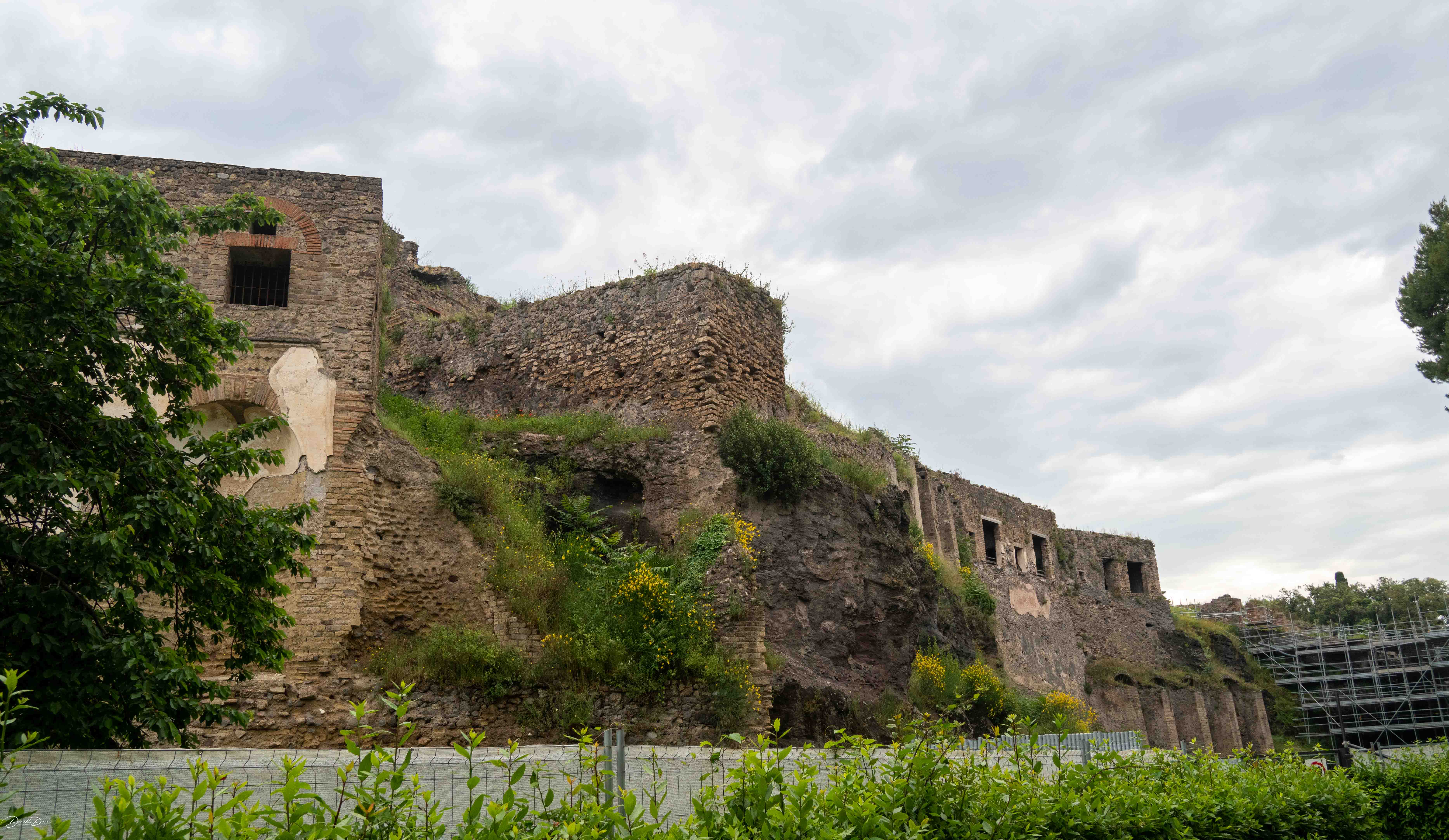
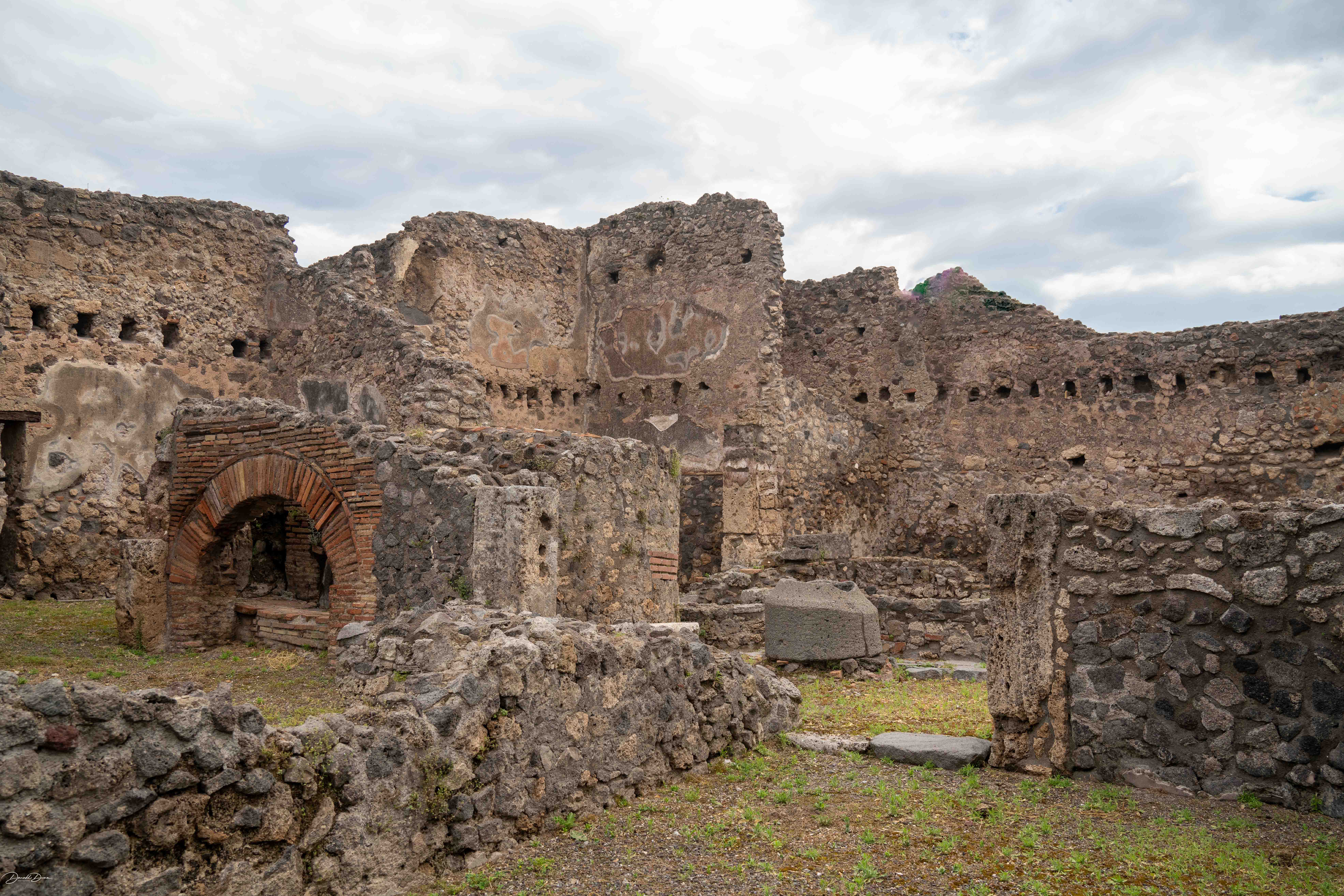
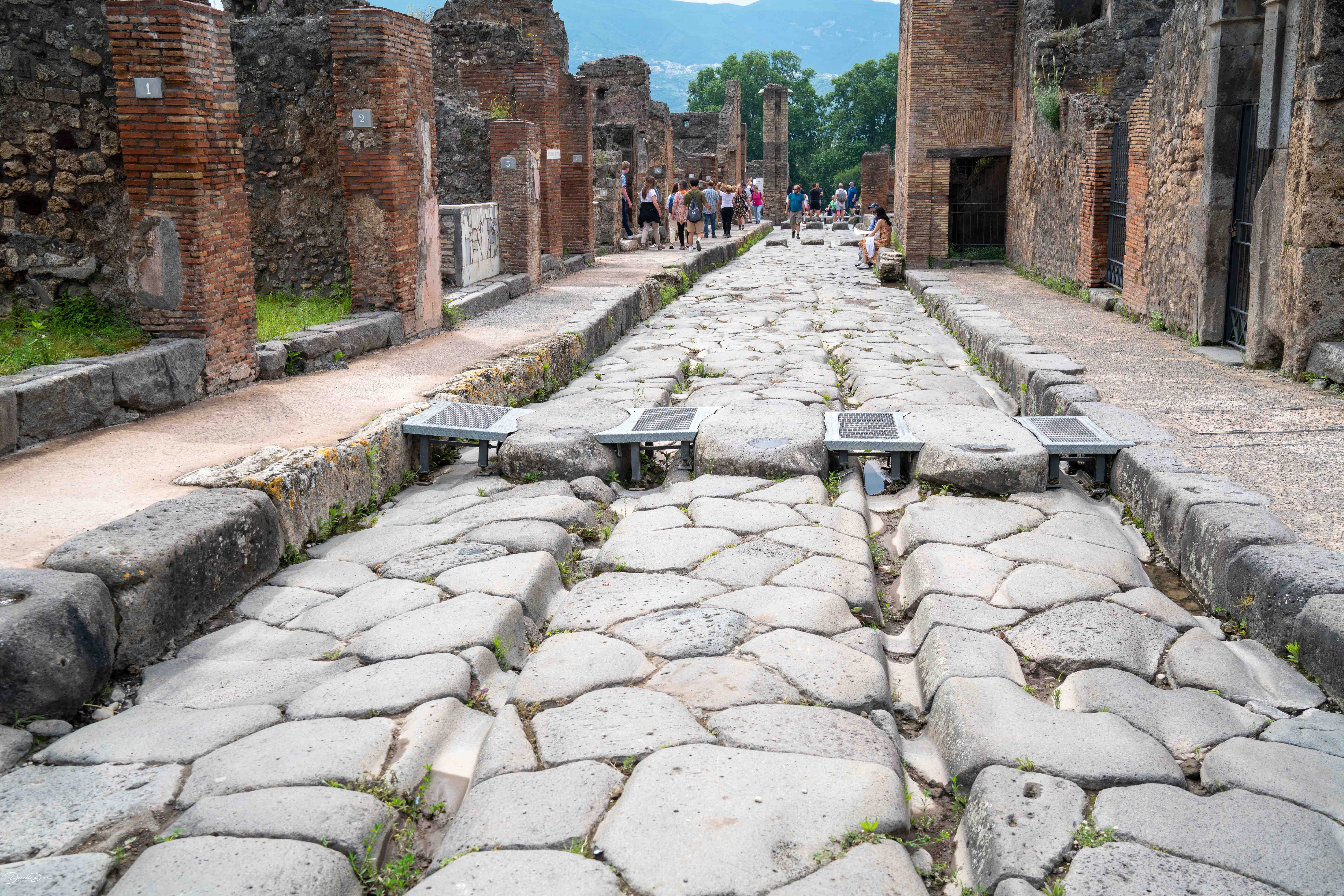
Pompeii is a preserved ancient Roman city 14 miles southeast of Naples, at the southeastern base of Mount Vesuvius. Around noon on August 24, 79 AD, a huge eruption from Mount Vesuvius showered volcanic debris over the city, followed the next day by clouds of blisteringly hot gases. Buildings were destroyed, the population was crushed or asphyxiated, and the city was buried beneath a blanket of ash and pumice. For many centuries Pompeii slept beneath its pall of ash, which perfectly preserved the remains. When these were finally unearthed, in the 1700s, the world was astonished at the discovery of a sophisticated Greco-Roman city frozen in time.

Grand public buildings included an impressive forum and an amphitheater; lavish villas and all kinds of houses, dating back to the 4th century BC, were also uncovered.

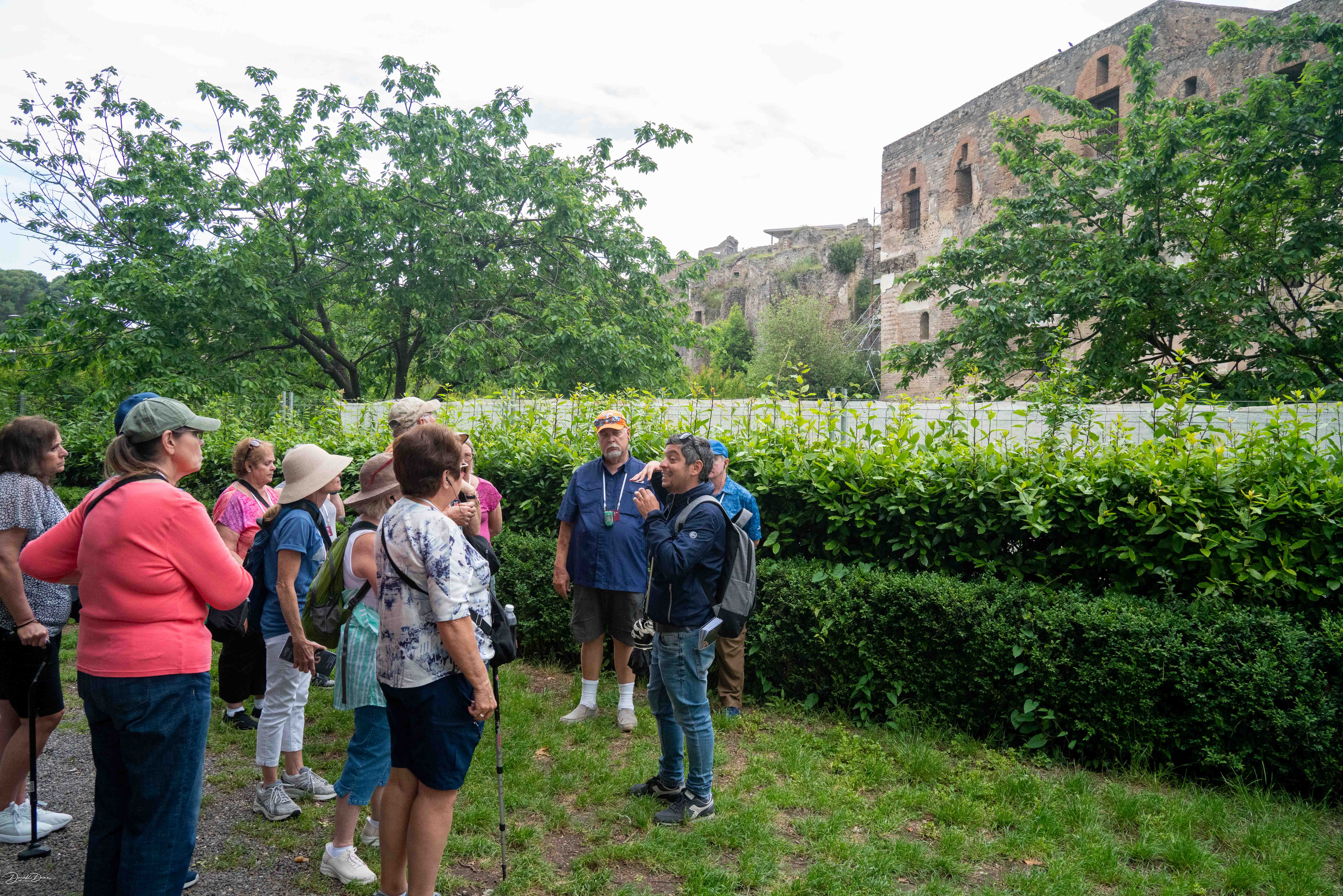
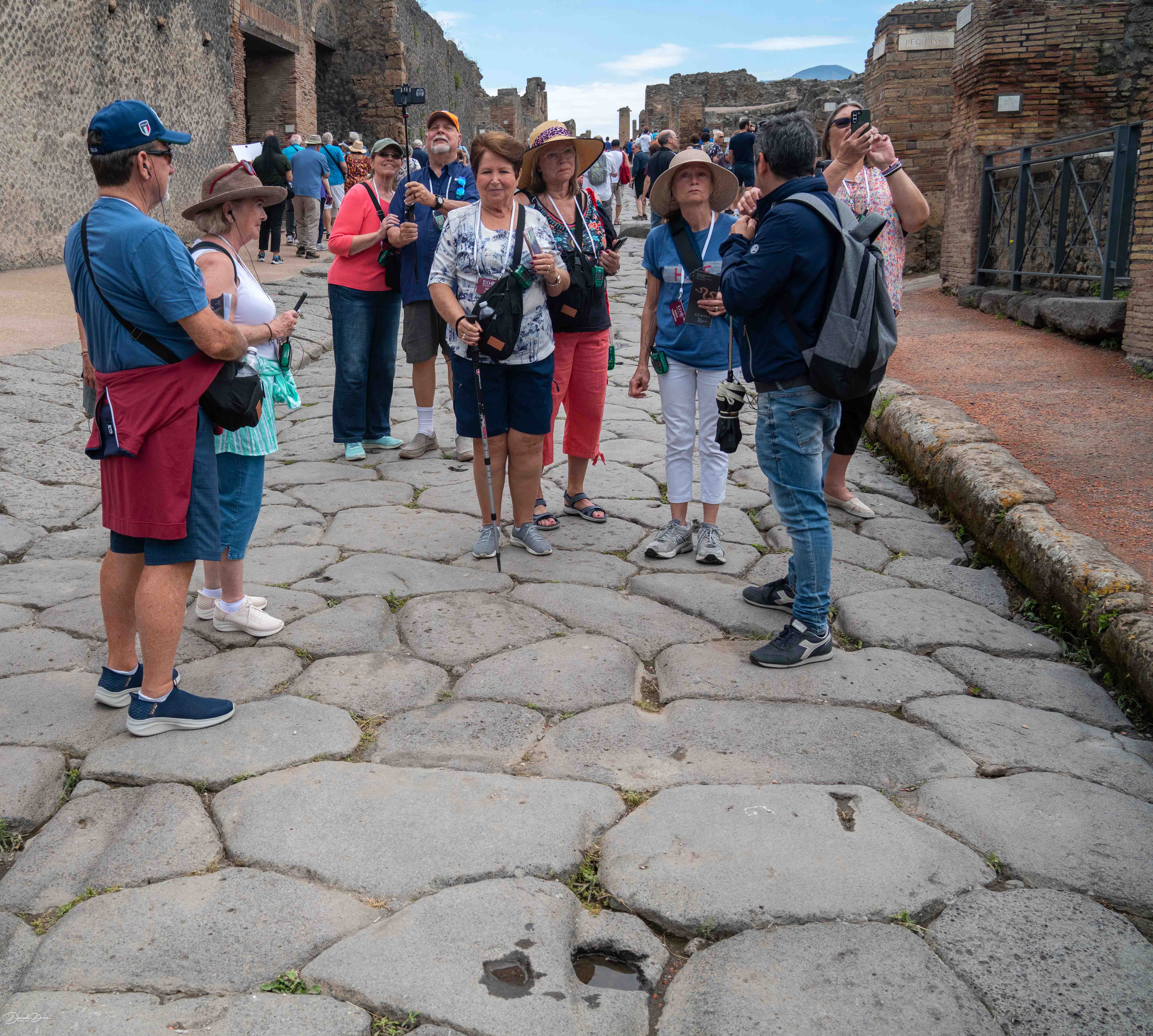
We began a long, guided walking tour of the ancient Roman city’s archeological ruins. With our guide, we traversed the historic excavation site through the city’s forum and past grand temples, mansions, and Roman baths. On view were artifacts recovered from the 79 AD volcanic blast, when 20 feet of ash and pumice buried the entire city.

Inside were some preserved remains of people sheltering from the eruption; others lay buried as they fled; bakeries were found with loaves still in the ovens. The buildings and their contents revealed day-to-day life in the ancient world—and stirred 18th-century interest in all things classical. 

Thursday and Friday, May 25-26, 2023–Mykonos, Greece and Sailing Somewhere on the Aegean Sea

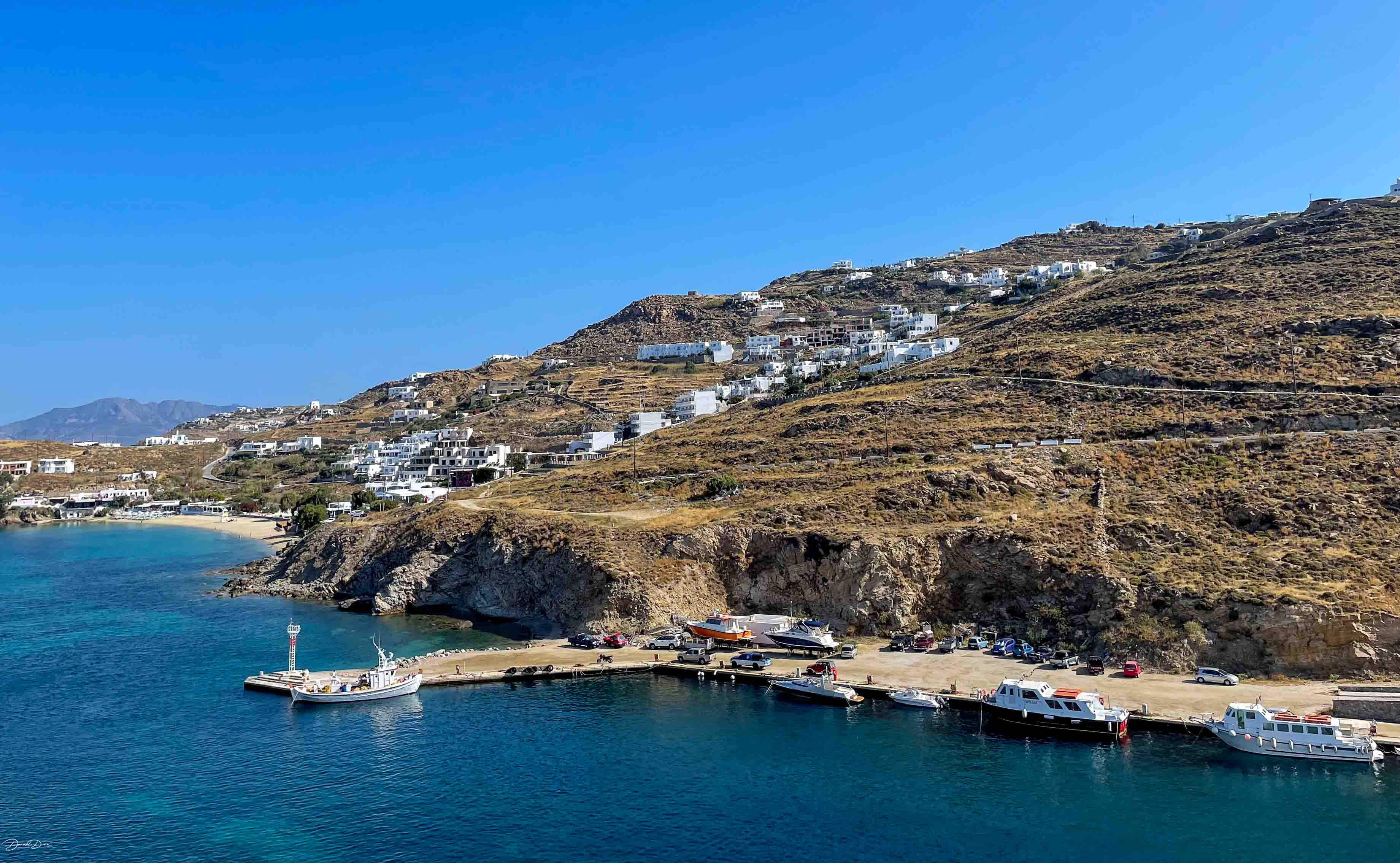
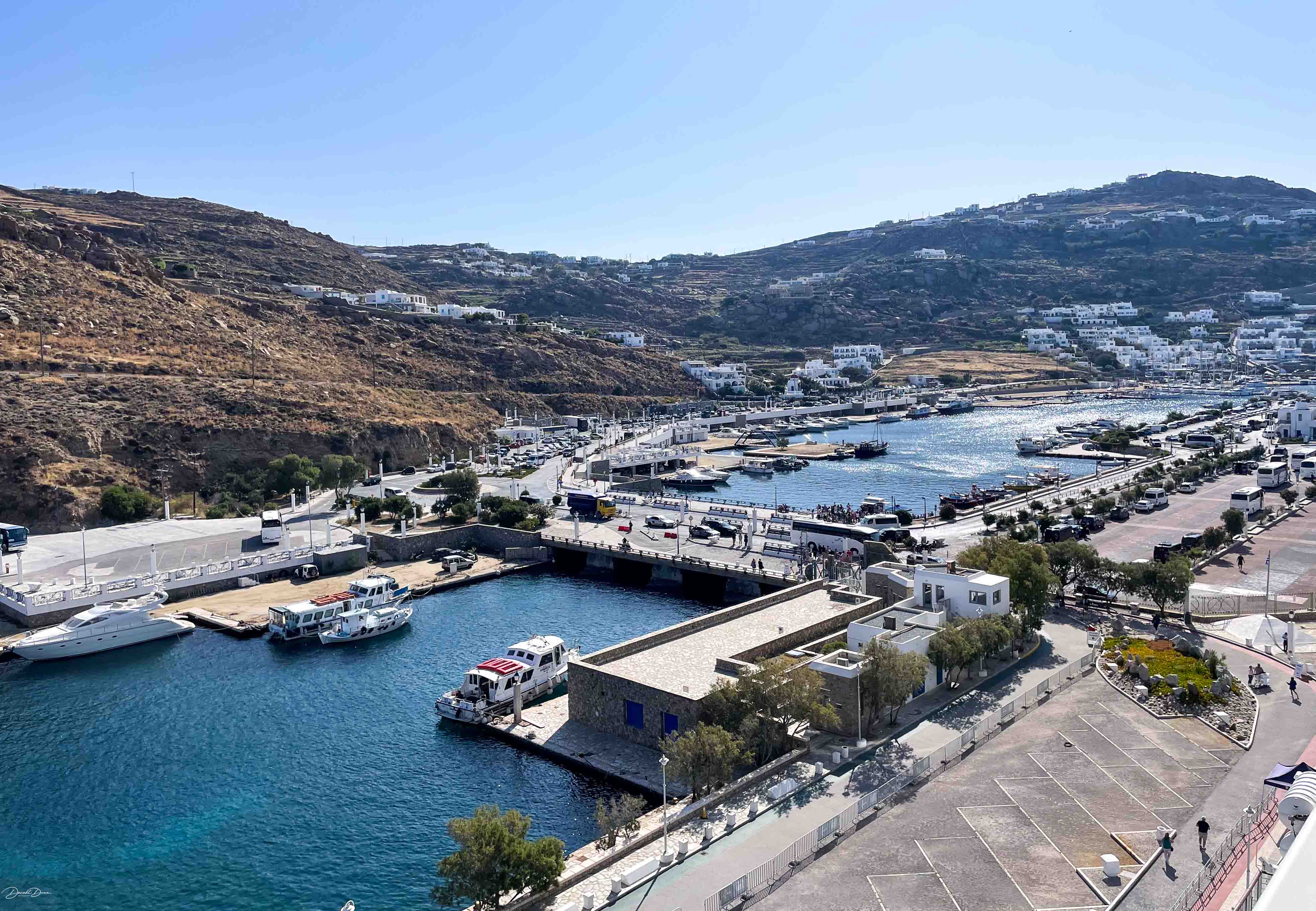
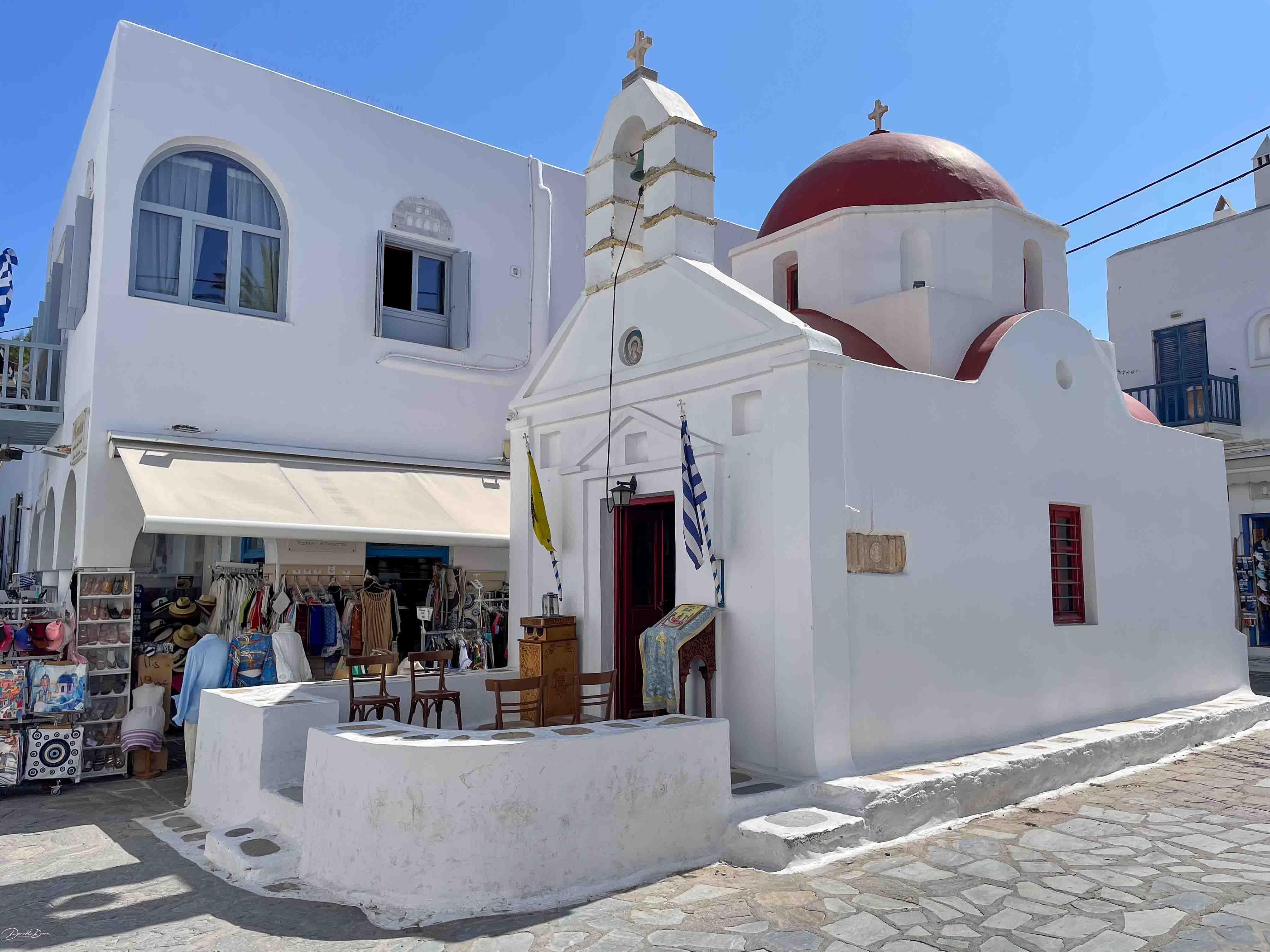
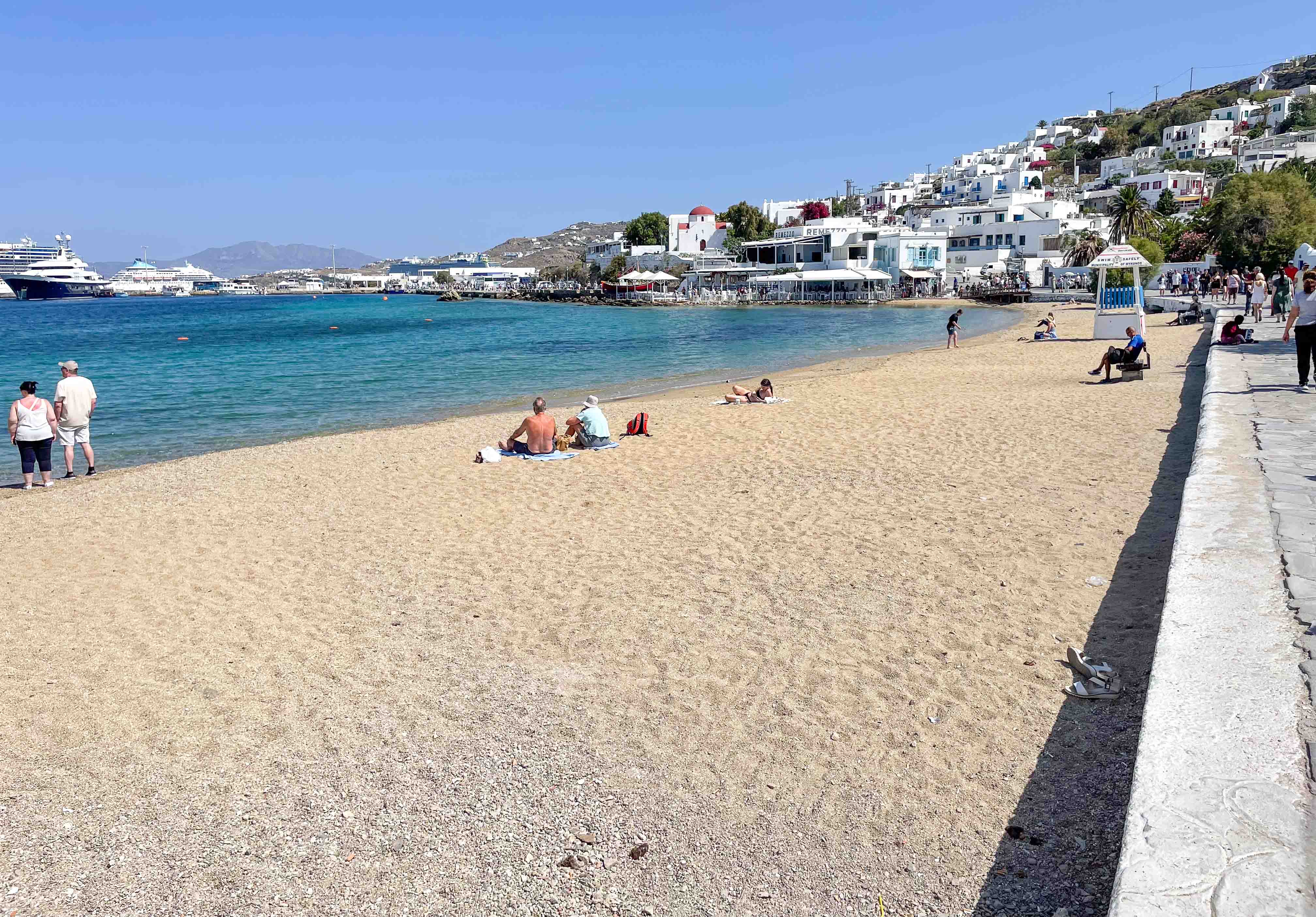
Thursday morning, we arrived at the world-famous Greek Island of Mykonos, where gleaming white-washed buildings seem to climb atop each other to reach the azure sky.

After deboarding, Kay and I walked the waterfront, full of shops and restaurants. There were over half dozen cruise ships anchored just offshore; luckily, the Odyssey of the Seas was able to dock at the waterfront pier making it much easier to access the city seashore. We really enjoyed the day—no scheduled excursions or activities—sunny with a comfortable sea breeze. Catching a “sea bus” to the shore front, people watching was very interesting as there were all nationalities, shapes, and sizes enjoying the narrow alleyways and streets/sidewalks. I think, perhaps, Americans were outnumbered, and English was definitely not the first language. 

We were the beneficiaries of a time change last night, turning “time” back one hour. Today, Friday, we are at sea all day. Desperate to occupy spare time in the absence activities and internet, I finished reading the third of three books on Kay’s Kindle list; these three had already been downloaded to our iPads.

Wednesday, May 24, 2023–Ephesus, Turkey

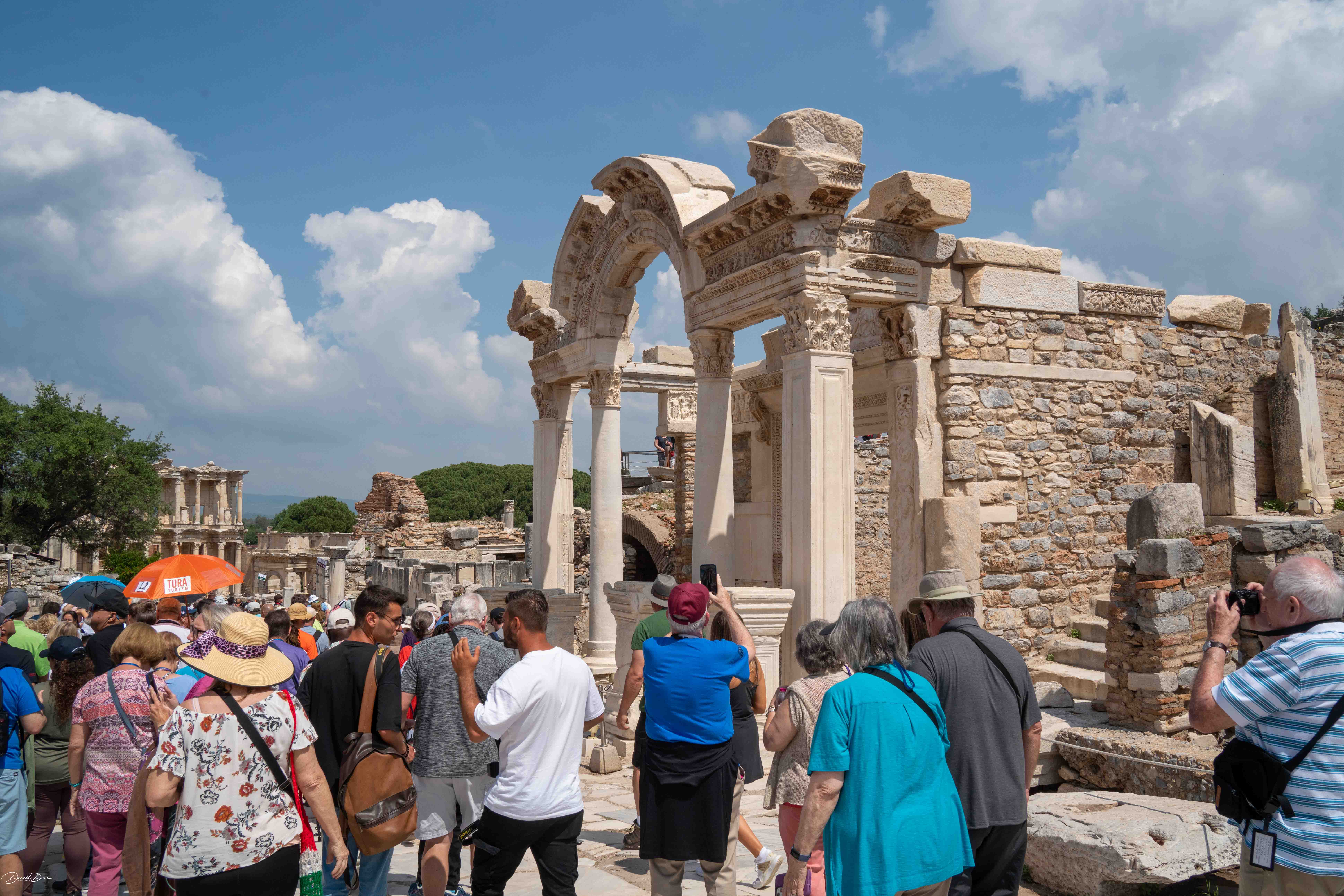
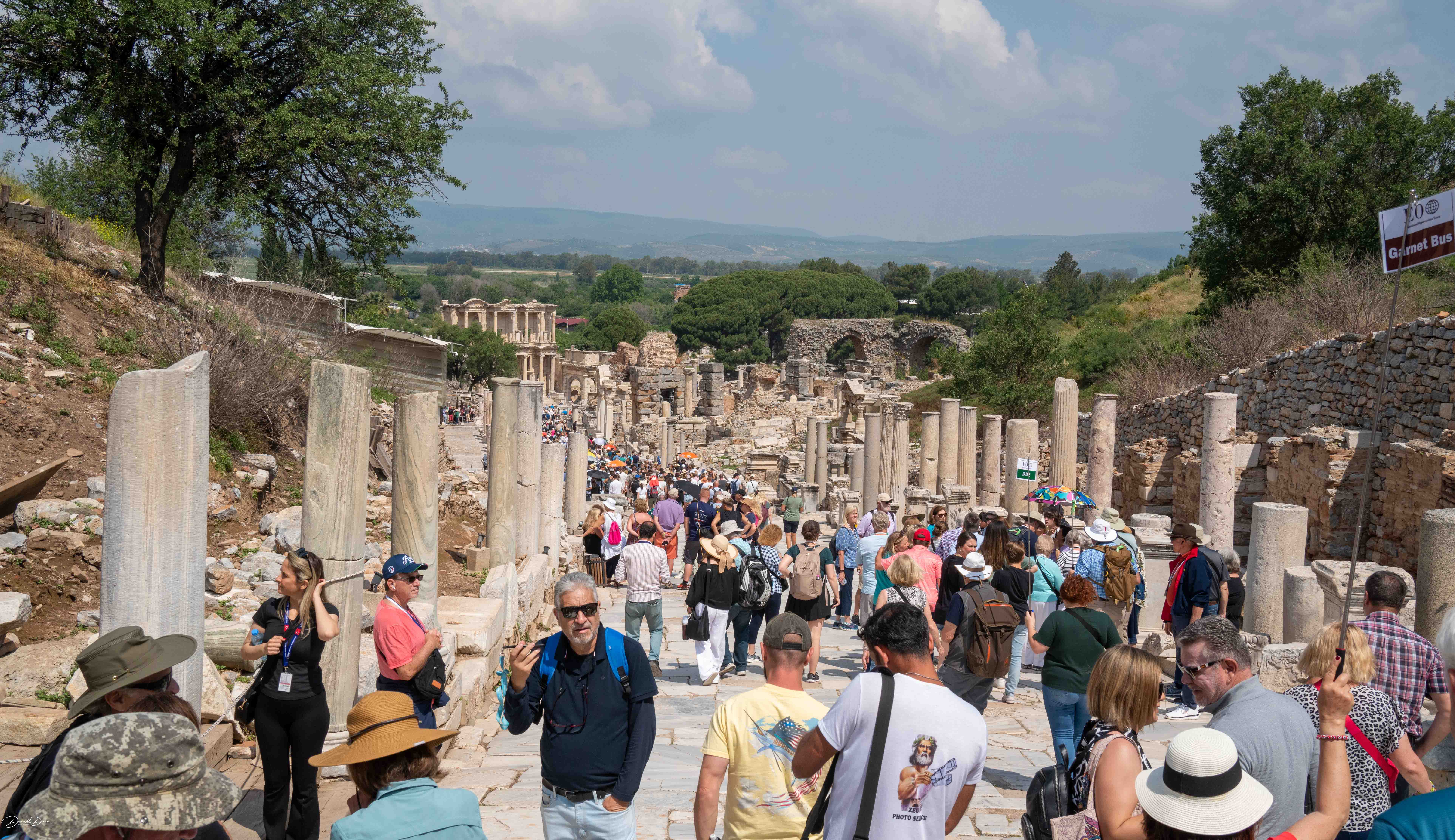
Today, we visited the Ancient City of Ephesus, had lunch at a rug-weaving school, observed the skill and artisanship of rug weaving, and shown a number of hand-woven rugs.

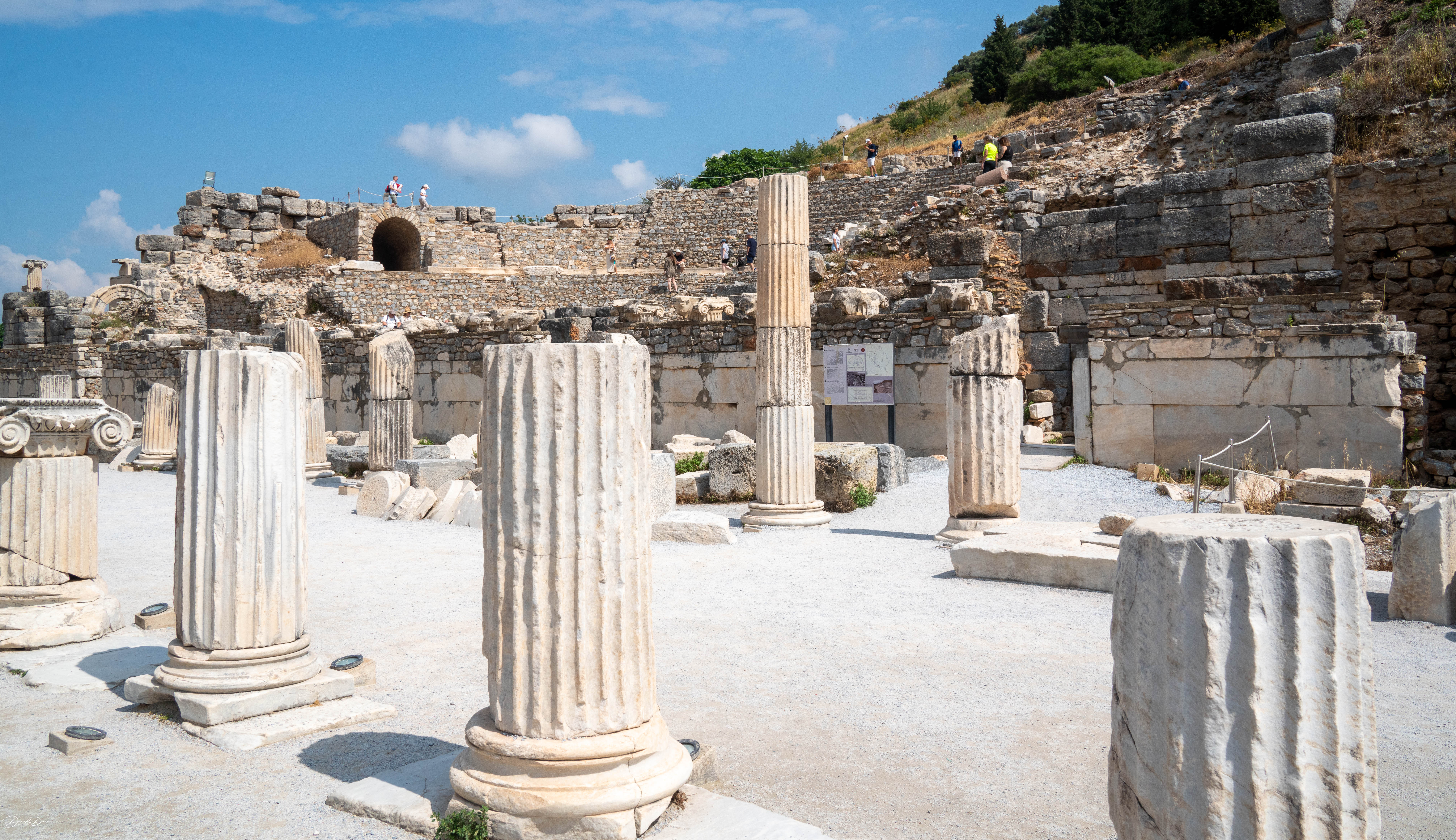
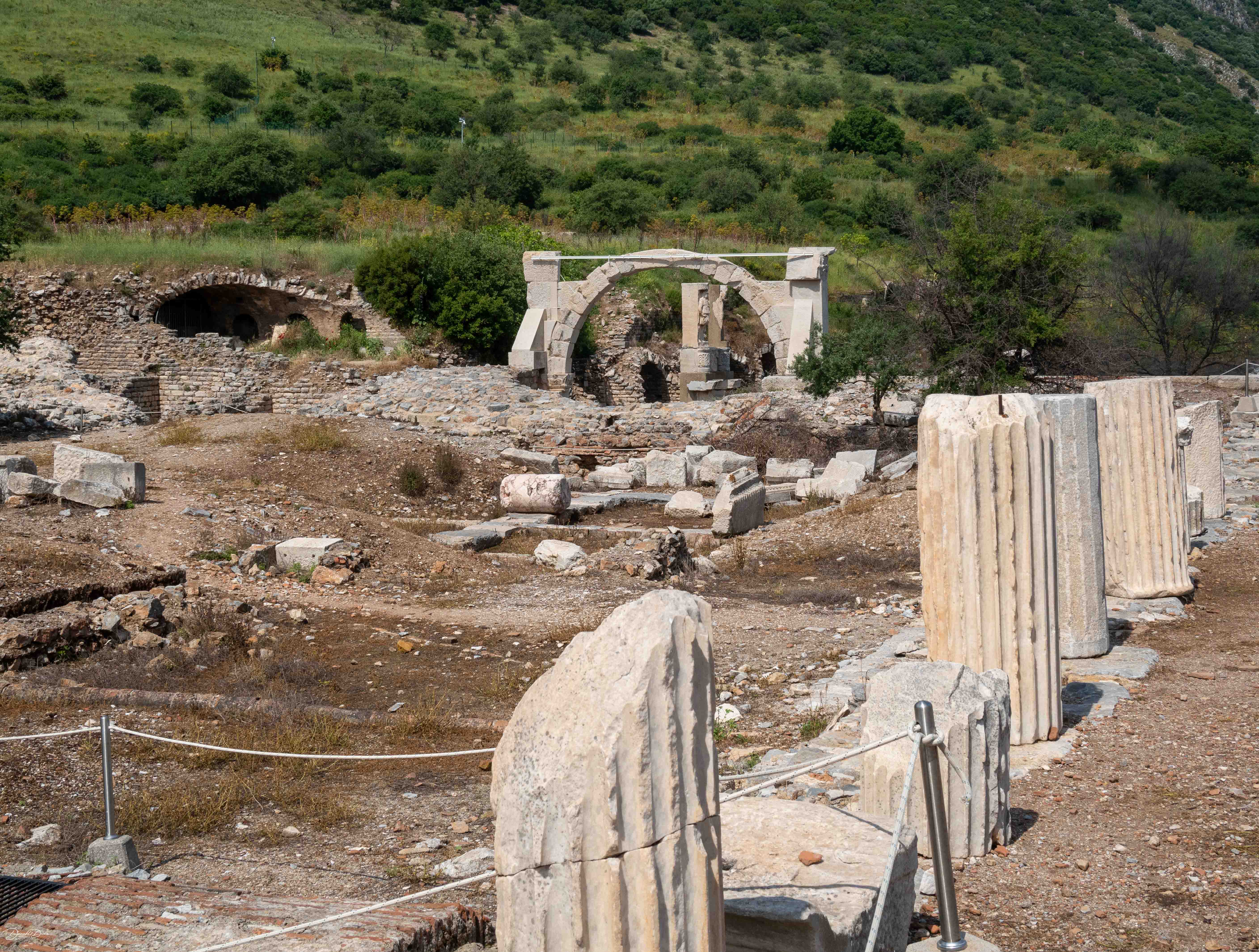
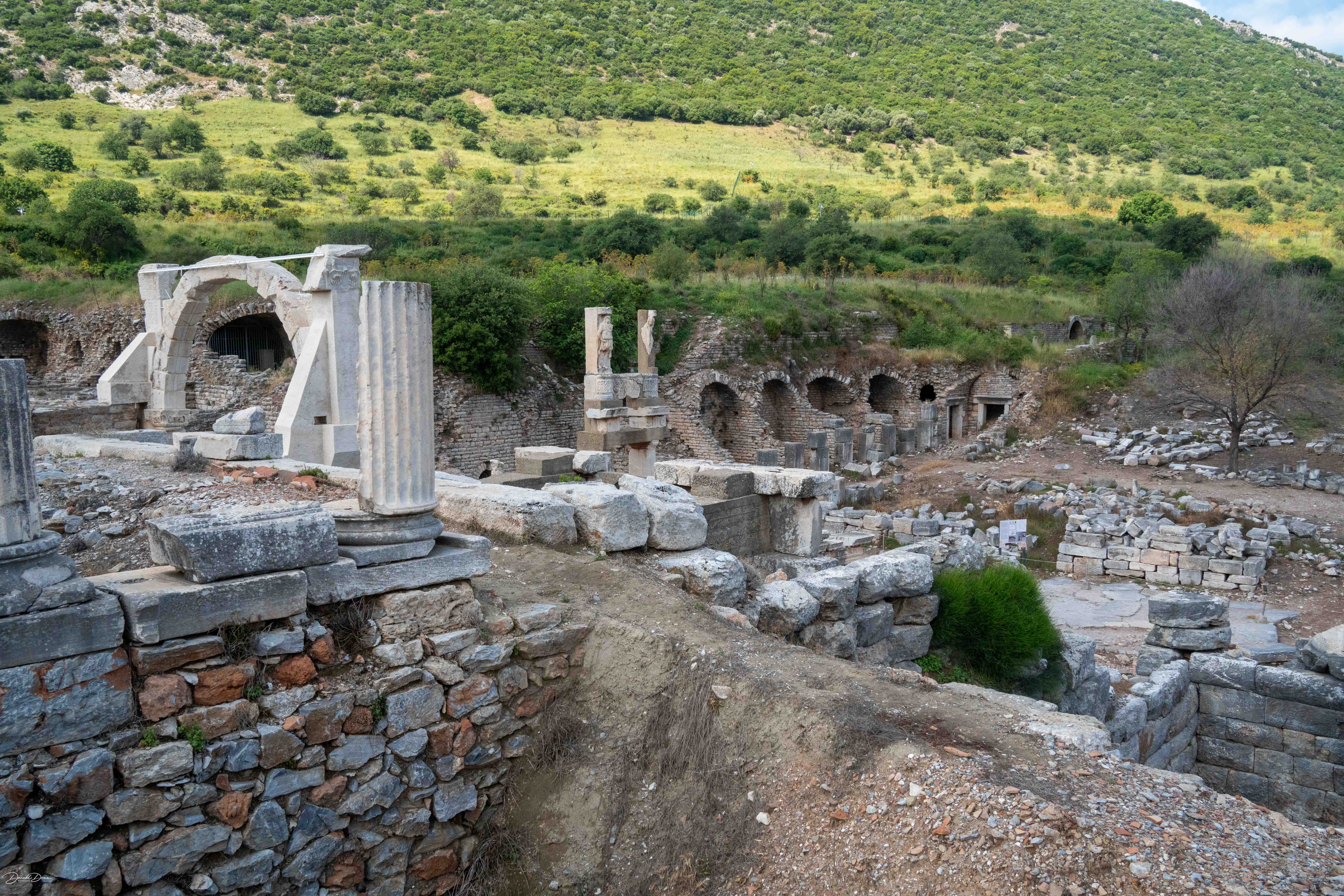
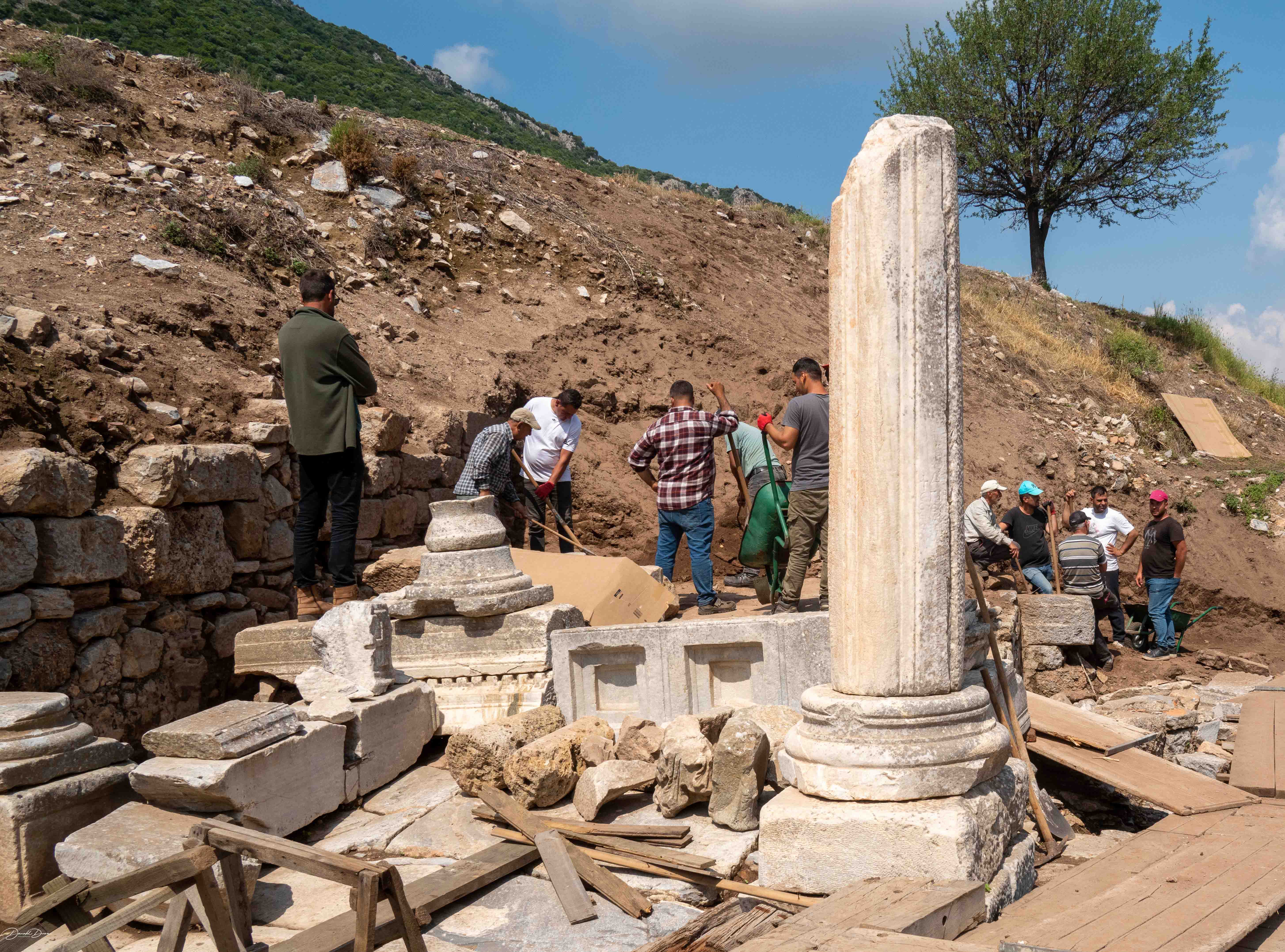
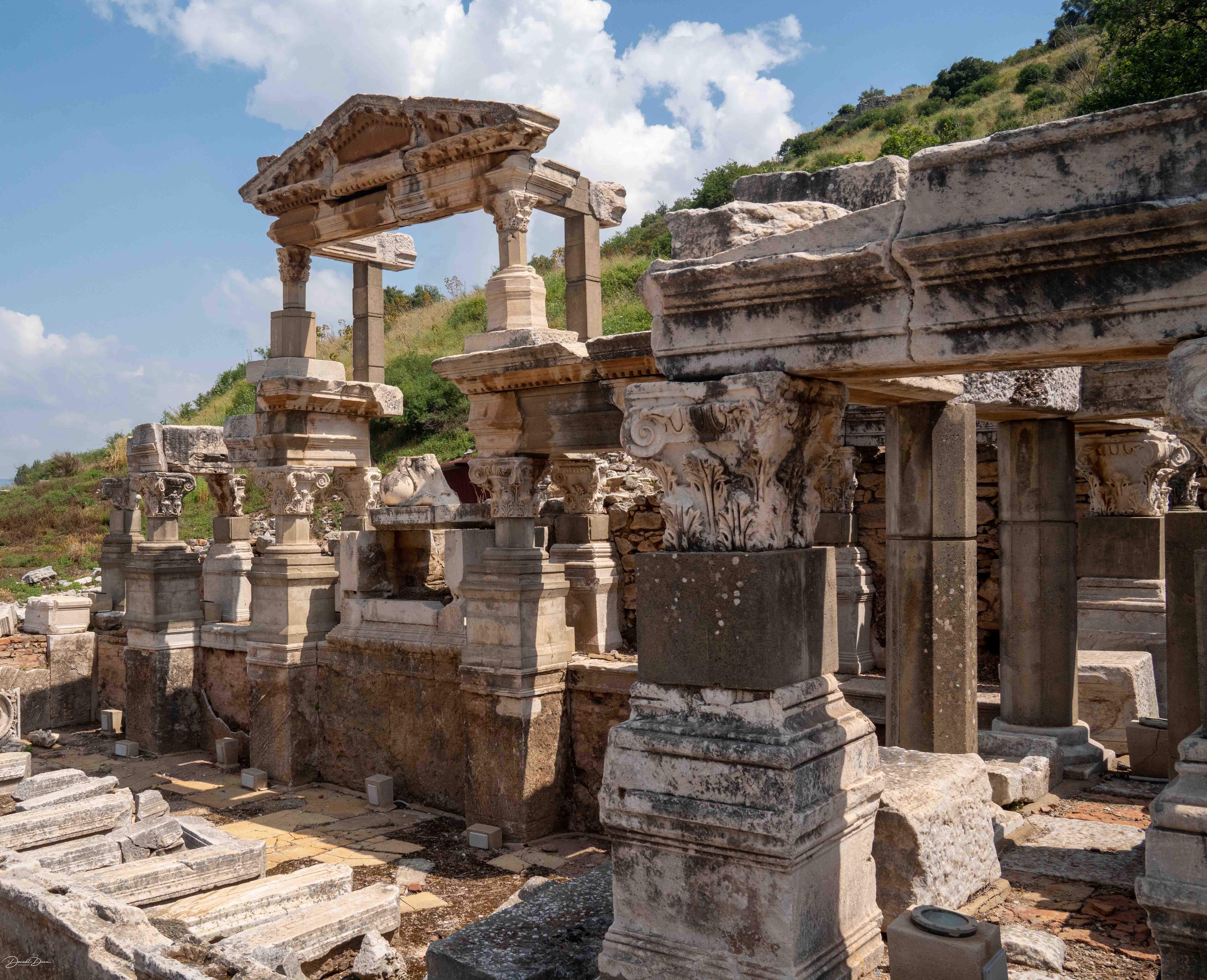
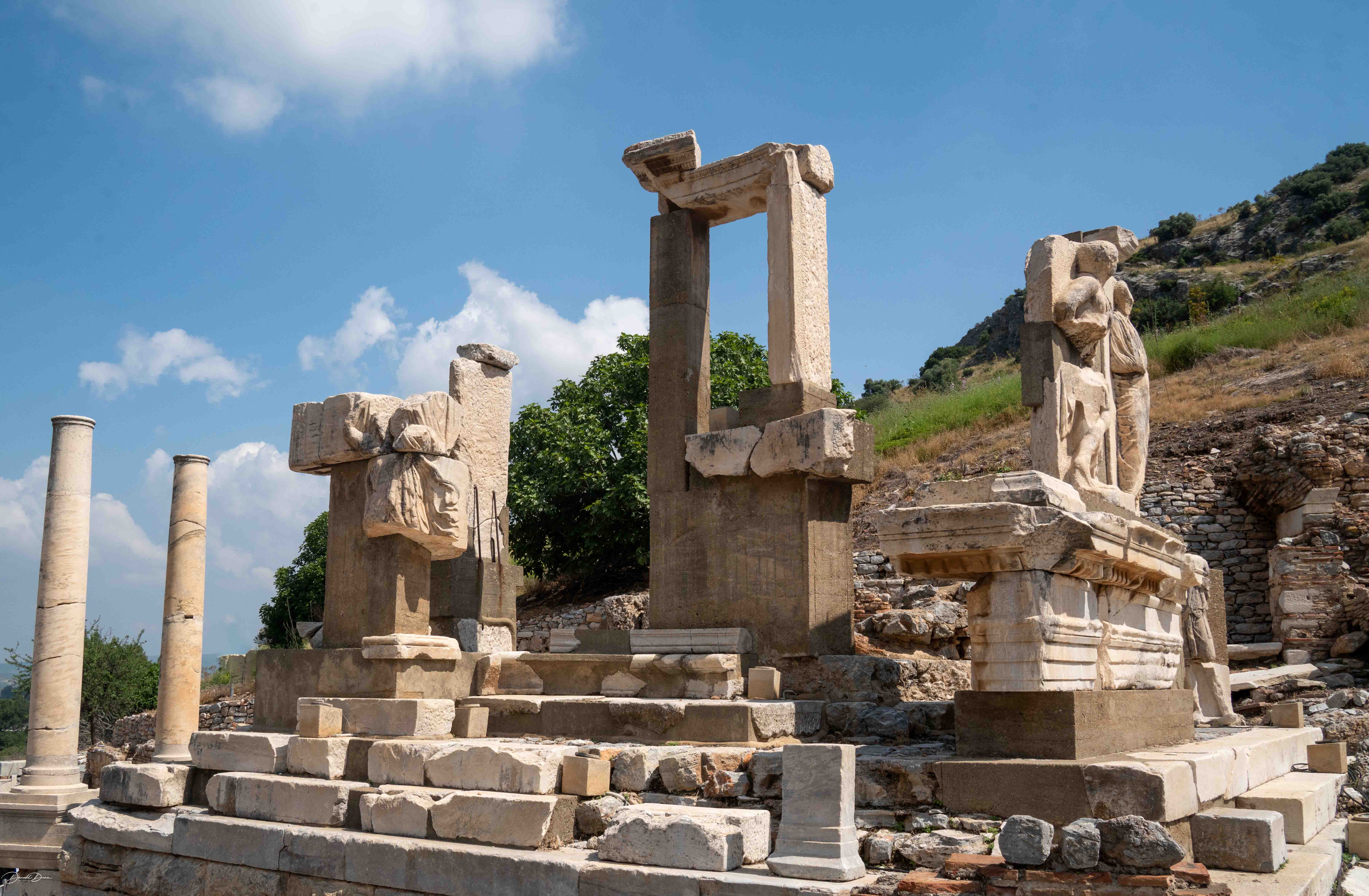
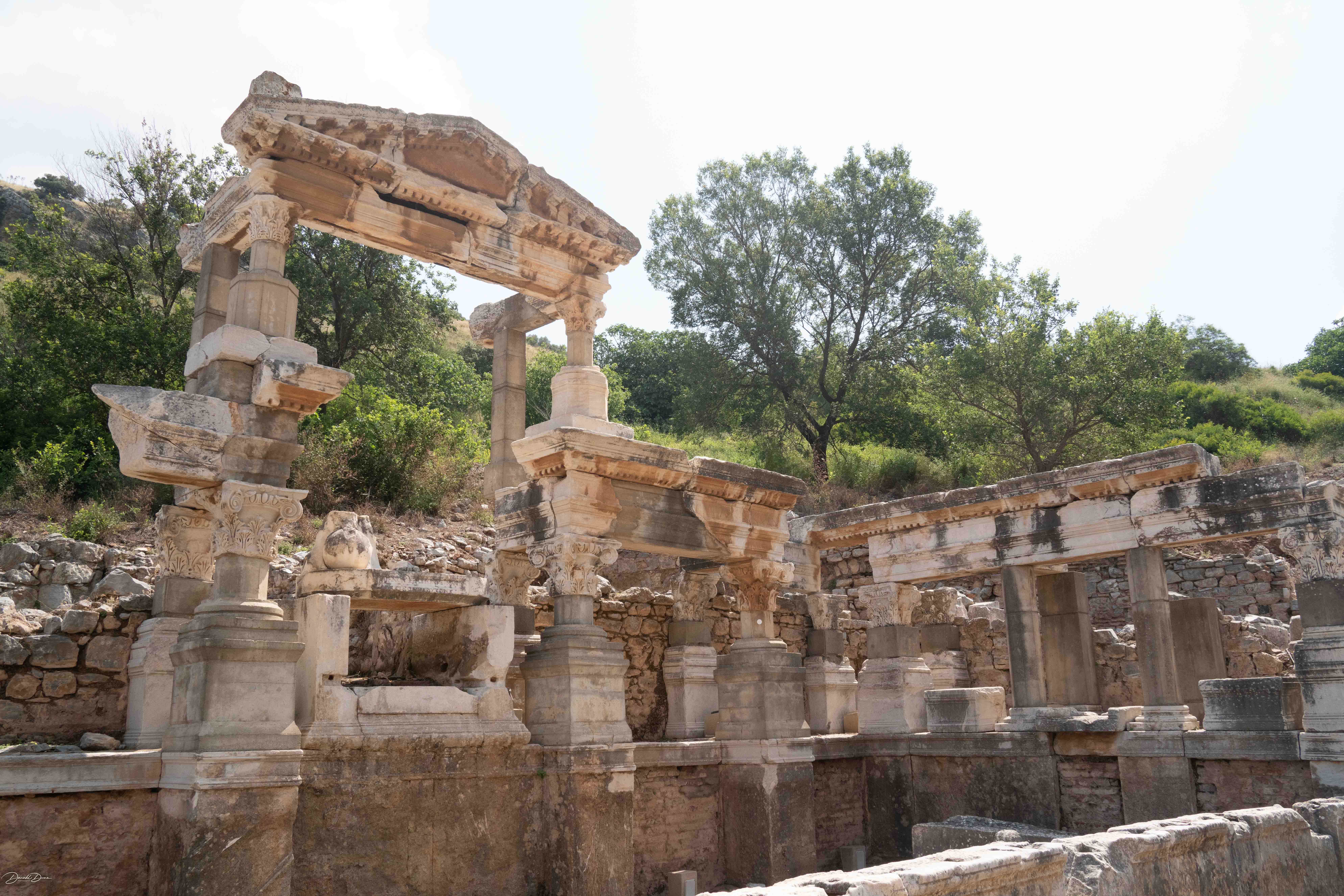
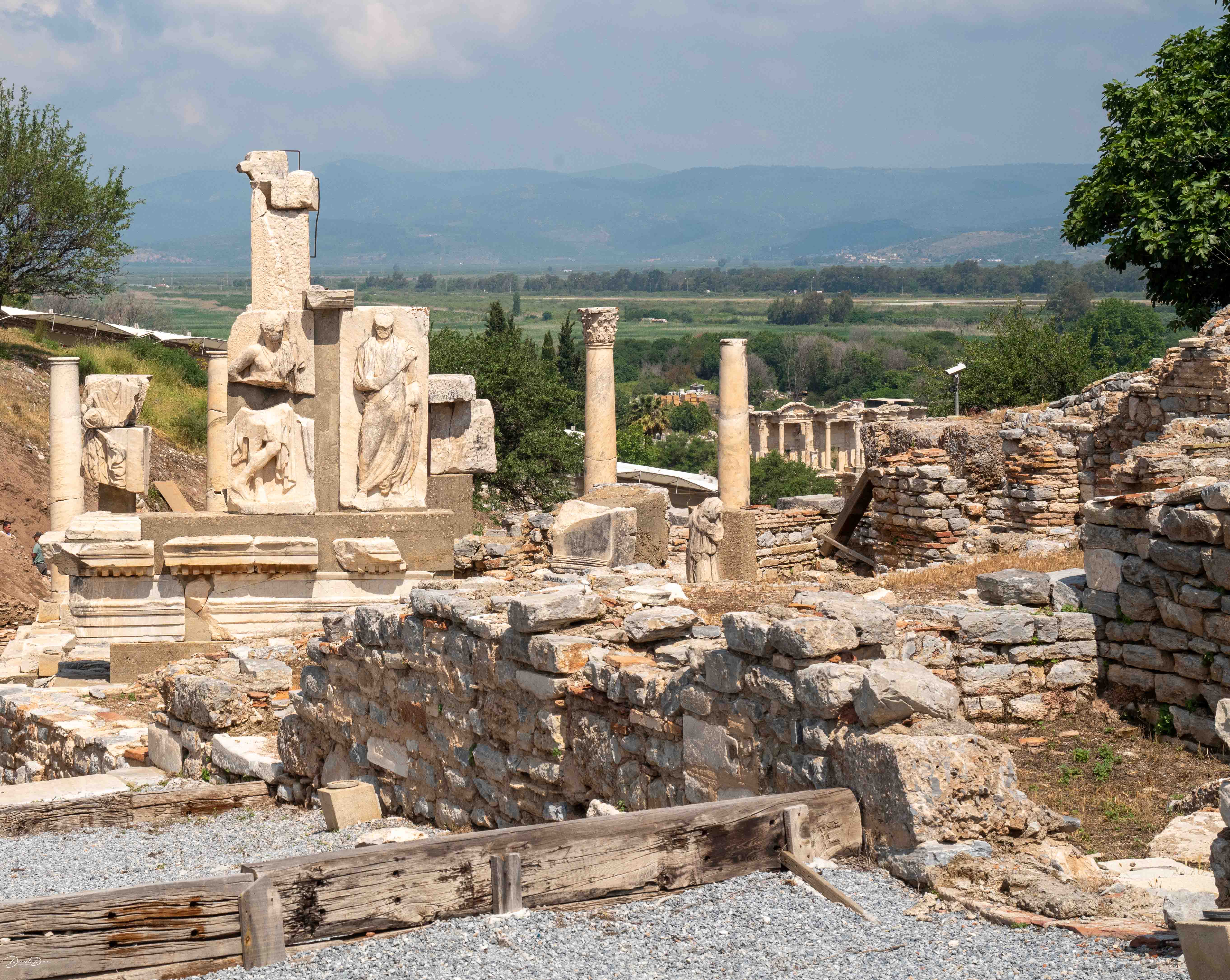
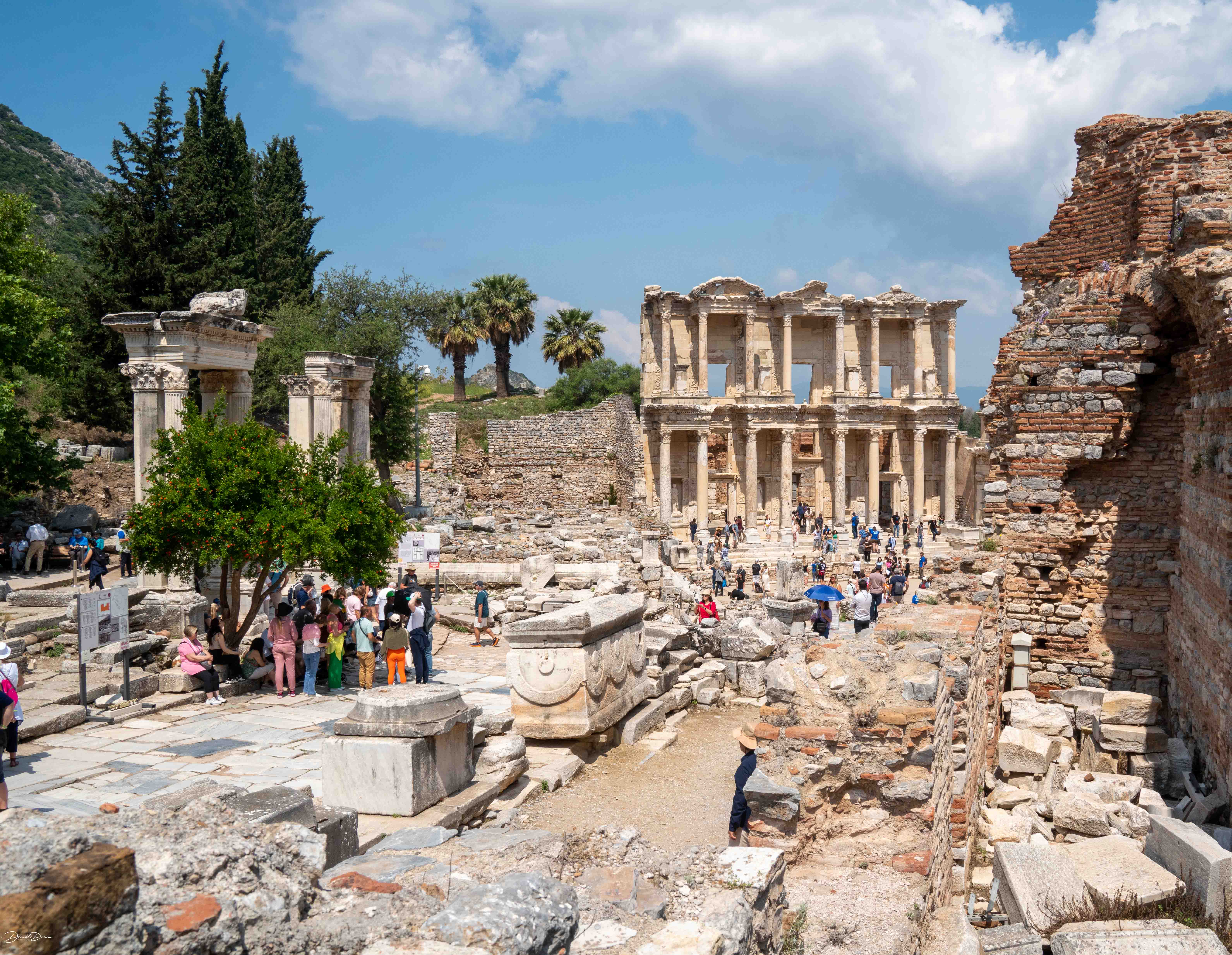
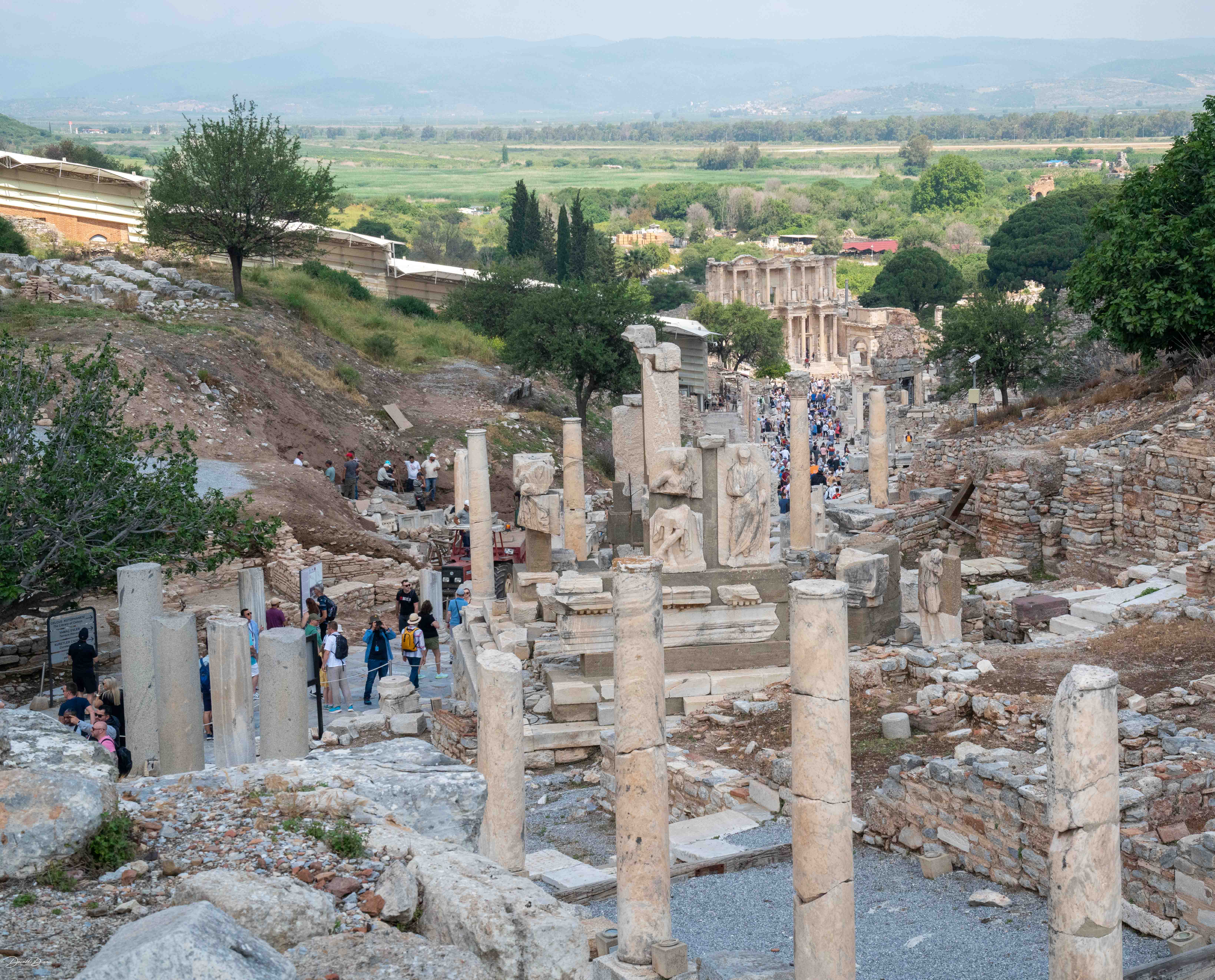
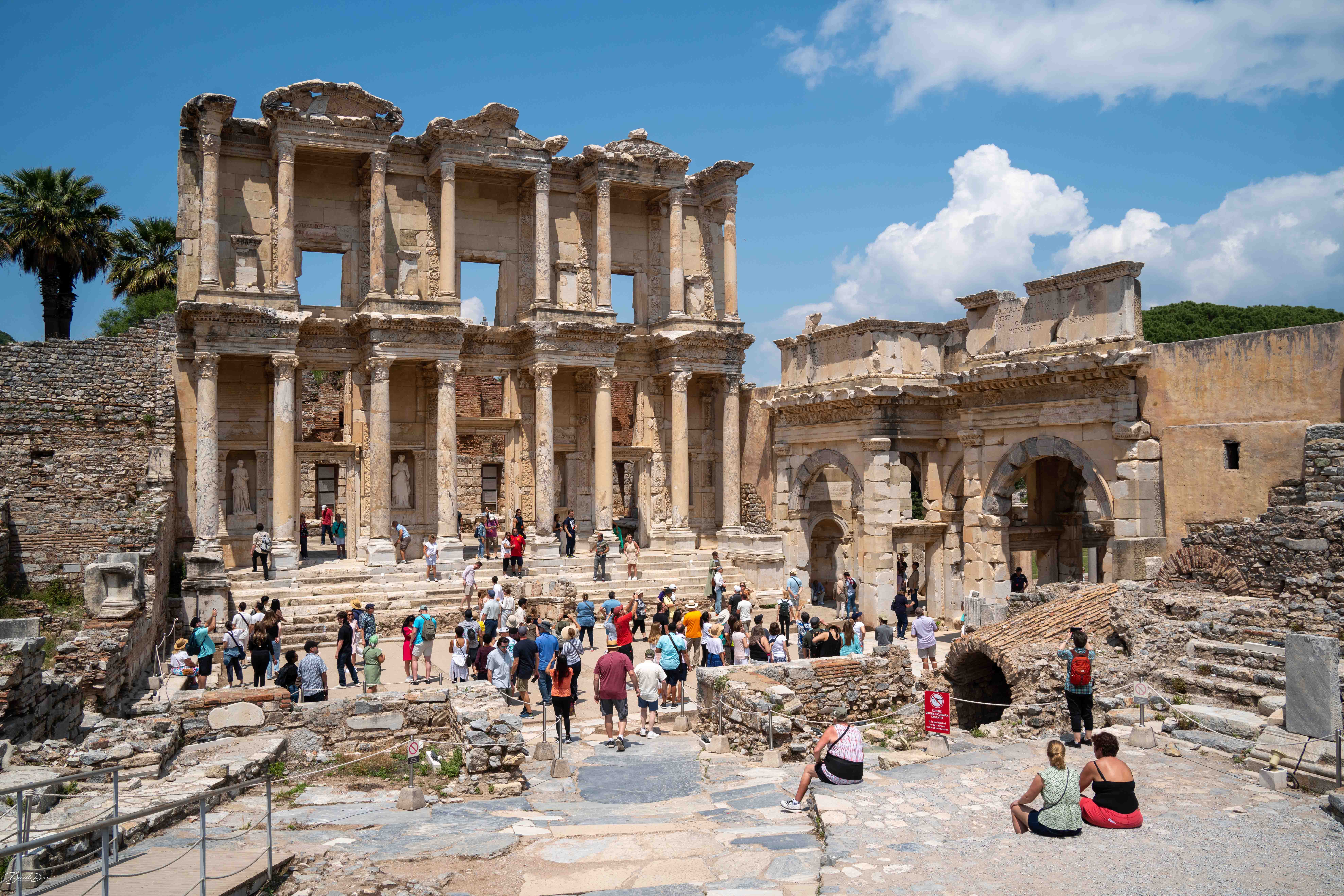
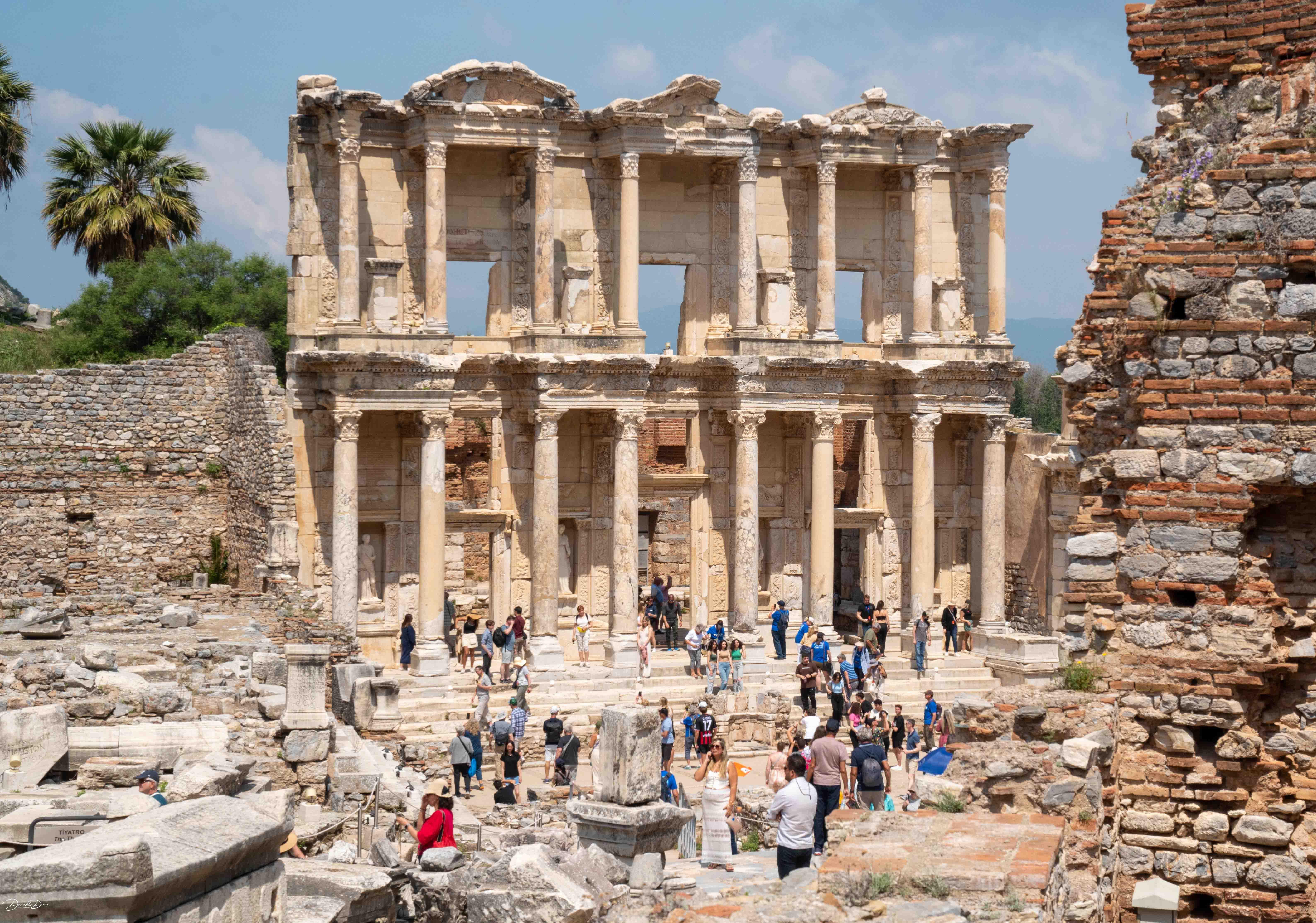
Ephesus is another of the Seven Churches of Revelation and was once a bustling port town graced with wide, colonnade-bordered streets and a population of 250,000. Despite attempts at recovery, much of Ancient Ephesus has been lost.

Remains of the huge Agora and Library reveal much of the glory of Ancient Ephesus.

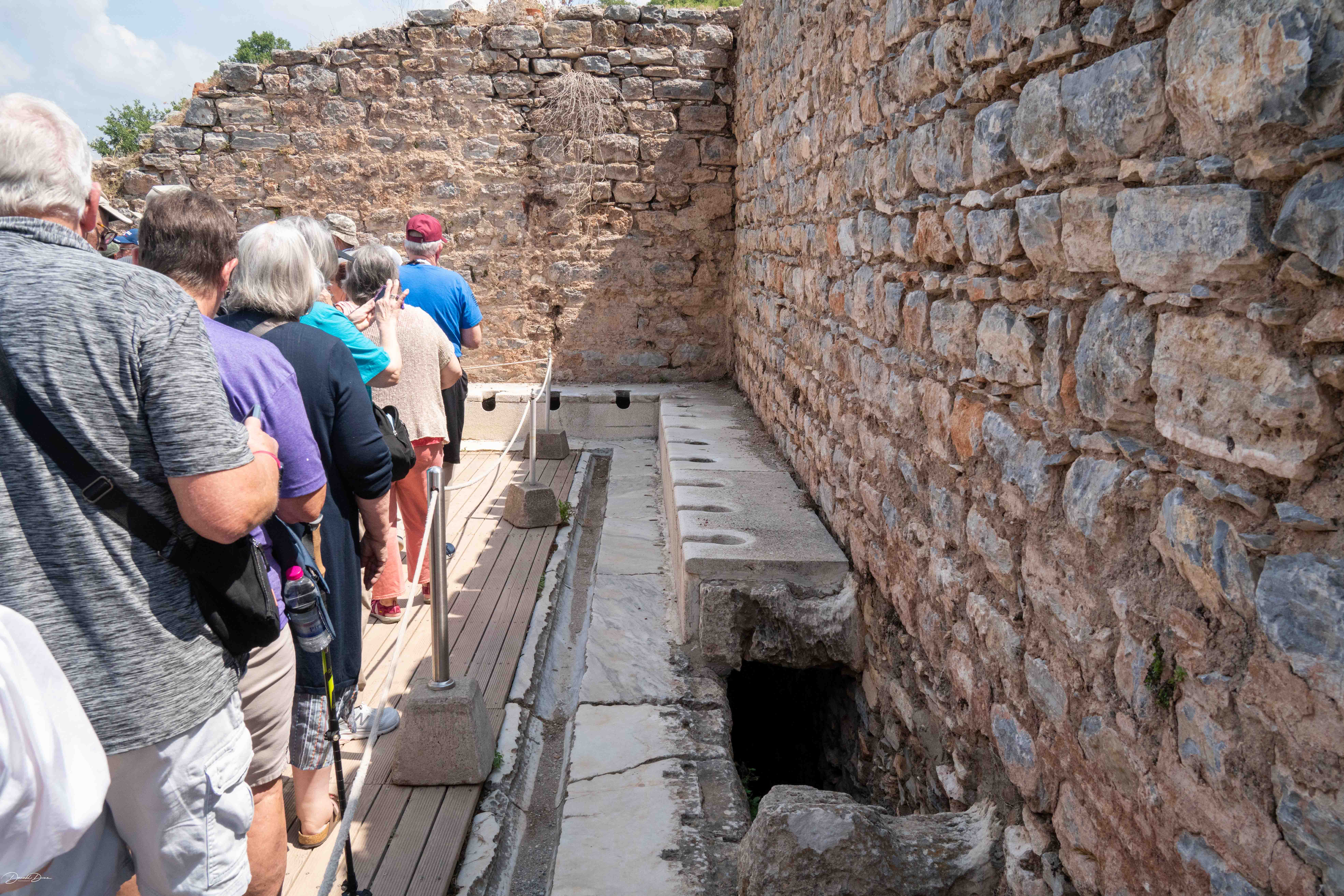
The ancient world once declared the Temple of Artemis to be one of the Seven Wonders of the World, but today only a single column remains to mark its site. We climbed step after step to view the terrace houses, also known as “the house of the rich,” which provided a true impression of ancient lifestyle, complete with private toilets where sewage was removed by running water.

Interestingly, only about 15 percent of the ancient city has been excavated and catalogued.

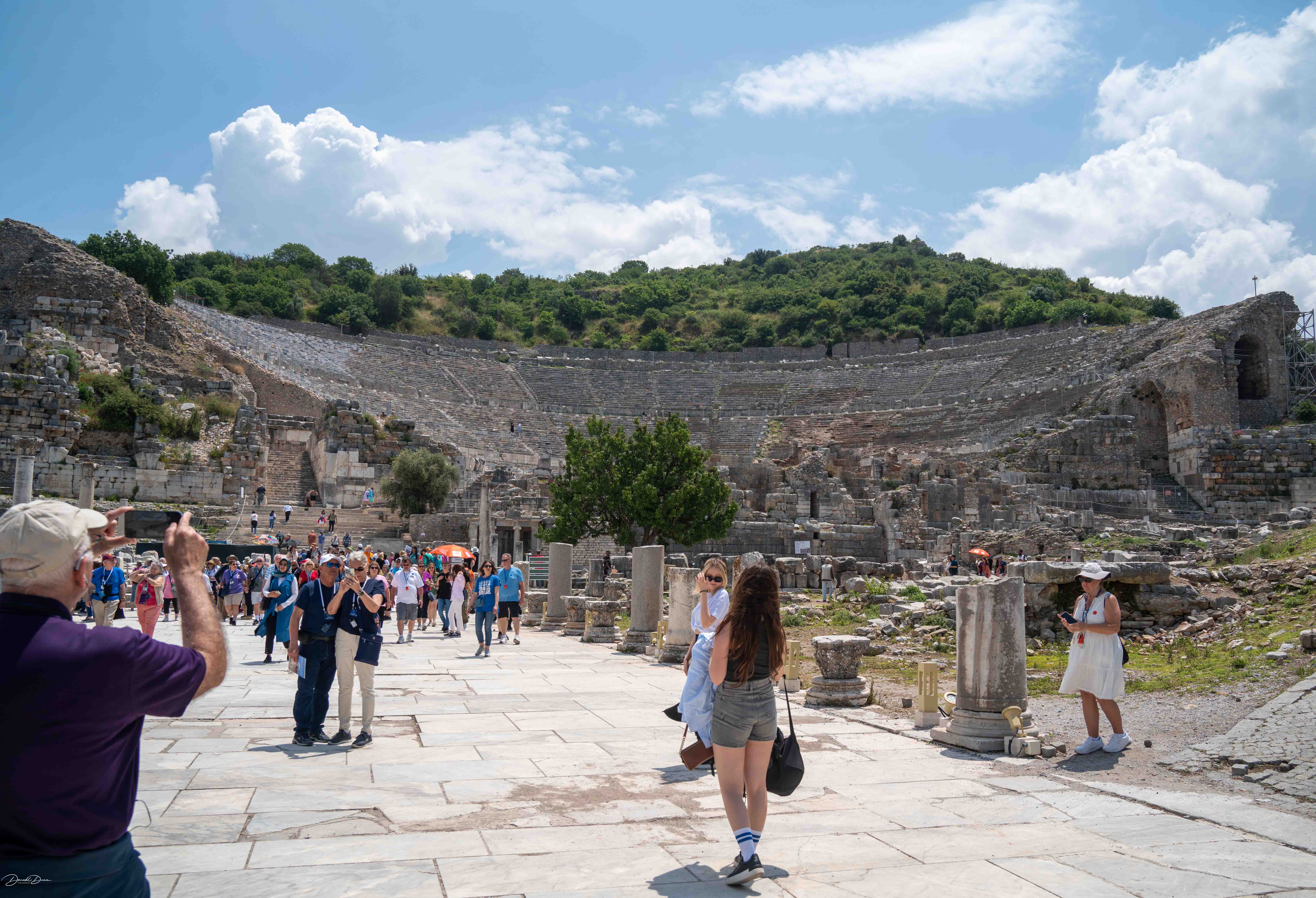
The Great Theater of Ephesus was constructed in the Hellenistic period (about 1st century AD) taking 60 years to complete. It is the largest theater in Asia Minor with accommodation for 25.000 people; 24.000 seats and 1000 standing places. It served not only for dramatic performances, but also for demonstrations of a social, political, economic, religious nature and for gladiator games. The theater is often mentioned in the context of St. Paul’s visit to Ephesus (Acts 19.)

unch was at a Turkish rug-weaving school. The craft of rug weaving was demonstrated, and we were shown a number of professional weavers’ wares. Hand-woven rugs were also for sale, and we are the proud owners of one to be shipped to Hot Springs Village. After rug weaving, we briefly explored the Museum of Ephesus for an up-close look at some of Ephesus’ antiquities and ancient artifacts. It was hard, yet amazing to grasp the reality of civilization some 2,000 years ago—the art, architecture, and extravagance.

Tuesday, May 23, 2023–Rhodes, Greece

While Kay did an excursion with EO, I stayed onboard, relaxing and catching up on sleep.

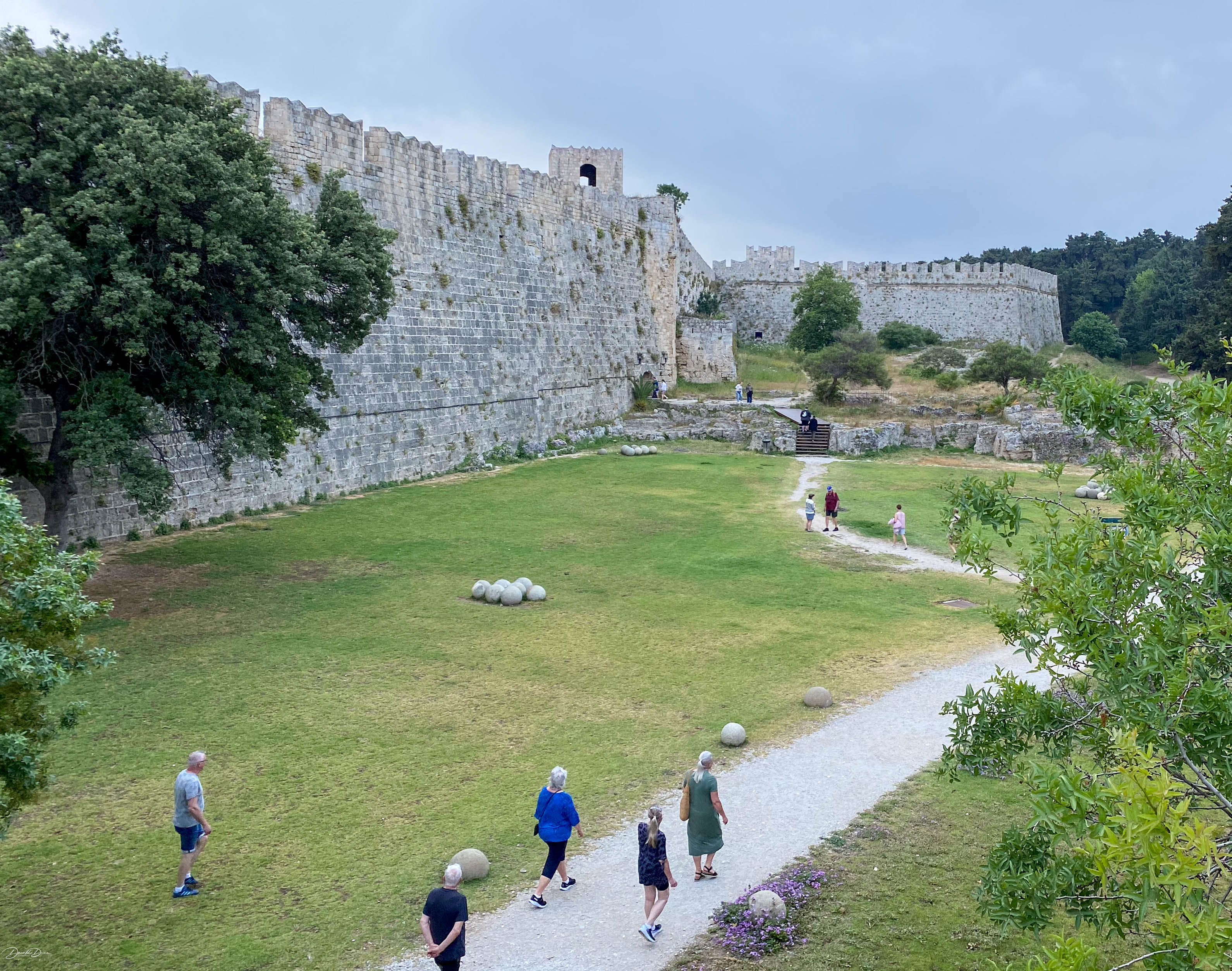
Rhodes, the largest of Greece’s Dodecanese islands, is known for its beach resorts, ancient ruins and remnants of its occupation by the Knights of St. John during the Crusades.

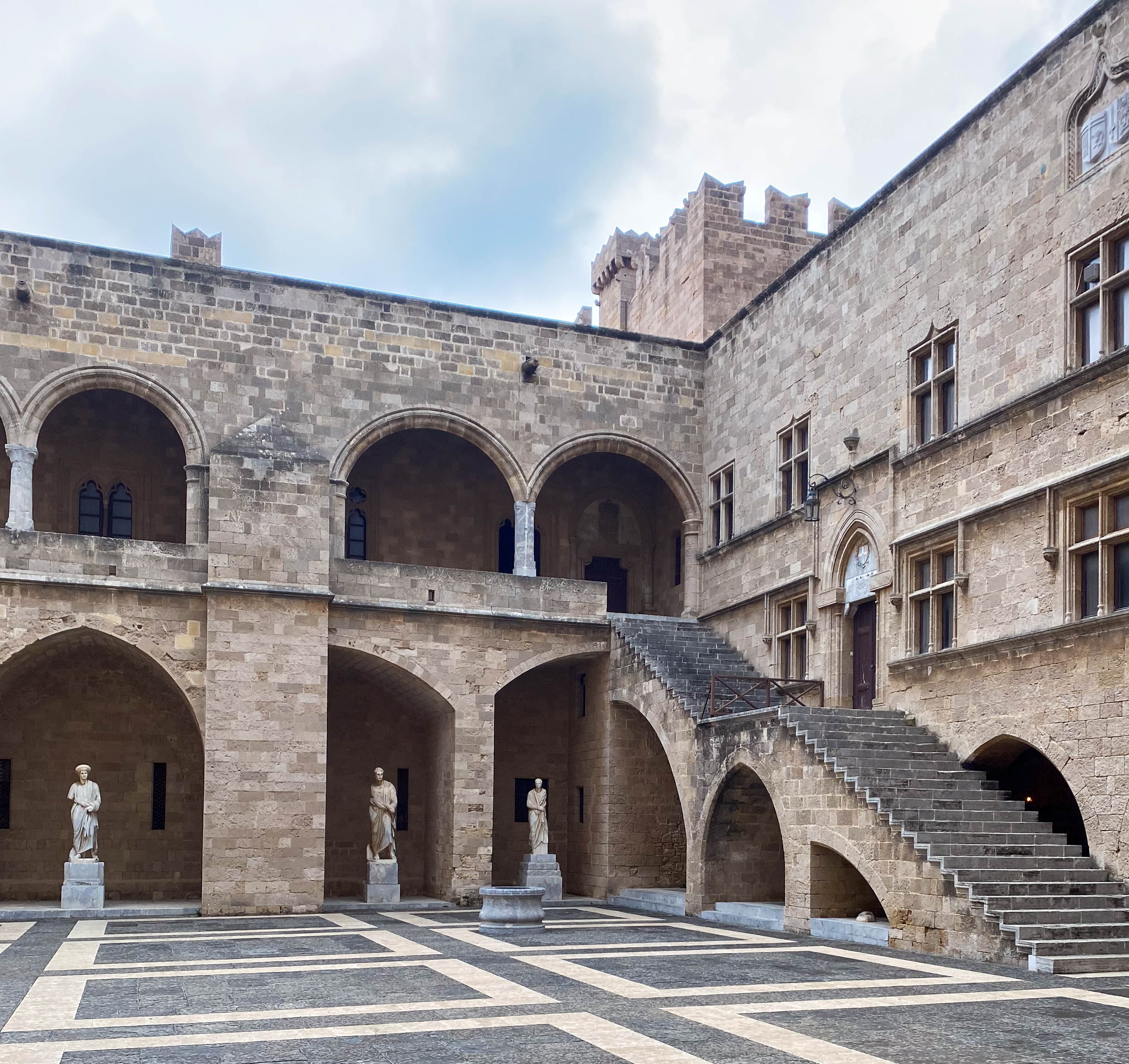
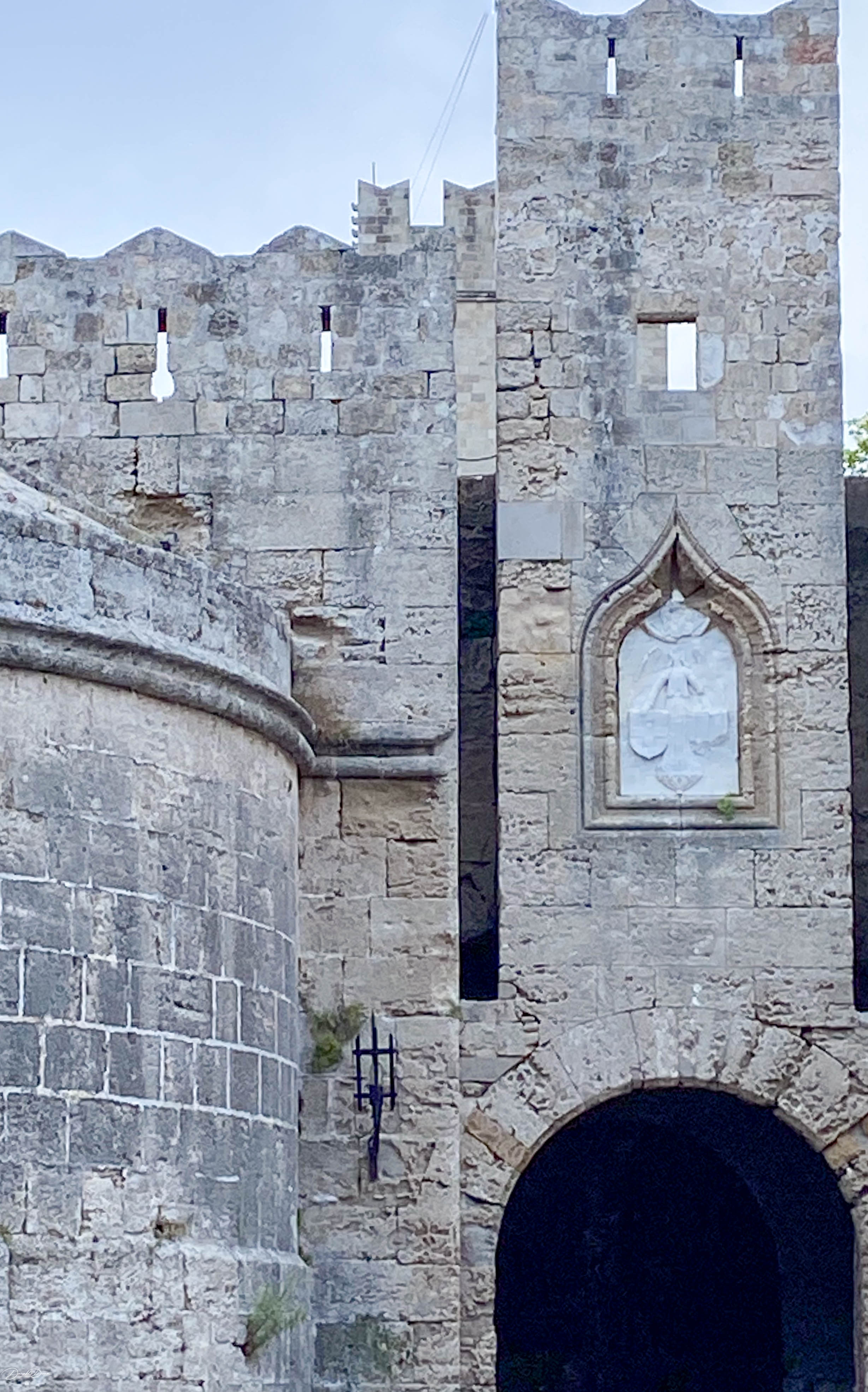
The Greek Island of Rhodes was home to Agora and Collachium, where the Knights of St. John of Jerusalem lived and worked during the Crusades. Rhodes has stunning churches, an exquisite Jewish quarter, the Inns of Knights, and the Palace of Grand Masters. The city of Rhodes has an Old Town featuring the medieval Street of the Knights and the castle-like Palace of the Grand Masters. Captured by the Ottomans and then held by the Italians, the palace is now a history museum.

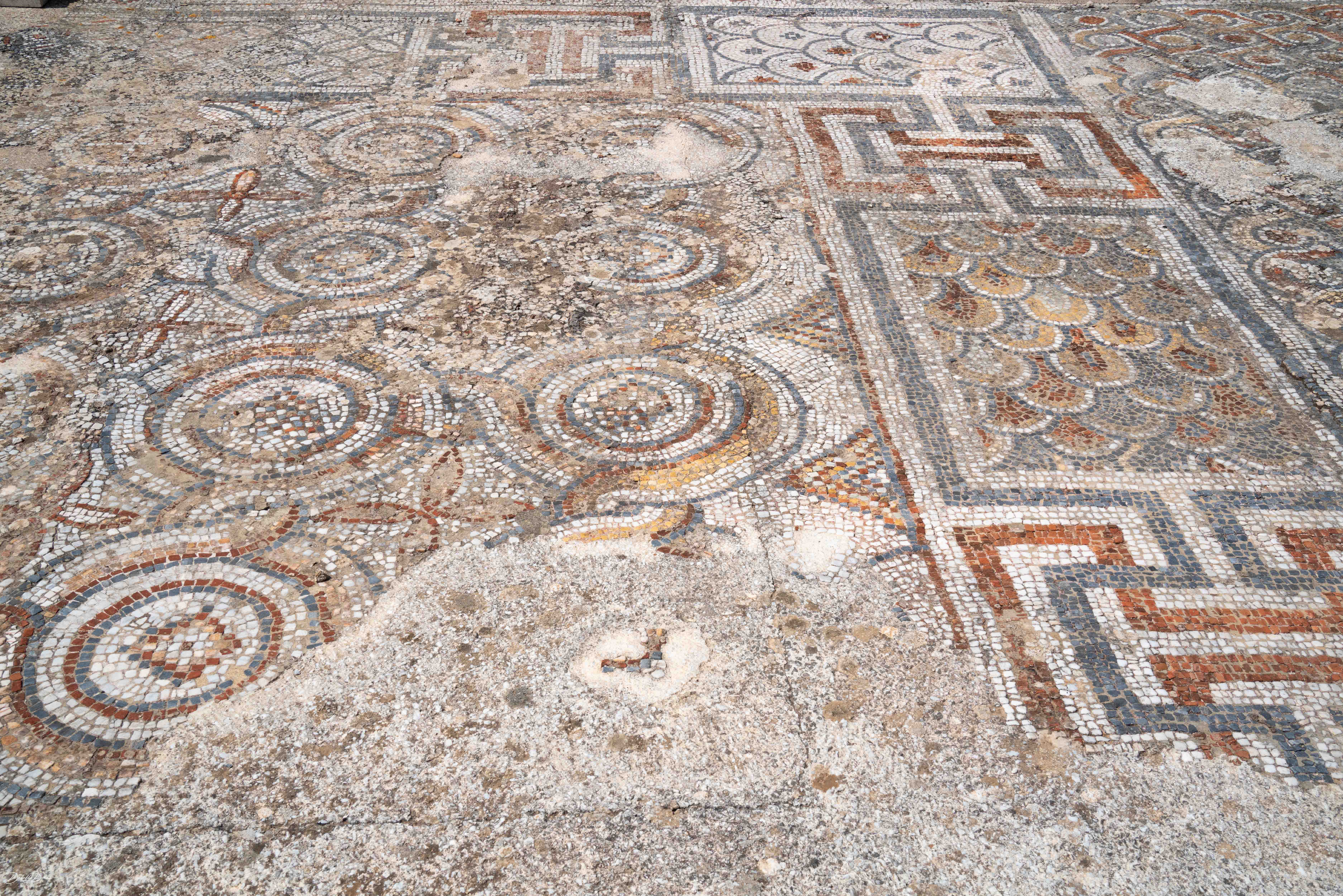
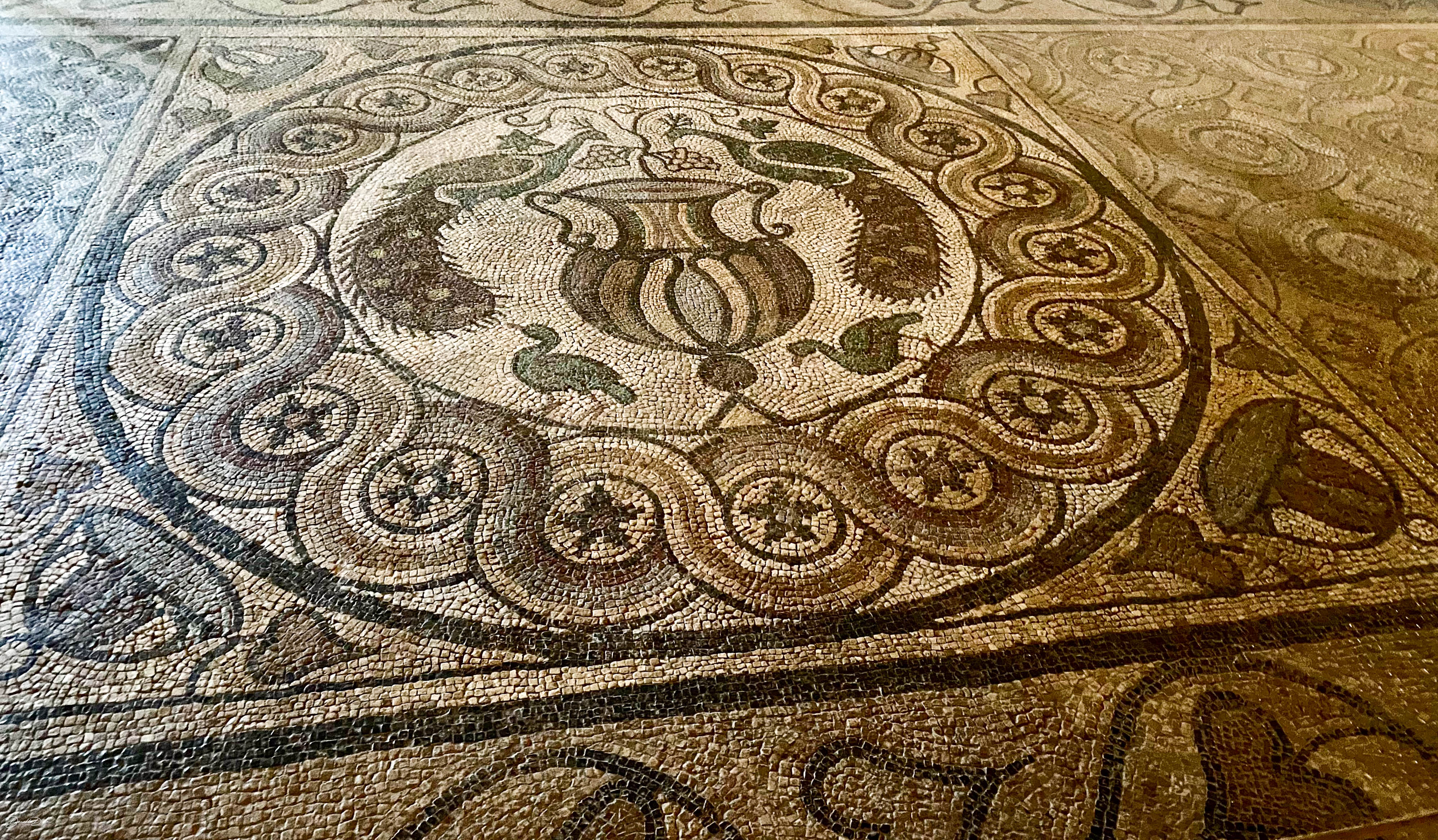
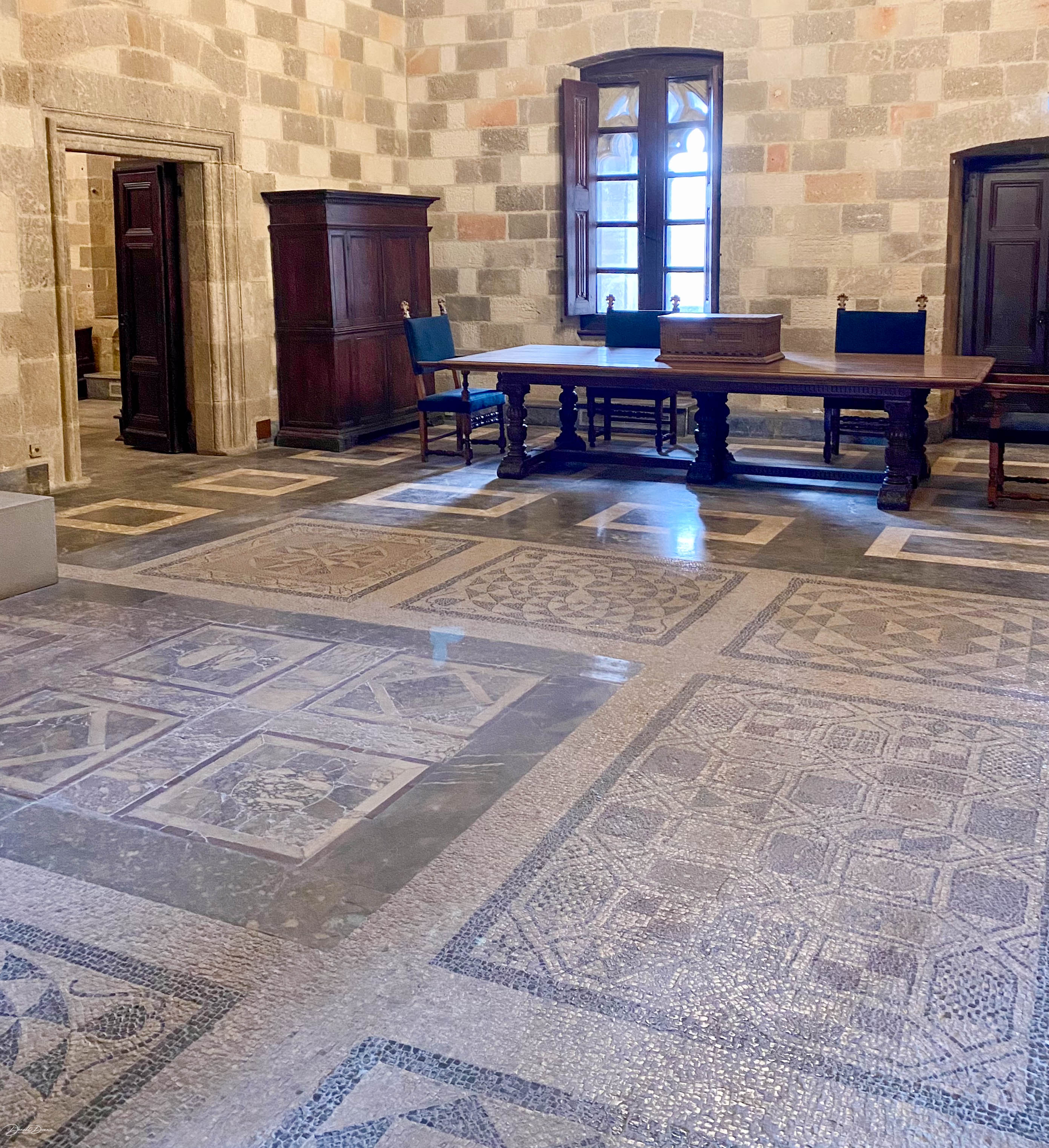
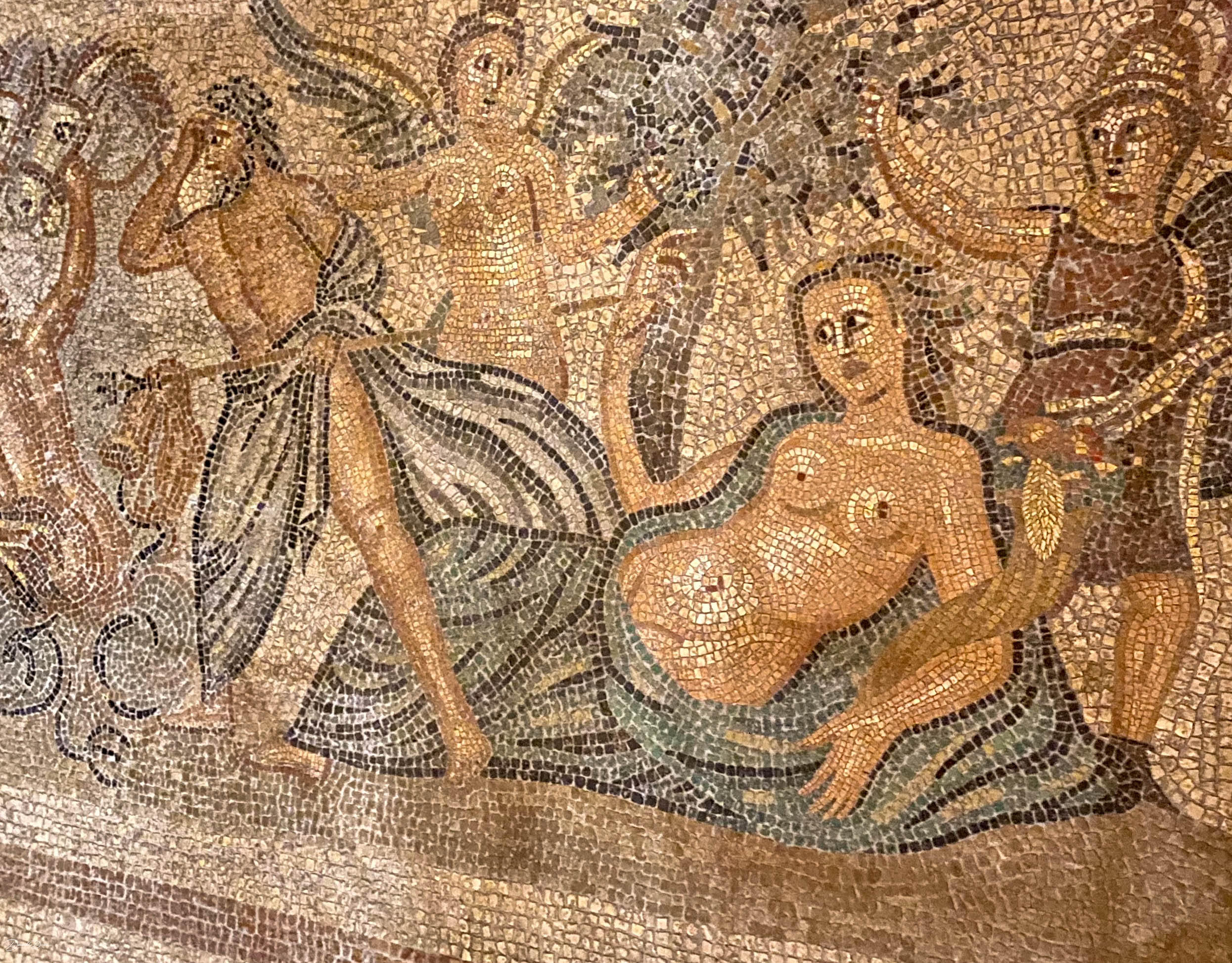
Here are photos of mosaics made during Kay’s tour.

Monday, May 22, 2023–Ancient Corinth and Athens, Greece

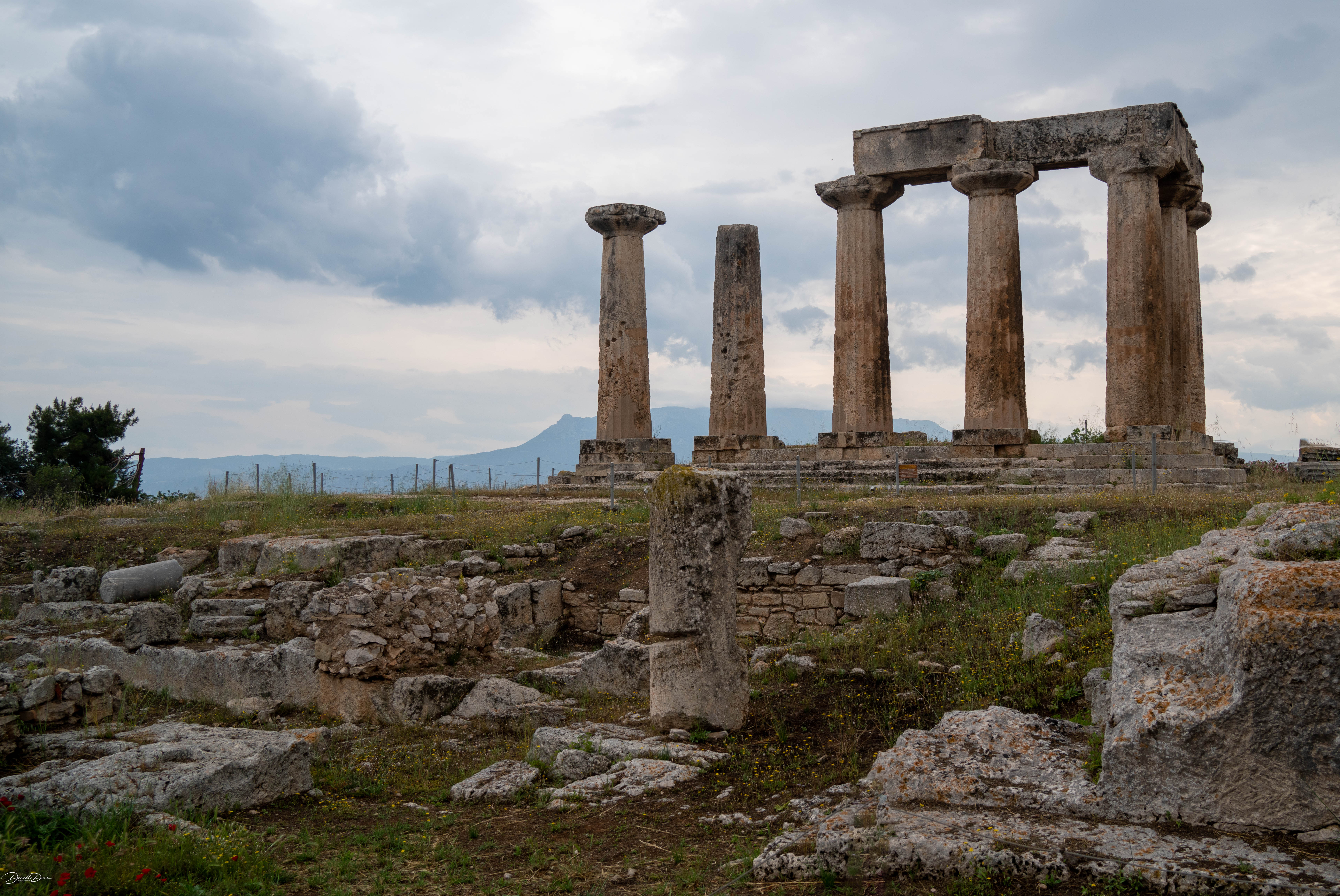

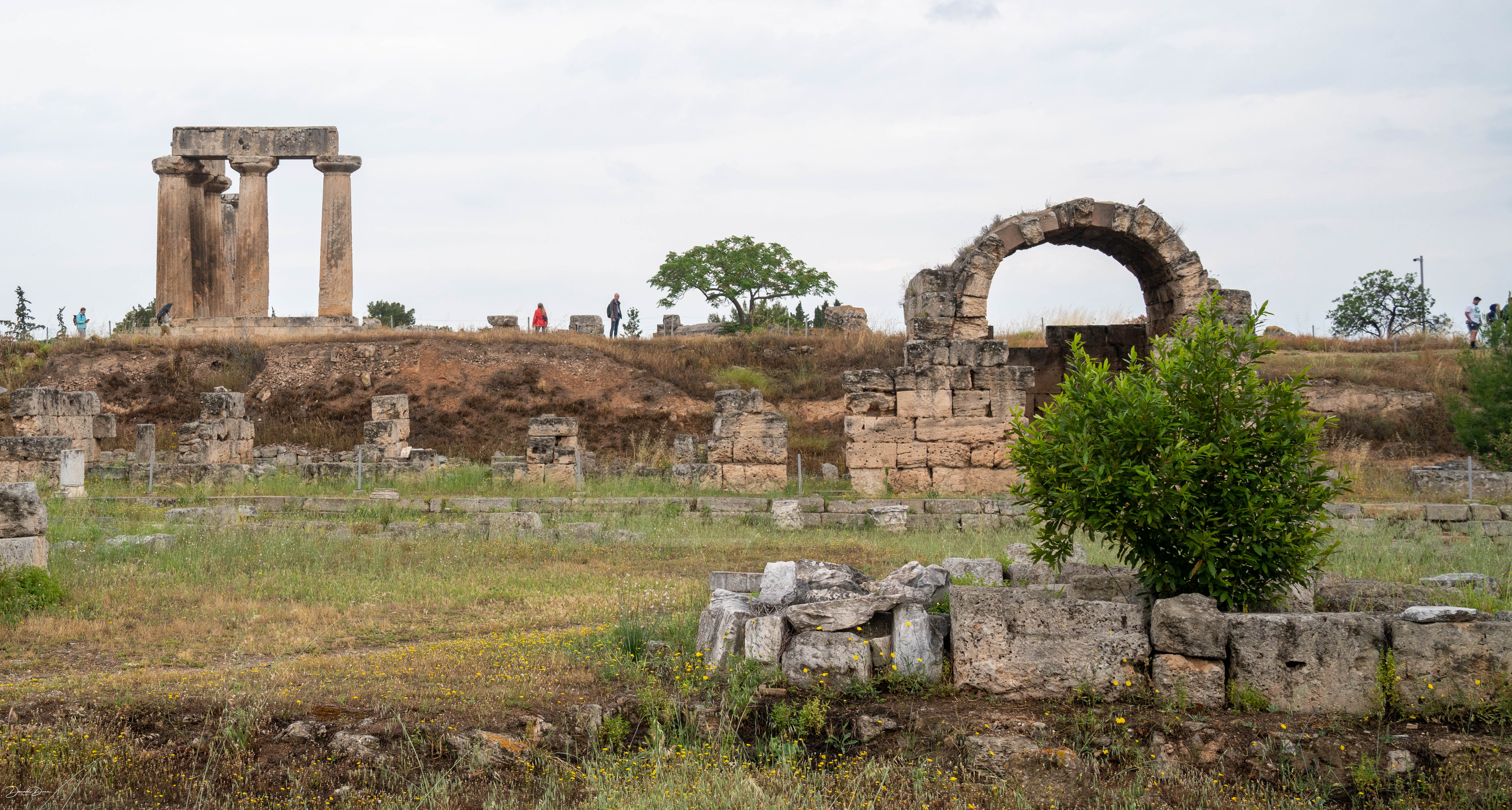
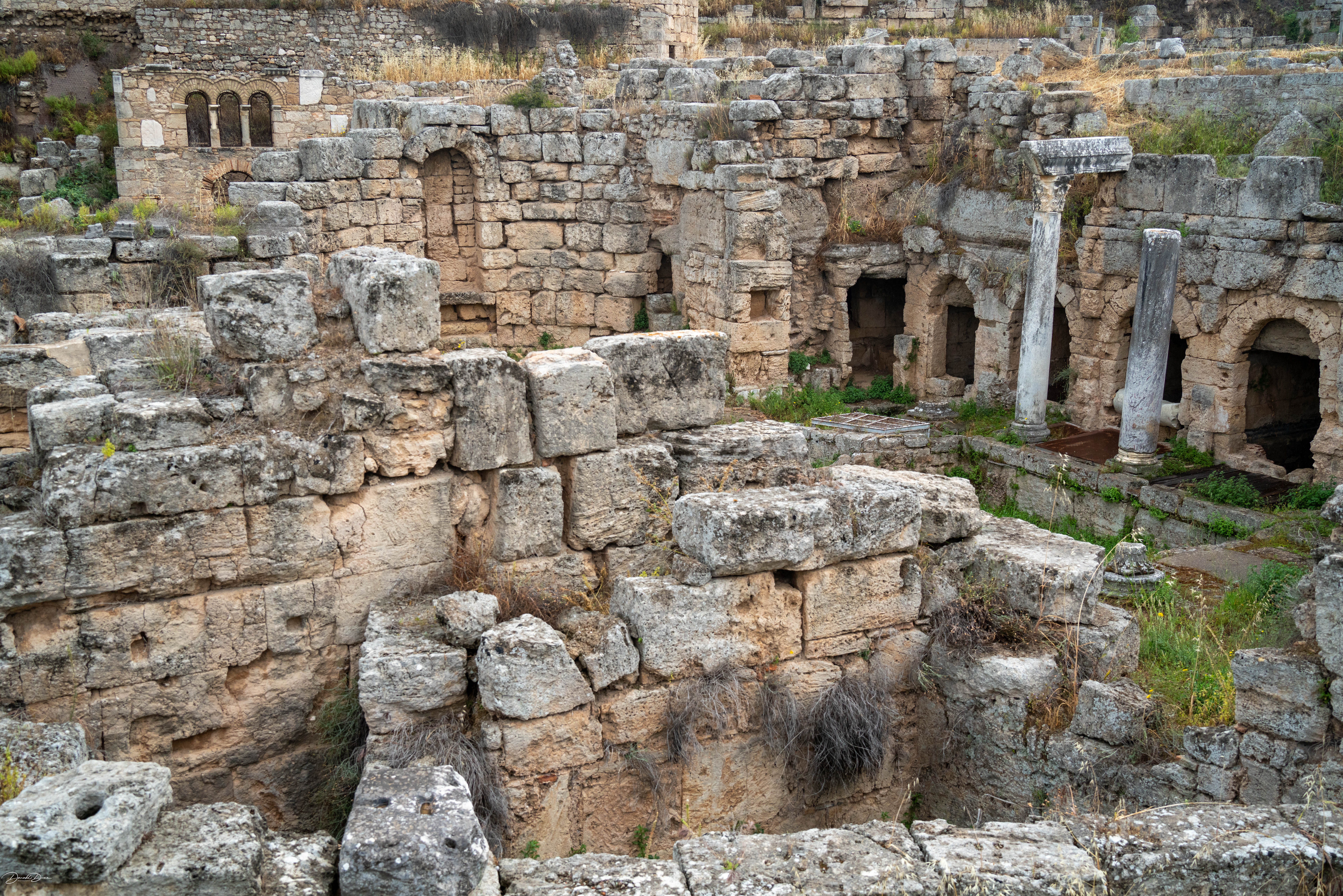
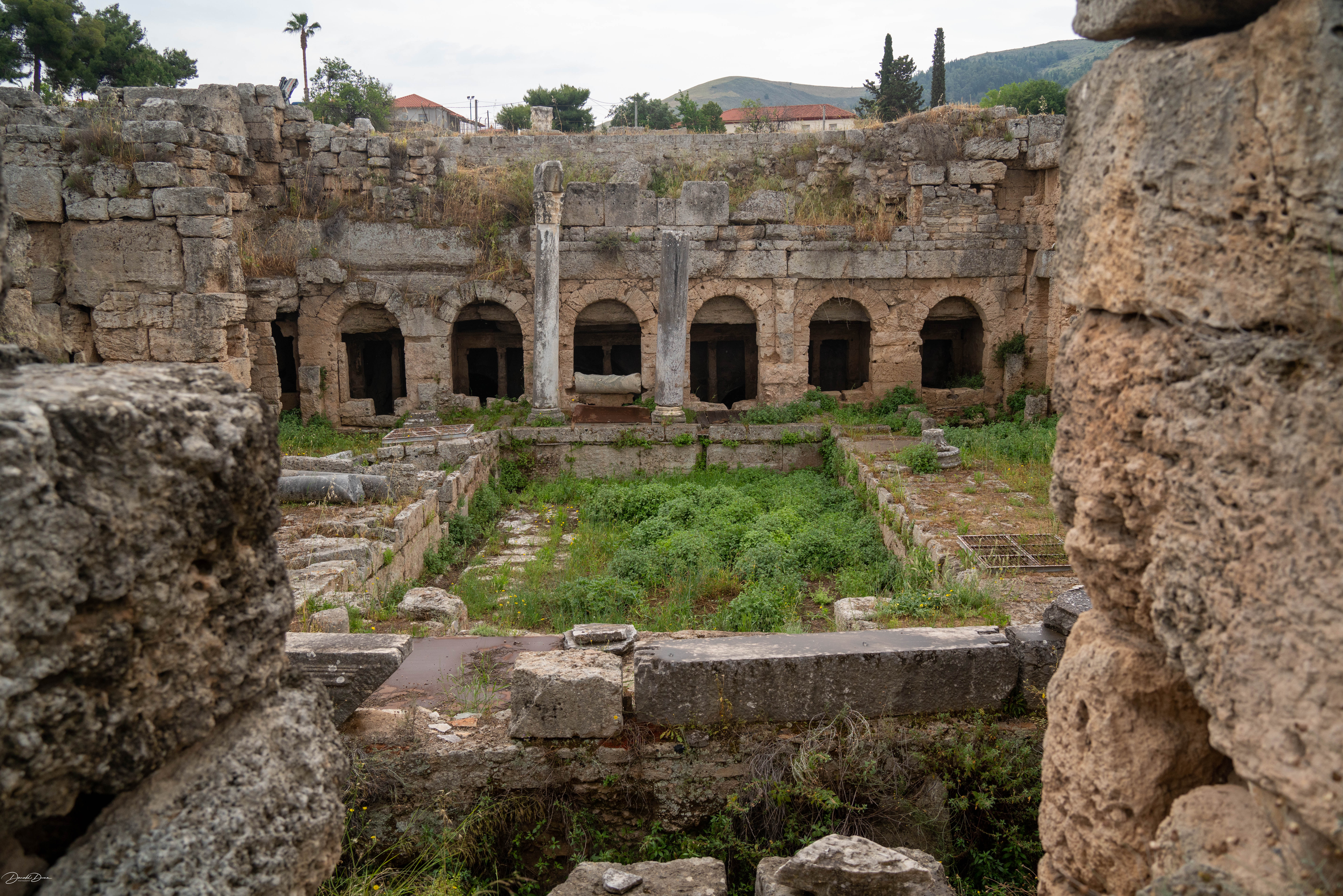
This morning’s excursion, began with a drive through the city of Athens enroute to Corinth, stopping for a bathroom break near an excellent viewpoint for the Corinth Canal. The Corinth Canal is an artificial canal in Greece that connects the Gulf of Corinth in the Ionian Sea with the Saronic Gulf in the Aegean Sea. At the city of Corinth, we viewed Ancient Corinth, including the Market Place and Temples. We visited the site where the apostle Paul met fellow tentmakers Aquila and Priscilla and received a vision from the Lord saying, “I am with thee, and no man shall set on thee to hurt thee: for I have much people in this city.” As Paul spoke, Crispus (chief ruler of the synagogue) and many others believed and were baptized, establishing the church at Corinth to whom Paul later wrote his two epistles.

Click on each photo below to enlarge.

We took communion near the Bema where the apostle Paul stood before Gallio to face charges brought against him by the Jews, and then walked through the remainder of the ruins.

The tour stopped for lunch (macaroni and cheese as an appetizer, veal with potatoes and rice, salad, and a baklava) at a restaurant near the Aegean Sea where we enjoyed very brief internet access for the first time in four days.

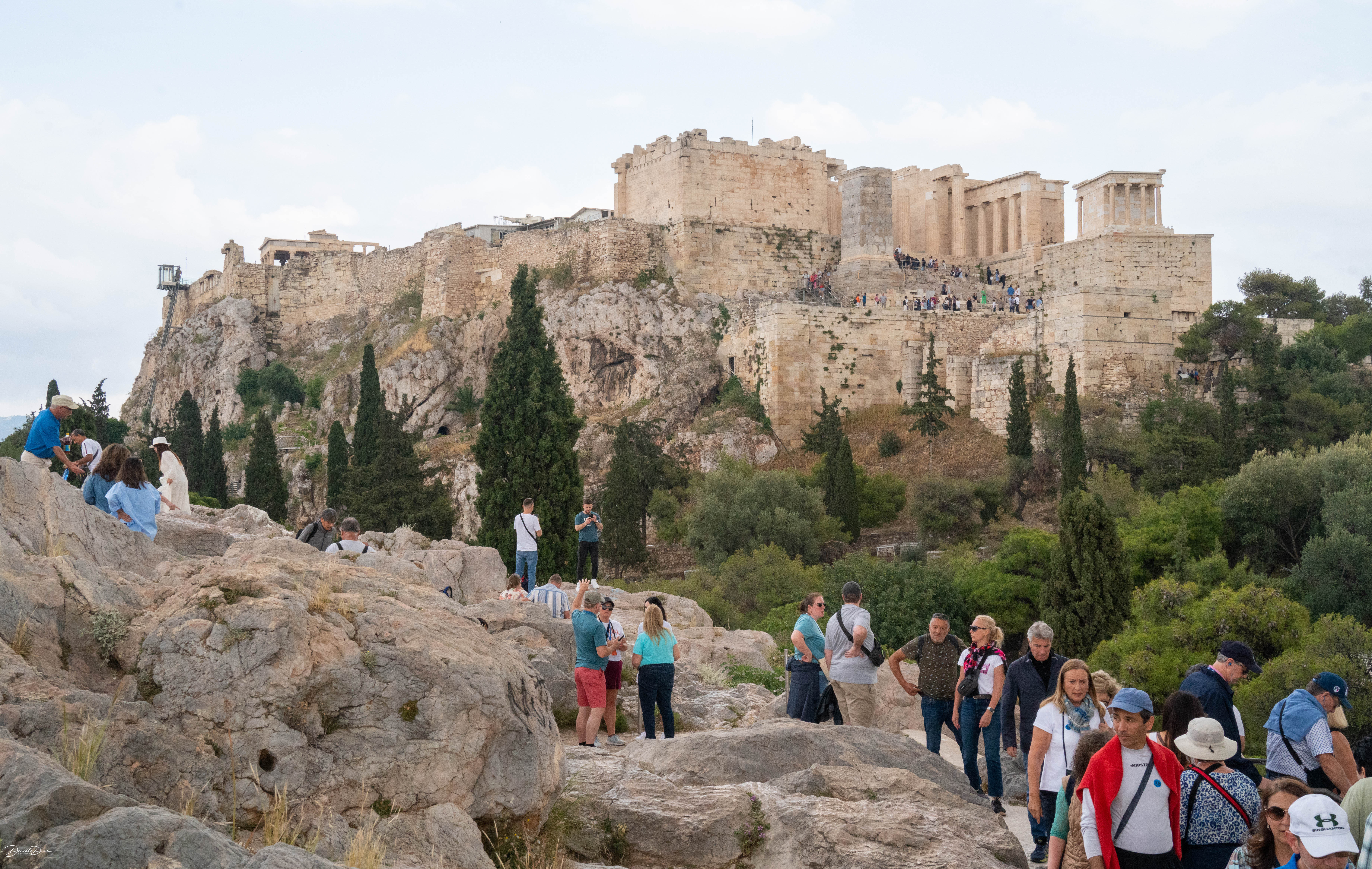
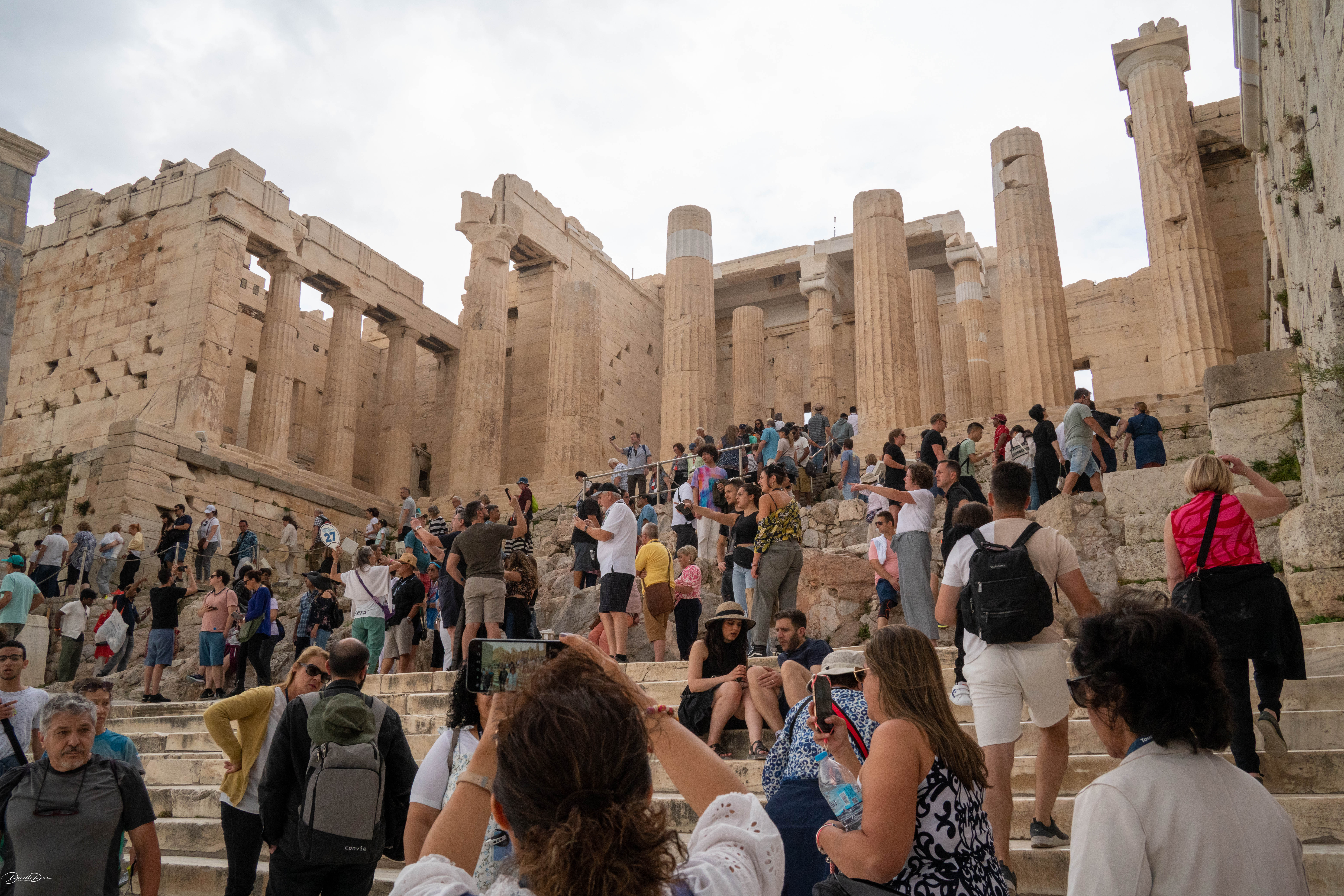
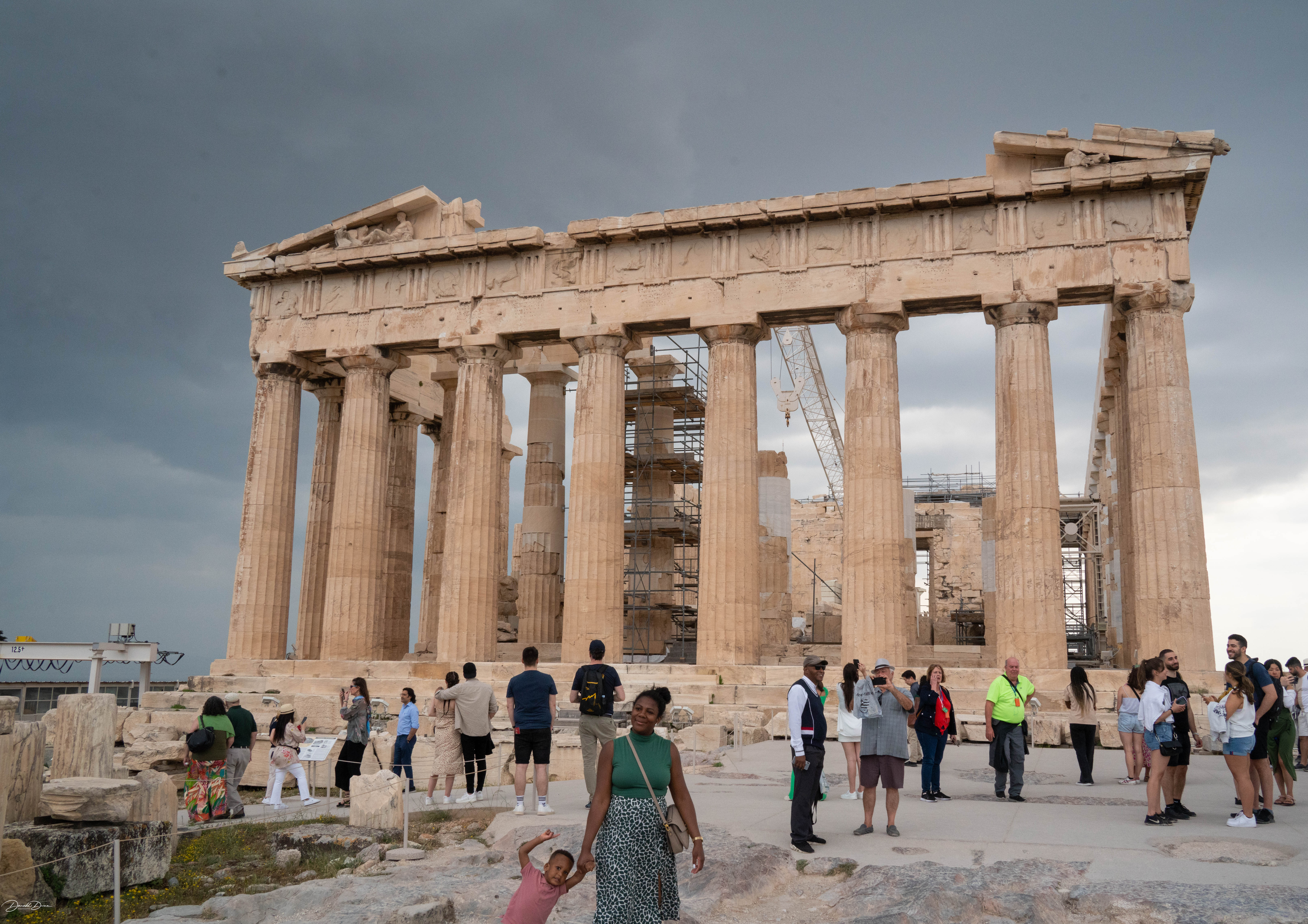
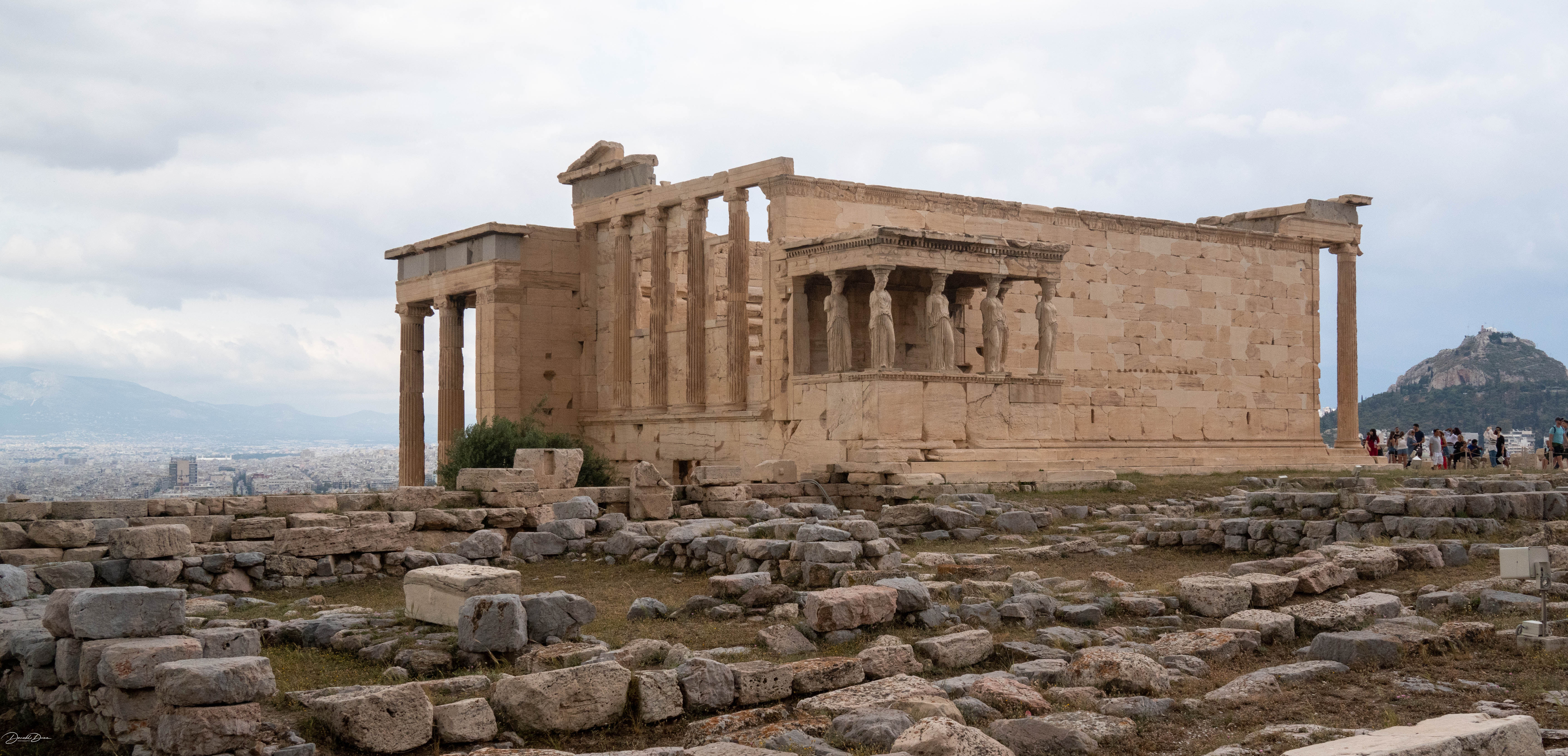
After lunch, the day’s excursion included a drive through Athens and past the House of Parliament, the Presidential Palace, the Tomb of the Unknown Soldier, and many other historical and national buildings. And then, we were taken to rather highlight of the day, the rich architectural splendor of the ancient city of Athens including the world-renowned Acropolis, the Propylaea, the Parthenon and the Erectheum.

We stood on Mars Hill as did the apostle Paul when he proclaimed, “I found an altar with this inscription, TO THE UNKNOWN GOD. Whom therefore ye ignorantly worship, him declare I unto you.” After climbing a long steep grade, we strolled, in awe, through the Agora (ancient market place and center of Athenian public life), where the Apostle Paul preached “Jesus and the resurrection” to the skeptical Athenians.

Back at the ship, it was dinner, a couple of shows, and bed.

Sunday, May 21, 2023–Santorini, Greece

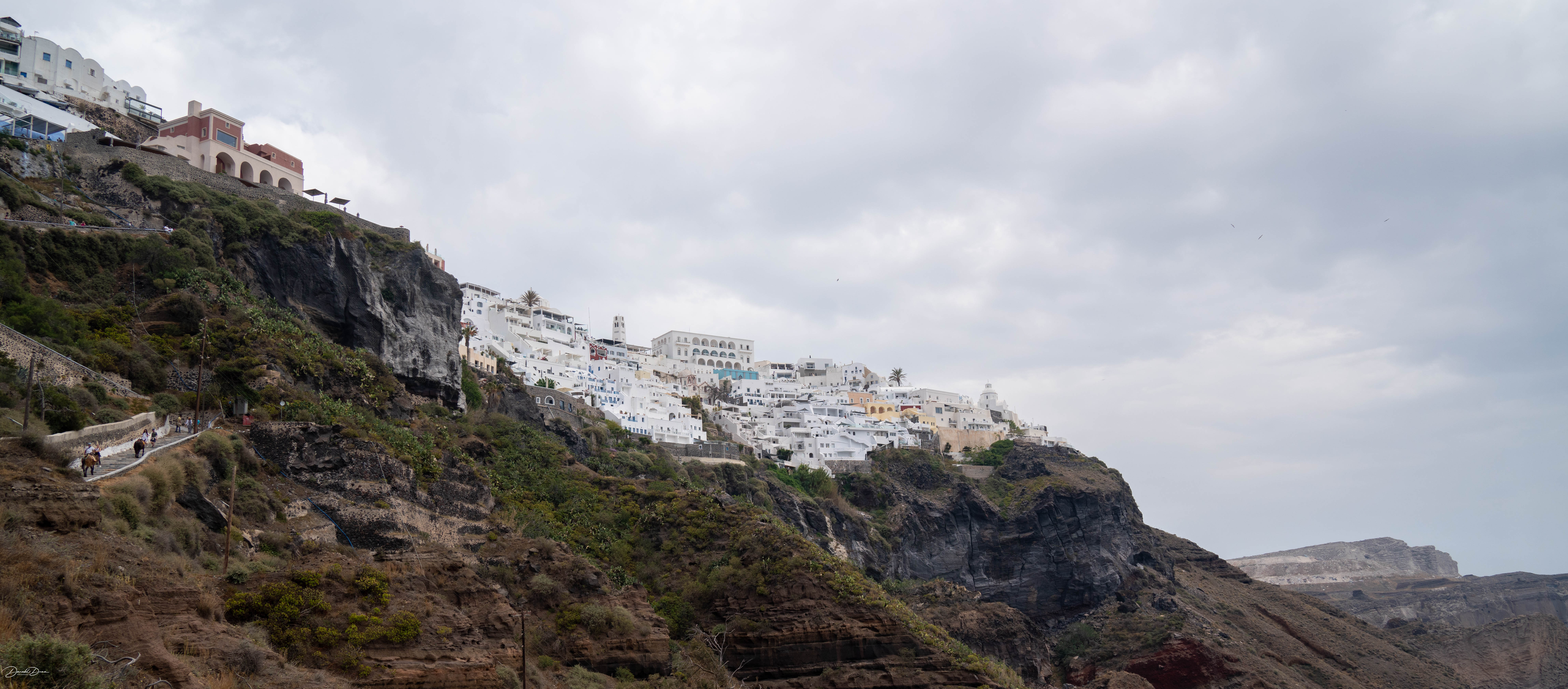
I apparently got confused in yesterday’s blog entry, thinking it was Crete that had the switchbacked access to the top of the island. However, the switchbacks were on Santorini. That blog entry has been edited.

Switchbacks, left center

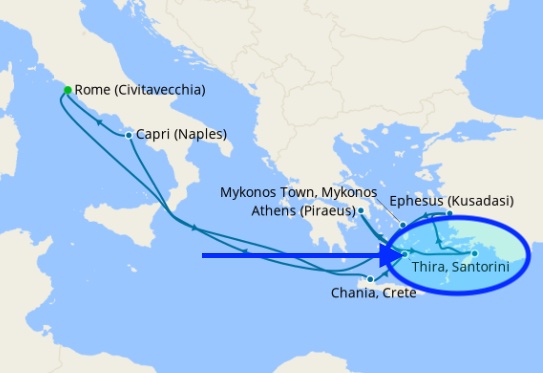
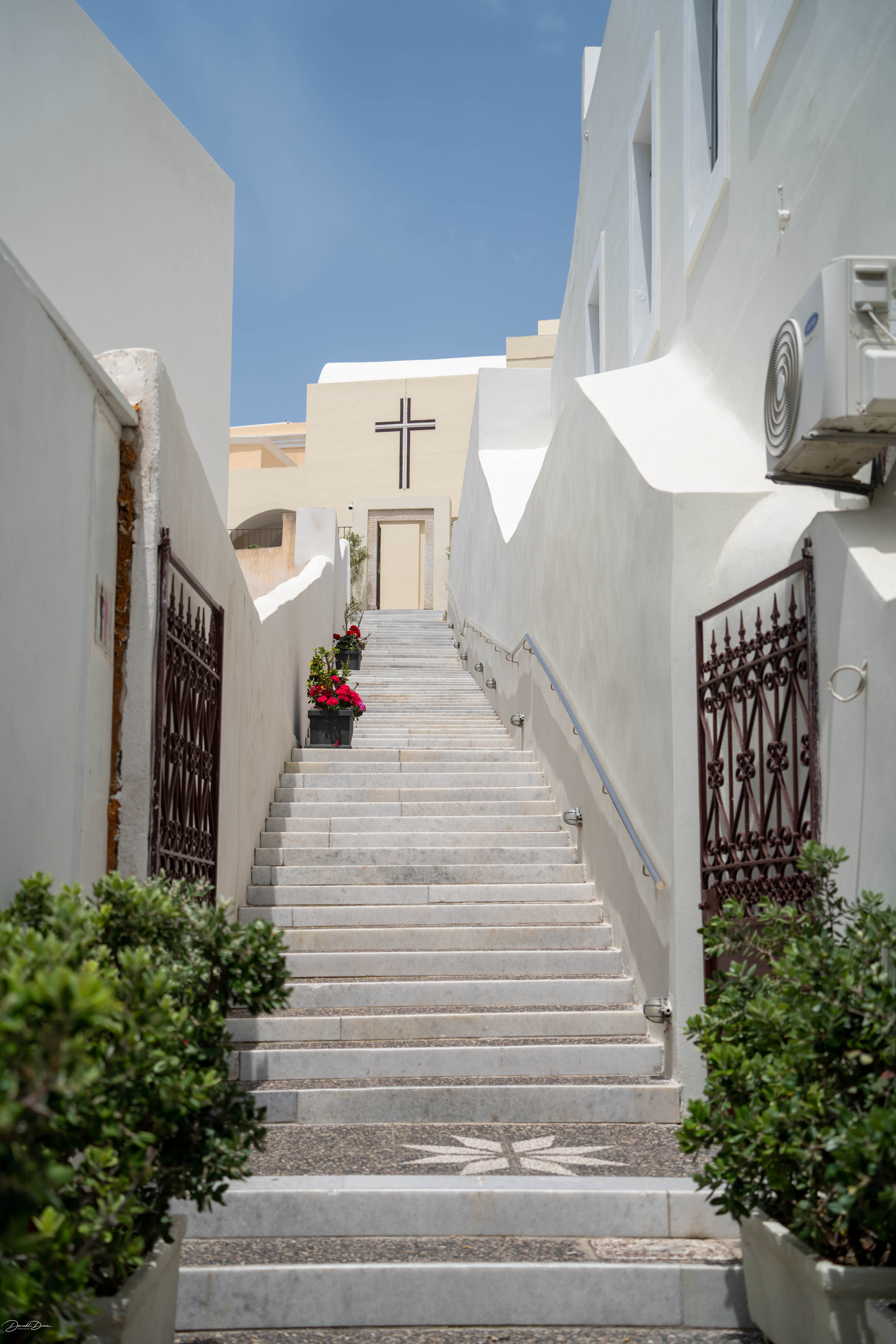
Today’s stop was the island of Santorini, considered by most to be Greece’s most beautiful isle. Santorini is one of the world’s most popular islands, known best for its dramatic scenery, whitewashed villages and fiery volcanic activity.

We anchored not far off shore, requiring a tender to the island.

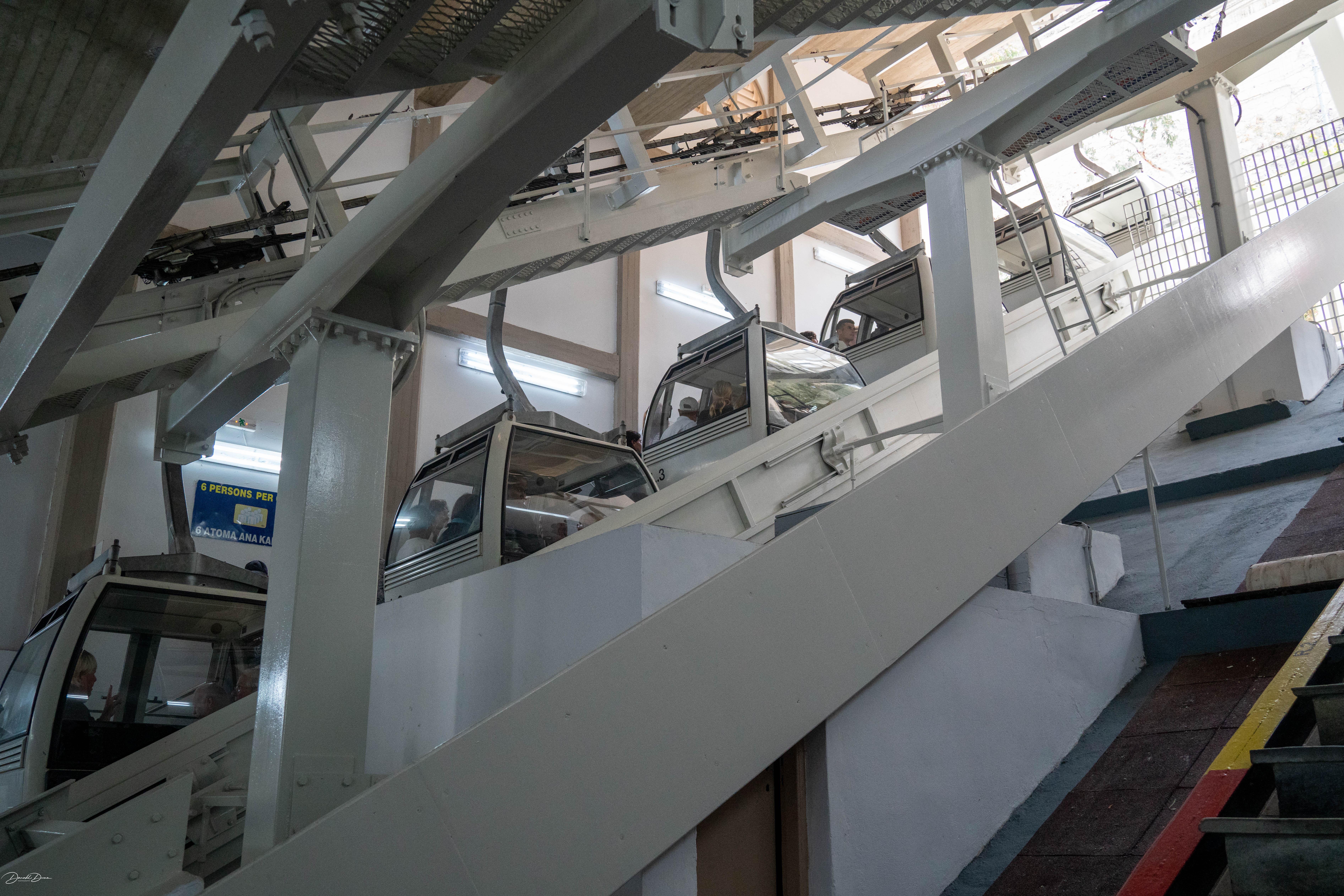
There, we were met with extremely long lines (20+ minutes) to catch the cable car to the top of the island to its capital, Fira, a bustling cliff-top town awash with old cathedrals, enthralling museum collections and cozy tavernas. (The alternative to the cable car was to climb the difficult switchbacks. Regrettably, several people who walked the switchbacks slipped and fell on the rain-slicked cobblestones.)

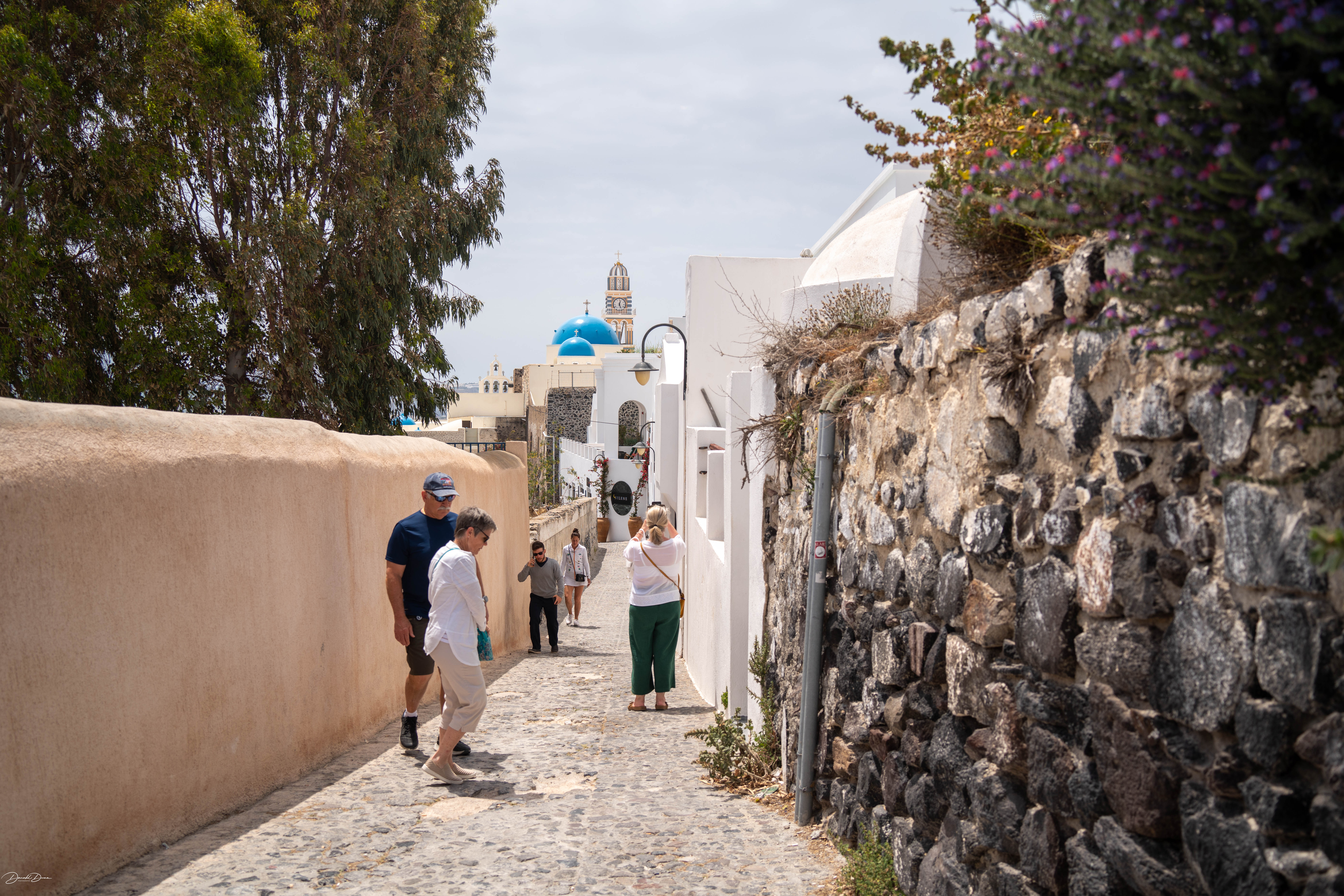
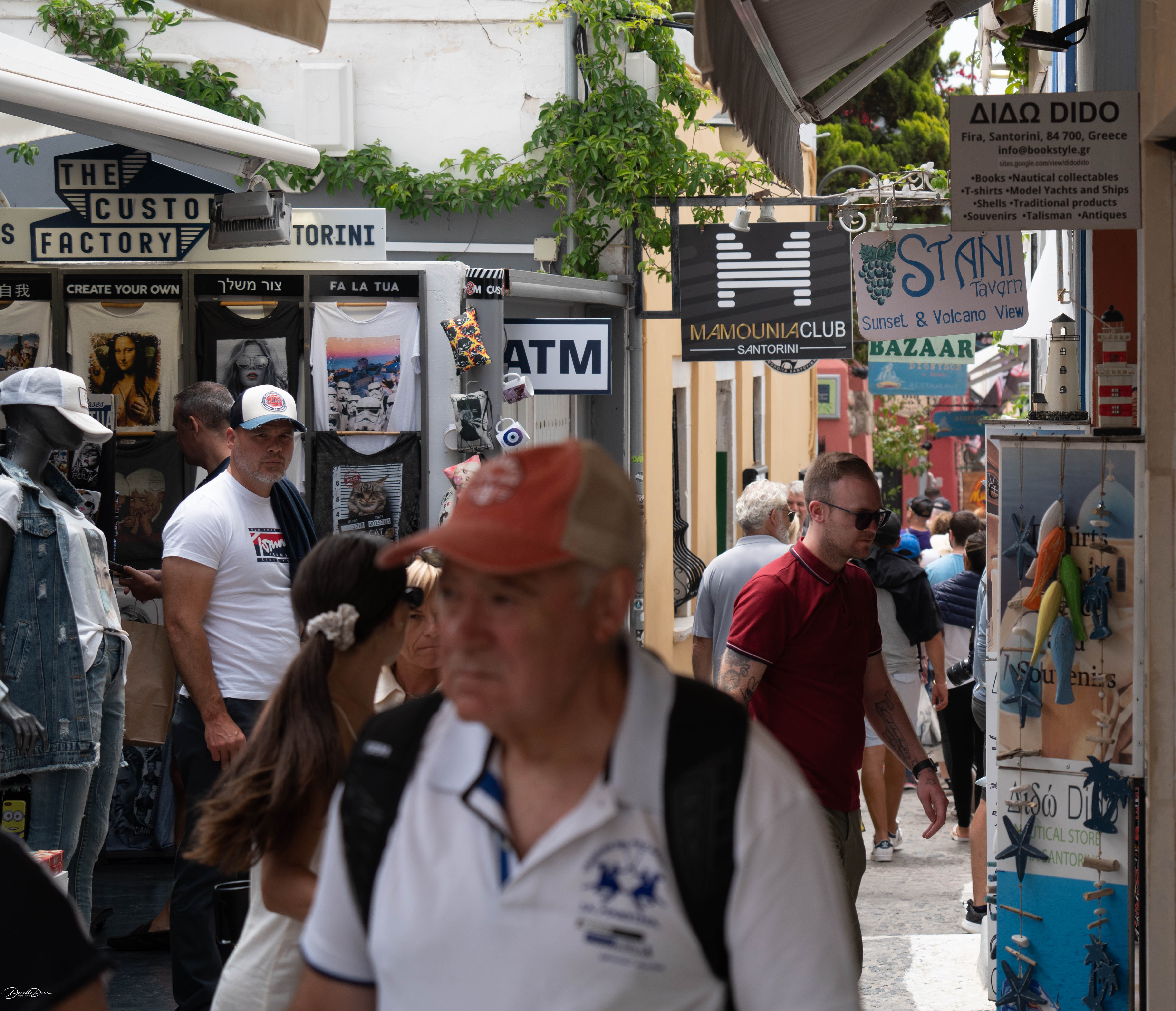
At Fira, narrow, crowded streets awaited us.

After a brief walk along some of these streets, we again waited in a long line (20+ minutes) to catch the cable car back down the mountain. 

Back at the ship, we had dinner and watched “The Book,” a cirque-type production of the highest quality. The Book is an epic journey for the imagination that brings the magic and tradition of storytelling to life through cutting-edge tech, including a wall of robotic video screens, 12K projection mapping, and talented live performers.

Friday and Saturday, May 19-20, 2023—Day at Sea and Crete, Greece

We could get used to room service and breakfast in bed to start the day. Once out of bed and dressed, our day with lectures as part of the Educational Opportunities portion of the cruise began a bit disorganized—we were given wrong time and wrong place to meet for the lecture. And, speaking of the lecture, the discussion of Paul’s early life was interesting, but too long at 1 hour and 45 minutes! Food, thus far, on the ship has been good. There are more young couples and children on this cruise than any other we’ve been on; thus, there is little to no room at the hot tubs or pools—another reason to choose “adult only” Viking. It really didn’t matter today as cool and windy weather filled the day; while it was too cold for pool lounging, it was perfect for napping, especially with the sound of water splashing against the ship! We are among the few passengers who did not buy the drink package, but those who did are certainly trying to drink “their money’s worth.” We are really liking the music on this cruise.
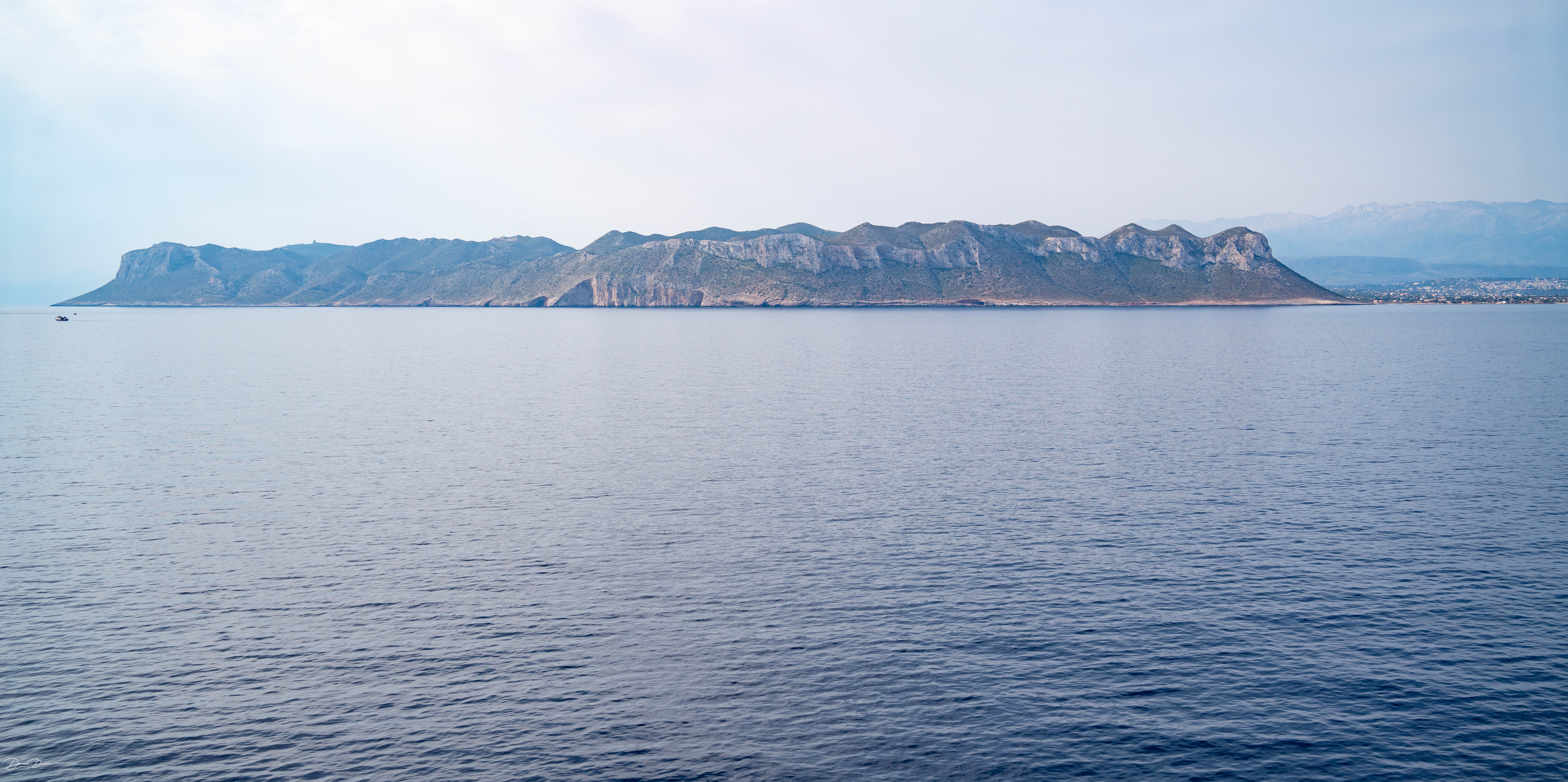
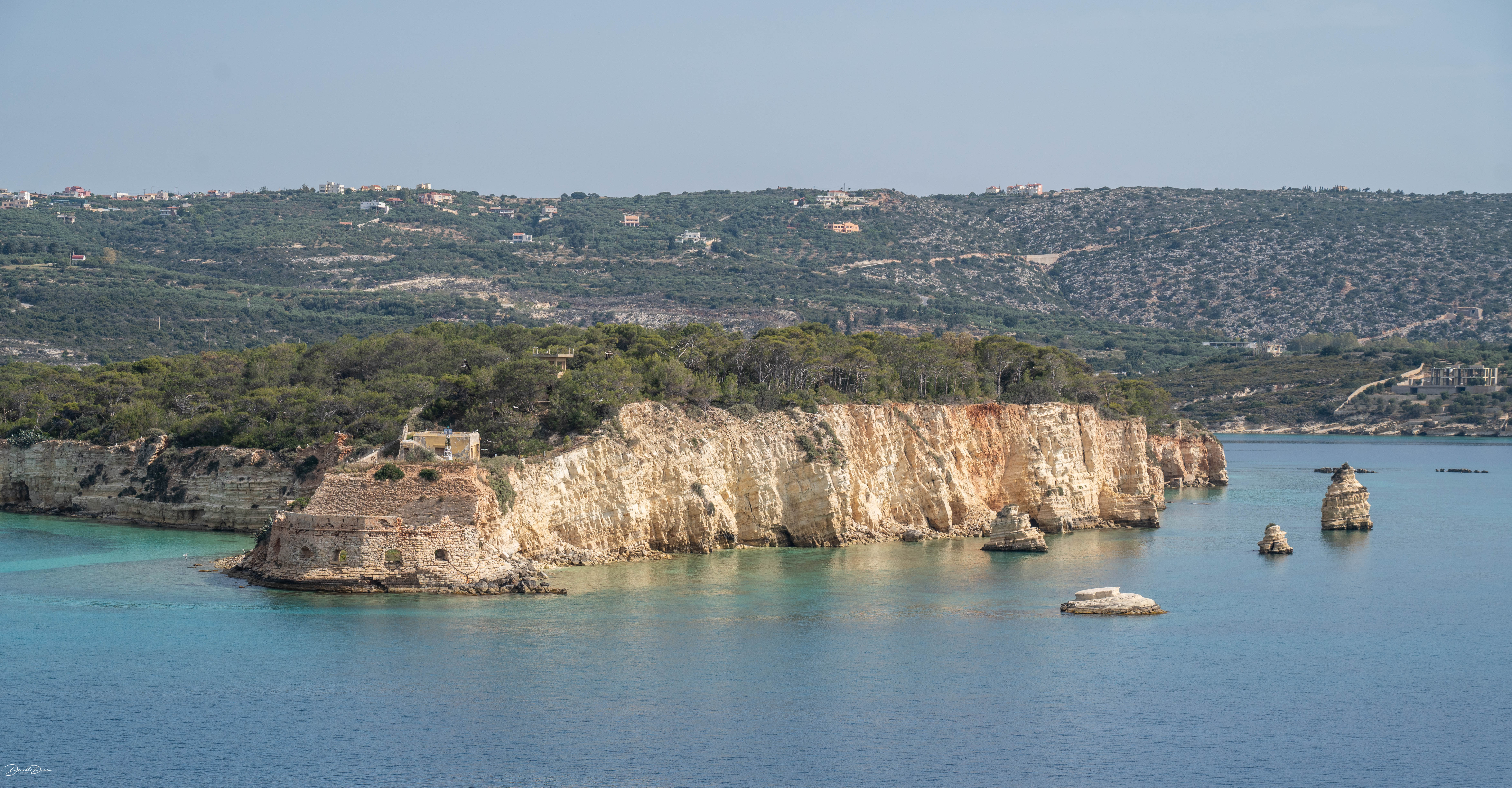
On Saturday morning, the Odyssey of the Seas sailed through a number of Greek Isles and into port on the Island of Crete.

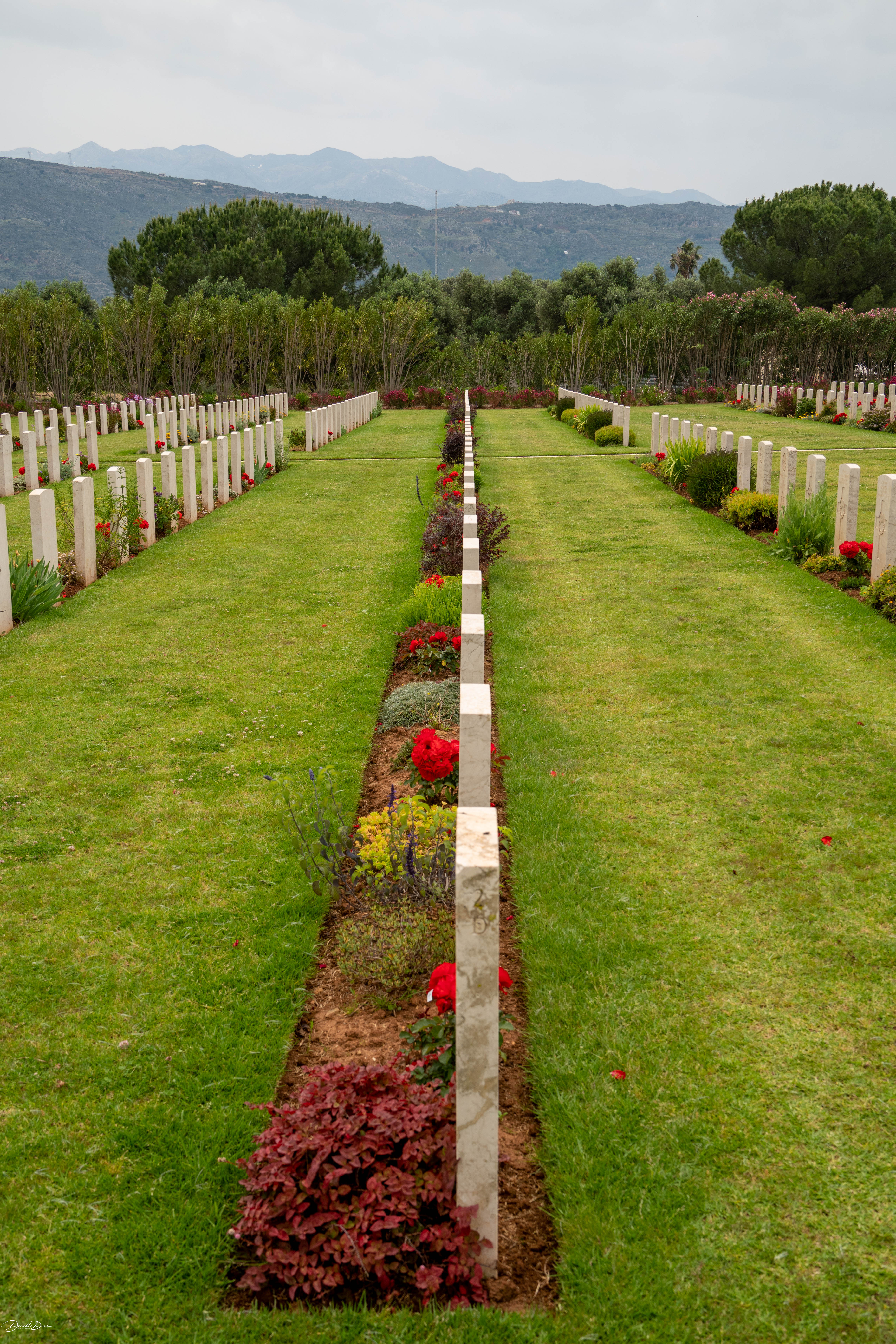
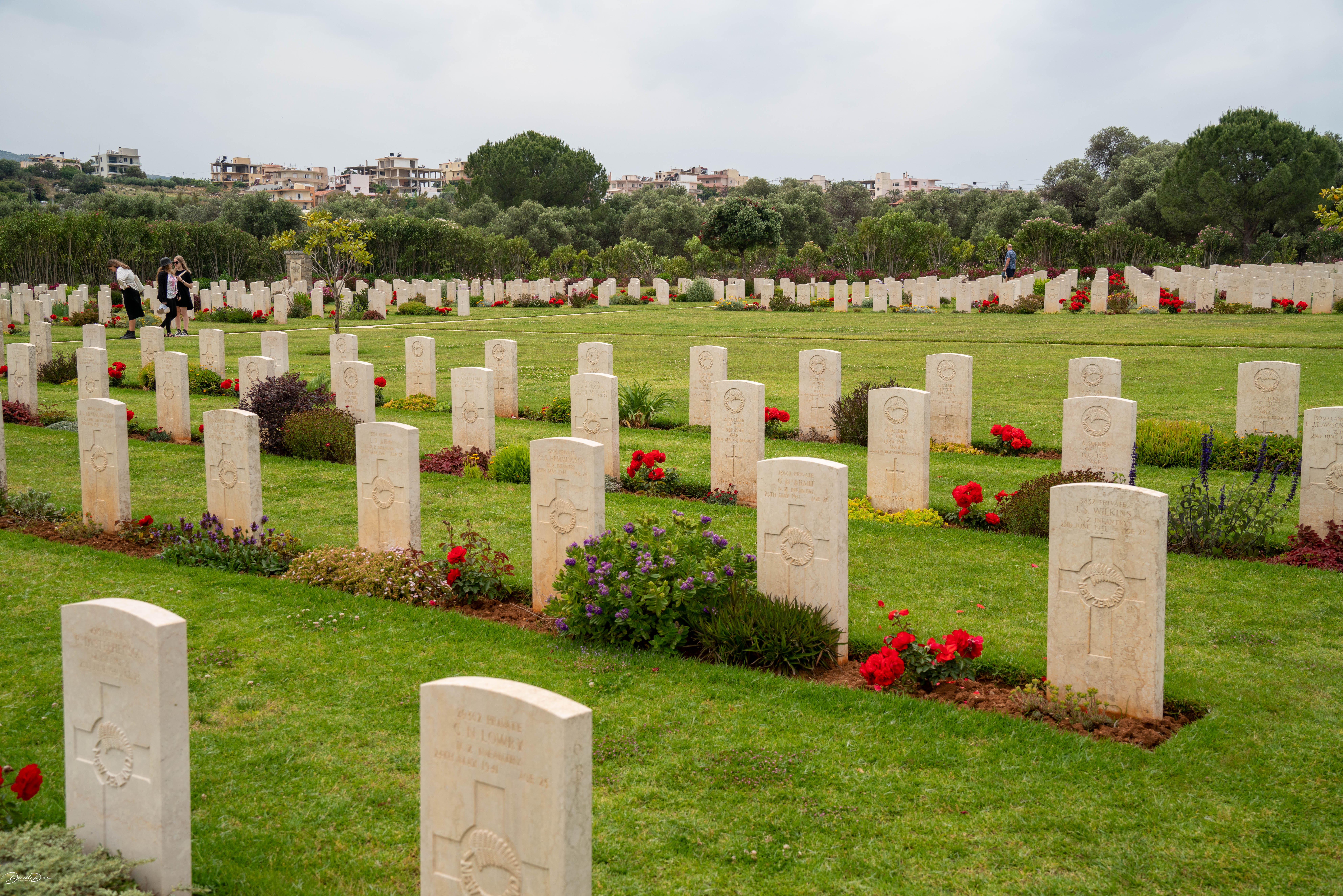
The first stop was at a memorial cemetery honoring British, Australian, and New Zealand soldiers and airmen who were killed while fighting on Crete against the Germans during World War II.

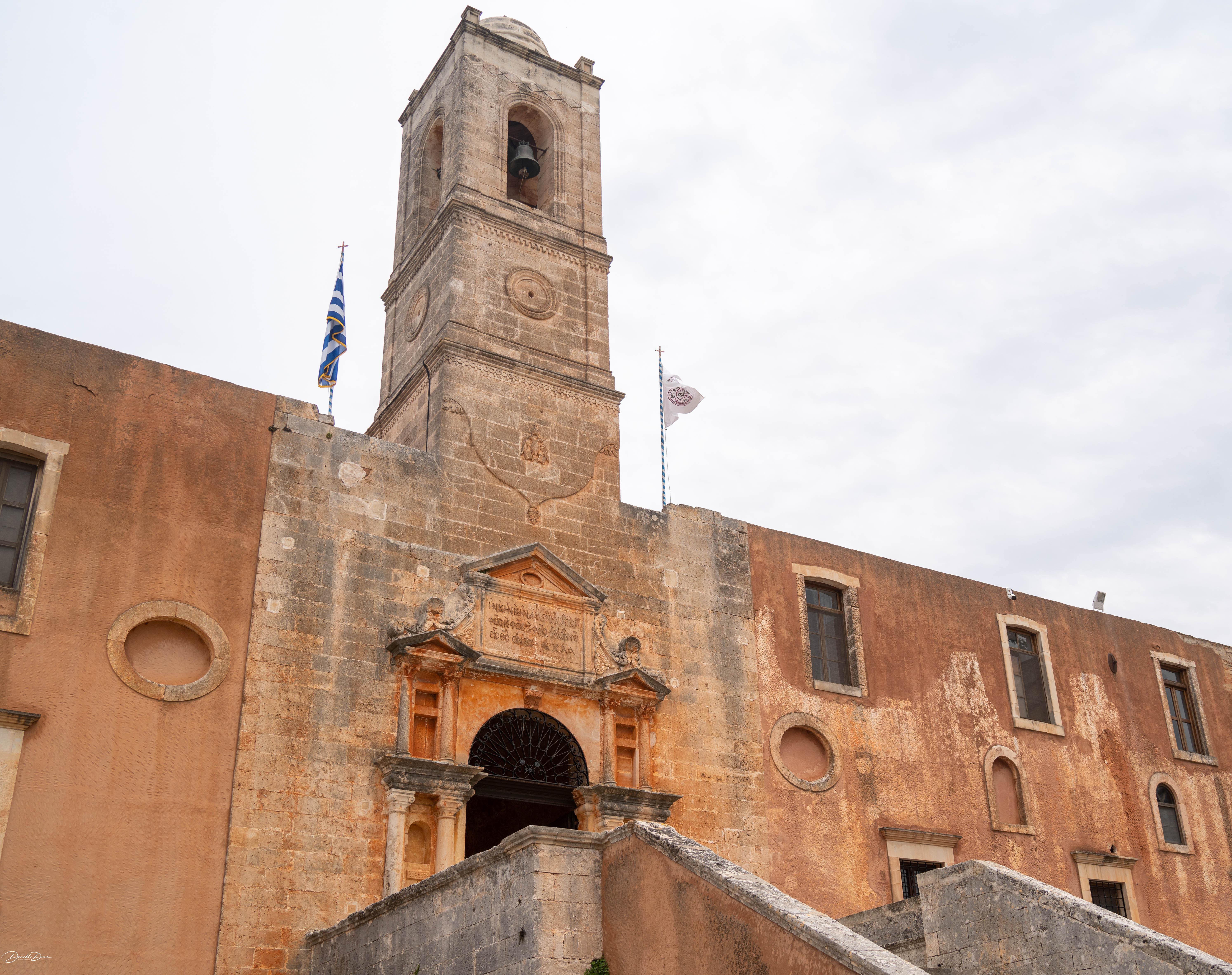
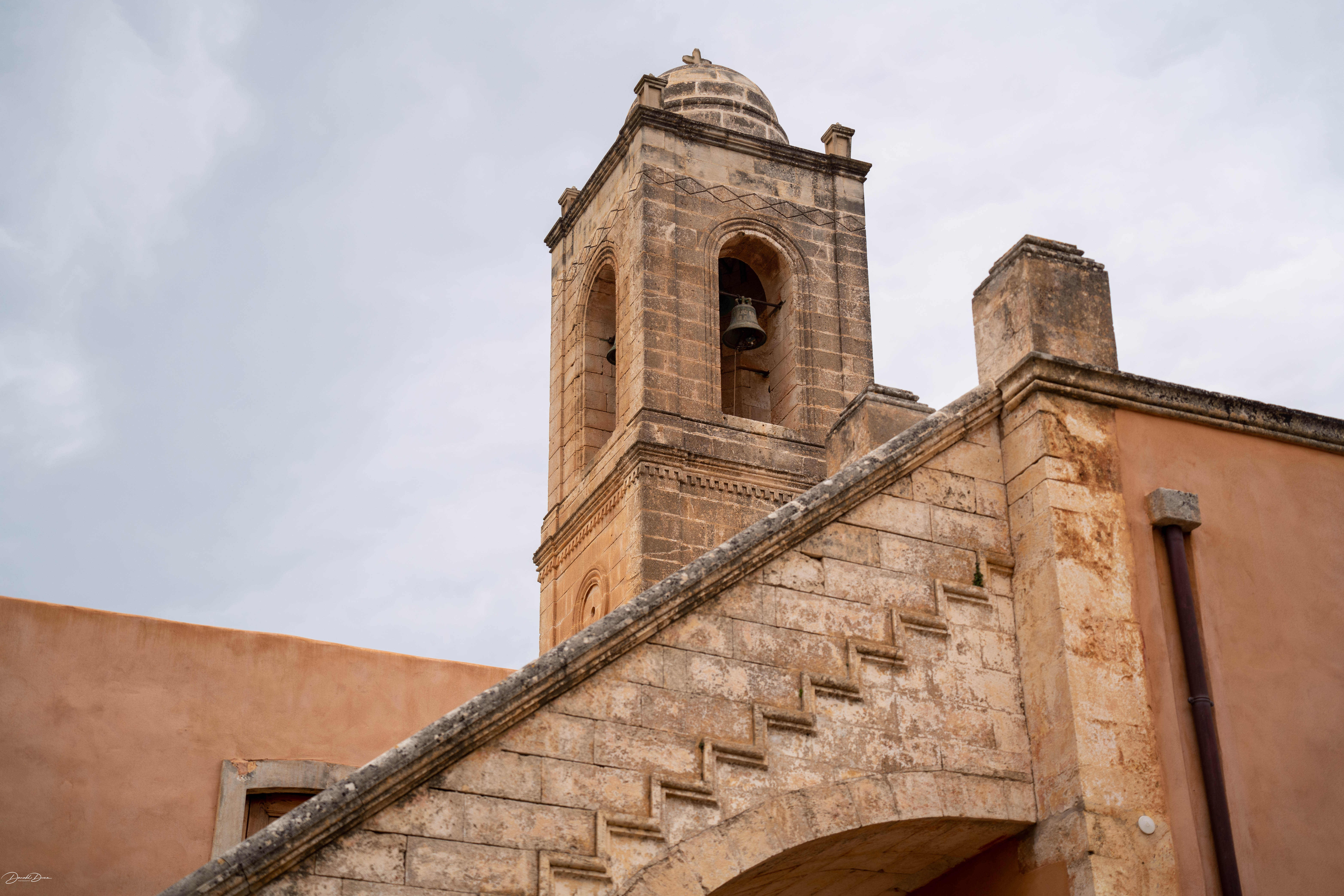
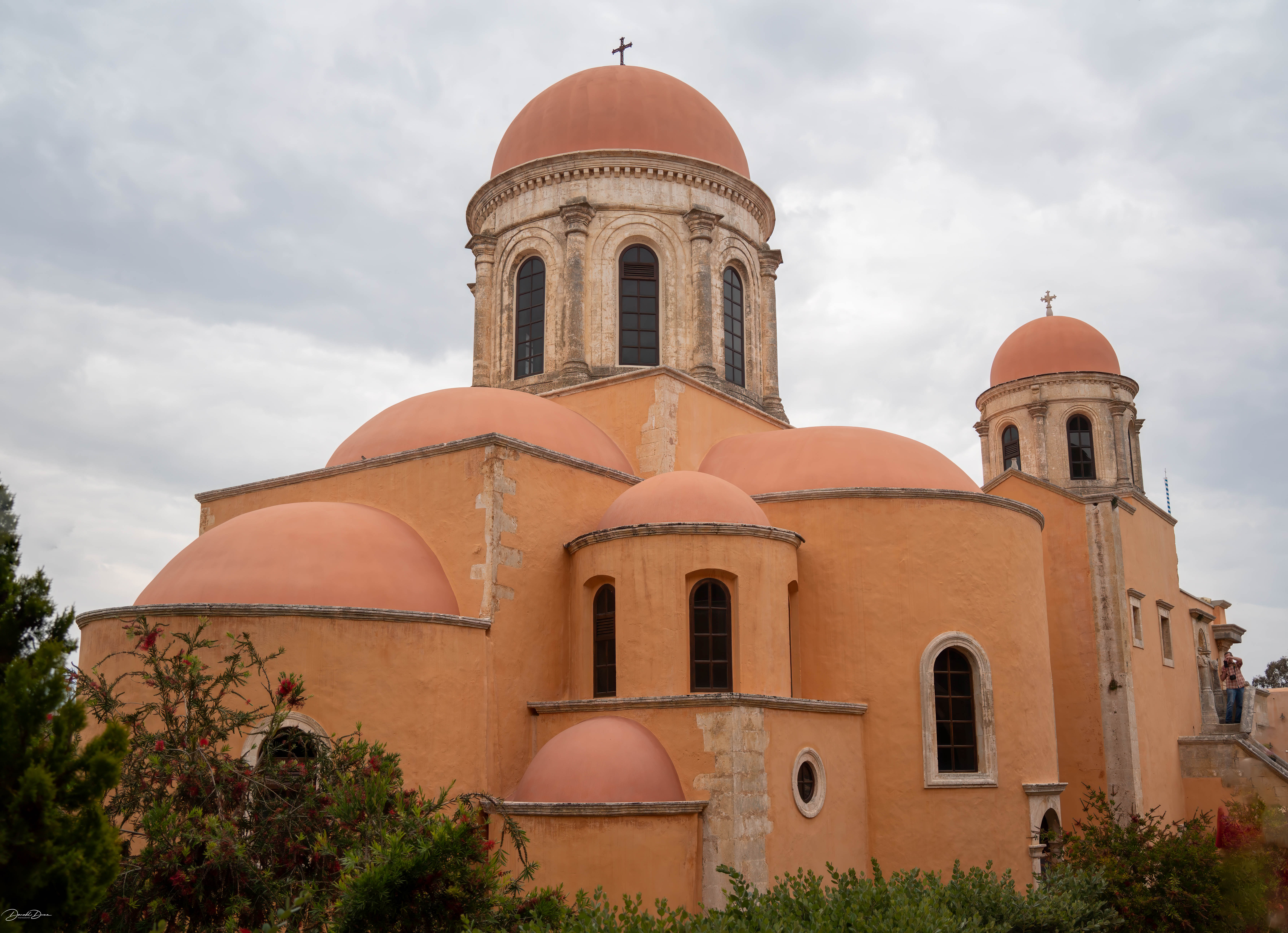
There was also a stop to overlook the city of Rethymnon. Next was a stop at Arkadi Monastery, a fortress-like monastery whose history dates to Byzantine times. The monastery had one of the most beautiful gardens we’ve seen, simple but elegant as well.

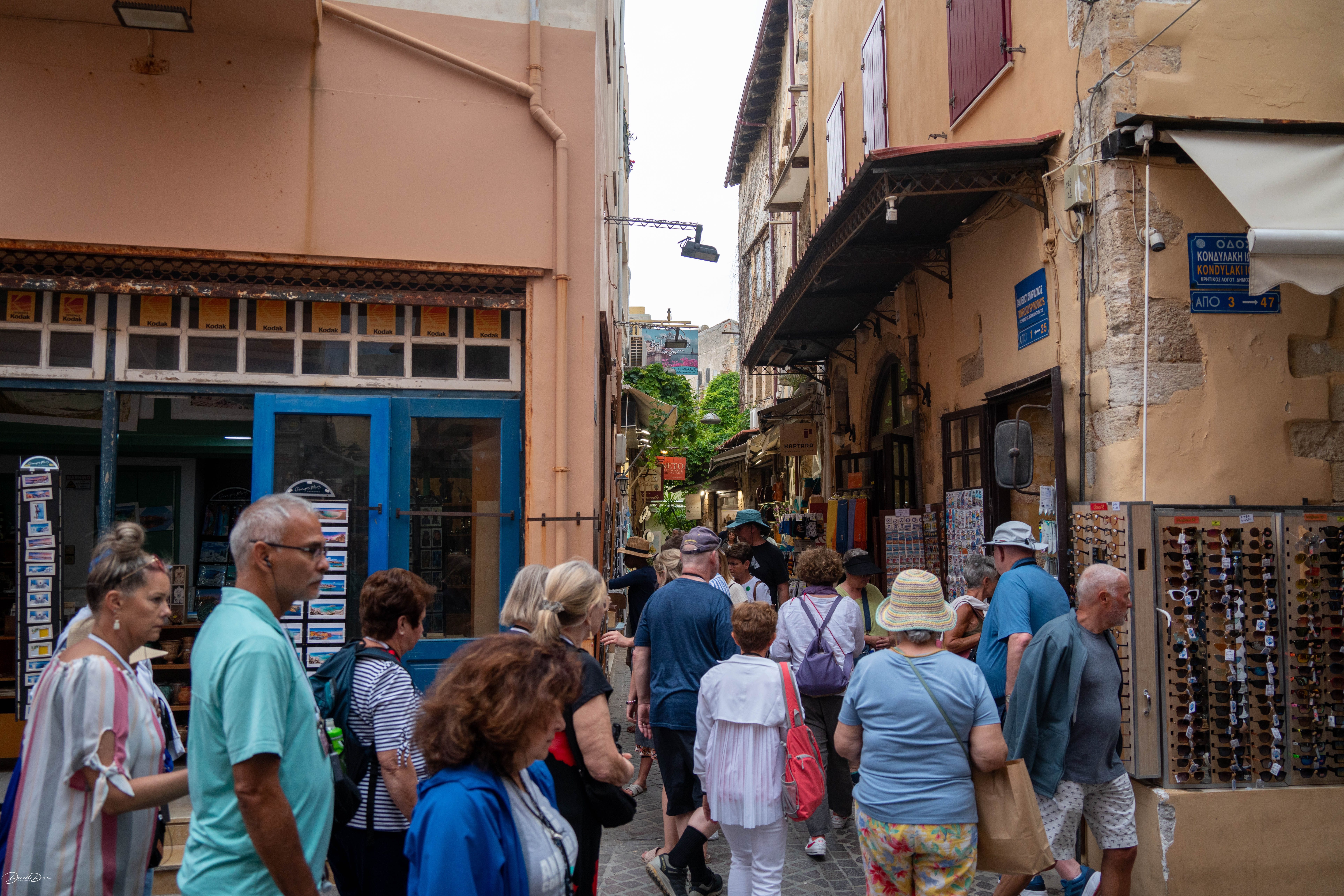
We finished the excursion with a stroll through the distinctively ancient yet distinctly modern bustling Rethymnon which reminded us of a small version of Gdańsk, Poland.

In the evening we attended a show by a British group, the Barricade Boys, stars of the “Les Misérables” musical, live in concert. From fabulous harmonies and incredible vocals, the Barricade Boys blew us away with their one-of-a-kind vocal performance.

Wednesday, May 18, 2023–More of Rome, Italy

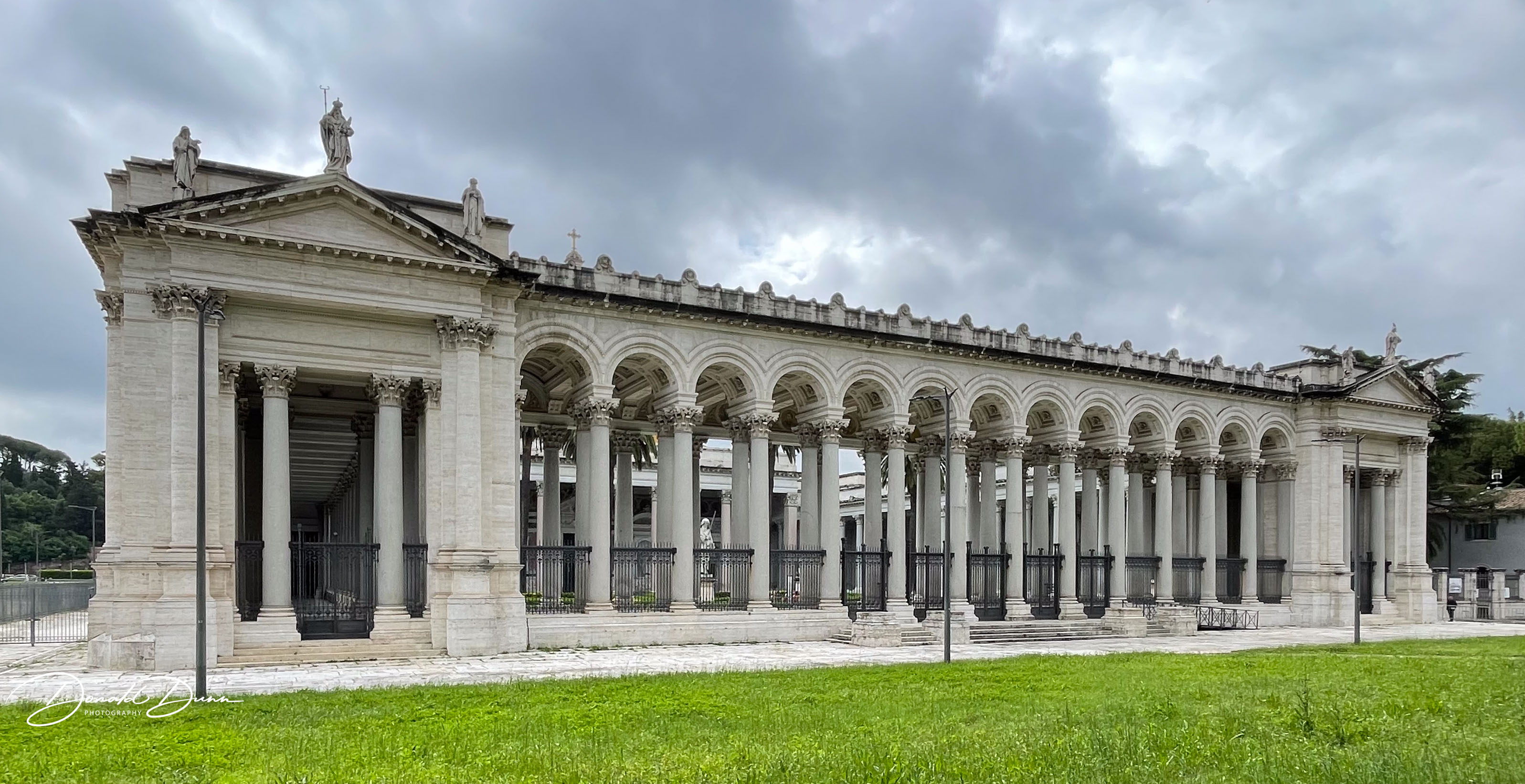
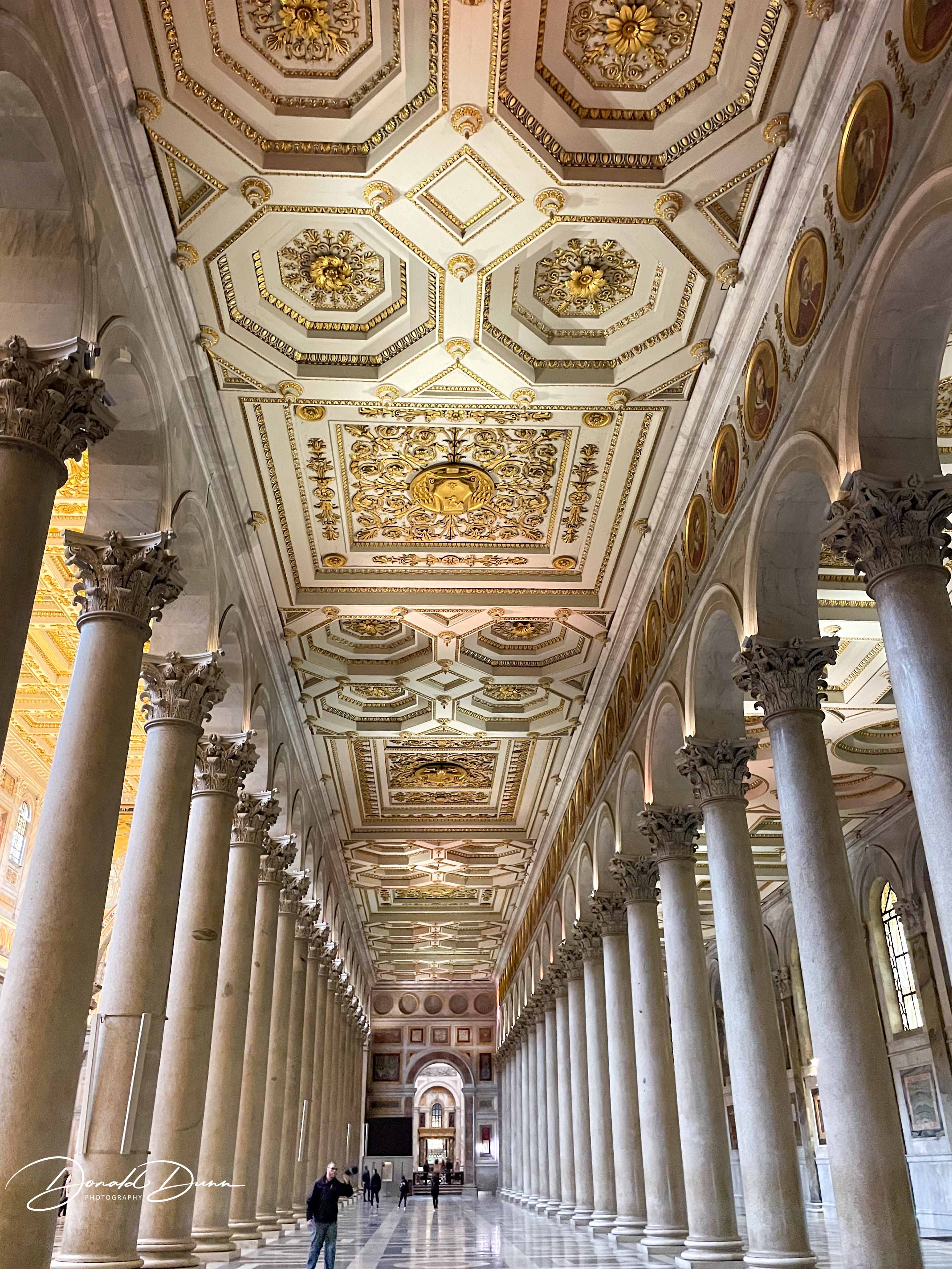
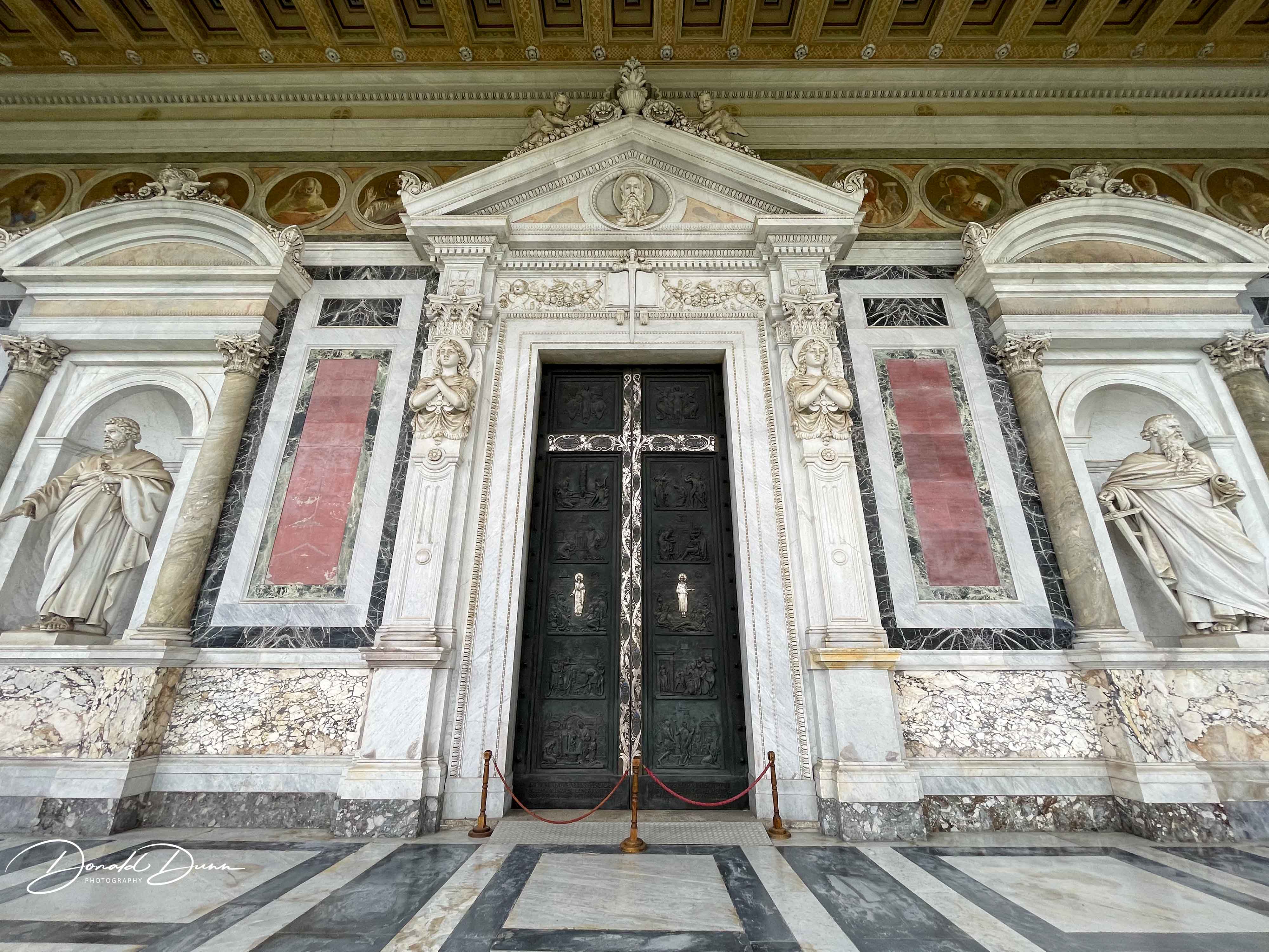
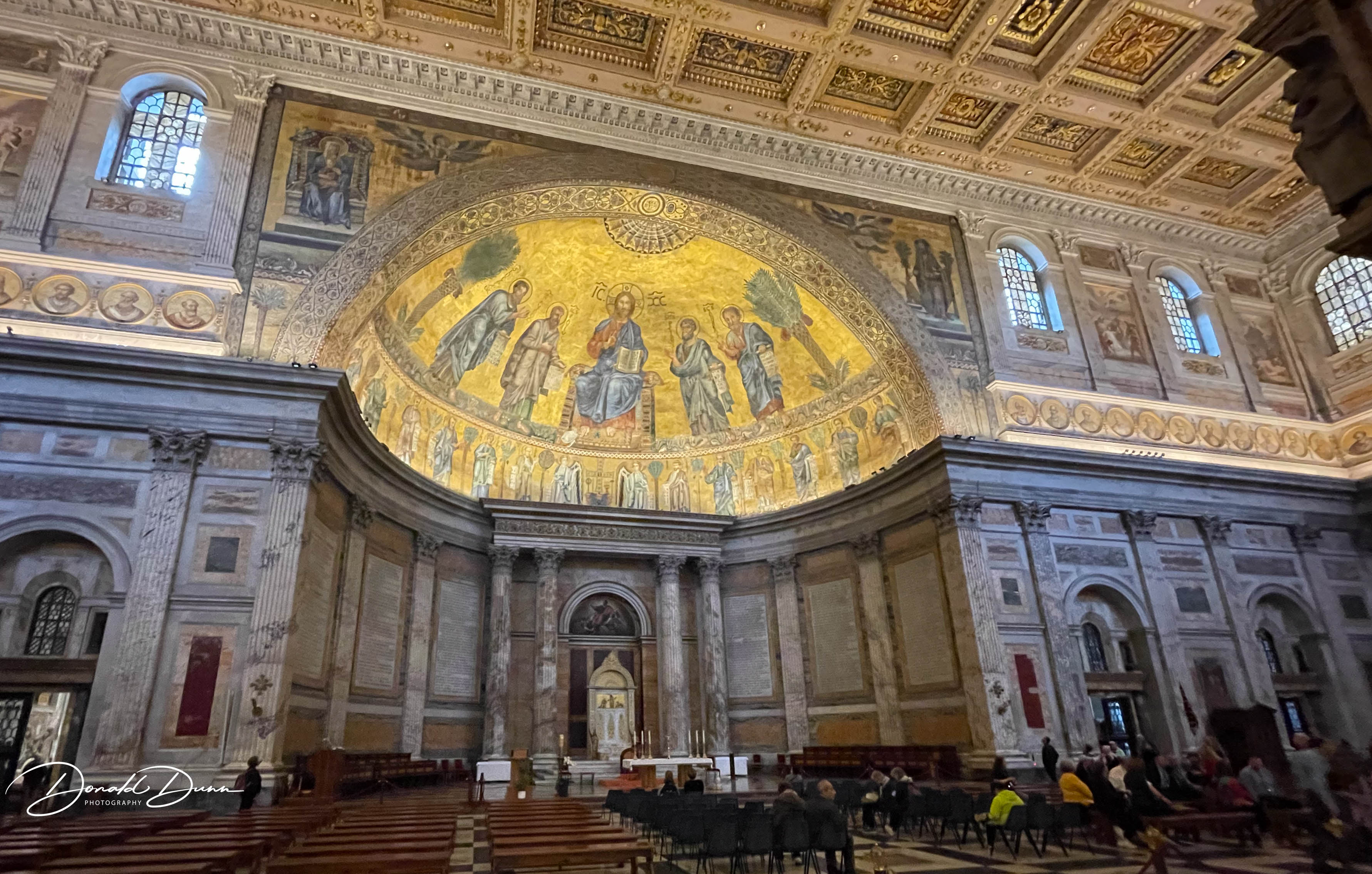
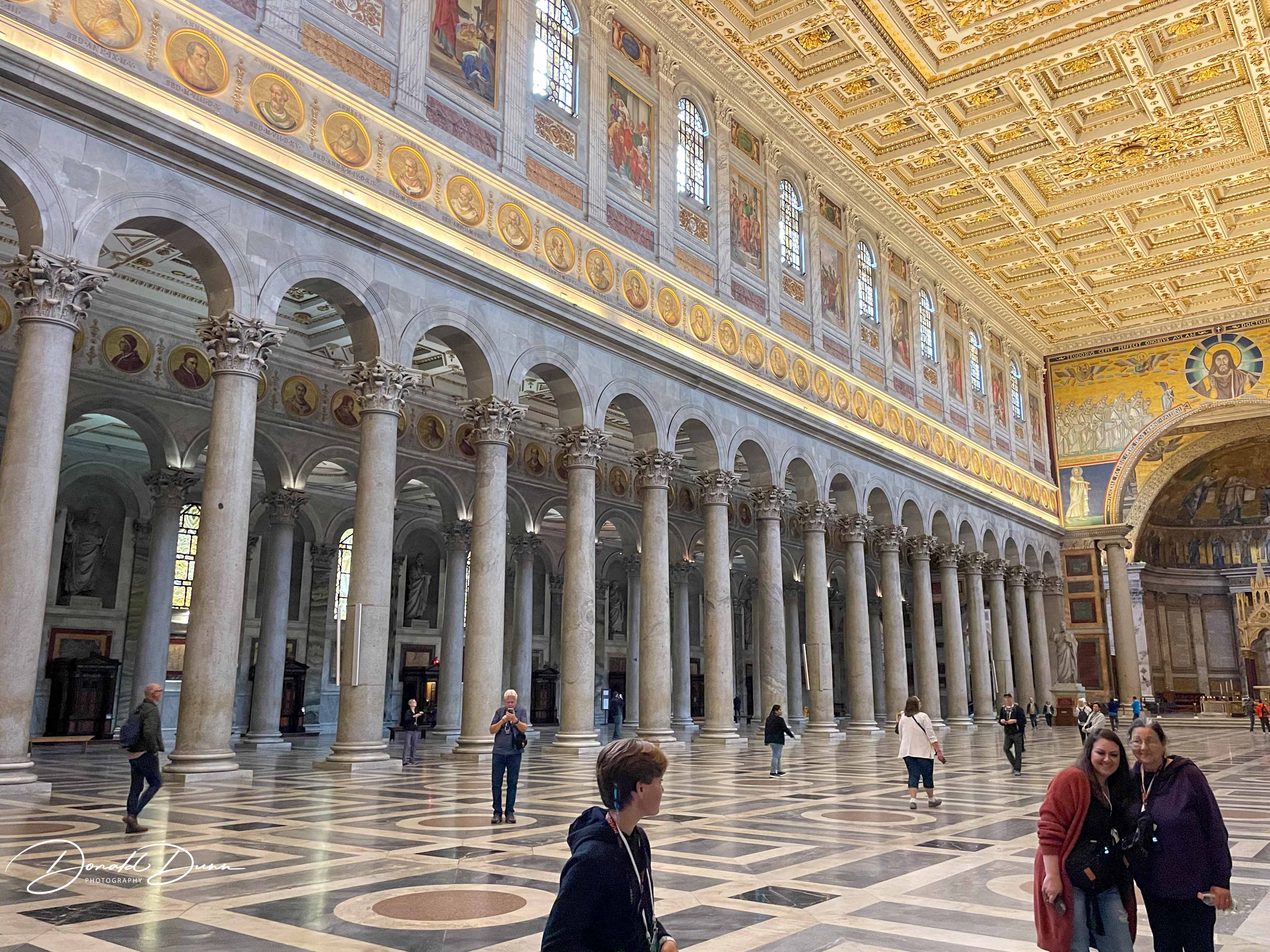
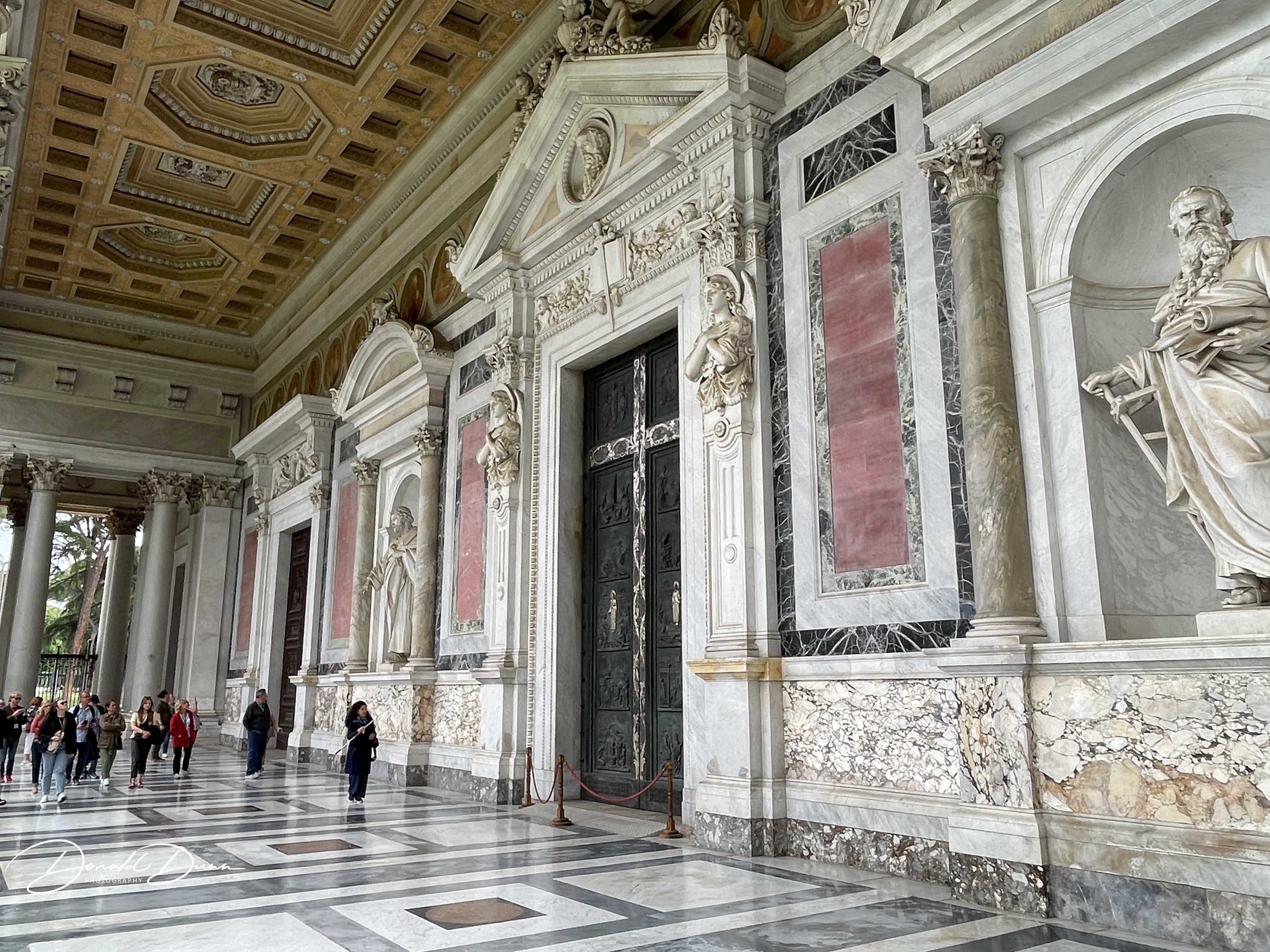
After breakfast, we toured the Basilica of St. Paul Outside-the-Walls. The present structure stands over the place where Constantine built the first church over Saint Paul’s grave. The church features a portrait of every Pope that has served the church. Next, we entered the Catacombs of Callixtus, built along the Appian Way. Here, 16 Popes from the 2nd through 4th Centuries were interred, though they have been removed to various churches over the centuries.

Basilica of St. Paul Outside-the-Walls

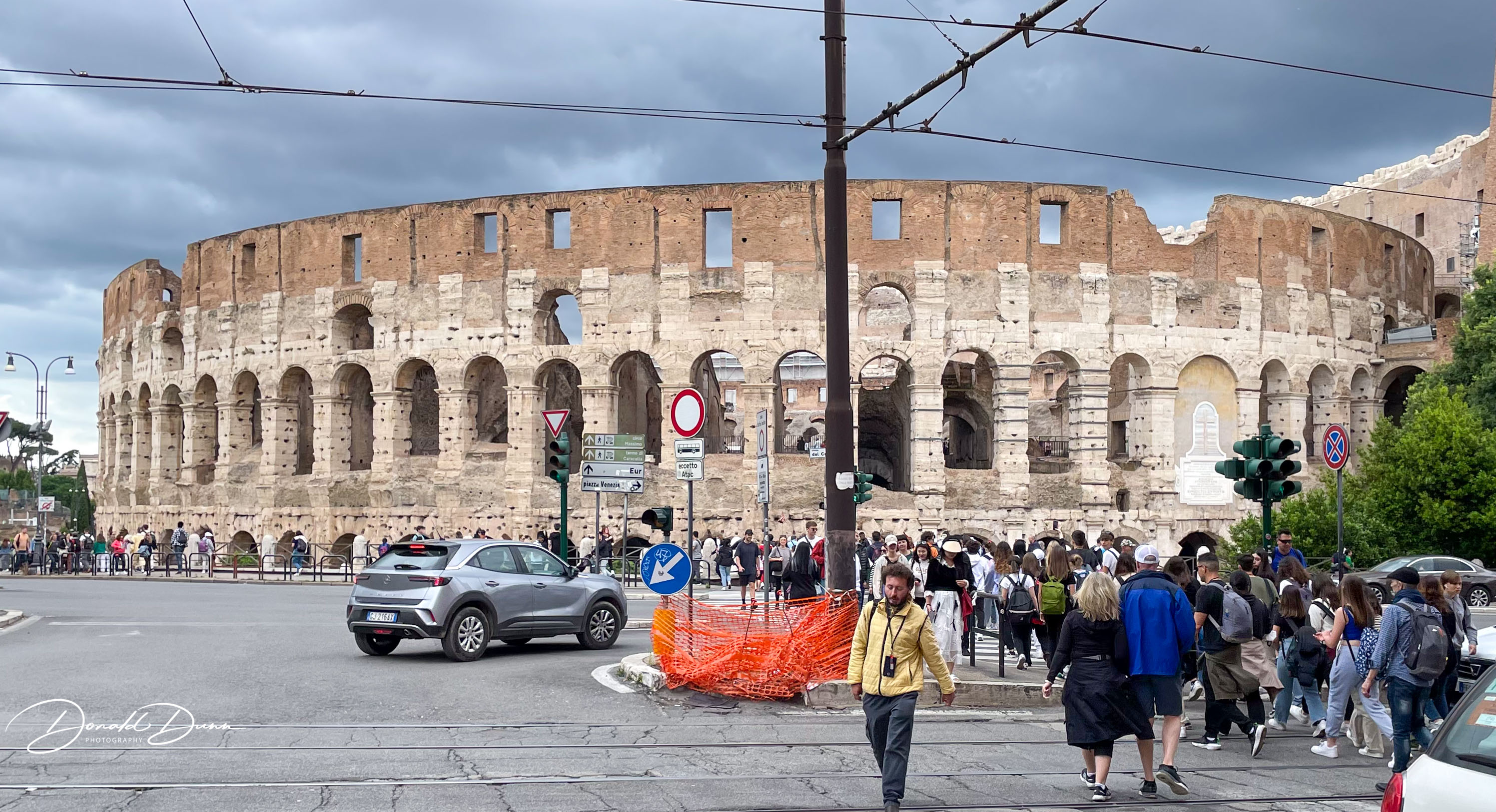
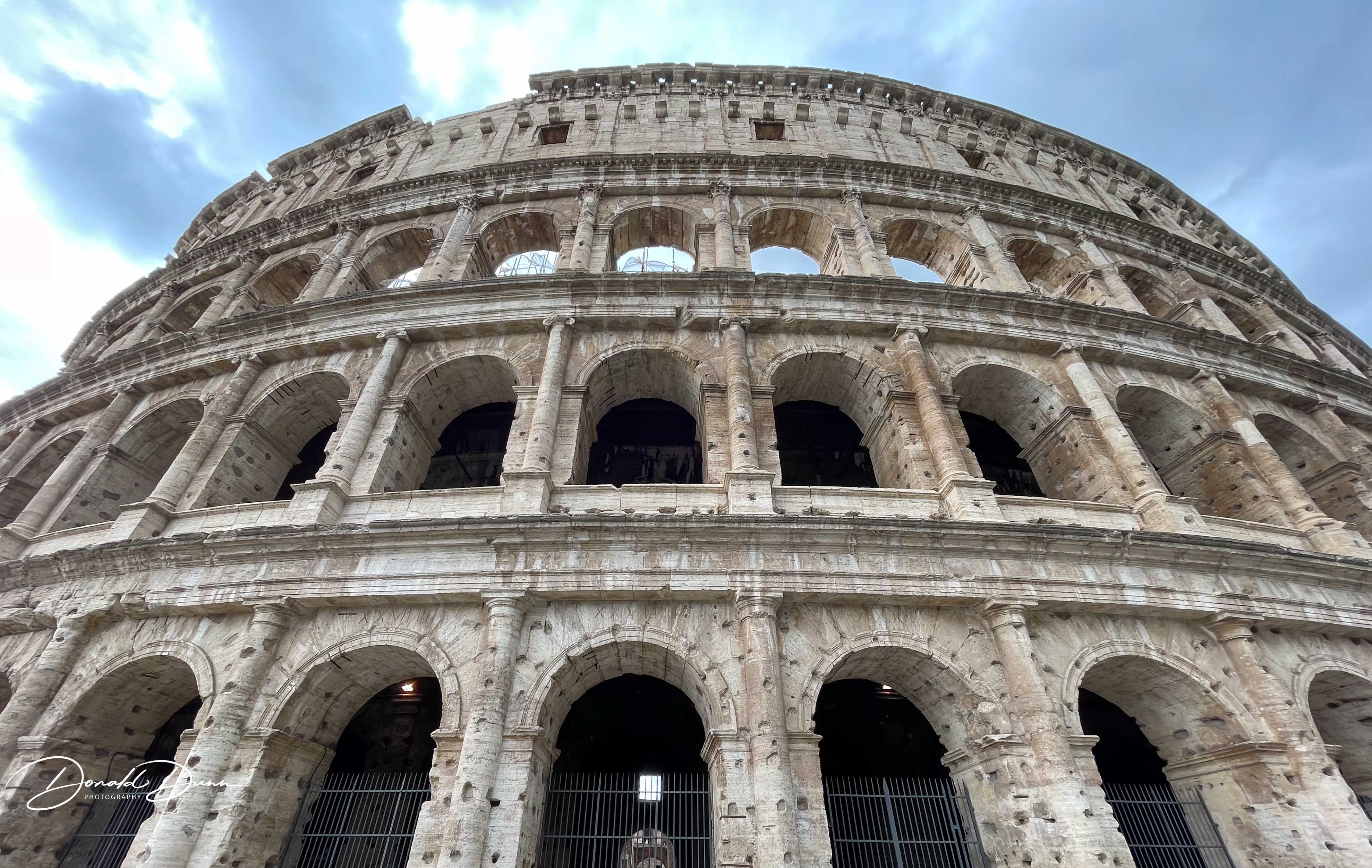
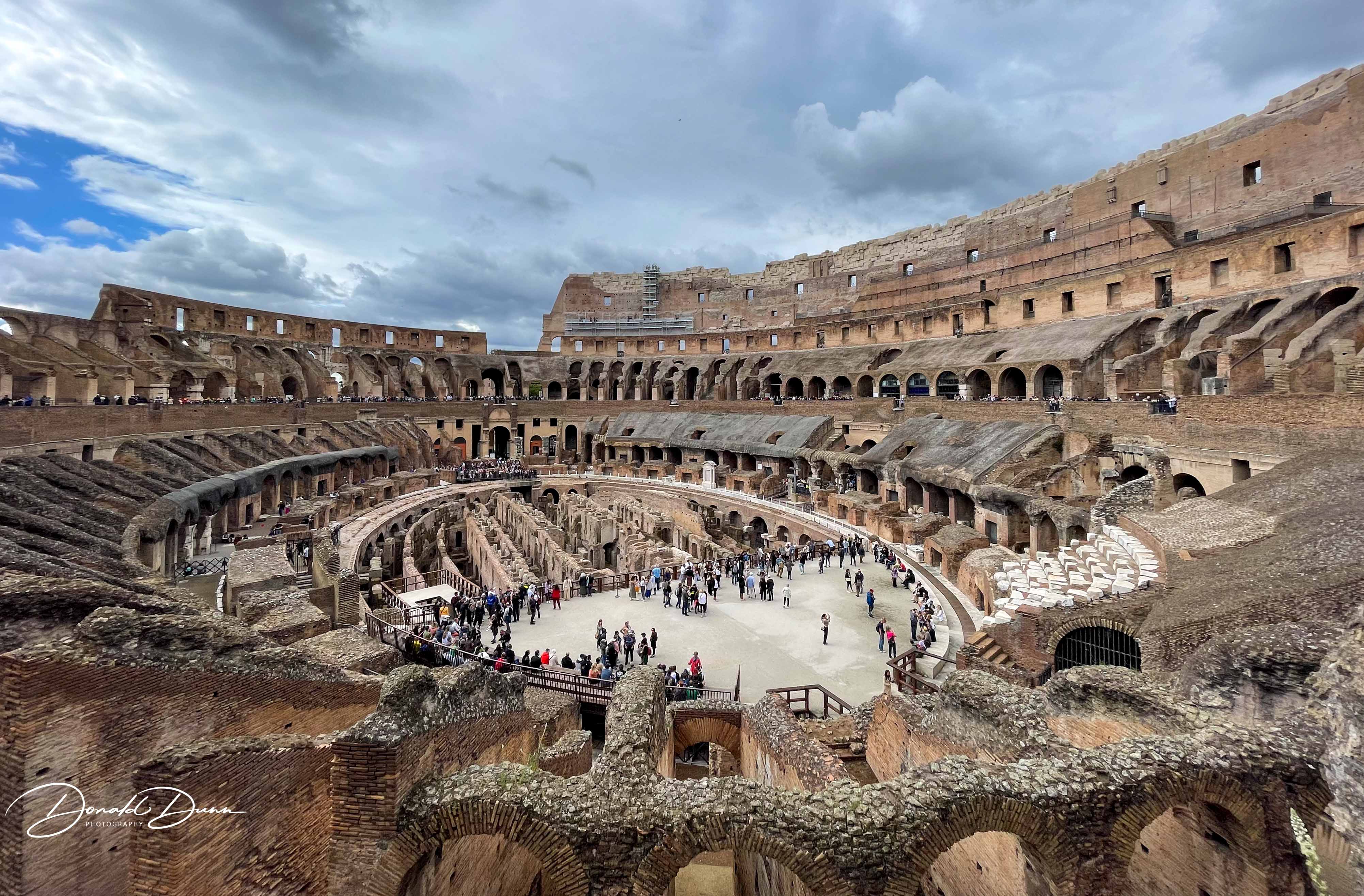
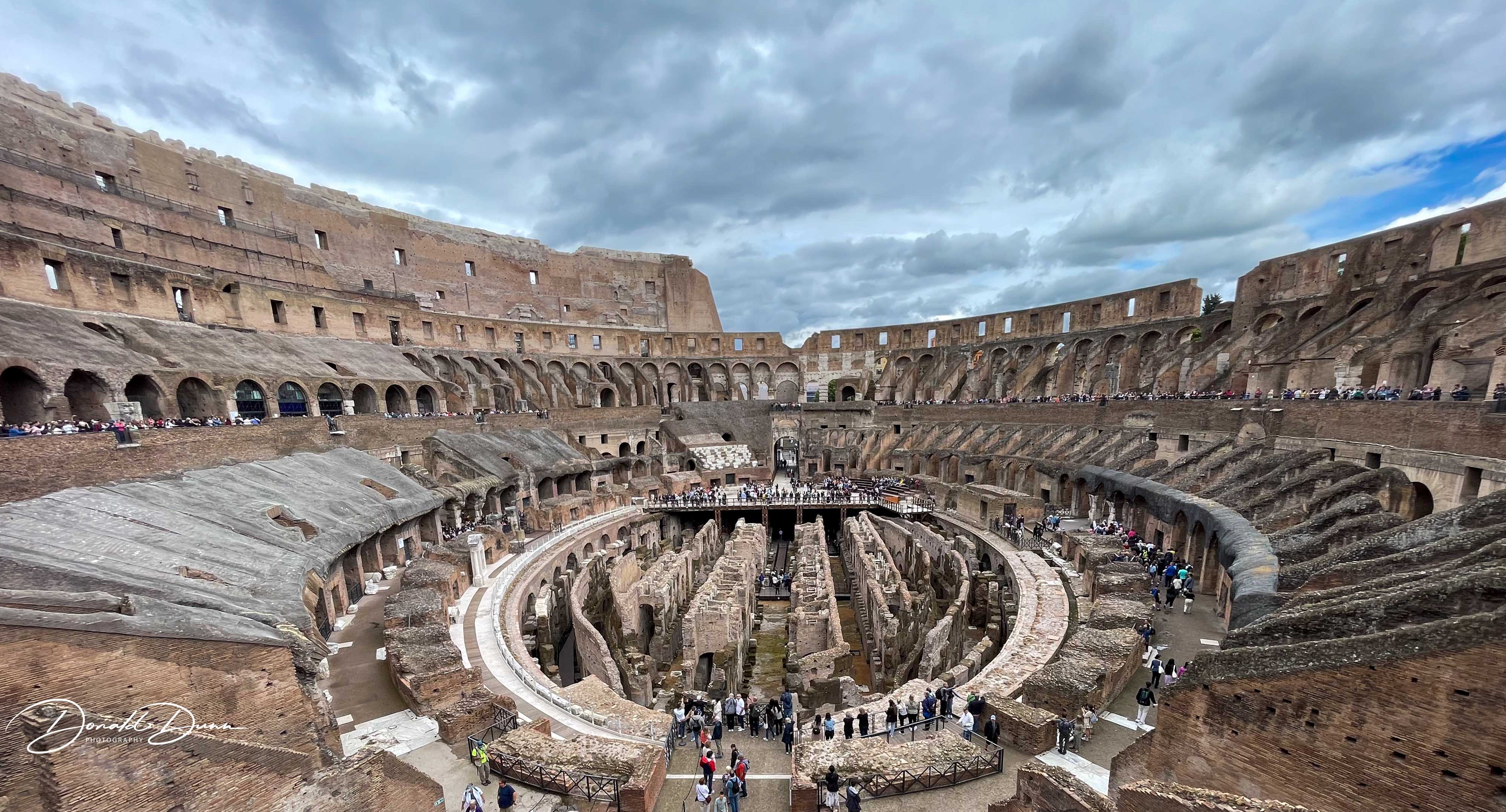
And then, we were off to tour the Colosseum. The Colosseum is an elliptical amphitheater in the center of Rome. It is the largest ancient amphitheater ever built, and is still the largest standing amphitheater in the world, despite its age. Construction began in 72 AD and was completed in 80 AD. The three emperors (Vespian, Titus, and Domitian) who were patrons of the work are known as the Flavian dynasty.

Panorama of the Colosseum

The Colosseum is built of travertine limestone, tuff or volcanic rock, and brick-faced concrete. It could hold an estimated 50,000 to 80,000 spectators at various points in its history, having an average audience of some 65,000; it was used for gladiatorial contests and public spectacles including animal hunts, executions, re-enactments of famous battles, dramas based on Roman mythology, and briefly mock sea battles.  Although substantially ruined by earthquakes and stone robbers, the Colosseum is still a renowned symbol of Imperial Rome and was listed as one of the New 7 Wonders of the World. It has links to the Roman Catholic Church, as each Good Friday, the Pope leads a torchlit “Way of the Cross” procession that starts in the area around the Colosseum.

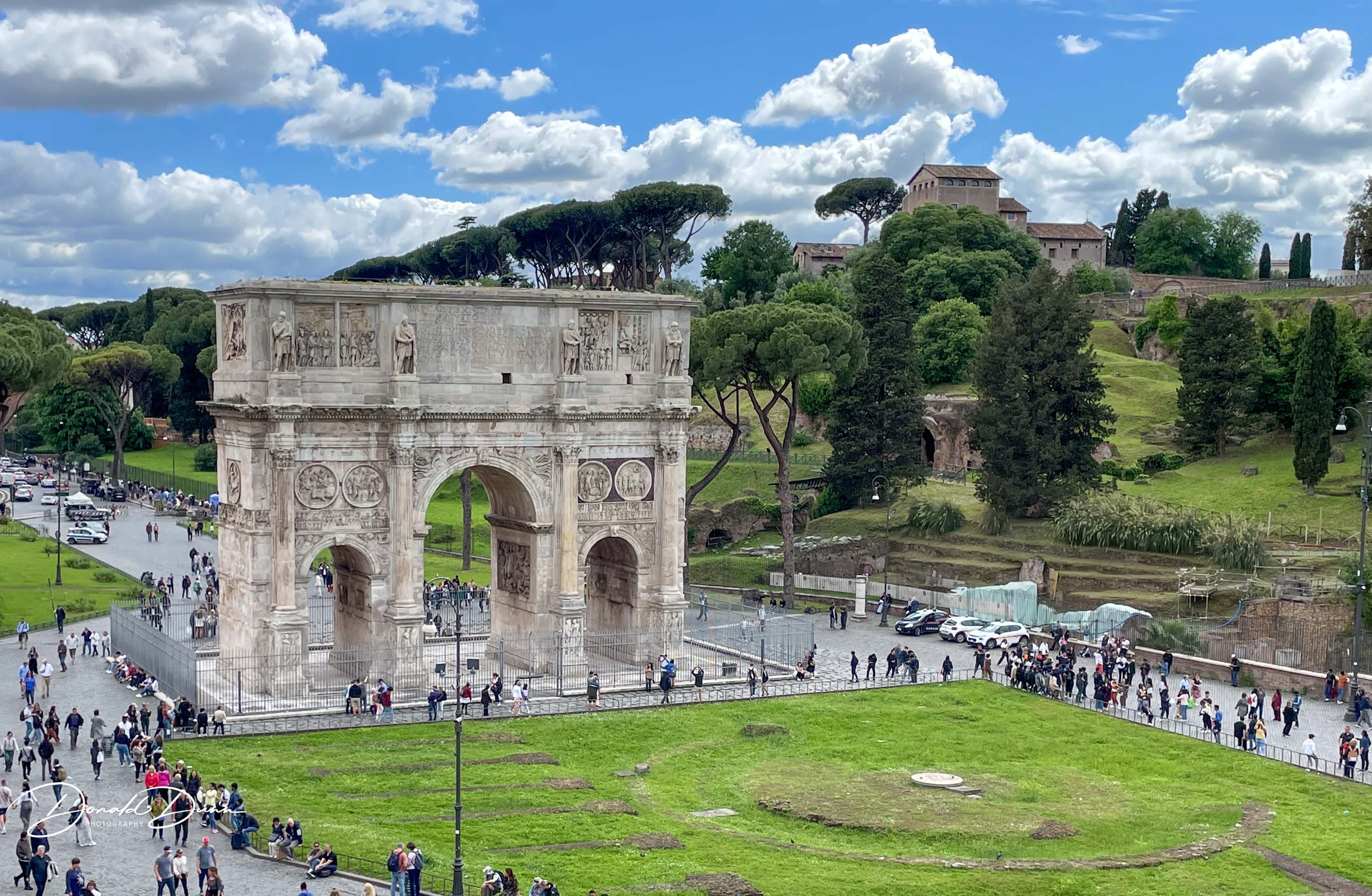
From atop the Colosseum, we saw the the Arch of Constantine and the Forum.The Arch of Constantine is a triumphal arch in Rome dedicated to the emperor Constantine the Great. The arch was commissioned by the Roman Senate to commemorate Constantine’s victory over Maxentius at the Battle of Melvin Bridge in AD 312. Situated between the Colosseum and the Palatine Hill, the arch spans the Via Triumphalis, the route taken by victorious military leaders when they entered the city in a triumphal procession. Dedicated in 315, it is the largest Roman triumphal arch; the arch is constructed of brick-faced concrete covered in marble.

Arch of Constantine
The Forum

And then was back to the hotel for dinner and packing for our Thursday departure from Rome.

Thursday, May 18, 2023–Ending Our Tour Of Rome

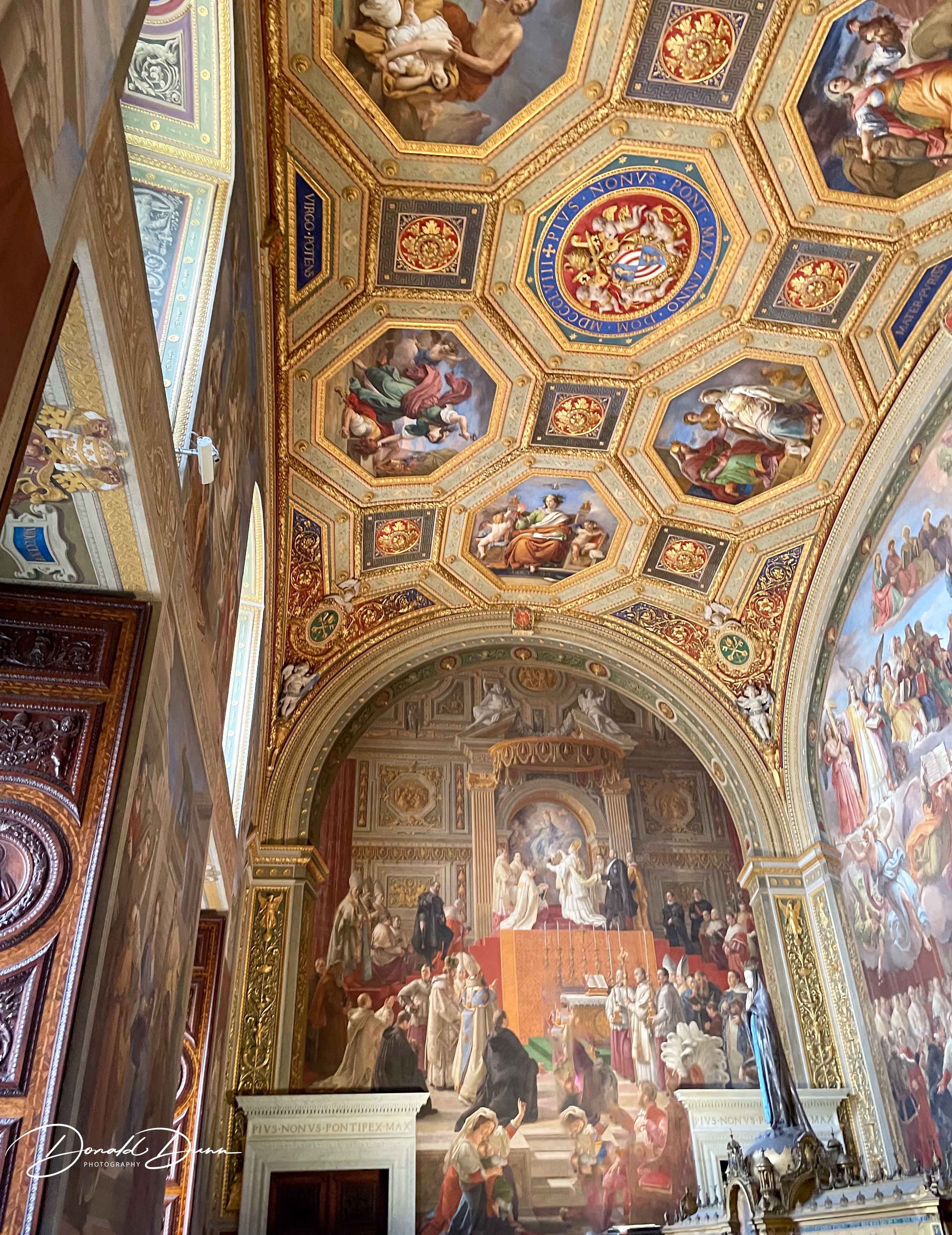
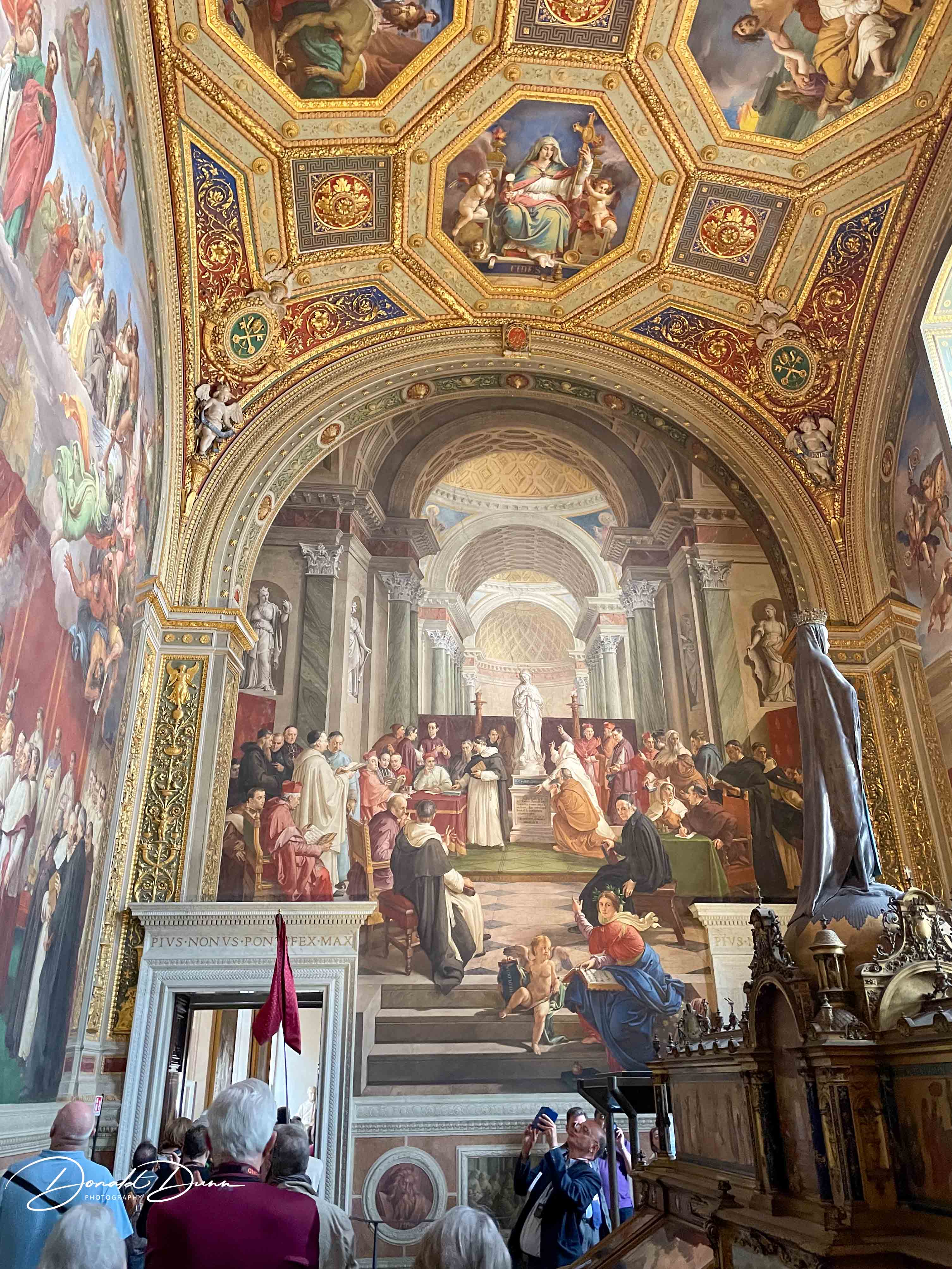
Today, we toured the Vatican, and explored its museums. 

As reported by the CIA, popes in their secular role ruled portions of the Italian peninsula for more than a thousand years until the mid-19th century, when many of the Papal States were seized by the newly united Kingdom of Italy. In 1870, the pope’s holdings were further circumscribed when Rome itself was annexed. Disputes between a series of “prisoner” popes and Italy were resolved in 1929 by three Lateran Treaties, which established the independent state of Vatican City and granted Roman Catholicism special status in Italy. In 1984, a concordat between the Holy See and Italy modified certain of the earlier treaty provisions, including the primacy of Roman Catholicism as the Italian state religion. 

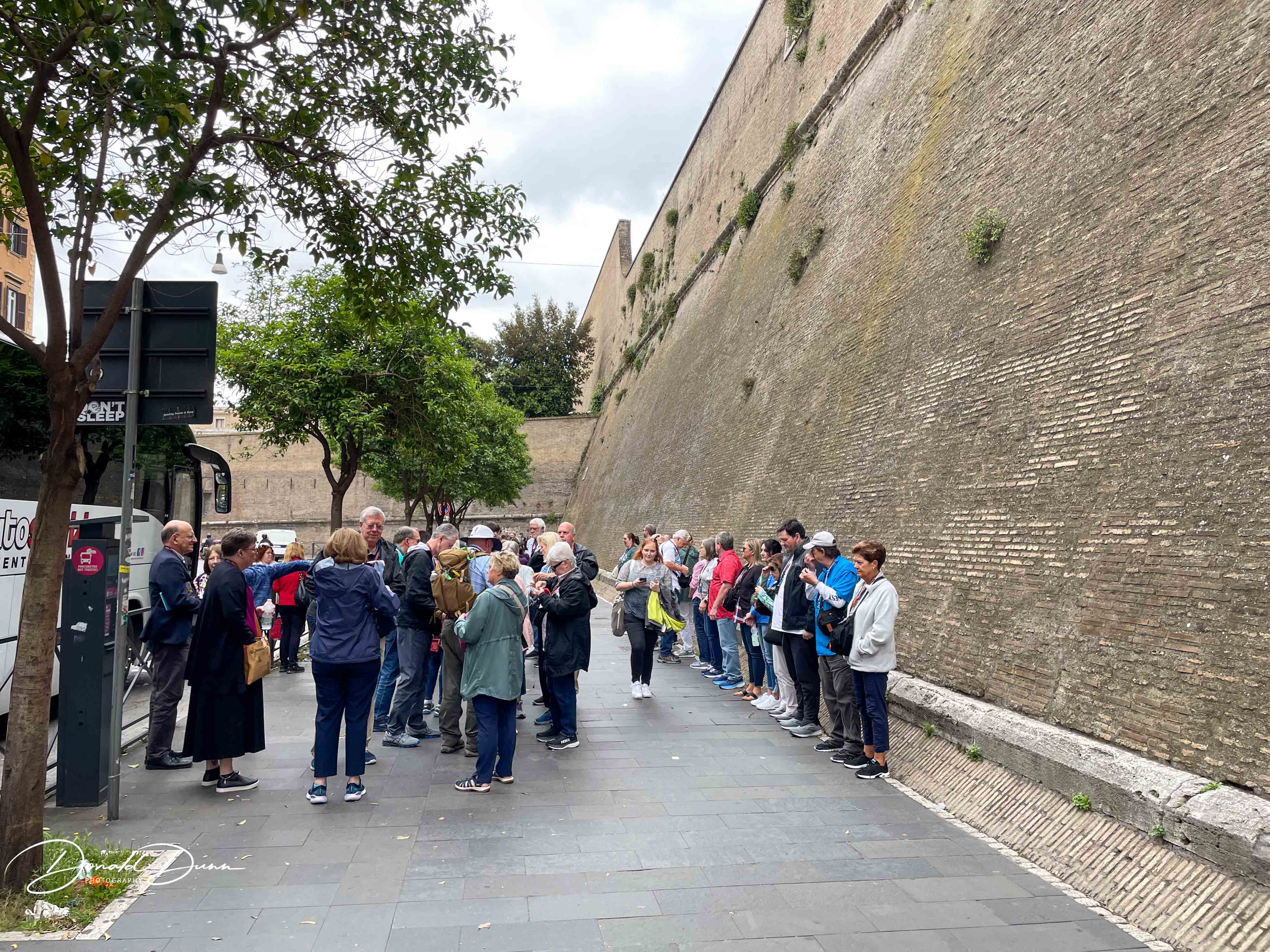
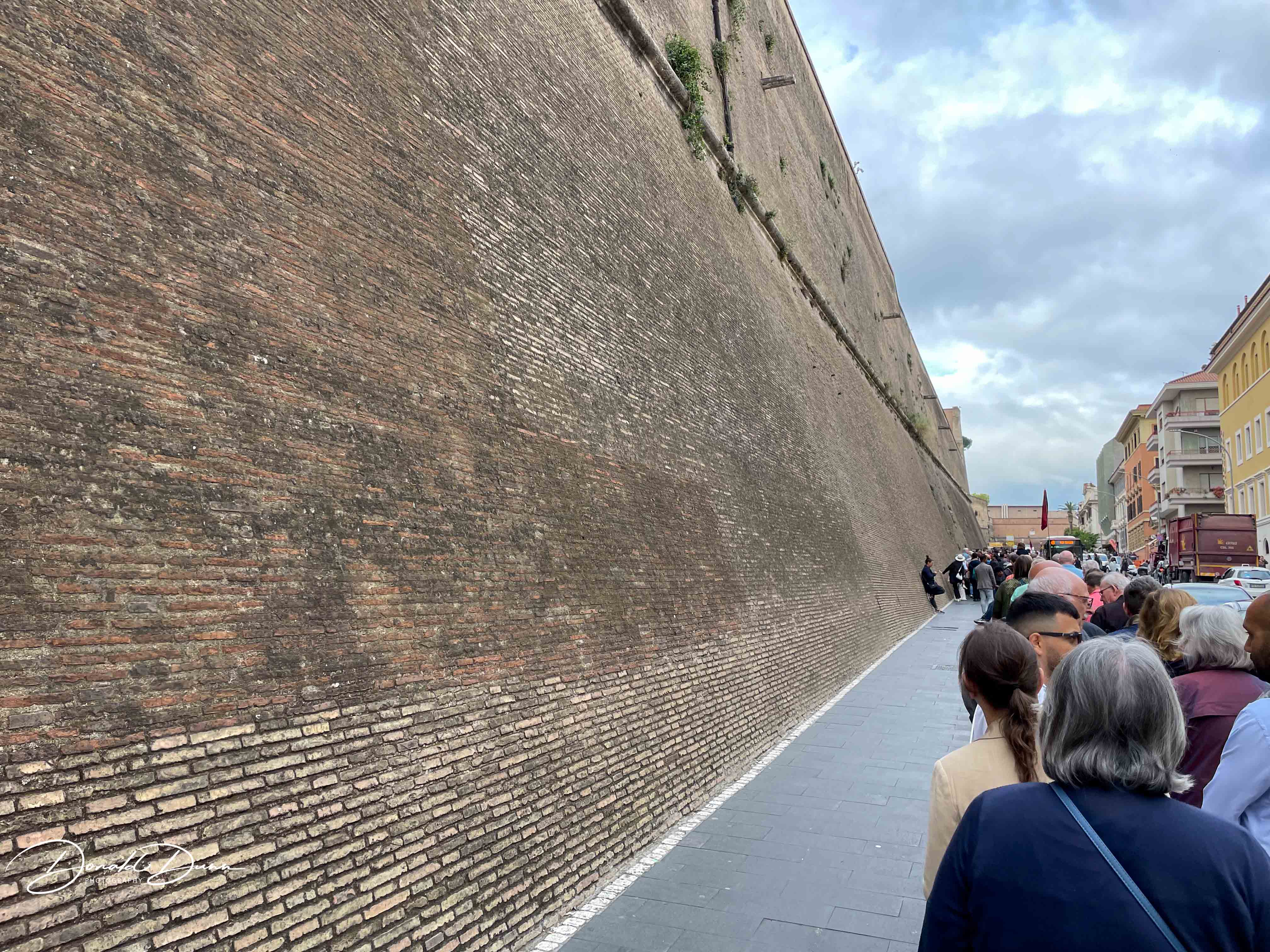
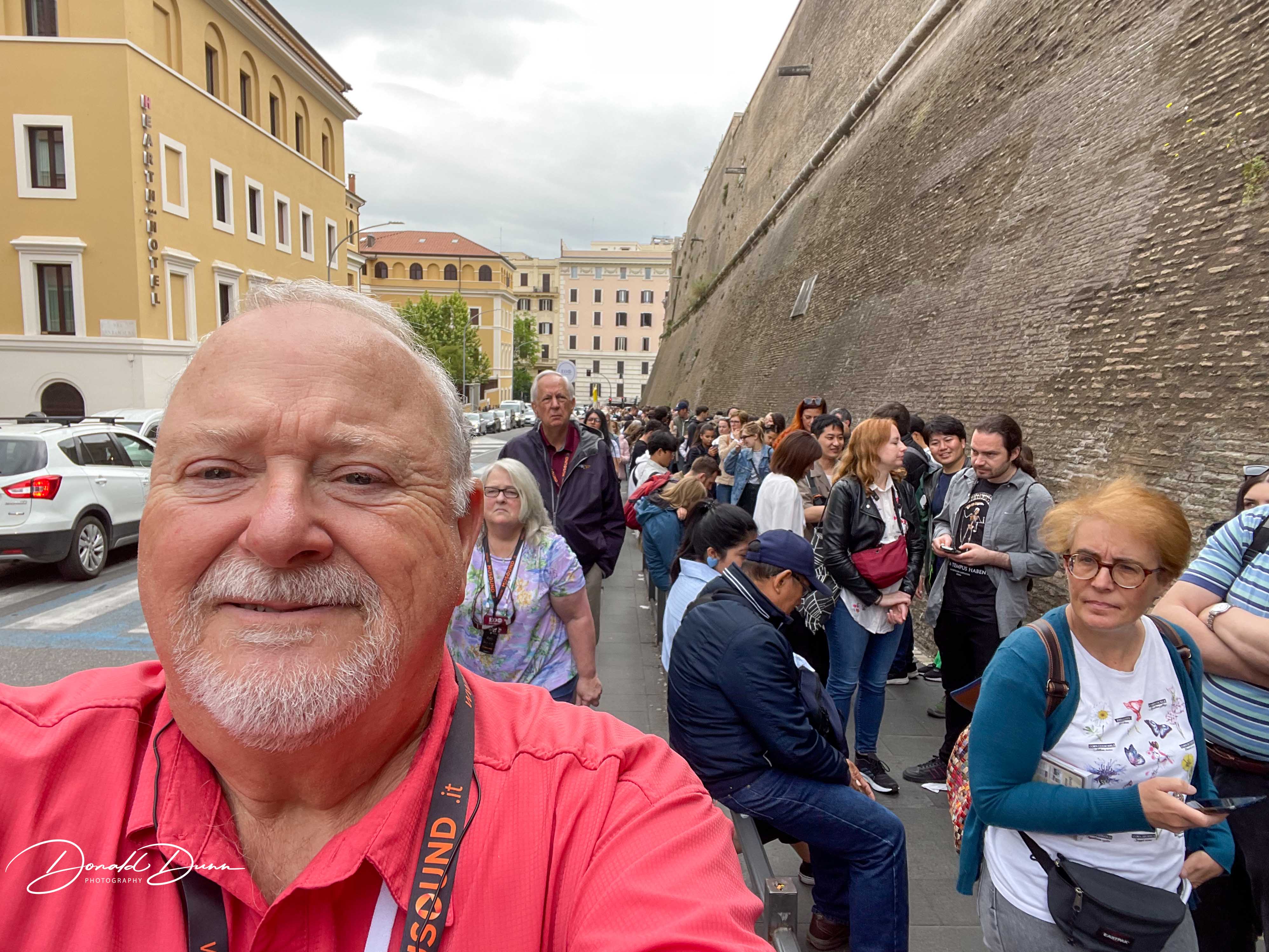
First up was queuing up alongside the Vatican City walls to enter the Main Gate. Long lines were seemingly everywhere, but moved at a reasonable speed.

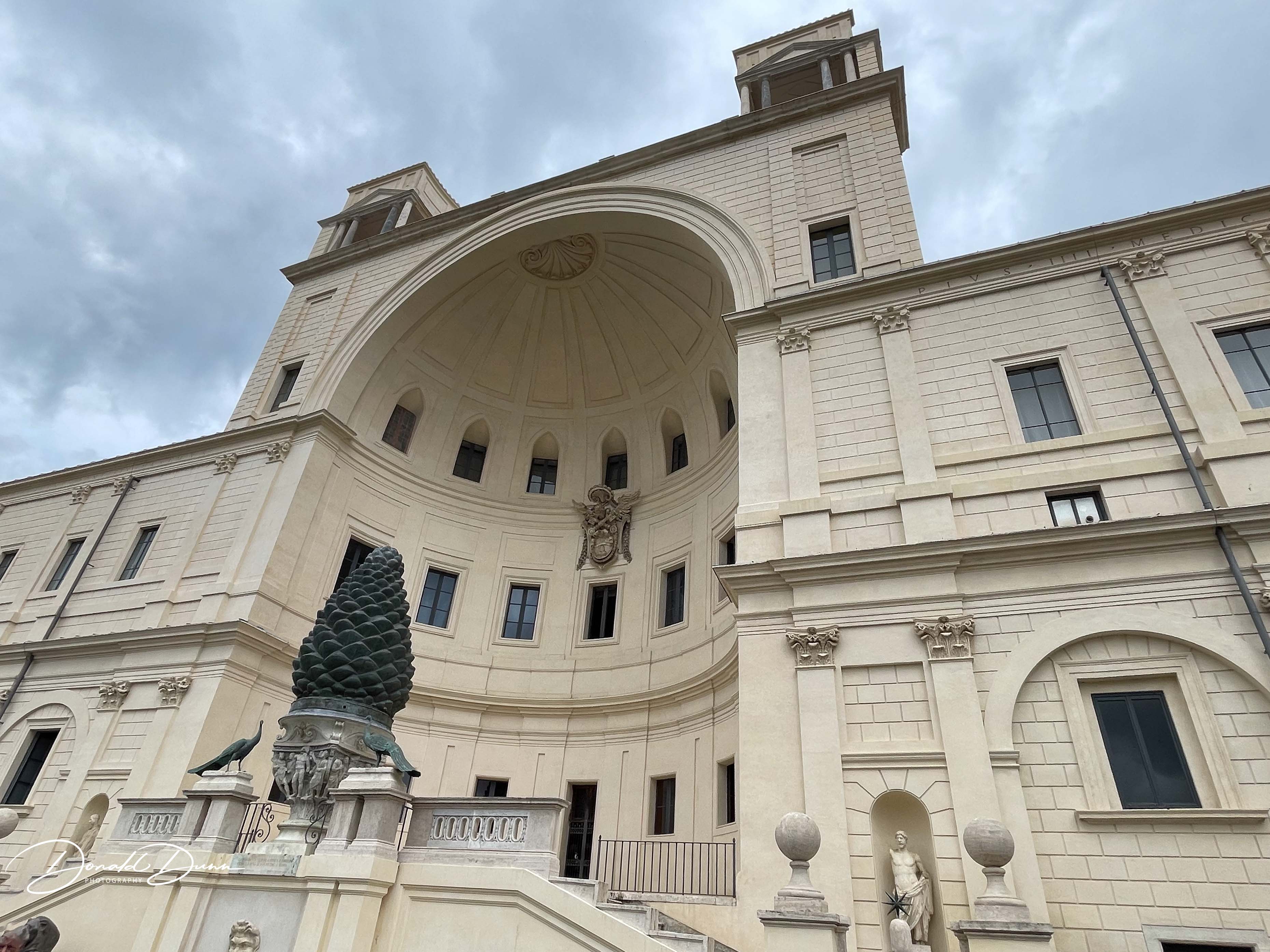
Upon entering, the Vatican Museums awaited us. The Vatican Museums are the public museums of the Vatican City. They display works from the immense collection amassed by the Catholic Church and the papacy throughout the centuries, including several of the most well-known Roman sculptures and most important masterpieces of Renaissance art in the world. Before entering the Vatican Museums, we traversed the the Pinecone Courtyard, and the New Wing.

One of the first parts of the Vatican Museums that is seen when the visit begins is the Pinecone Courtyard. It is a large open space of 300 square meters adjacent to the corridors and halls of the museum. This pine cone was made in the first century B.C., and it was a decorative fountain that, very probably, adorned the interiors of the Baths of Agrippa.

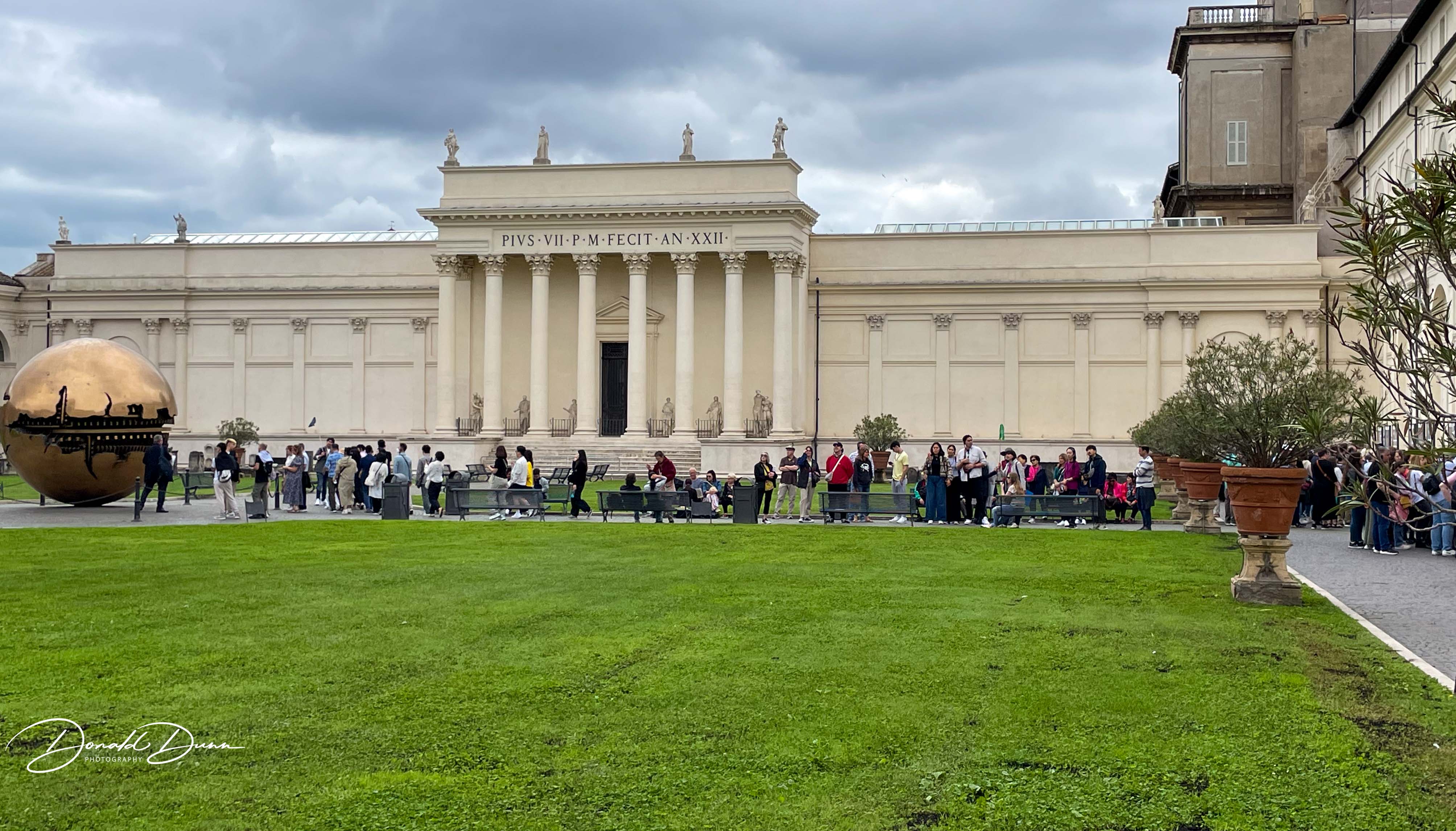
Pope Pius VII (1800-1823) employed the Roman architect Raffaele Stern to build what is now called the New Wing (Braccio Nuovo) of the Chiaramonti Museum. Photos were prohibited in many areas of the museums and photo ops were minimal.

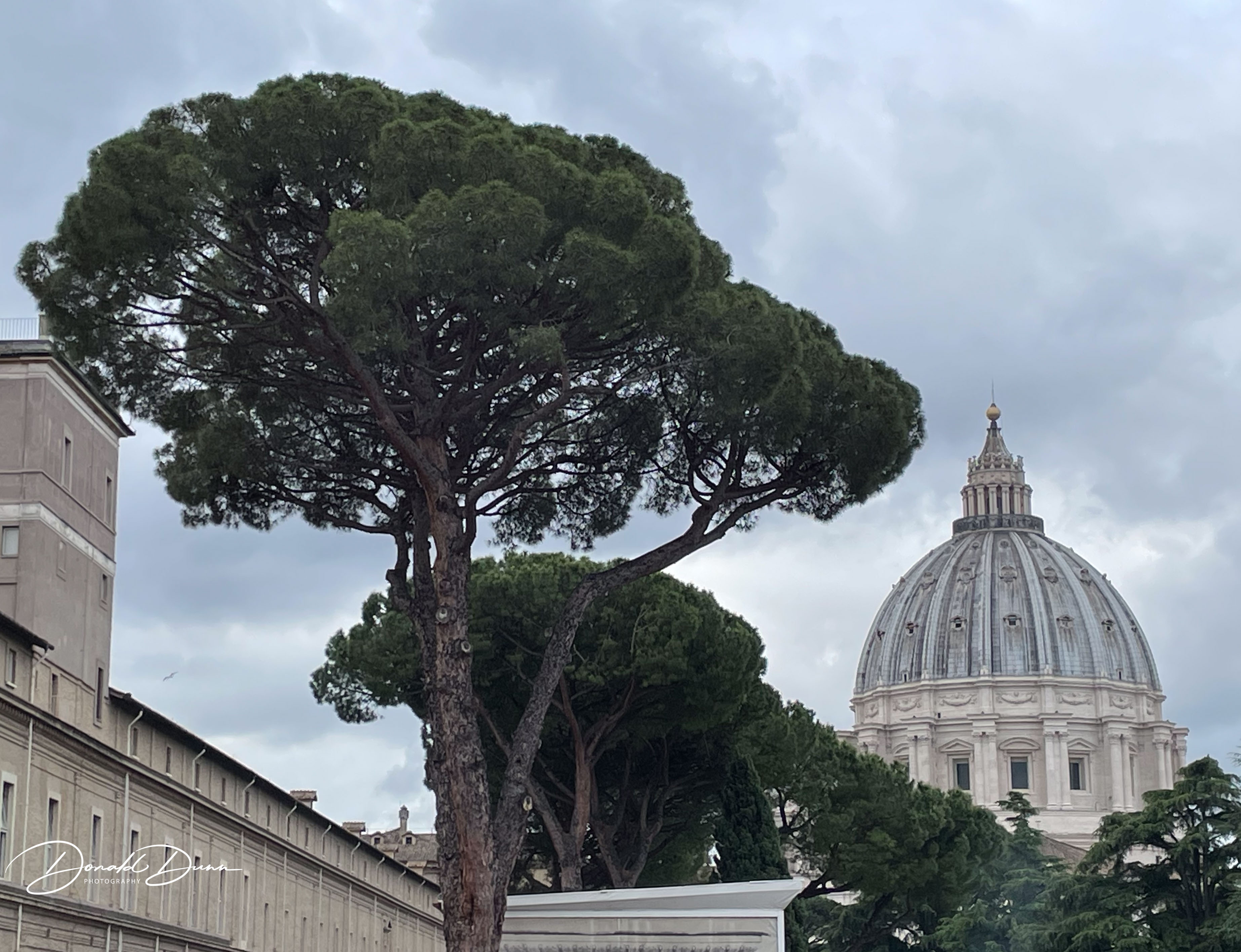
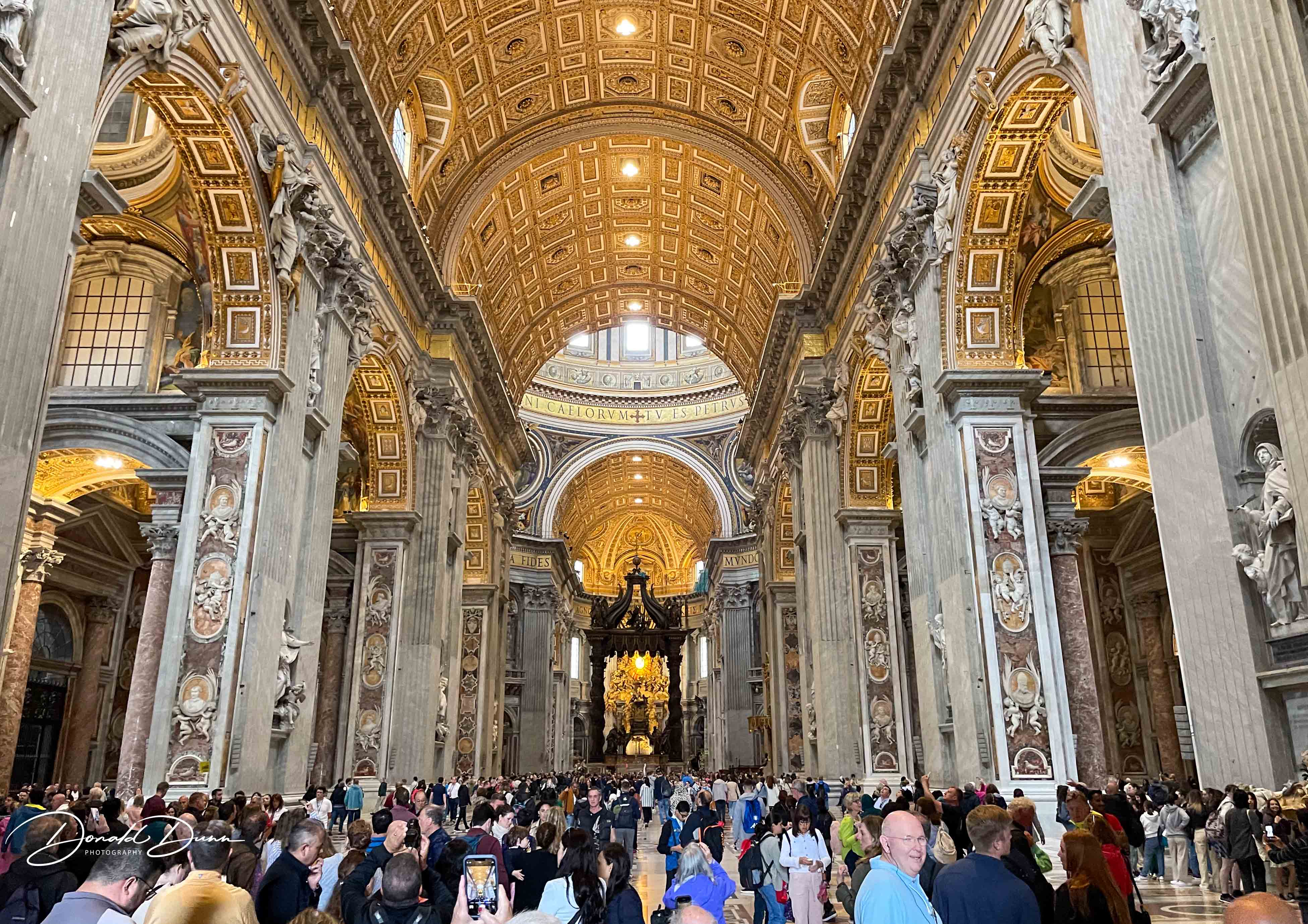
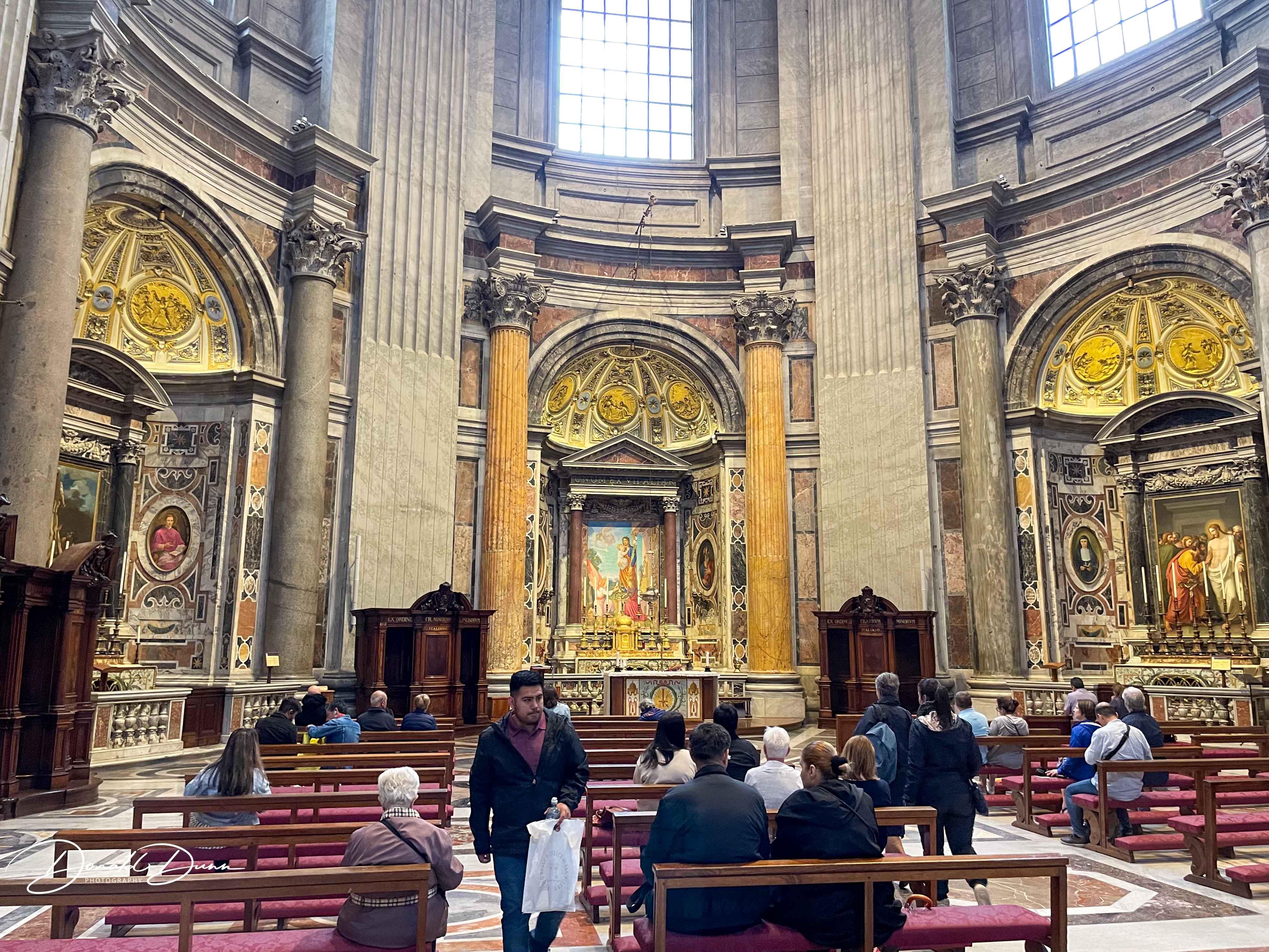
We marveled at the beauty of St. Peter’s Basilica and stood in awe of Michaelangelo’s frescoes in the Sistine Chapel.

St. Peter’s Basilica

After touring the Vatican, it was off to the Port of Civitavecchia where we boarded Royal Caribbean’s Odyssey of the Seas. We’re officially off the internet for 10 days more or less. We had a really good dinner on board, and listened to great jazz, “Jazz Standards” by the Odyssey of the Seas Quintet.