Christmas Day was anticlimactic; holiday festivities with family and friends occurred earlier in the week. Kay busily deconstructed Christmas decorations, while I worked on “information management” software and hardware. We took a break to exchange gifts with friends Pam and Don, and then continued packing away ornaments and trees. Late afternoon we drove to the motorhome storage bay with a load of stuff, mostly my computer and photographic gear. After installing the bike rack on the car, we could not find the lock key anywhere. We looked everywhere, and then out of desperation, looked in my bedside table drawer, and, low and behold, there it was. Christmas Day proved to be an exhausting day for us!
Waking up several times during the short night, both Kay and I got up about 4:30 AM Tuesday morning (9:30 PM Monday, Central Standard Time), put the luggage outside the door to be picked up, had breakfast, and boarded the bus to the airport. No problems were encountered at either Charles de Gaulle Airport or Chicago Ohare; in fact, both were quite efficient, including immigration and customs. Each of the flights arrived early. Many thanks to Dana Connally at Vacation Valet in Hot Springs Village. She went above and beyond attempting to solve our first day trip disruption.
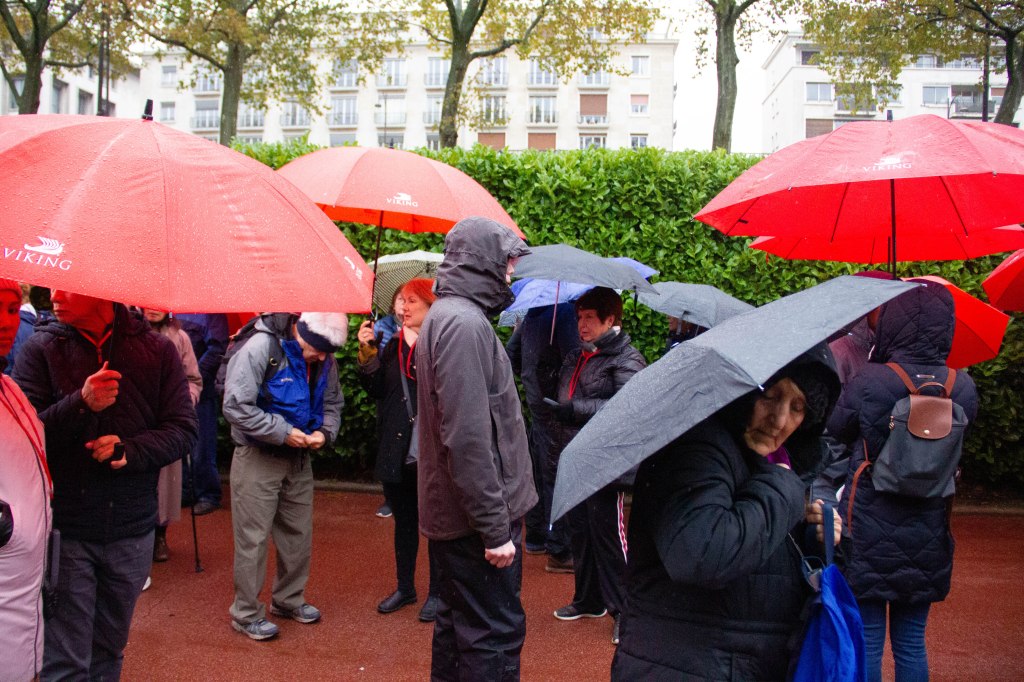
The area of France we toured, Normandy and Paris, were delightful to say the least. The rural French countryside was breathtaking, especially with peaking leaf colors—about two weeks behind us. We especially liked the small villages, towns, and cities along the River Seine, with their quaintness and medieval architecture. People were courteous, but not unfriendly. Little English is spoken, but pointing and hand signs worked. Prices for foods, tea, and coffee were much less expensive than in large US cities, and were very, very tasty. The weather during the trip was typical Arkansas winter weather—temperatures in the 40s, cloudy, and some rain—though it did not impede us. The parts of France we saw were really clean. Our guides were especially good, and experts in the the things we saw. Viking was great as usual, once we were on the ship. ALL staff and services were above average, as was the food and drink. We will definitely sail with them again, Lord willing.
We took way too many clothes, but we did have the right layers. Thus, the cool, wet weather did not adversely impact our various excursions.
We are scheduled to tour England, Scotland, Wales, and Ireland for 24 days in September 2020. Want to join us?
Depending on health, family, etc. the Balkans (Eastern Europe), Mediterranean, and New Zealand are high on the list, too. At our age international travel becomes more challenging each trip!
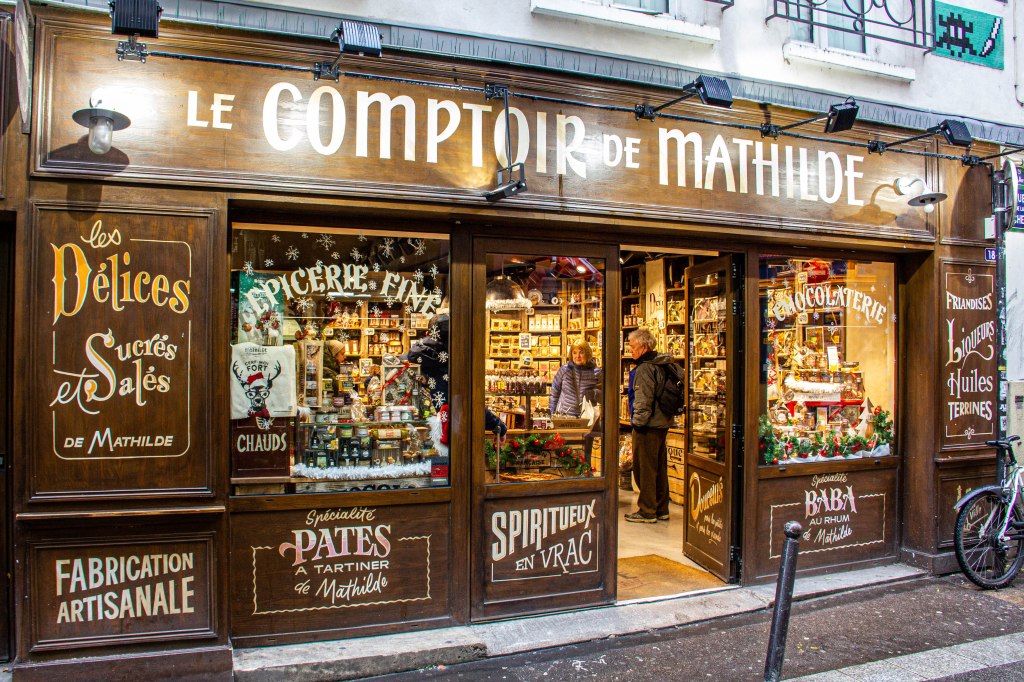
Cold temperatures and rain did not dampen our enthusiasm for seeing Paris. The 8-hour tour covered all the highlights of this wonderful city as we viewed essentially all the “big name” sights, Arc de Triomphe, Champs-Elysees, Pantheon, Louvre, and stops at the Eiffel Tower and the Notre Dame Cathedral. Photo making opportunities were very limited because of the rain. About three hours of “free time” allowed us to walk the streets near Notre Dame Cathedral, enjoying the sights, sounds, and smells of Europe’s second largest city. Small shops abounded, and prices declined the further one was away from the Cathedral. Numerous eateries—most had outdoor areas —were inner mixed with the shops. We had coffee, tea, and croissants at a corner cafe across from Notre Dame. Paris is known for its pickpockets, but we did not experience any issues. Public toilets were immaculate, as they have been in all of France.
Back at the ship, we enjoyed a great dinner before taking on the chore of packing for the return trip home; luggage is out the door at 5:15 AM.
Eiffel TowerNotre Dame CathedralColorful city streetNan and George visiting a small Parisian shop
After a full 11-hour day yesterday, we slept in this morning, had a leisurely late breakfast, and enjoyed a restful few hours
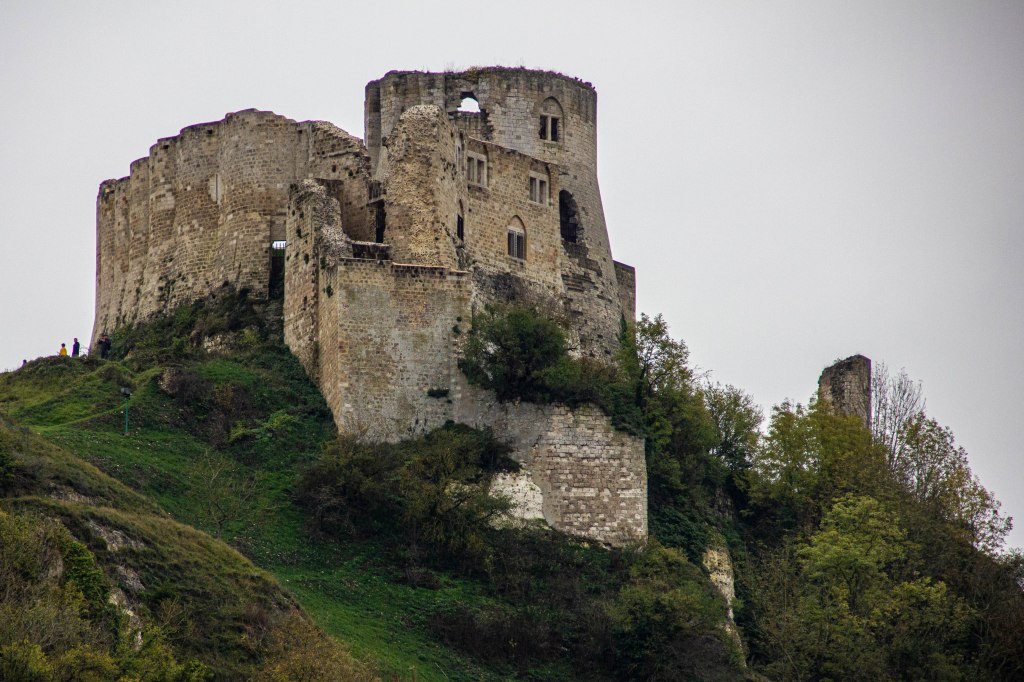
Today’s excursion was to the small northern French village of Les Andelys, located on a bend of the River Seine about 60 miles northwest of Paris. White cliffs along the river greet visitors traveling the meandering Seine. Overlooking the village are the ruins of Richard Lionheart’s medieval castle, Chateau Gaillard. Construction began in 1196 under the auspices of Richard the Lionheart who was simultaneously King of England and feudal Duke of Normandy. Les Andelys was built at the same time to accommodate workers building the castle.
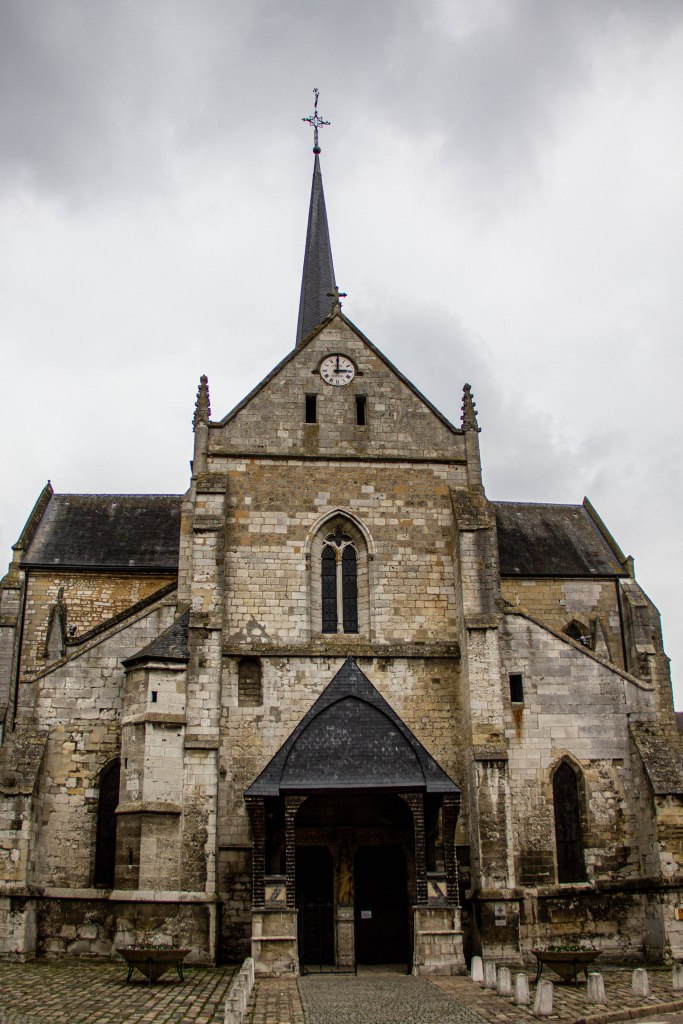
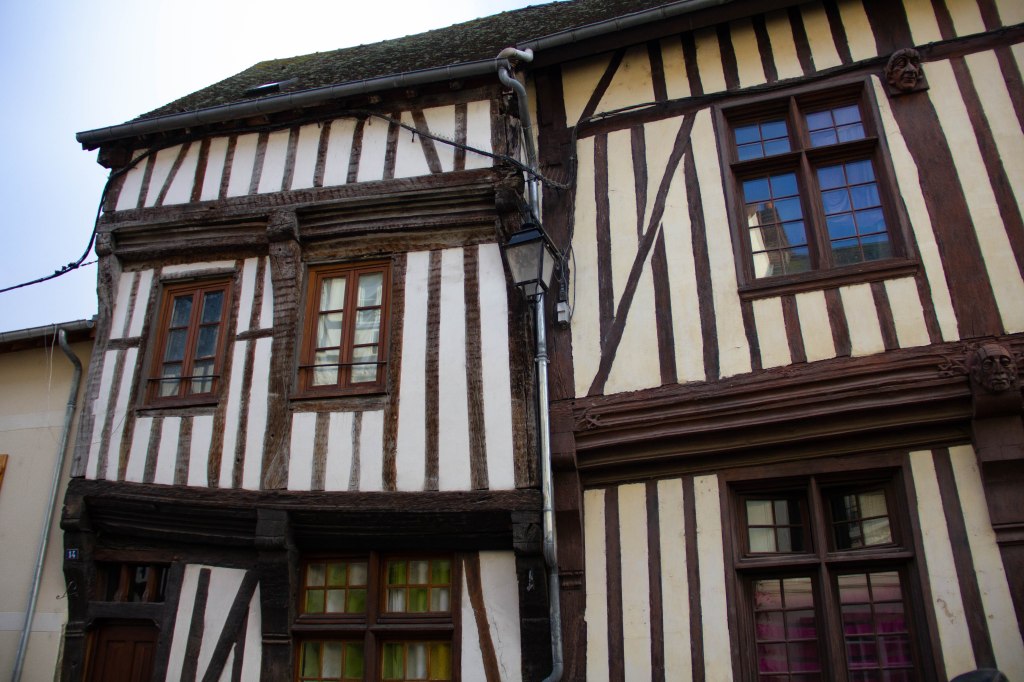
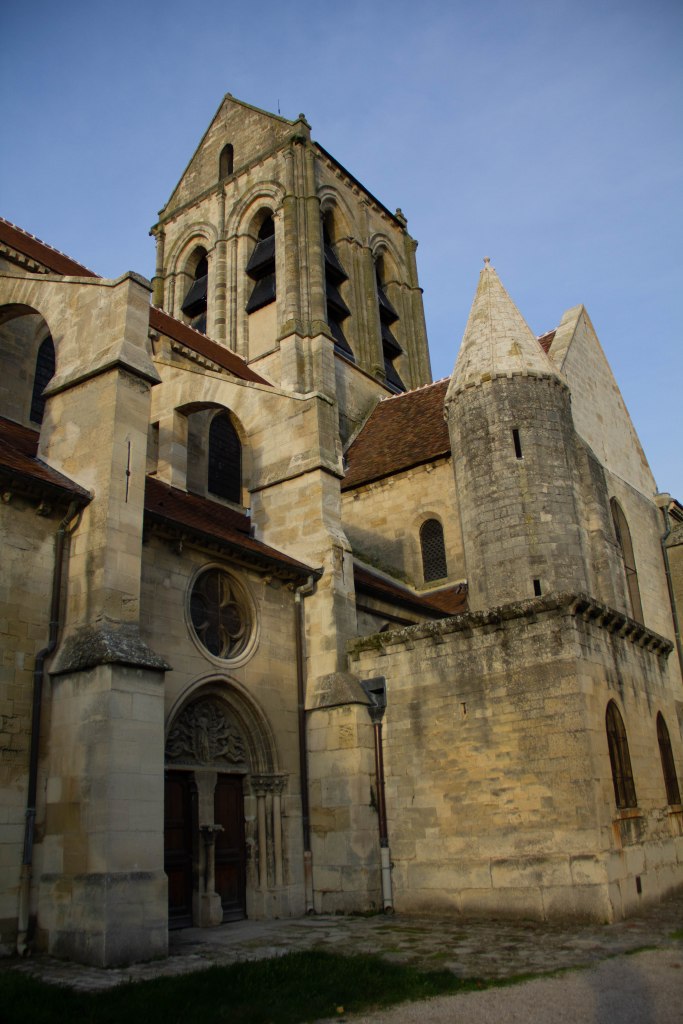
Today’s guide lead us from the Viking Rinda along cobblestone streets to the gothic Saint-Sauveur church (containing one of the finest organs in France). The cathedral-like church was built concurrently with the castle, and is surrounded surrounded by lovely half-timbered buildings. We immensely enjoyed walking the narrow cobbled streets lined with tourist shops selling their wares.
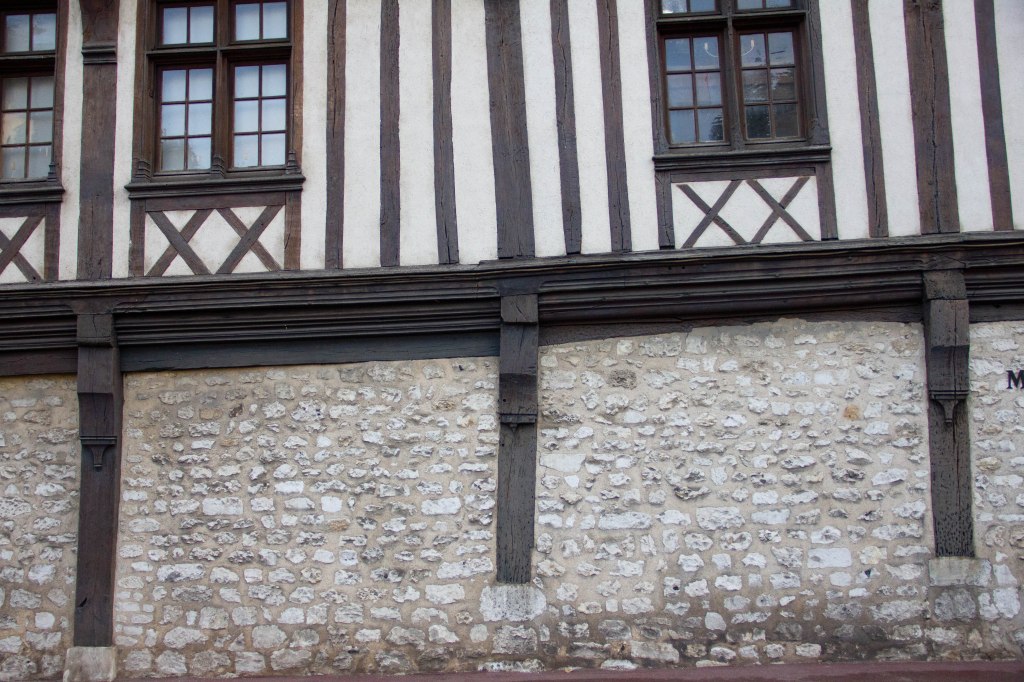
Les AndelysChateau Gaillard, Richard Lionheart’s medieval castleHalf-timber buildingSaint-Sauveur church
An early start and long day awaited us as we boarded the bus for two-hour ride to Omaha Beach, one of the “landing sites, on D-Day, June 6, 1944.
The overwhelming beauty of the French countryside was apparent through the bus windows as the bus made its way westward. Dairy farms, pastures with beef cattle (Charlois), and recently harvested corn and beet fields among the gently rolling hills reminded us of the Ozark foothills. Fall was in the air with cool temperatures and leaf color was at its peak.
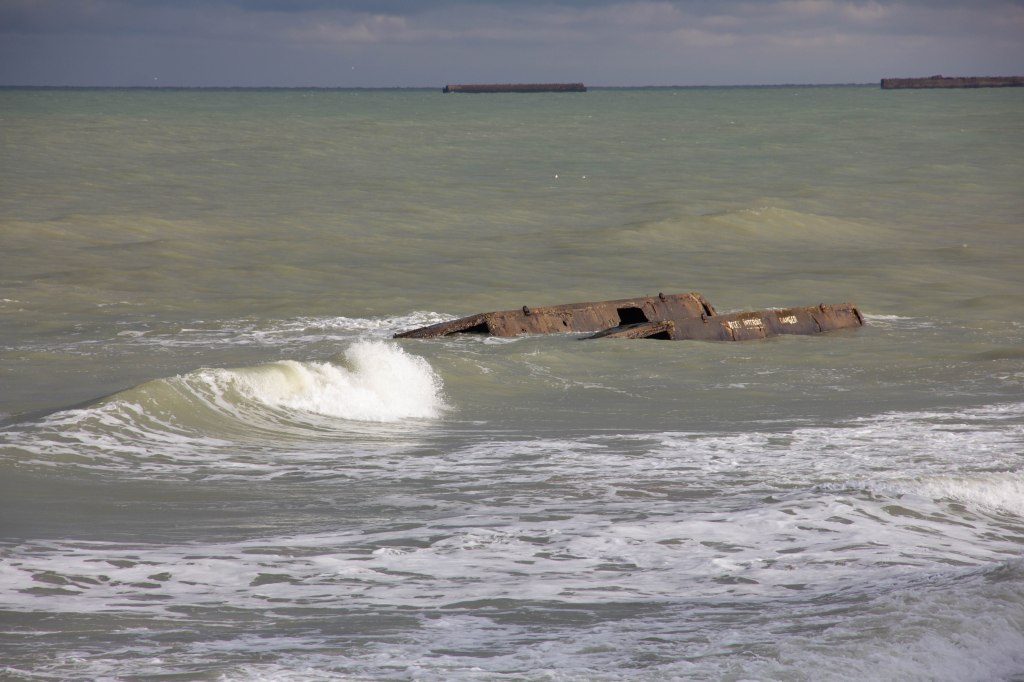
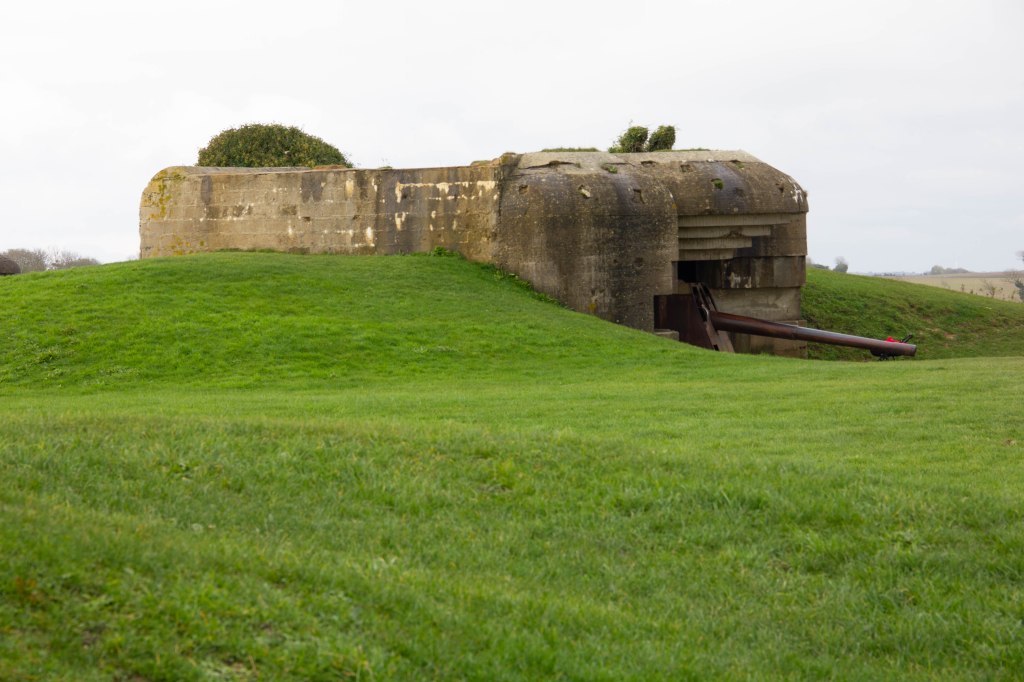
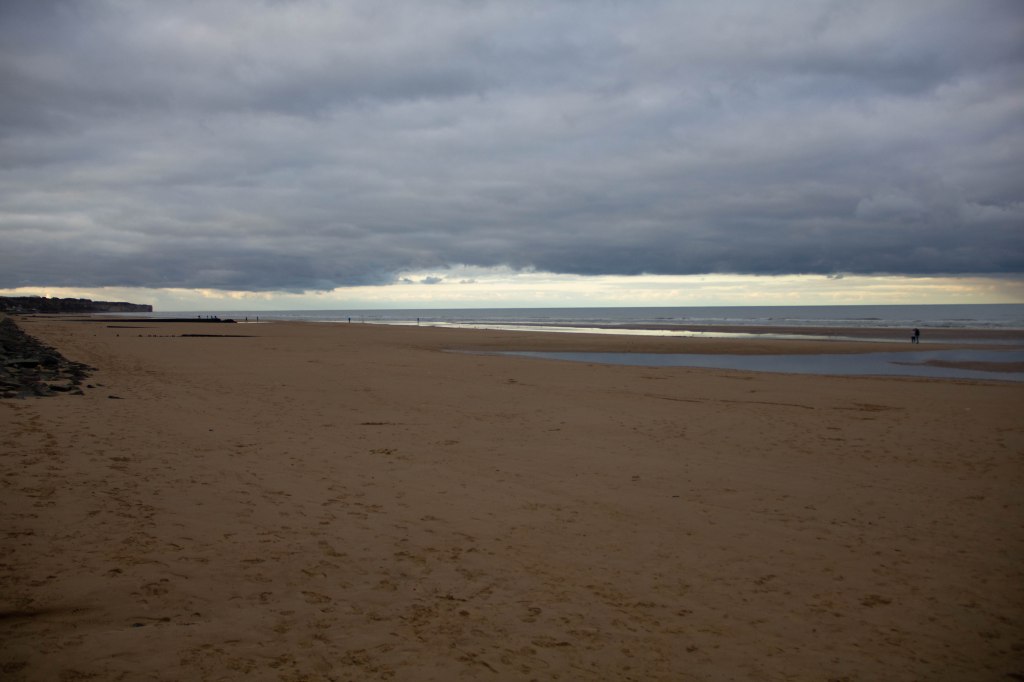
The tour included four stops. First was Arromanches, near the middle of where Canadian and British forces came ashore, respectively Juno and Gold Beaches, where we toured a small museum, and observed the beaches still strewn with floating, British-built concrete breakwaters (sunk when floated into place) and floating bridges strung together to create single lane “roads” from ships to the shore. The second stop was at an array of German gun bunkers high on a bluff overlooking the beach. Many of the bunkers are still intact. After lunch at a local hotel, the third stop was at the Normandy American Cemetery where the remains of 9,400 American service men and women are interred; in addition, over 1500 are still missing. Viking arranged for a solemn dedication ceremony at the cemetery and monument, and veterans in our group placed a wreath at the foot of the Spirit of American Youth Rising from the Waves sculpture. (Average age of the Americans interred there was 23.) Lastly, we walked Obama beach—impossible not to think of bodies virtually covering the beach as far as one’s eye could see.
After a long two hour ride back to the ship, we were greeted with a cup of rum-infused hot chocolate.
Arromanches, where Canadian and British forces came ashore, Juno and Gold BeachesBritish-built concrete breakwaters and floating bridges, now sunkGerman gun bunker high on a bluff overlooking the beachNormandy American CemeteryOmaha Beach, where over 10,000 US service men and women died
We were welcomed to Rouen with rain and temperatures in the mid-40s.
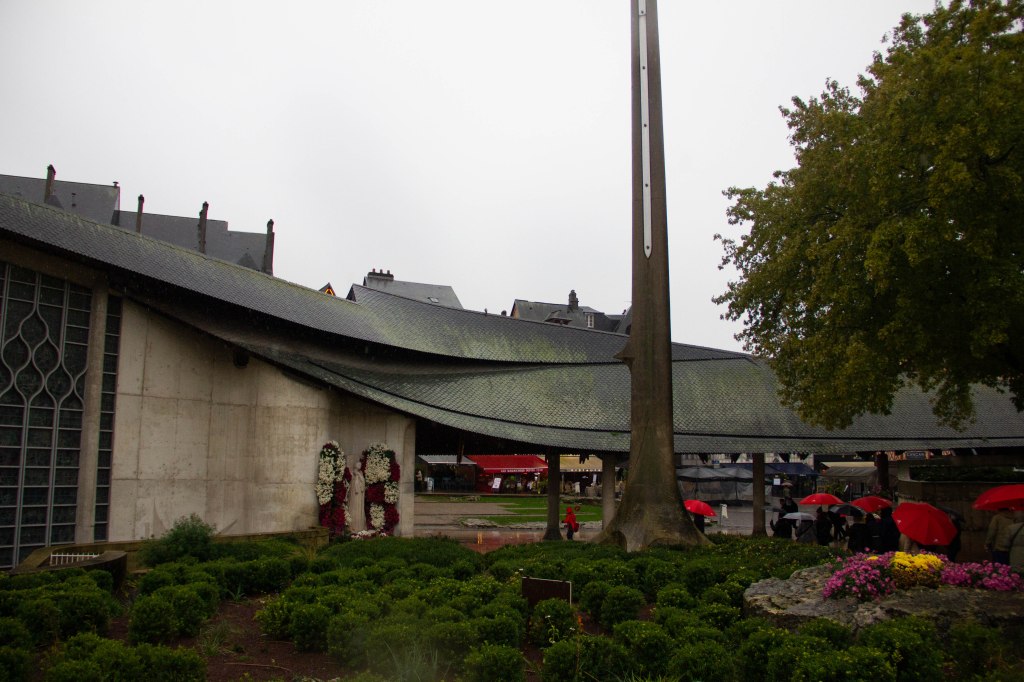
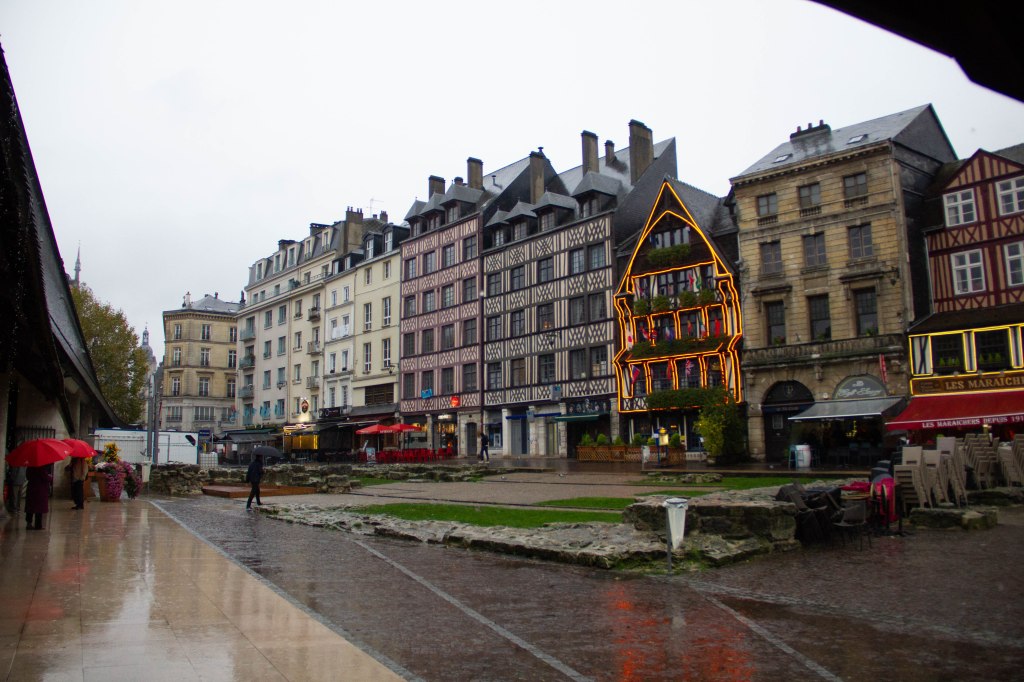
Rouen is the capital of Normandy and France’s fourth largest port. Founded by the Roman Catholic Archdiocese in 744 AD, but overtaken by the Vikings one hundred years later. William the Conqueror died in Rouen in 1087 AD and over one hundred years later, King Phillip II, Augustus of France annexed Normand and Rouen thrived. Turmoil struck in the 14th century—it was here that Joan of Arc was tried for heresy and treason, and burned at the stake at the Old Market Square. In WWII, Rouen, south of the cathedral and nearest to the river, was practically leveled by bombing. Thankfully, this part of the city has been painstakingly restored to reflect its former glory.
Despite the weather, a walking tour of the city revealed it’s quaintness and vibrancy. The Rouen Cathedral, began in the late fourth century, has be rebuilt many times; the current structure was begun in the twelfth century. The cathedral houses the tomb of Viking Rollo, founder and first ruler of Normandy, and the tomb holding the heart of Richard the Lionheart. The height of Rouen Cathedral is exceeded only by the cathedral in Cologne, Germany. Stained glass windows date to the thirteenth century. I found the cathedral to be the most picturesque of all those we’ve seen in our travels. Apparently Monet appreciated the cathedral’s beauty as well; he painted it several times (one of the paintings is valued at $40 million).
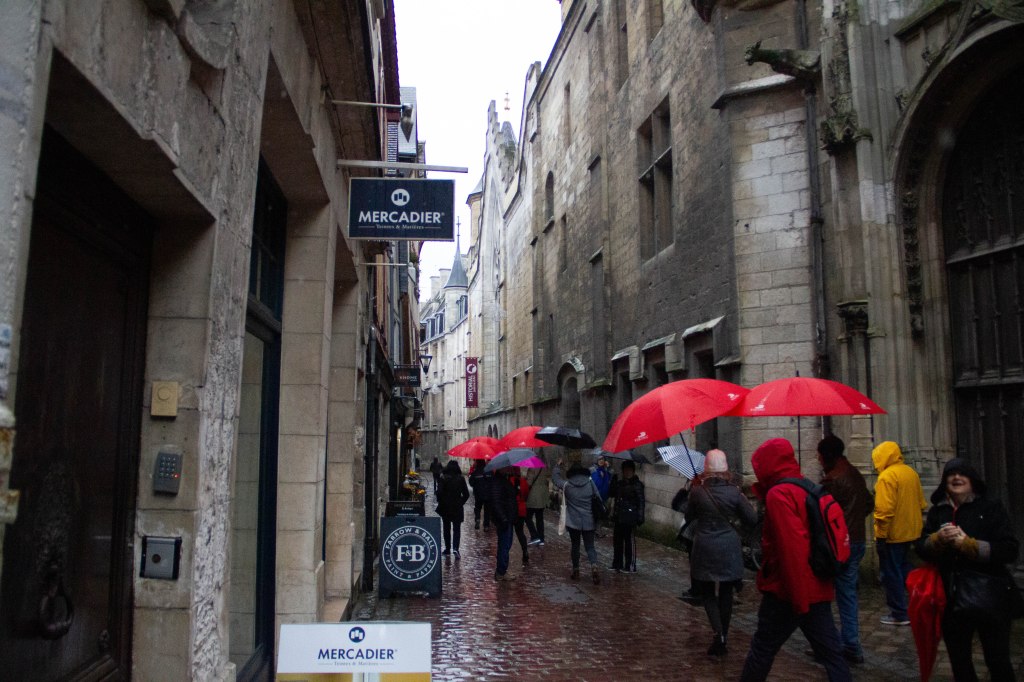
We particularly enjoyed walking the cobblestone streets of the city, with its many coffee and tea shops, speciality stores, and bakeries and meat markets. Some 700 half-timbered structures remain and restoration of the buildings suffering WWII bombing added to the city’s quaintness.
A rainy start to the tourBeautiful old city of RouenWalking the cobblestone streetsJoan of Arc was burned at the stake hereRouen was readying for the Christmas marketRouen Cathedral with Christmas market preparations in the foreground
Vernon, France, is a charming and provincial city, set on the west bank of the Seine downstream of Paris. Founded in the 9th century by Viking Rollo, it was an important transit point between Paris and Rouen, and thus saw many sieges. It’s cobblestoned streets and half-timbered houses, paint an image of what it must have looked like in the Middle Ages. Despite severe damage in both world wars of the previous century, many of the aforementioned half-timbered houses, some dating to the 14th century, remain, as well as a “small” parish church built in the 11th century and rebuilt in the 16th century. Ruins of Vernon’s medieval bridge can still be seen on the right bank of the Seine.
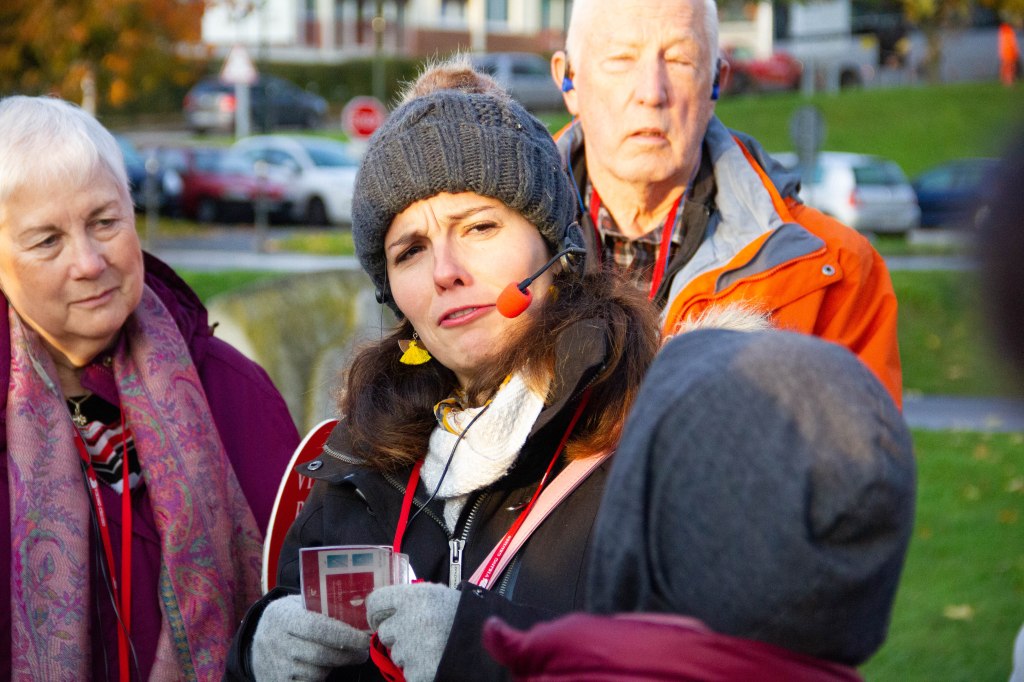
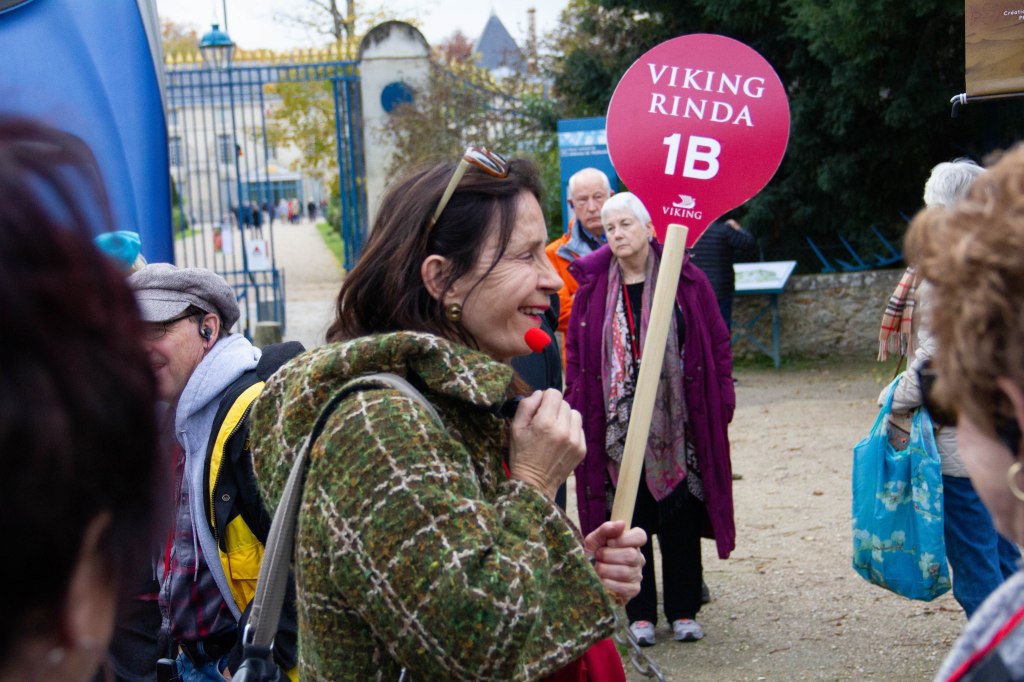
We immensely enjoyed this walking tour, made even better by our knowledgeable, fervent, and effervescent guide, a young French lady named Marie (she spoke at least 4 languages).
Accompanied by our morning guide (well educated in art history), an hour bus ride began at the Viking Rinda and ensued through the French countryside past Monet’s house and water lily filled pond. The bus continued past fields of sunflowers, and recently harvested corn, beets, and soybeans, finally arriving at Auvers-sur-Oise, where Vincent Van Gogh spent the last 10 weeks of his life. It was here that he painted 70 masterpieces and near masterpieces before dying from a self-inflicted gunshot wound. Vincent Van Gogh was a very troubled man suffering from smoker’s cough, alcoholism, probable syphilis, and mental illness. He is buried in a simple grave beside his brother, Theo, who died six months later than Vincent. Many of you have heard Don McClean’s Starry, Starry Night—it is the story of Van Gogh.
MarieOne of many cathedrals, Vernon, FranceSagging half-timbered house, Vernon, FranceSkewed half-timbered house, Vernon, FranceLovely Vernon, FranceCathedral painted many times by Van GoghVan Gogh’s burial site, along with his brother Theo
Kay and I finished packing last night, and are ready for France!
After leaving home at 11 AM and driving to the airport in Little Rock, the car was parked at the Comfort Inn, luggage was transferred to their van, and we were dropped off at Bill and Hillary Clinton Airport. After quickly obtaining boarding passes and checking luggage, we effortlessly passed through security, and arrived at the United Airlines gate at about 12:30 PM. We began noticing cancellations popping up on the TV monitors, caused by ice and snow problems at Chicago O’Hare International Airport. We were assured that thus far our flight was OK. More cancellations occurred, and then at the last minute, our flight was delayed, putting our connection to Paris in jeopardy. After waiting almost an hour, our flight was canceled! Consequently, we missed the connecting flight to Paris. Fortunately the gate attendant was far more responsive than the ticket counter employees, and reconfigured the flight to Paris via Houston and Newark—departing tomorrow morning after 9 AM arriving in Paris Wednesday AM. So, it was back home for the night. At home, we had decided to cancel the trip entirely until Kay and her sister talked, mutually deciding to continue.
We awoke early to a new day on Tuesday being cautiously optimistic. With boarding passes in hand, we quickly checked baggage, and began the two hour wait. Shortly before boarding, the flight to Houston was delayed, putting the connecting flight from Newark to Paris in jeopardy. Some time was made up in the flight to Houston, but we found the flight from Newark to Paris delayed! Taking off an hour late, we were, at last, Paris bound. With tailwinds near 140 mph, the pilots made up for some lost time by crossing the Atlantic in just under 6 hours.
(Note: We really enjoy Viking Cruises—but flights made through Viking Air are very disappointing. We are beginning our 3rd Viking cruise, this time via United, our first flight was delayed, then canceled, we missed connecting flight to Paris, and so far have missed one day of the cruise and two excursions. And on Tuesday, two legs of the flight were delayed—causing us to miss one of the two key excursions of the trip! While the United Airlines gate attendant went above and beyond, the ticket counter folks were unhelpful, a bit ignorant of company policy, and generally gave us bad recommendations! Viking cruises are awesome—one you board the ship. However flights made through Viking Air are very disappointing. We are on our 3rd Viking cruise, this time via United, and each of our three trips have had significant flight issues, with attendant delays and missed cruise activities. Our pleas to Viking (via our travel agent) to travel one day early, have been met with very strong discouragement. Please, Viking, accommodate our needs, we don’t want to discontinue traveling wit you. And, oh by the way, I’m still waiting on the promised communication within two business days; it’s only been four.)
Good fortune came our way as we passed through the passport check rather quickly, claimed our luggage, and met Nan, George, and the Viking agent at the exit, all without issues. However heavy traffic, combined with flight delays, resulted in our arriving on the ship, Viking Rinda, just after 9 AM, and missing the Versailles excursion by less than an hour.
After a light breakfast, everything was unpacked, and we were off to LaLa land for a long nap, trying to offset jet lag.
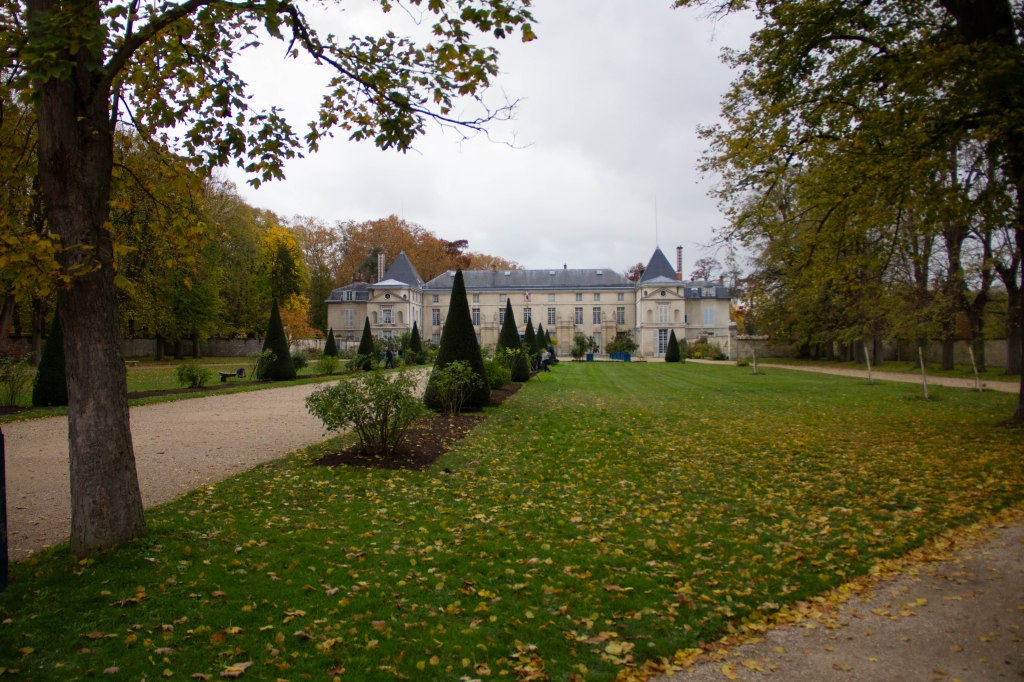
Napoleon’s Chateau de Malmaison—After our nap and a light lunch, along bus drive delivered us to Napoleon’s Chateau de Malmaison. Chateau de Malmaison is a French château near the western bank of the Seine about 10 miles west of the center of Paris. It was the residence of Empress Josephine de Beauharnais, wife of Napoleon. It was the headquarters of the French government fro 1800 to 1802, and Napoleon’s last residence in France at the end of the Hundred Days in 1815.
Notable were Josephine’s music room, library, and chambers, and Napoleon’s bedroom and office. The formal gardens, while not opulent, were nonetheless impressive.
Also impressive was the Rural French countryside where row crops abounded. Evidence of recently harvested fields of soybeans, corn, and beets (for livestock feed) combined with the absence of urban areas was a delightful surprise. Never in my wildest imagination could I have realized the beauty of France.
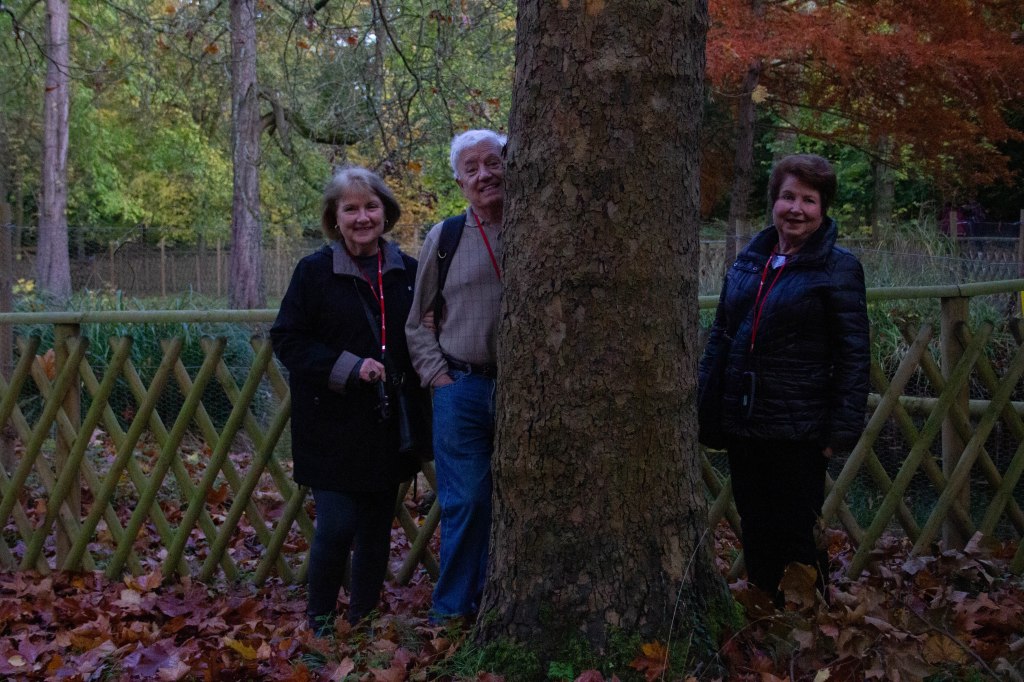
Viking RindaOur Guide at Chateau de MalmaisonChateau de MalmaisonNan, George, and Kay
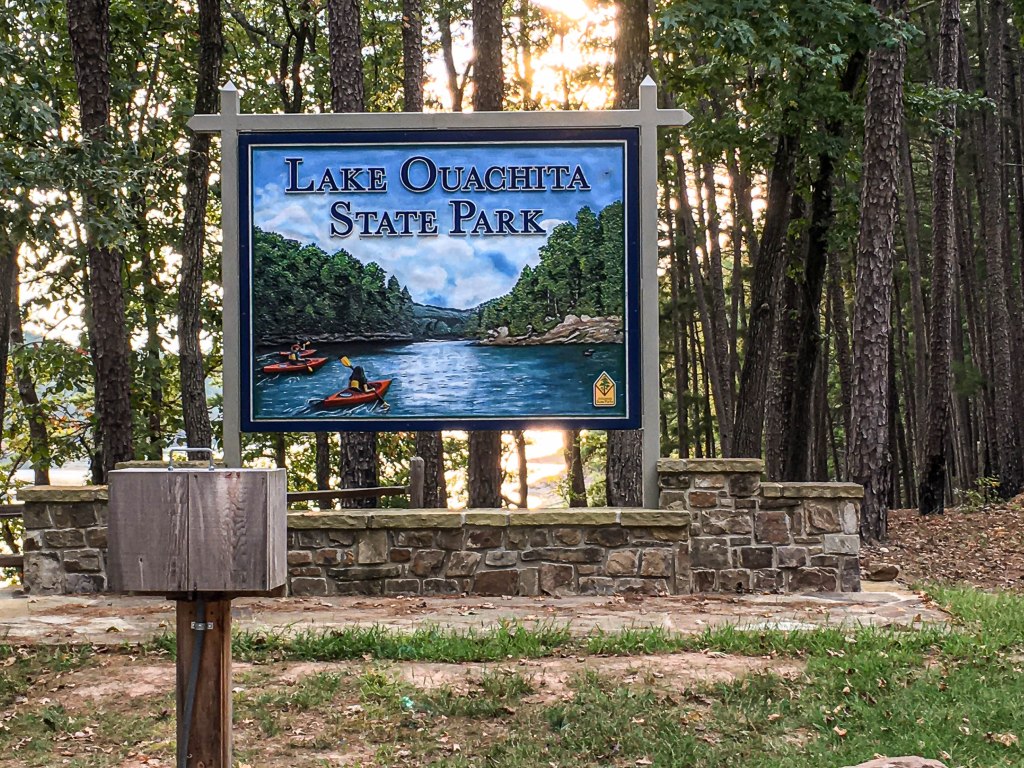
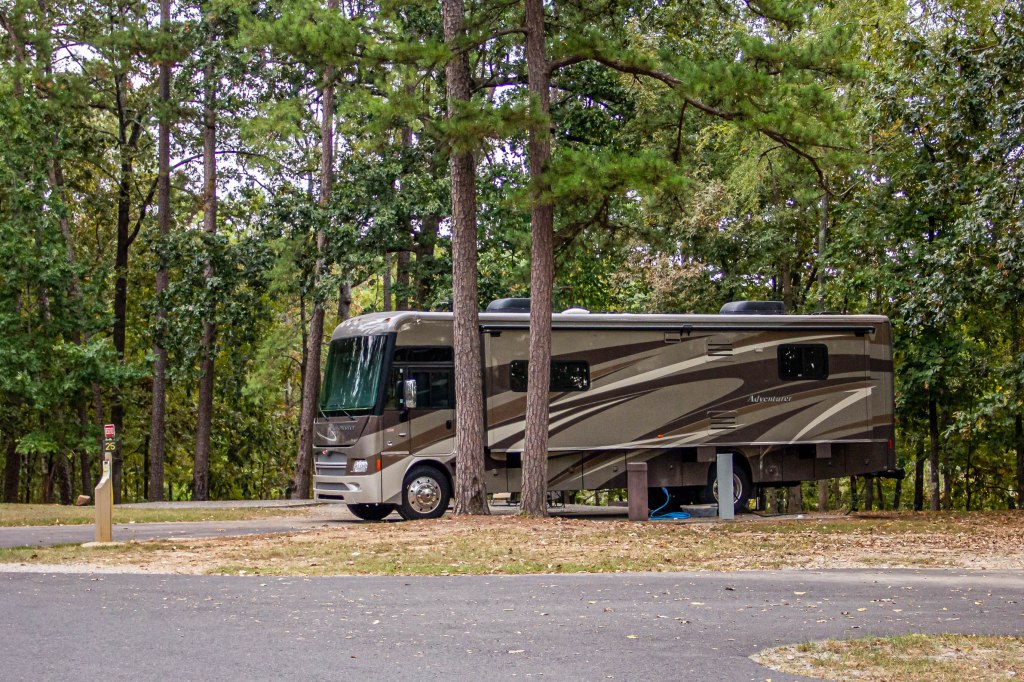
Up early, Kay made quick work of organizing the inside of the coach for travel back to the storage bay and packing for the short trip home. Meanwhile, I tidied up the outside, repacking camp chairs and the like in the MH. Cool weather enveloped the area last night, and we awoke to cool weather just as we were leaving Lake Ouachita State Park. A good time was had by all.
Today was a lazy day (aren’t they all) with no planned campground activities.
The fall weather here in midwestern Arkansas has been incredibly warm, with daytime highs in the 90s and nighttime lows in the low 70s—summer weather in early October. Additionally, it has been dry with little to no rain for the last several weeks. We both are experiencing allergic reactions to the dust and heaven pollen, especially ragweed. Consequently, the MH AC has been running most of the time since we’ve been here.
With no internet and precious little cellular service, our time here at Lake Ouachita State Park has provided a great opportunity to exercise the MH and perform much needed maintenance and cleaning.
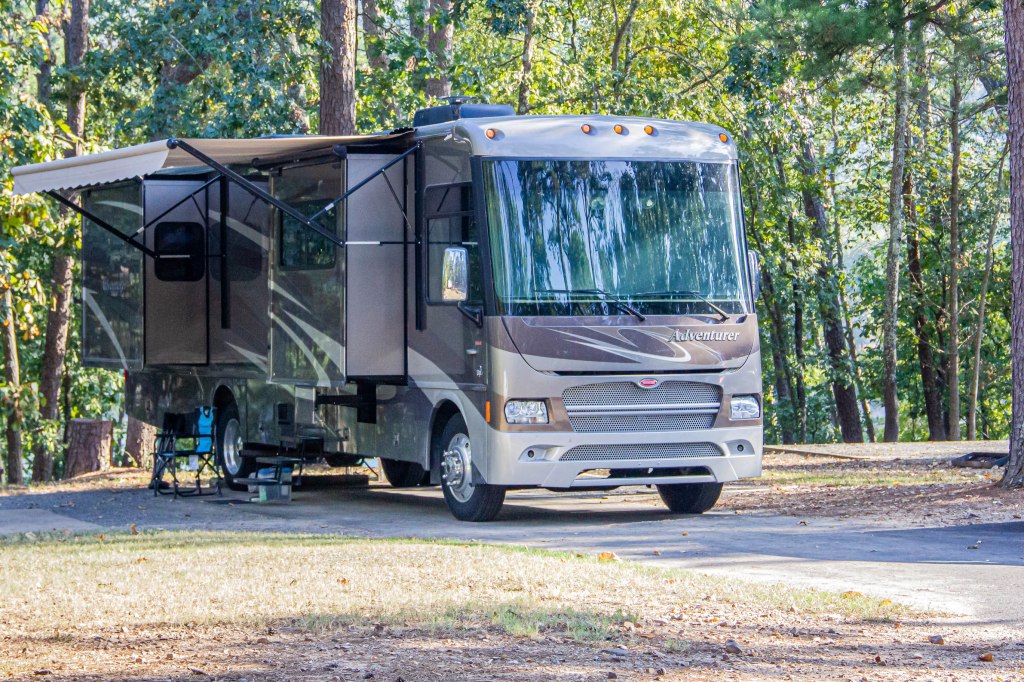
Dirty MH, but she still looks goodUp to date on maintenance
Collection of trails and greenway quotes, terms, acronyms, tools as well as trail publications and presentations and 100s of photos from my bicycle and hiking adventures. .
This journal was begun several years ago, and reflects an accurate record of each day fished. Please enjoy it, and remember that fish are too valuable to be caught just once, and the places they live are too valuable to be mistreated.












 Dunngone's Photos and Blog