
After a night of good rest, Kay explored the breakfast area (i.e. kitchen), seeing what was offered for the “breakfast” portion of the B&B. To our dismay breakfast was a serve yourself minimal continental breakfast: for us that was coffee for the both of us, juice for me, and raisins and bananas for the road. Nevertheless the accommodations were clean and comfortable.
The first stop of the day was French Camp at MP 180.7. French Camp. The town dates back to circa 1810, when a Frenchman, Louis Lefleur, established a stand or trading post and inn.
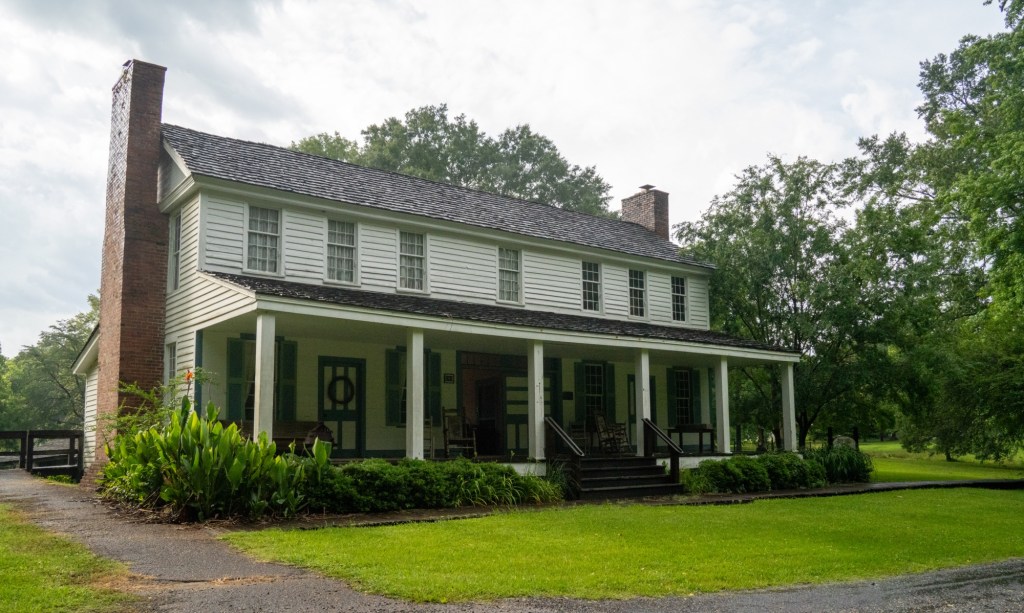

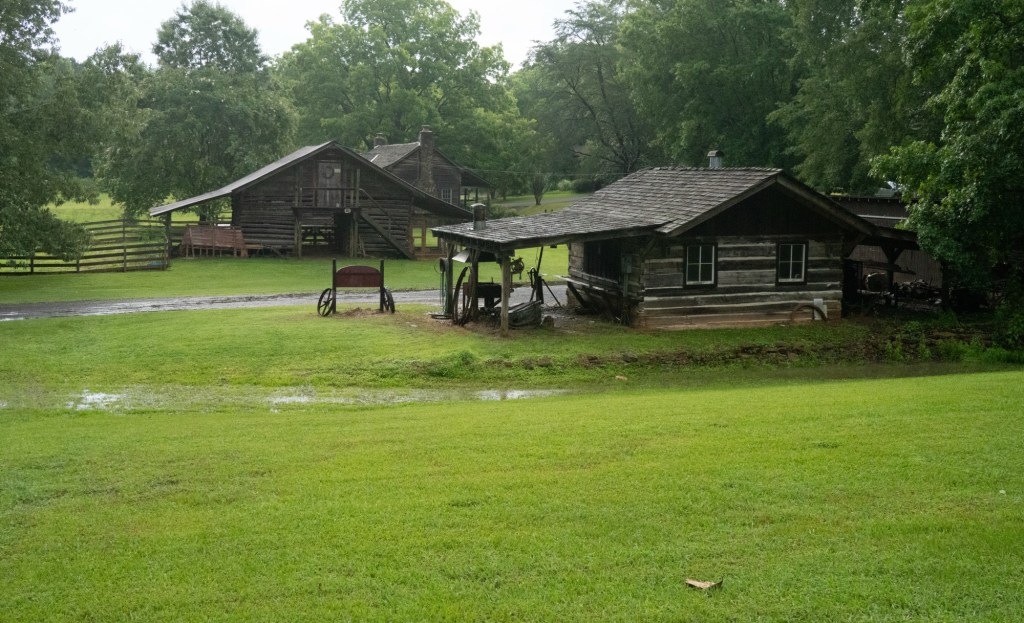

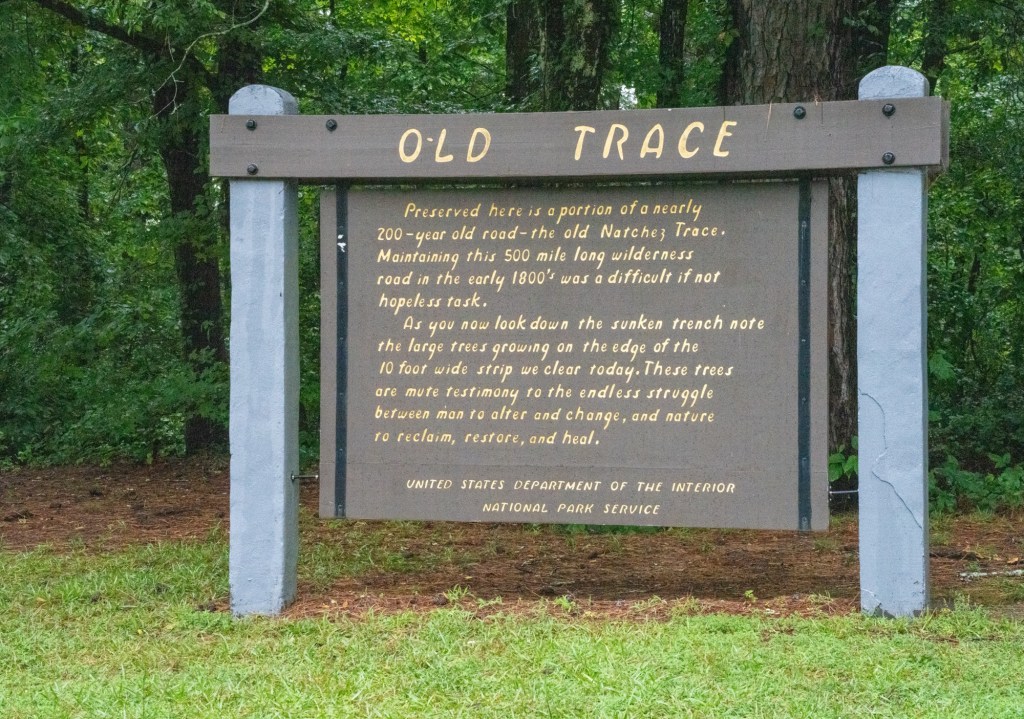
Another Old Trace stop at MP 221.4 preserves a portion of a nearly 200 year old postal road, the Old Natchez Trace.

Bynum Mounds, at MP 232.4, is the oldest mound site along Natchez Trace Parkway. These mounds were created by American Indians in what was known as the Middle Woodland Period between 100 BCE-100 CE.
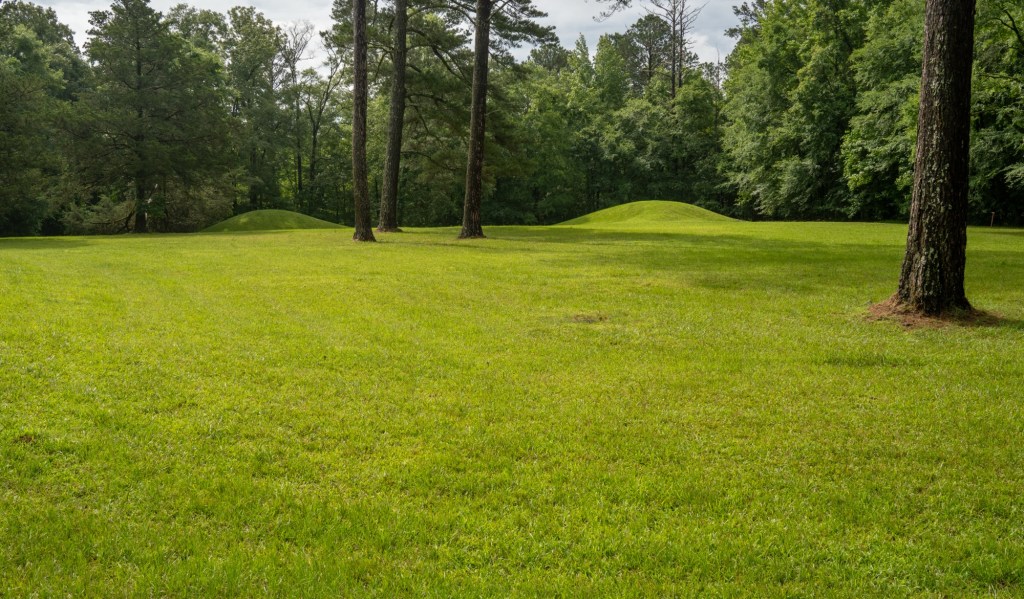

Around 2,000 to 1,800 years ago native people built Pharr Mounds (MP 282.7), a complex of eight dome-shaped mounds, spread over 90 acres.

A stop at Sunken Trace, MP 350.5, provides a view three different detours made to avoid mud.

When the trail became so water logged that wagons could not be pulled through, travelers cut new paths through the nearby woods as a detour.
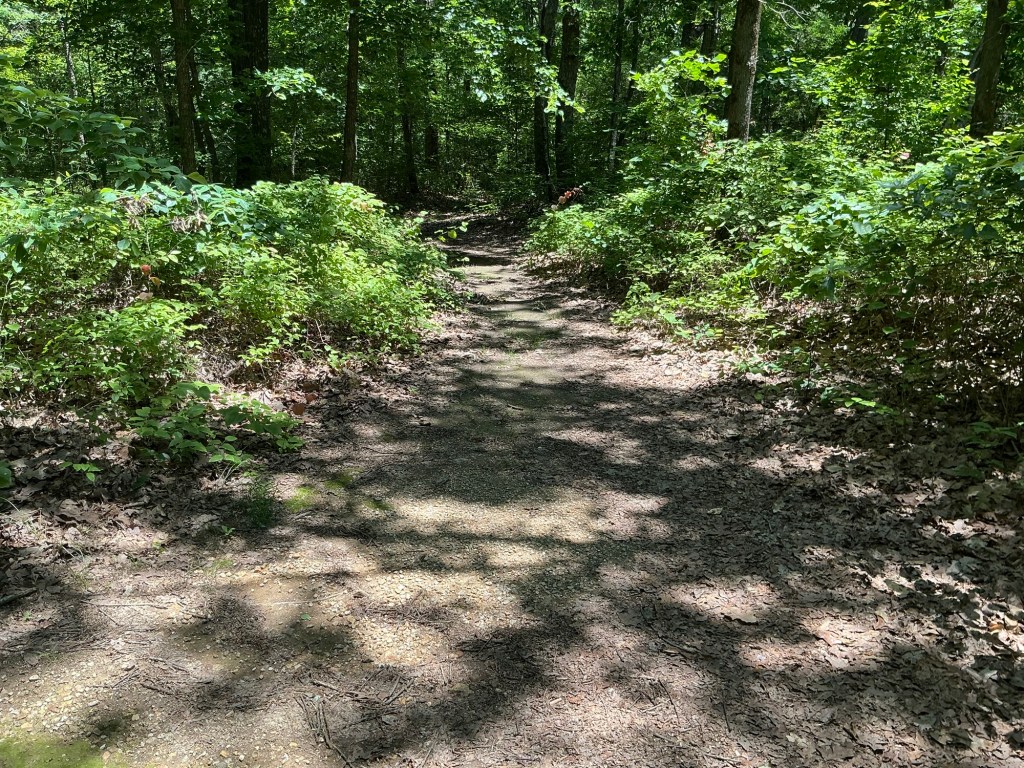


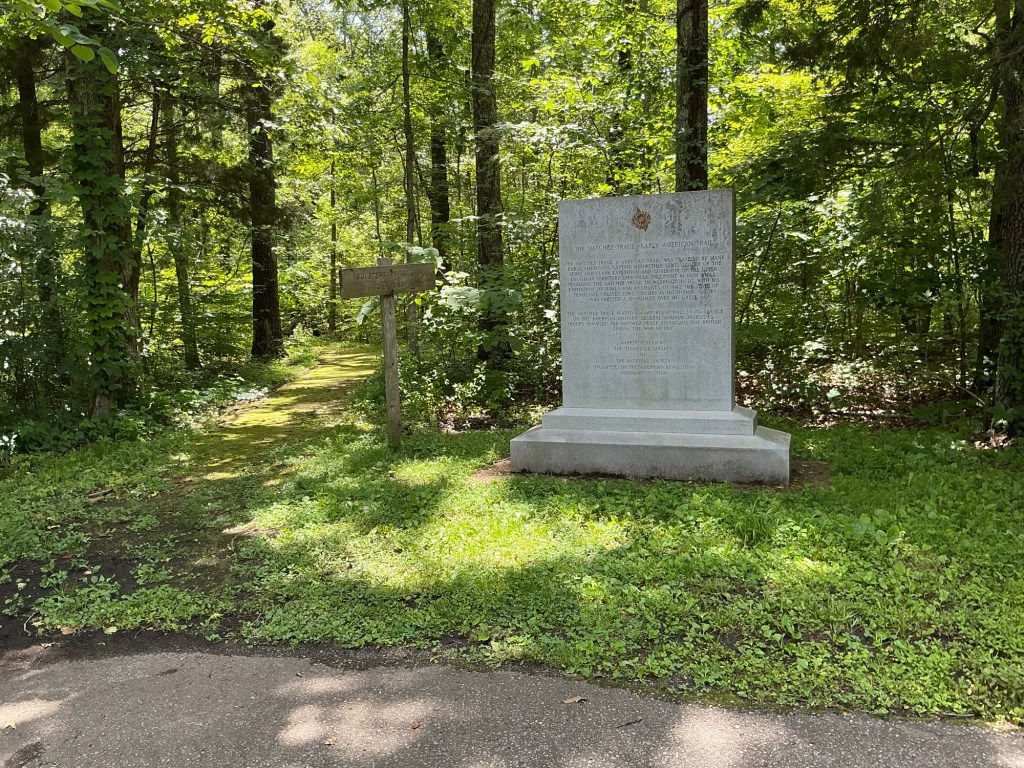
Meriwether Lewis Death and Burial Site, MP 385.9 features a Daughters of the American Revolution marker commemorating the historic Natchez Trace, a section of the Old Trace, and the Meriwether Lewis Burial Monument. The Daughters of the American Revolution, D.A.R, began a program in 1903 to place markers along the old Natchez Trace to prevent losing all traces of the one-famous military road in Mississippi. This is one such example. Similar programs were later adopted in Alabama and in Tennessee.
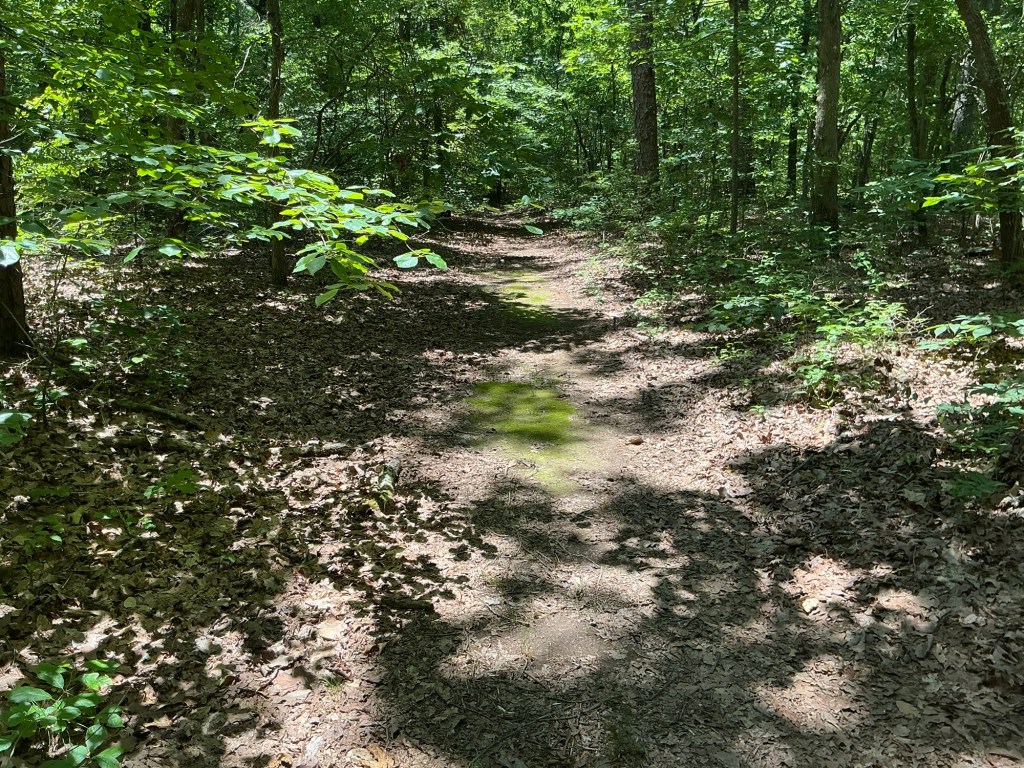
This trail is a section of the Old Natchez Trace, evolved from bison and American Indian trails, into a mail route and government road is the old southwest, cut and opened under authority of the US government, after treaties negotiated with the Chickasaw and Choctaw nations in 1801.
Lastly, The Meriwether Lewis monument marks the burial site of famed explorer Meriwether Lewis on the Natchez Trace Parkway near present day Hohenwald, Tennessee. The Meriwether Lewis Monument was built in 1848 with funding provided by the Tennessee legislature. The legislation provided $500 “to preserve the place of internment, where the remains of General Meriwether Lewis were deposited.”
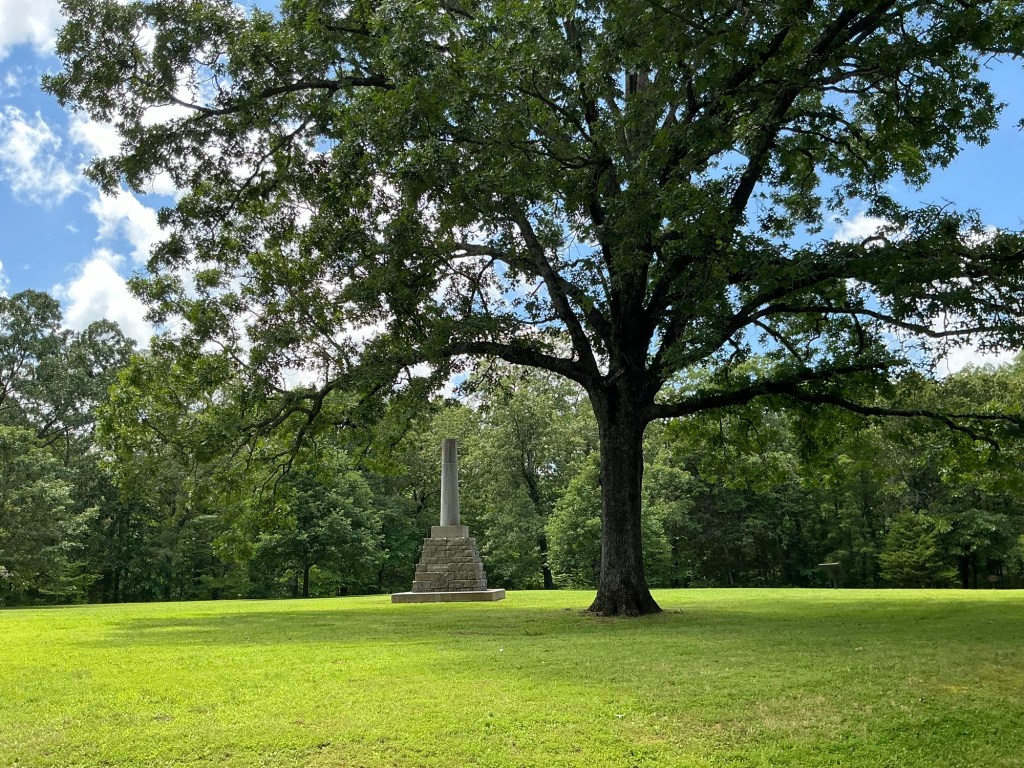
After viewing the above sites, Kay and I enjoyed a picnic lunch under the shade of old, old trees.
From this stop we drove to near the northern terminus at MP 444, before heading north and east to our overnight accommodations in Abington, Virginia (we were delayed 45 minutes on I40 near Bristol, Tennessee, because of traffic.
 Dunngone's Photos and Blog