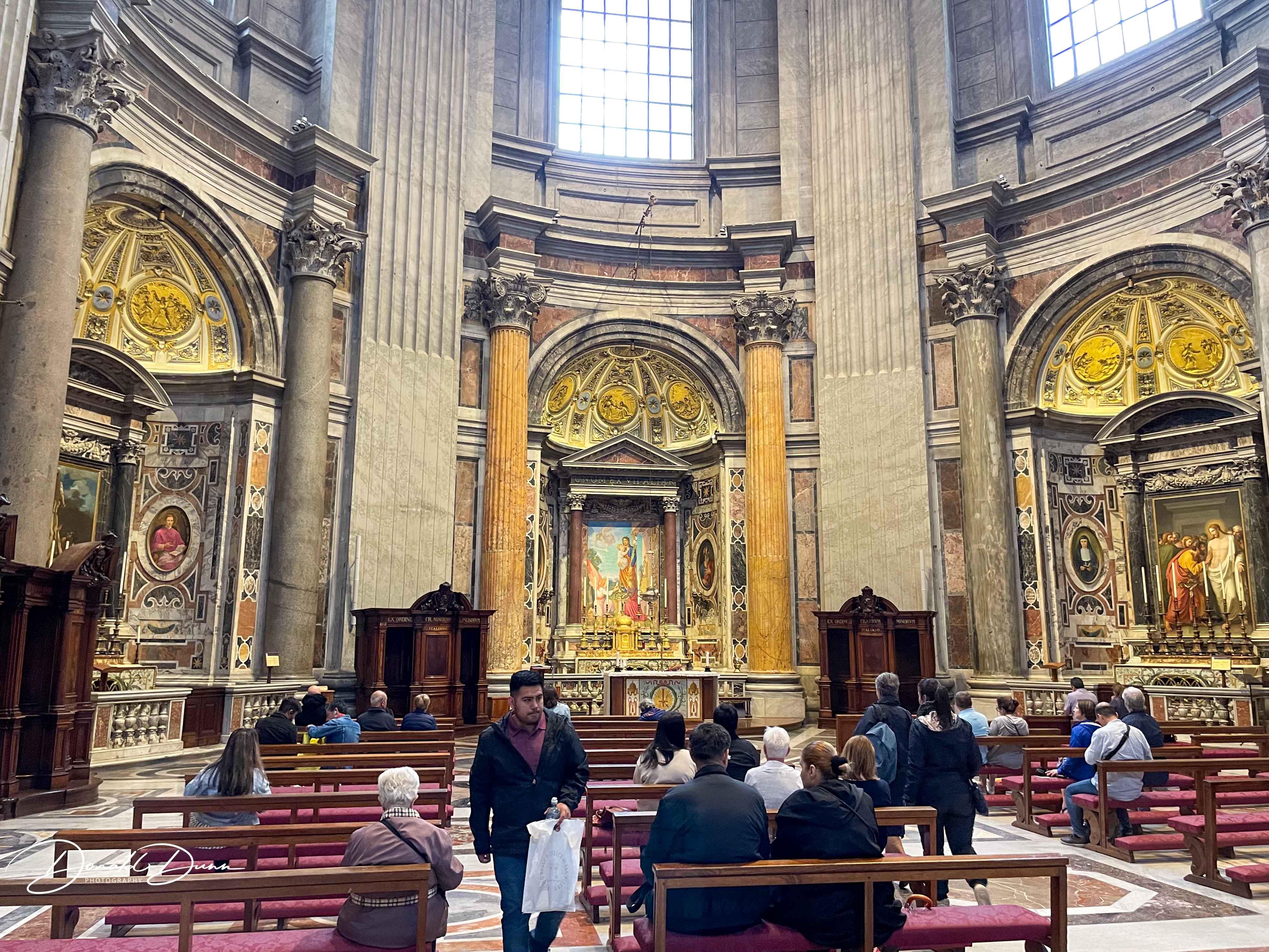
Wednesday, May 18, 2023–More of Rome, Italy

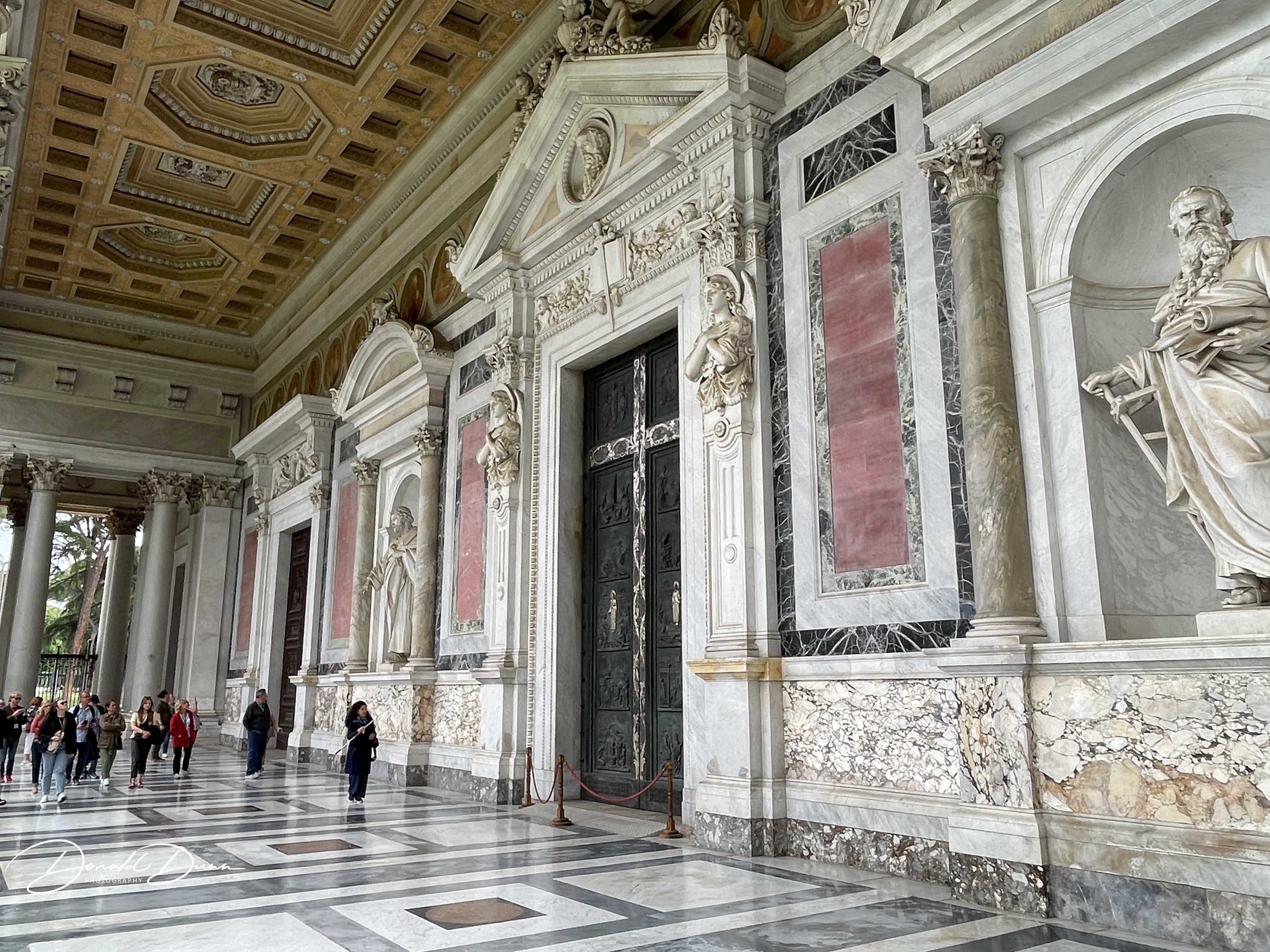
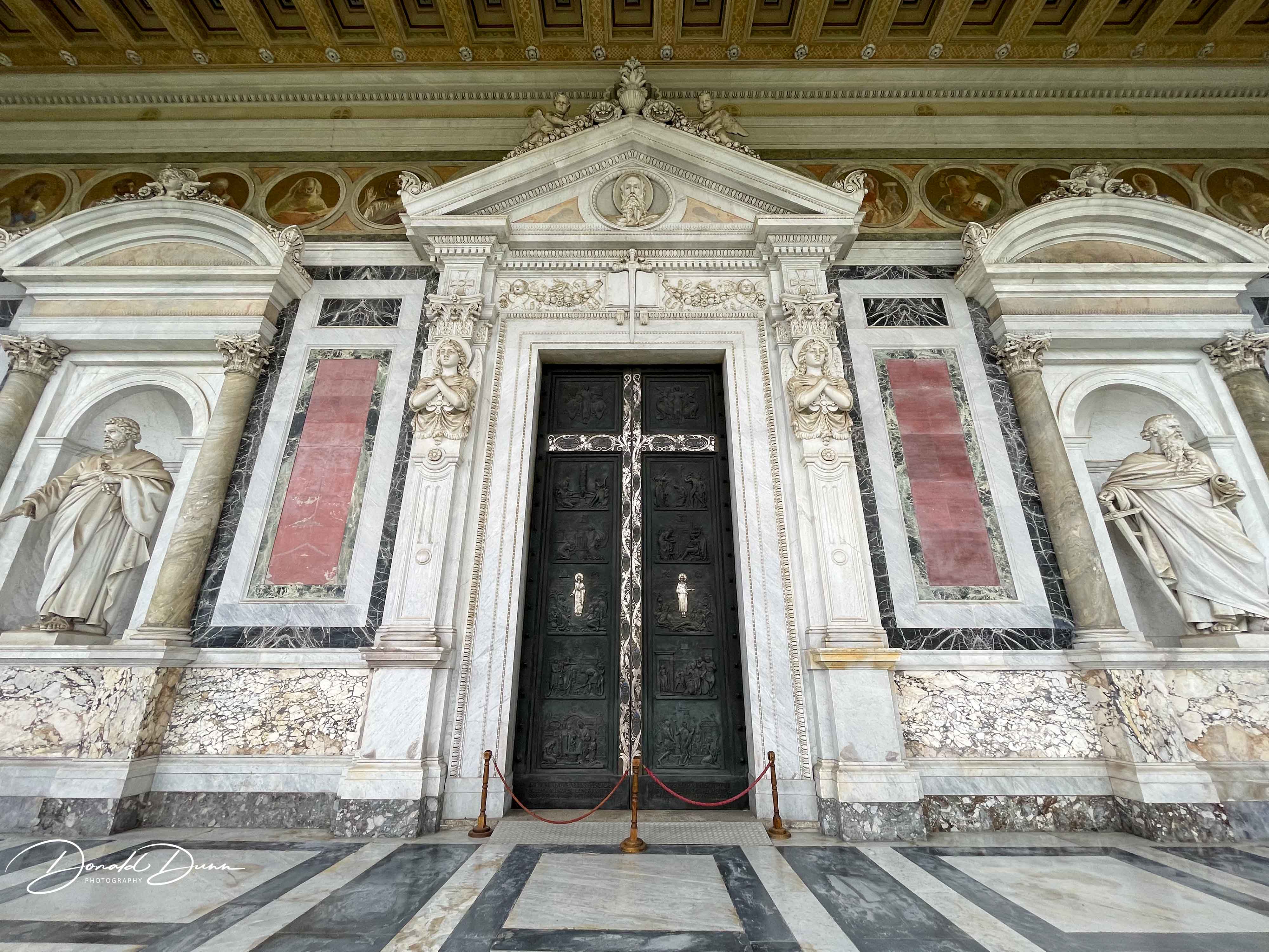
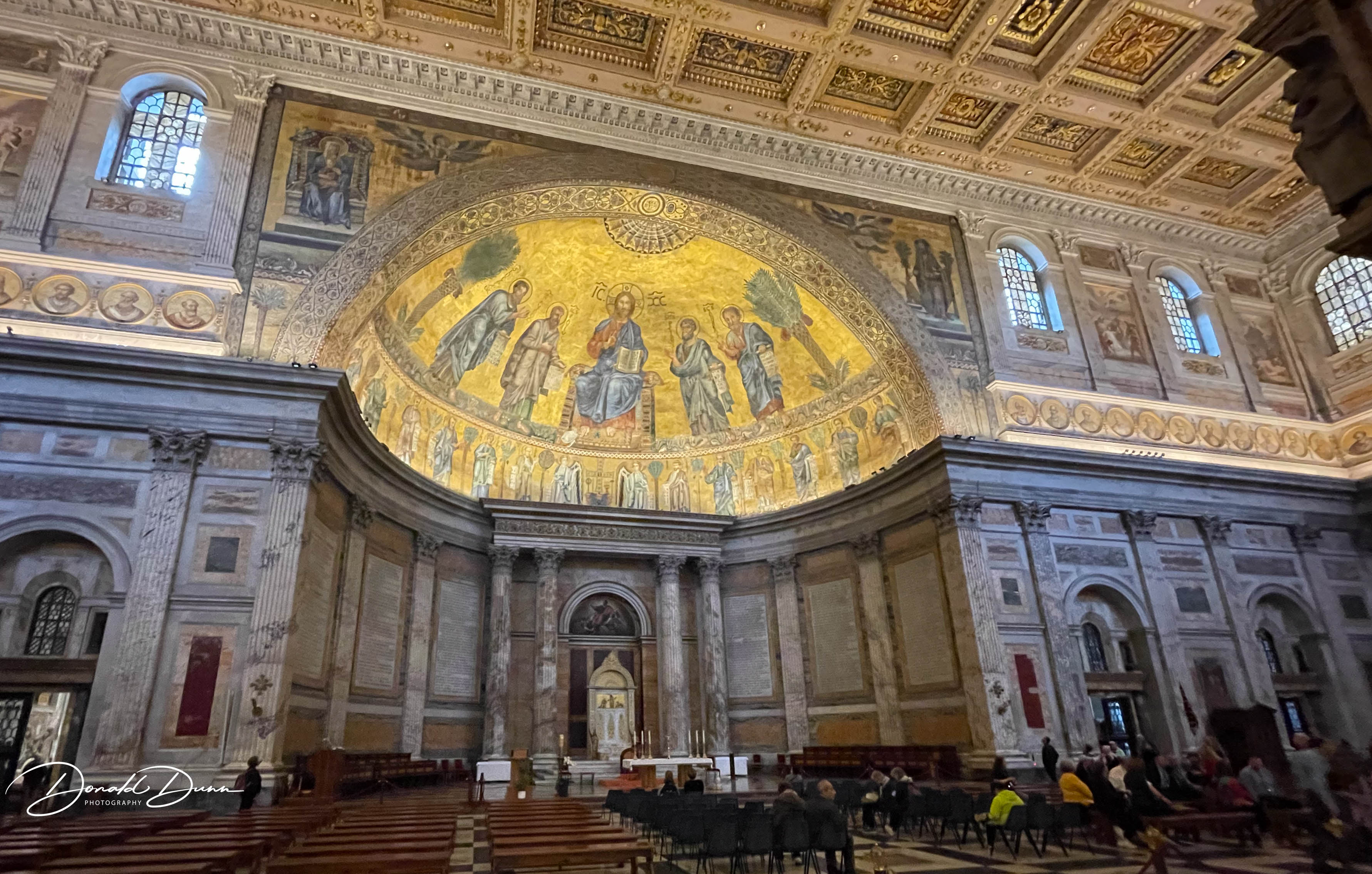
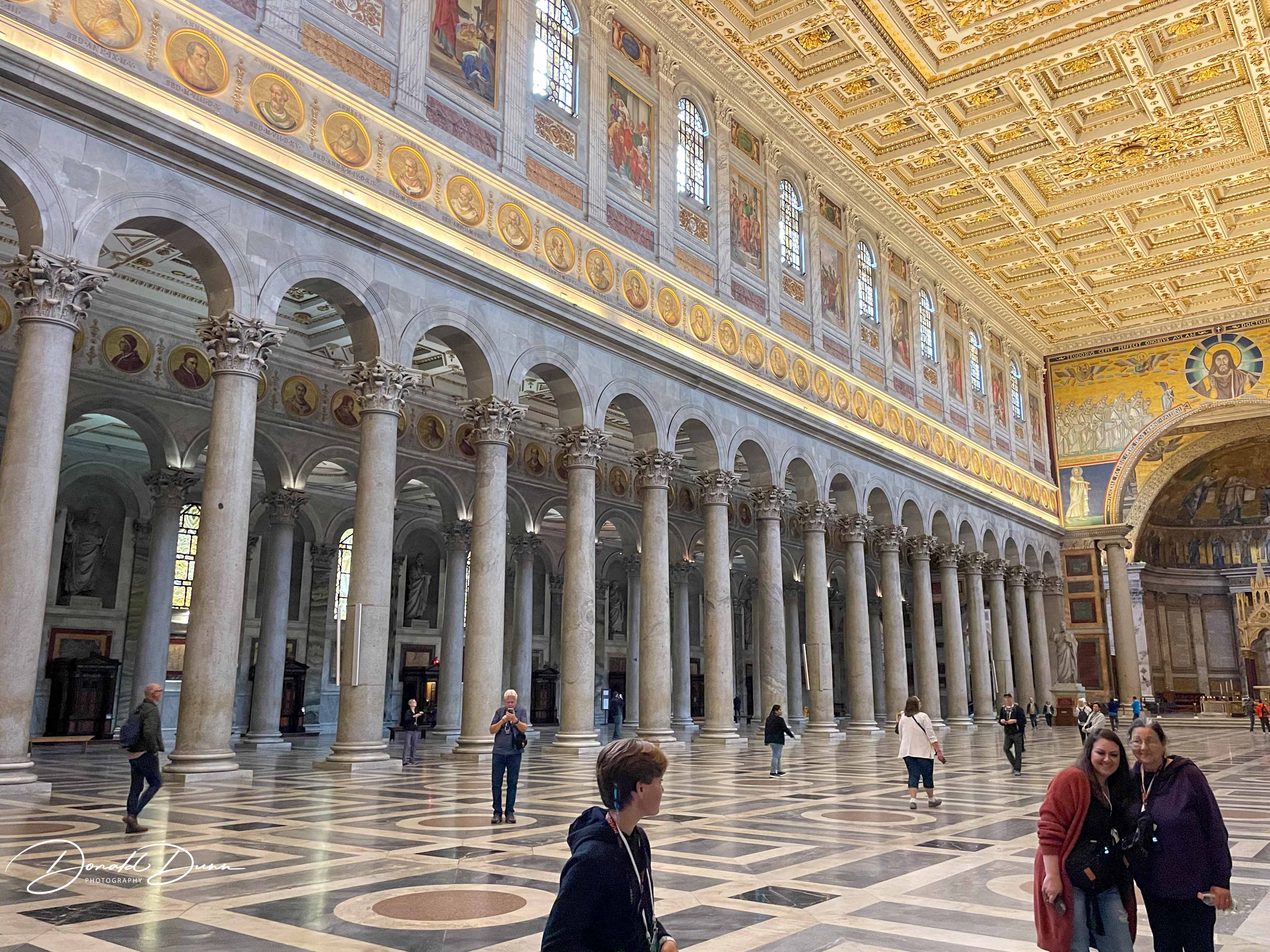
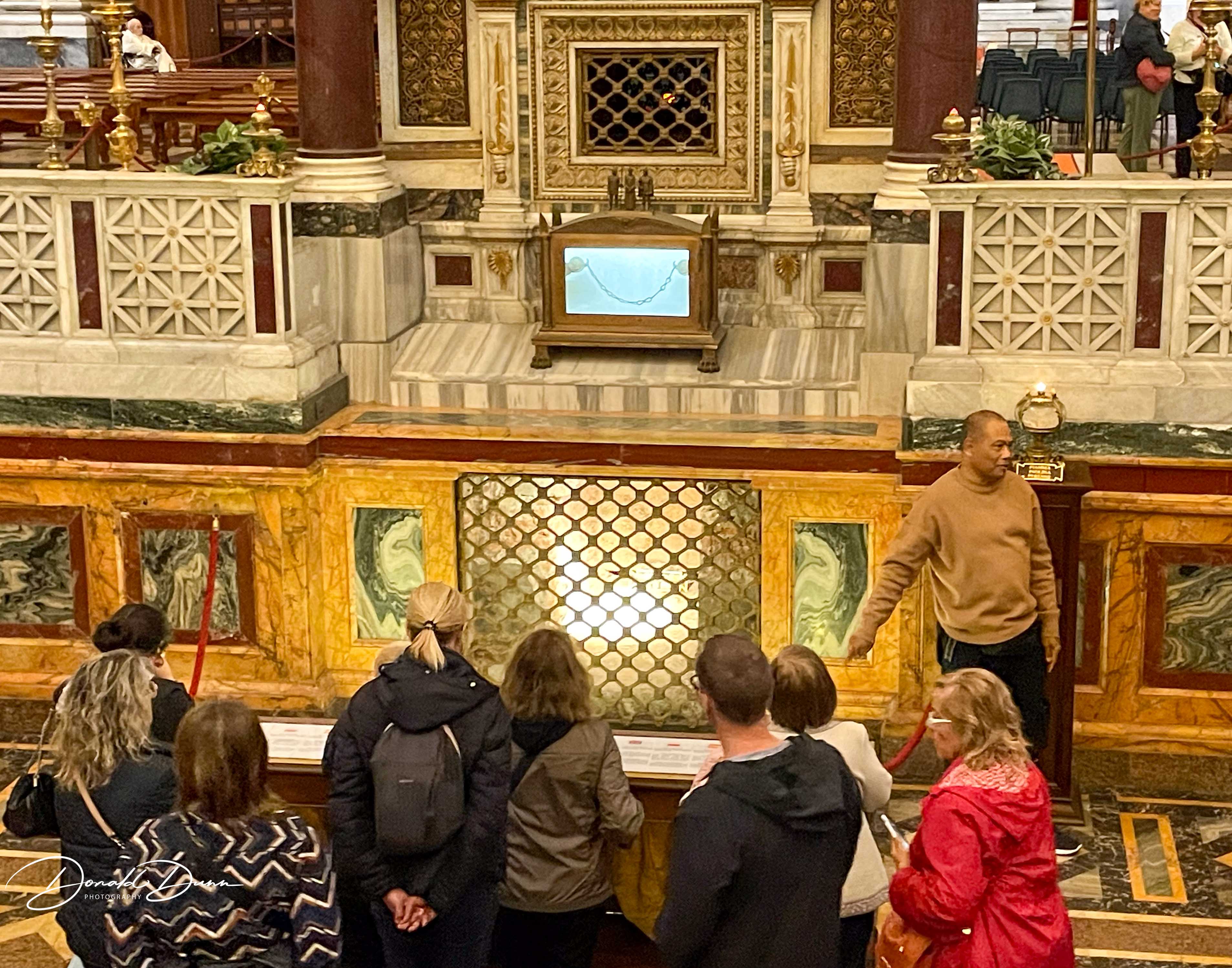
After breakfast, we toured the Basilica of St. Paul Outside-the-Walls. The present structure stands over the place where Constantine built the first church over Saint Paul’s grave. The church features a portrait of every Pope that has served the church. Next, we entered the Catacombs of Callixtus, built along the Appian Way. Here, 16 Popes from the 2nd through 4th Centuries were interred, though they have been removed to various churches over the centuries.
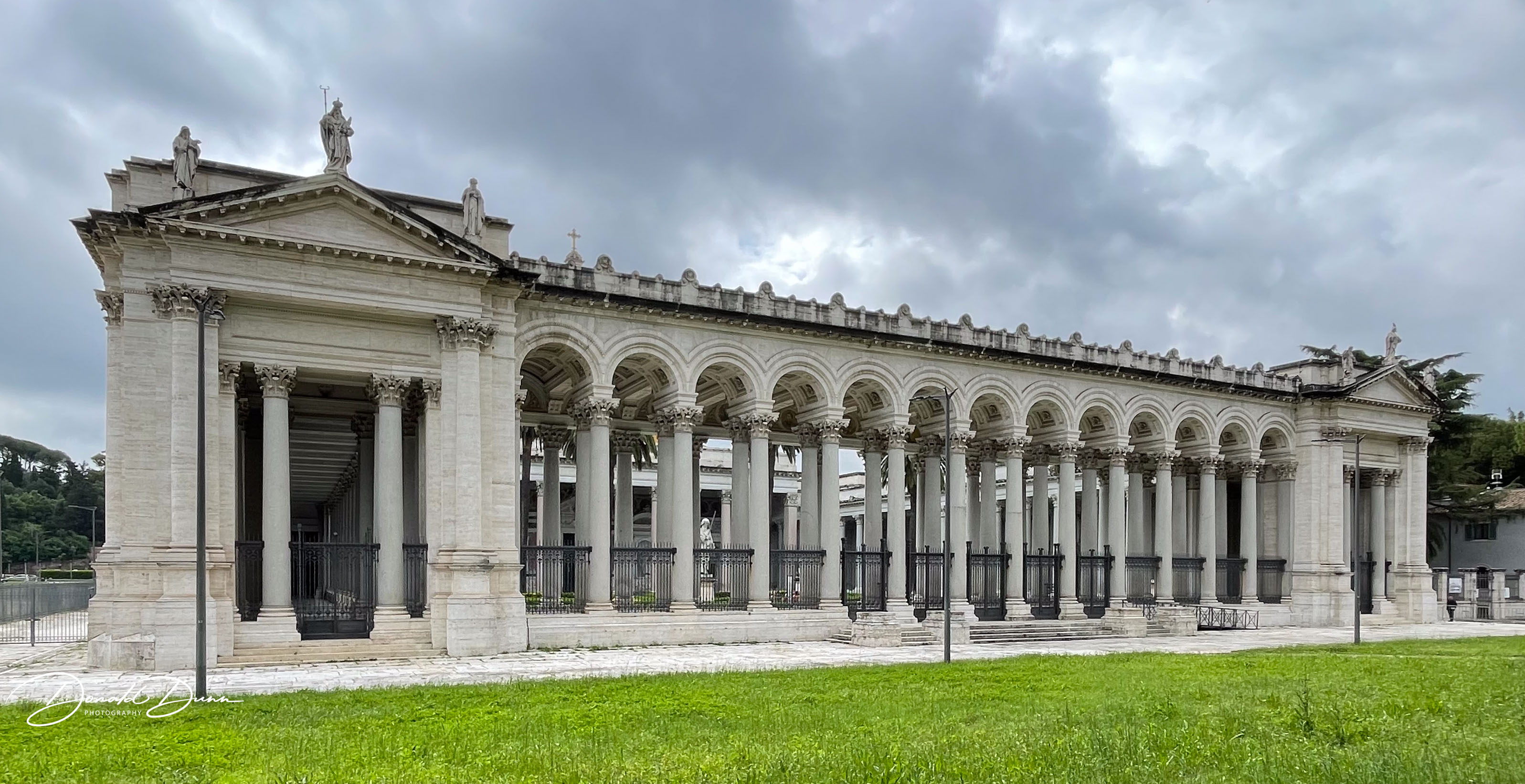
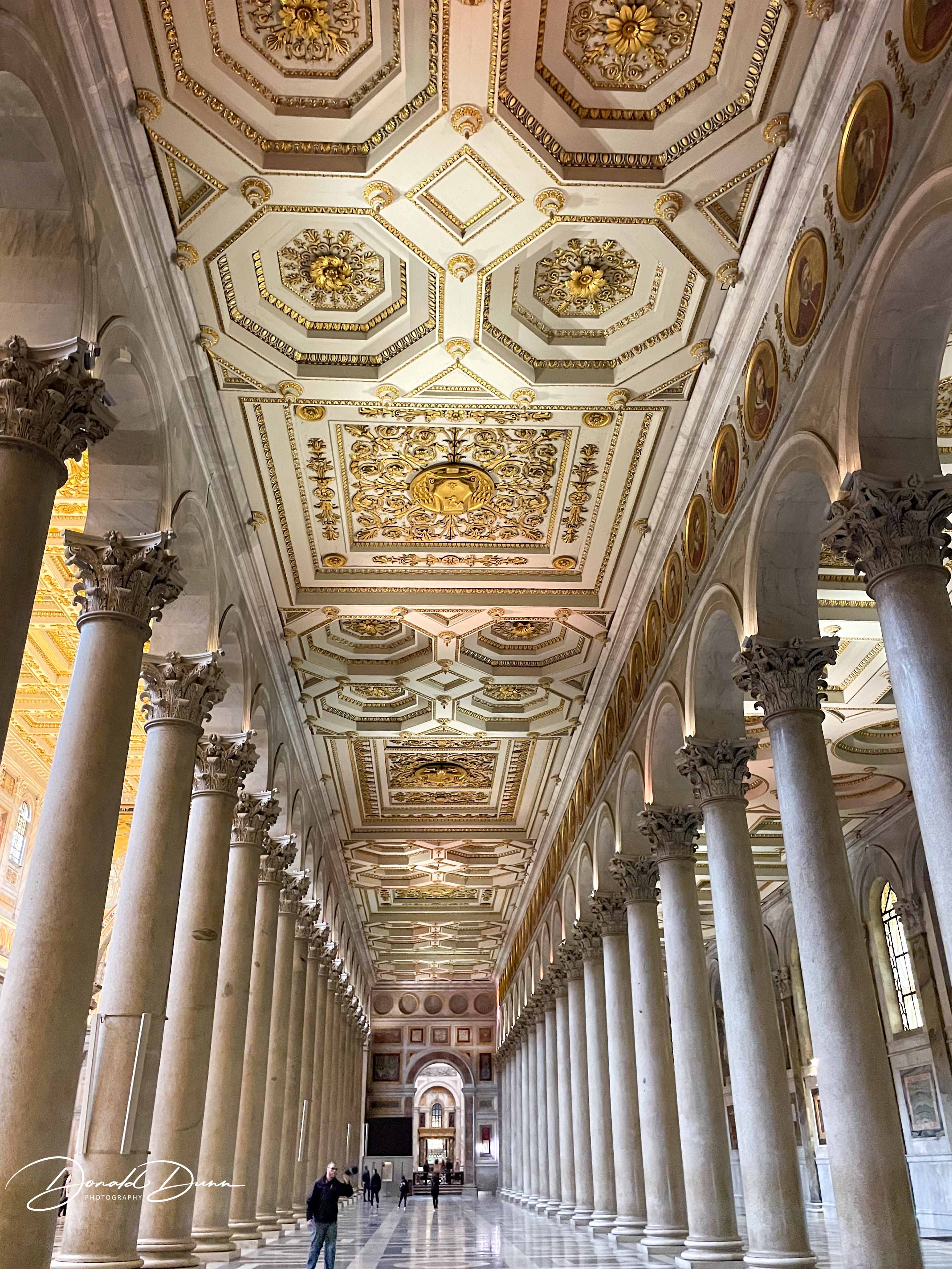
Basilica of St. Paul Outside-the-Walls

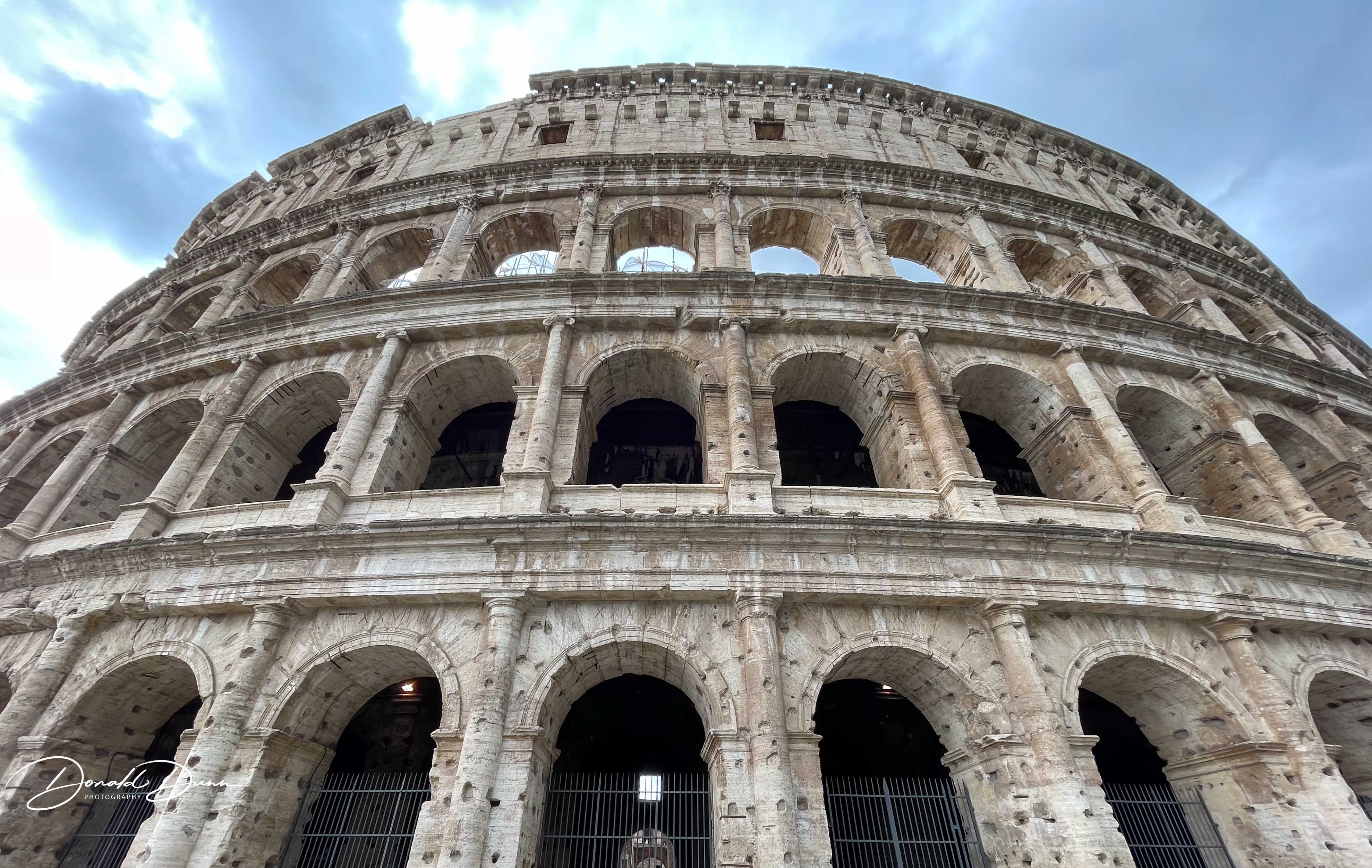
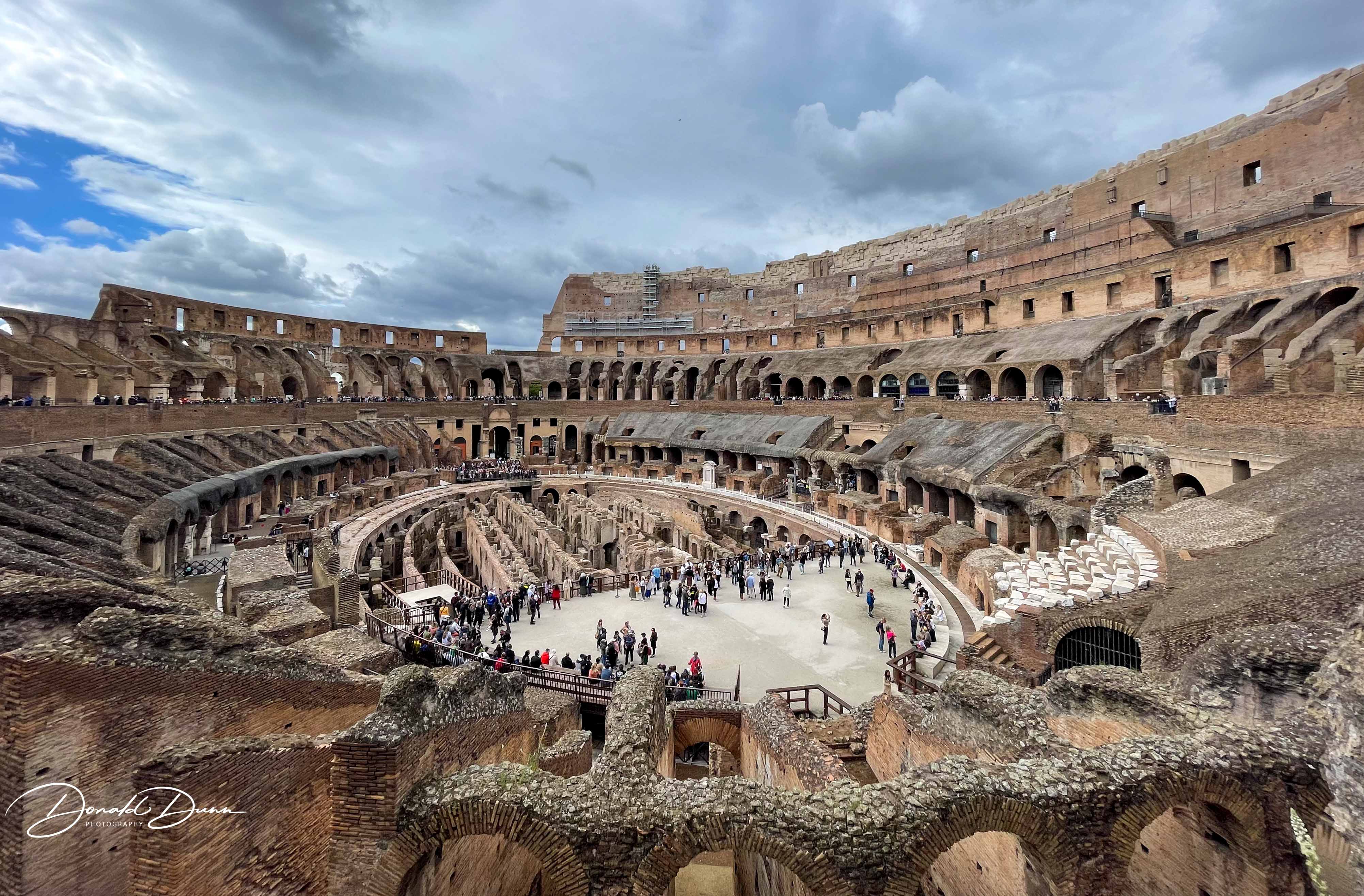
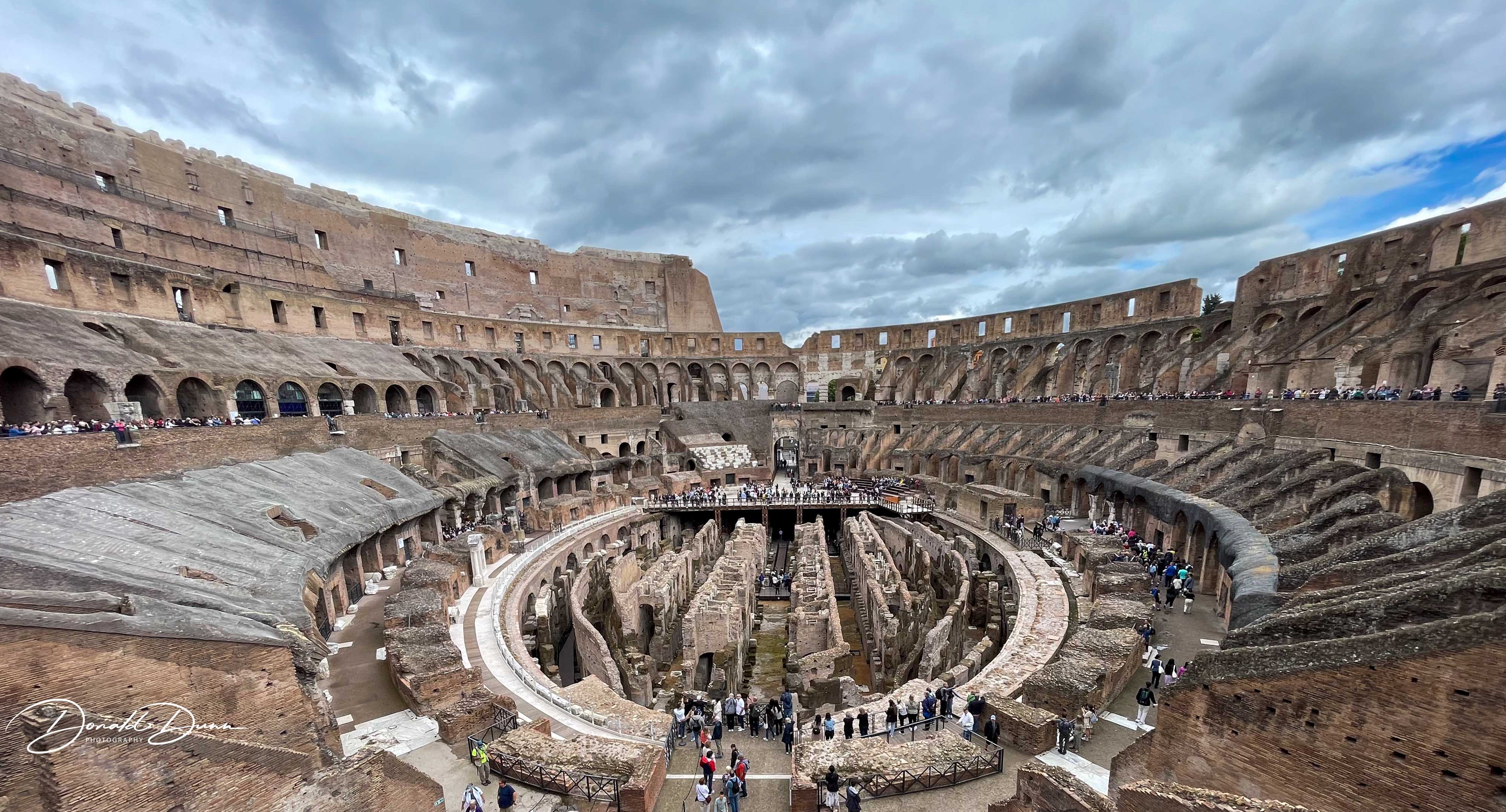
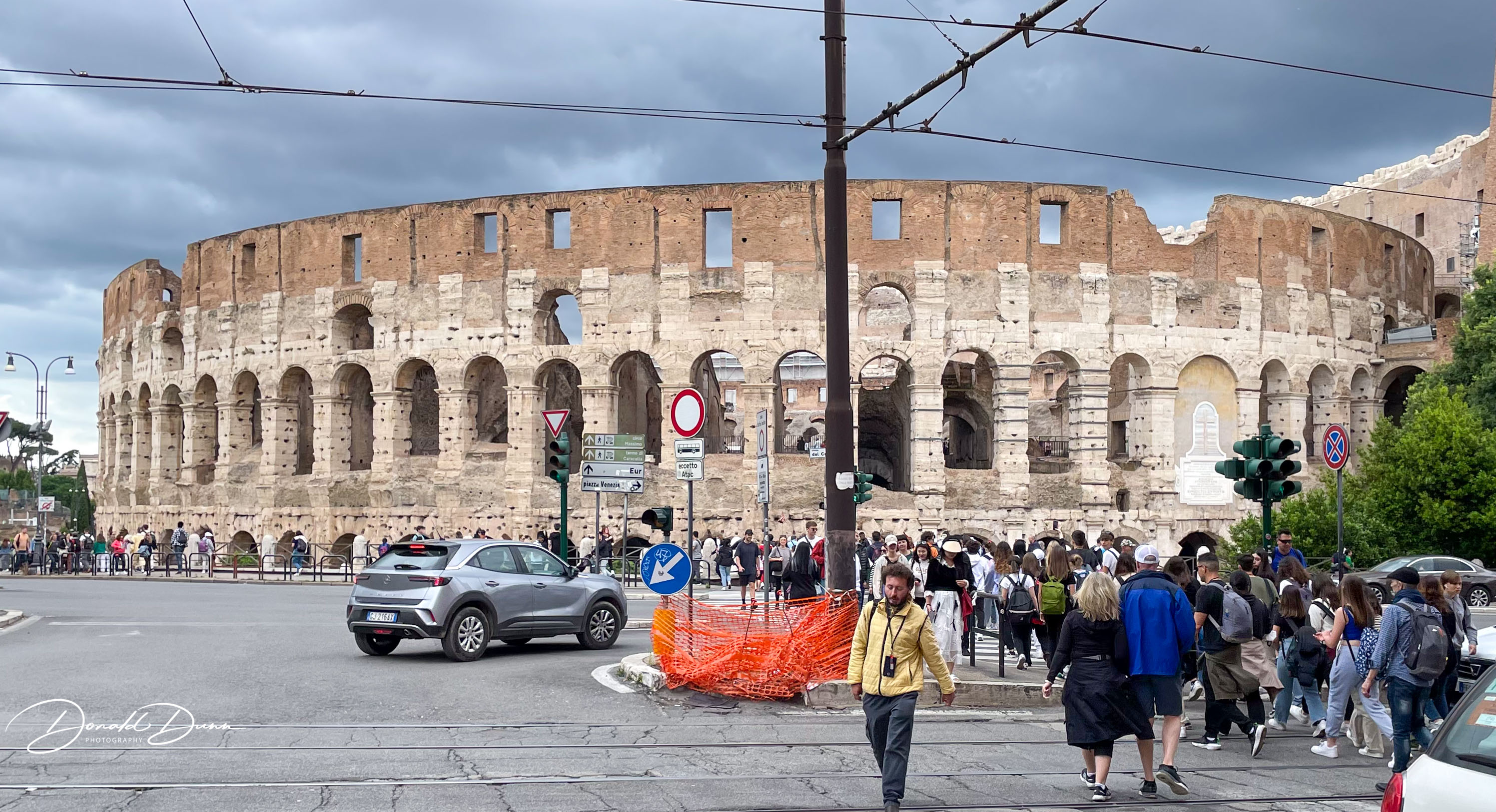
And then, we were off to tour the Colosseum. The Colosseum is an elliptical amphitheater in the center of Rome. It is the largest ancient amphitheater ever built, and is still the largest standing amphitheater in the world, despite its age. Construction began in 72 AD and was completed in 80 AD. The three emperors (Vespian, Titus, and Domitian) who were patrons of the work are known as the Flavian dynasty.

Panorama of the Colosseum

The Colosseum is built of travertine limestone, tuff or volcanic rock, and brick-faced concrete. It could hold an estimated 50,000 to 80,000 spectators at various points in its history, having an average audience of some 65,000; it was used for gladiatorial contests and public spectacles including animal hunts, executions, re-enactments of famous battles, dramas based on Roman mythology, and briefly mock sea battles.  Although substantially ruined by earthquakes and stone robbers, the Colosseum is still a renowned symbol of Imperial Rome and was listed as one of the New 7 Wonders of the World. It has links to the Roman Catholic Church, as each Good Friday, the Pope leads a torchlit “Way of the Cross” procession that starts in the area around the Colosseum.
From atop the Colosseum, we saw the the Arch of Constantine and the Forum.The Arch of Constantine is a triumphal arch in Rome dedicated to the emperor Constantine the Great. The arch was commissioned by the Roman Senate to commemorate Constantine’s victory over Maxentius at the Battle of Melvin Bridge in AD 312. Situated between the Colosseum and the Palatine Hill, the arch spans the Via Triumphalis, the route taken by victorious military leaders when they entered the city in a triumphal procession. Dedicated in 315, it is the largest Roman triumphal arch; the arch is constructed of brick-faced concrete covered in marble.
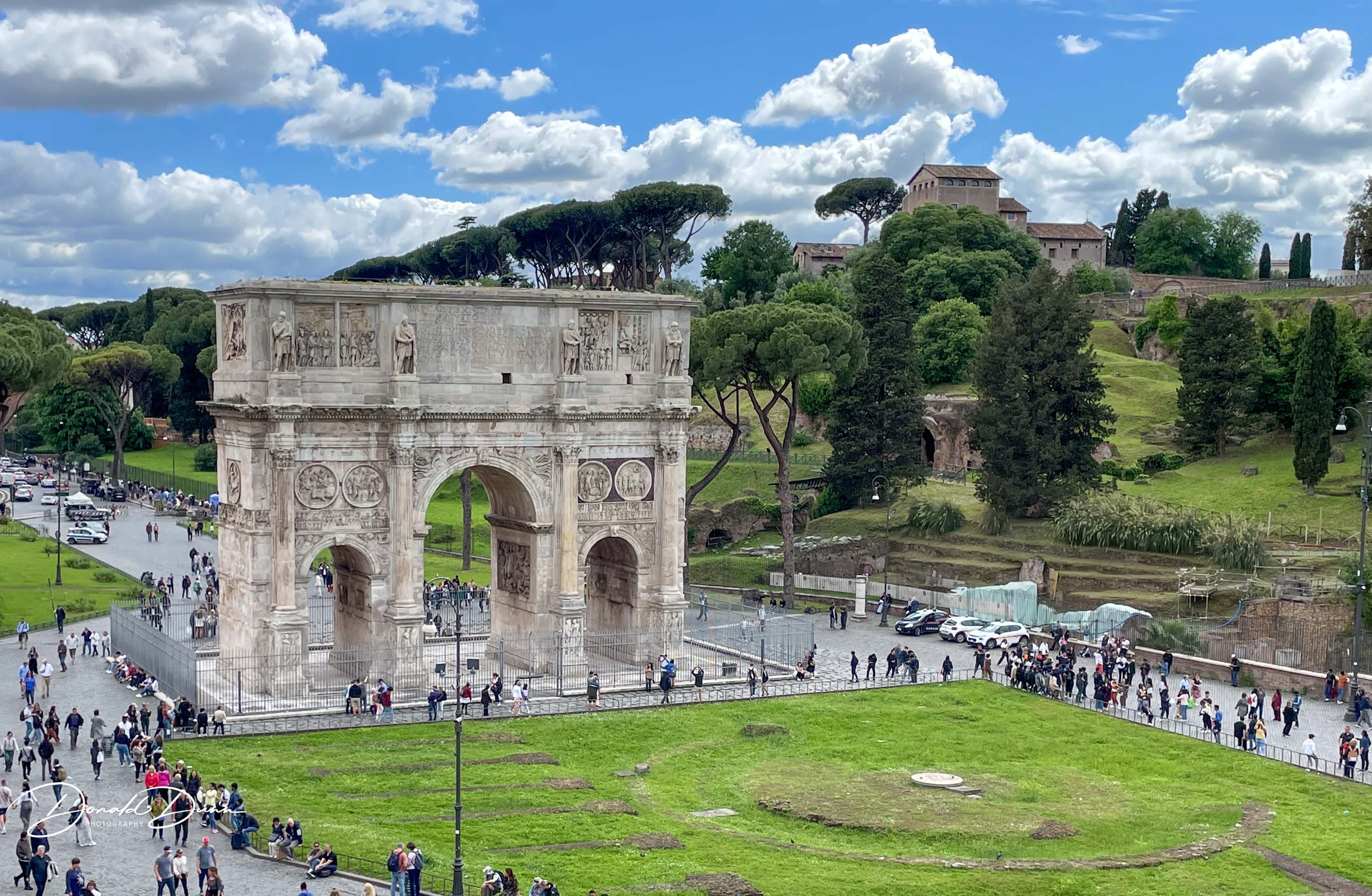
Arch of Constantine
The Forum

And then was back to the hotel for dinner and packing for our Thursday departure from Rome.
Thursday, May 18, 2023–Ending Our Tour Of Rome

Today, we toured the Vatican, and explored its museums. 

As reported by the CIA, popes in their secular role ruled portions of the Italian peninsula for more than a thousand years until the mid-19th century, when many of the Papal States were seized by the newly united Kingdom of Italy. In 1870, the pope’s holdings were further circumscribed when Rome itself was annexed. Disputes between a series of “prisoner” popes and Italy were resolved in 1929 by three Lateran Treaties, which established the independent state of Vatican City and granted Roman Catholicism special status in Italy. In 1984, a concordat between the Holy See and Italy modified certain of the earlier treaty provisions, including the primacy of Roman Catholicism as the Italian state religion. 

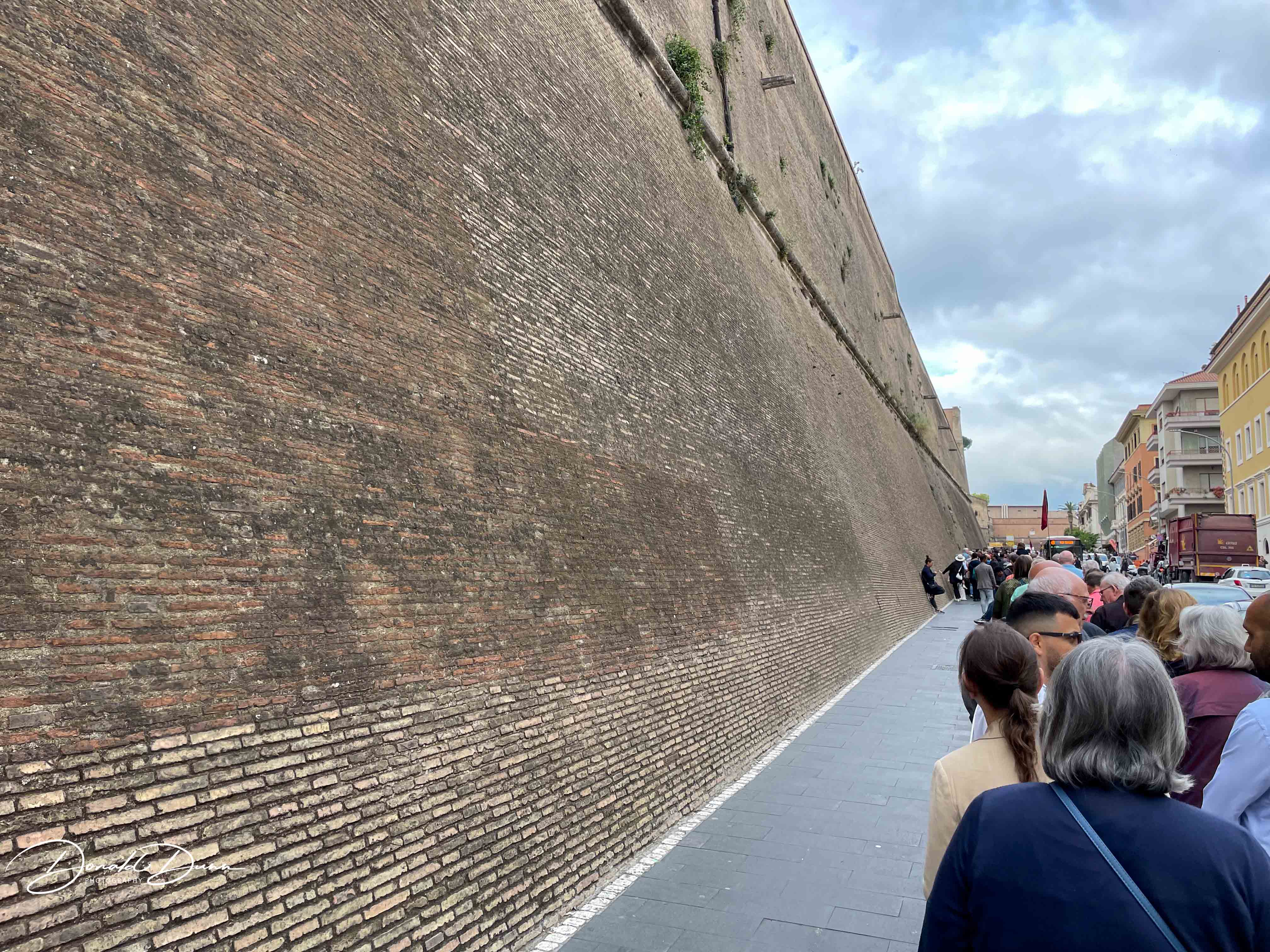
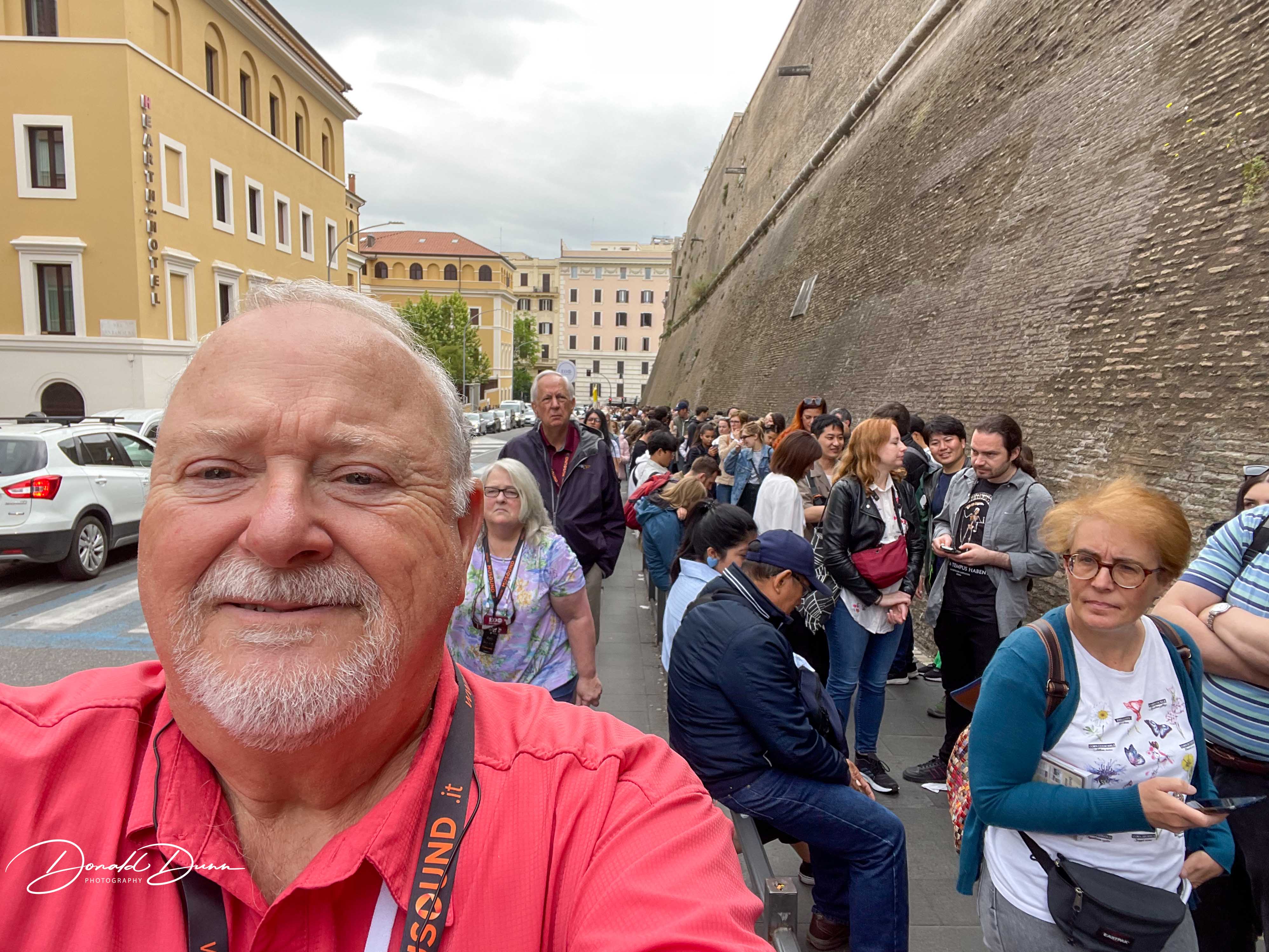
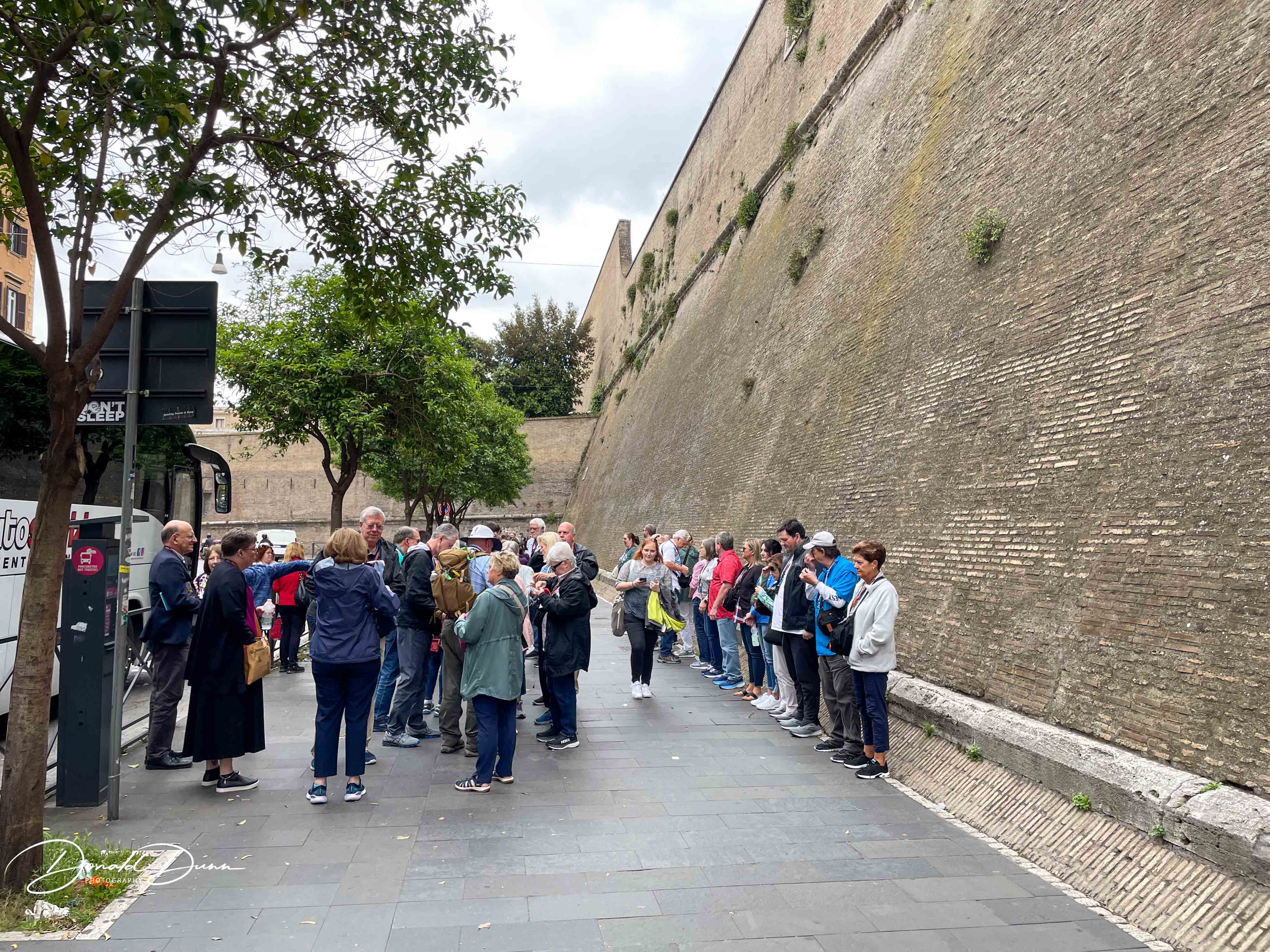
First up was queuing up alongside the Vatican City walls to enter the Main Gate. Long lines were seemingly everywhere, but moved at a reasonable speed.

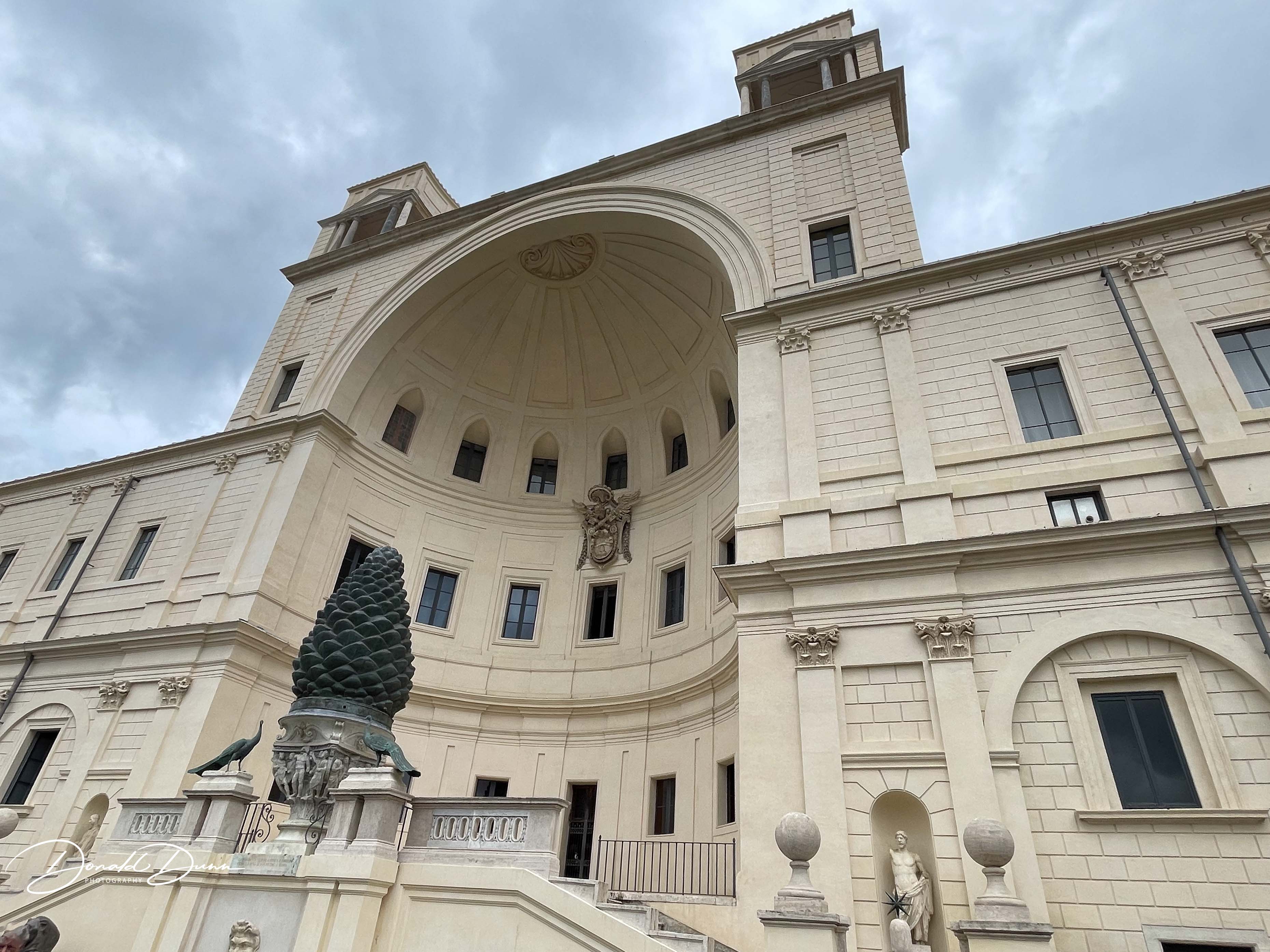
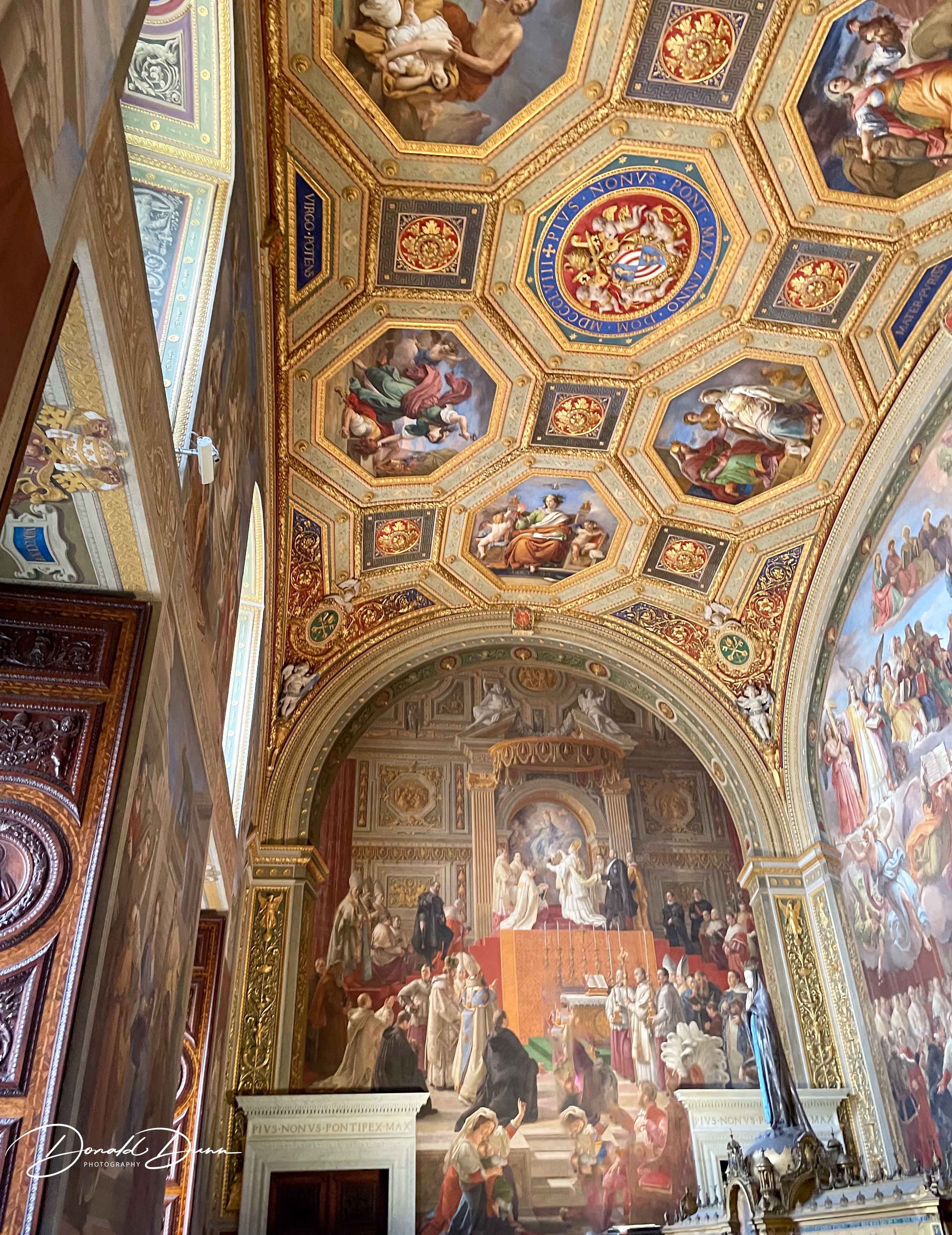
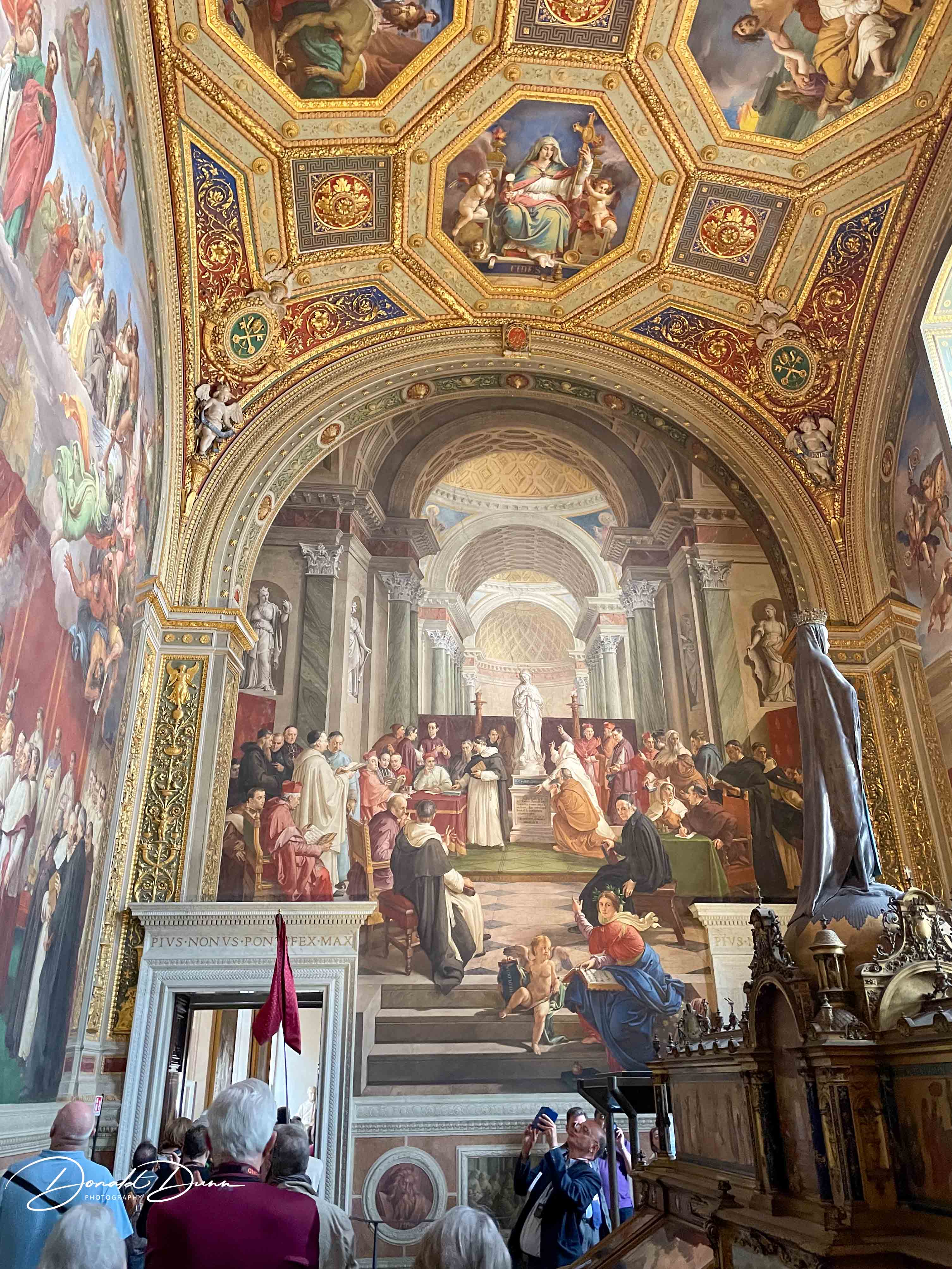
Upon entering, the Vatican Museums awaited us. The Vatican Museums are the public museums of the Vatican City. They display works from the immense collection amassed by the Catholic Church and the papacy throughout the centuries, including several of the most well-known Roman sculptures and most important masterpieces of Renaissance art in the world. Before entering the Vatican Museums, we traversed the the Pinecone Courtyard, and the New Wing.

One of the first parts of the Vatican Museums that is seen when the visit begins is the Pinecone Courtyard. It is a large open space of 300 square meters adjacent to the corridors and halls of the museum. This pine cone was made in the first century B.C., and it was a decorative fountain that, very probably, adorned the interiors of the Baths of Agrippa.

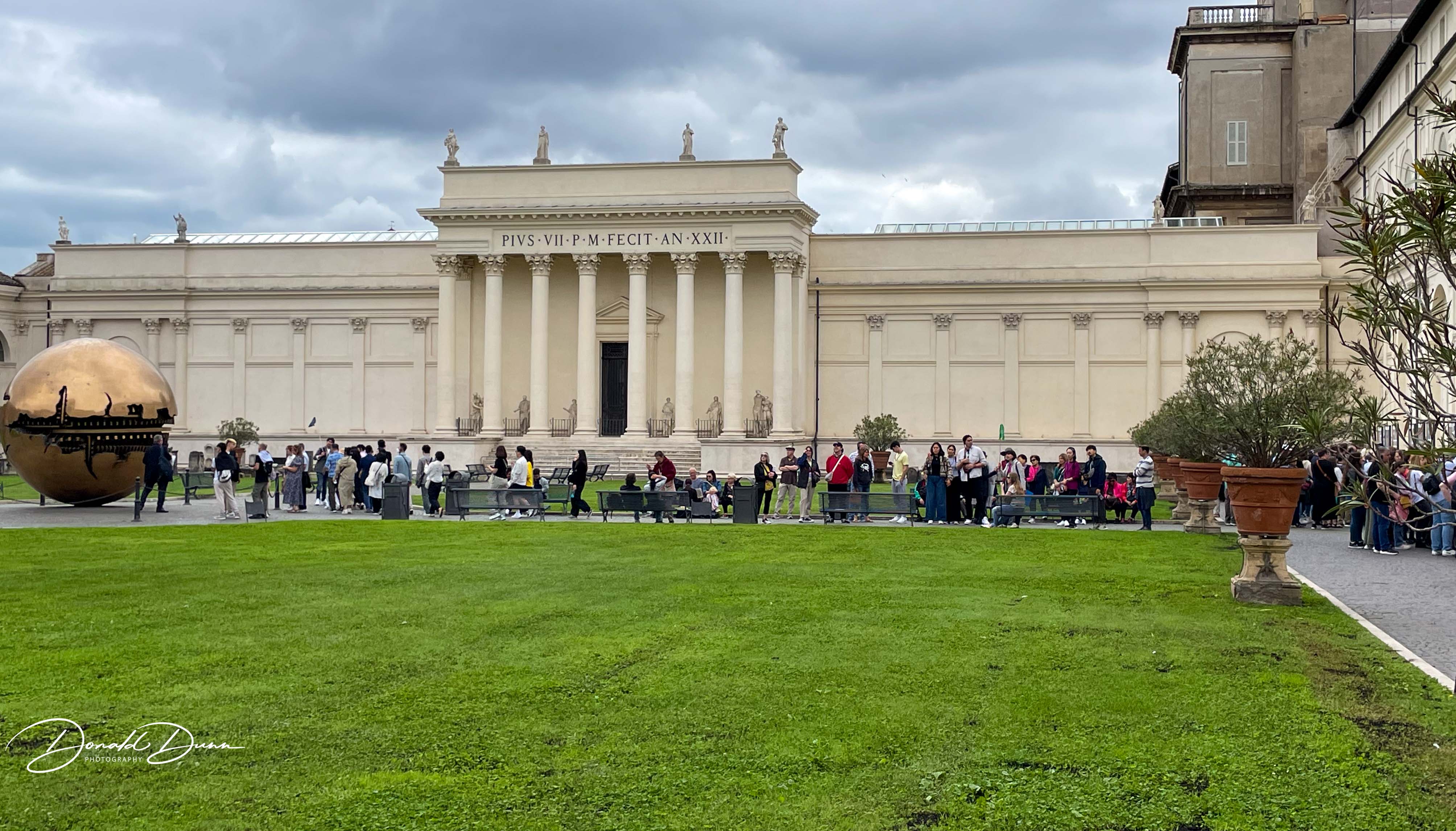
Pope Pius VII (1800-1823) employed the Roman architect Raffaele Stern to build what is now called the New Wing (Braccio Nuovo) of the Chiaramonti Museum. Photos were prohibited in many areas of the museums and photo ops were minimal.

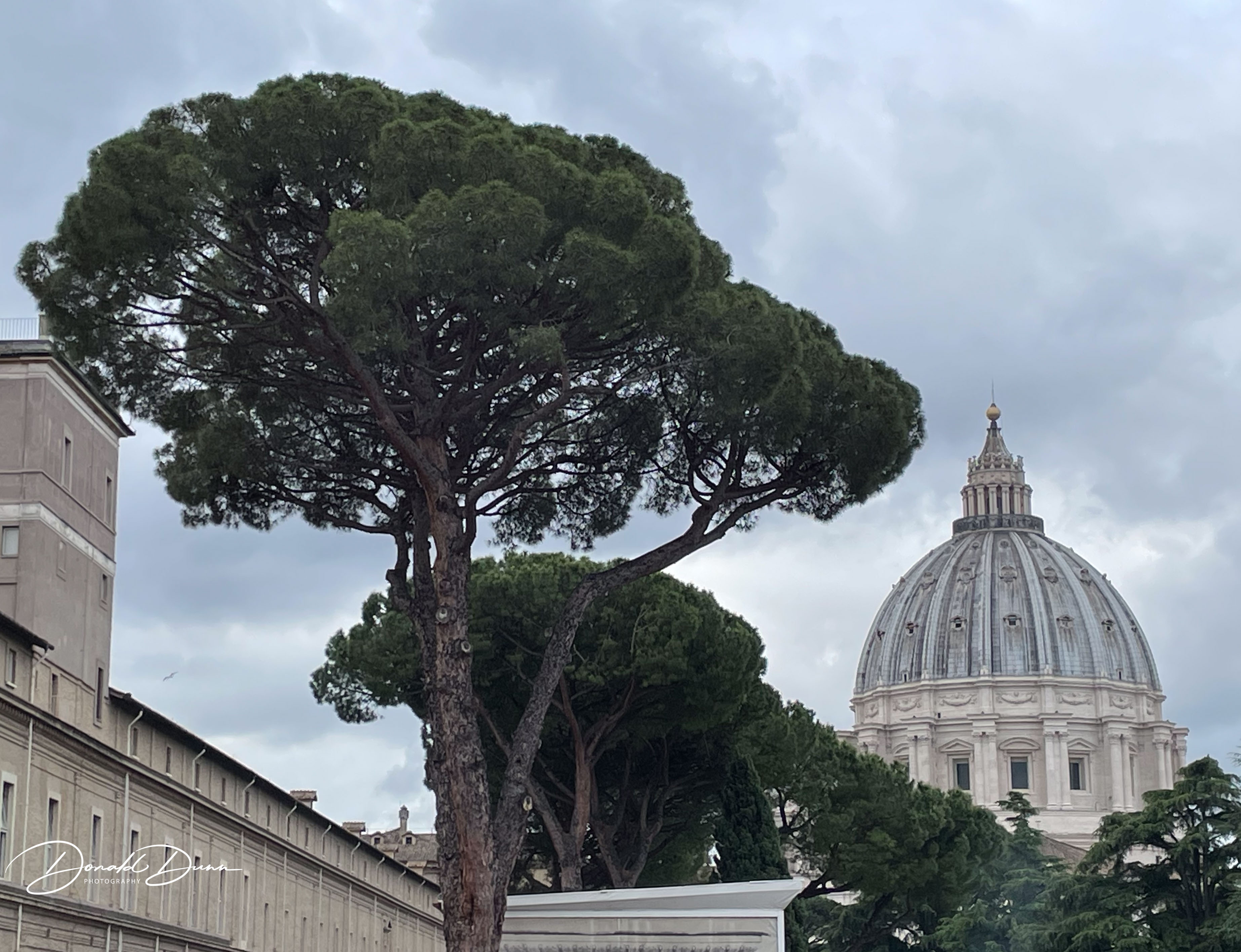
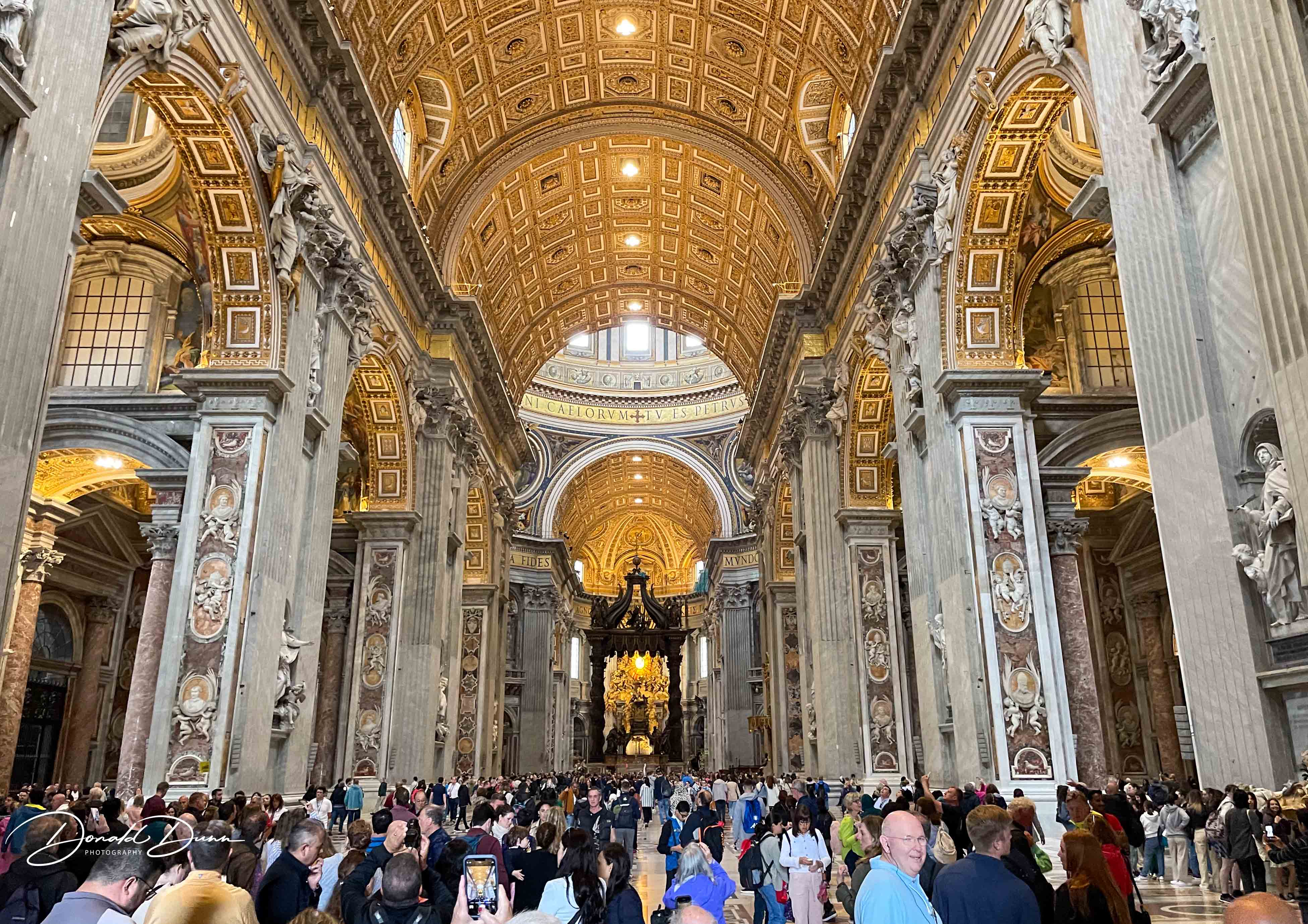
We marveled at the beauty of St. Peter’s Basilica and stood in awe of Michaelangelo’s frescoes in the Sistine Chapel.

St. Peter’s Basilica

After touring the Vatican, it was off to the Port of Civitavecchia where we boarded Royal Caribbean’s Odyssey of the Seas. We’re officially off the internet for 10 days more or less. We had a really good dinner on board, and listened to great jazz, “Jazz Standards” by the Odyssey of the Seas Quintet.