Kay and I left Hot Springs Village at about 10:00 o’clock AM on Monday, driving to the airport in Little Rock. From there, we flew to Charlotte, North Carolina, then flying to Rome, Italy, arriving at 9:00 o’clock AM.

Italy marks my 34th country visited. Luggage pickup and customs clearance went without a hitch, and we were immediately met by our tour representative, Educational Opportunities (EO) Tours, for Rome. From the airport we bussed to the City of Rome where we descended the graceful Spanish Steps, saw a number of the Egyptian and Roman obelisks, and observed several of the famous fountains of Rome, including the famous Trevi Fountain.
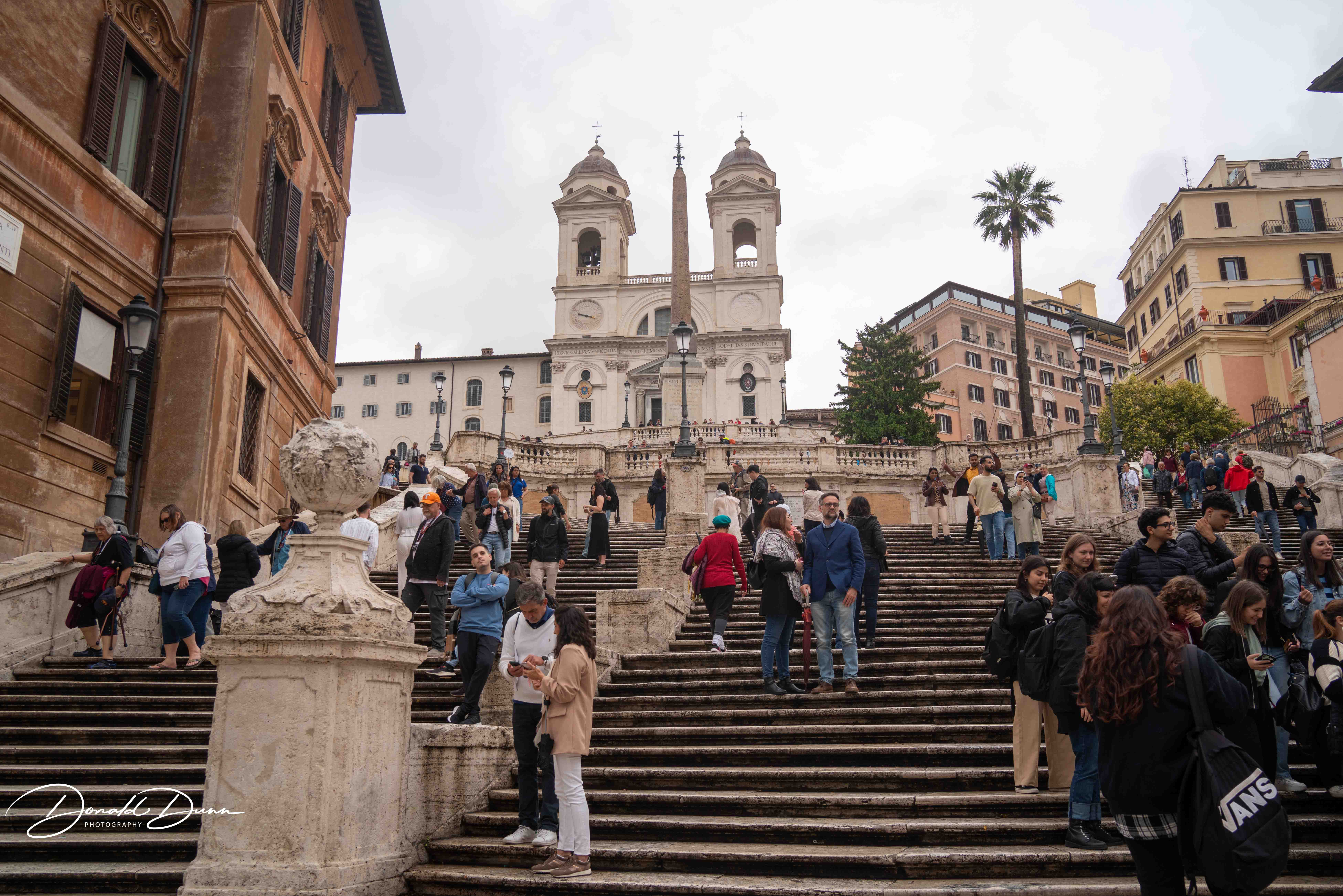
The Spanish Steps in Rome, Italy, climb a steep slope between the Piazza di Spagna at the base and Piazza Trinità. They were made famous by the 1953 blockbuster film Roman Holiday starring Audrey Hepburn and Gregory Peck.

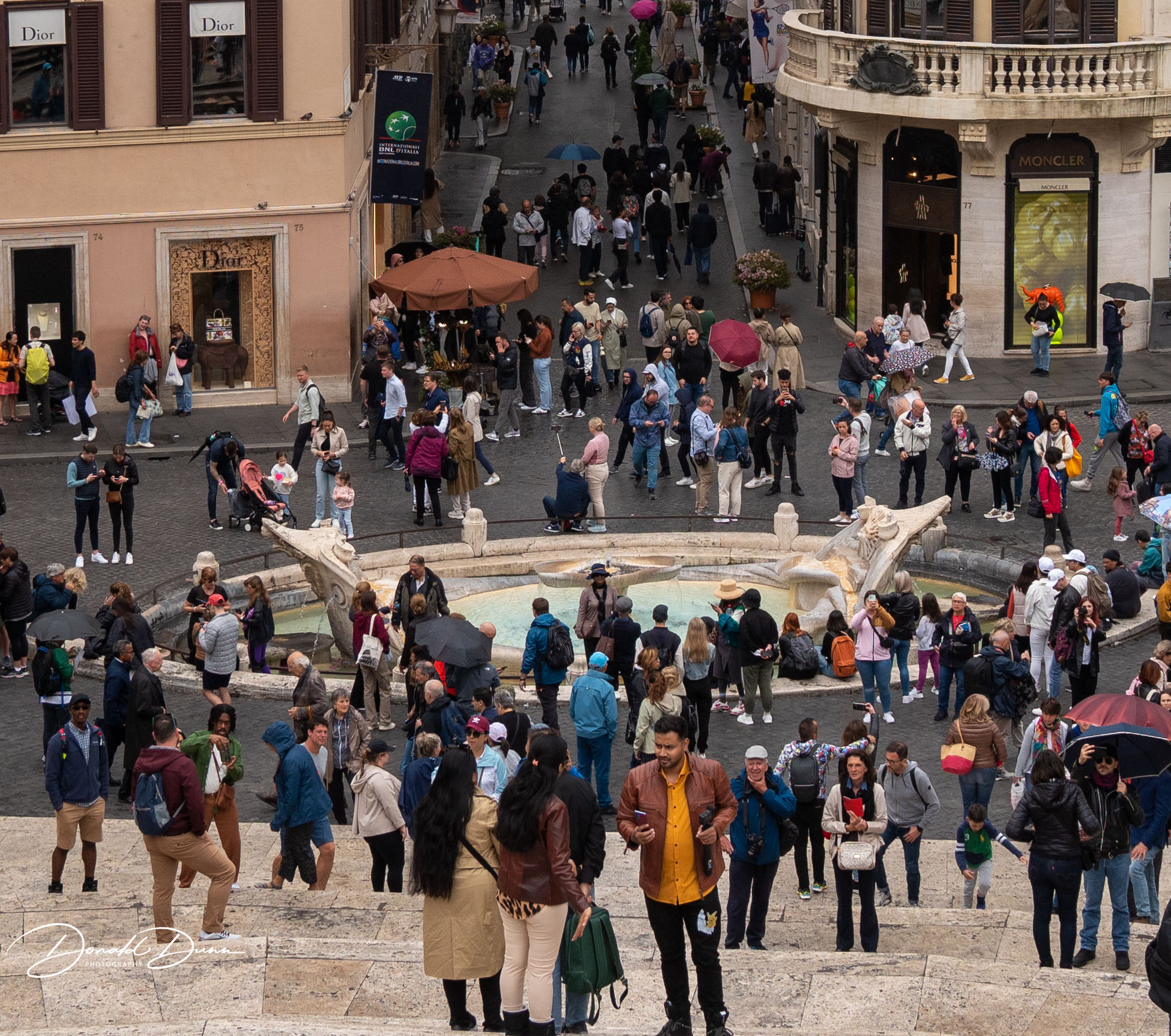
The Fountain of the Boat is a Baroque-style fountain found sat the foot of the Spanish Steps in Rome’s Spanish Square (Piazza di Spagna). It was commissioned by Pope Urban VIII in 1623 an completed between 1627 and 1629.
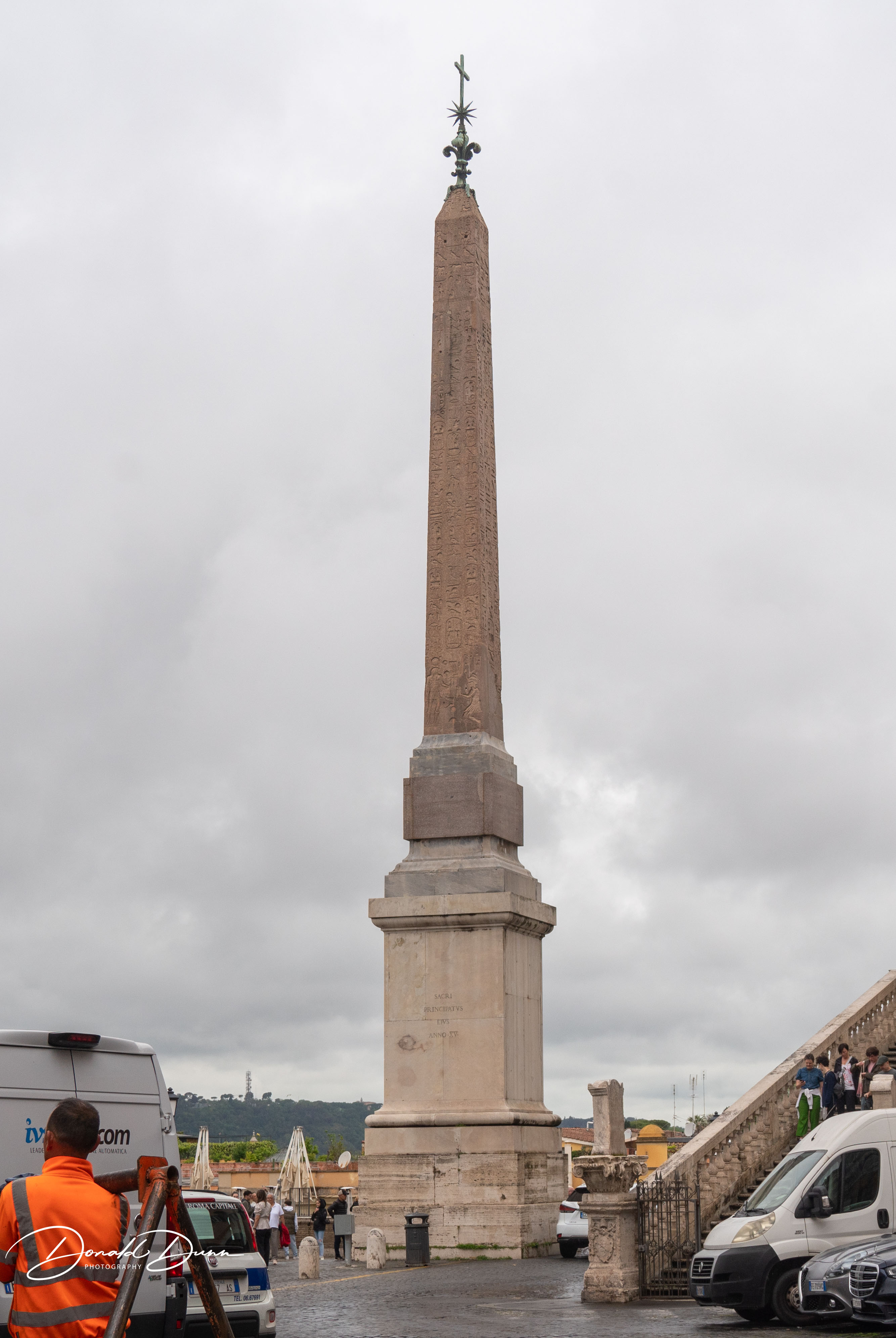
The city of Rome harbors thirteen ancient obelisks, the most in the world. There are eight ancient Egyptian and five ancient Roman obelisks in Rome. The Obelisk Trinità dei Monti tis is a Roman obelisk created during the reign of Roman Emperor Aurelian (reign 270 to 275 AD). Emperor Aurelian was so impressed with the Flaminio obelisk created for Egyptian Pharaoh Ramses II during the 13th century BC, he ordered a replica. It is located at the top of Spanish Stairs, in front of the church by the same name.
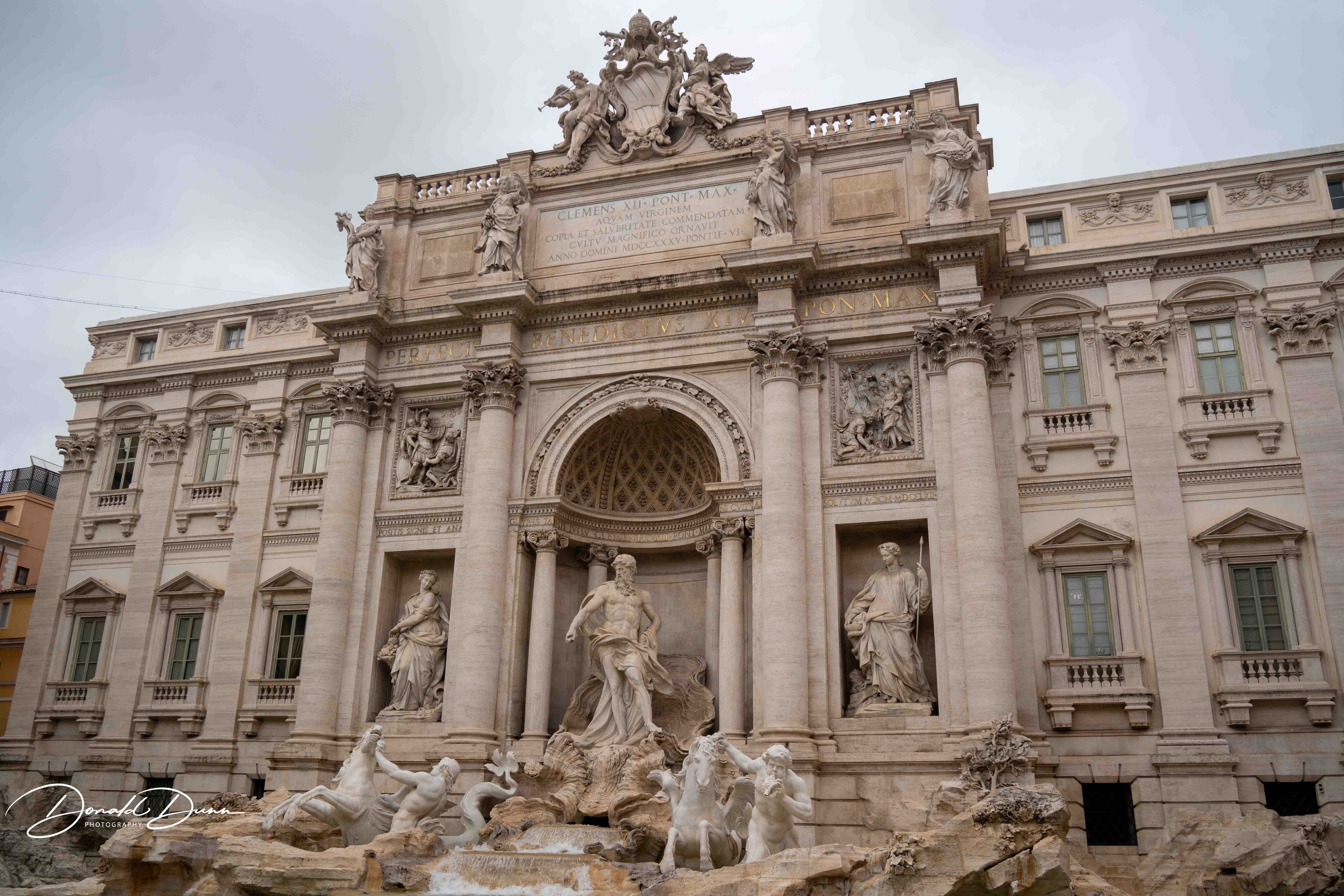
The Trevi Fountain is perhaps the most famous fountain in the world and definitely in Rome. The baroque fountain on the Piazza di Trevi square was initially designed for Pope Clemens XII. However, it was not built until 50 years later; construction lasted from 1732 to 1762. The fountain’s fame is in part the result of the many films, including the aforementioned Roman Holiday.

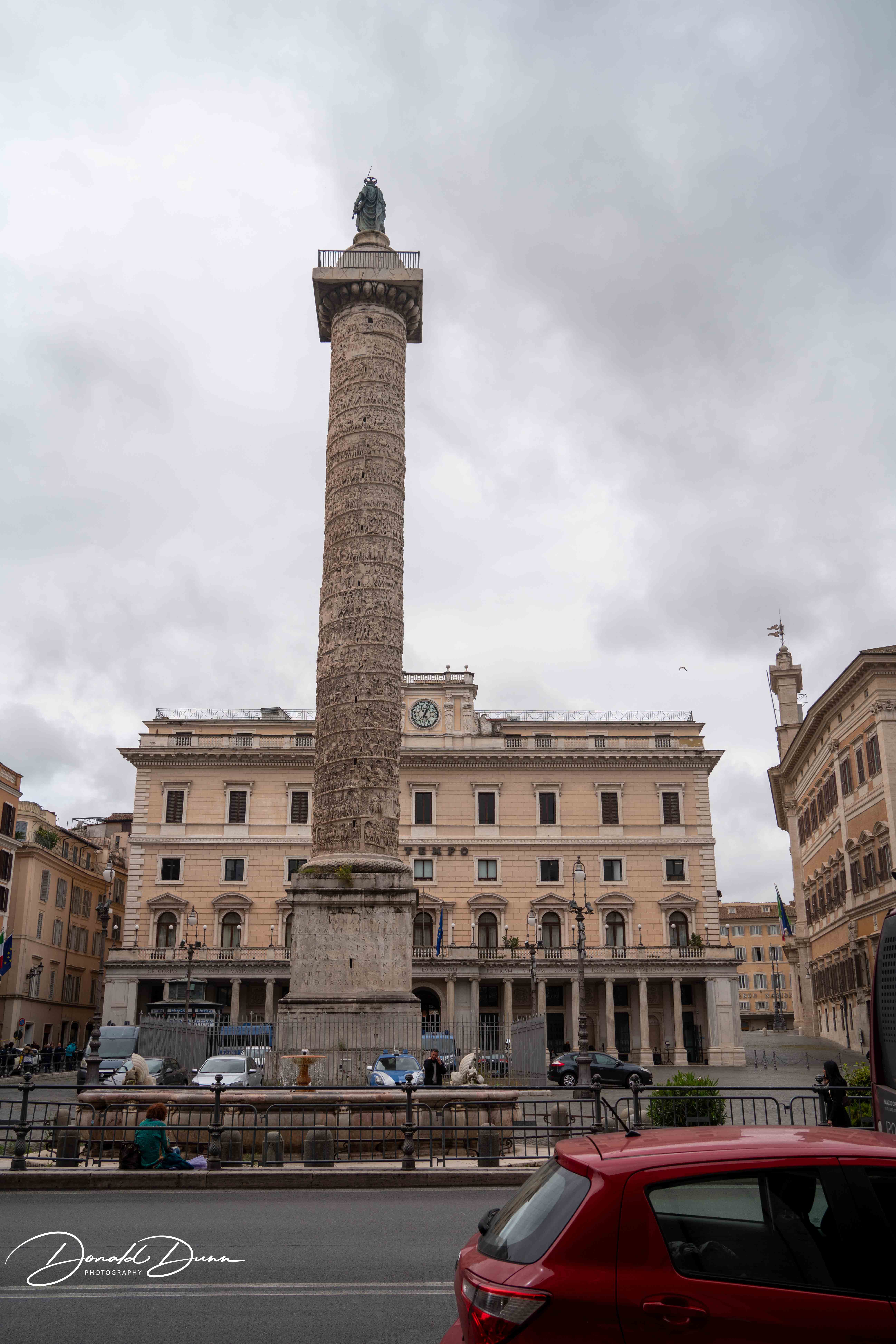
Trajan’s Column is a Roman triumphal column in Rome, Italy, that commemorates Roman emperor Trajan’s victory in the Dacian Wars. It was probably constructed under the supervision of the architect Apollodorus of Damascus at the order of the Roman Senate. It is located in Trajan’s Forum, north of the Roman Forum. It was constructed in 113 AD.
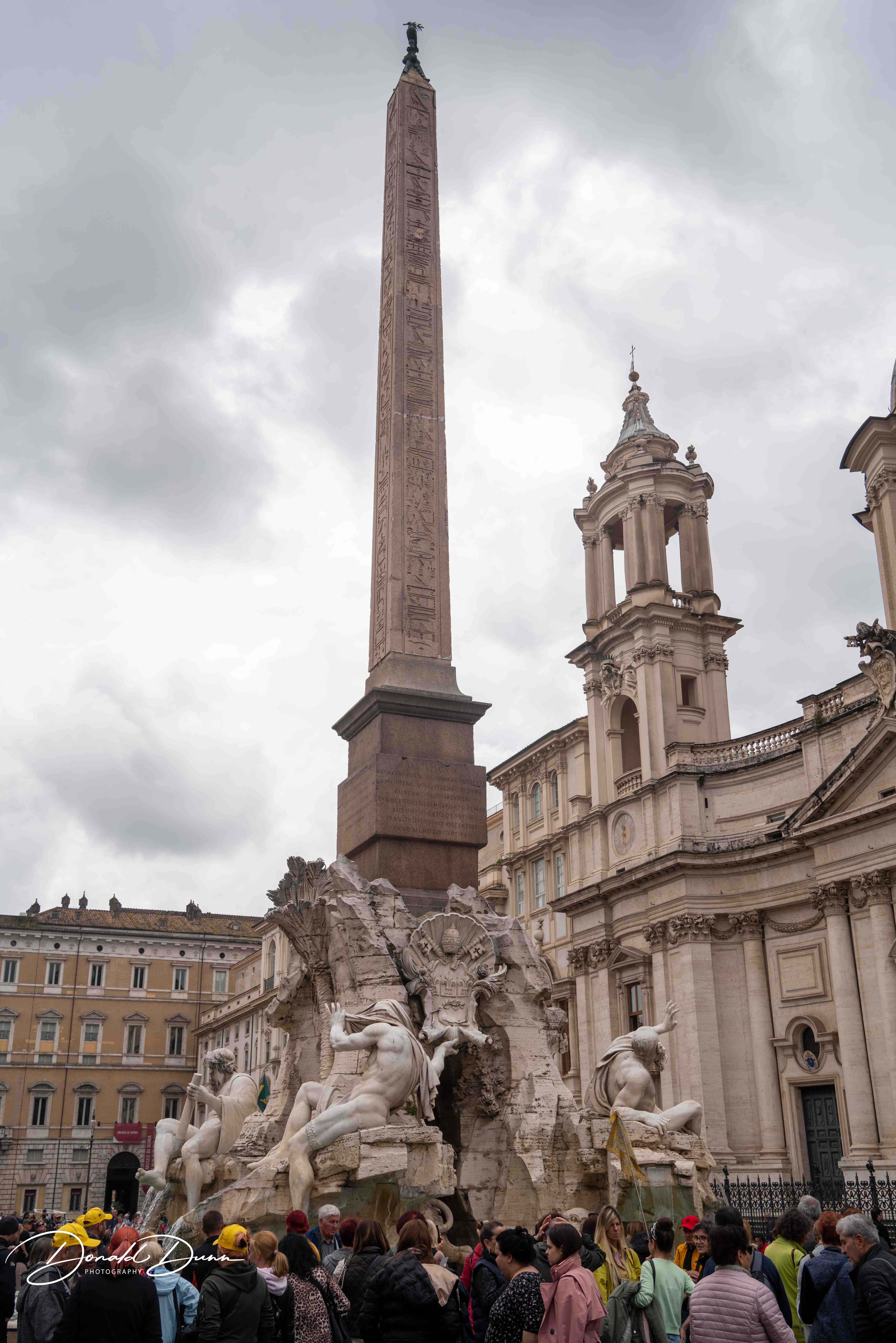
The Fountain of the Four Rivers depicts Gods of the four great rivers in the four continents as then recognized by the Renaissance geographers: the Nile in Africa, the Ganges in Asia, the Danube in Europe and the Río de la Plata in America. The Fountain of Four Rivers is topped by the Obelisk of Domitian. It is dated to the reign of Roman emperor Domitian (81-96 AD). Originally set up in the Circus of Maxentius, the obelisk was broken and buried over centuries. Although Pope Sixtus V was aware of its location, it was not excavated until Pope Innocent X, in 1649.


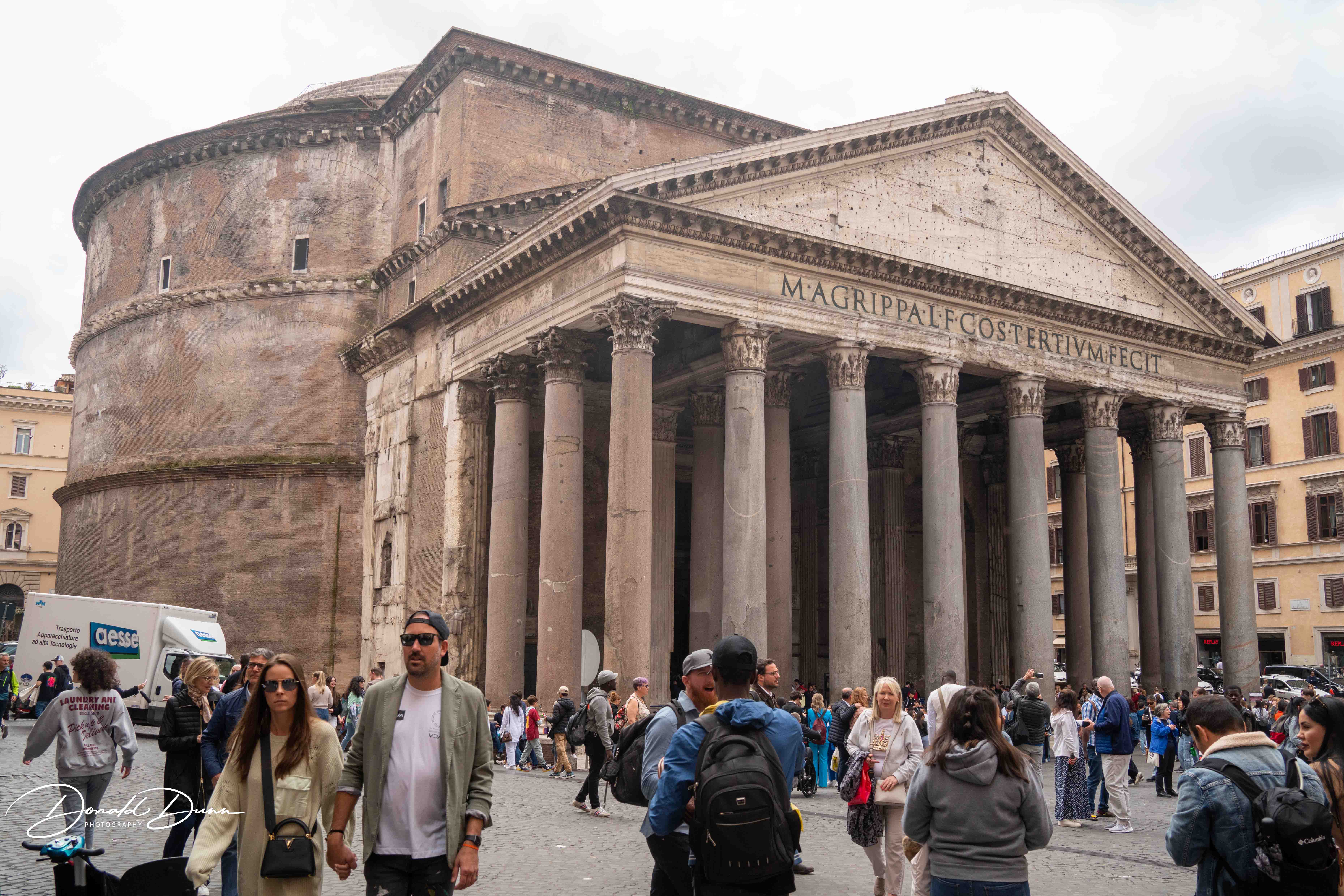
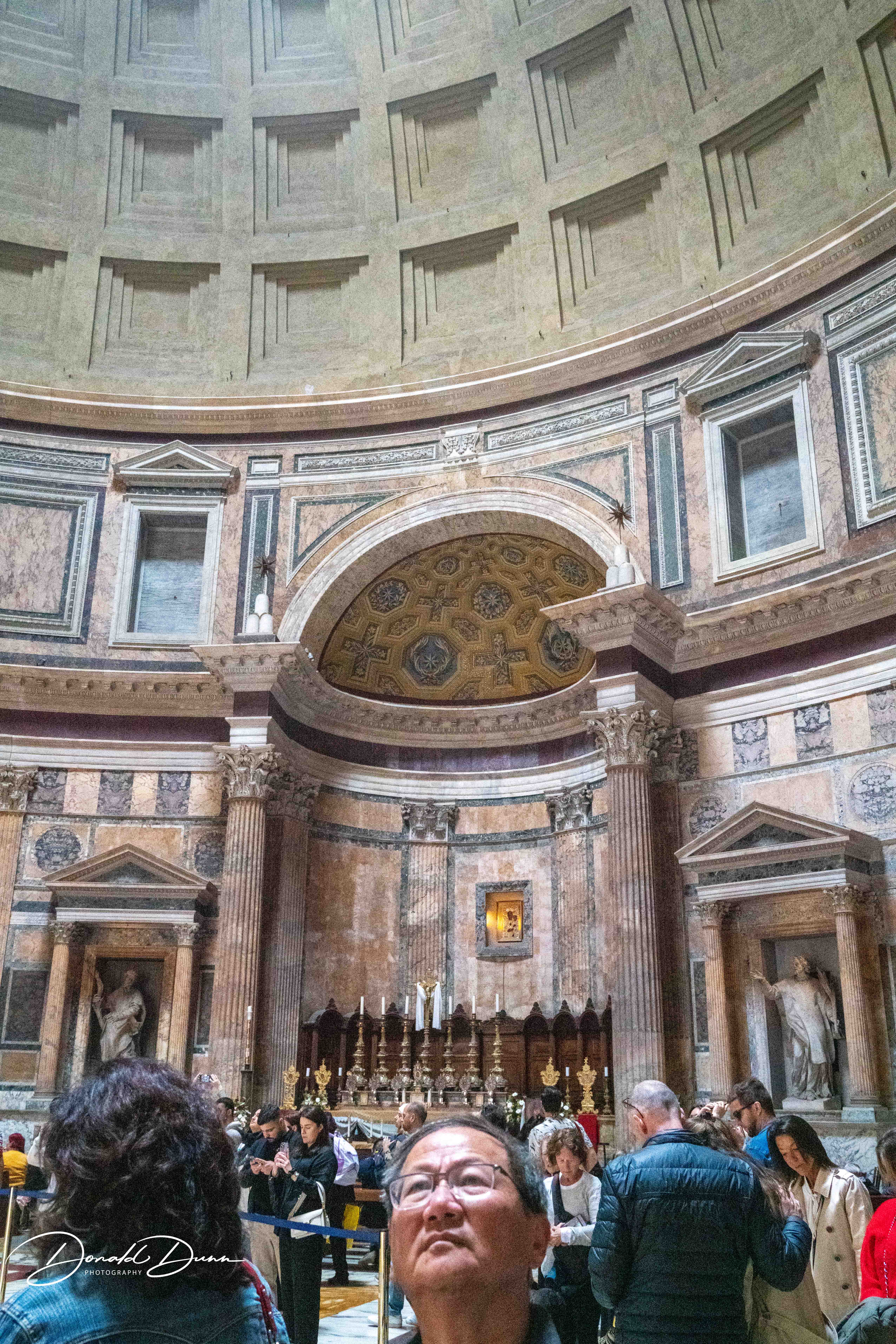
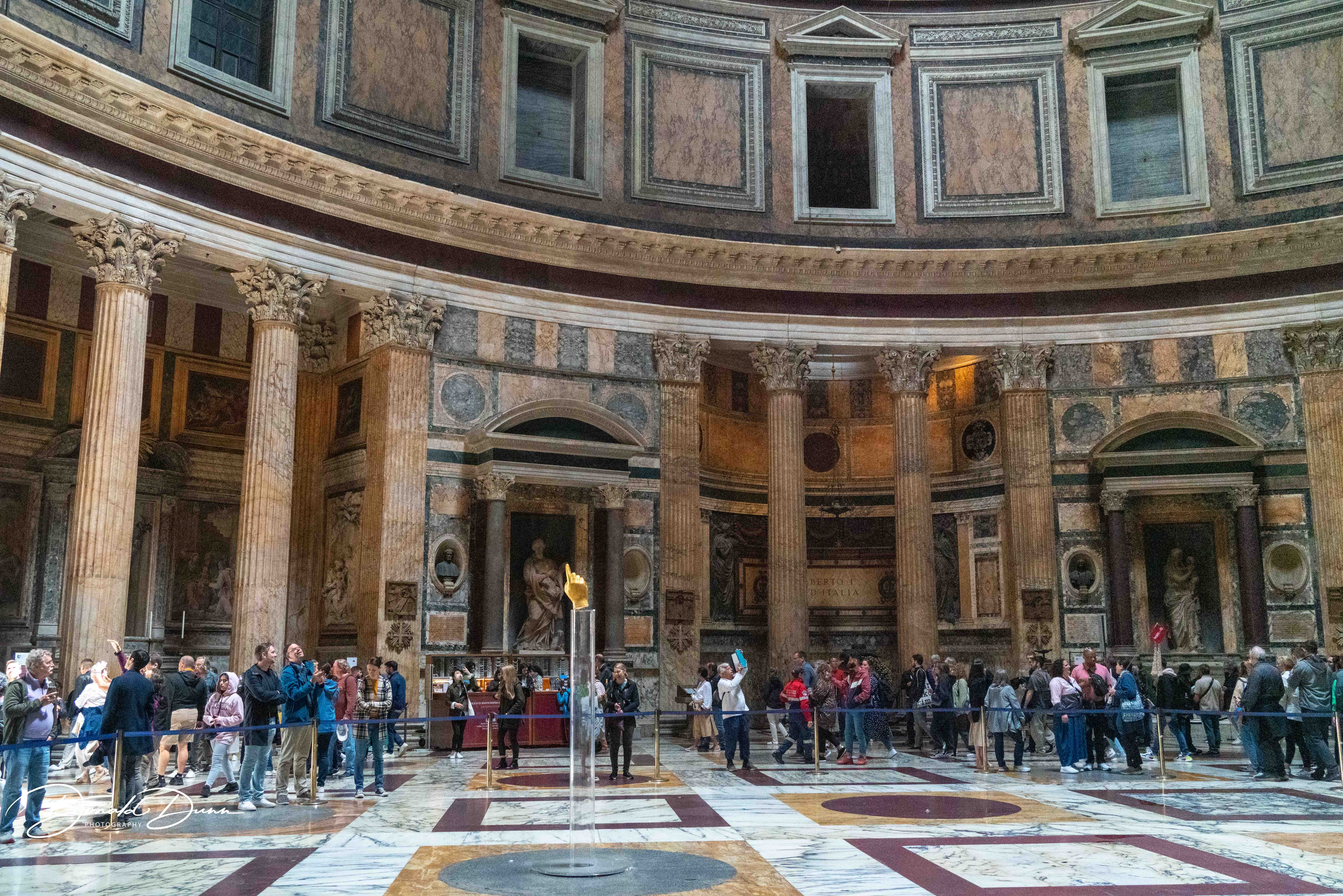
And then it was off to the Pantheon. The Pantheon is a former Roman temple and, since 609 AD, a Catholic church in Rome, Italy, on the site of an earlier temple commissioned by Marcus Agrippa during the reign of Augustus. It was rebuilt by the emperor Hadrian and probably dedicated around 126 AD. Built by Agrippa between 25 and 27 BC, the Pantheon was a temple dedicated to the twelve Gods and to the living Sovran. Traditionally it is believed that the present building is result of the radical reconstruction by Hadrian between 118 and 125 AD. It is the only ancient Roman building that has remained practically intact through the centuries. In 608 Pope Boniface IV had the remains of many martyrs removed from the Christian catacombs and placed in the Pantheon.


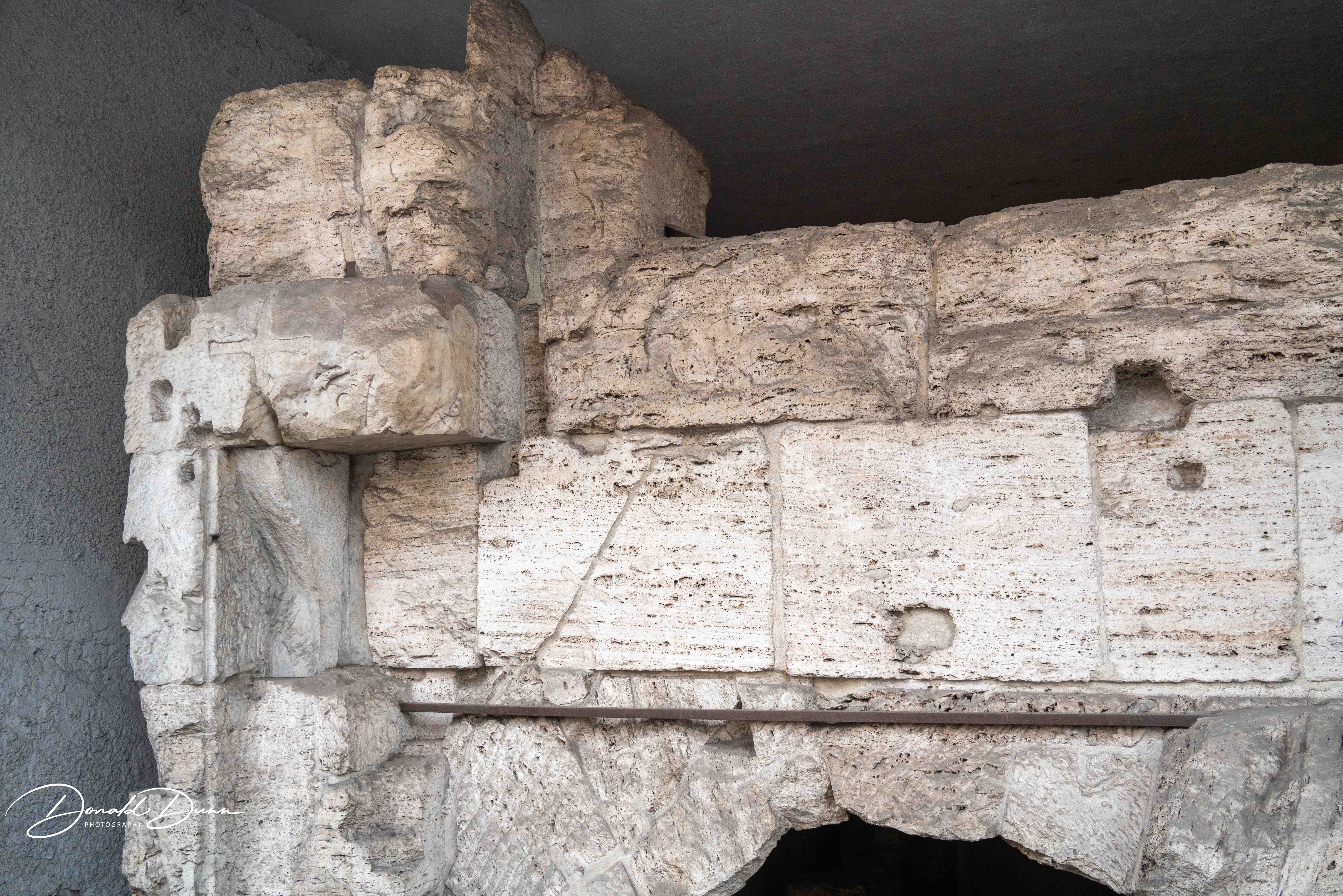
The Stadium of Domitian, also known as the Circus Agonalis, was located to the north of the Campus Martius. The Stadium was commissioned around AD 80 by Emperor Titus Flavius Domitianus as a gift to the people of Rome and was used almost entirely for athletic contests. It was Rome’s first permanent venue for competitive athletics, erected for Domitian’s celebration of the Capitoline Games. It was patterned after Greek stadia and seated approximately 30,000. In Christian tradition, Agnes of Rome wass martyred there. This is a photo of the Arcade of the Stadium of Domitian. Architecturally speaking, an “arcade” is a succession of contiguous arches, with each arch supported by a colonnade of columns or piers. Exterior arcades were designed to provide a sheltered walkway for pedestrians. The walkway was likely lined with retail stores.
St. Peter’s Basilica is the largest church in the world (interior dimensions) and the headquarters of the Roman Catholic Church. Catholic tradition holds that the basilica is the burial site of St. Peter, chief among Jesus’ apostles and also the first Bishop of Rome (Pope). St. Peter’s tomb is supposedly directly below the high altar of the basilica, also known as the Altar of the Confession. For this reason, many popes have been interred at St. Peter’s since the Early Christian period. St. Peter’s is famous as a place of pilgrimage and for its liturgical functions. The pope presides at a number of liturgies throughout the year both within the basilica or the adjoining St. Peter’s Square; these liturgies draw audiences numbering from 15,000 to over 80,000 people. As a work of architecture, it is regarded as the greatest building of its age. Its chief architect was none other than Michelangelo!

From there it was off to the hotel for a quick nap, passing by Circus Maximus where preparations for a large concert—Bruce Springsteen and the E Street Band—were being made. After our nap, we met for a group dinner at the hotel.
 Dunngone's Photos and Blog