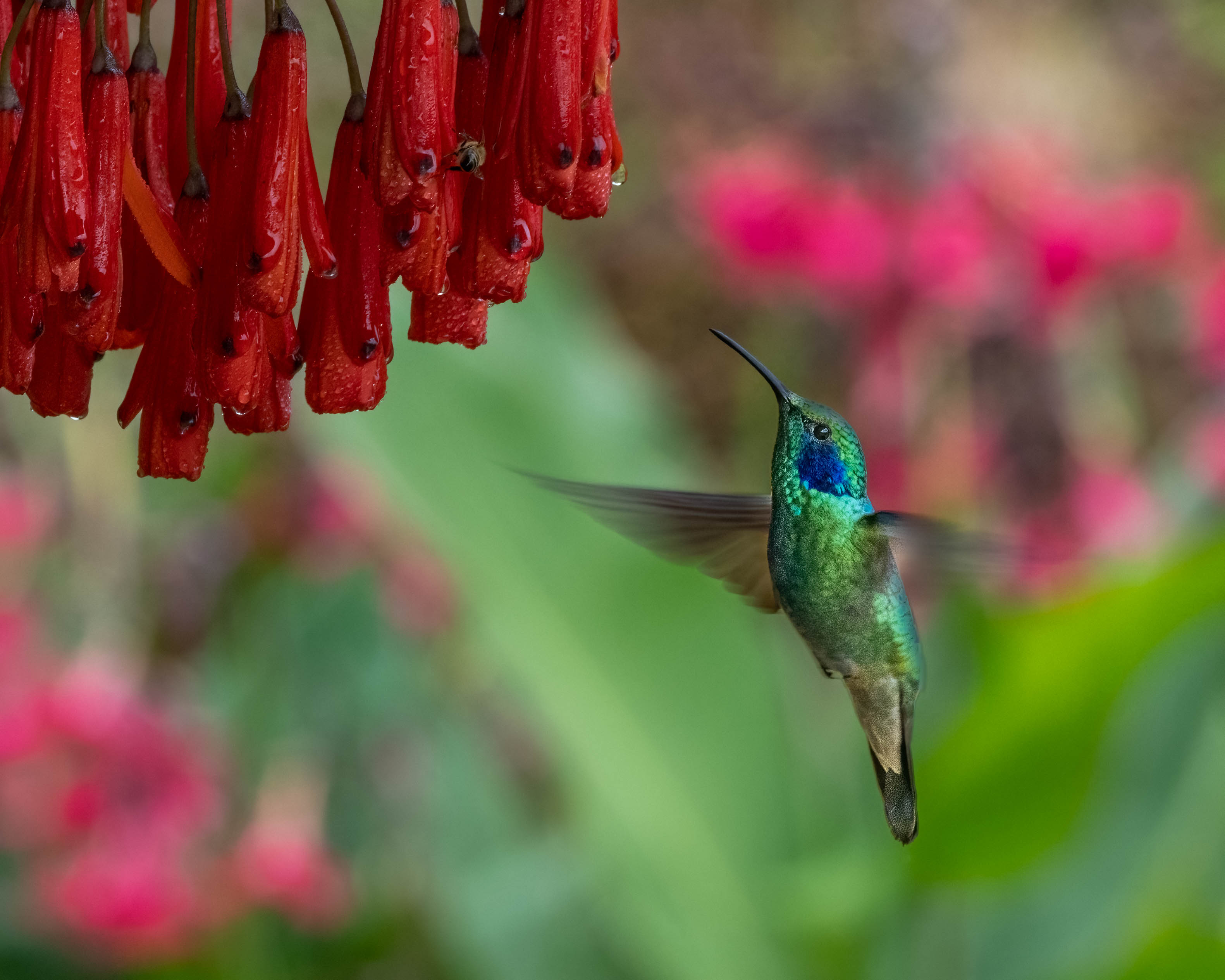
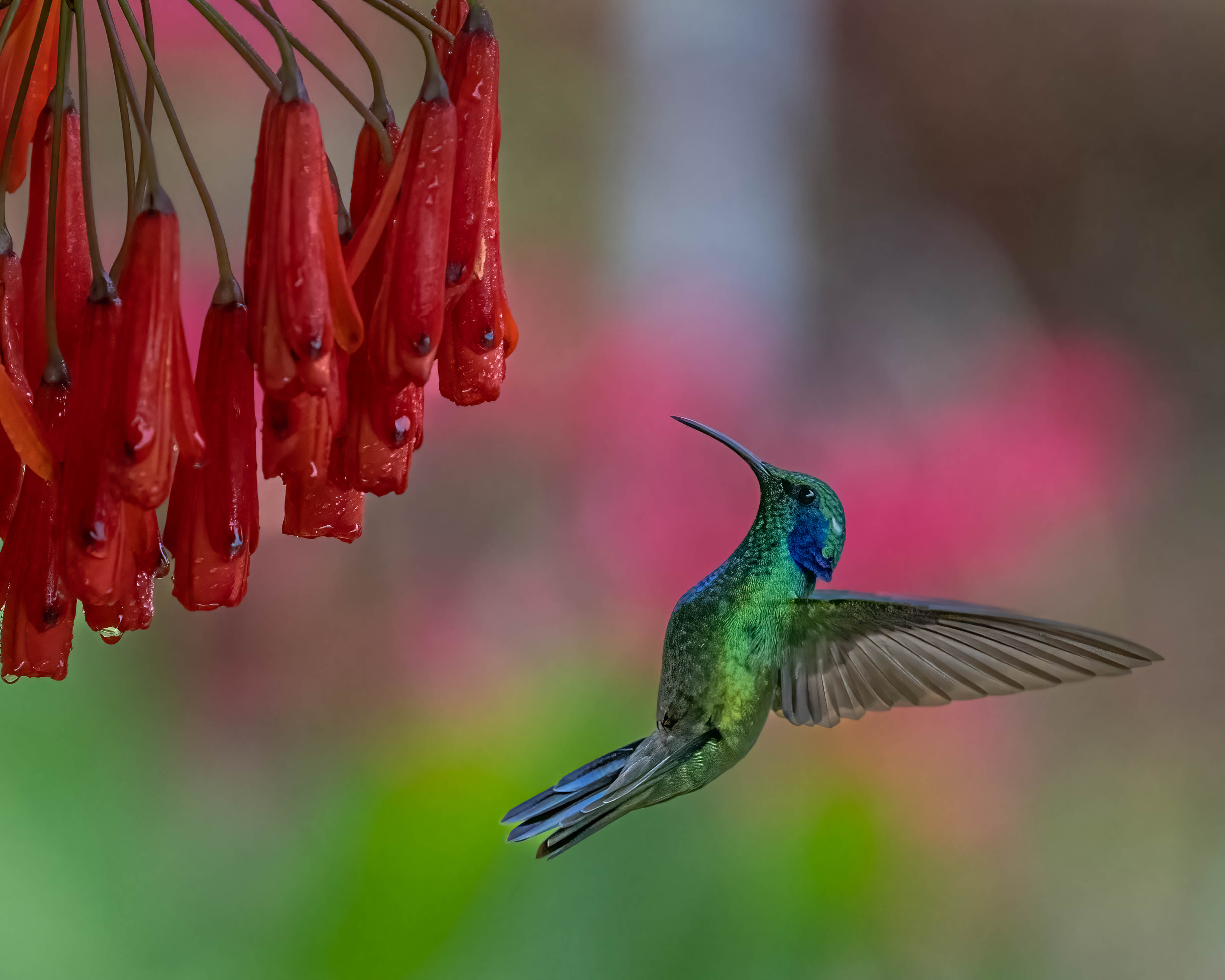
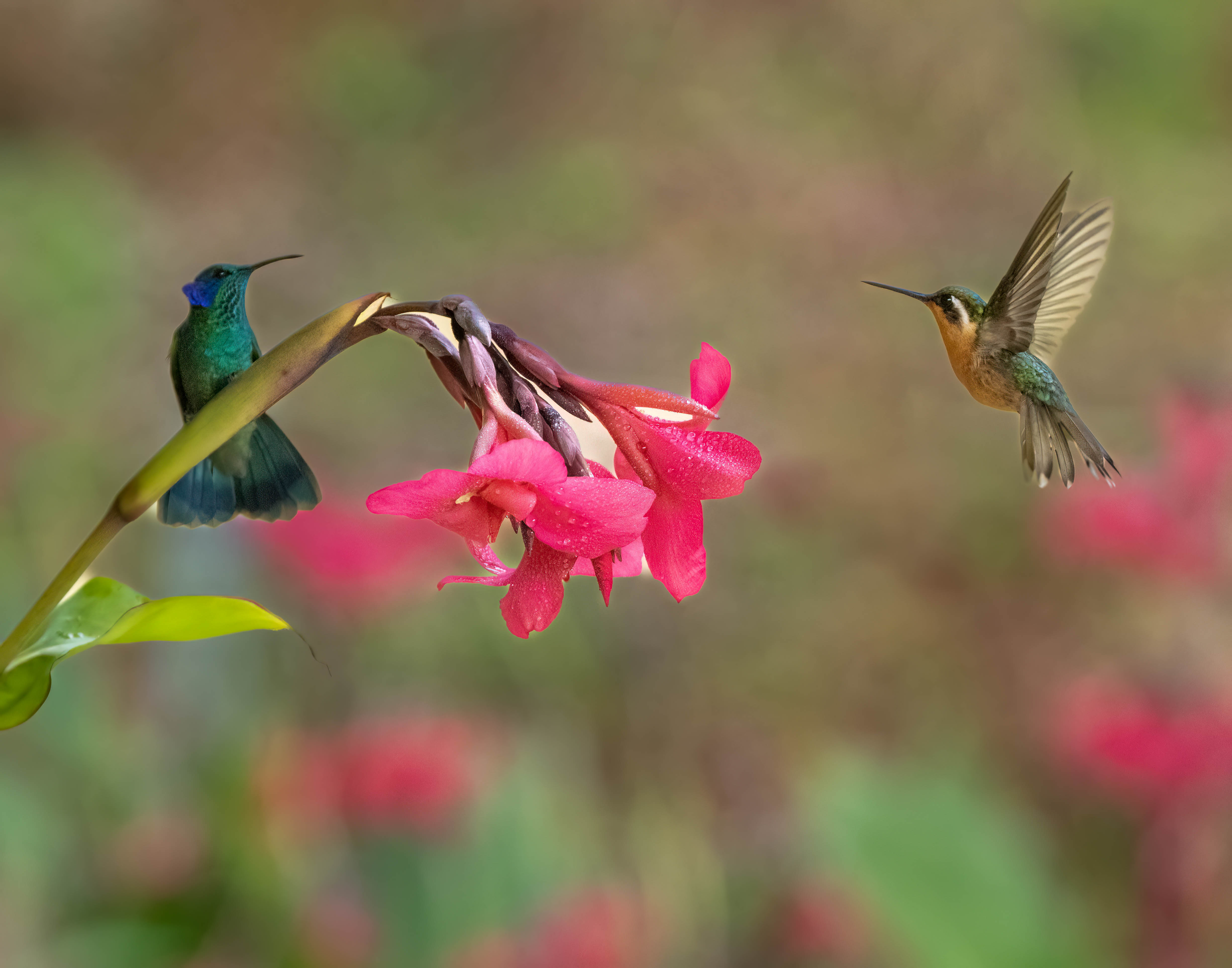
Seemingly, after observing and photographing the Resplendent Quetza this morningl, anything and everything left on the trip would be considered anticlimactic. Not to be outdone, the endemic hummingbirds of the mountains of San Gerardo de Dota put on quite a show in the afternoon. We traveled by private van to a hummingbird haven, Batsu Garden, designed specifically for birdwatching and photography. Feeders and fruits attract the birds to viewing platforms, while trails wind through the blooming gardens had been established to enhance bird watching and photography. This provided a great opportunity for fast speed photography, fill flash photography, and birds in flight. I shot over 1,000 photos of hummingbirds while there!
White-throated HummingbirdLesser VioletearLesser VioletearLesser Violetear and Scintillant HummingbirdsLesser Violetear and White-throated HummingbirdsLesser Violetear
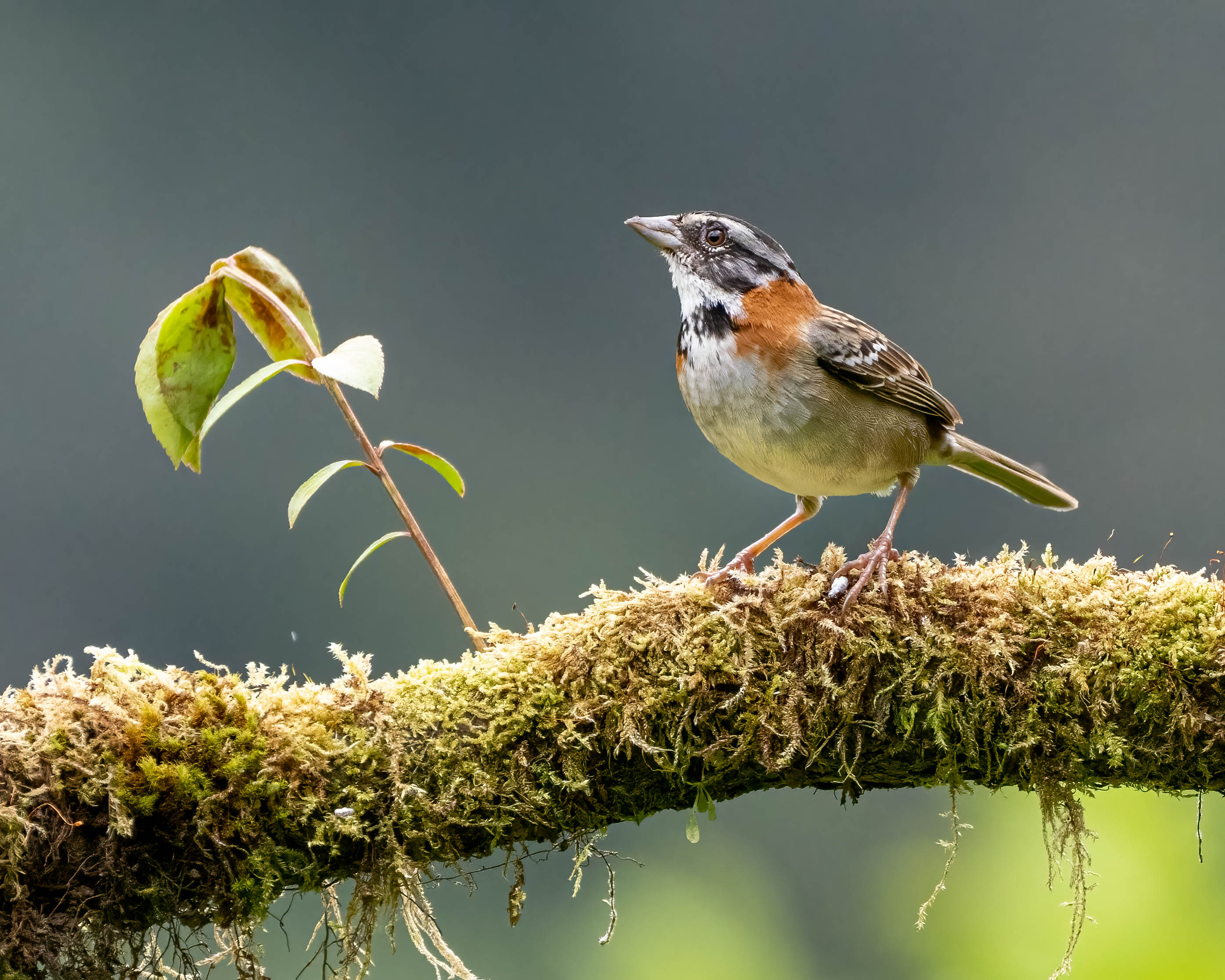
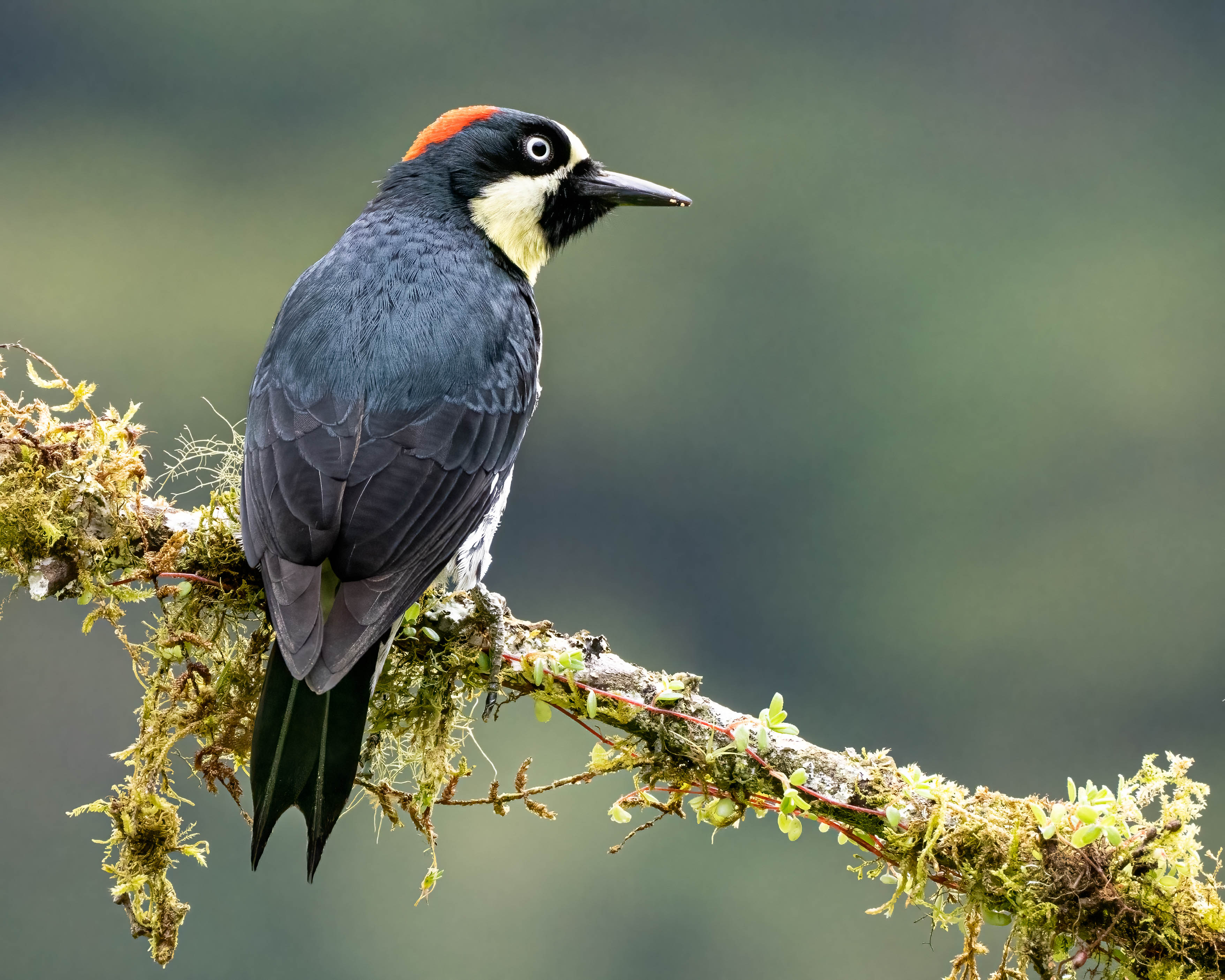
In addition to hummingbirds, a few other beautiful birds appeared and offered poses.
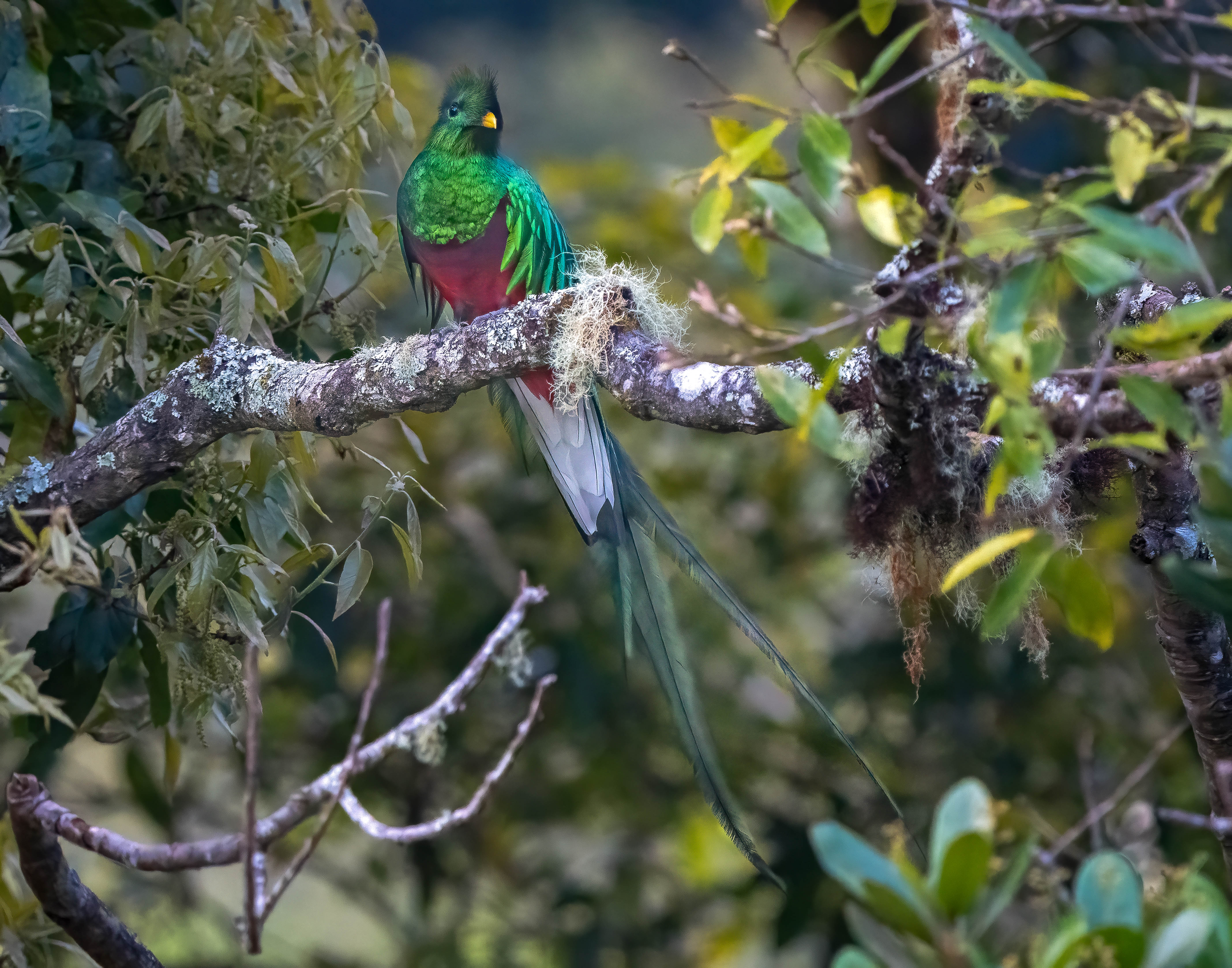
We were up early, departing the lodge at 5:15 AM in an attempt to spot the rare, elusive Resplendent Quetzal. The Resplendent Quetzal (Pharomachrus mocinno) is a small bird found in southern Mexico and Central America. These exquisite birds live in tropical forests, particularly montane cloud forests, and they are part of the family Trogonidae. Like other quetzals, the Resplendent is omnivorous; its diet mainly consists of fruits of plants in the laurel family, but it occasionally also preys on insects, lizards, frogs, and snails. The species is well known for its colorful and complex plumage that differs substantially between sexes. Males have iridescent green plumes, a red lower breast and belly, black inner wings and a white undertail, while females are duller and have a shorter tail. Grey lower breasts, bellies, and bills, along with bronze-green heads are characteristic of females. These birds hollow holes in decaying trees or use ones already made by woodpeckers as a nest site. They are known to take turns while incubating, males throughout the day and females at night. The female usually lays one to three eggs, which hatch in 17 to 19 days. The quetzal is an altitudinal migrant, migrating from the slopes to the canopy of the forest. This occurs during the breeding season, which varies depending on the location, but usually commences in March and extends as far as August. These magnificent birds are infrequently seen in the mountains of southern Arizona.
The Quetzal had been observed earlier in the week feeding on avocados in the mountains. After a short drive, the bus was parked along side the road, and we climbed a steep narrow path from the single-lane road to a “viewpoint” near an Aguacatillo trees of the avocado family where they had been observed feeding the previous morning.
I was fortunate to be the first to spot the colorful bird sitting on a lower Aguacatillo tree limb about 25 yards from where we were standing. Note the long tail.
Because of its undulating pattern of the tail during flight, the bird is known as the “serpent of the sky.” Endangered due to deforestation, these creatures are notoriously difficult to find in nature around the world.
Collection of trails and greenway quotes, terms, acronyms, tools as well as trail publications and presentations and 100s of photos from my bicycle and hiking adventures. .
This journal was begun several years ago, and reflects an accurate record of each day fished. Please enjoy it, and remember that fish are too valuable to be caught just once, and the places they live are too valuable to be mistreated.









 Dunngone's Photos and Blog