Thursday and Friday, August 6-7—Craggy Gardens and Mount Mitchell

Thursday was uneventful as I stayed in the motorhome most of the day while Kay shopped (looked).

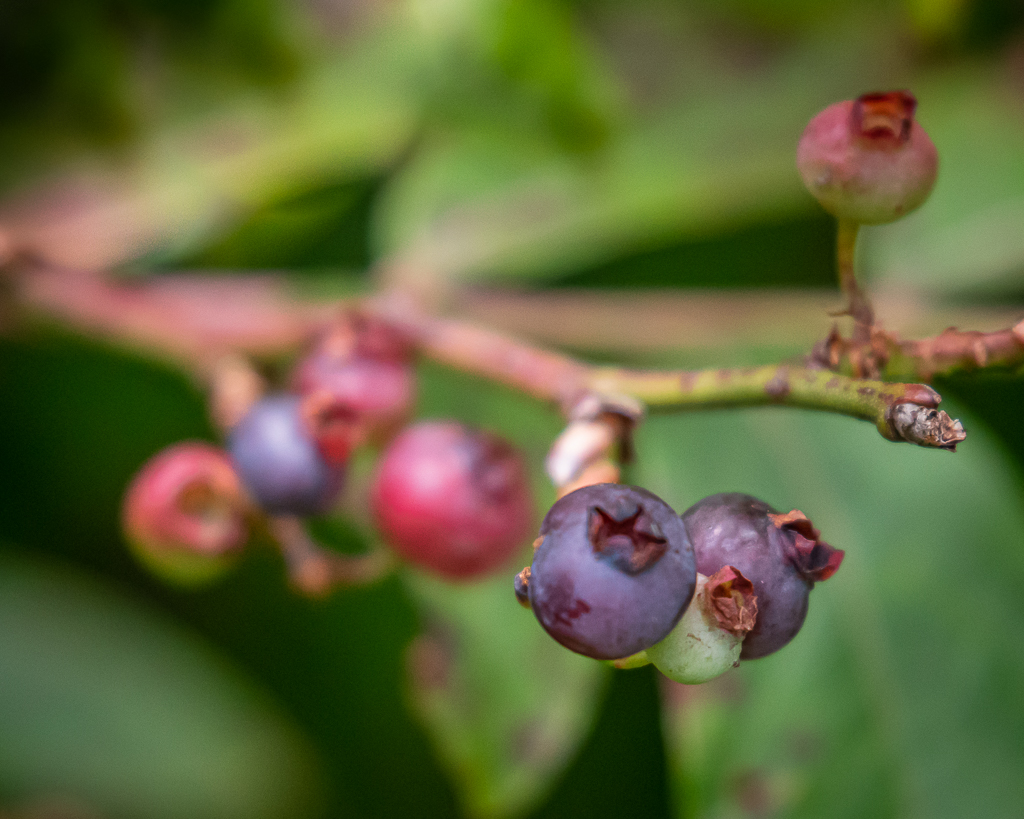
Most mornings, I am so slow to get going; quite a difference from back in the working days when I hit the ground running. It seems that we’ve developed a routine of going out every other day, and today (Friday) was the day! After homemade breakfast burritos, we drove I-40 to Asheville, and then the Blue Ridge Parkway north up, up, and up to mile-high Craggy Gardens. As we approached the area, a sign appeared for the Craggy Picnic Area to the left. It was only a short drive to the parking area. From there, we hiked upward almost a mile to the 5,680 ft high Craggy Flats, eating a blueberry or two along the way.
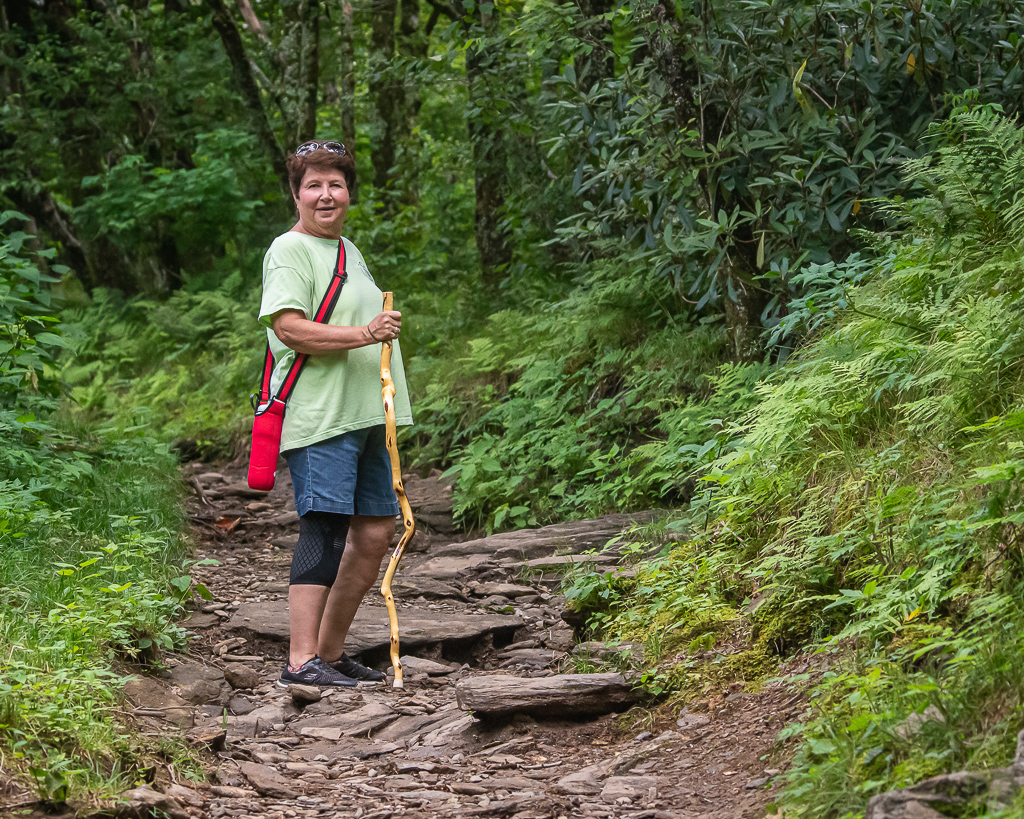
Kay on the trail to Craggy Gardens
Lots of blueberries, though the ones we ate were a little tart

Even though expecting it, the “bald” surprised us as it resembled a palette of colors—generated by the numerous wildflowers in bloom. One can only imagine what it would be like in mid-June when the pink and purple blooms of Catawba rhododendrons blanket the area. It was pleasantly surprising to observe almost everyone hiking the trails wore masks, including children; says a lot about those who enjoy nature!
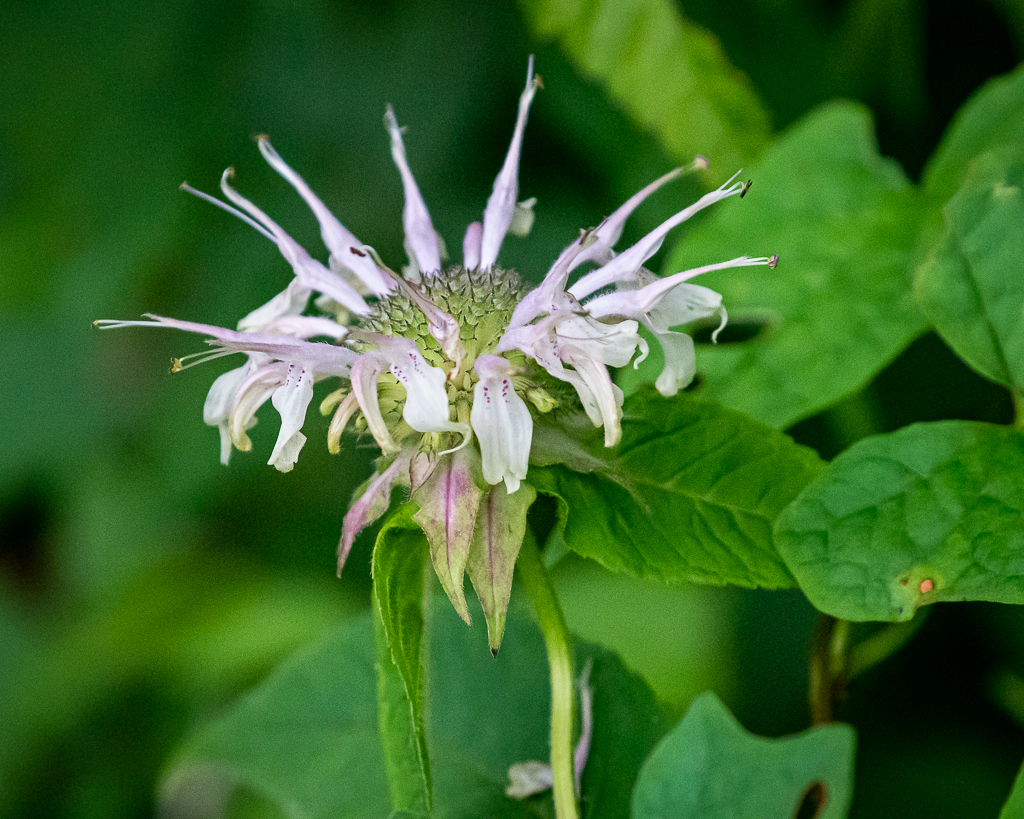
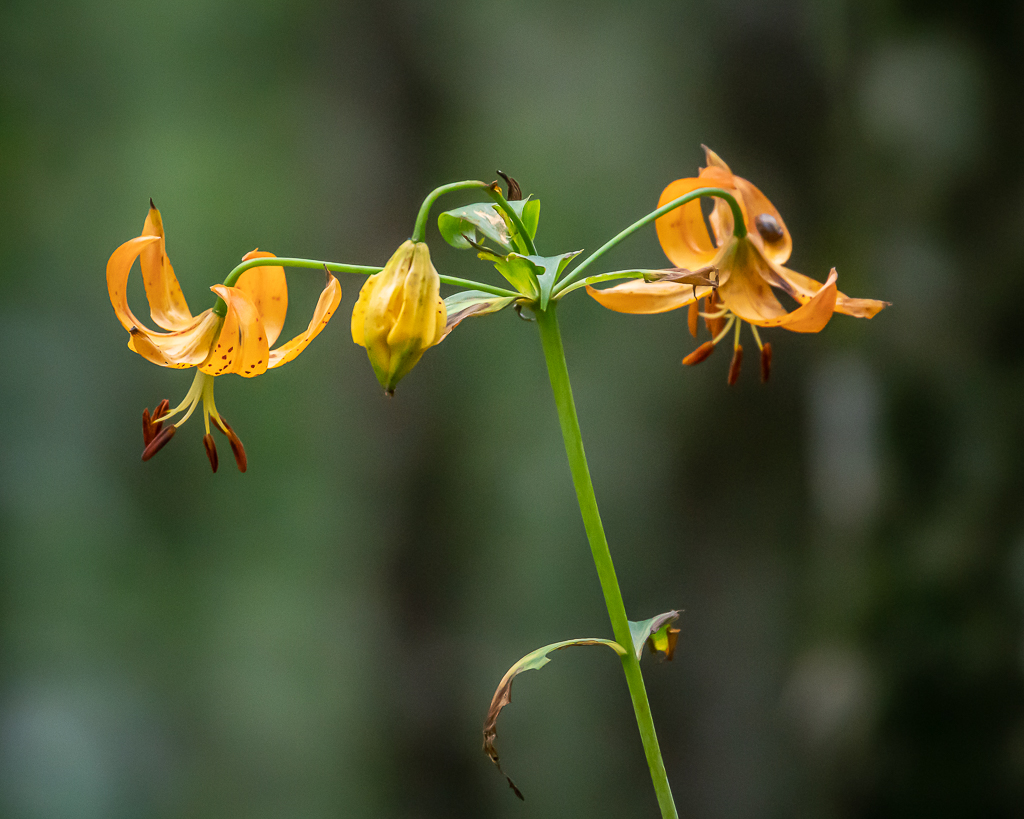
Turk’s Cap Lily was one of my favorites
These birds were everywhere—in the shrubs, on the trail, and in the grass

Twisted, jagged, rocky “crags” give Craggy Gardens its name, but these high elevation summits are home to the most spectacular floral display along the 469-mile Blue Ridge Parkway corridor. Craggy Gardens has been recognized by the state of North Carolina as a Natural Heritage Area.

Just as we were finishing the hike, it began sprinkling and then turning into a full blown rain. From Craggy Gardens, we drove in the deluge of rain to Mount Mitchell, the highest point east of the Mississippi River at an elevation of 6,684 feet.
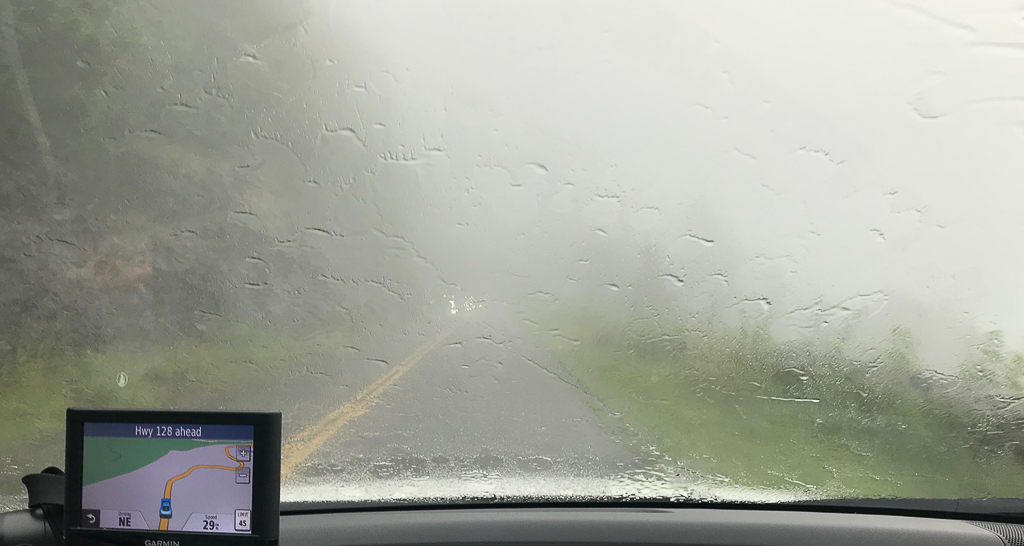
Driving through the clouds at elevation 6,000+ feet

The state highway took us almost all the way to the top. With continuing rain, we did not hike the few feet to the summit, but grabbed a quick photo our the wind. It continued raining most of the afternoon, but quit as we returned to the motorhome about 6 PM.
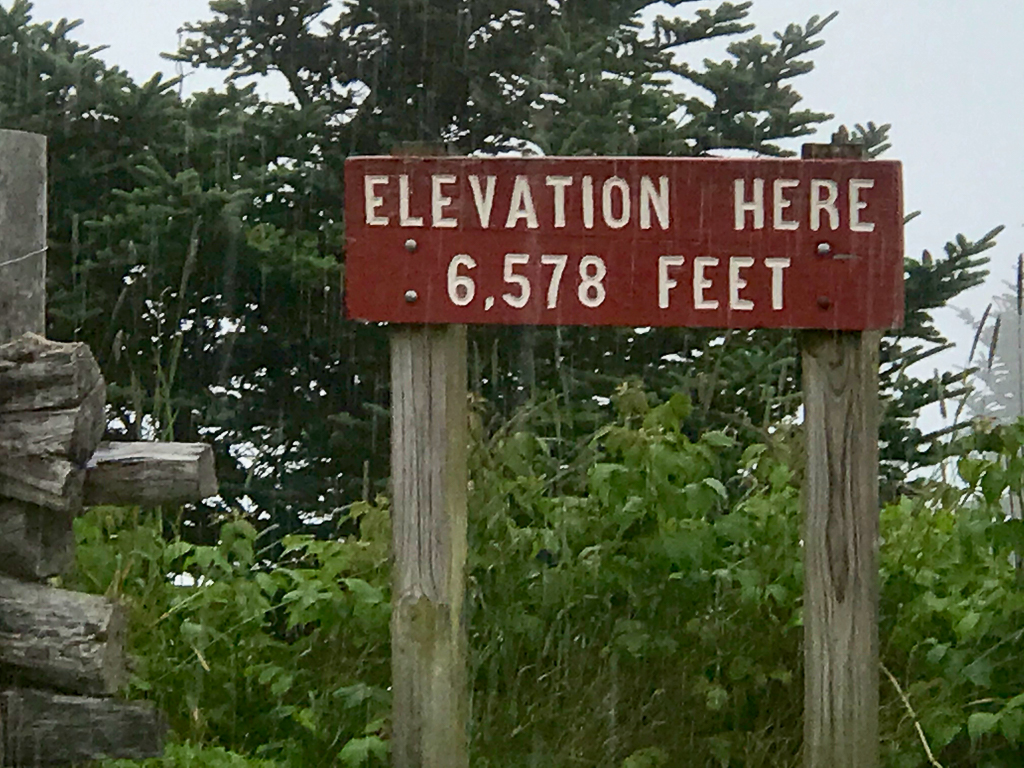
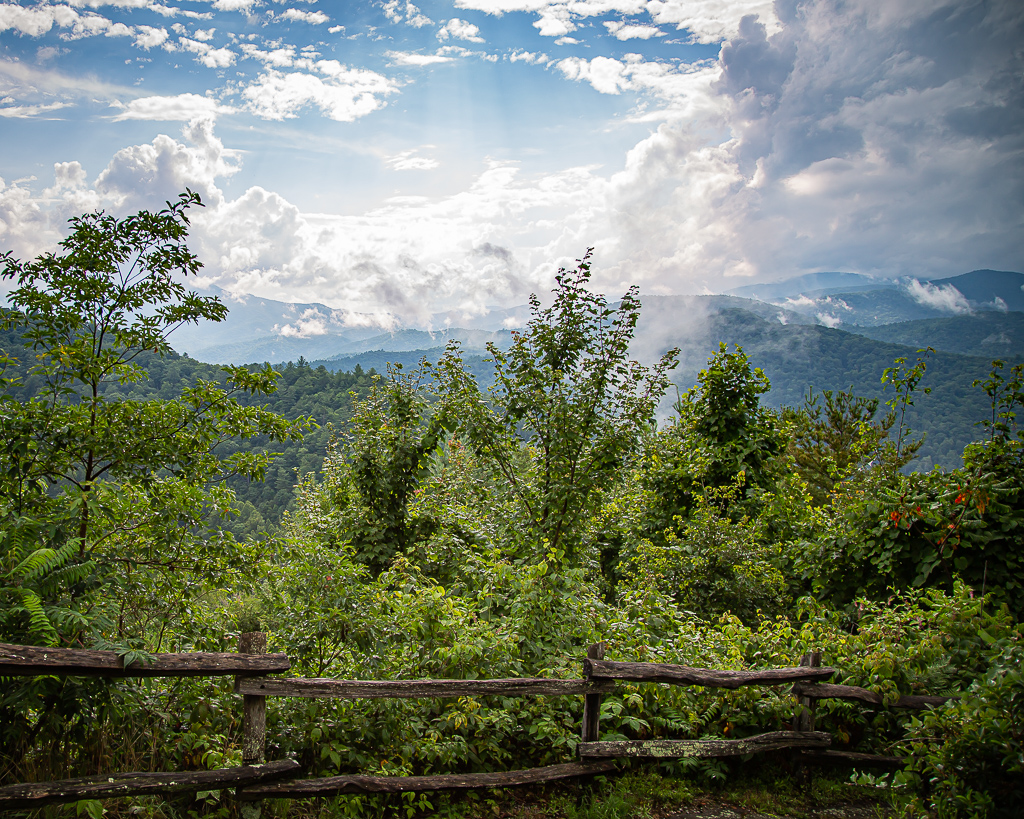
Parking area near the summit of Mount Mitchell

Wednesday, August 5—Cataloochee Valley

Today was another laid back day. With the pandemic surging and the lack of personal safeguards among the public, we try to stay away from people. However, Kay made an exception and met a friend with whom she taught many years ago and who is staying in the area for a few weeks. They had lunch, and reminisced about old times, catching up of news related to common acquaintances, all the time social distancing.

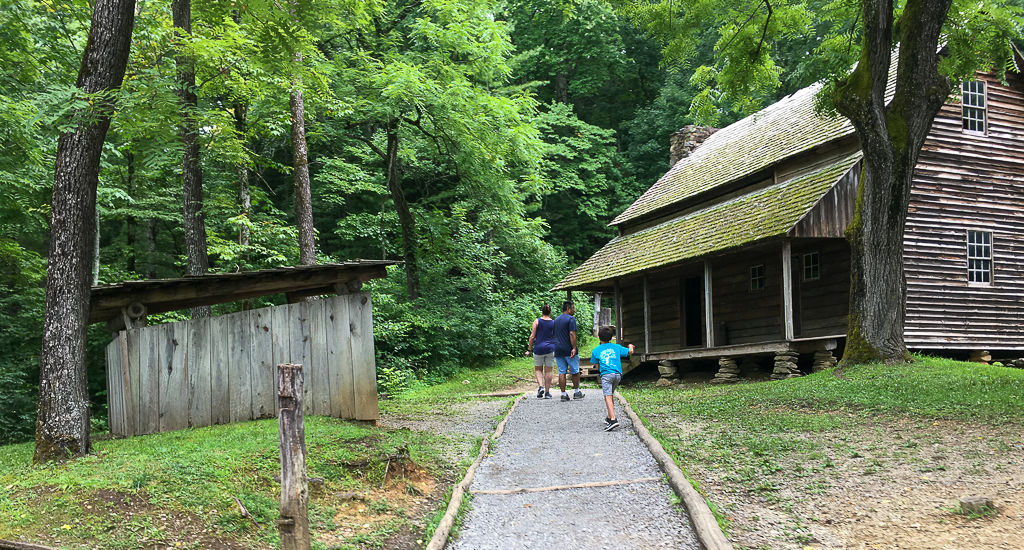
In the late afternoon, despite the threat of rain, we drove northwestward in an attempt to find Cataloochee Valley, a tiny piece of GSMNP. The road had many switchbacks as the car slowly climbed on the asphalt pavement, and even more slowly as the pavement transitioned into gravel. Kudos to the National Park Service for their great maintenance on a tight budget. Some segments of the road were so narrow that there was room for only one vehicle to pass, but there were many pullovers to accommodate the traffic. And then, it was back to pavement and just when we thought we were lost after a few more miles, a dead end and parking area awaited us—Cataloochee Valley.

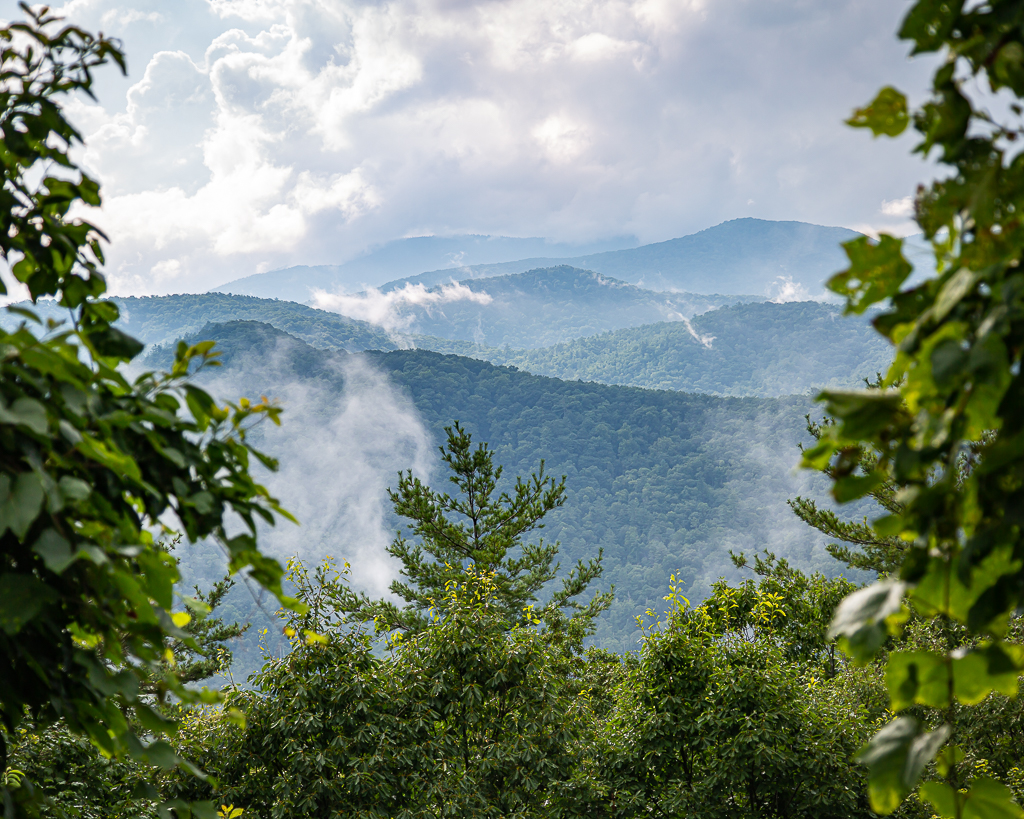
View enroute to Cataloochee Valley
The ascending clouds looked like smoke signals from olden times, and somewhat reminding us of Yellowstone NP

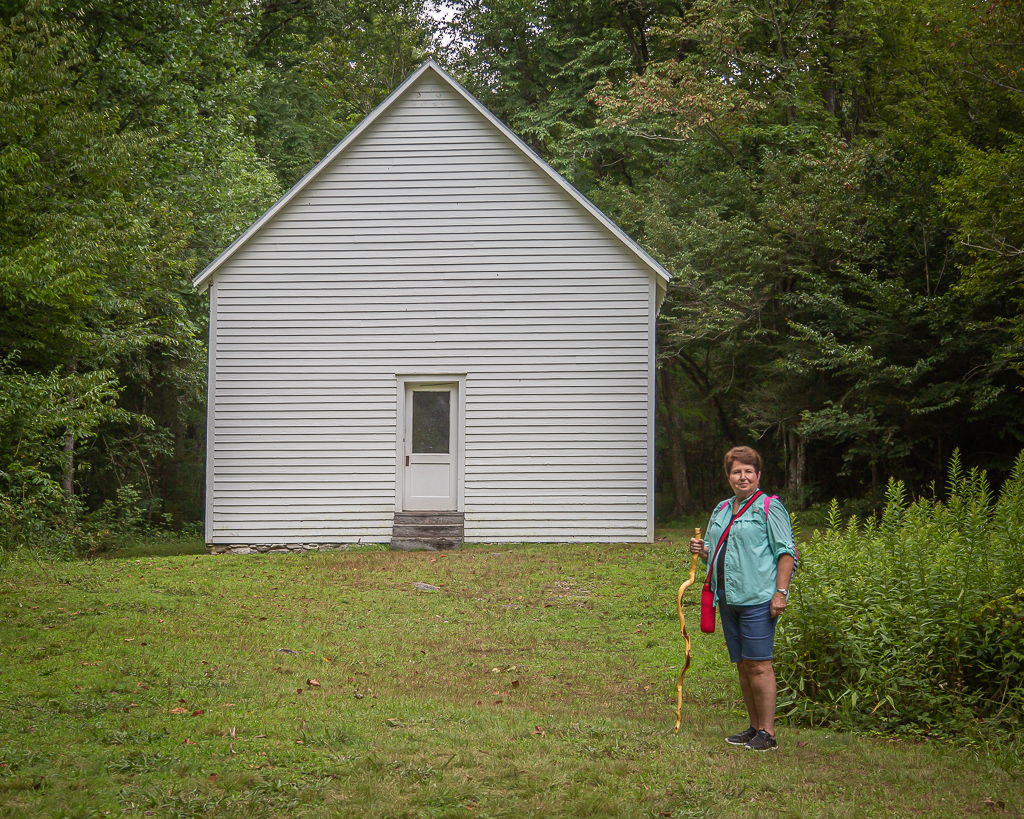
Cataloochee Valley is nestled among some of the most rugged mountains in the southeastern United States. Surrounded by 6000-foot peaks, this isolated valley was one of the largest and most prosperous settlements in what is now the Great Smoky Mountains National Park. Some 1,200 people lived in this lovely mountain valley in 1910. Most made their living by farming, including commercial apple growing, but an early tourism industry developed in Cataloochee with some families boarding fishermen and other tourists who wished to vacation in the mountains. A variety of historic buildings have been preserved in the valley, including two churches, a school, and several homes and outbuildings. This is considered the Cades Cove of North Carolina.

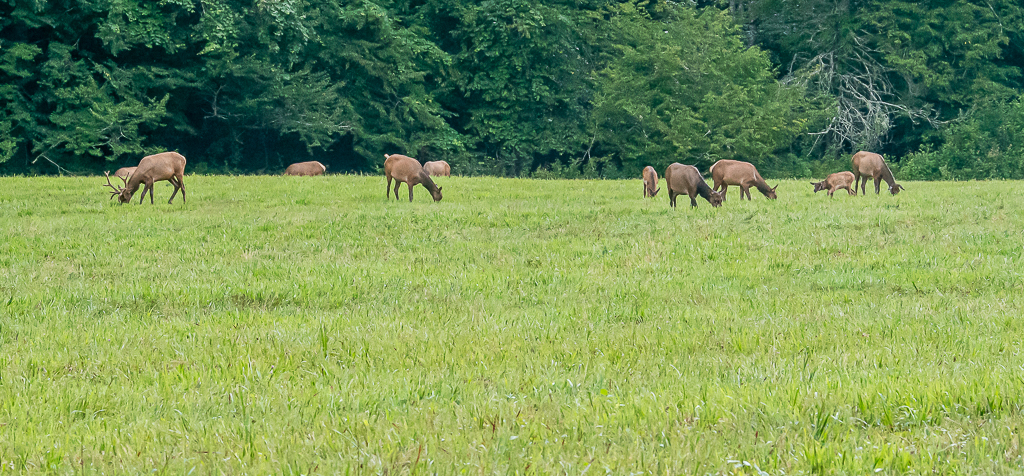
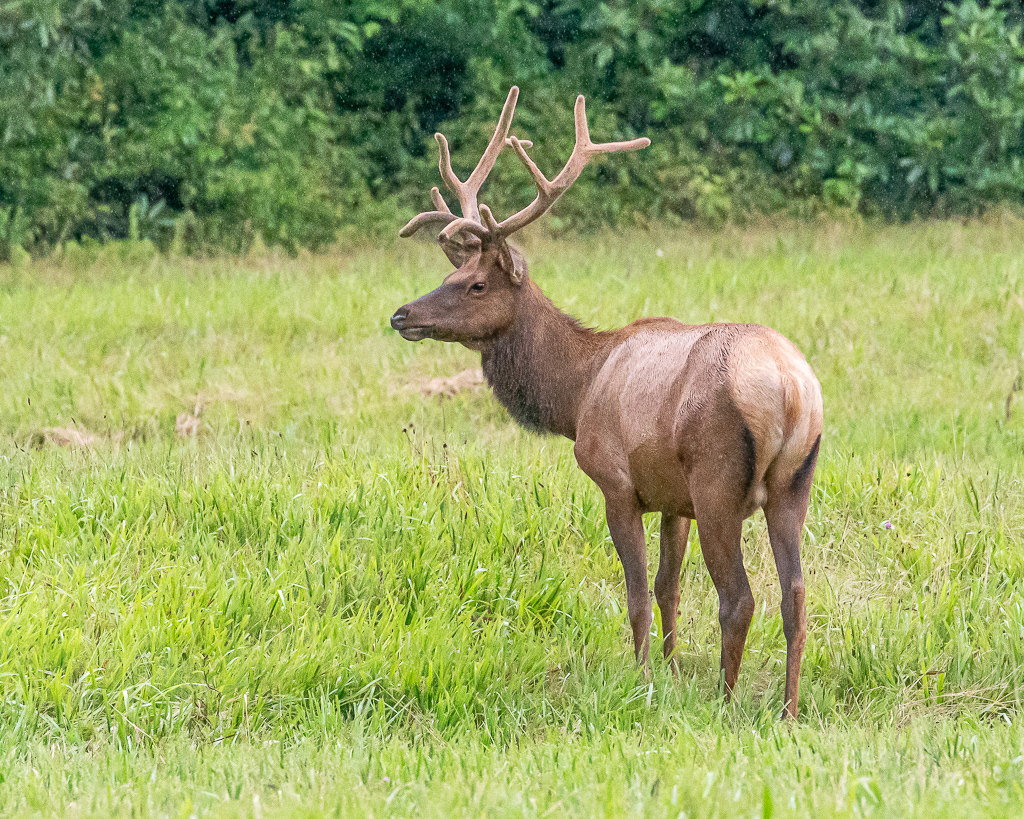
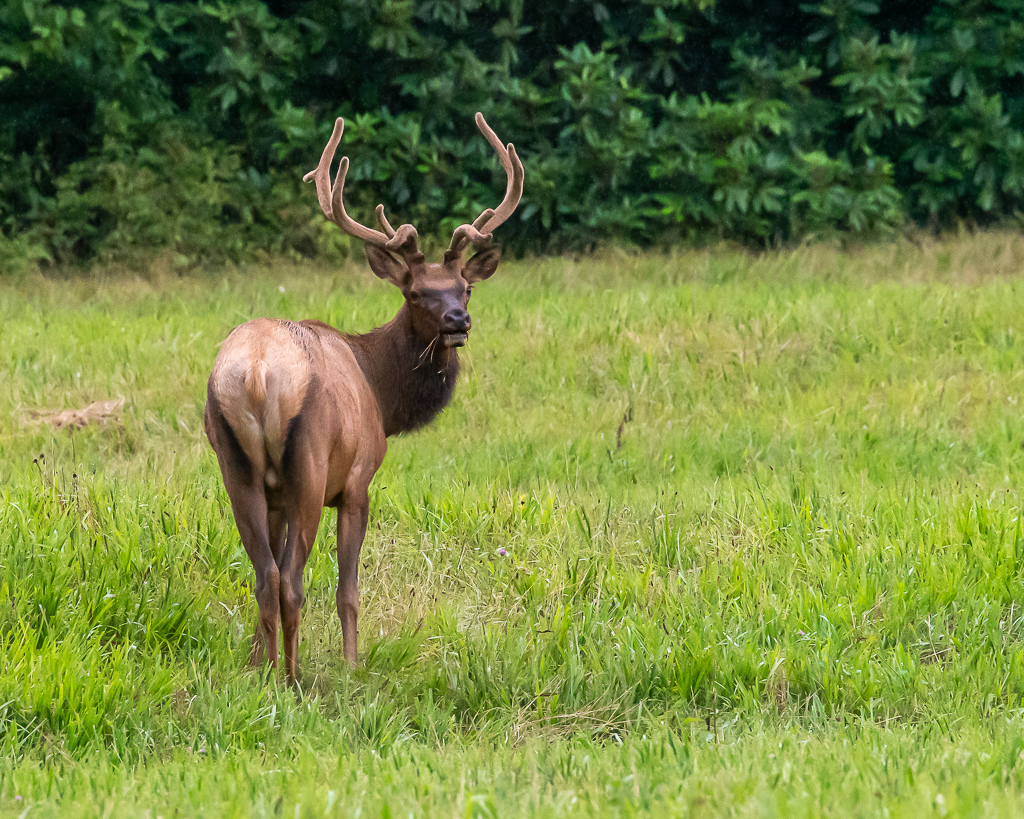
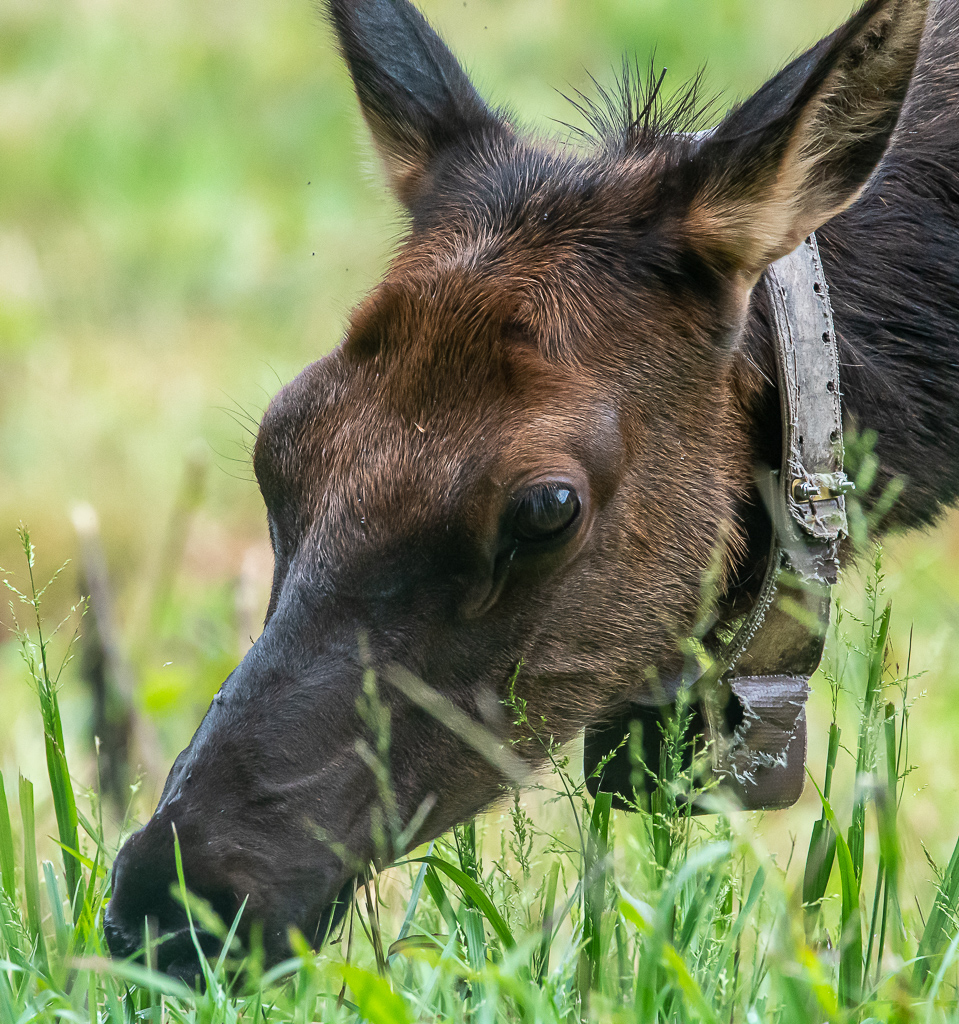
In 2001, elk were released in Cataloochee Valley as part of an experimental program to reintroduce elk to the park. The herd can be seen regularly in the fields of the valley, especially in the early morning and evening hours. This was our major objective, and we were not to be disappointed. Just as we were leaving the car at the Cataloochee Valley parking area, it began to sprinkle, and then turned into a light rain. We managed to see one building before elk began pouring out of the woods in a far corner of the field; of course, I had the wrong lens, so it was back to the car for alternate camera/lens, tripod, and raincoat. We managed to make several photographs before the elk became close, causing us to retreat back to the parking area. And then, the elk crossed the road, and moved through the woods into a large field. There, we were able to set up the tripod and camera/lens, and make photos from a distance. Buffalo gnats were swarming and left a bunch of whelps on Kay’s legs.

This herd came out of the woods one-by-one with the little ones cavorting all over the place
This bull was careful to watch over his harem
The onlookers made too much noise, drawing attention from this bull
She was almost too close for comfort; we retreated to the other side of the car

After such an excellent adventure, we returned to the motorhome via the same road that took us the Valley, stopping to make photos of the beautiful, post rain mountain landscape.

Monday and Tuesday, August 3-4—Hurricane Isaias and GSMNP

It rained all day Monday, as Maggie Valley was on the outer edge of Hurricane Isaias. Staying in the motorhome was not exactly what we had planned! Oh well, one has to take the good with the great.

After a lazy morning, we loaded snacks, sandwiches, and water in the car and drove through Great Smoky Mountains National Park (GSMNP) on US Highway 441. It was a gorgeous drive with lots of turnouts to observe the spectacular scenery. Our ultimate objective was Cades Cove on the southwestern side of the park, as far away from us as one could get and still be in the park.

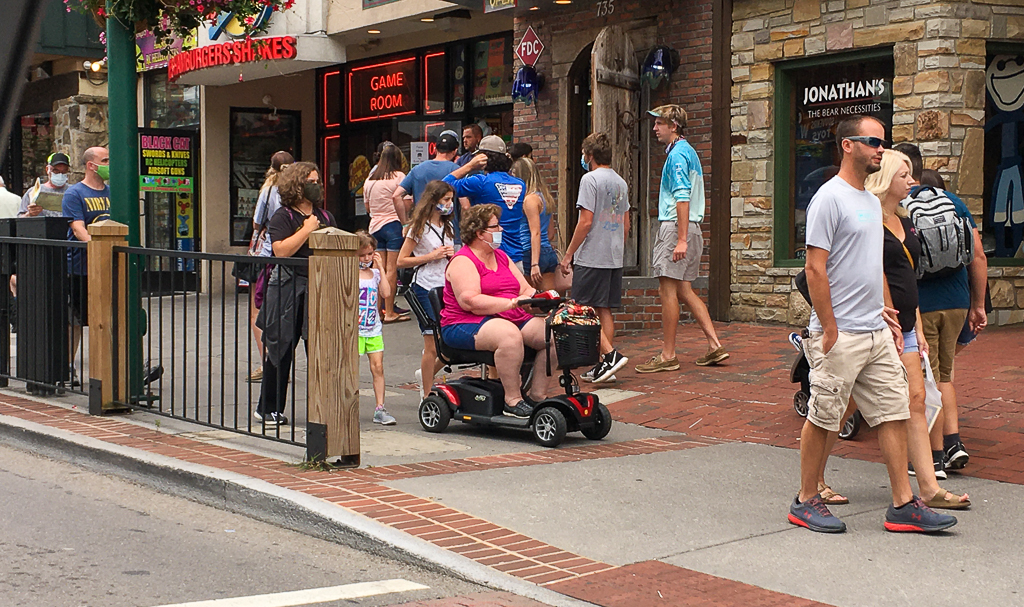
Before turning towards Cades Cove, we drove to the nearest gasoline station fill up, and that proved to be all the way through Gatlinburg. It was packed with people and cars, and very few folks wore masks; I estimated 10%, but Kay said I was being generous and estimated the number at 3%!

Gatlinburg, TN
Gatlinburg, TN

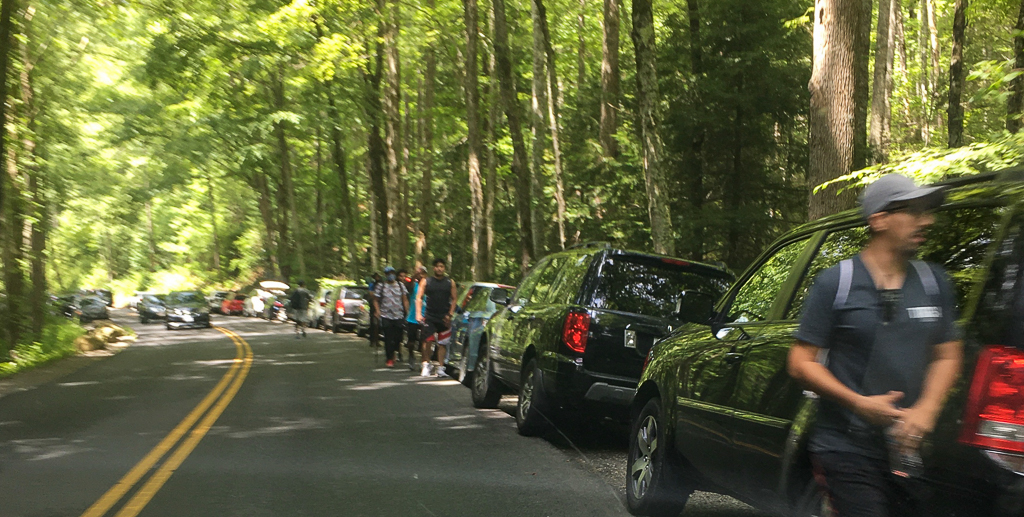
From there we made our way ever so slowly, because of traffic, to the Cades Cove Loop. Near every trailhead, parking areas and the adjacent quarter to half-mile roadside was packed with cars, and kiters taking up part of the traffic lane.

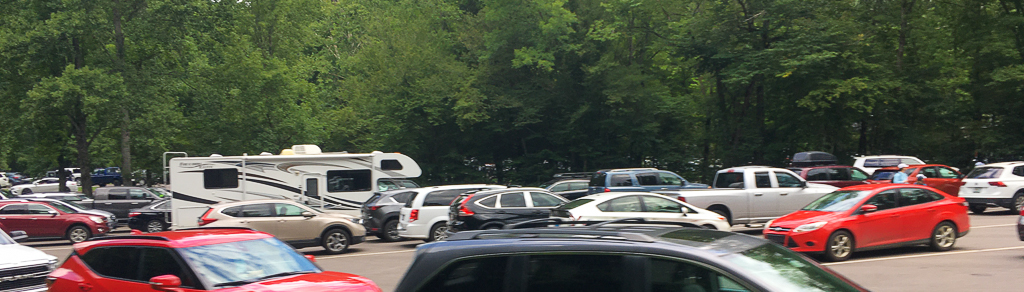
GSMNP Visitor Center Parking Lot
About 1/2 mile from a trailhead

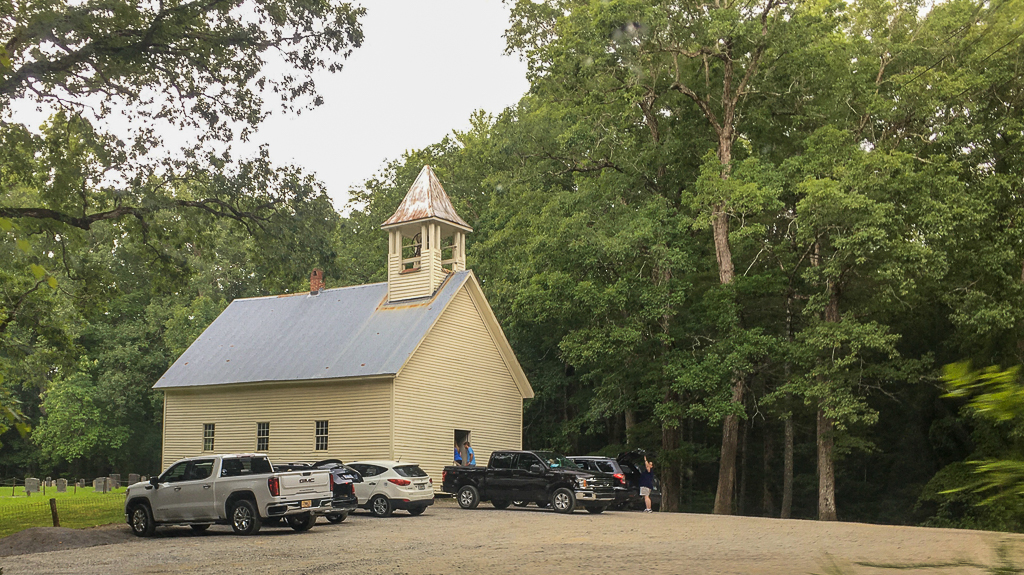
At our first stop in Cades Cove—a Primitive Baptist Church—it began raining and rained most of the time we were traversing the Loop road. There were at least two Baptist churches and a Methodist church in the community.

Primitive Baptist Church

Traffic crawled at about 5 miles per hour, with frequent stops; no bears were spotted!

Bumper-to-bumper traffic on the Cades Cove Loop
Trailheads were not safe due to large number of people
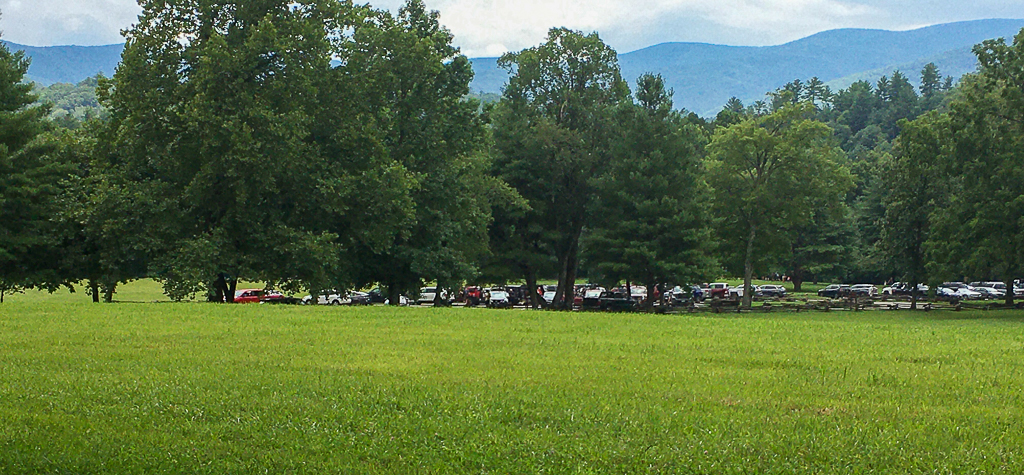
Another parking lot, crammed full
One of the primitive houses (not too different from those where I grew up)

On the way out, we stopped along a boulder-filled stream for a late lunch. We were both excited to be traveling US Highway 341 back to Cherokee because the views were incredible. At our turn, the road was blocked and the US Park Service ranger said the road was closed, to find another route—that was it, no explanation or anything. Consequently, it was back to Gatlinburg to a route north of GSMNP connecting to I-40, and back to Maggie Valley. We were both exhausted, though very little physical activity occurred during the day, and after briefly watching downloaded British television, we “crashed”.

Photos courtesy of Kay.

Saturday and Sunday, August 1-2—The Storm before the Calm

After a good day on Friday, Saturday was pretty yucky, with slight fever coming and going almost all day. I have watched YouTube channels and read blogs ad infinitum. The good news is that it did not rain, though it was overcast and windy all day. God bless Kay for all she does.

Today, Sunday, we experienced an epiphany; it’s the allergies, stupid. We opted to take a drive to Asheville, mostly via the Blue Ridge Parkway. With windows and sun roof open, it was glorious, until itchy eyes, sneezing, and a slight flush took over. Immediately closing the openings, the symptoms quickly disappeared. Ah ha, it is allergies, stupid.

Despite it being a Sunday, traffic was light as was parking at trailheads, though both increased as Asheville drew nearer. We stopped at the almost empty Blue Parkway Visitor Center near Asheville and picked up some much needed maps and Park brochures, and used the temporary toilet facilities. And then, we drove the Blue Ridge Parkway Folk Art Center to view various artworks related to the mountain culture—quilts, furniture, dolls, paintings, and many other forms of art were displayed.

Inside the Blue Ridge Parkway Folk Art Center

A bit too crowded for comfort (though everyone was masked), a search for wildflowers and butterflies ensued, with little luck. Only a couple of blooms were observed, and no butterflies could be found anywhere! After a few photos, we departed the Parkway and drove into Asheville to Sam’s Club, and then to Lowe’s, before driving back to the motorhome. There, we tied down the awning and attached a shade with hardware just purchased. It proved fortuitous as rain began, but the area near the door was relatively dry.  Oh, how it has been raining here in Maggie Valley, NC! 

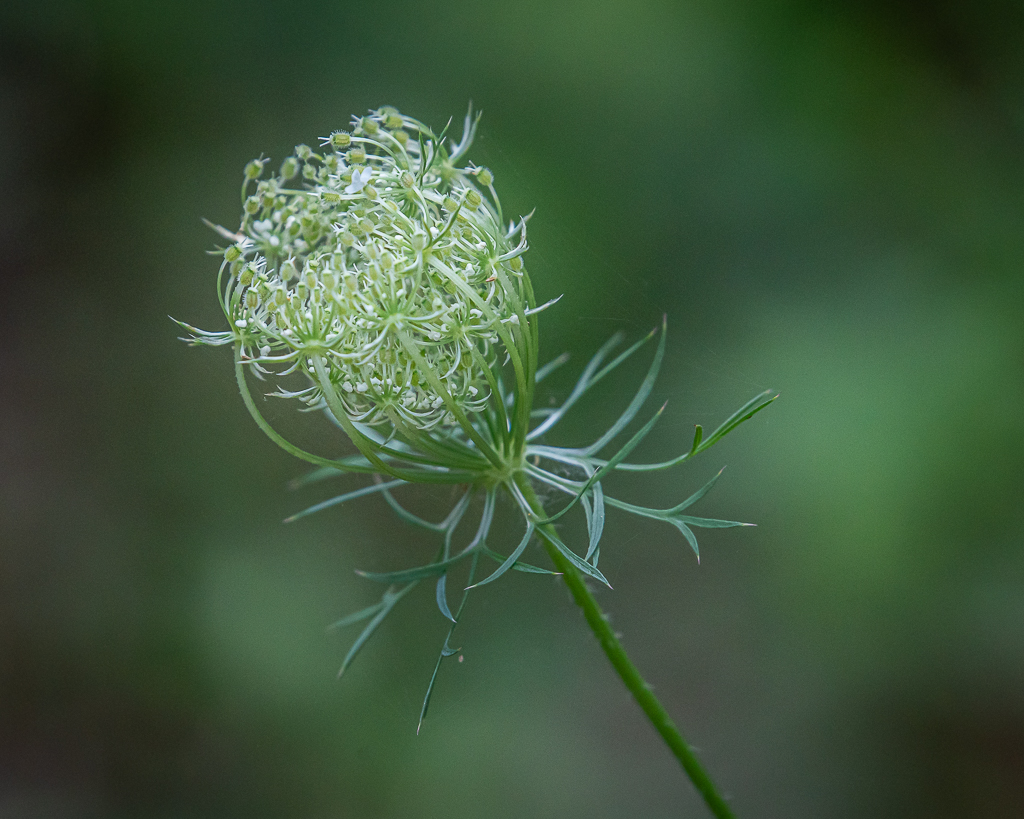
Unknown bloom outside the Blue Ridge Parkway Folk Art Center
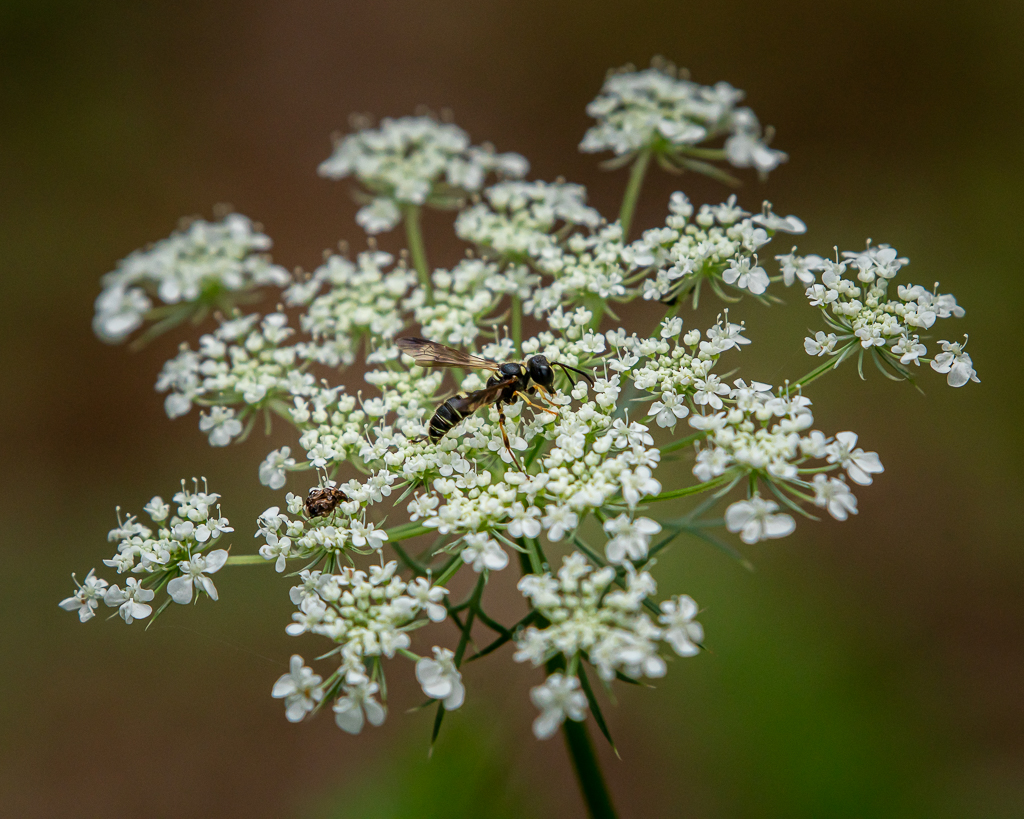
Wasp on Queen Anne’s Lace (?) outside the Blue Ridge Parkway Folk Art Center
Unknown bloom outside the Blue Ridge Parkway Folk Art Center